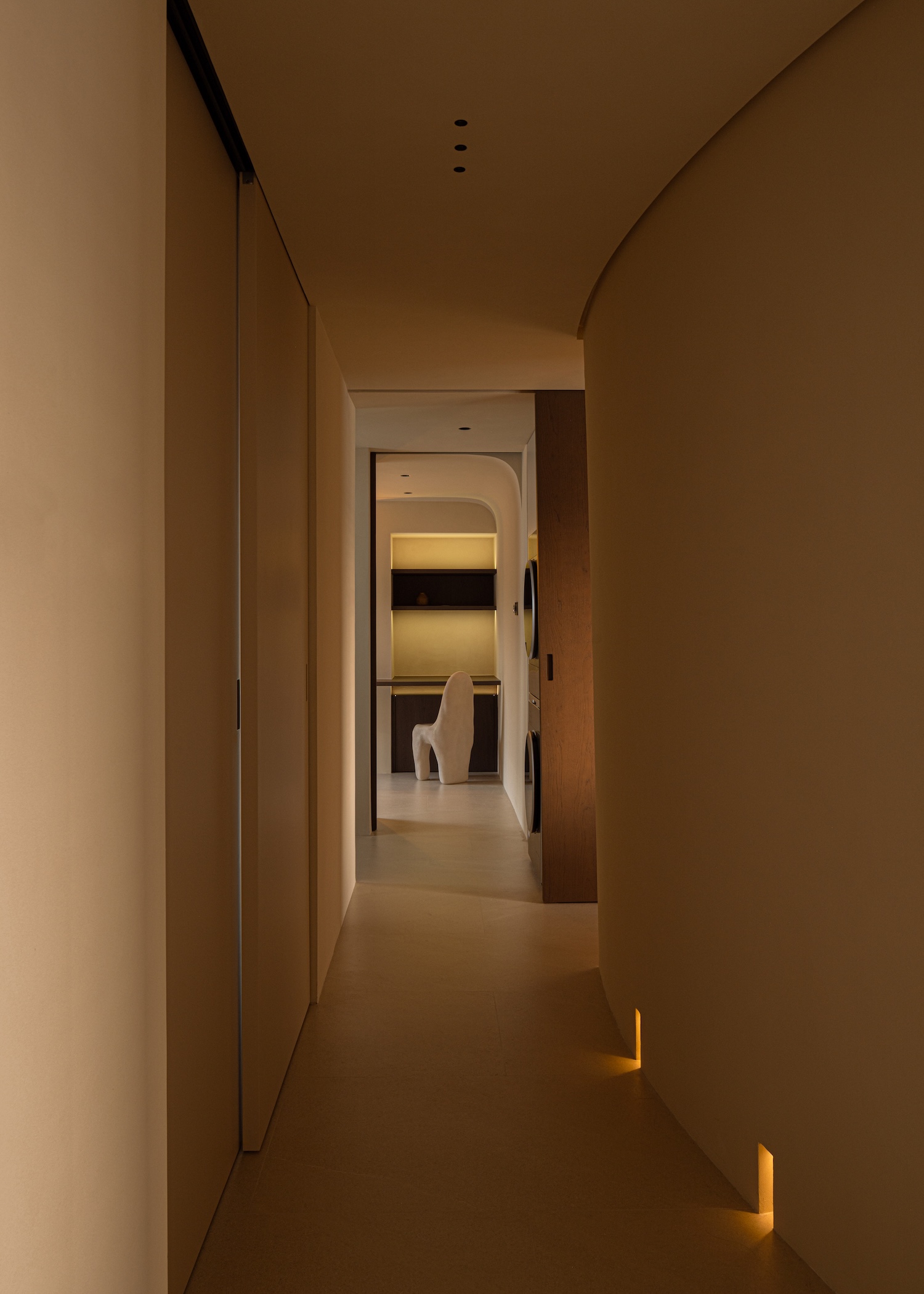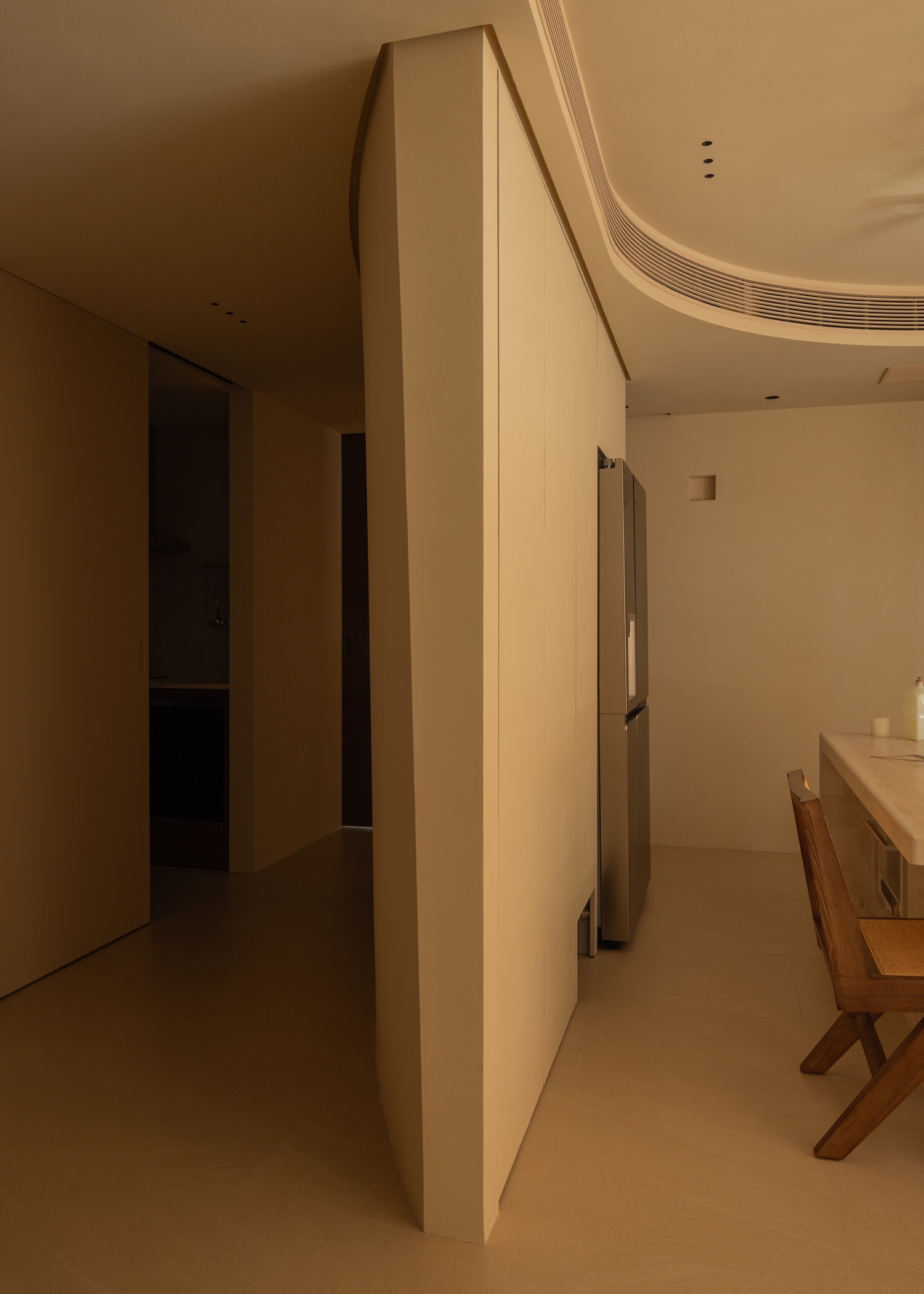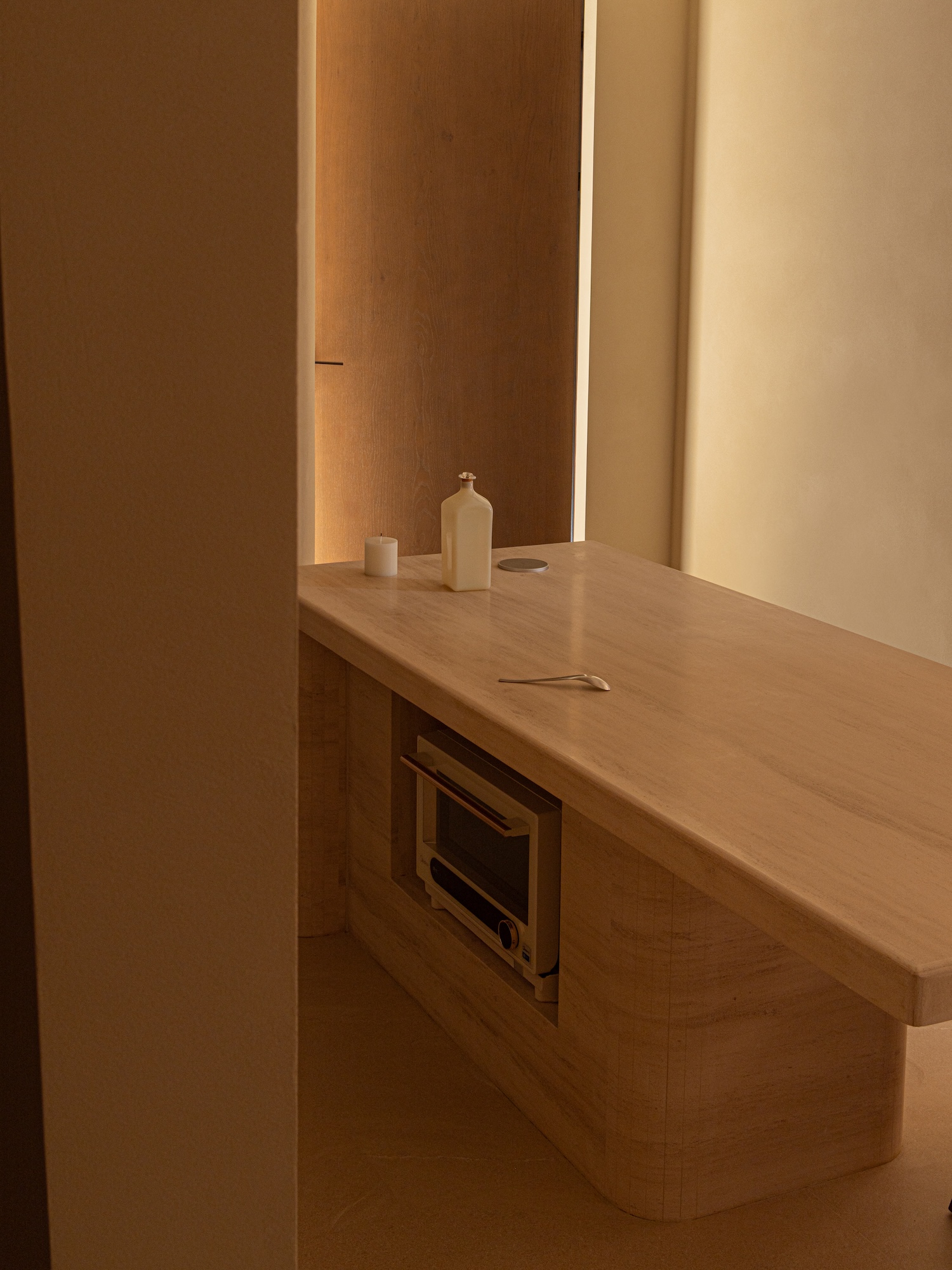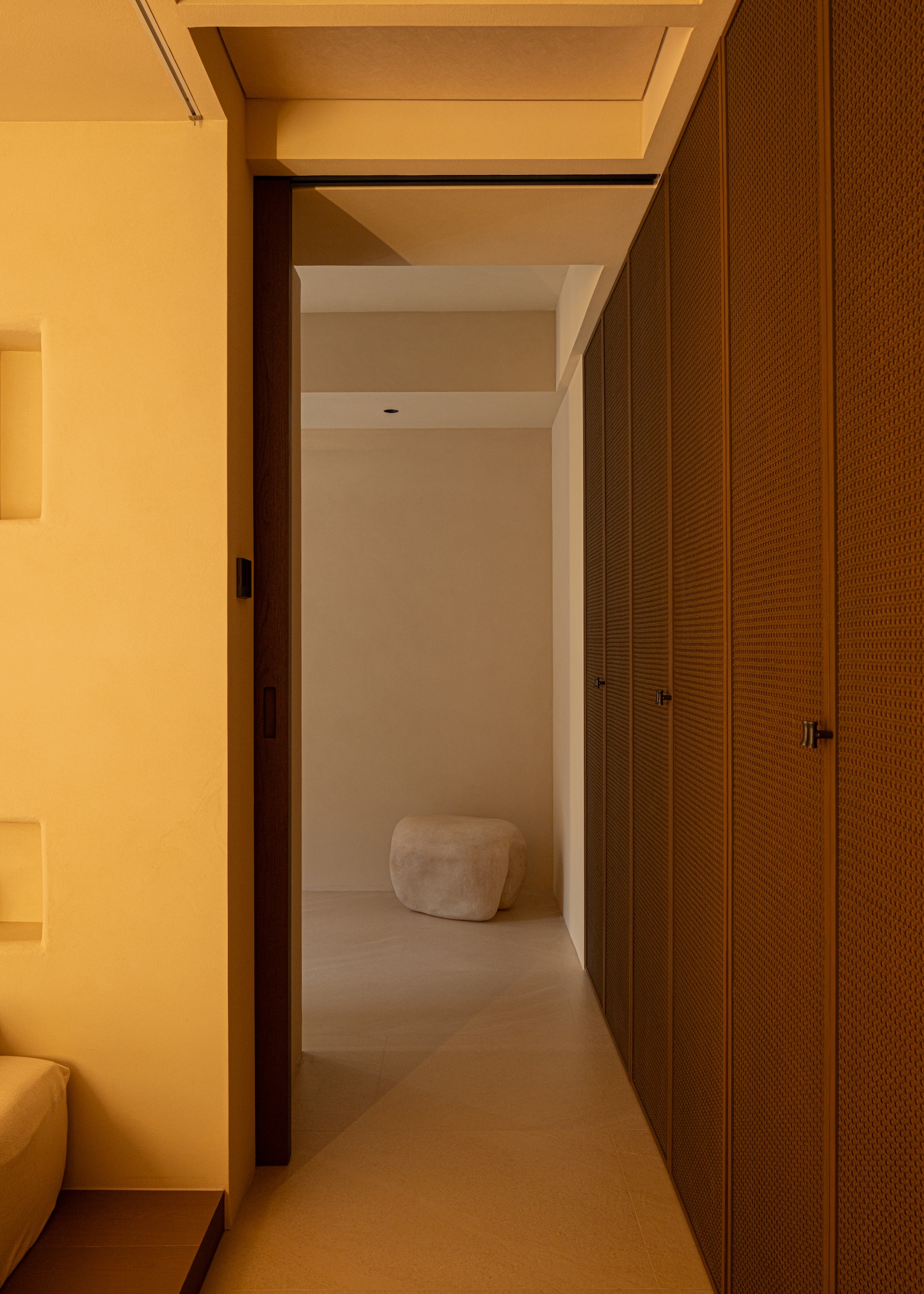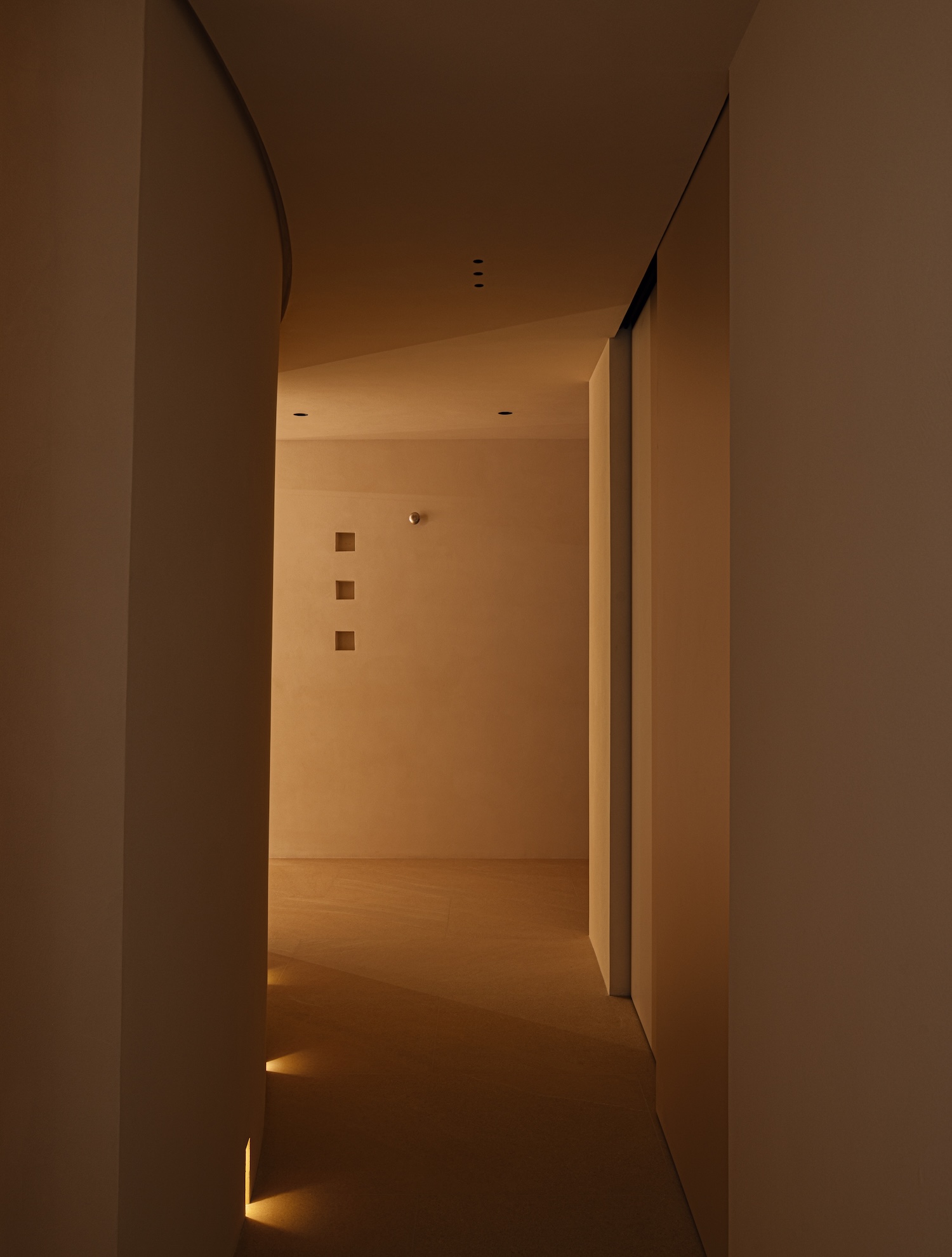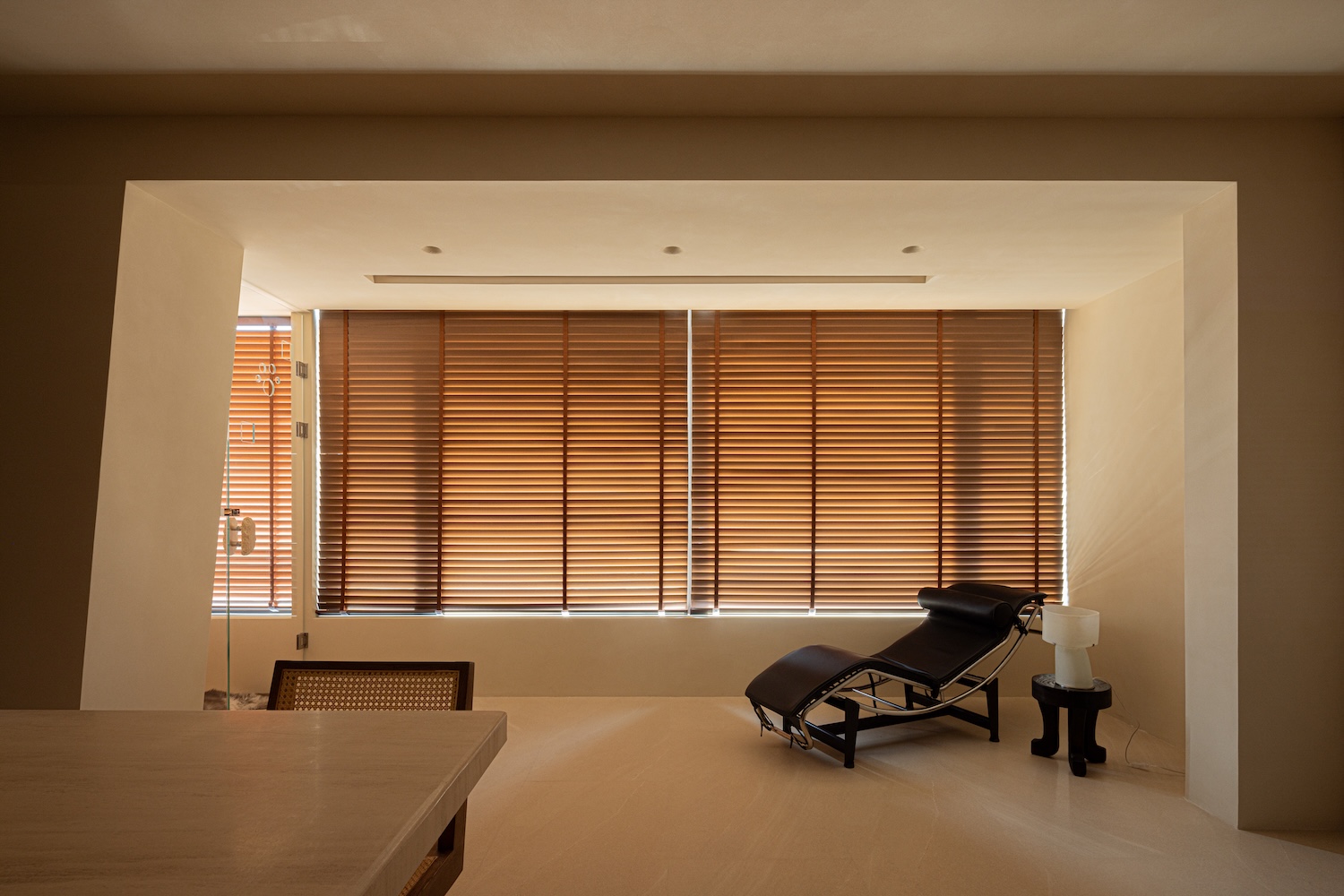
LL House is a minimalist apartment located in Nanjing, China, designed by NON STUDIO. The project begins with a deceptively simple premise – how to make 100 square meters feel boundless – but arrives at something far more radical than spatial optimization. Rather than expanding the footprint through visual tricks or open-plan defaults, NON Studio has carved the apartment into a sequence of thickened enclosures, treating the modest floor area as raw stone to be sculpted rather than empty volume to be filled.
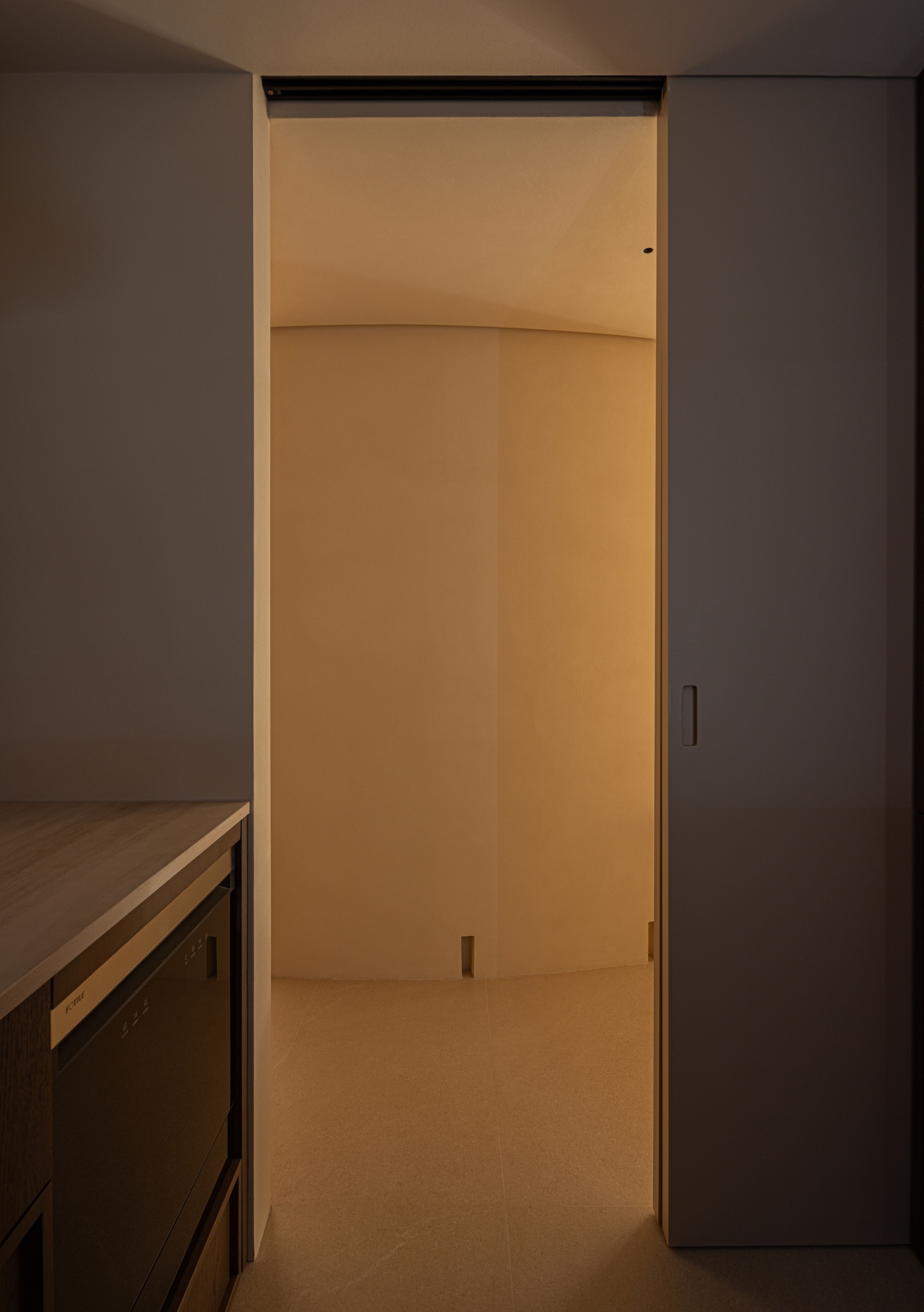
The renovation dismantles the conventional apartment hierarchy entirely. Two corridors and four sliding doors replace fixed walls as the primary organizational elements, creating a residence that reconfigures itself around shifting domestic scenarios. This is not the fashionable flexibility of movable partitions but something more deliberate – a spatial choreography where circulation paths double as emotional thresholds and storage infrastructure disappears into the depth of walls themselves.
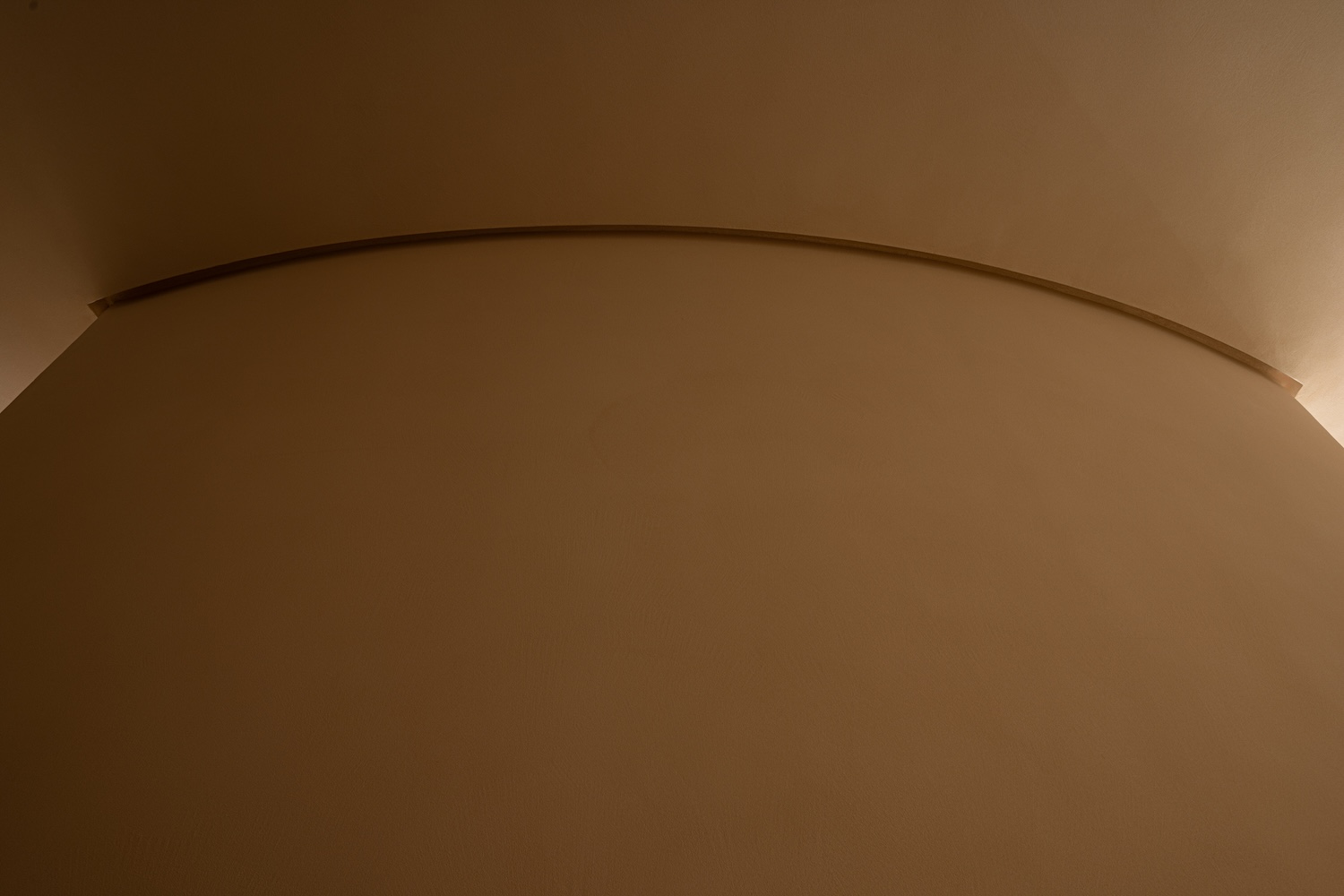
The living room represents the project’s most assertive gesture. NON Studio has stripped the space of its expected program – no sofa-television axis, no conventional furniture arrangement – and installed a sculptural island as its sole anchor. Coarse-textured micro-cement runs uninterrupted across walls and ceiling while sandstone flooring extends the monolithic palette underfoot. The strategy recalls the material austerity of Vincent Van Duysen’s early Belgian interiors, but where Van Duysen’s restraint tends toward cultivated serenity, NON Studio pushes toward something more geological. The granular surfaces catch light at different angles throughout the day, producing subtle shadow fields that make the envelope read as a single carved mass rather than an assembly of applied finishes.
The corridor connecting living areas to the bedroom suite deserves particular attention. NON Studio treats it not as residual circulation space but as a calibrated decompression chamber – a volumetric threshold where light shifts and proportions narrow to slow the body’s movement between public and private zones. This owes something to the spatial sequencing found in traditional Japanese residential architecture, where transitional passages calibrate the psychological distance between exterior and interior worlds.