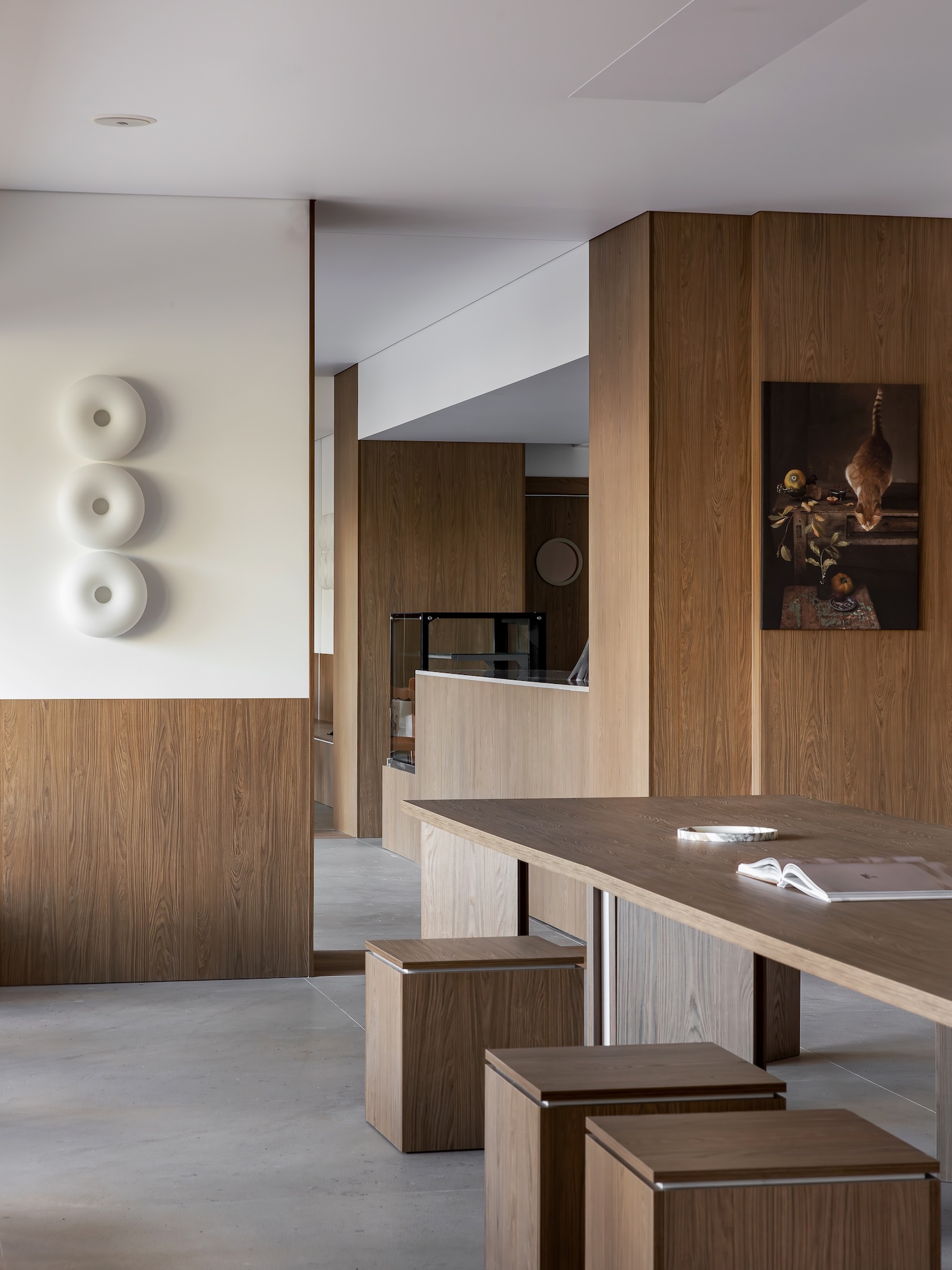
MARKS is a minimalist cafe located in in Minsk, Belarus, designed by Anna Lazar. Reading in public has always required specific furniture, and the 142 square meter interior treats that requirement as its organizing problem rather than as decoration, building a room where the surfaces that hold a book, a cup, and a laptop are the same surfaces that give the space its character.
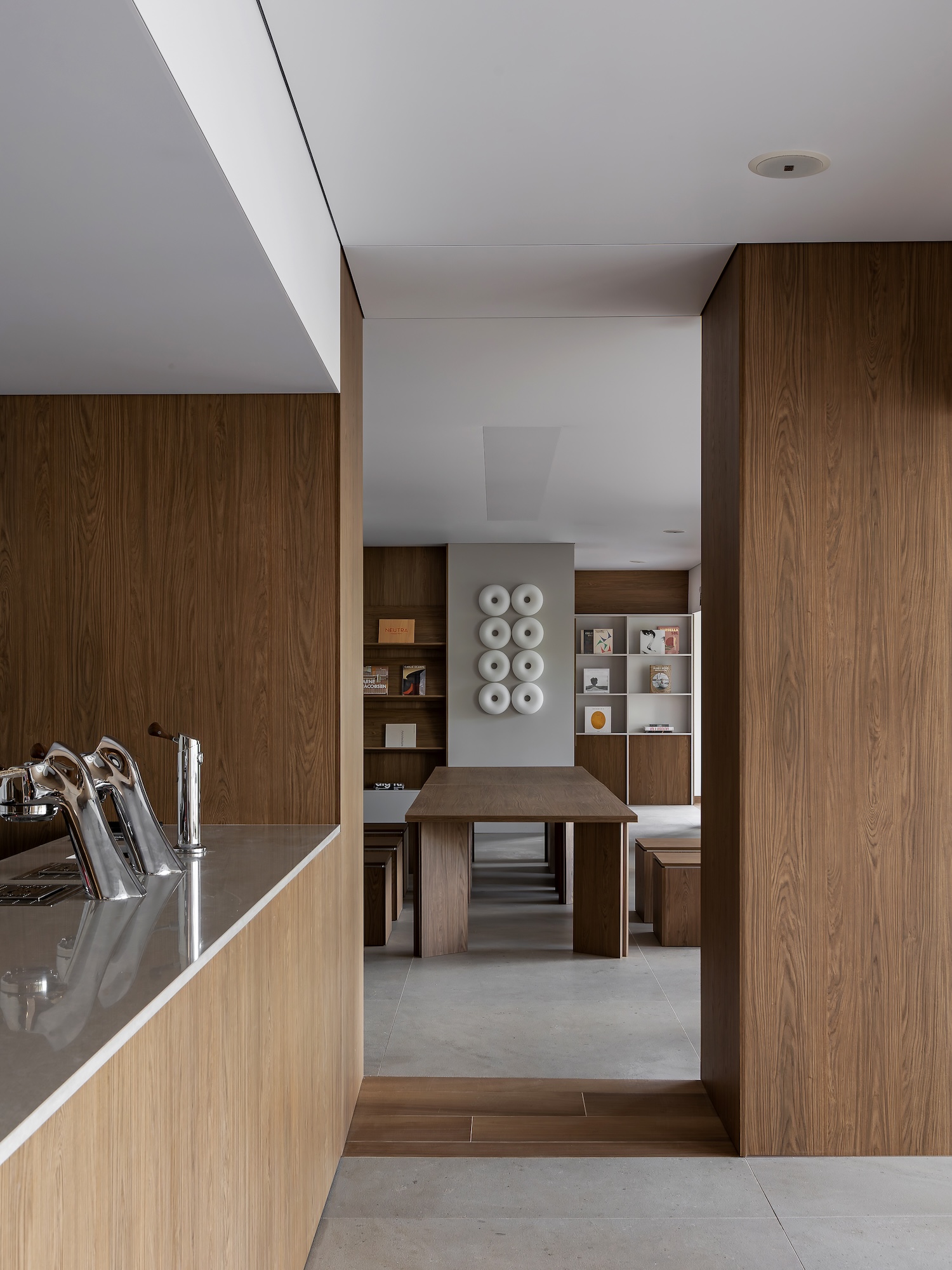
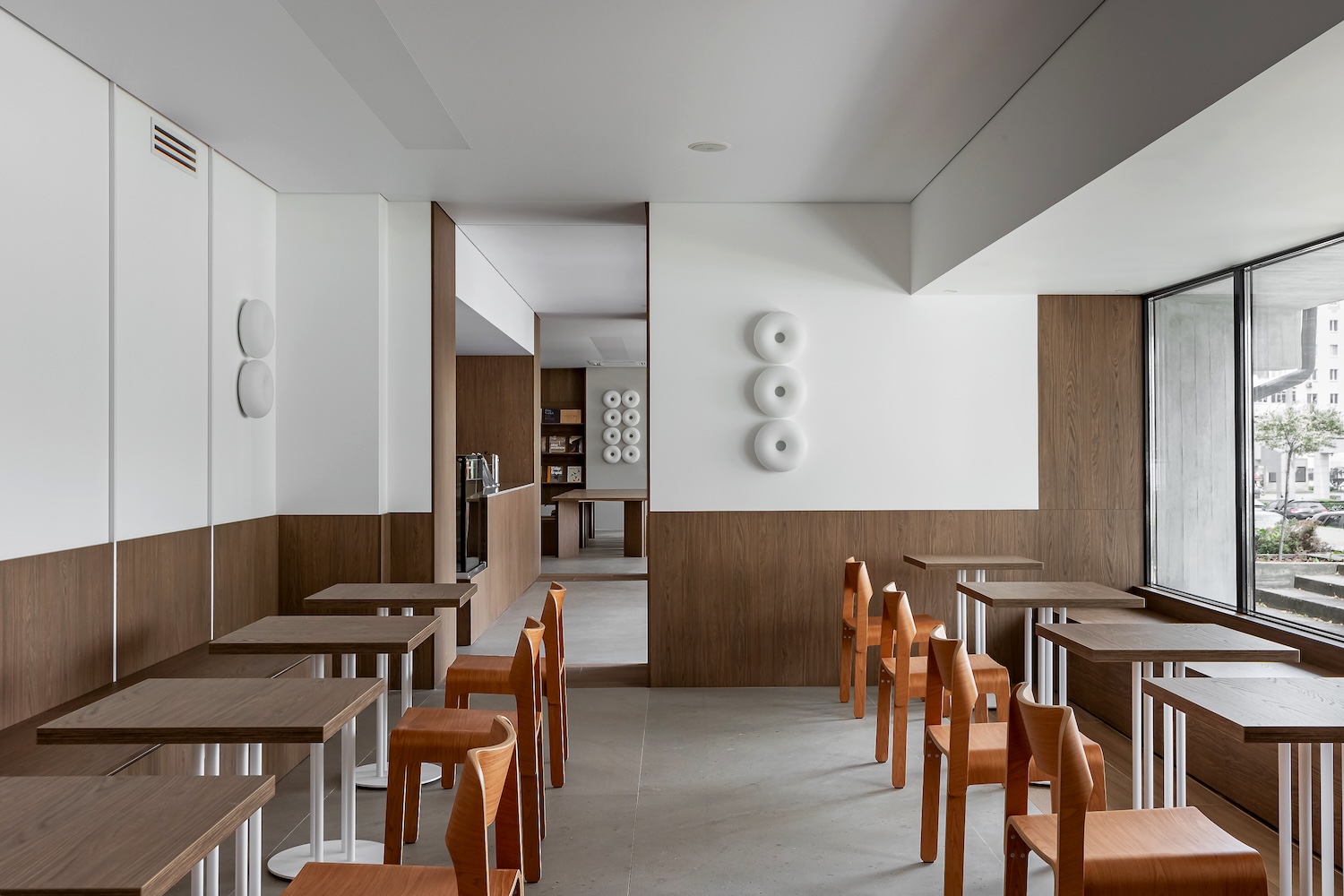
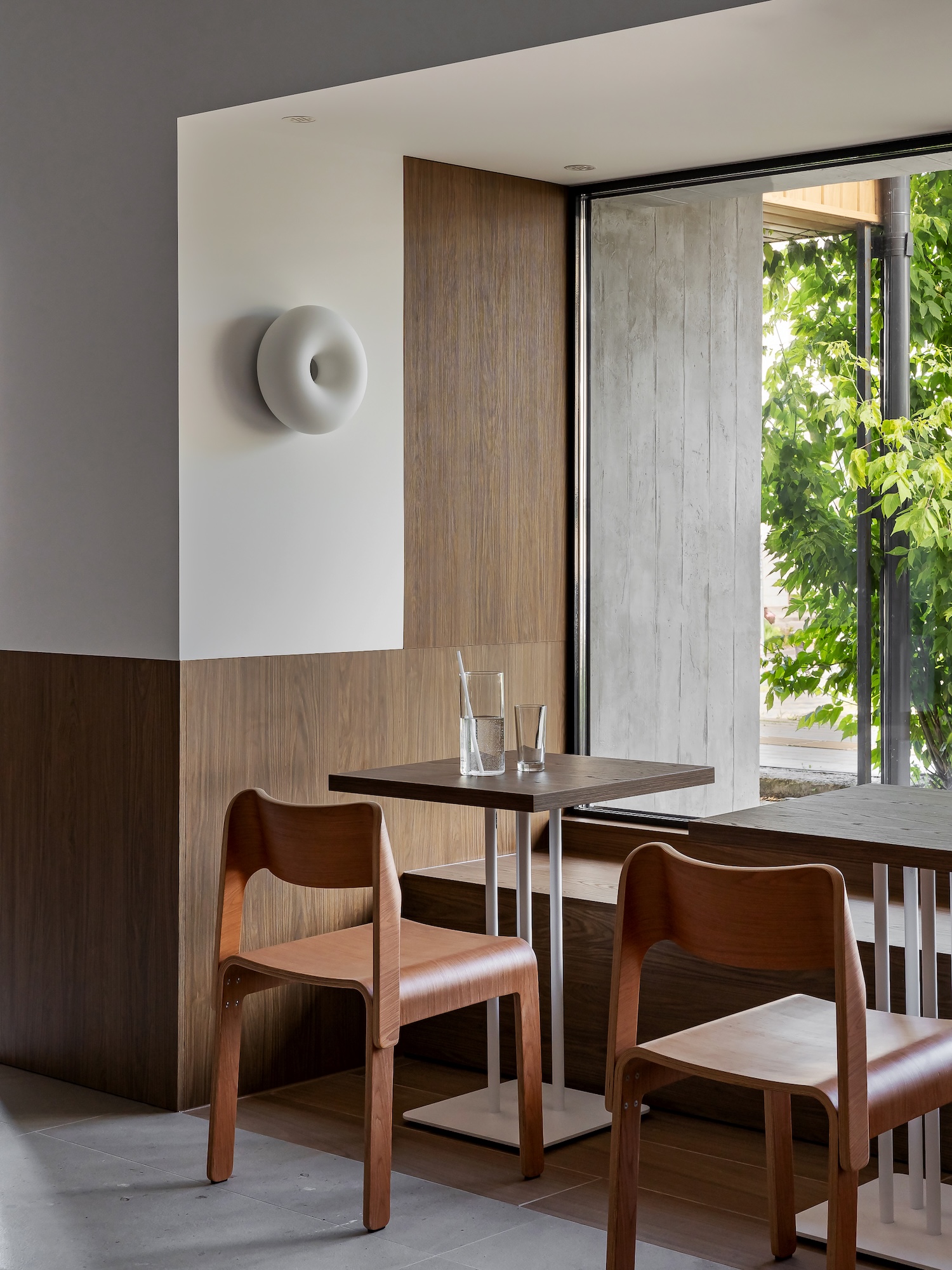
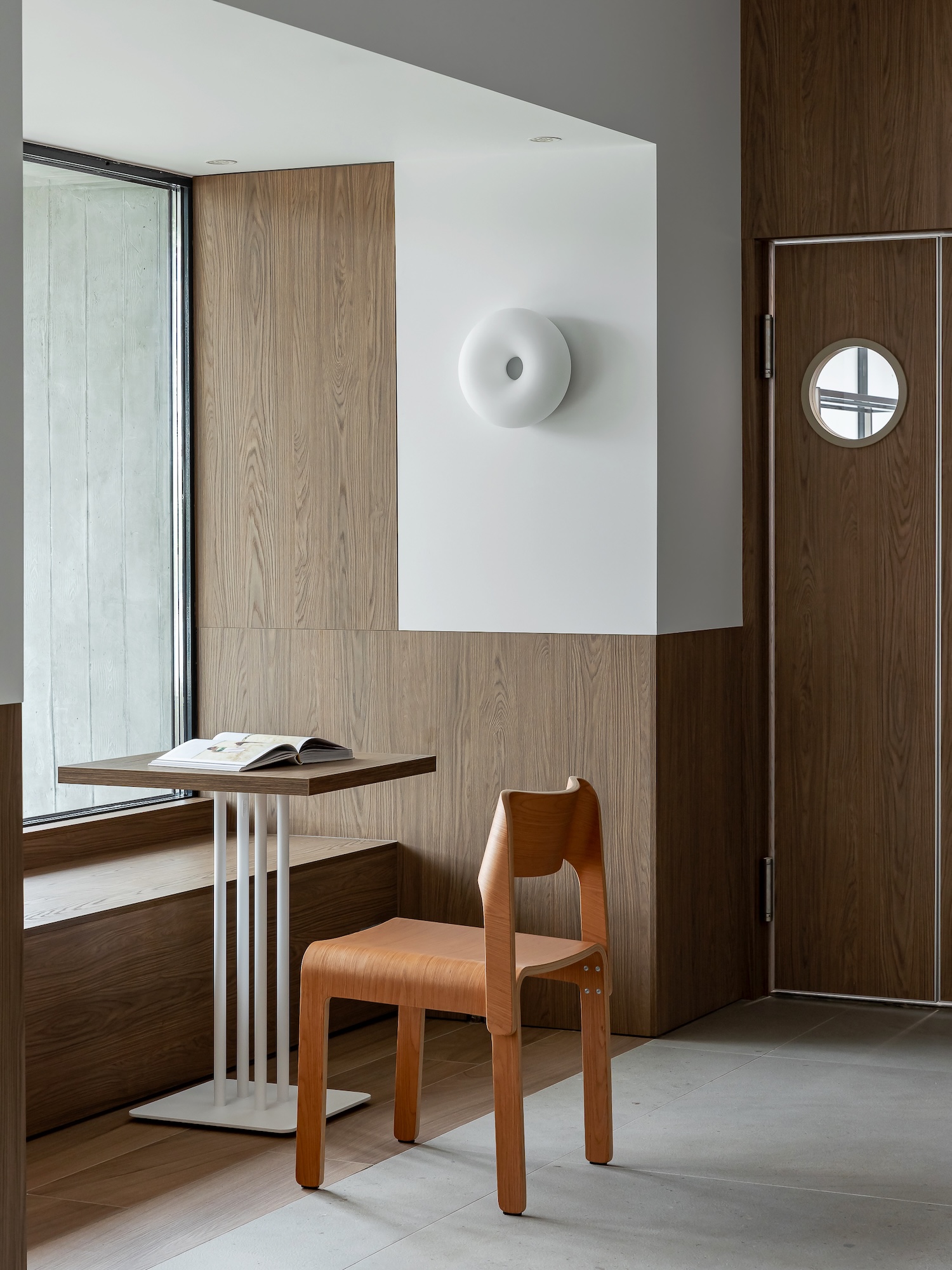
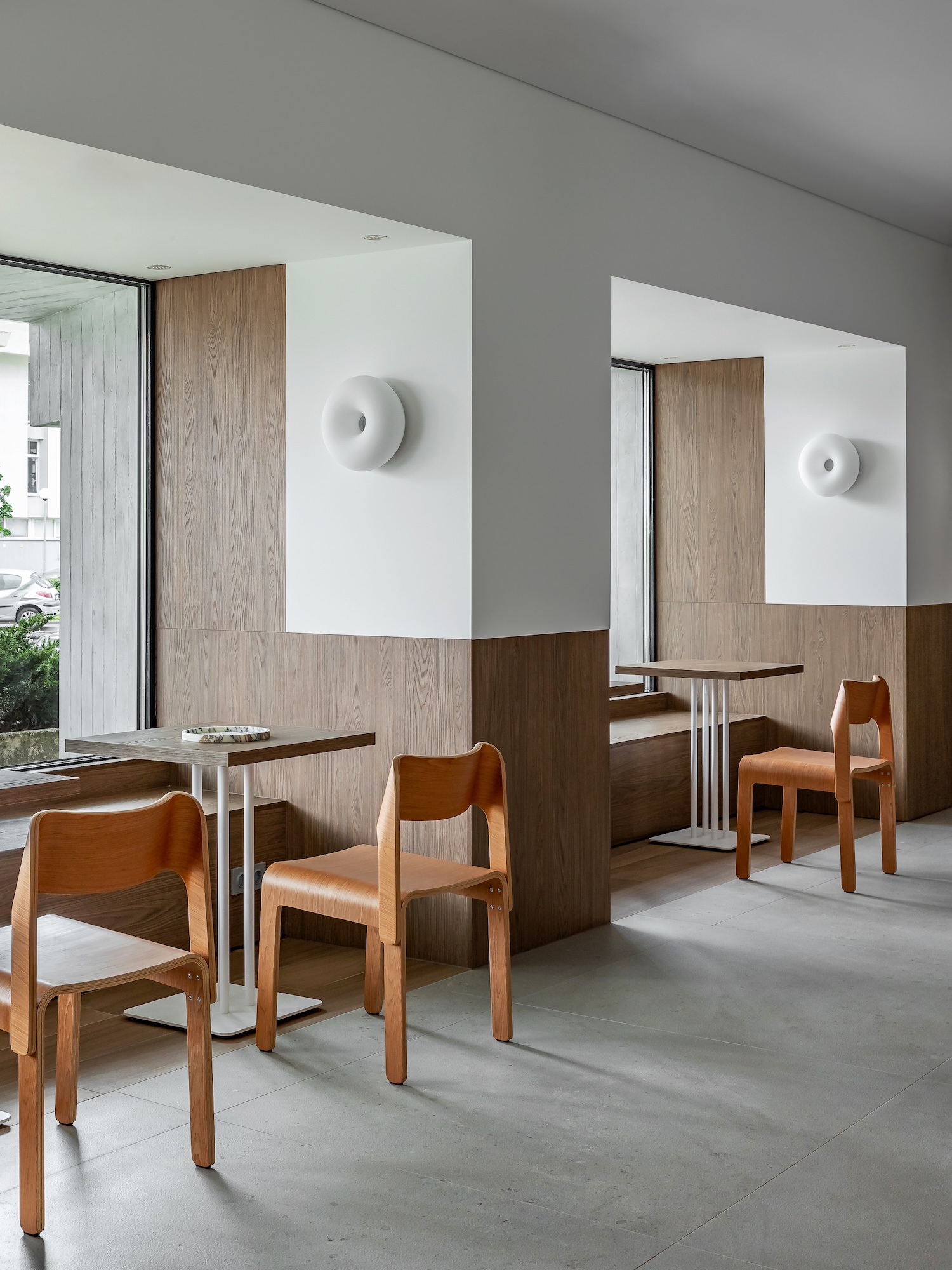
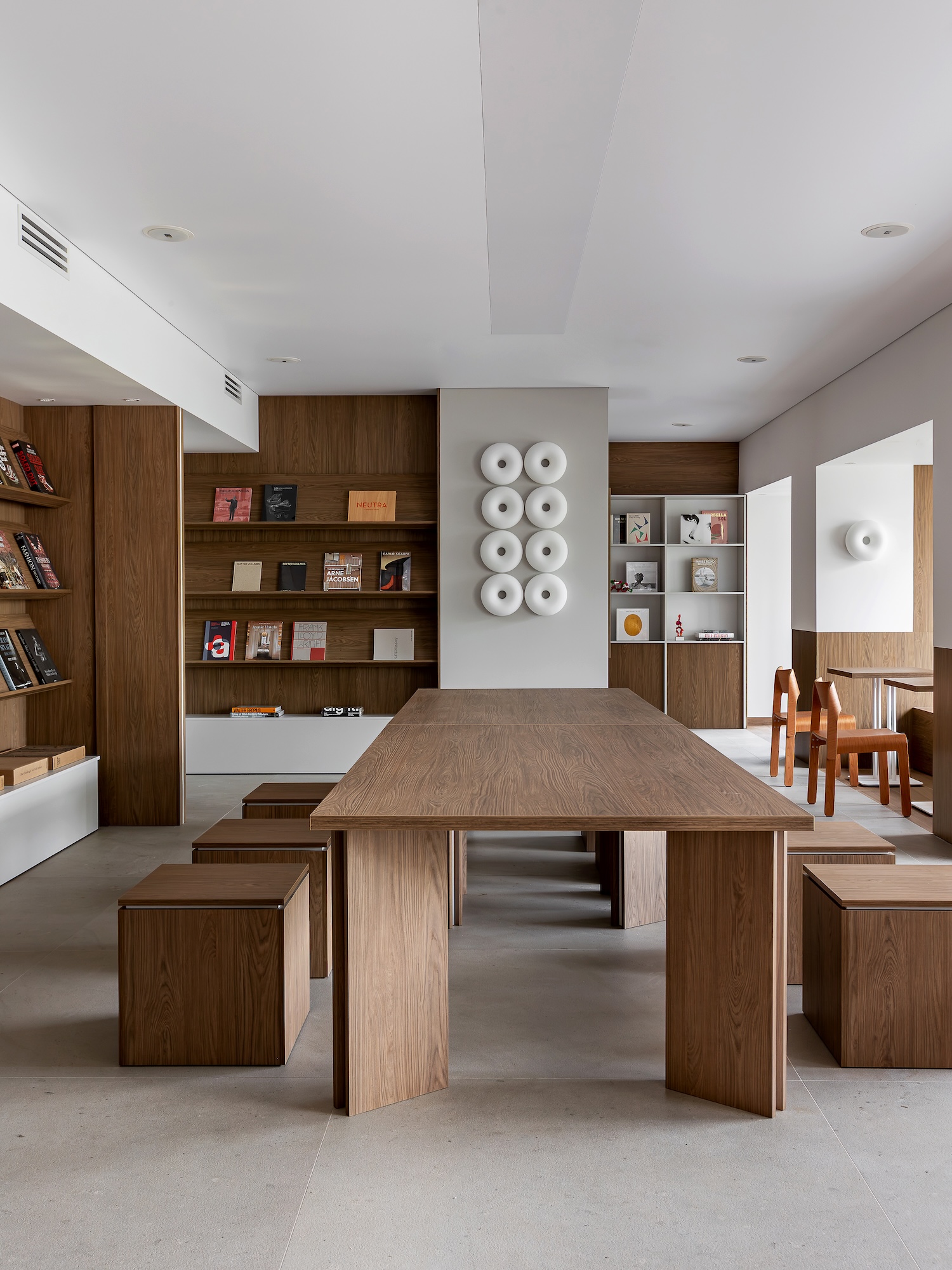
Wood runs continuously through walls, shelving, benches, doors, and tabletops, and the decision to carry one material across every plane collapses the usual distinction between architecture and joinery. Vertical grain on the wall panels reads as a warm field rather than as individual boards, and because the shelving is cut from the same stock, the books appear to sit inside the wall instead of on brackets attached to it. White painted surfaces above and between the woodwork keep the volume from turning heavy, holding daylight and pushing it back down onto the timber. Underfoot, porcelain stoneware from Fioranese and Coem introduces a cool mineral register, and the contrast between a floor that stays at ambient temperature and wood that warms under the hand is doing real work in how the room feels across a long visit.
Seating is sorted by social temperature. Small tables against the glazing produce the solitary condition that a book requires, oriented toward the street so that the reader has somewhere to look up to. The large communal table at the center borrows directly from the public reading room, a typology refined in Scandinavian library design through the middle of the last century, where a single long surface shared by strangers created a specific kind of quiet company. Placing that table in a café rather than an institution shifts its meaning without diluting it.
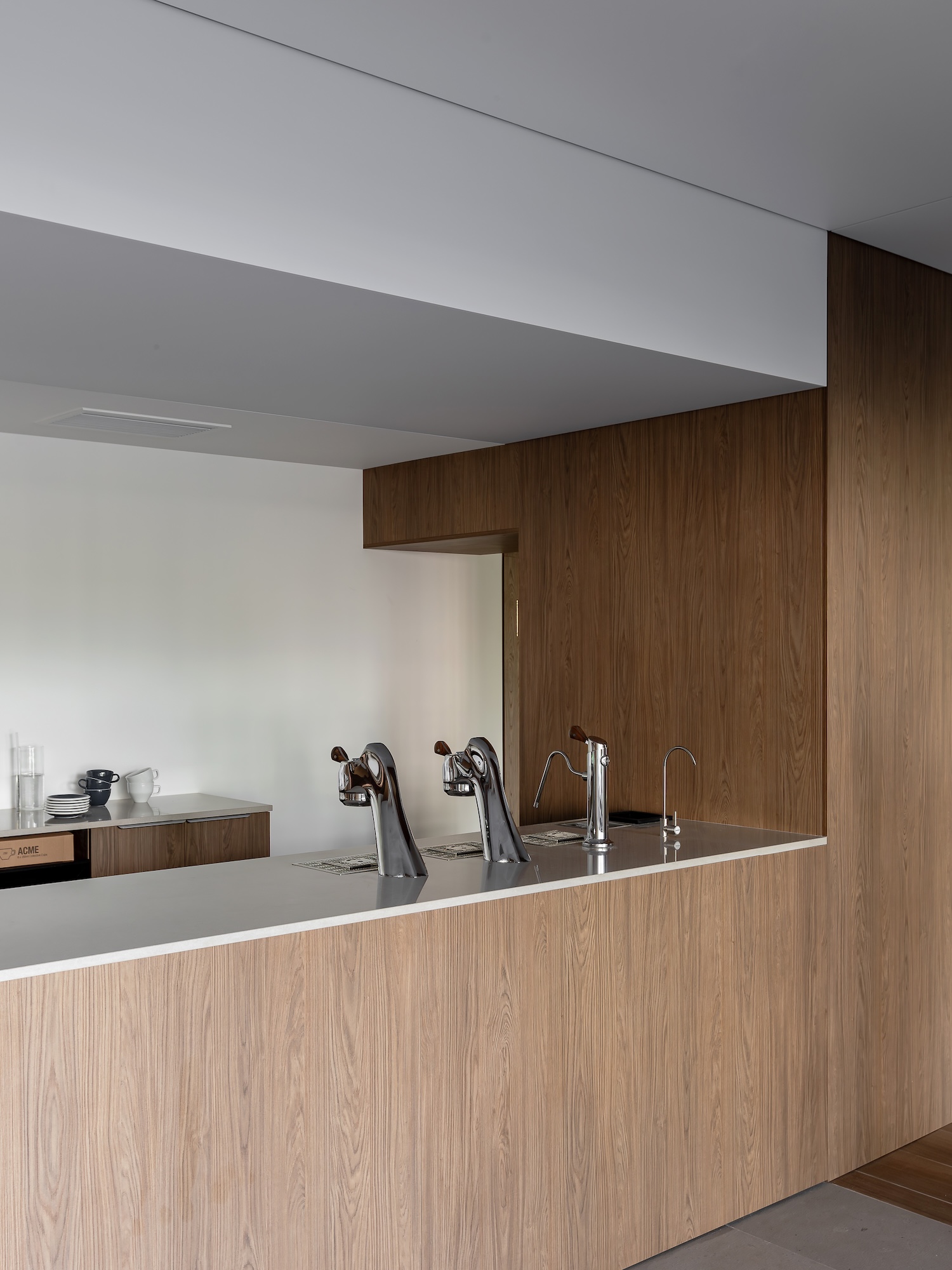
The bar depends on the Modbar system, which relocates the espresso hydraulics beneath the counter and leaves only the taps above it. Removing the machine chassis eliminates the visual wall that normally separates barista from customer, and what remains visible is the extraction itself along with the hands controlling it. For a room built around slow attention, exposing that process rather than concealing it behind stainless steel is consistent with everything else happening here.