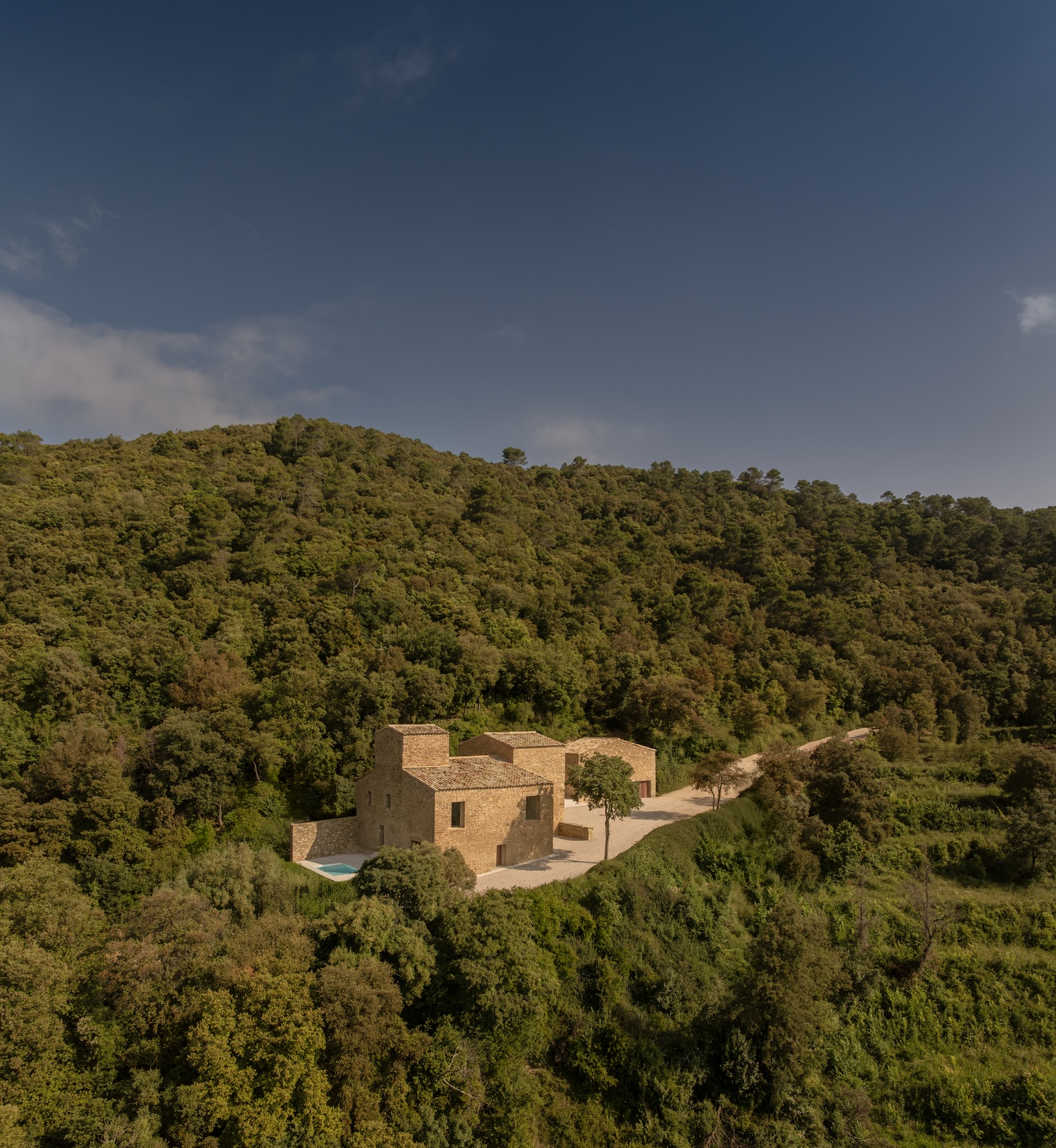
Mas Cadalt is a minimalist residence located in Canet d’Adri, Spain, designed by an Fran Silvestre Arquitectos. This abandoned farmhouse restoration in Girona’s Serrat de la Cadalt demonstrates how traditional rural buildings can adapt to contemporary needs through selective intervention preserving original volume and typology while transforming only what is essential. The project born from understanding before intervening addresses British couple relocating from London to begin new chapter surrounded by trees, calm, and light while maintaining professional activities in exceptional natural setting.
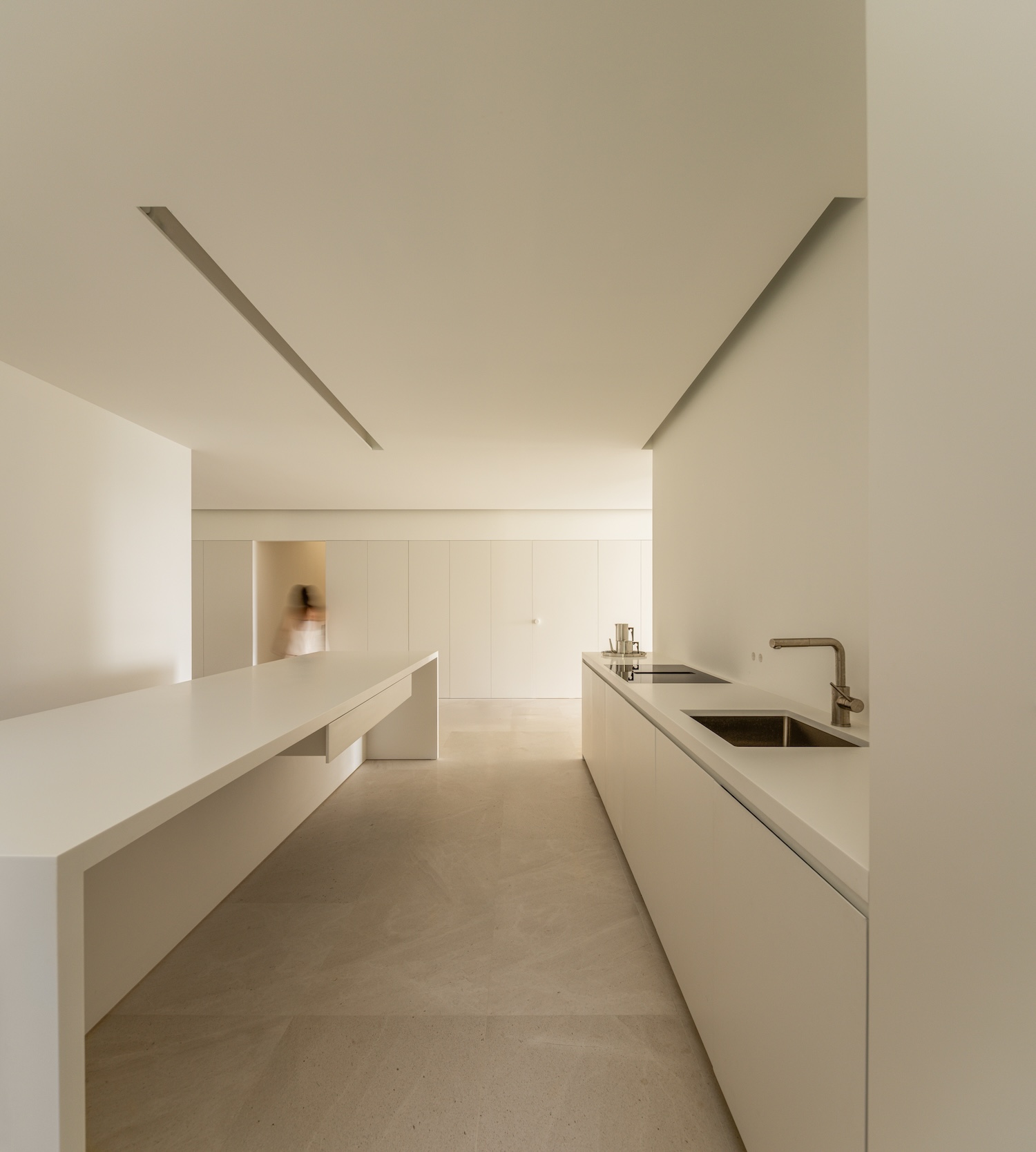
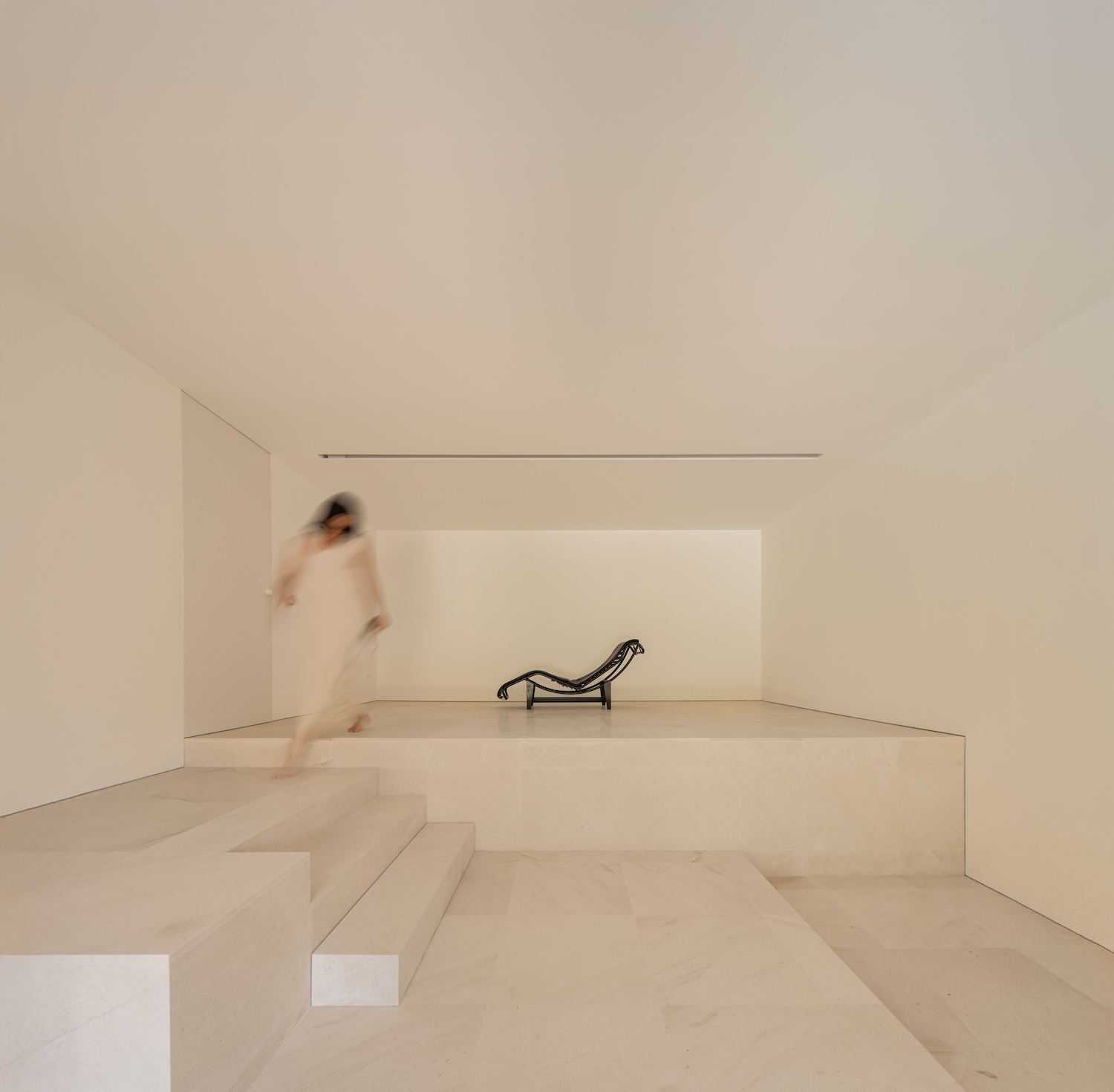
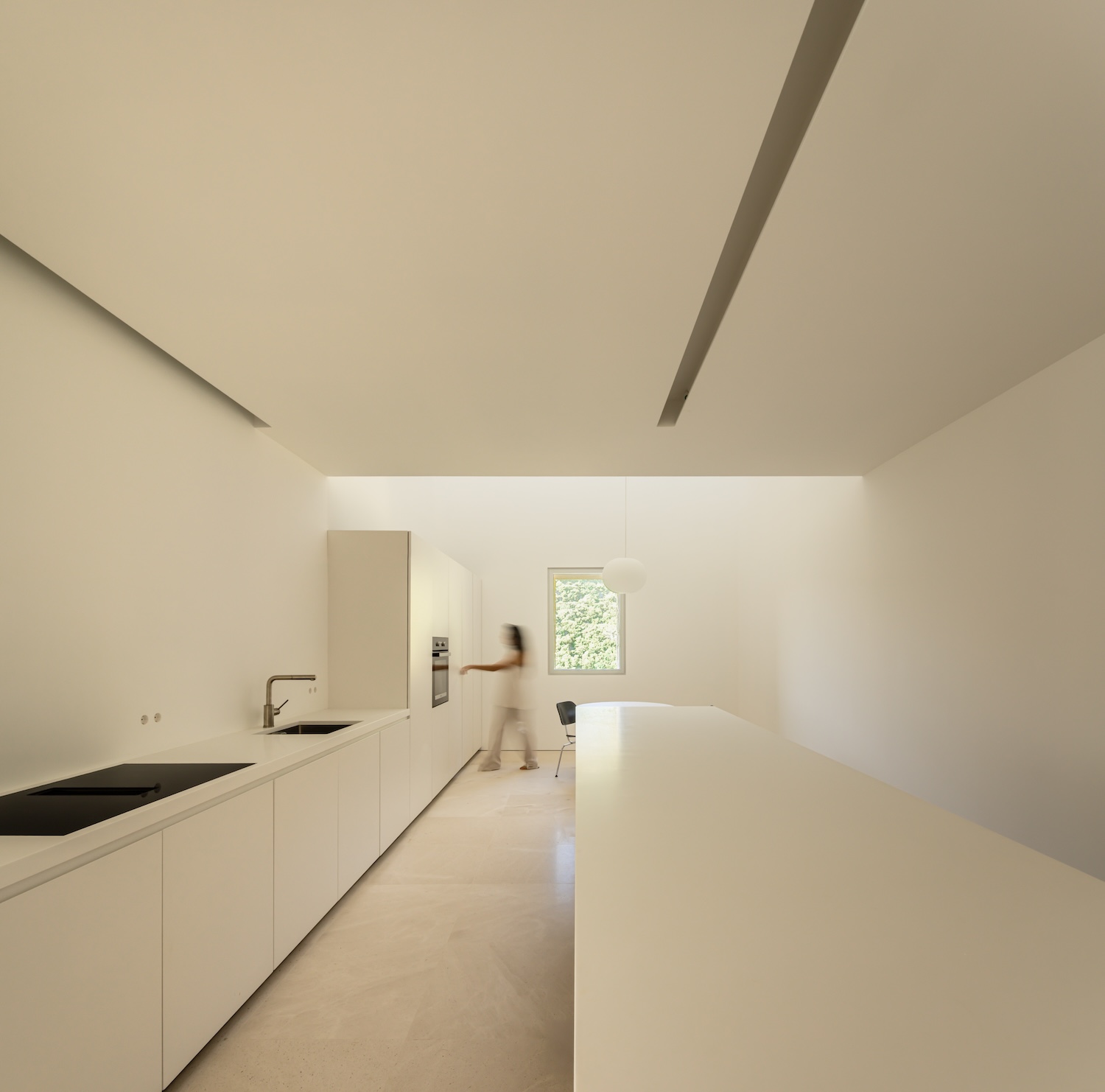
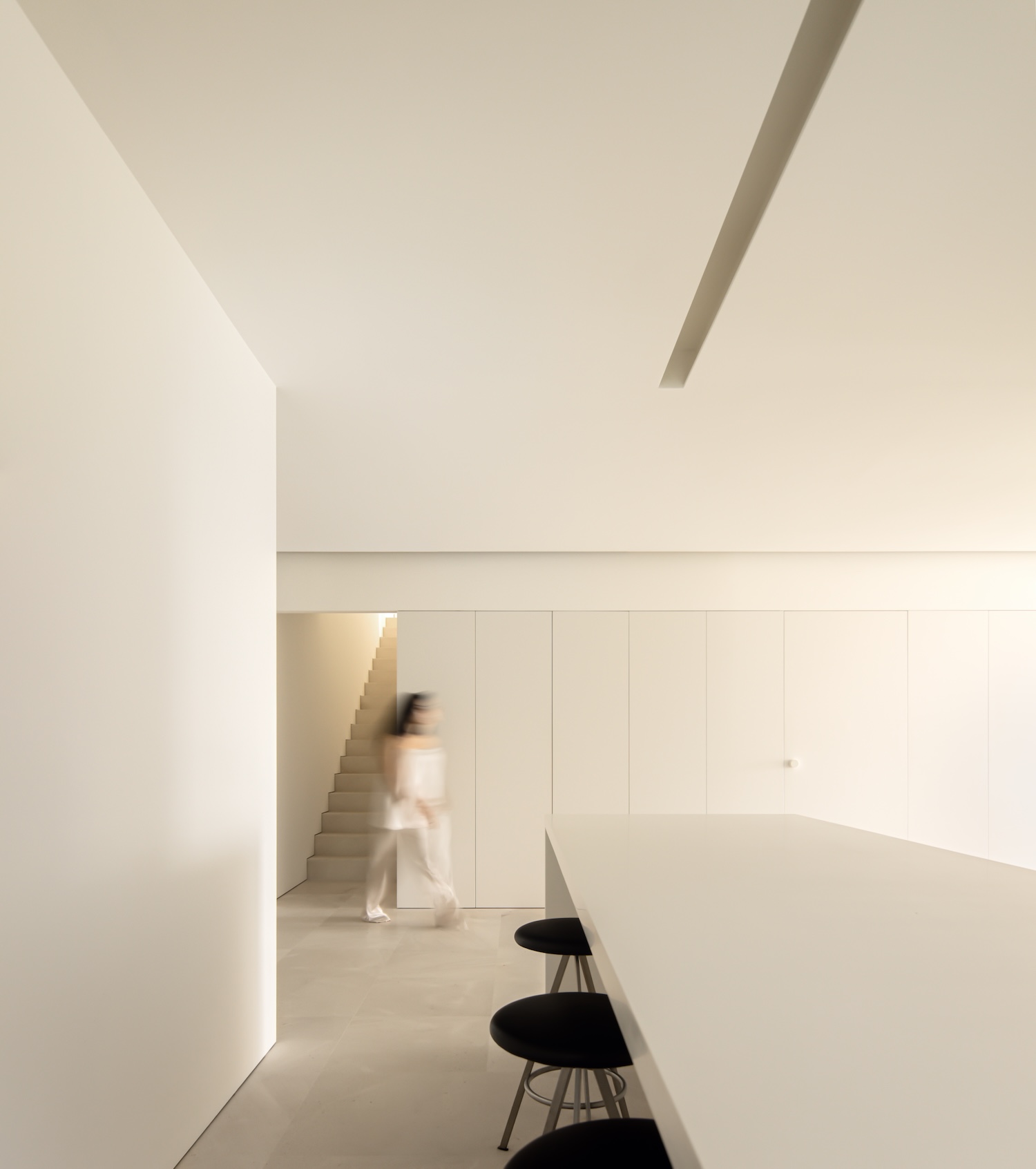
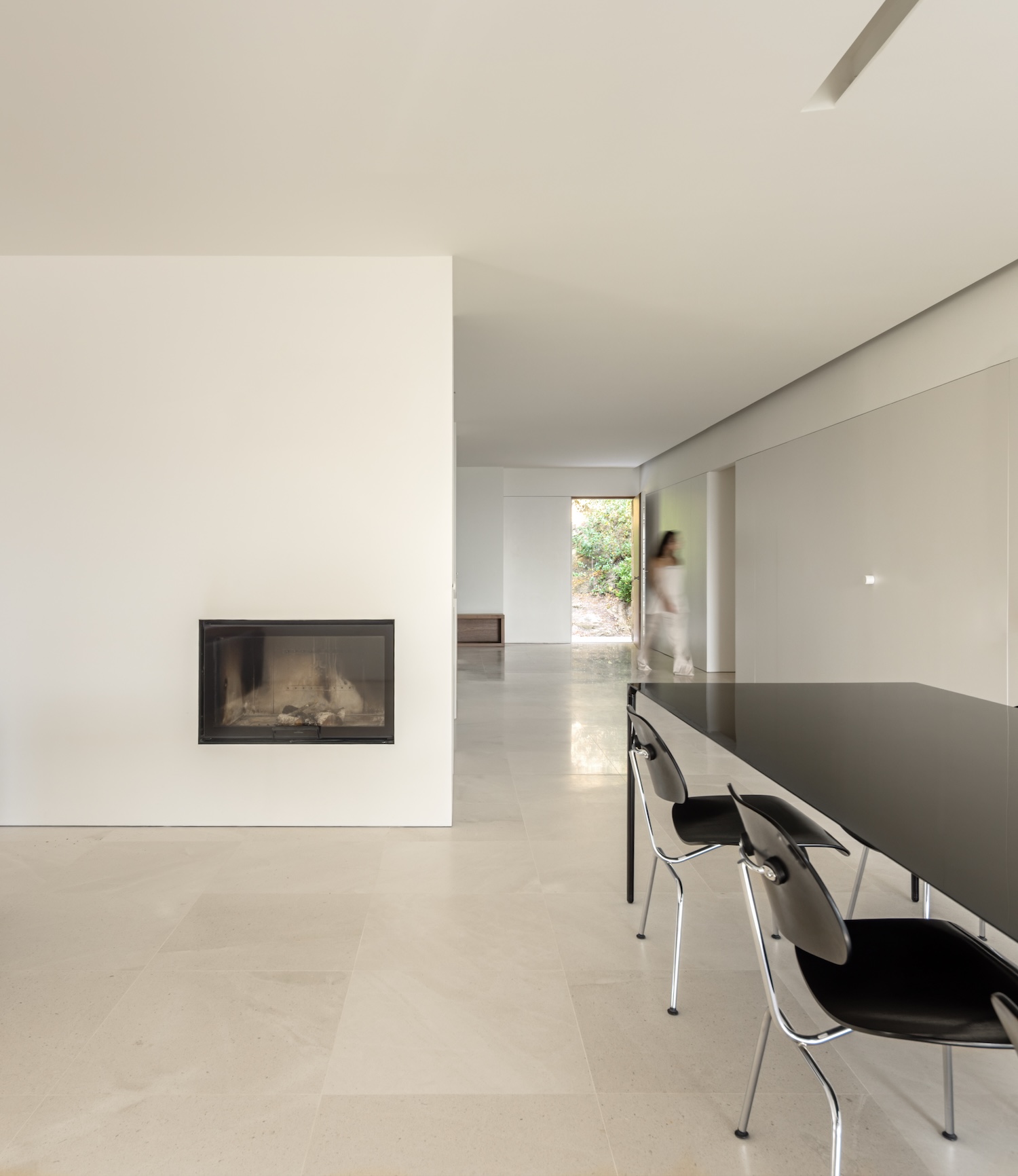
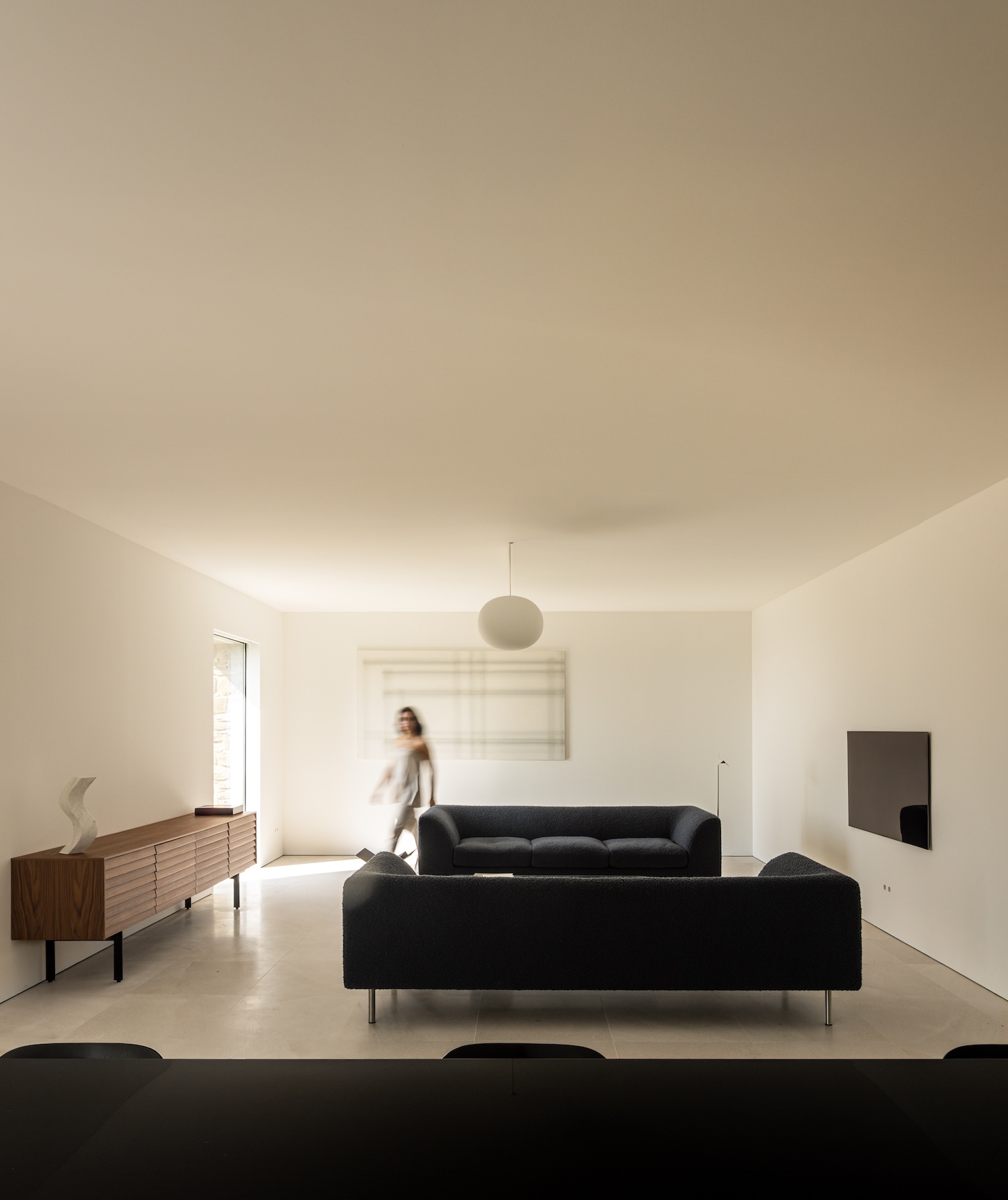
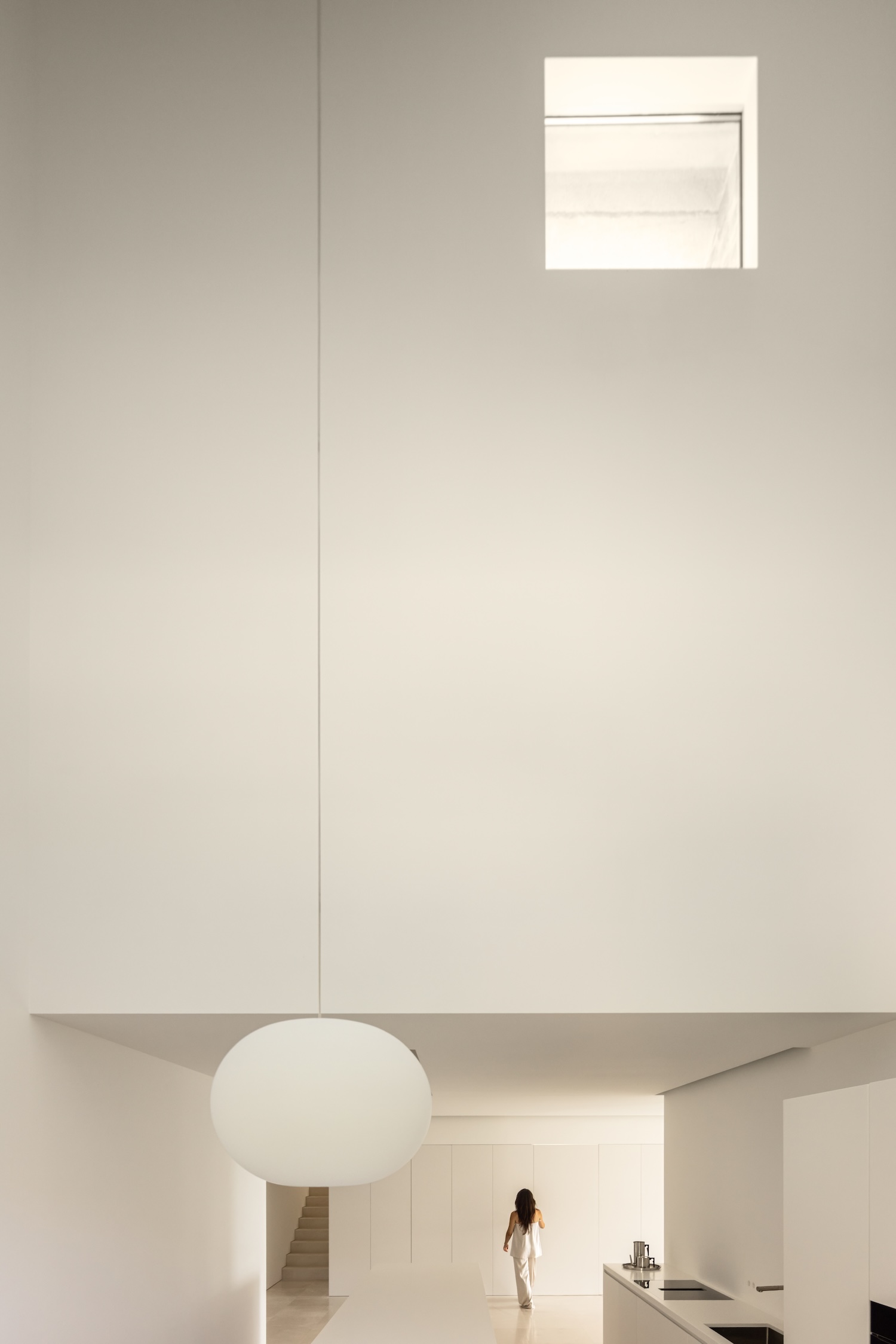
On entrance level, the kitchen incorporates triple height of existing tower while living room orients toward Sierra de la Cadalt views. Upper floor arranges two bedrooms while lower level reinterprets former animal space as multipurpose room. Adjacent volume once housing farming equipment repurposes as garage with upper-floor studio where designer Terence Woodgate now carries out his work, demonstrating comprehensive site utilization where ancillary agricultural structures receive contemporary functions appropriate for creative professional occupancy.
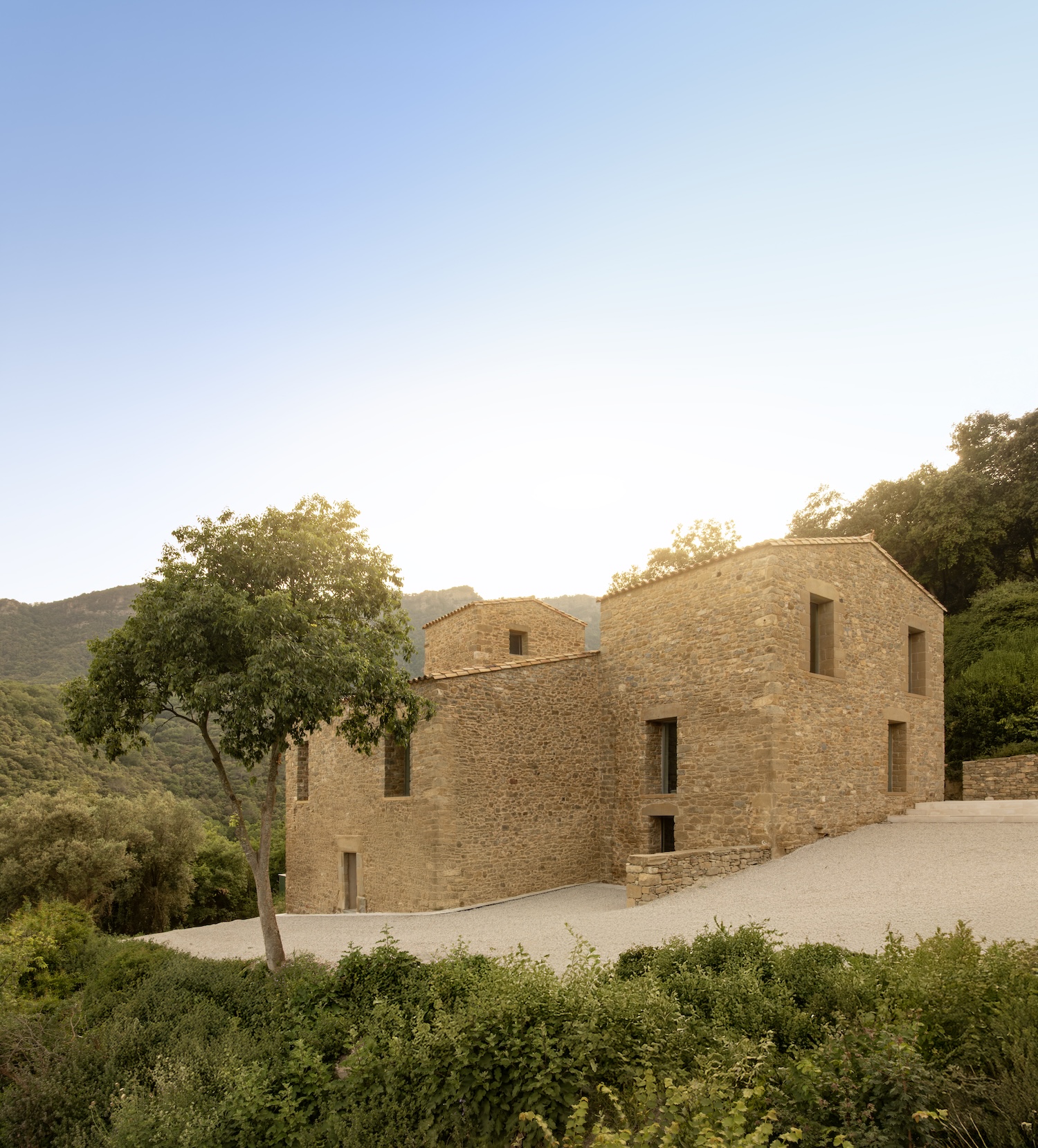
The traditional Girona farmhouse construction system common throughout Empordà region bases on load-bearing walls made of irregular limestone masonry bonded with lime mortar. Corners, lintels, and jambs were built with finely cut ashlar blocks providing structural precision and stability while interior walls typically finished with lime and sand plaster topped with slaked lime layer. This finish made cleaning easier and improved interior space brightness, demonstrating how historical construction techniques addressed functional requirements through material properties rather than mechanical systems.
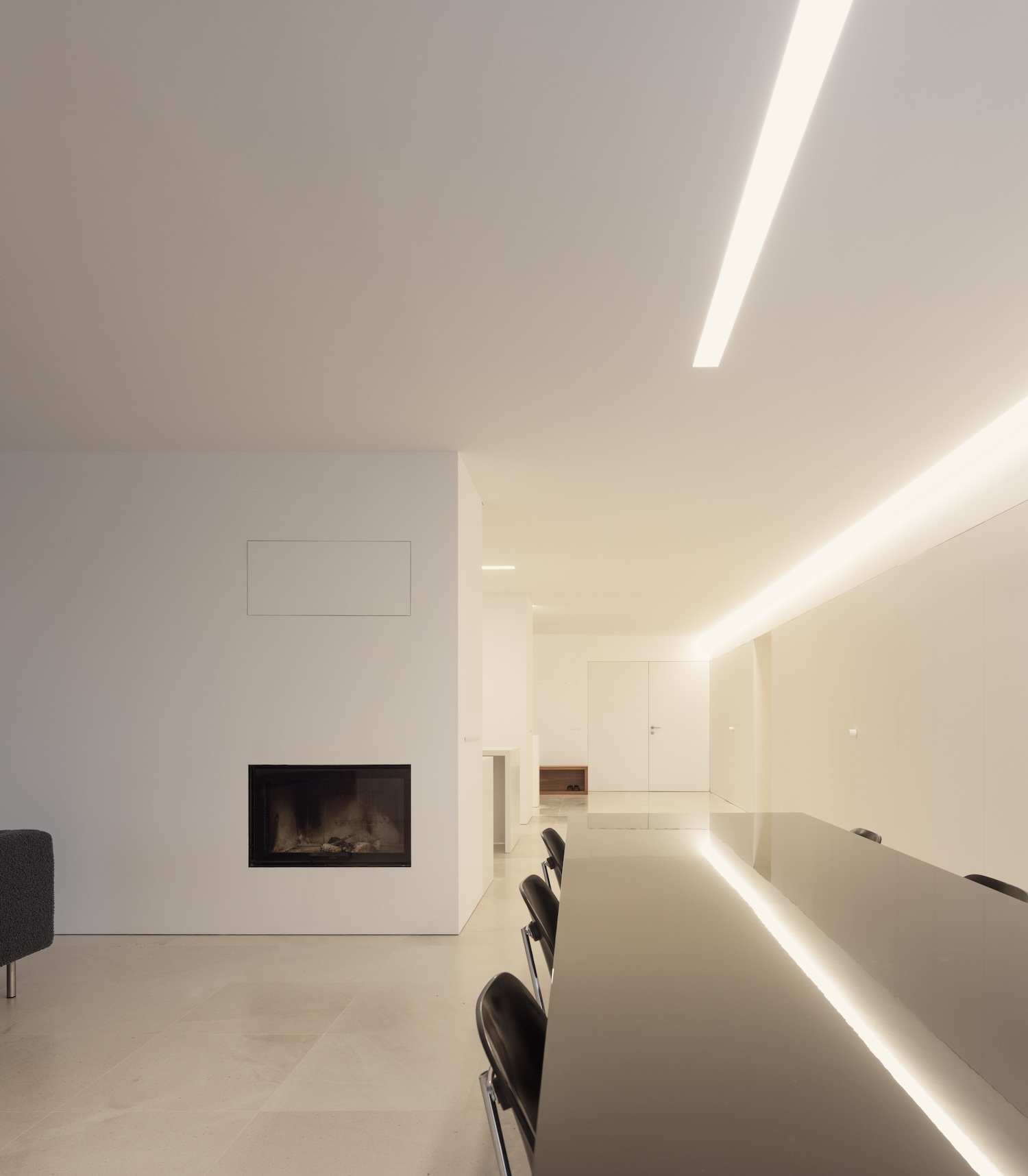
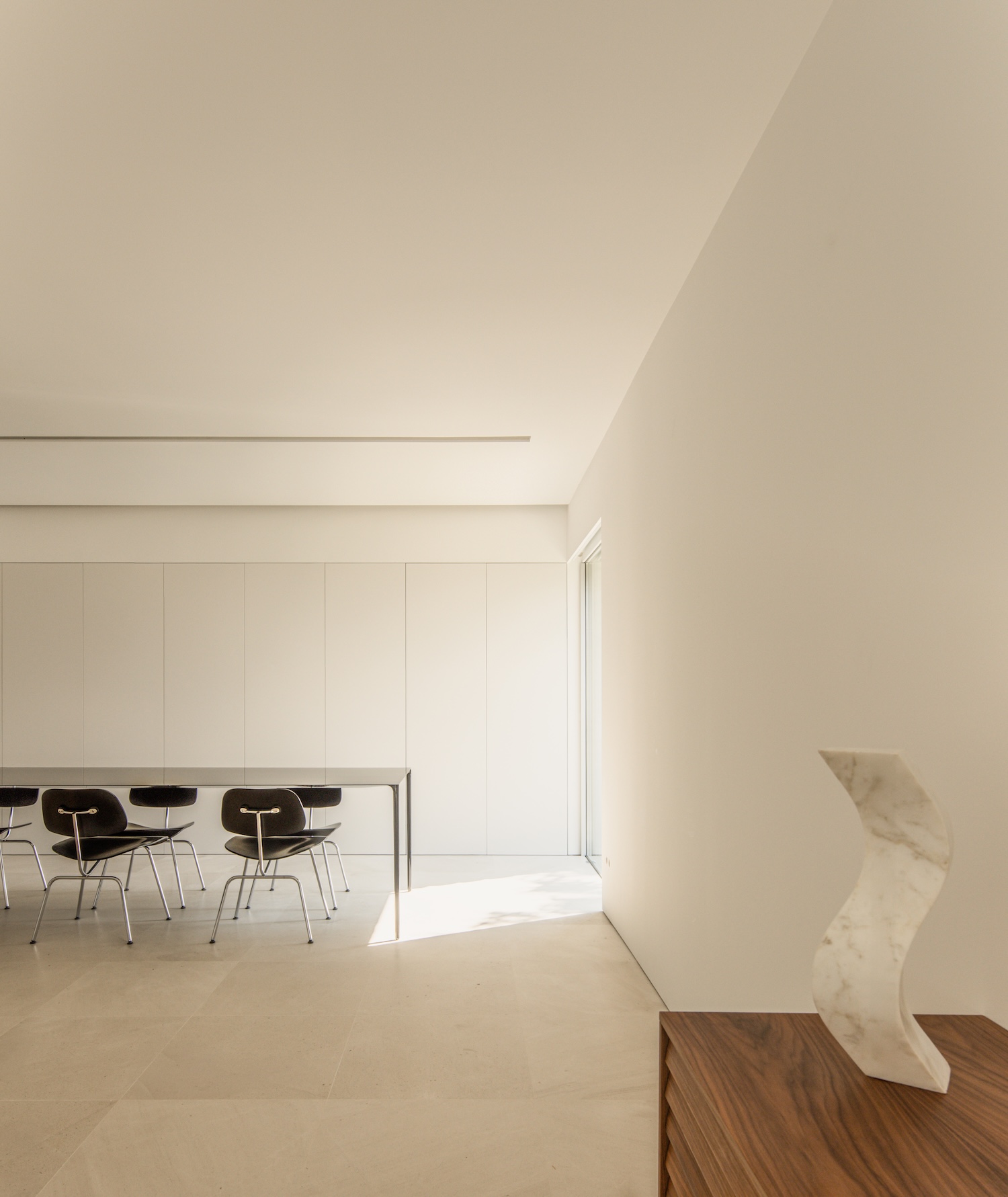
In current intervention, after reconstructing and repairing limestone bearing walls, cork-based thermal insulation layer was added ensuring better energy performance. Inside, second skin creates increased brightness, improves maintenance conditions, and discreetly integrates all necessary contemporary living systems while limestone flooring maintains material coherence throughout project. This layered approach demonstrates how historic building renovation can improve thermal performance without compromising structural integrity or external character.
The interior conceived as space suspended between architecture and product design features electrical outlets flush with walls, construction elements meeting at single point, and every decision seeking honesty with intervention era creating precise dialogue between existing and contemporary. This attention to detail demonstrates how renovation can acknowledge temporal layers rather than attempting seamless integration that might falsify building’s evolutionary history.