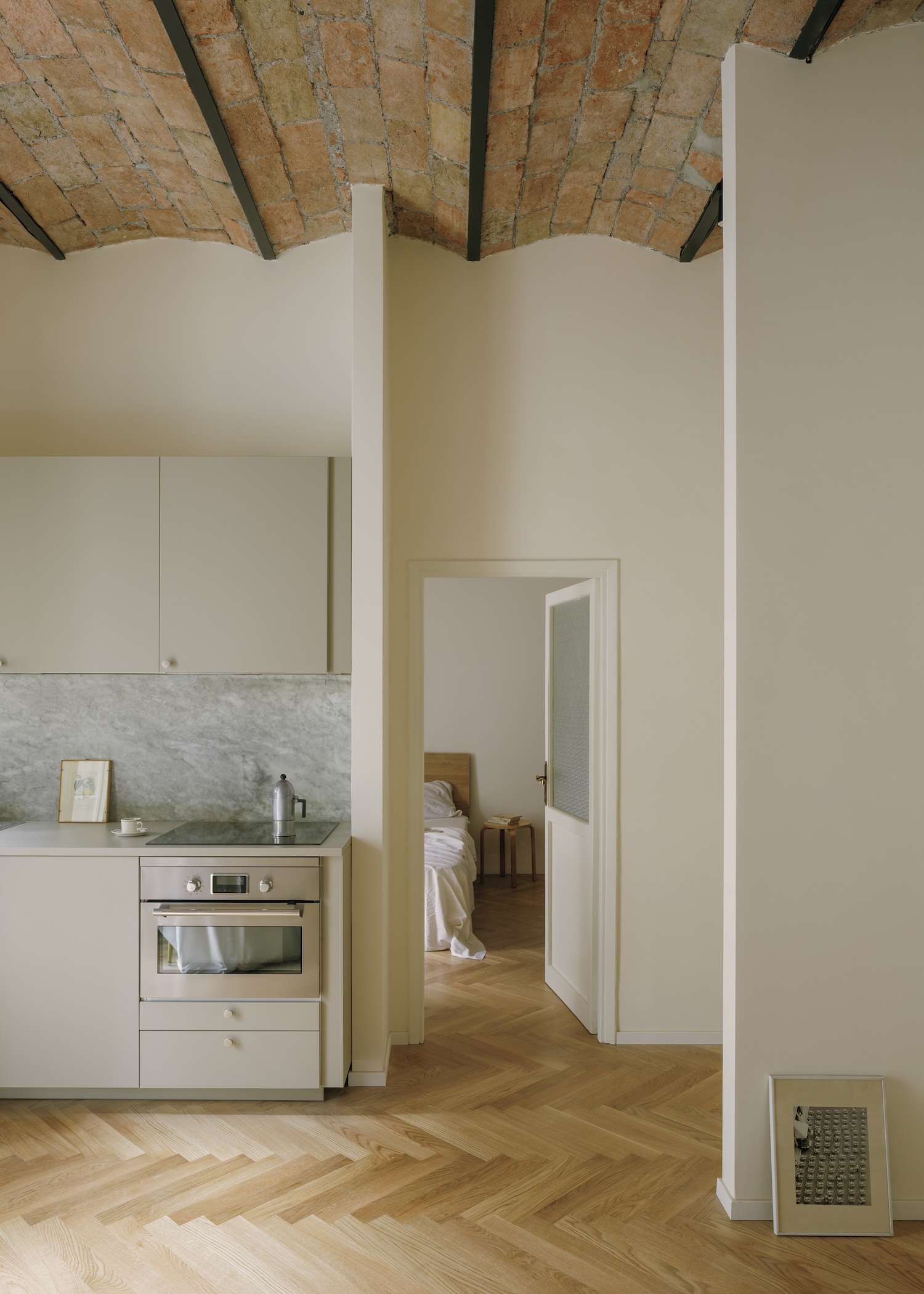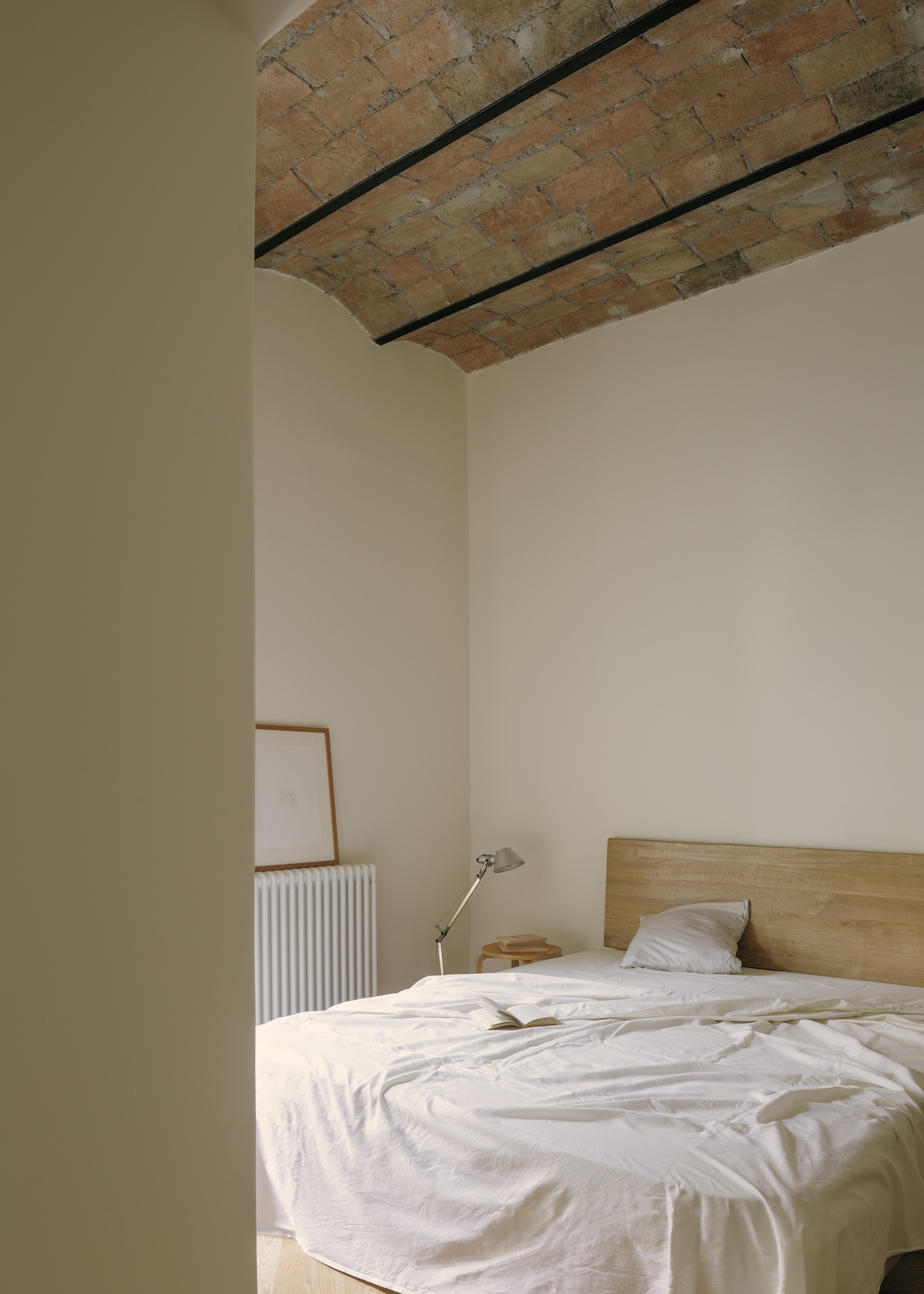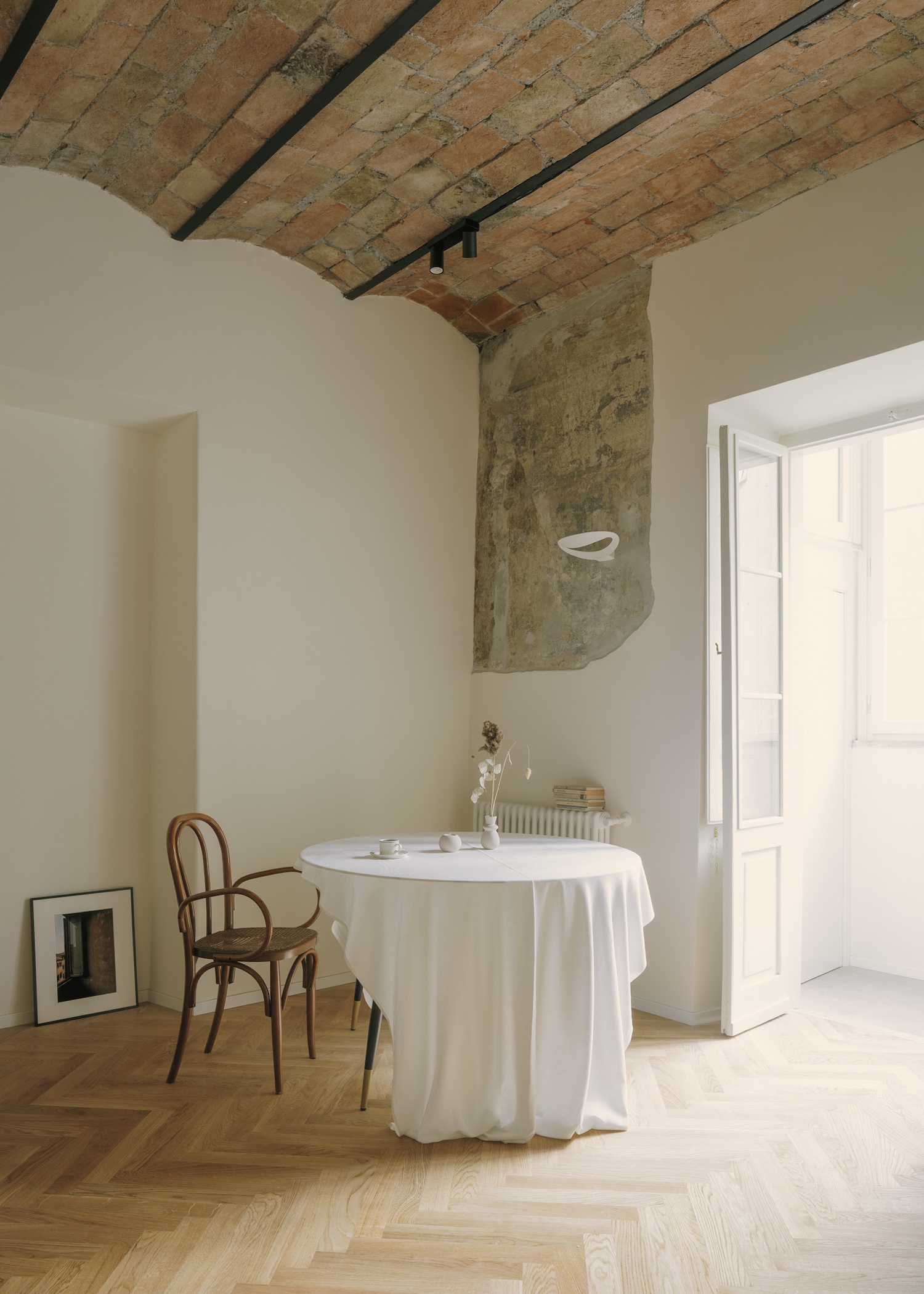
MH Apartment is a minimalist apartment located in Rome, Italy, designed by Incognito Studio. At just 38 square meters, the project confronts a question that has preoccupied Roman architects for centuries – how to honor the material weight of historic construction while making space feel generous enough for contemporary life. Incognito Studio’s answer is not addition but subtraction, a strategy that recalls the careful restraint of Italian rationalism’s domestic interiors, where every gesture had to justify its presence against what already existed.
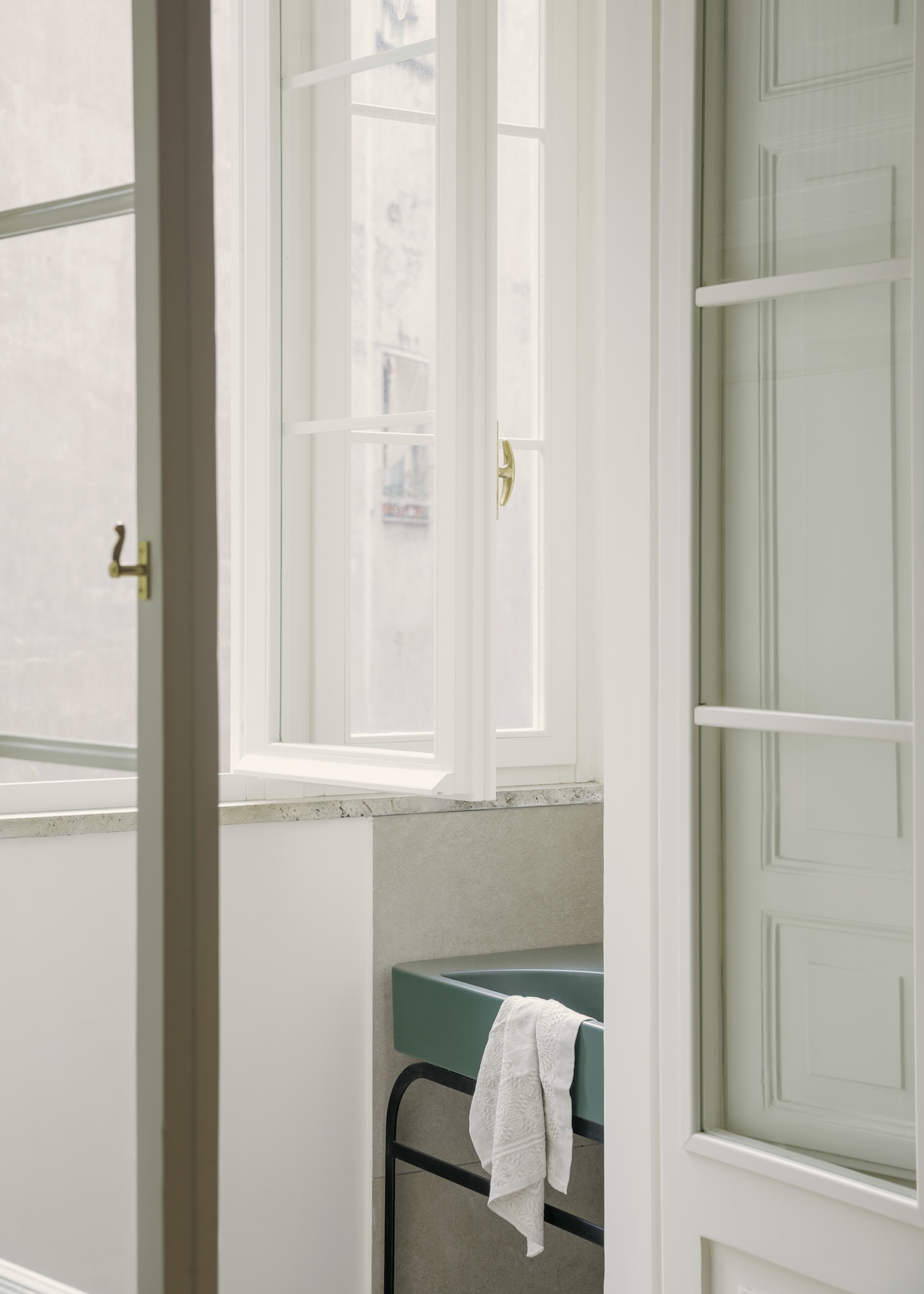
The apartment sits within a late 19th-century building overlooking Piazza Dante, one of Rome’s neighborhoods currently navigating its own tension between preservation and transformation. The courtyard below – with its wrought-iron balconies and rooftop antennas tracing the skyline – provides the kind of layered urban context that no renovation can manufacture. Incognito Studio recognized this backdrop as an asset rather than a condition to be designed around, allowing the apartment to remain porous to the rhythms of the building and the city beyond.
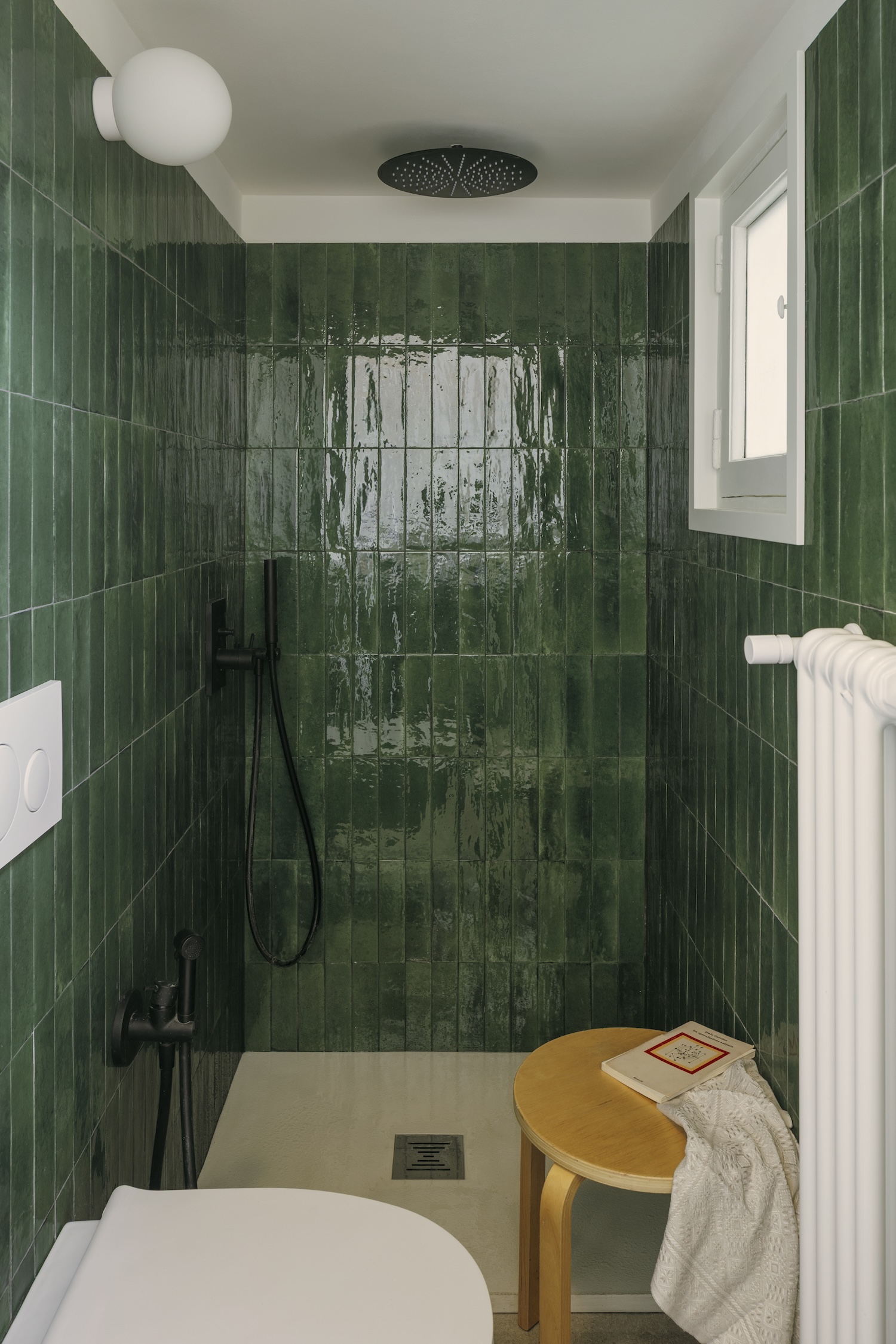
The layout is elemental in its compression. A living room with integrated kitchenette connects to a double bedroom through a simple opening, with no corridors or formal entry sequence mediating between zones. This directness is not a concession to limited footage but an intentional collapse of domestic hierarchy – the kind of spatial honesty found in traditional Roman apartments before postwar renovations subdivided them into smaller, more isolated rooms. A single bathroom completes the plan. Every surface is asked to perform double duty, balancing visual clarity with functional density.
The most revealing decisions involve what was removed rather than what was introduced. Layers of plaster and suspended ceilings were stripped away to expose the original lighter floor structures, while thick structural walls were retained as evidence of the building’s material honesty. Vaulted ceilings and aged wall finishes – the kind of surfaces that contemporary renovations typically skim-coat into uniformity – were left deliberately visible. The patina becomes a form of documentation, each crack and discoloration recording the passage of use and time in a way that new materials simply cannot replicate.