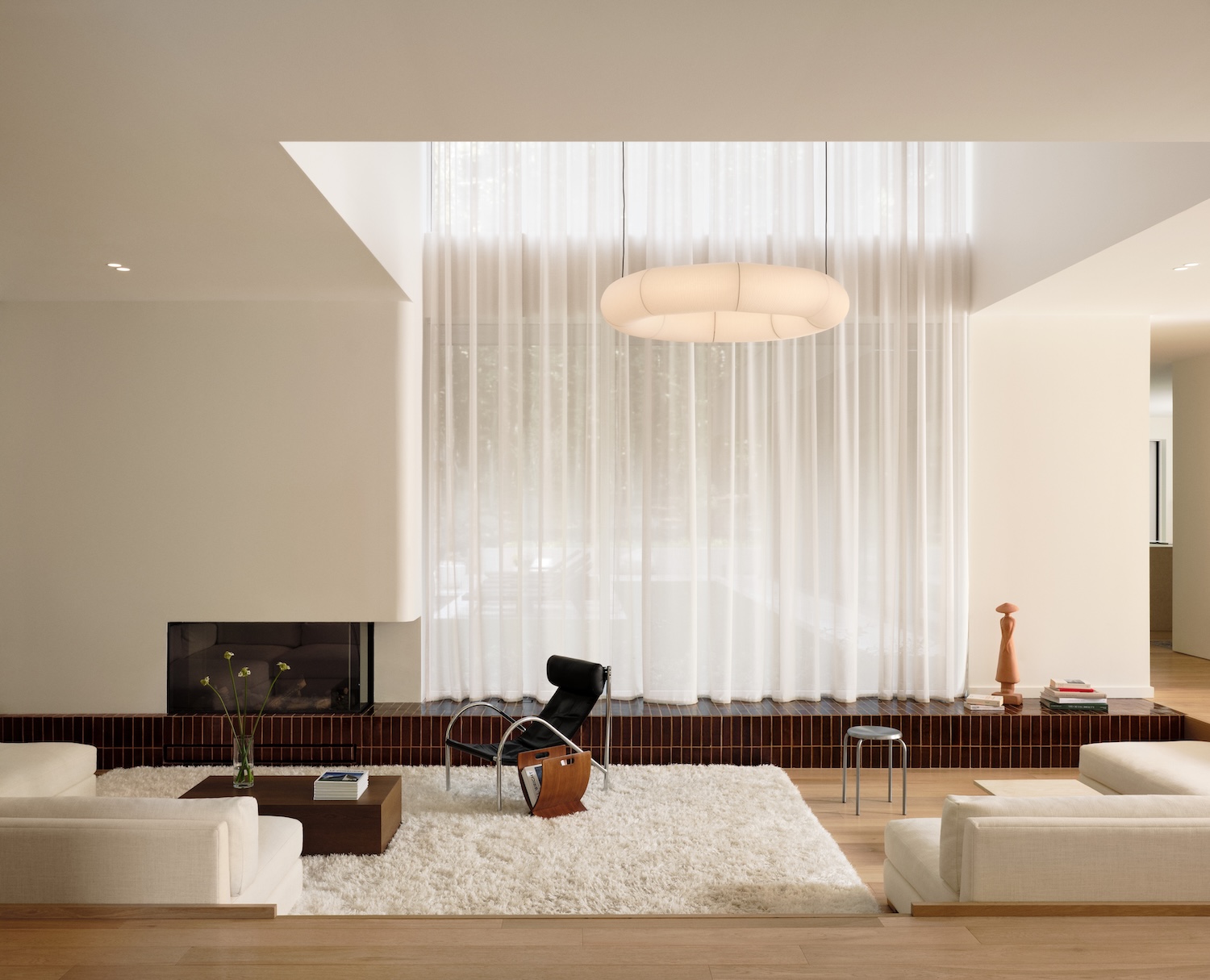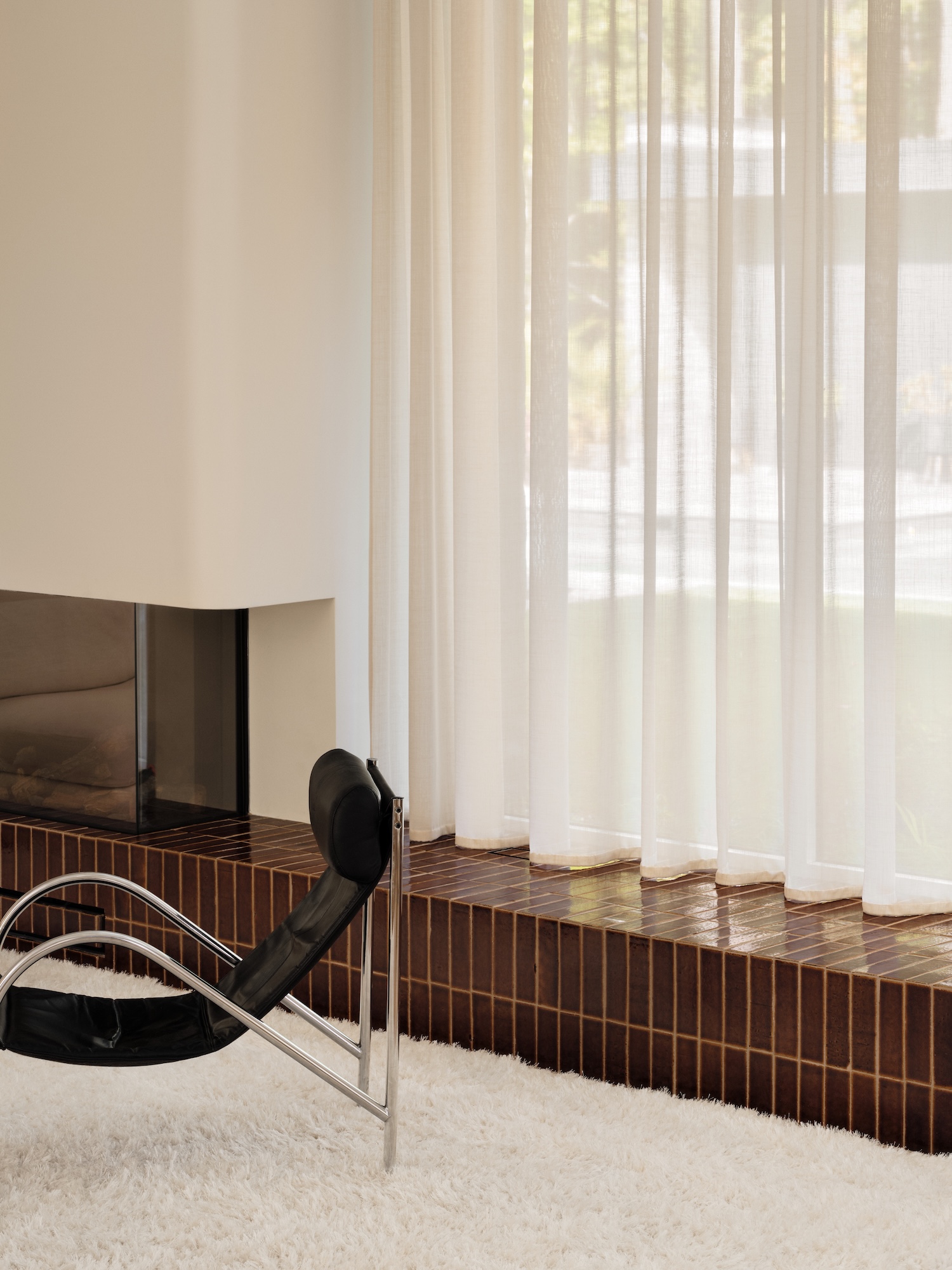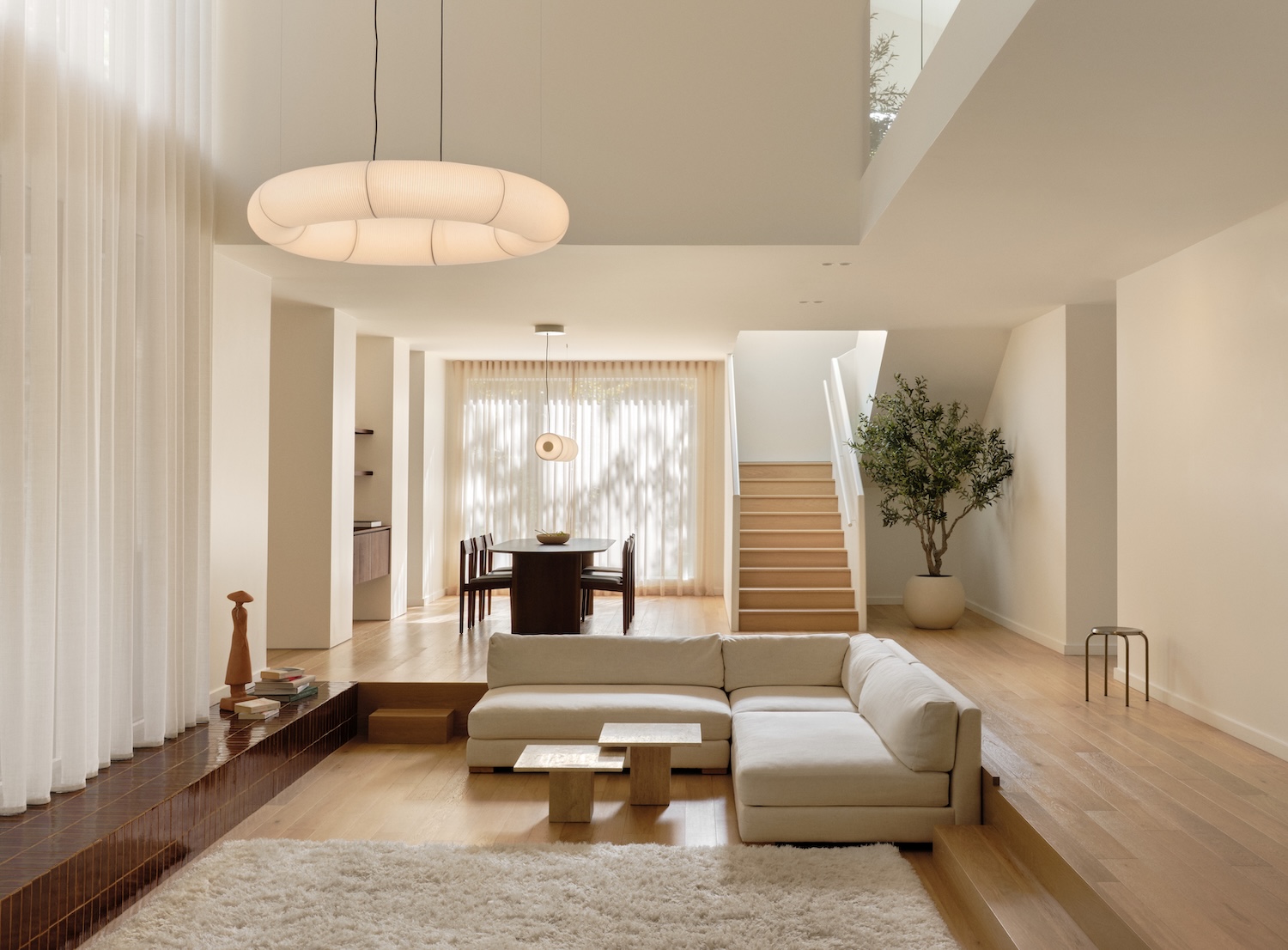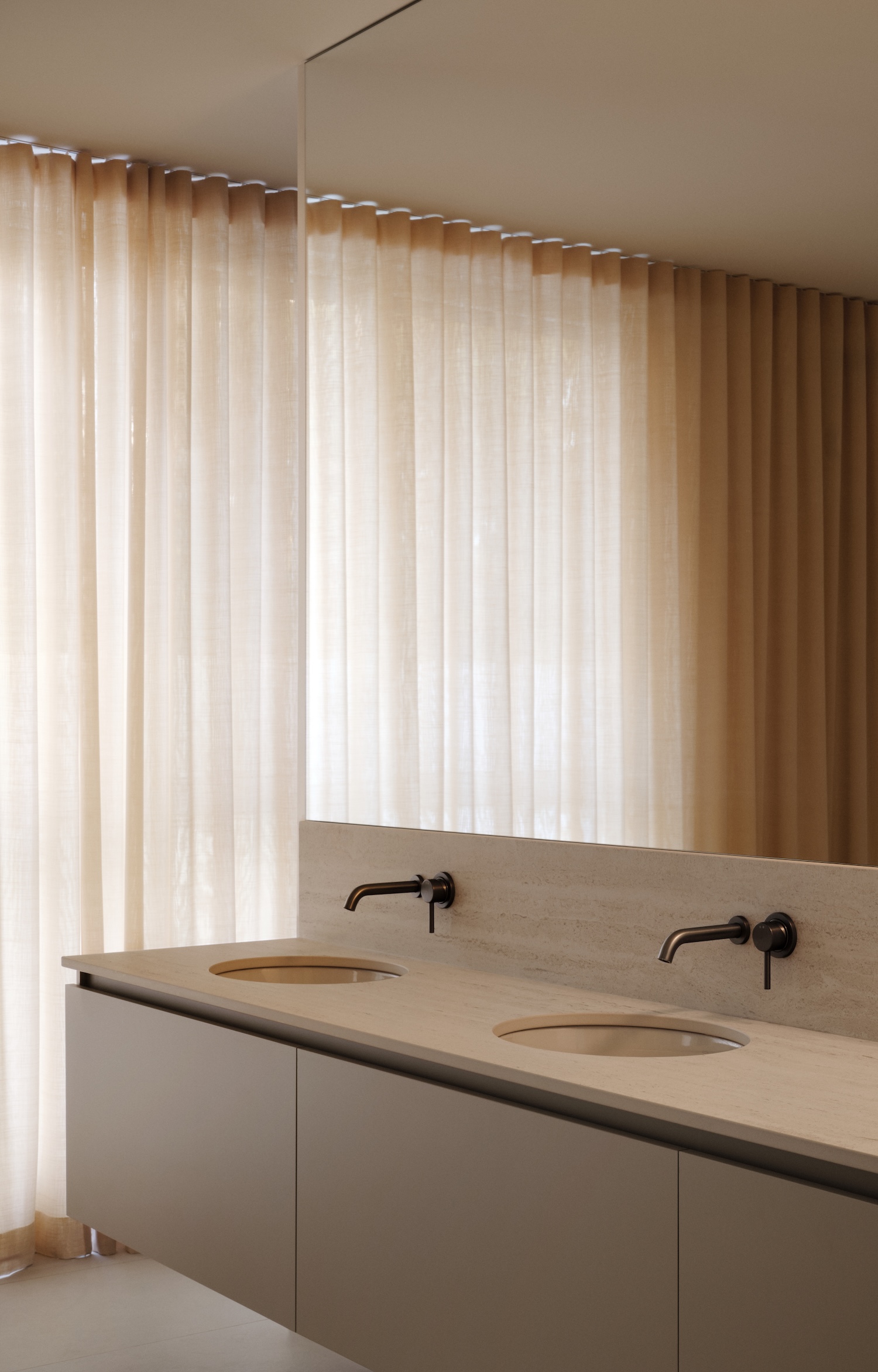
Montpellier House is a minimal residence located in Montérégie, Canada, designed by Vives St-Laurent. Built into the natural slope of Mount Saint-Bruno, the residence demonstrates how contemporary design can engage with topography as both constraint and opportunity. The partially buried garden level recalls the earth-sheltered houses of Hassan Fathy or the landscape-embedded works of Peter Zumthor, yet here the strategy serves not merely environmental concerns but a deeper philosophical alignment with place. The house doesn’t simply sit on its site – it emerges from it, following the terrain’s inclination with the sensitivity of Japanese sukiya architecture.
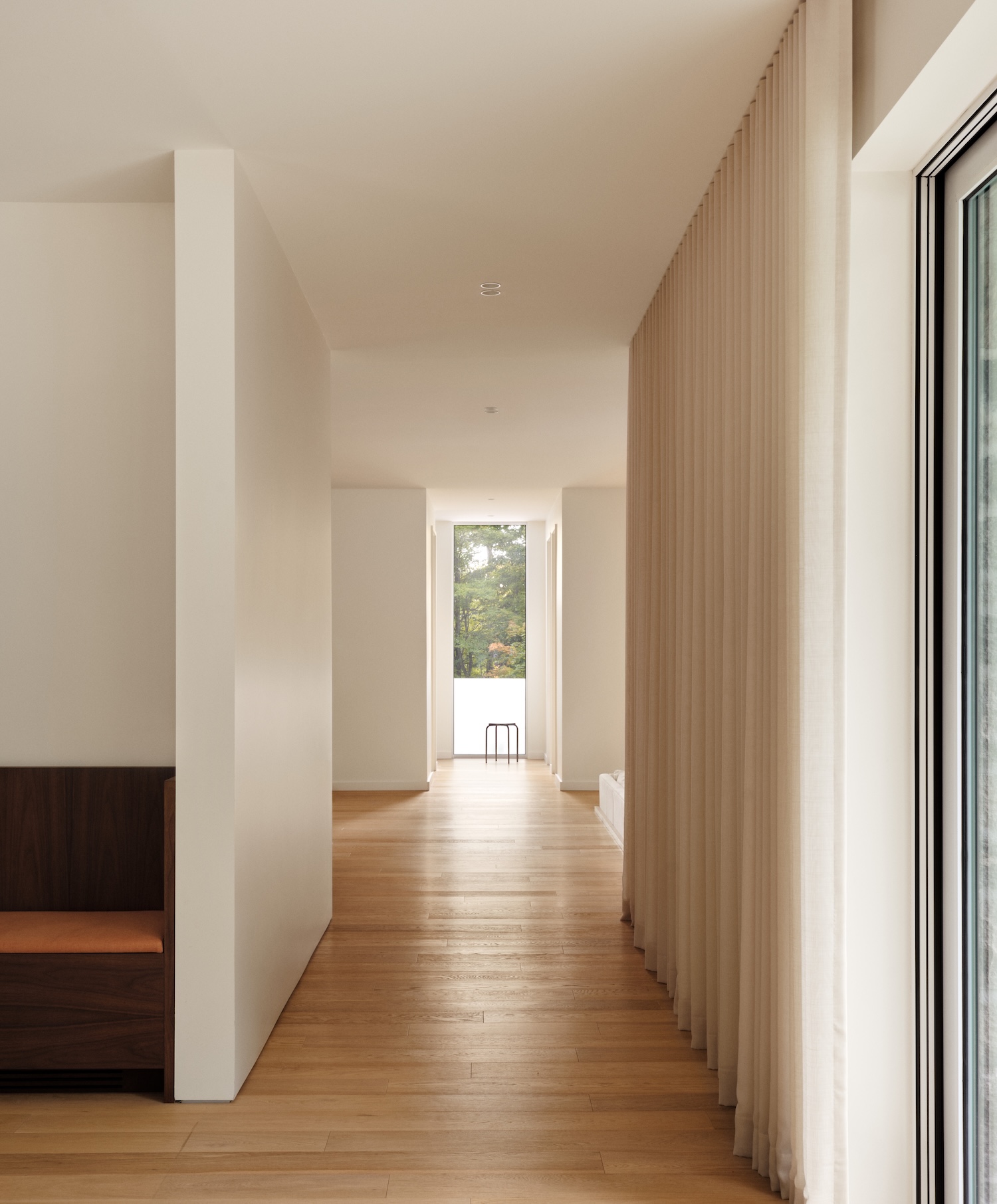
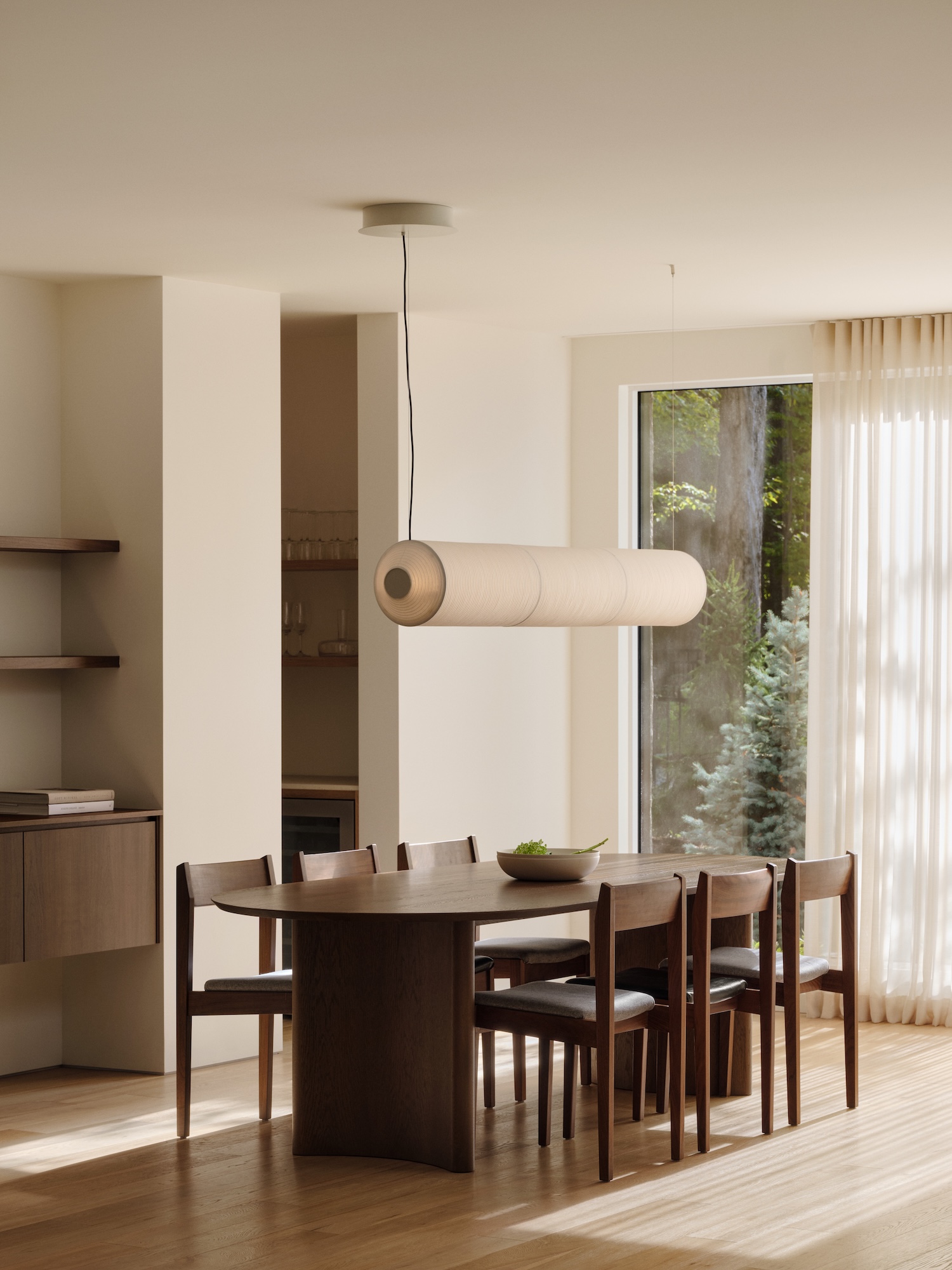
The interior’s organization around a central courtyard evokes the Mediterranean typology of the atrium house, though filtered through distinctly North American sensibilities. The pendant light made of washi paper – the Tekio fixture that hovers in the double-height space – bridges Eastern material traditions with Western spatial concepts, its translucent presence softening the geometric rigor of the architecture.
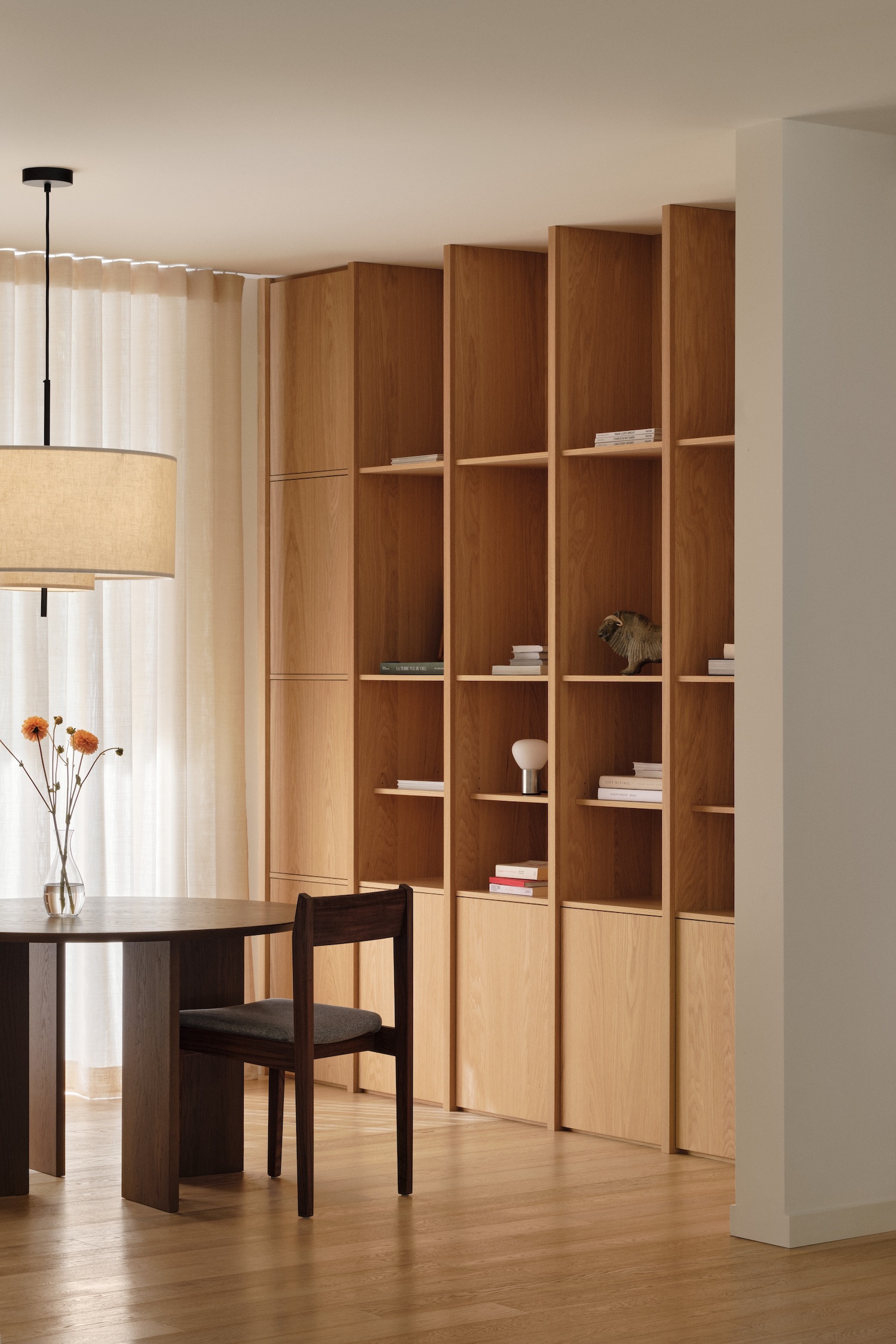
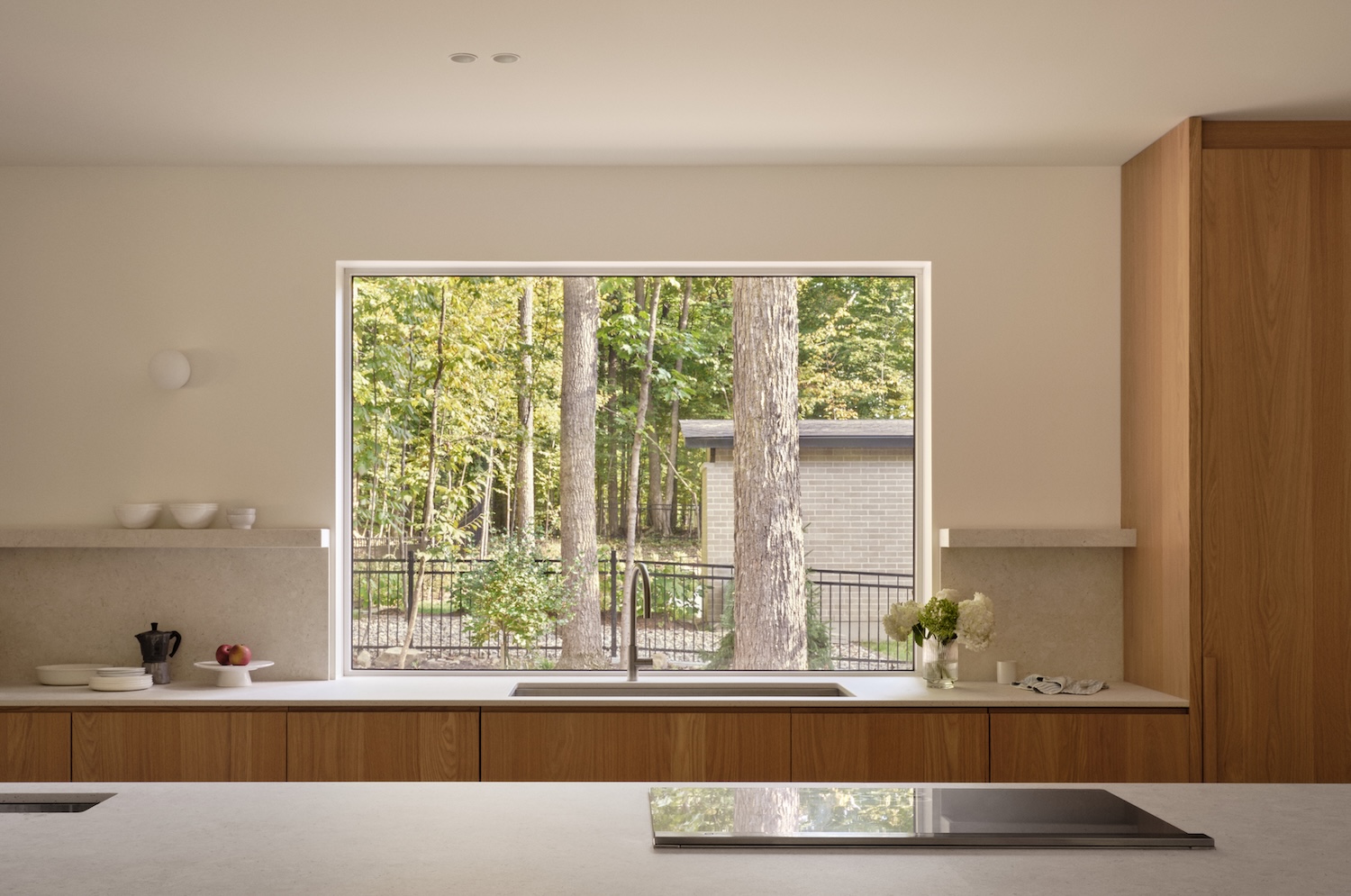
Material choices throughout reveal a sophisticated understanding of contrast and continuity. The interplay between natural white oak and dark-stained oak creates what might be called a material dialogue, each wood finish responding to and amplifying the other. This approach echoes the Scandinavian tradition of letting wood speak its own language while acknowledging the Japanese aesthetic principle of highlighting natural variation within repetition.
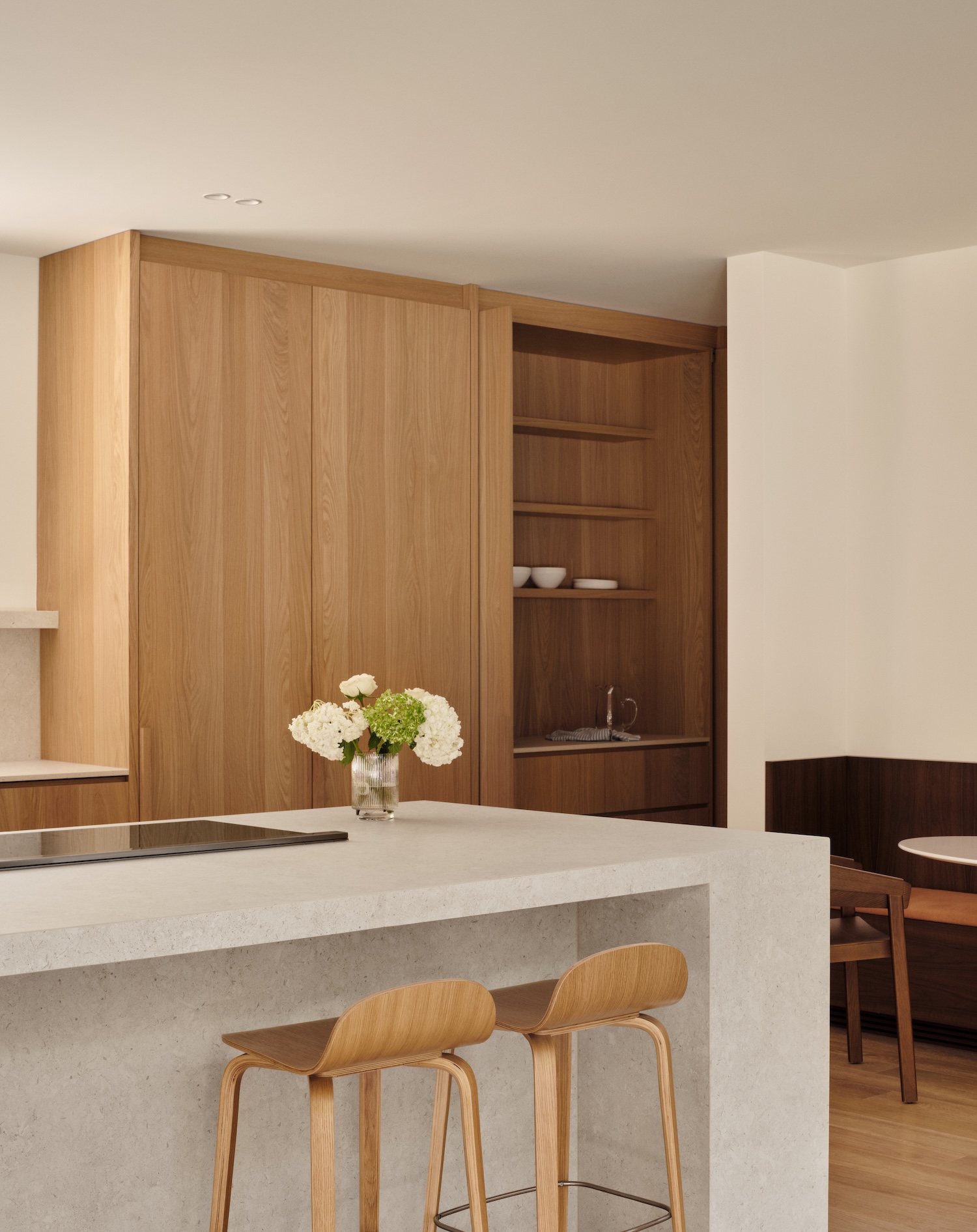
The kitchen island, carved from veined natural stone, functions as both workspace and sculpture. Here we see design thinking that transcends mere functionalism – the island operates as what Adrian Forty might call a “concentrated object,” gathering daily rituals while asserting its own material presence. The hidden pantry and concealed appliances behind sliding doors demonstrate how contemporary luxury increasingly values the choreography of concealment over the display of abundance.