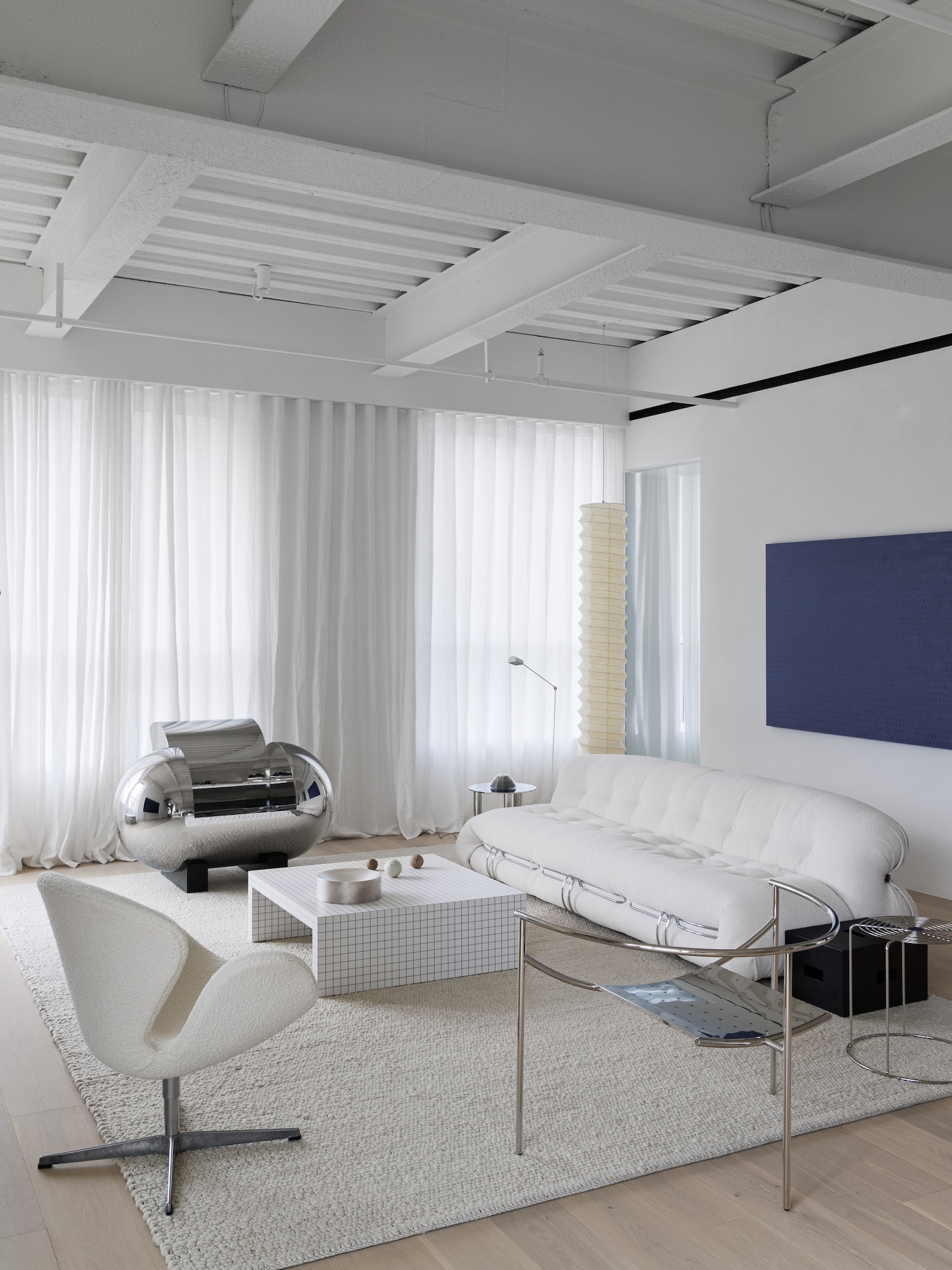
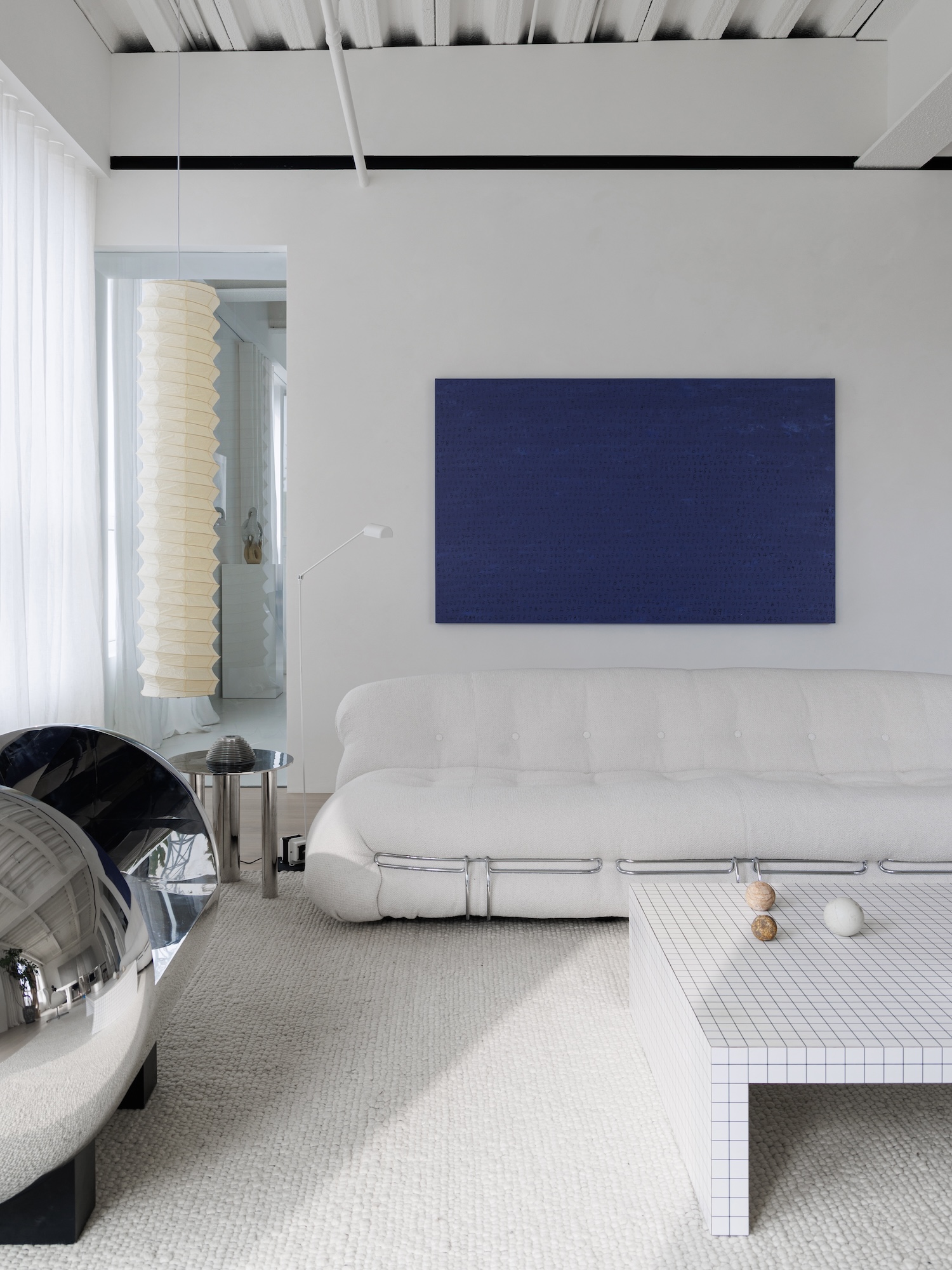
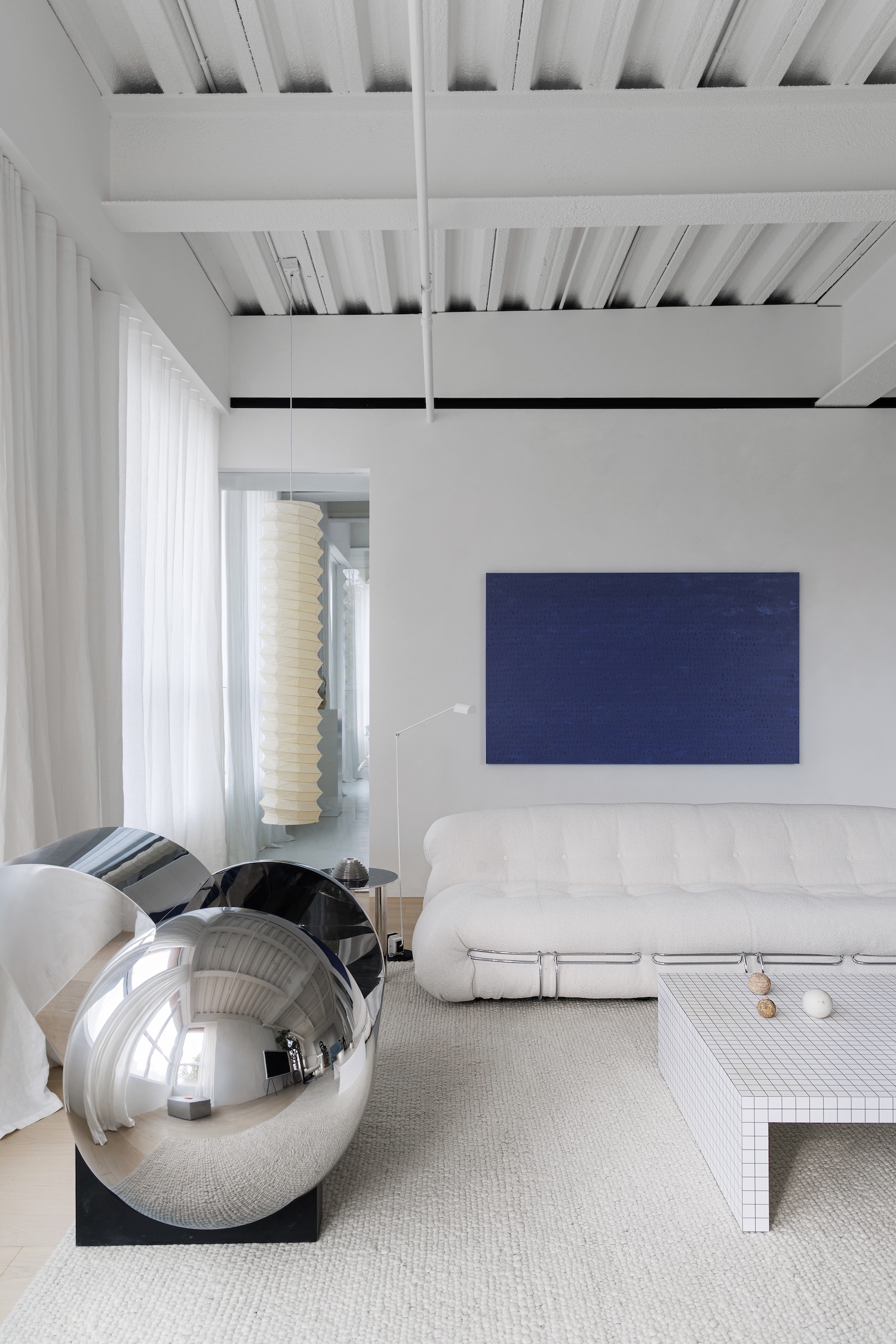
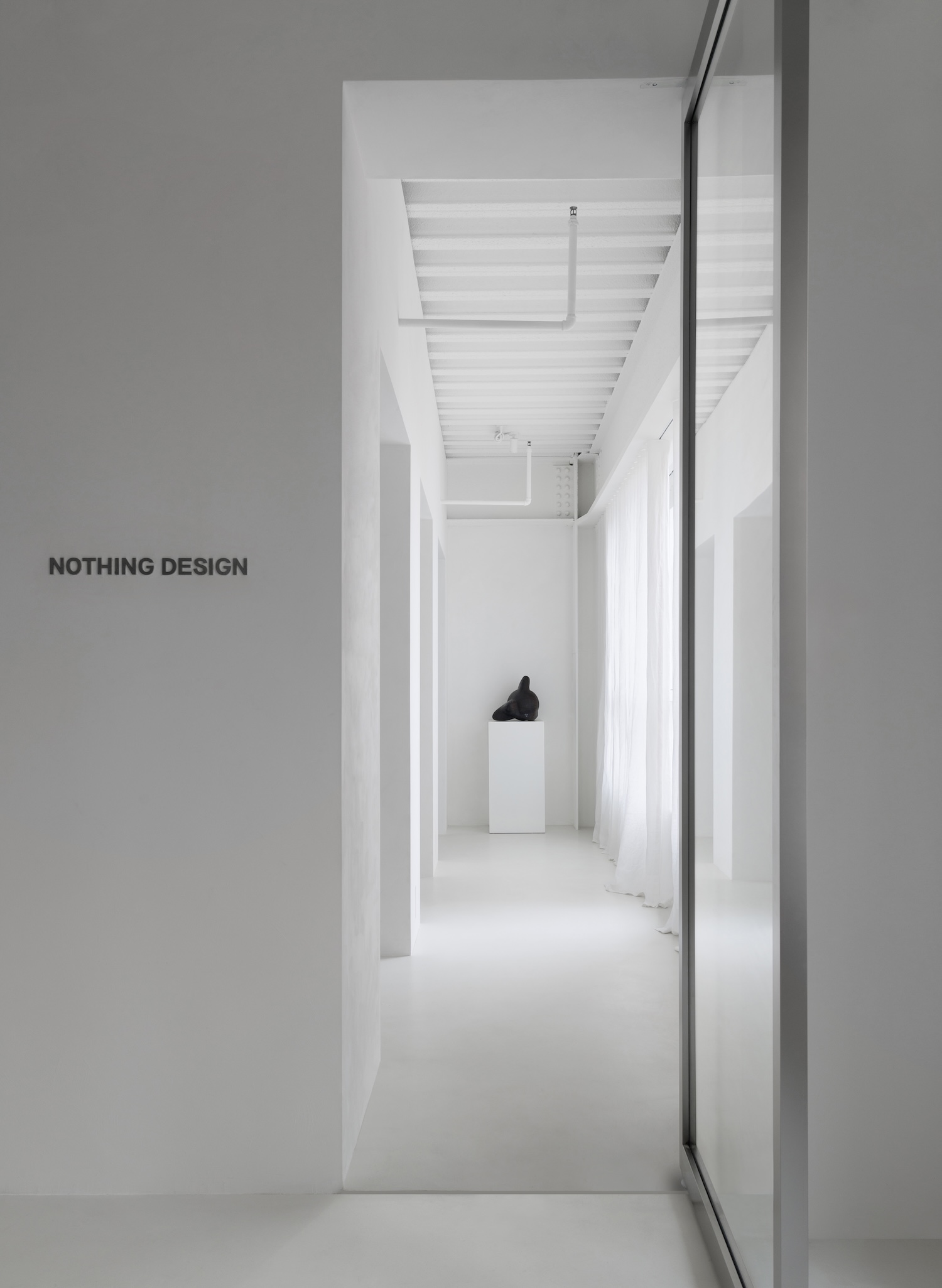
NOTHING DESIGN Beijing Studio is a minimal space located in Beijing, China, designed by NOTHING DESIGN. In the filtered light of Beijing’s Xidian Memory Park, a revelation unfolds within 150 square meters of deliberate emptiness. NOTHING DESIGN’s new studio presents itself not as a conventional workspace but as a meditation on materiality, where white micro-cement becomes both substrate and statement, allowing each carefully chosen object to declare its presence with quiet authority.
The space operates on a principle of material honesty that recalls the Japanese concept of ma – the pregnant pause between elements that gives meaning to the whole. Here, pure white serves as more than backdrop; it functions as an active participant in the dialogue between object and environment. The micro-cement substrate, with its subtle variations and tactile presence, creates what main manager Liu Chang envisioned as “a blank canvas, waiting for art and life to fill.”
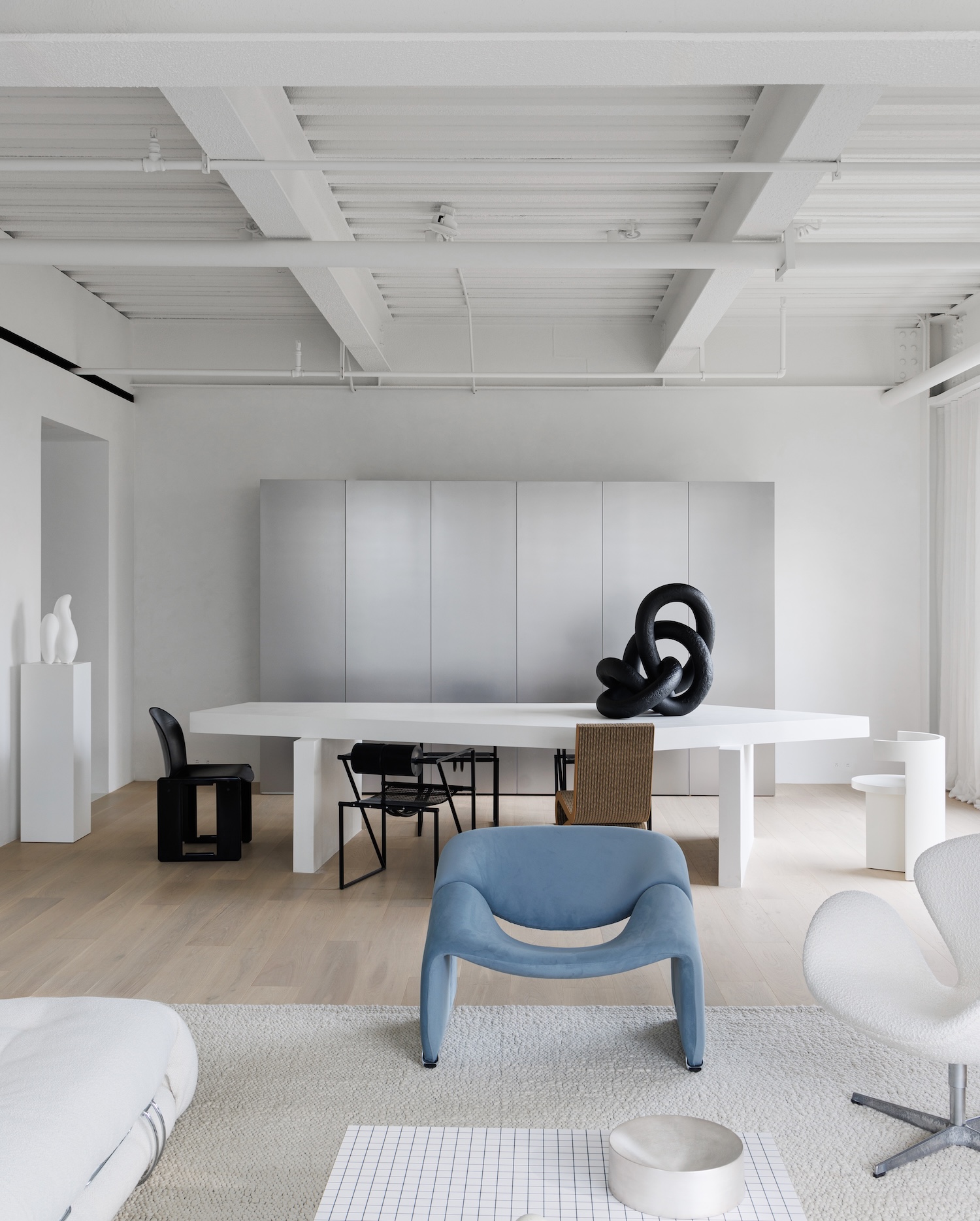
This approach to spatial curation reflects a broader contemporary movement toward what might be called “archaeological collecting” – the deliberate juxtaposition of objects across time periods to create new narratives. The conference room becomes a particularly compelling example, where Verner Panton’s revolutionary 1959 chair sits in conversation with Charles Rennie Mackintosh’s 1980 Cassina piece, each representing distinct moments in design’s evolution toward both democratization and artistic expression.
The material palette reveals sophisticated understanding of tactile relationships. Cotton and linen fabrics soften the industrial rigor of stainless steel, while natural wood grain provides organic counterpoint to geometric precision. This interplay recalls the Bauhaus principle of uniting craft traditions with industrial methods, yet here the synthesis serves contemplative rather than productive ends.
The studio’s approach to lighting demonstrates particular sensitivity to temporal rhythms. Natural light becomes the primary medium, filtered through translucent curtains that transform throughout the day, while evening illumination from carefully positioned fixtures like the Isamu Noguchi Akari chandelier creates intimate scales within the larger volume.
What emerges is less showroom than laboratory for material relationships. Each chair – from Arne Jacobsen’s 1958 Swan to Pierre Paulin’s 1973 Groovy – represents not merely seating but a crystallized moment of cultural aspiration. The invitation to “choose the most favorite one to sit” acknowledges furniture’s role in shaping human behavior and social dynamics.