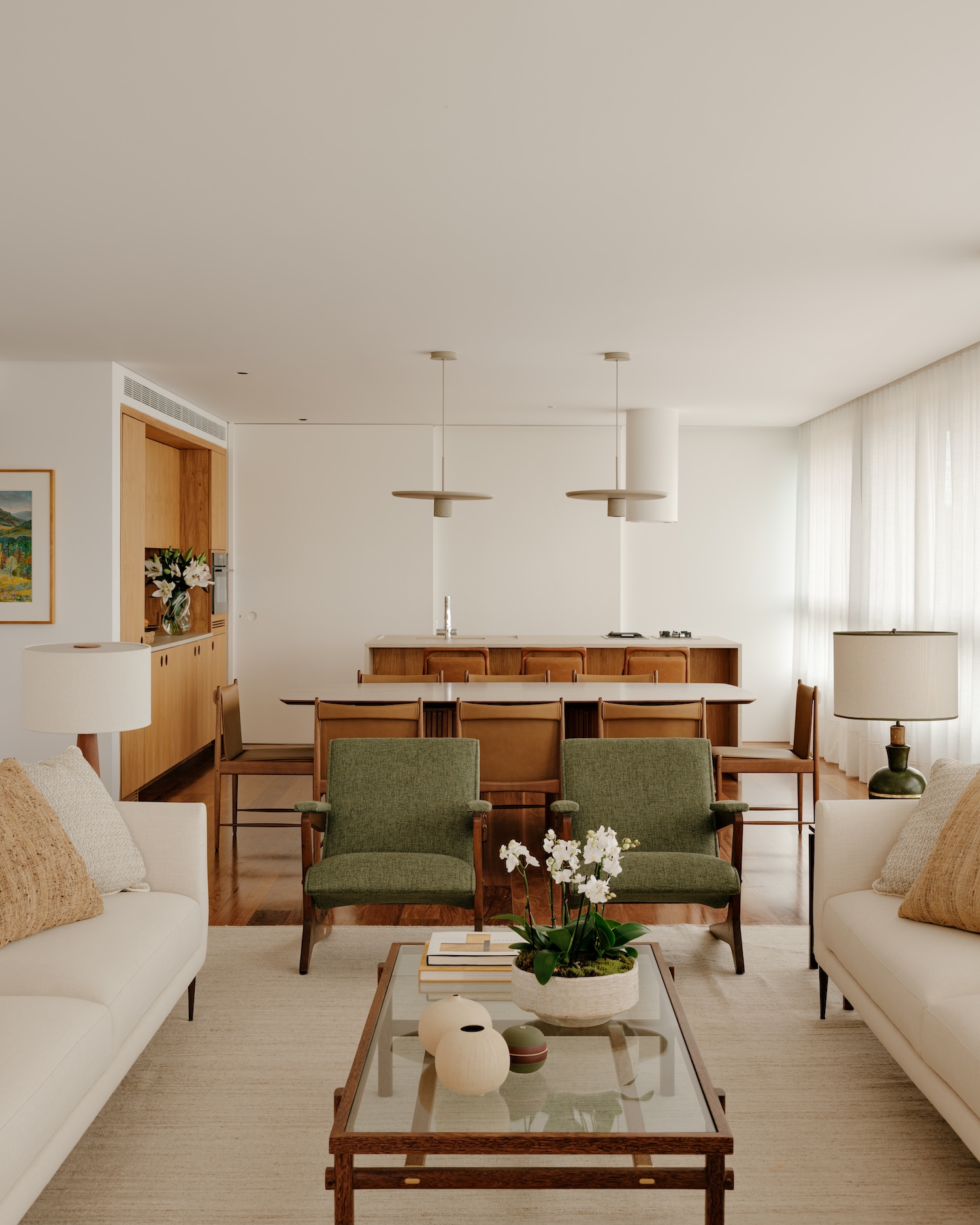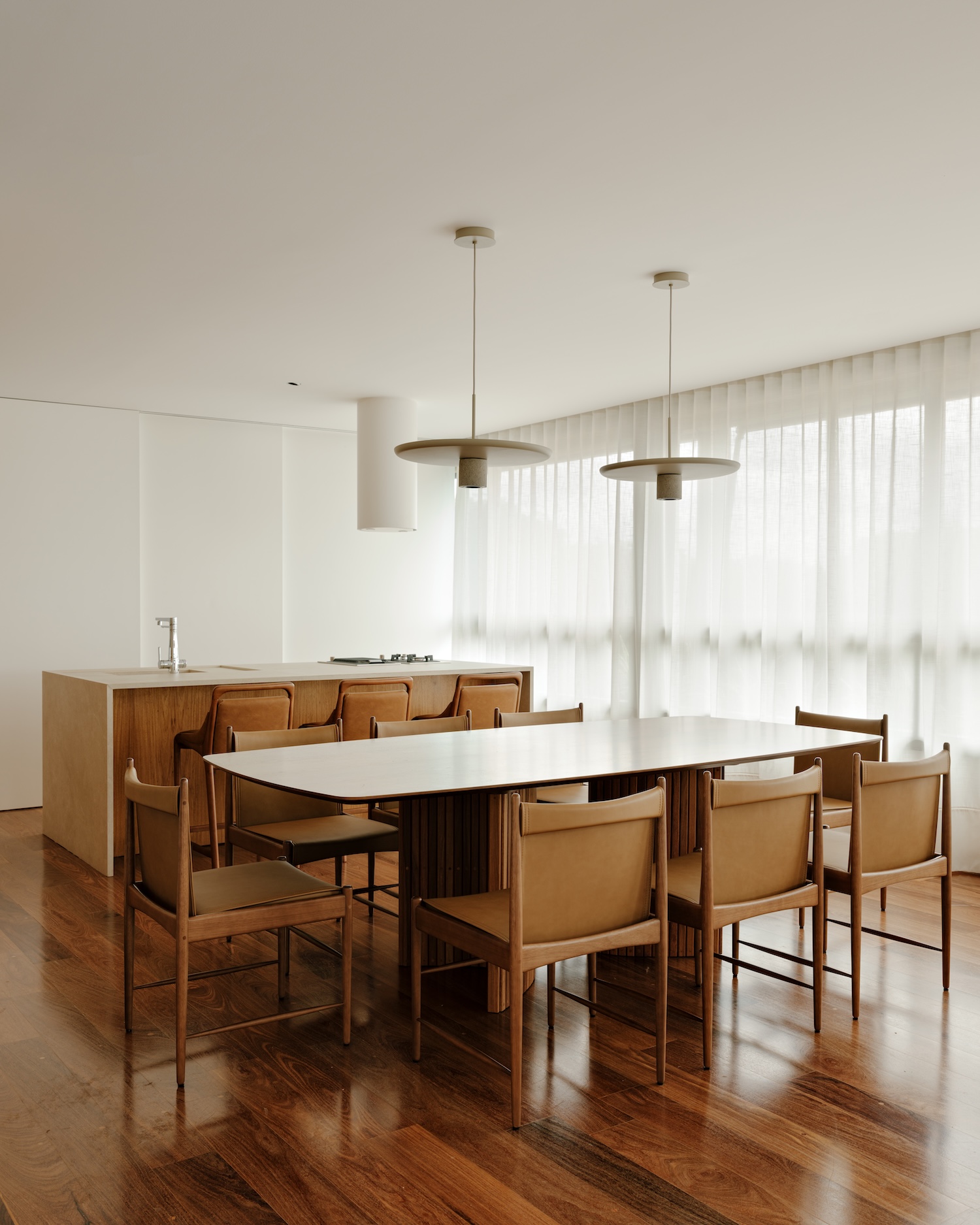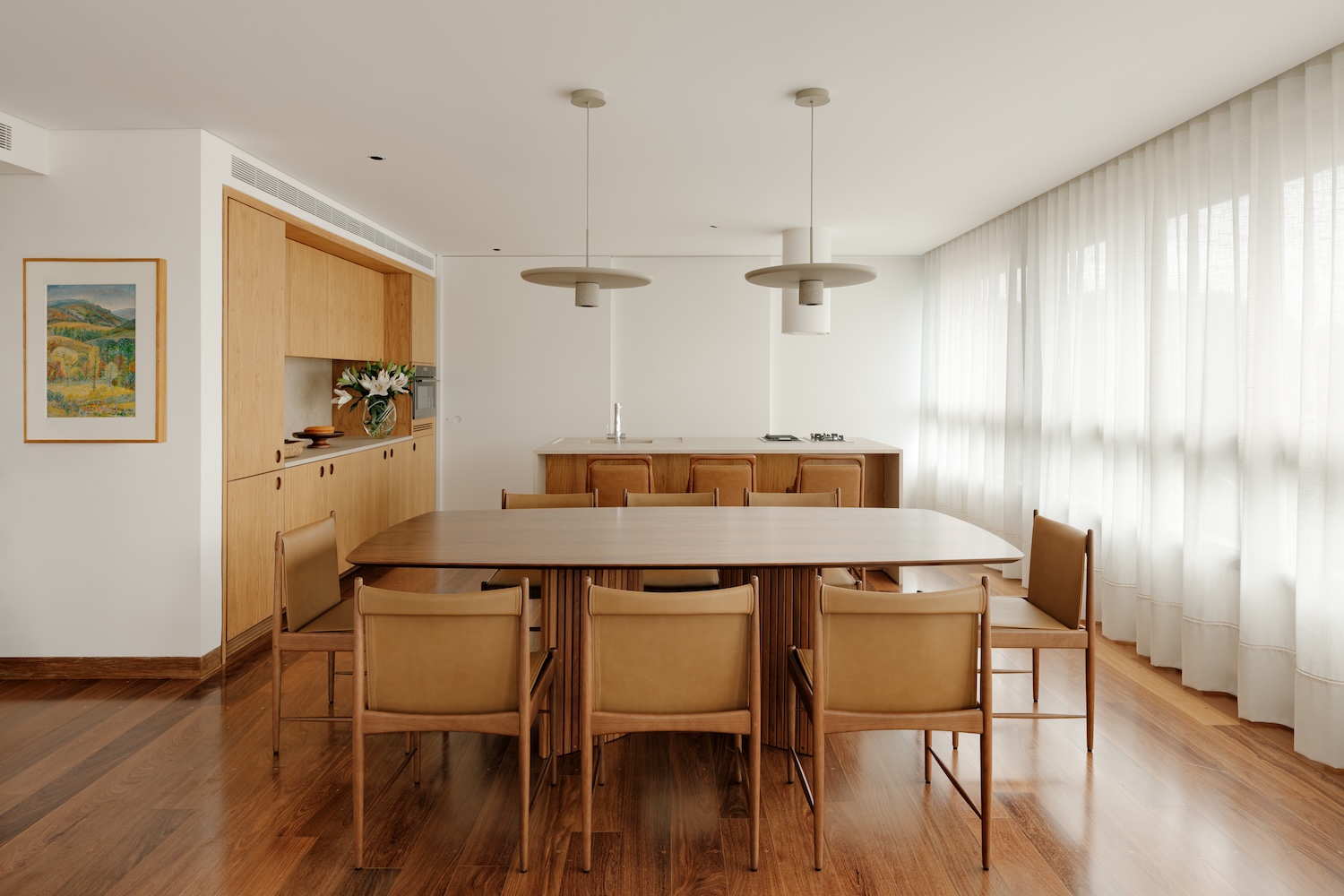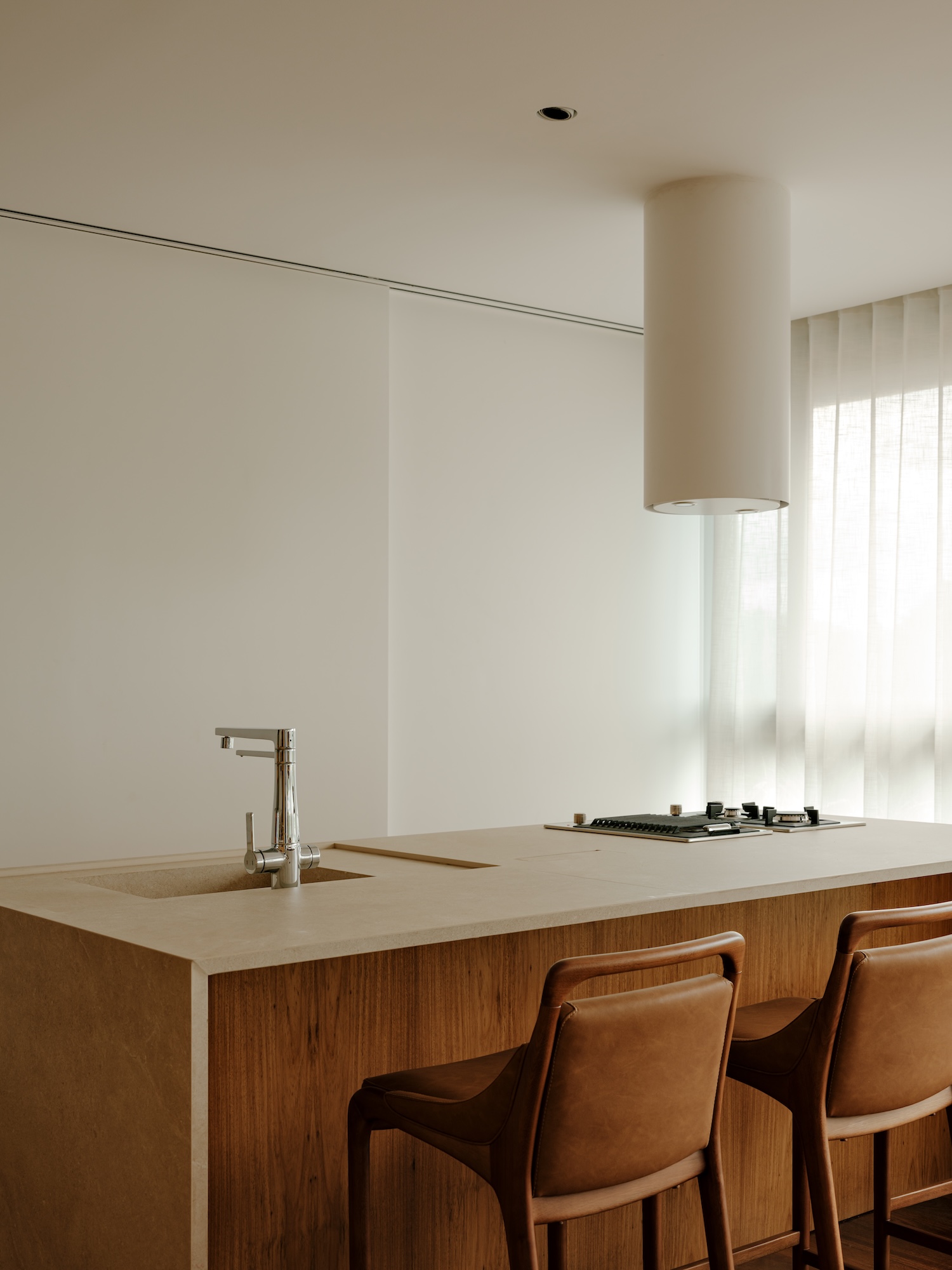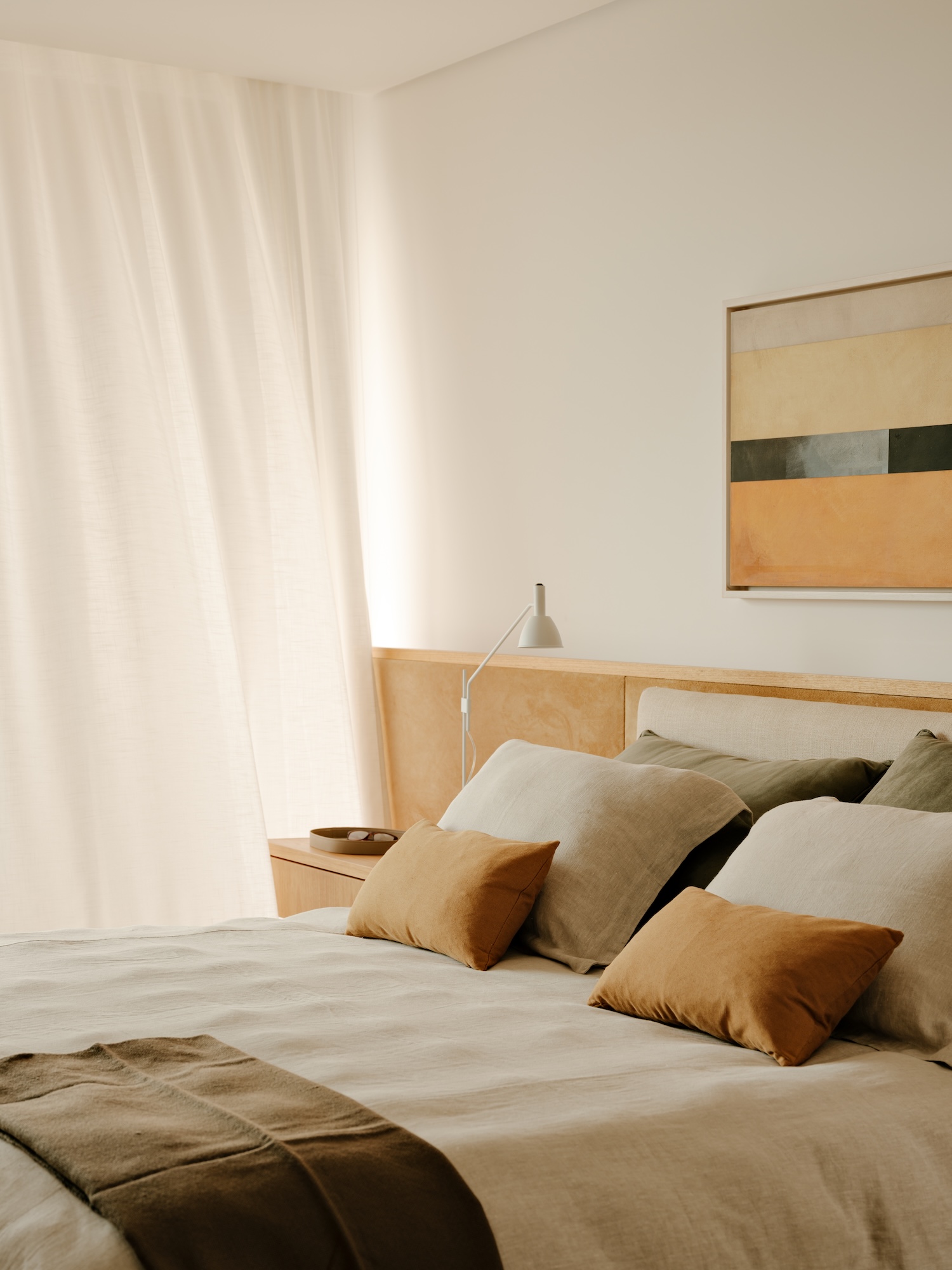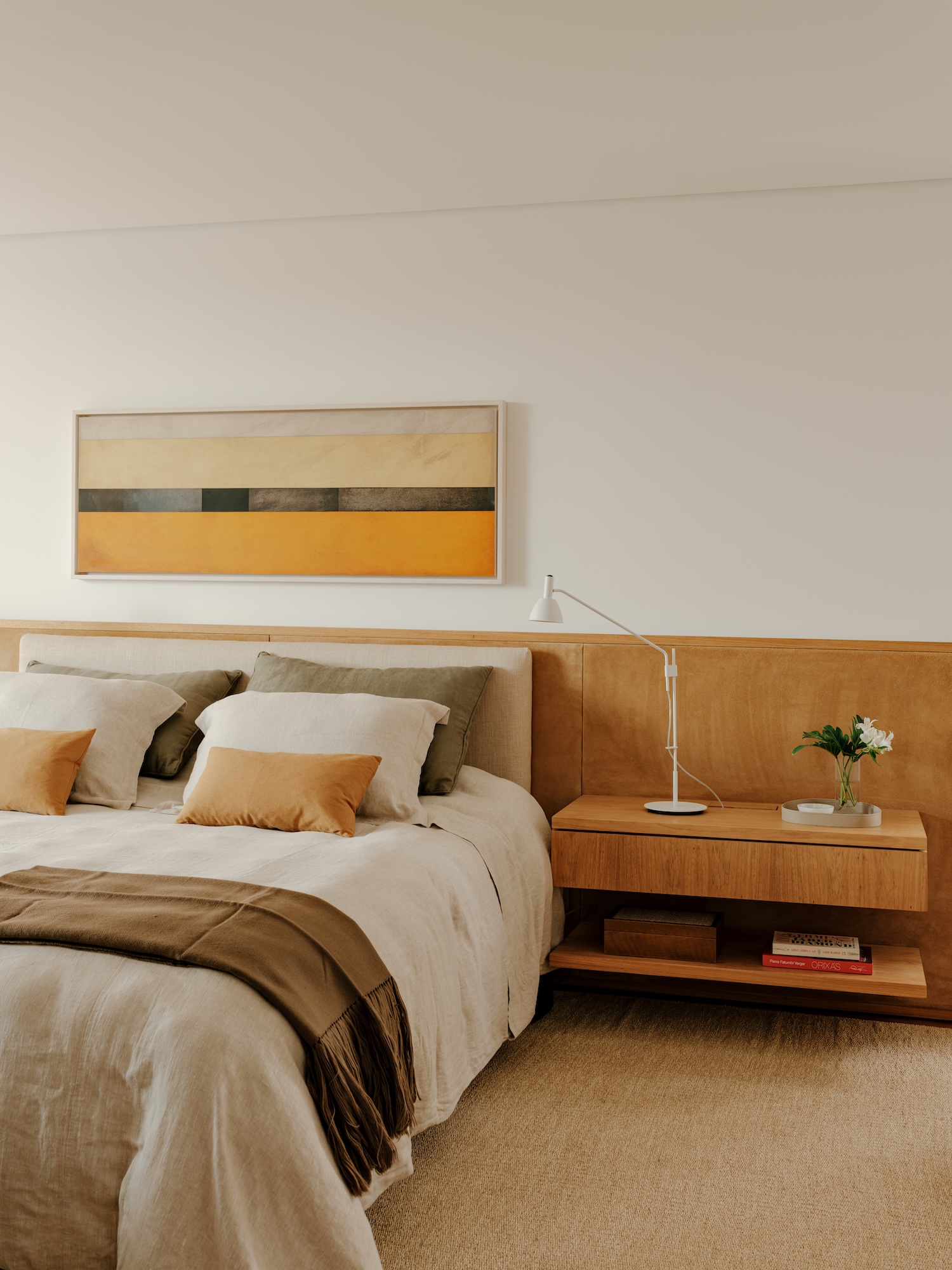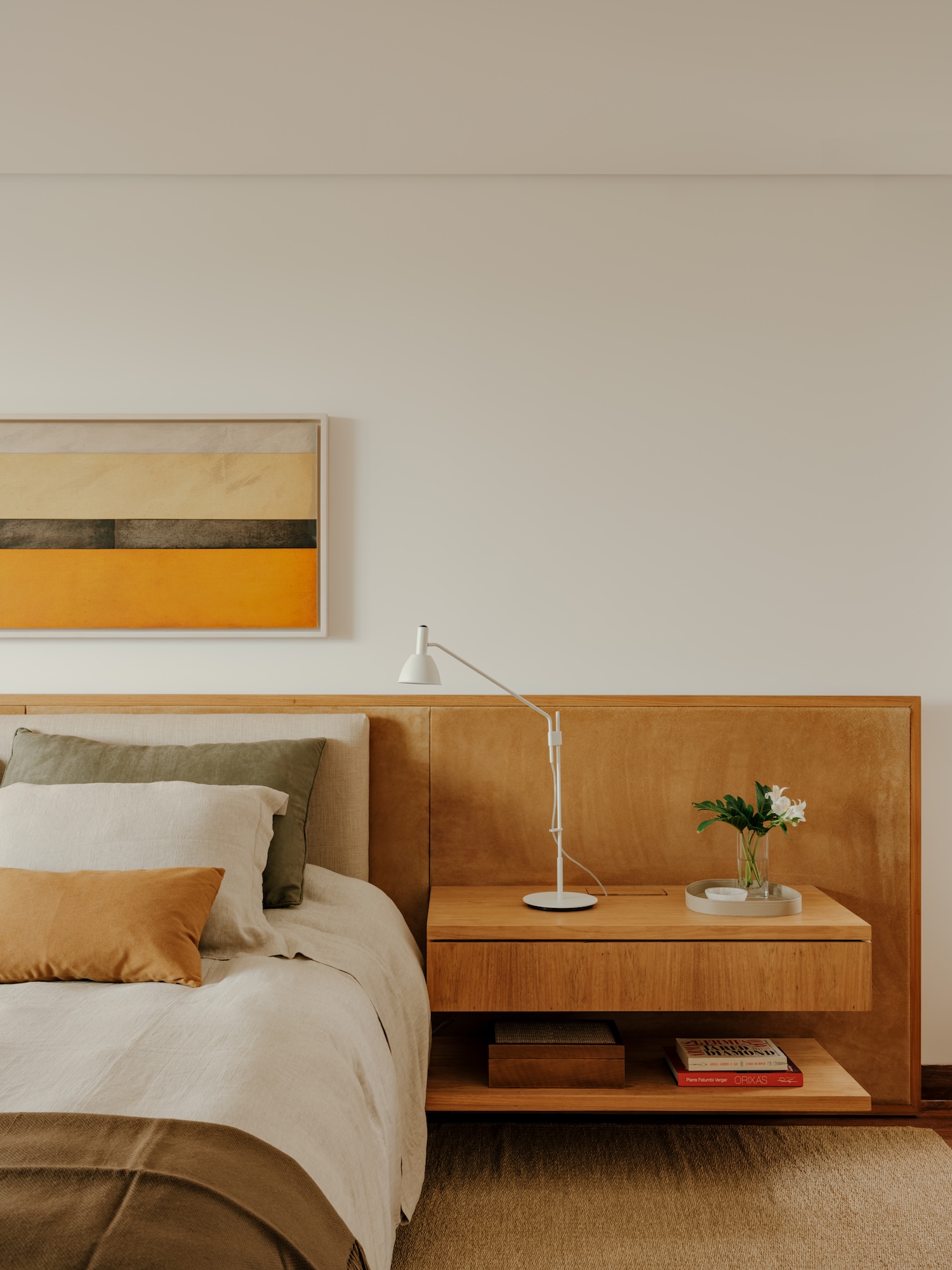
Pascoal Vita Apartment is a minimalist residential interior located in São Paulo, Brazil, designed by Marina Salles Arquitetura e Interiores. The most demanding problems in residential design rarely involve space or budget – they involve time. Specifically, the accumulated time embedded in inherited objects: a piano, farmhouse furniture, colonial pieces, artworks passed down through generations. For a couple transitioning from a house to an apartment in São Paulo, the 360-square-meter space purchased off-plan in 2020 presented Marina Salles with exactly this challenge. The project, completed in 2023 after nearly four years of continuous development, required a framework capacious enough to hold family memory without being consumed by it.
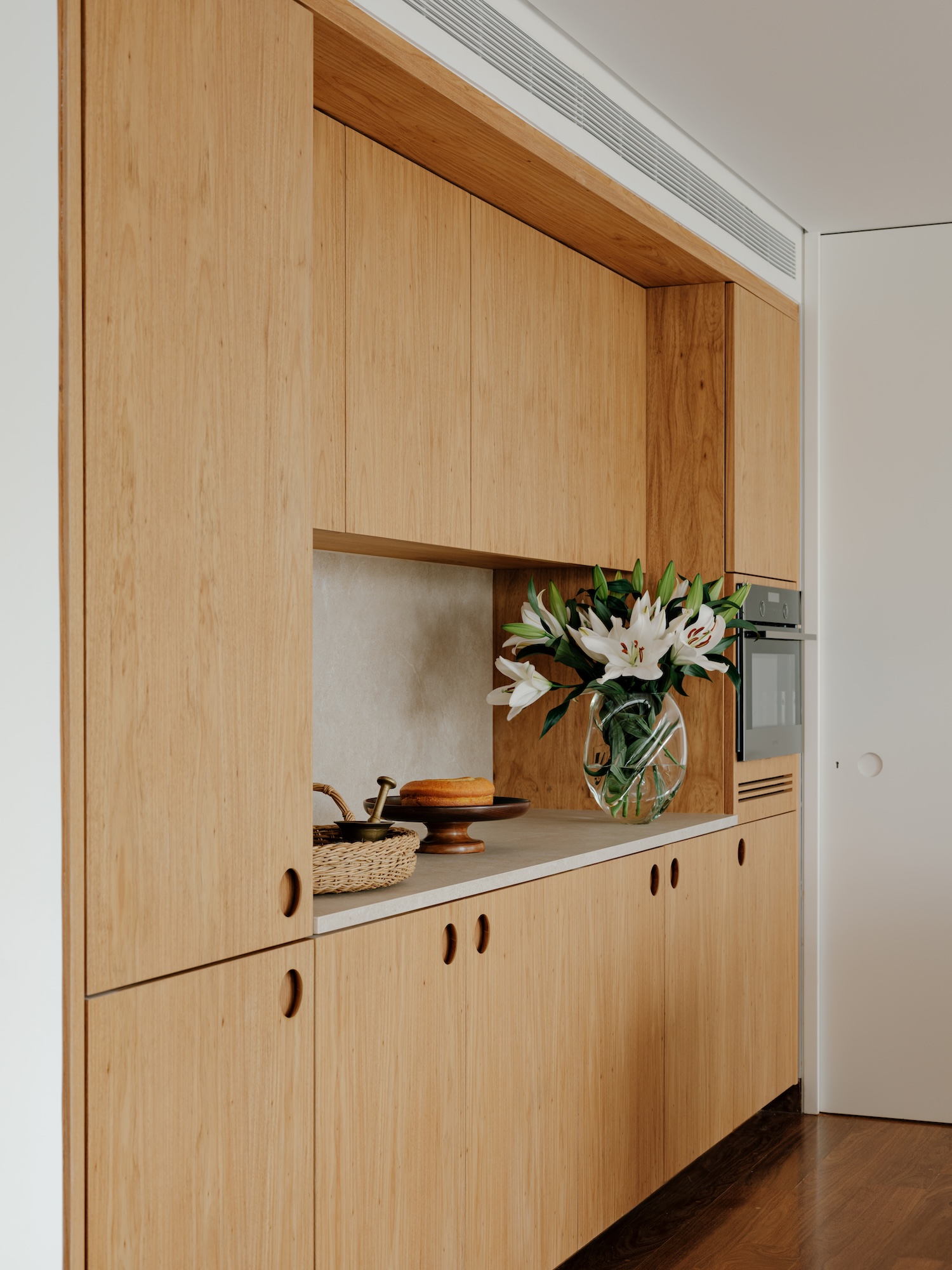
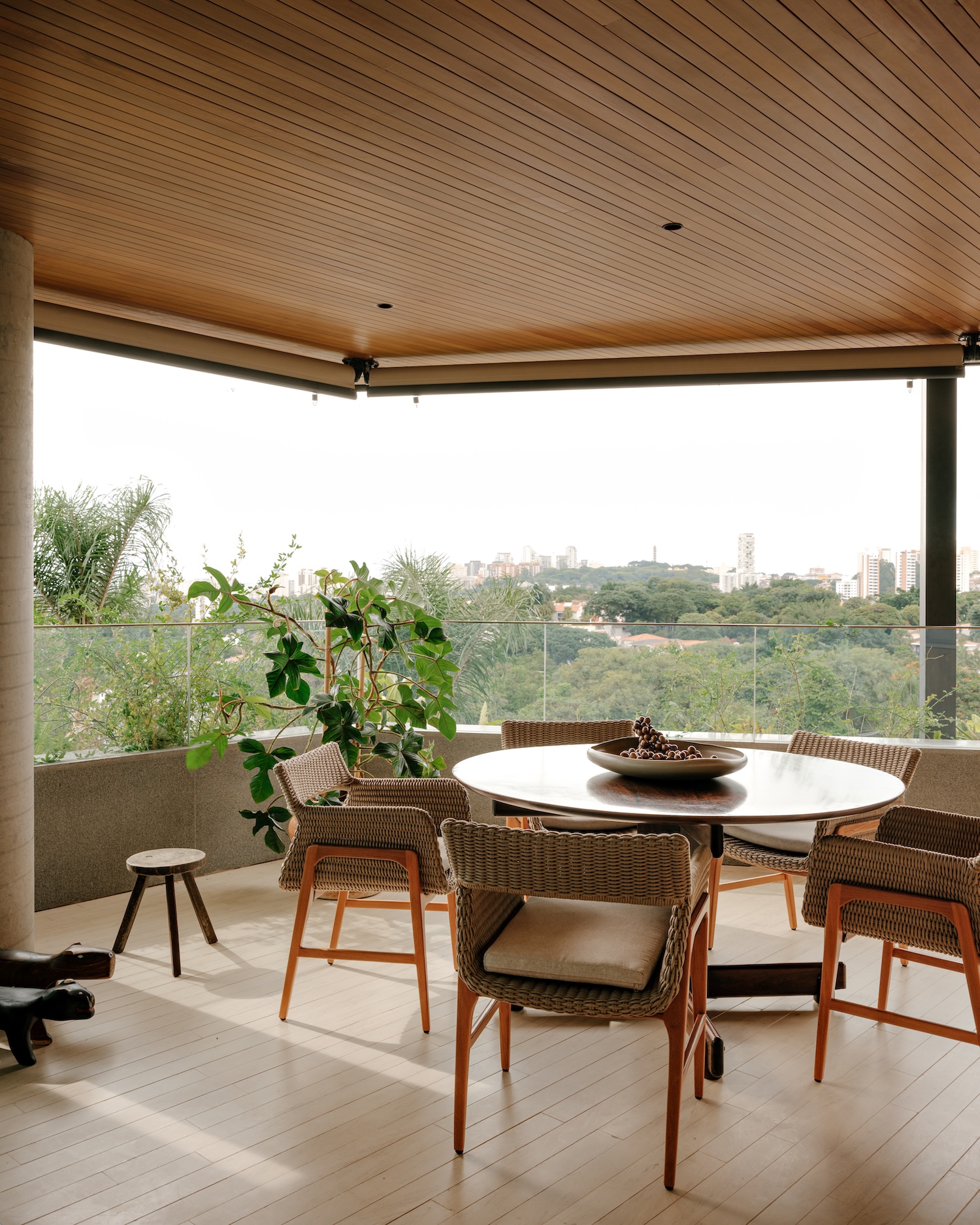
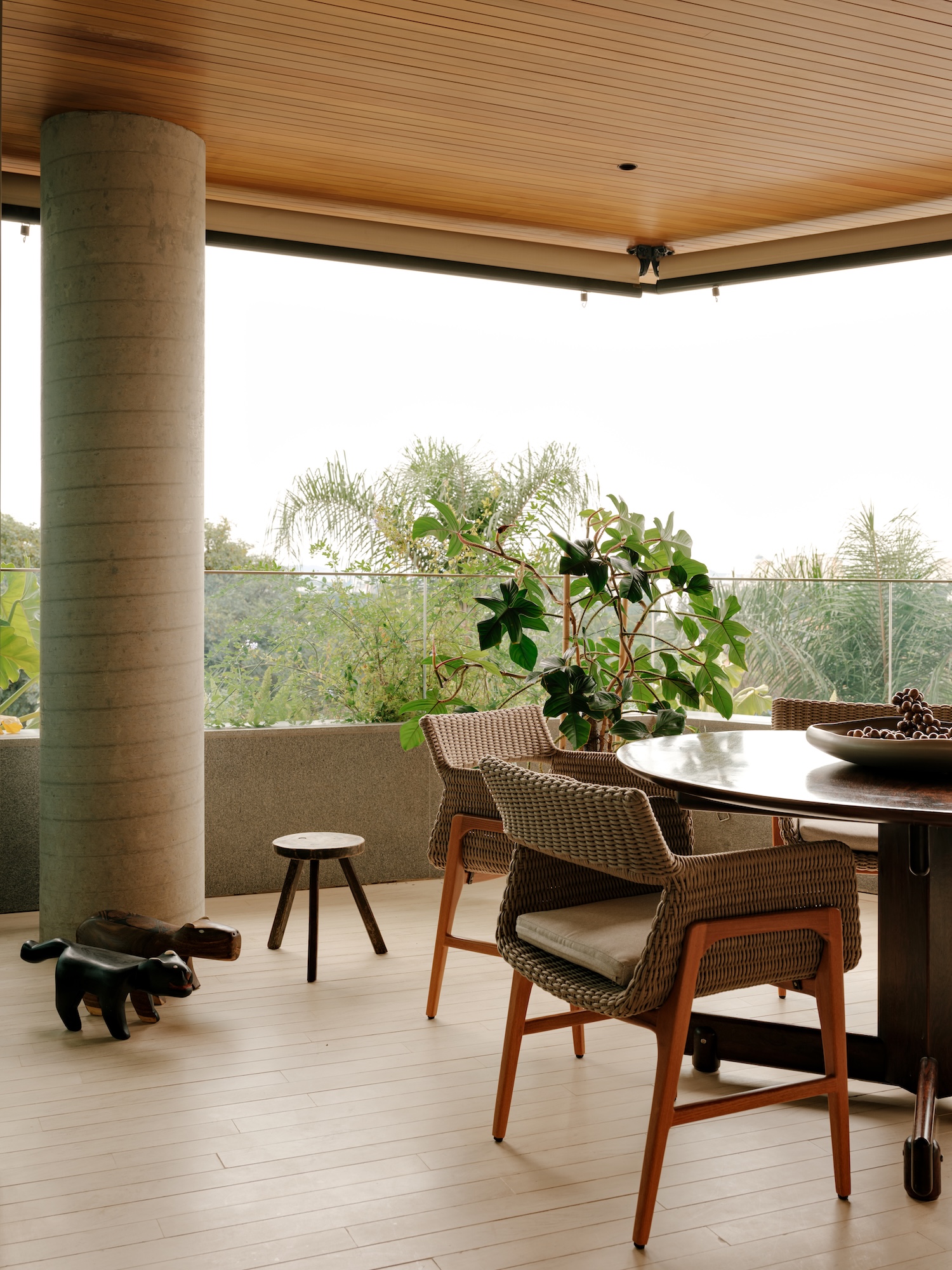
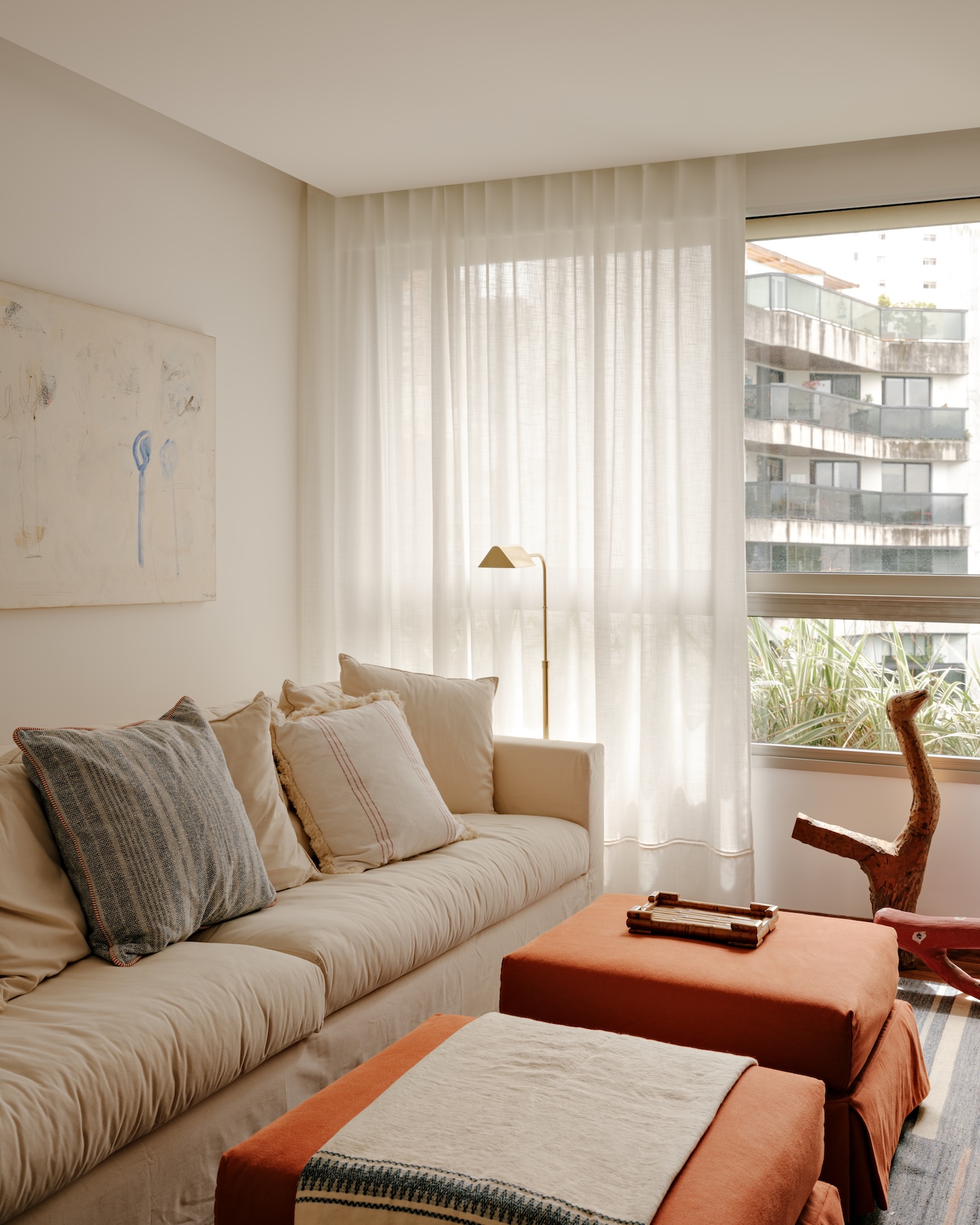
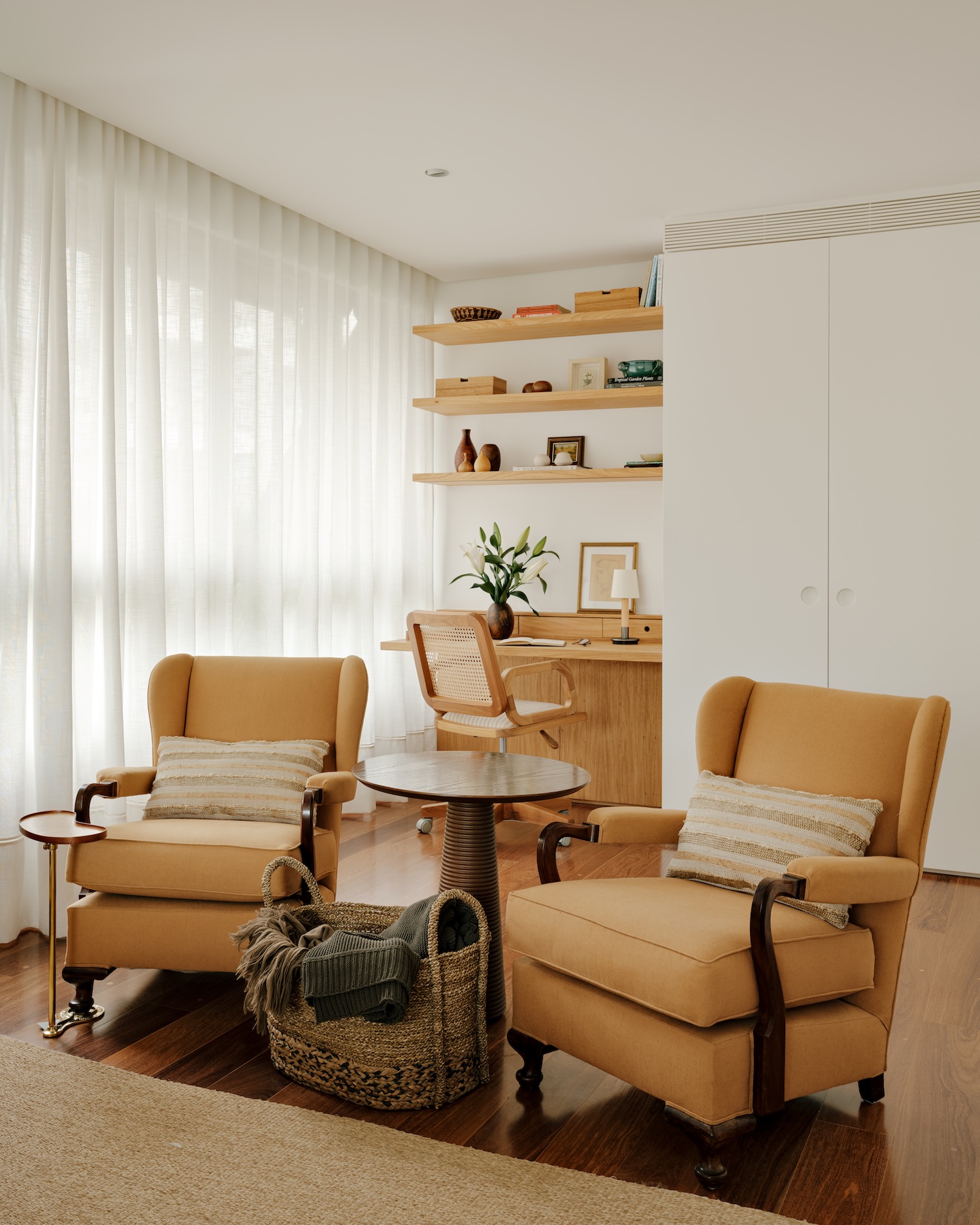
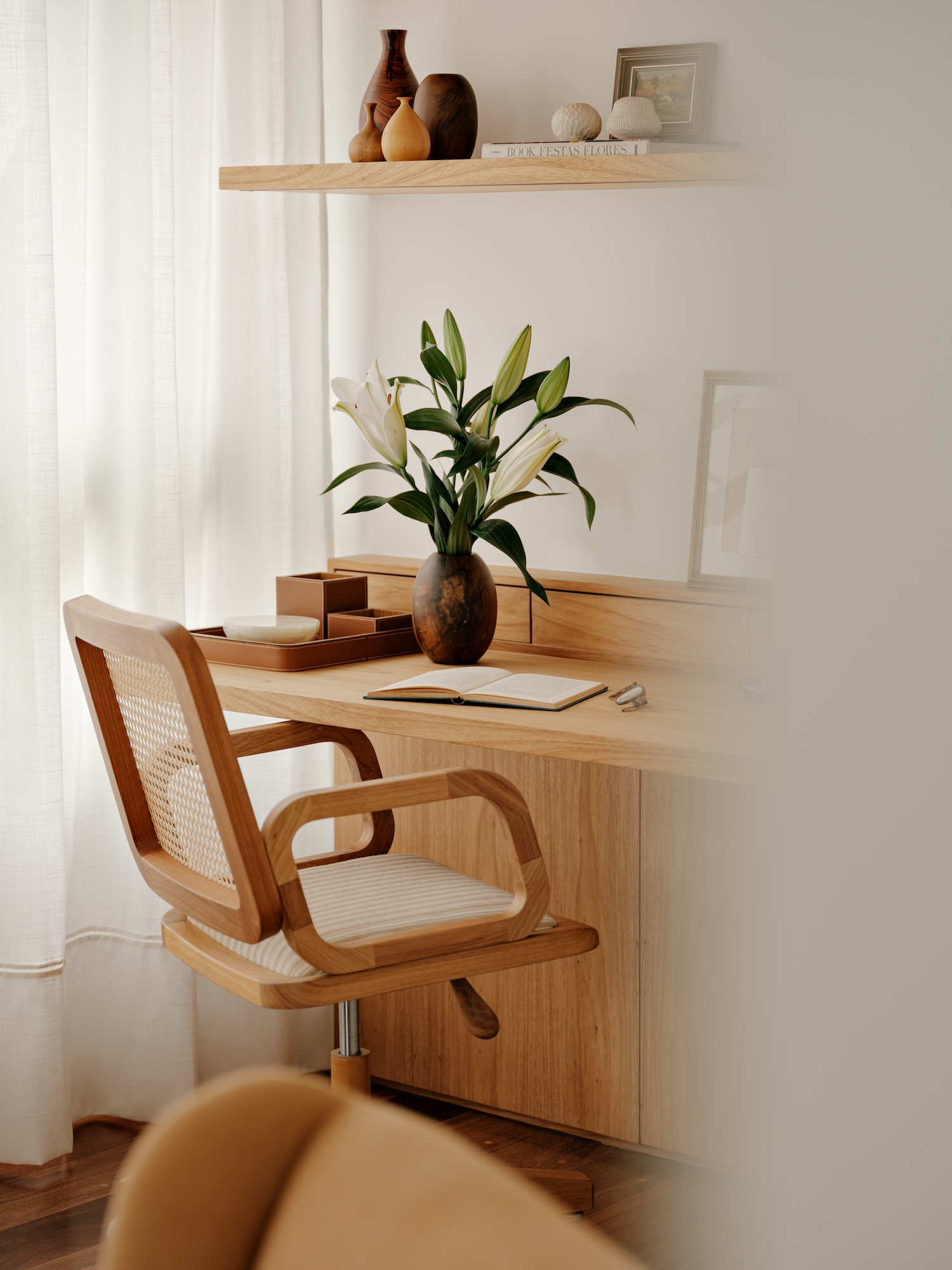
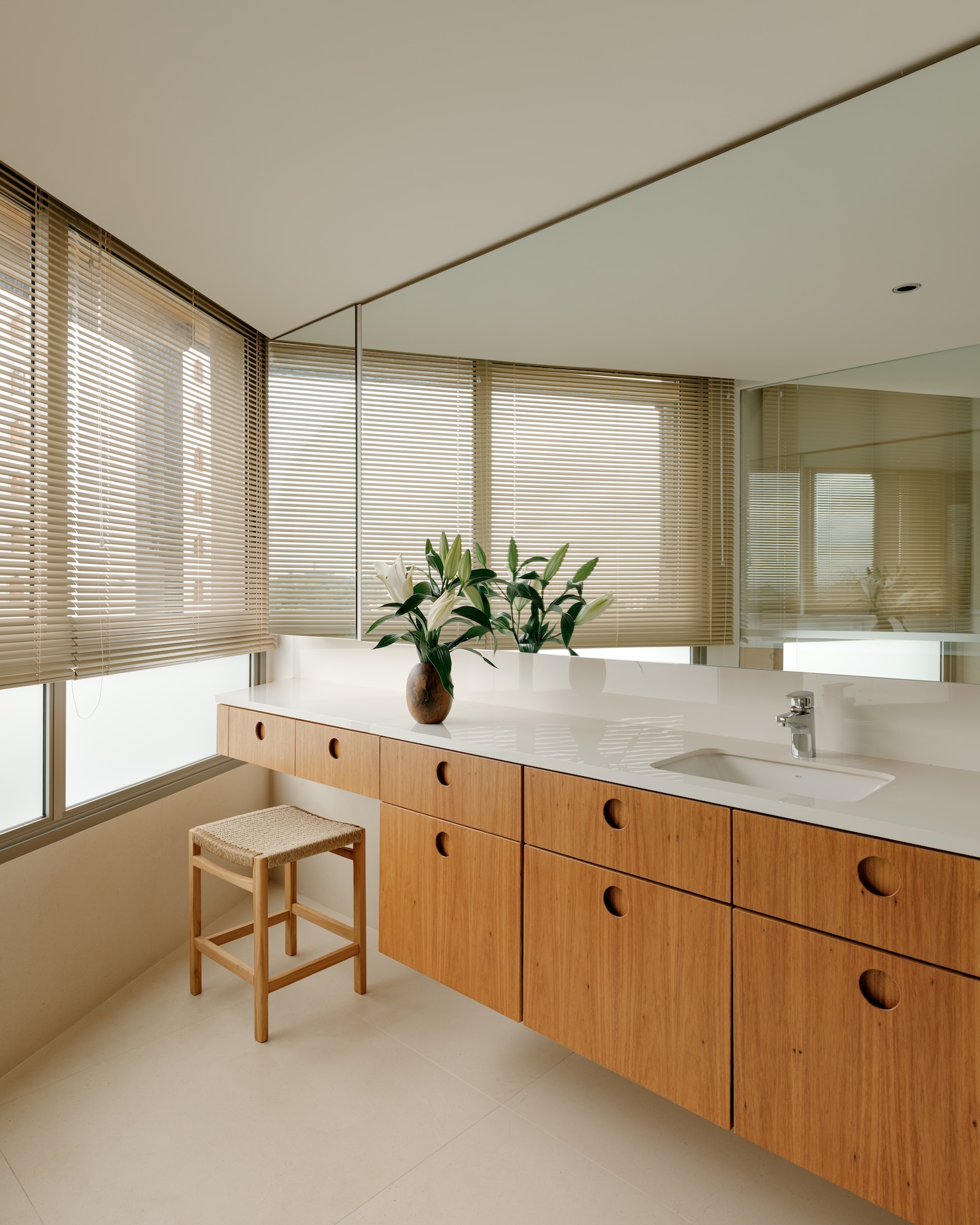
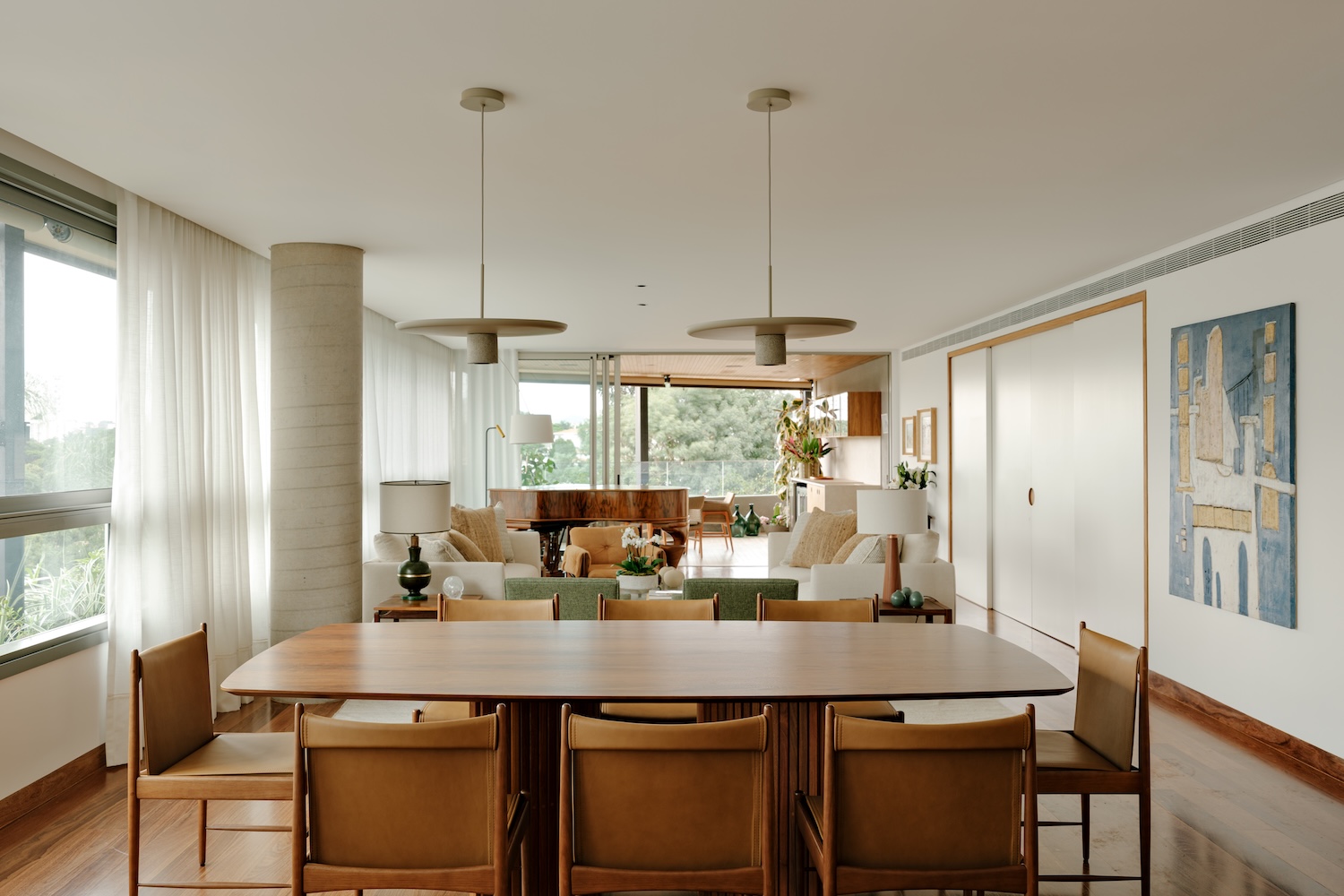
Salles resolved this through material restraint at the architectural scale. White dominates as a reflective ground, amplifying the natural light that enters through generous glass openings on the west-facing facade. Cumaru flooring and freijó cabinetry establish warmth without visual weight, their grain patterns providing texture that reads as continuity rather than accumulation. The inherited pieces – the Sergio Rodrigues caramel suede armchair restored by Herança Cultural, the Zanine Caldas Zeca armchairs, the piano – read as punctuation within this neutrality rather than clutter against it. The strategy recalls the way Brazilian modernism at its best understood furniture not as decoration but as structural argument.
Circular geometry functions as the project’s recurring motif, appearing in door handles, lighting fixtures, hood cutouts, and a particularly inventive office intervention where a circular ceiling aperture with tensioned fabric diffuses light in the manner of a skylight. This detail is telling: the office itself was carved from what had been a narrow intimate room running parallel to the social areas, its low ceiling constrained by structural elements and subsequently clad in wooden panels to create an enclosed box that dialogues with the flooring below. The transformation demonstrates how spatial compression, handled with material consistency, can produce intimacy rather than claustrophobia.