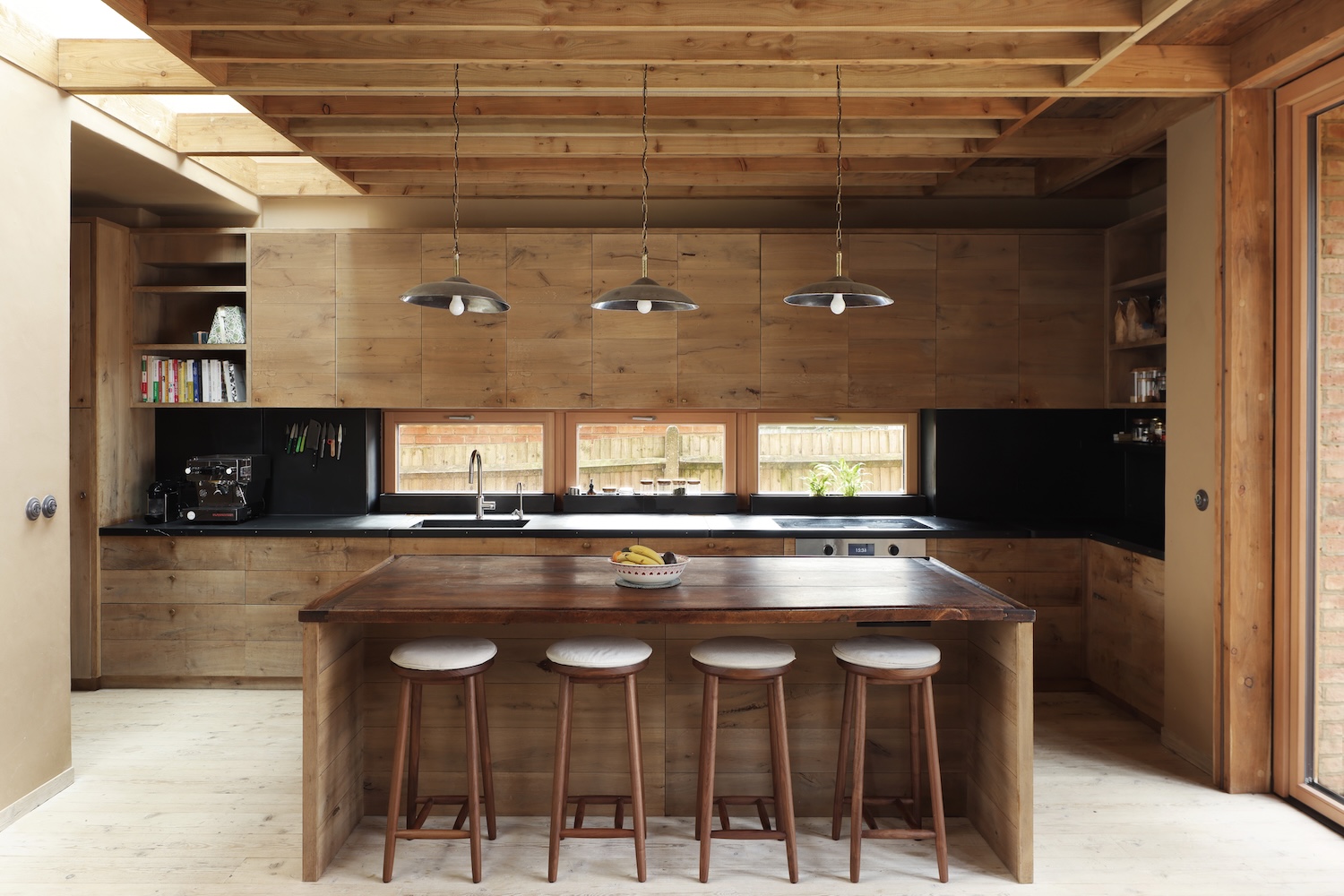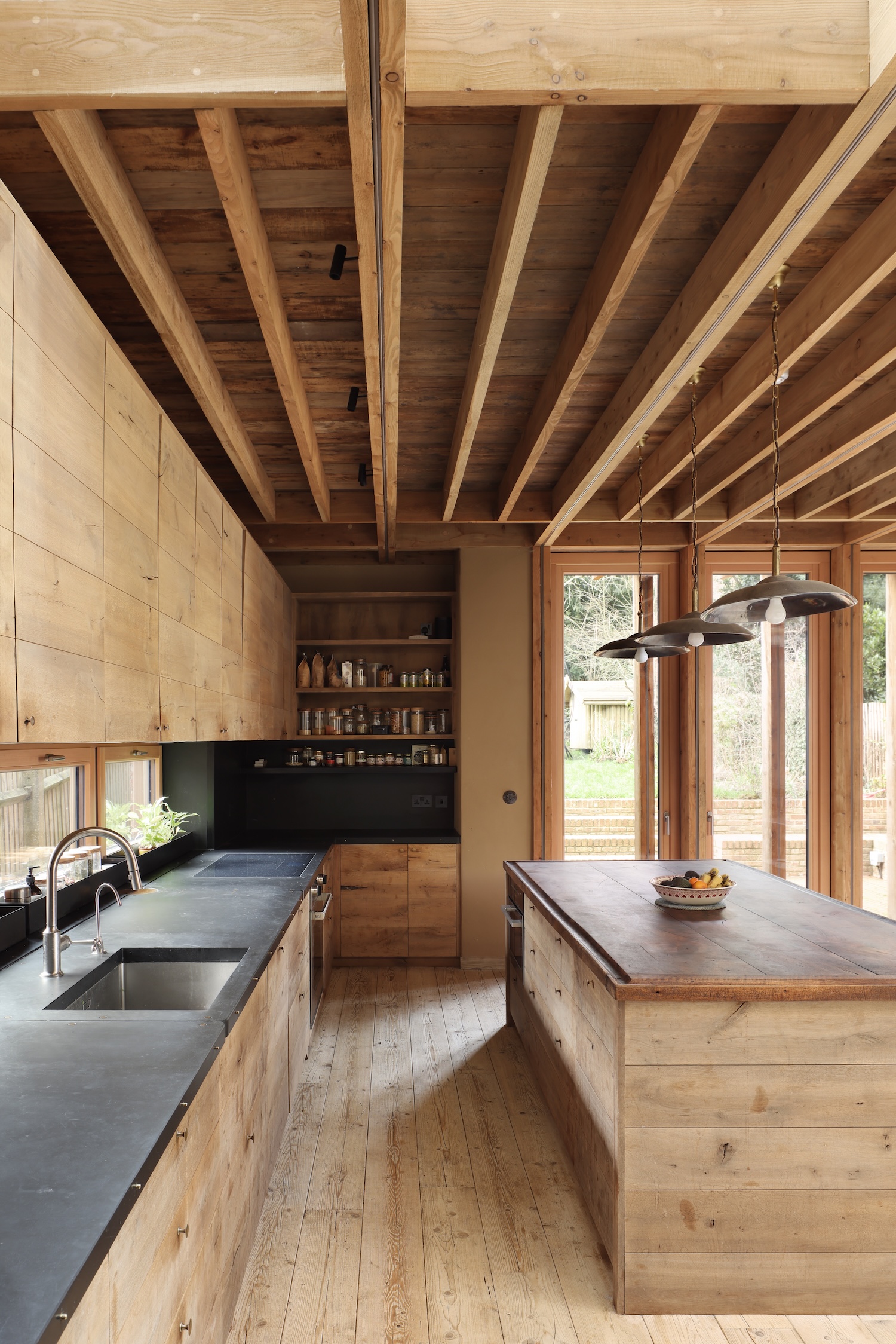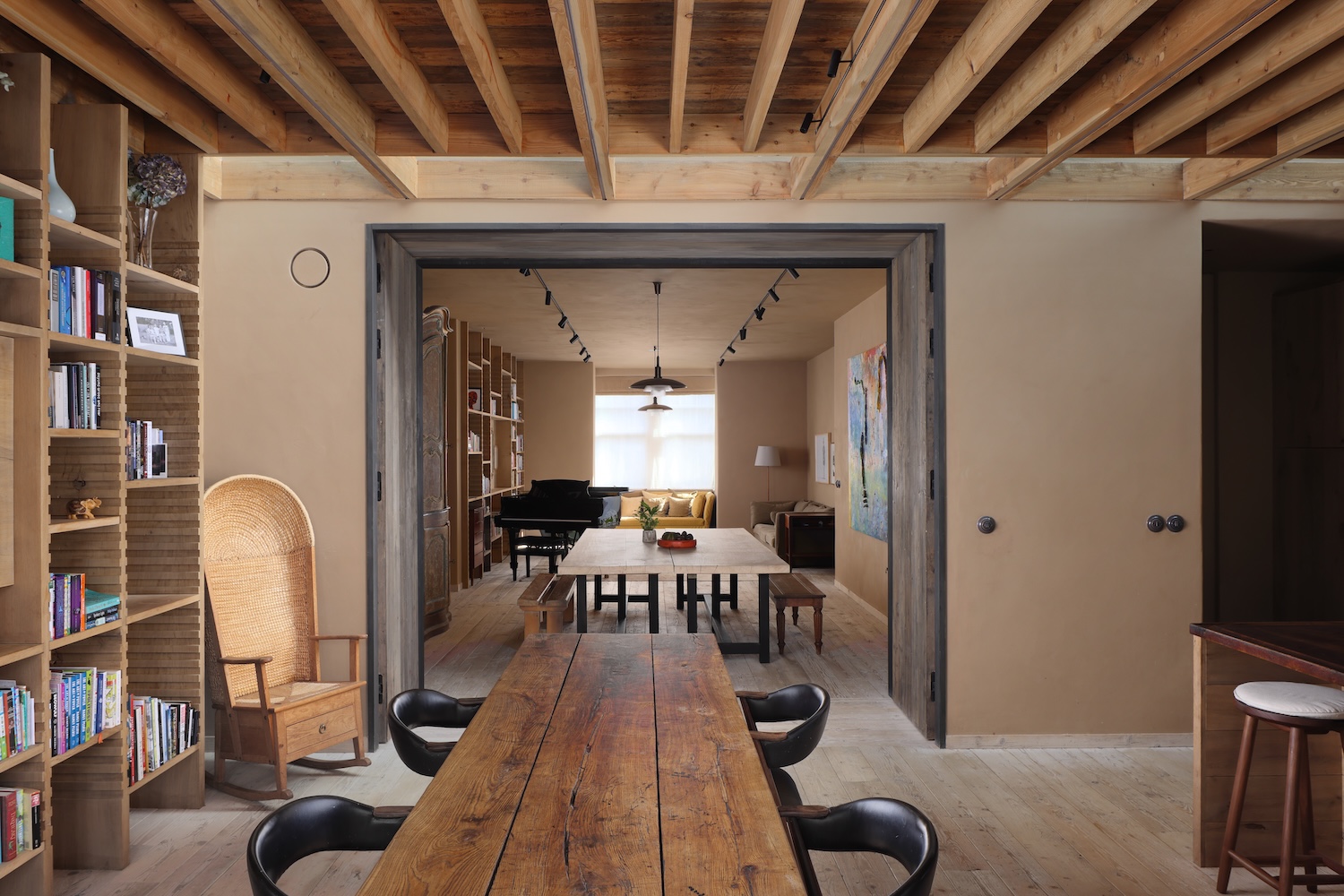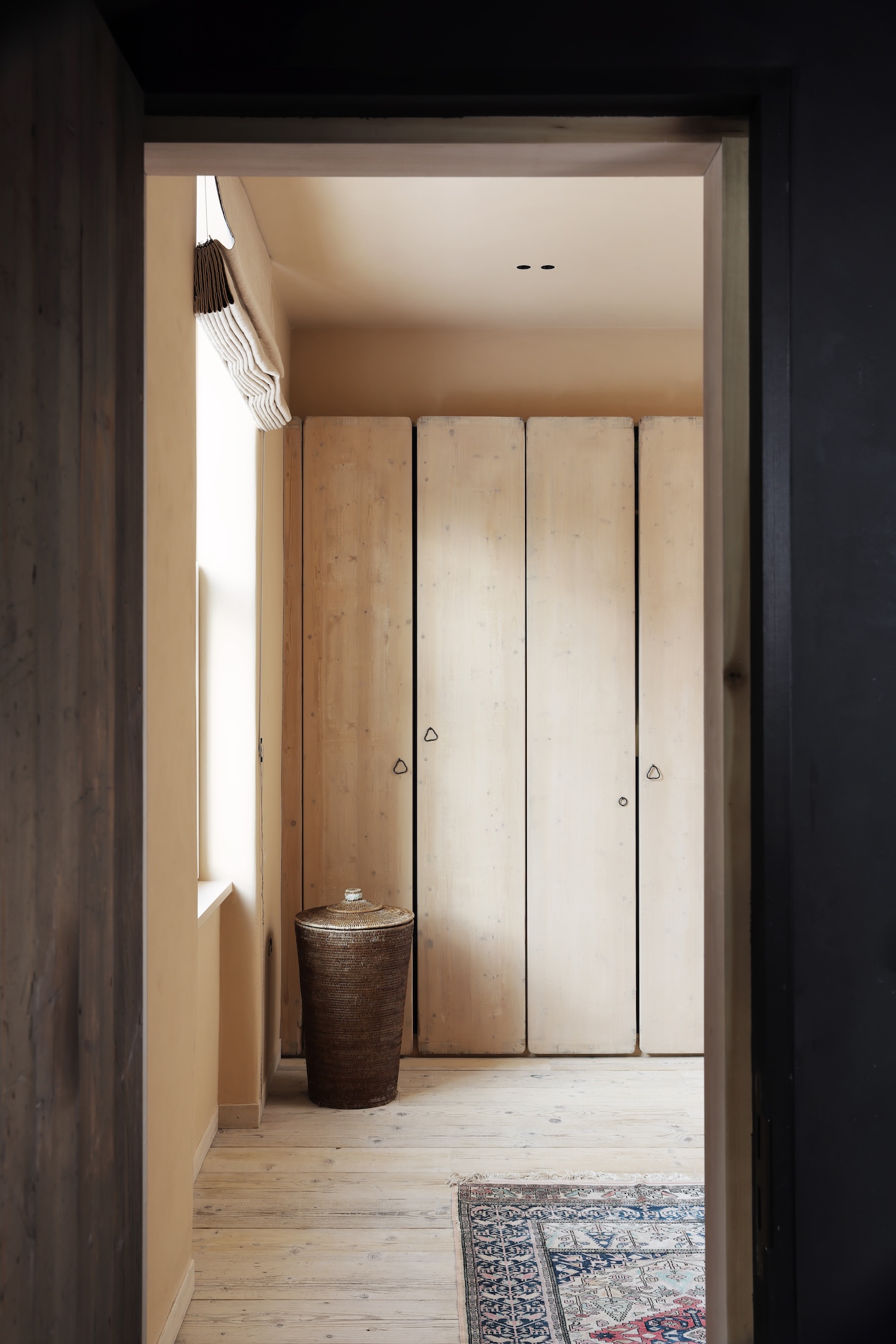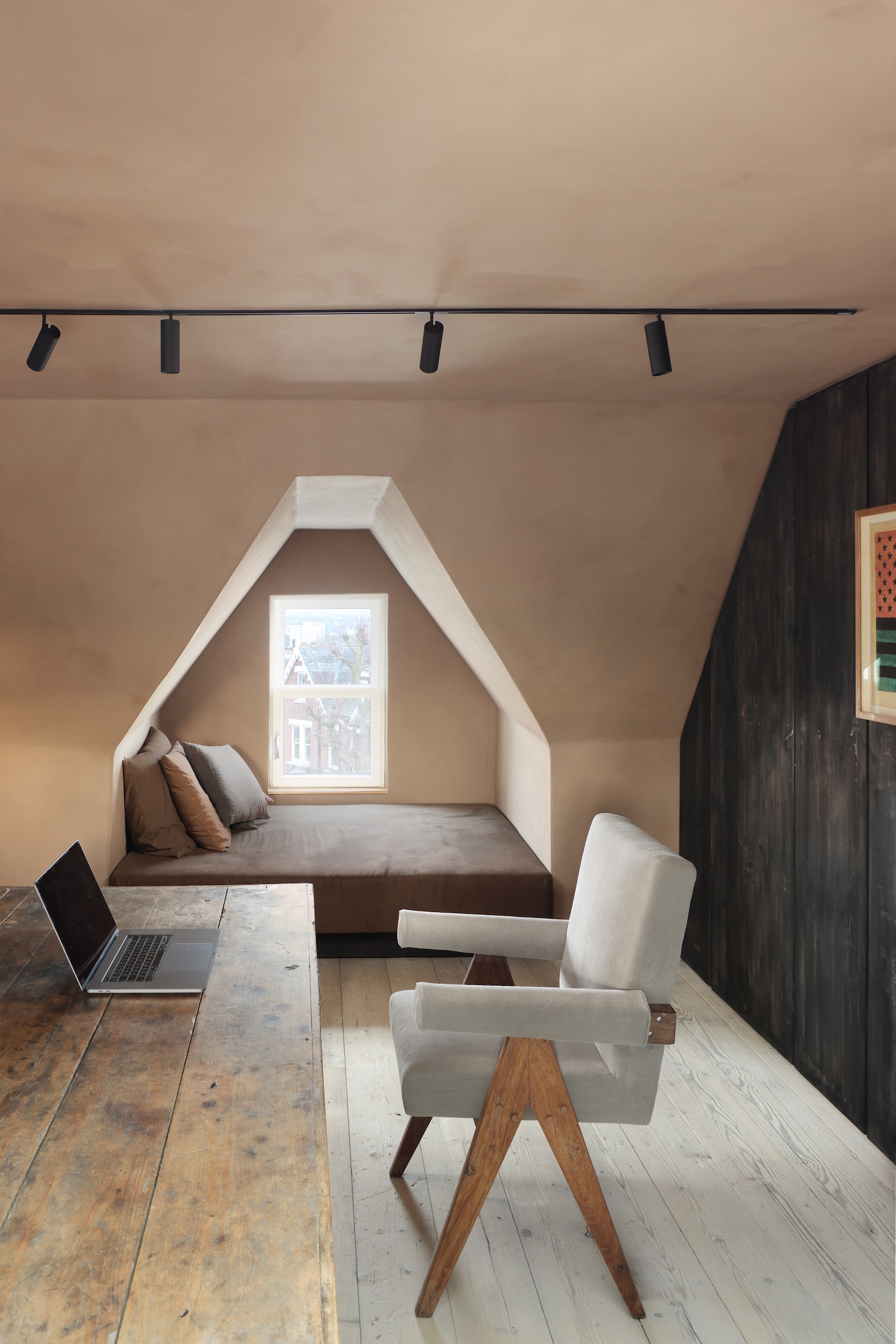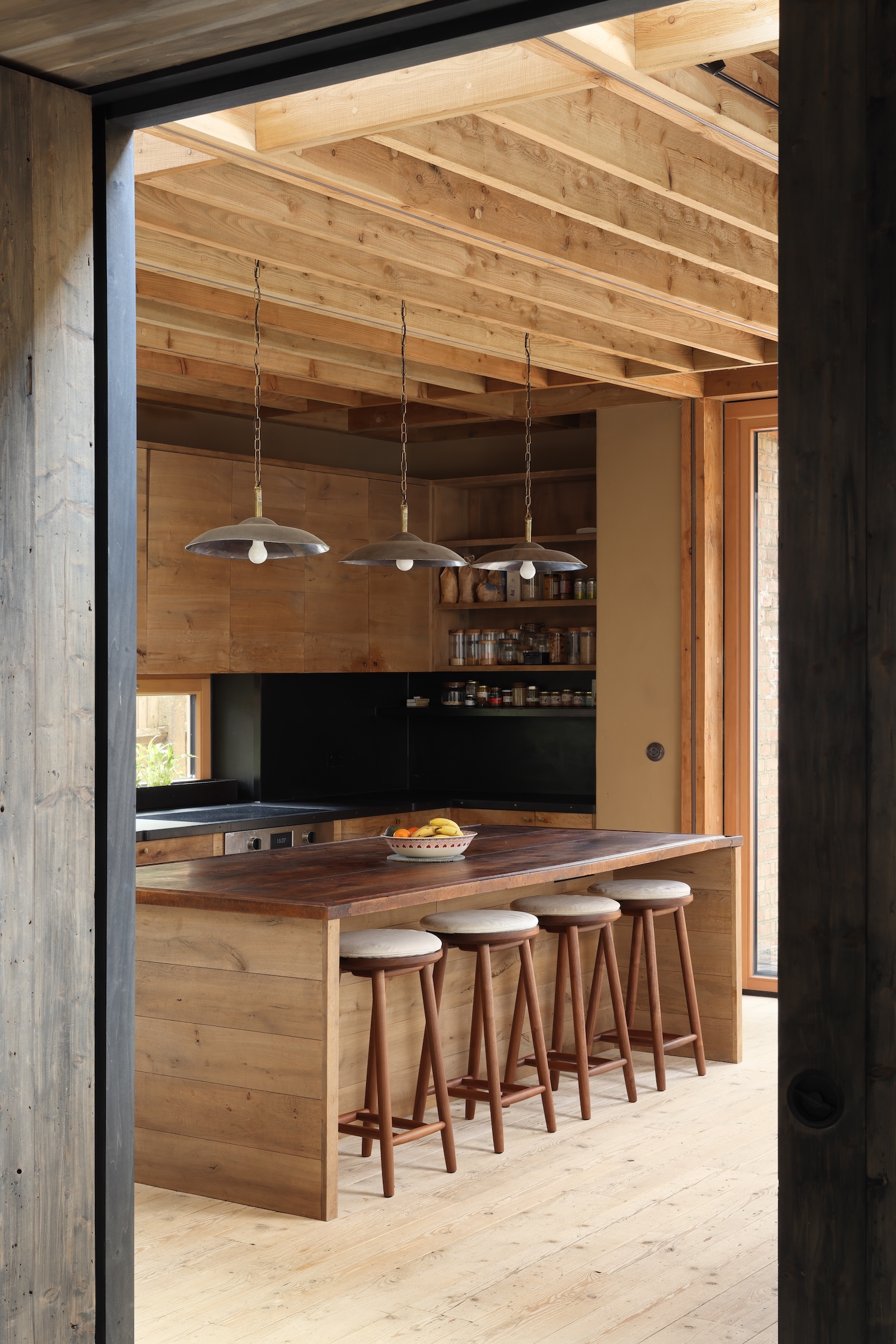
Passive House is a minimal home located in London, United Kingdom, designed by GS Architecture, with interiors by Axel Vervoordt. This project represents more than mere renovation – it signals a fundamental shift in how we approach the marriage of historical preservation and environmental responsibility. The decision to retrofit this semi-detached home to meet the exacting Passivhaus EnerPHit standard required a delicate choreography of old and new, where every material choice carried both practical and symbolic weight.
The timber-framed addition that replaced the existing conservatory demonstrates how contemporary sustainable design can honor historical precedent. Victorian builders understood the importance of connecting interior spaces to garden views, and this modern interpretation amplifies that relationship while achieving unprecedented thermal performance. The wildflower green roof serves as both insulation and habitat, creating a living bridge between the bedrooms above and the landscape below.
Perhaps most compelling is the project’s commitment to material provenance and reuse. The cheese manufacturing boards that now form cupboard doors carry the grain patterns and honest wear of industrial purpose, while clay soil excavated from the garden itself becomes hand-crafted paint – a gesture that recalls the medieval practice of sourcing pigments from local earth. These choices reflect a growing movement in contemporary design toward what we might call “material biography,” where objects and surfaces carry forward their histories rather than concealing them.
The integration of photovoltaic panels and mechanical ventilation systems reveals how technical innovation can serve both environmental and experiential goals. The continuous supply of fresh, filtered air through the MVHR system creates an almost imperceptible but profound enhancement to daily life – the kind of invisible luxury that marks sophisticated sustainable design.