Penthouse A.N.T. is a minimalist residence located in Barcelona, Spain, designed by Pineda & Monedero, in collaboration with Jaime Prous. This 1970s building top-floor dwelling demonstrates how residual penthouse spaces can transform through subtraction process revealing bare structure despite narrow bays and numerous obstacles including drainpipes and ventilation ducts. The project located where recessed facade positions dwelling above lower floor secondary spaces addresses typical urban penthouse challenges where desirable elevation combines with problematic spatial constraints.
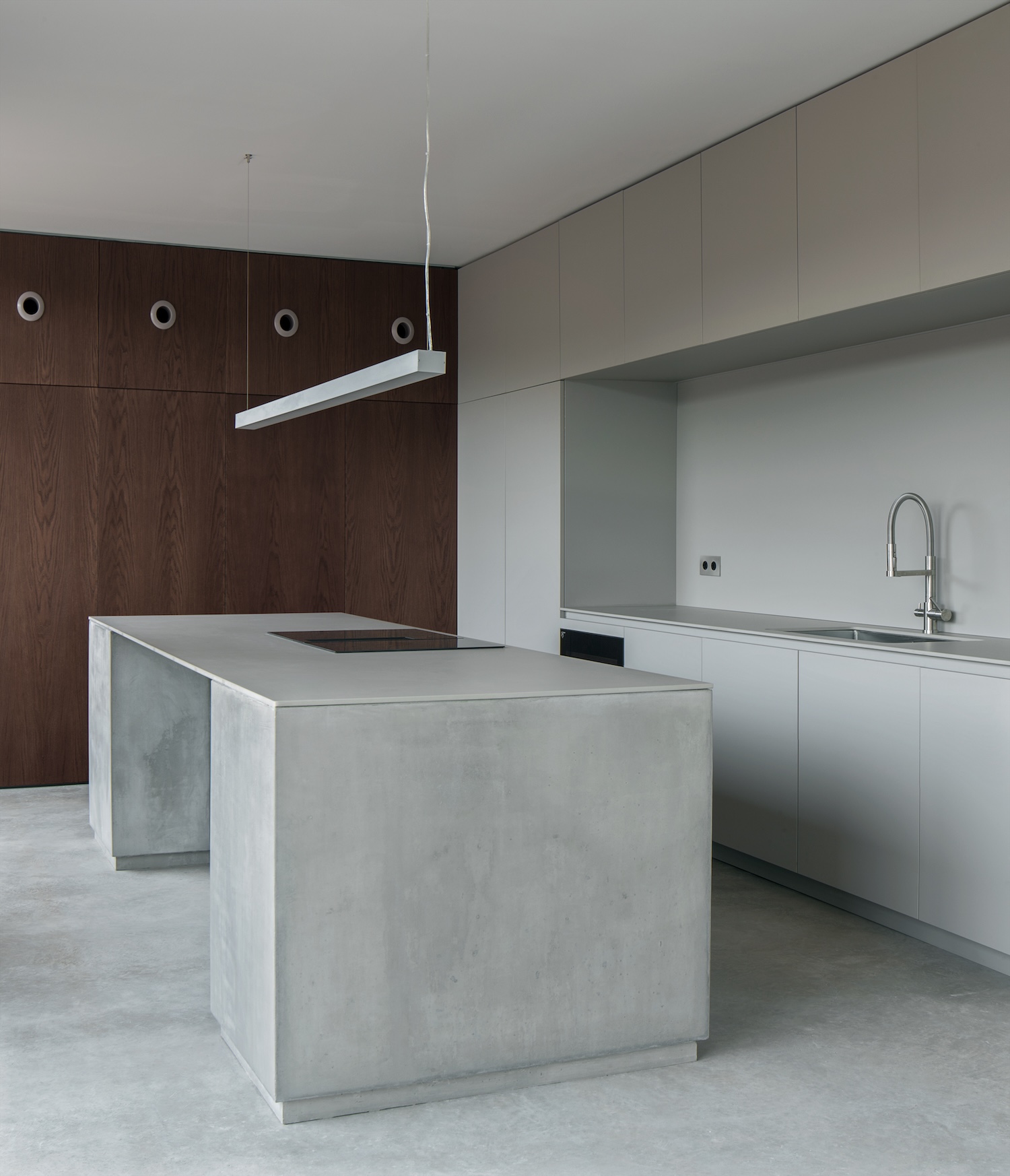
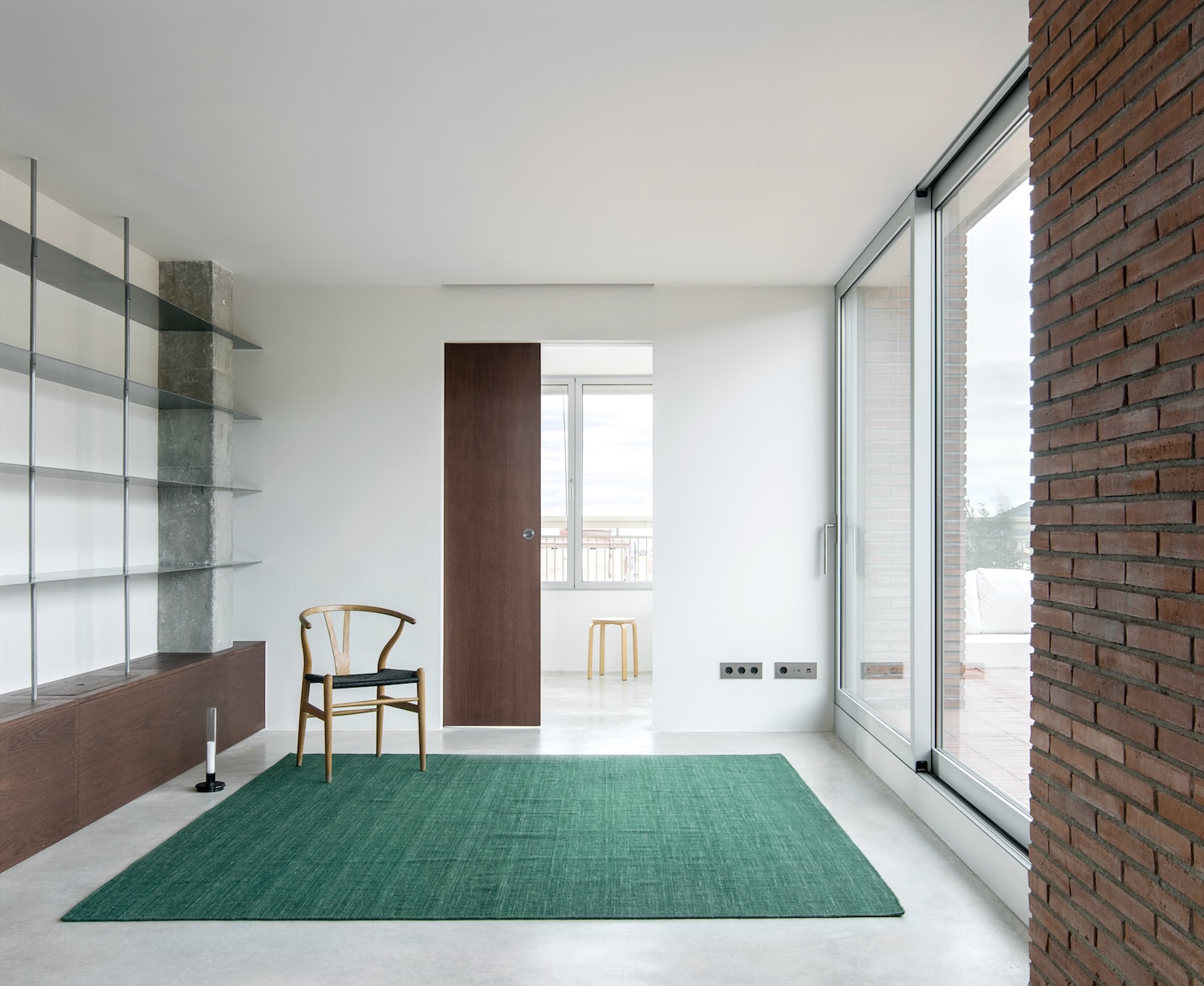
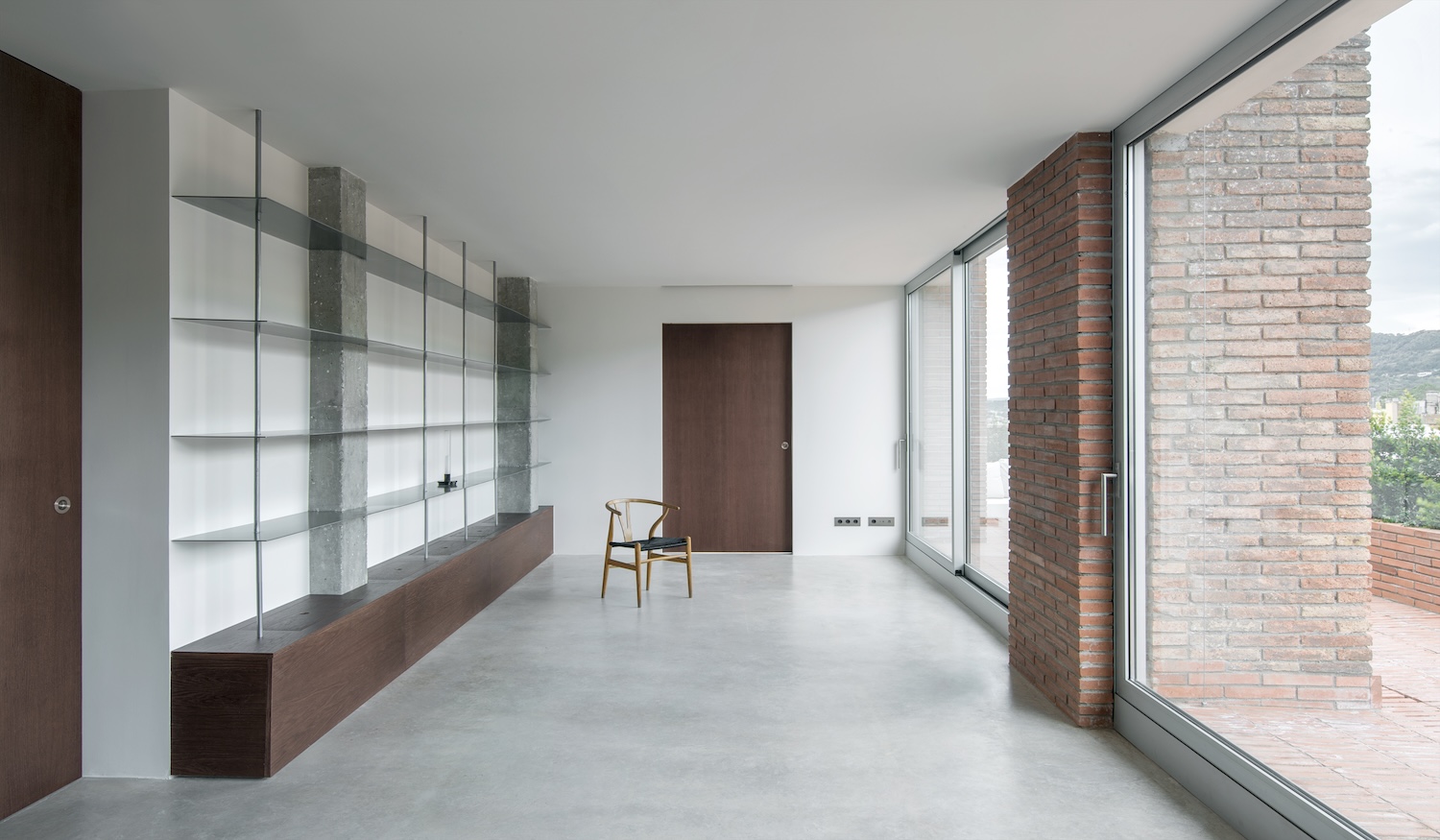
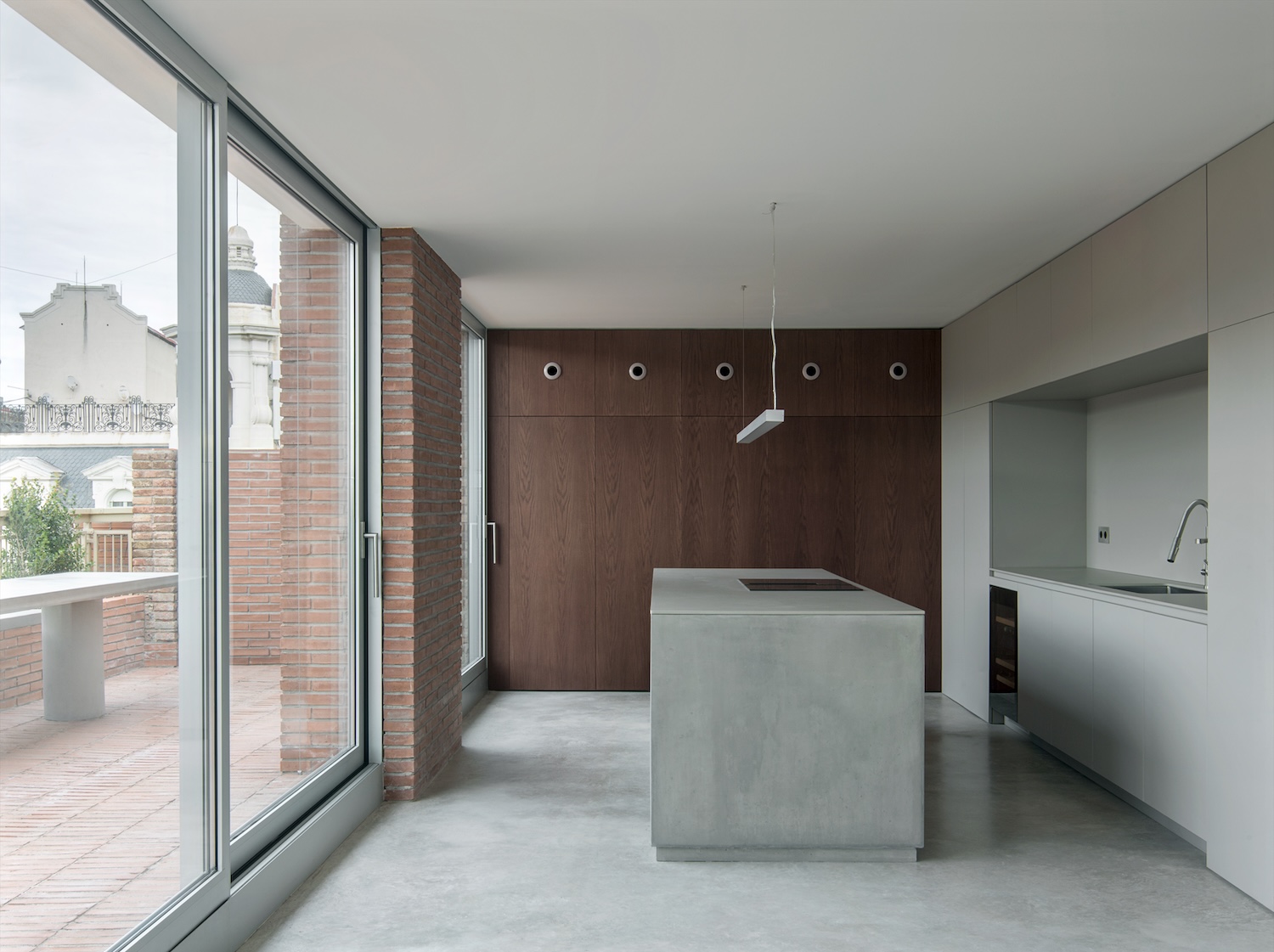
Three main spaces define original layout with first space being open-plan room more akin to hangar. Atmosphere creates through heavy and light element contrast where thick brick pillars frame windows while concrete altar sits at center acting as kitchen with remaining furnishings forming walls. This organizational strategy demonstrates how material weight and functional elements can establish spatial boundaries without traditional partition walls, creating open yet differentiated zones through volumetric objects rather than surface divisions.
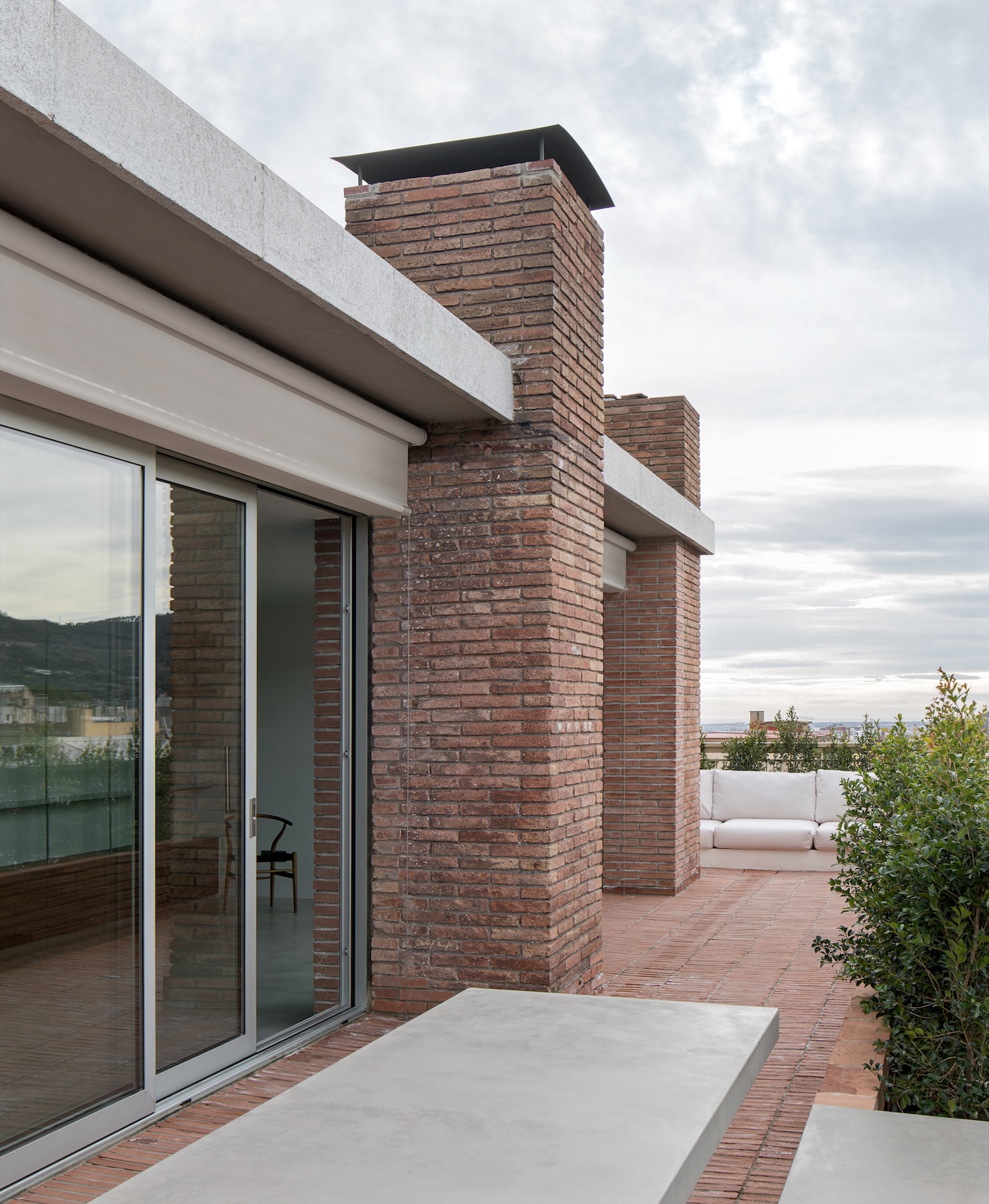
Added gallery demolition allows terrace recovery facing Tibidabo with elongated shape and brick materiality inspired by cities where penthouses form part of urban landscape including New York setbacks and Milan green rooftops. Furnishings integrate into architecture through low planter wall wrapping terrace doubling as sofa or concrete table bench, demonstrating how built-in elements can serve multiple functions eliminating freestanding furniture footprints maximizing limited penthouse outdoor space efficiency.
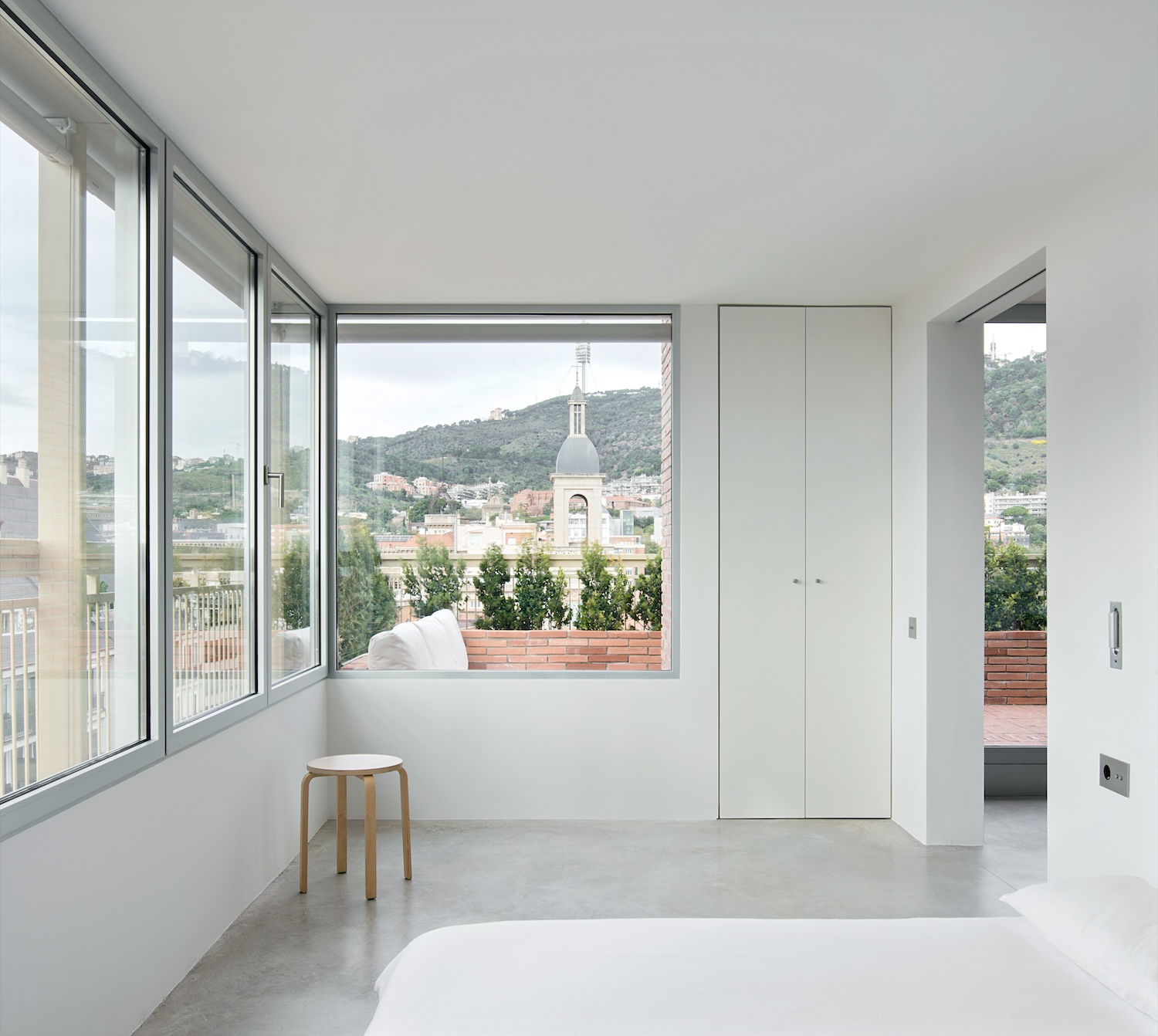
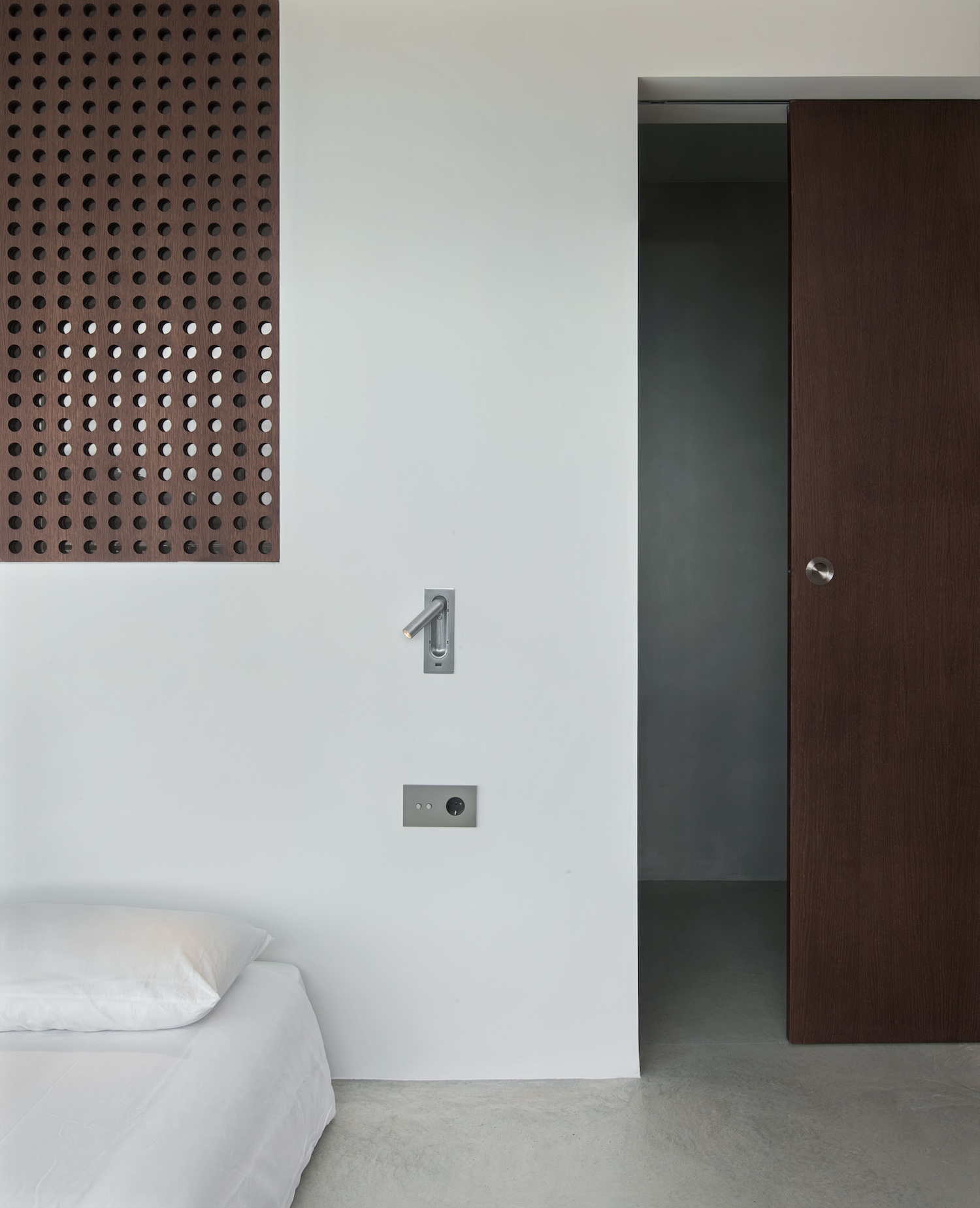
Third space is main bedroom – gallery overlooking El Prat with metal joinery facade and lightweight sunshade. Connected bathroom without direct views receives light through lattice mimicking confessional privacy, demonstrating how indirect illumination strategies can provide natural light while maintaining visual separation between adjacent spaces. This lattice detail creates atmospheric lighting conditions rather than purely functional illumination.
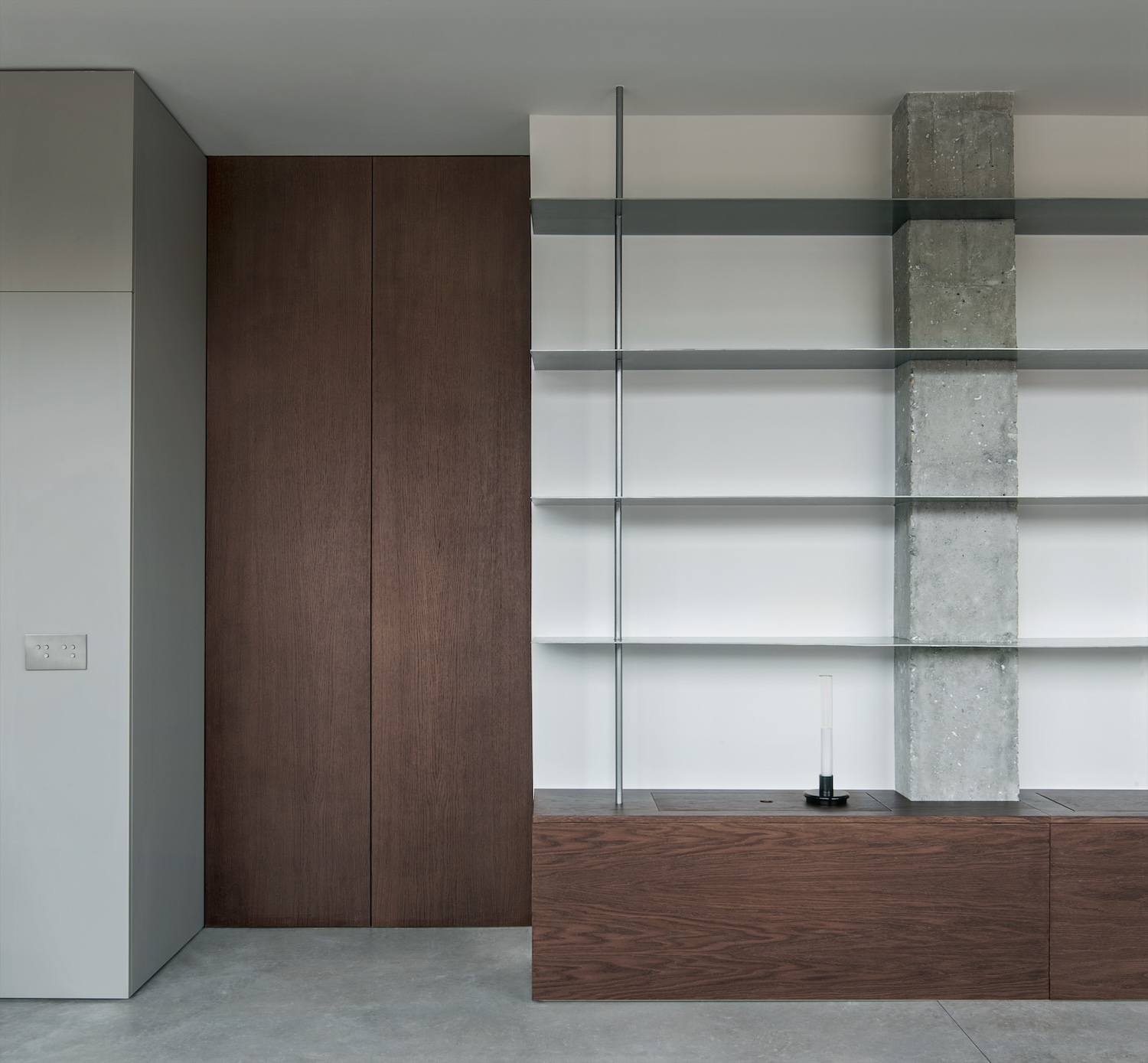
Concrete and brick use serves blurring line between existing and added elements enhancing space-carved-into-building feeling. Everything non-stereotomic including windows and furniture resolves in dark wood and steel joinery, demonstrating clear material hierarchy where heavy masonry establishes permanent architectural framework while lighter wood-metal elements indicate contemporary interventions and movable components. This material distinction allows reading spatial history while maintaining unified aesthetic.