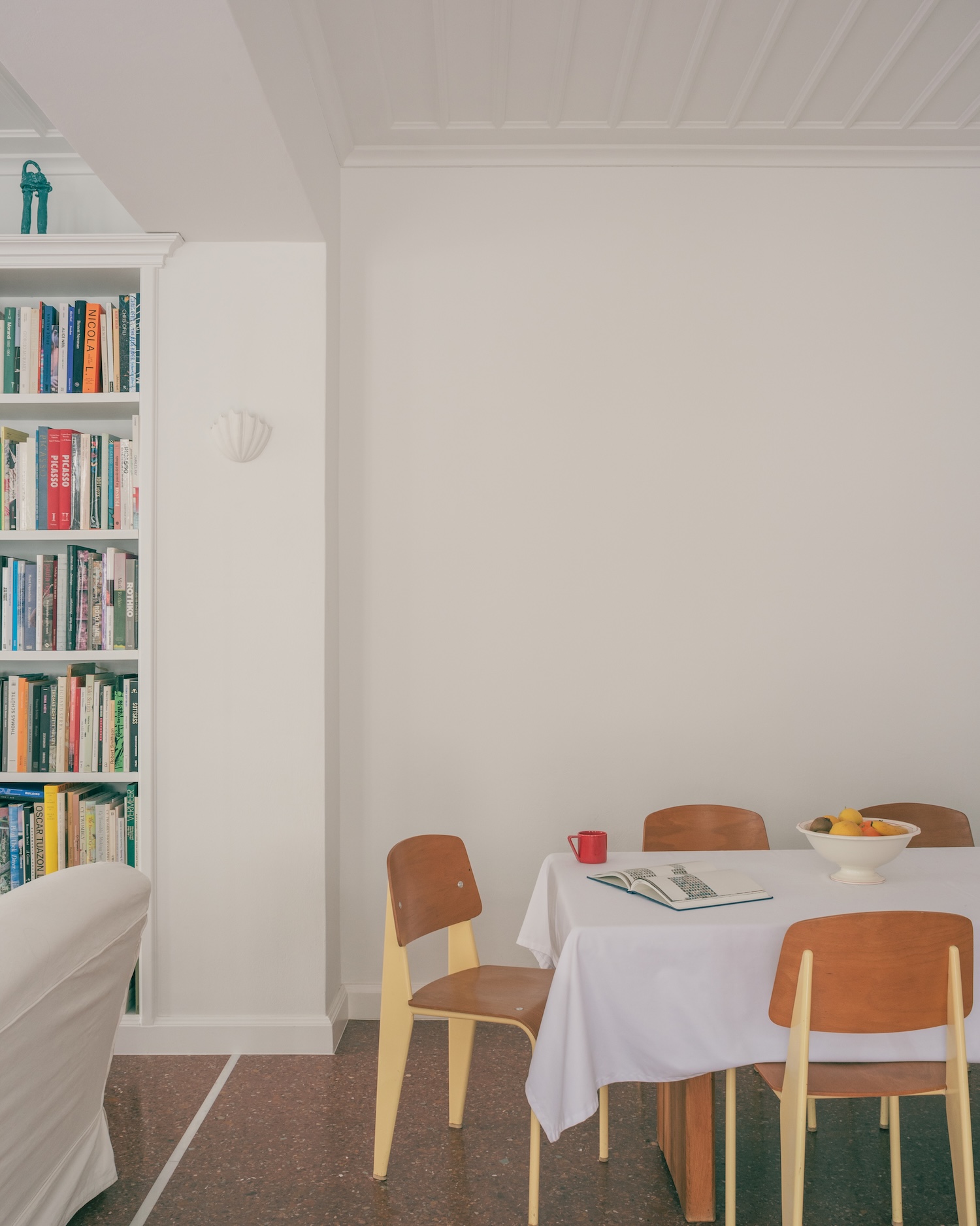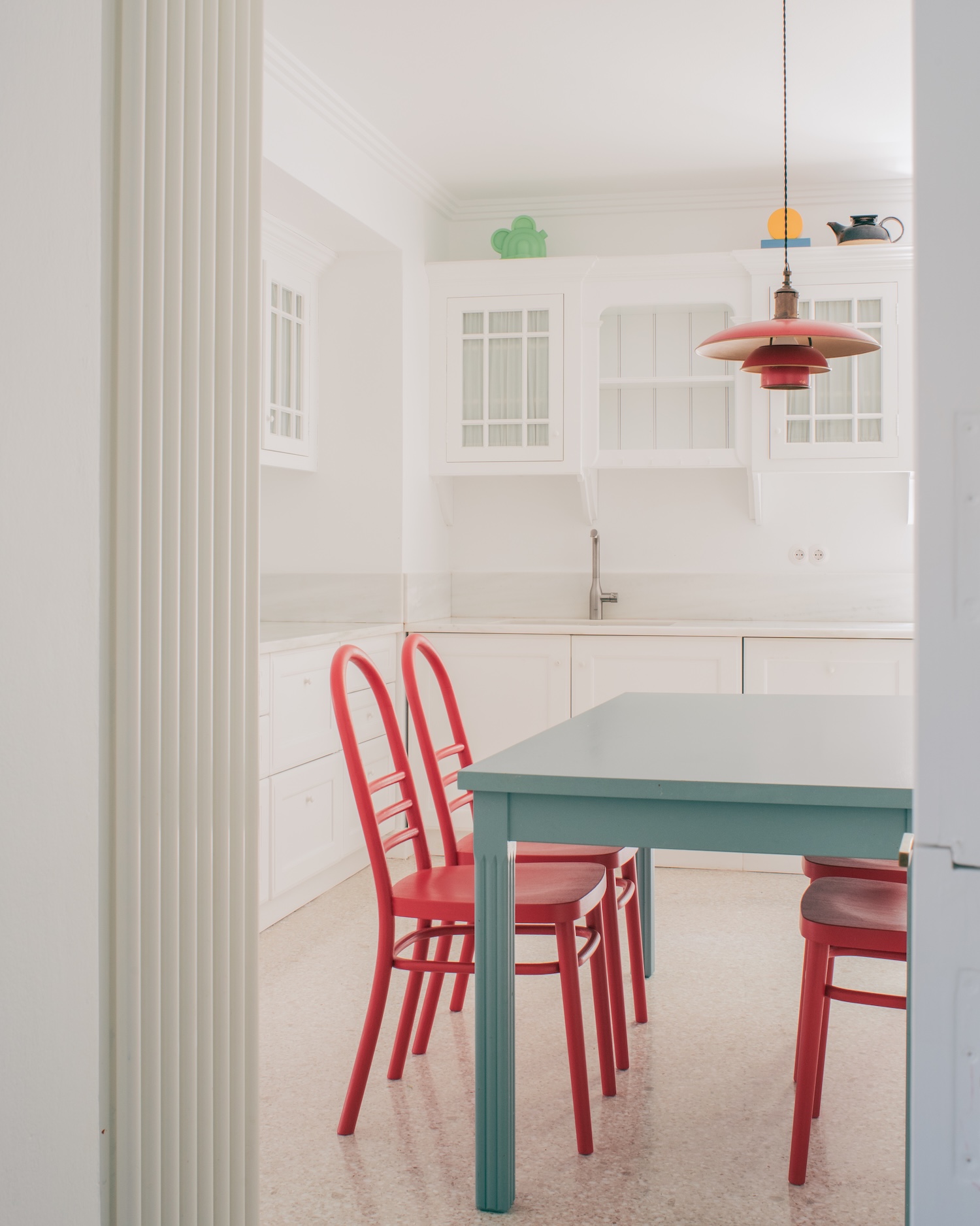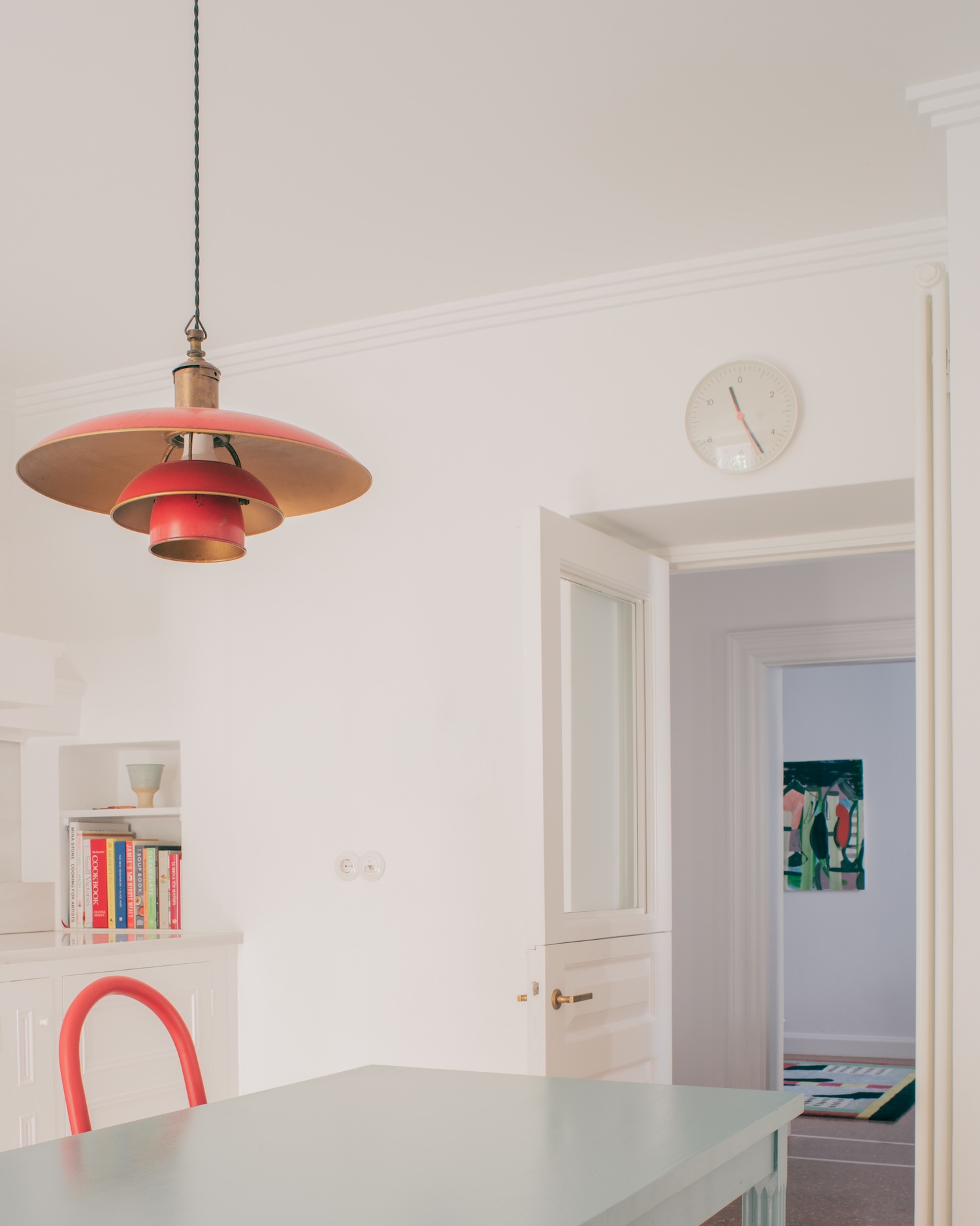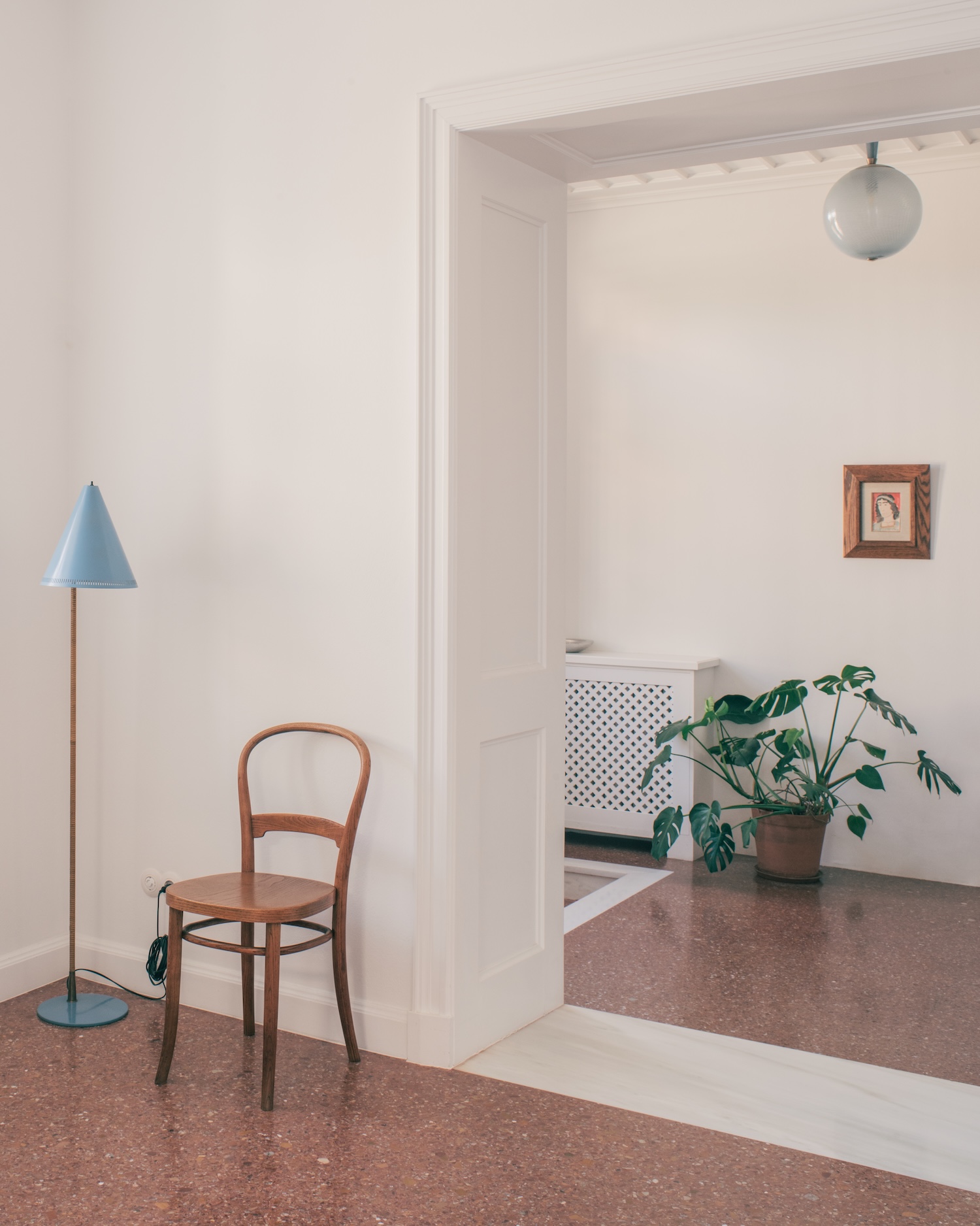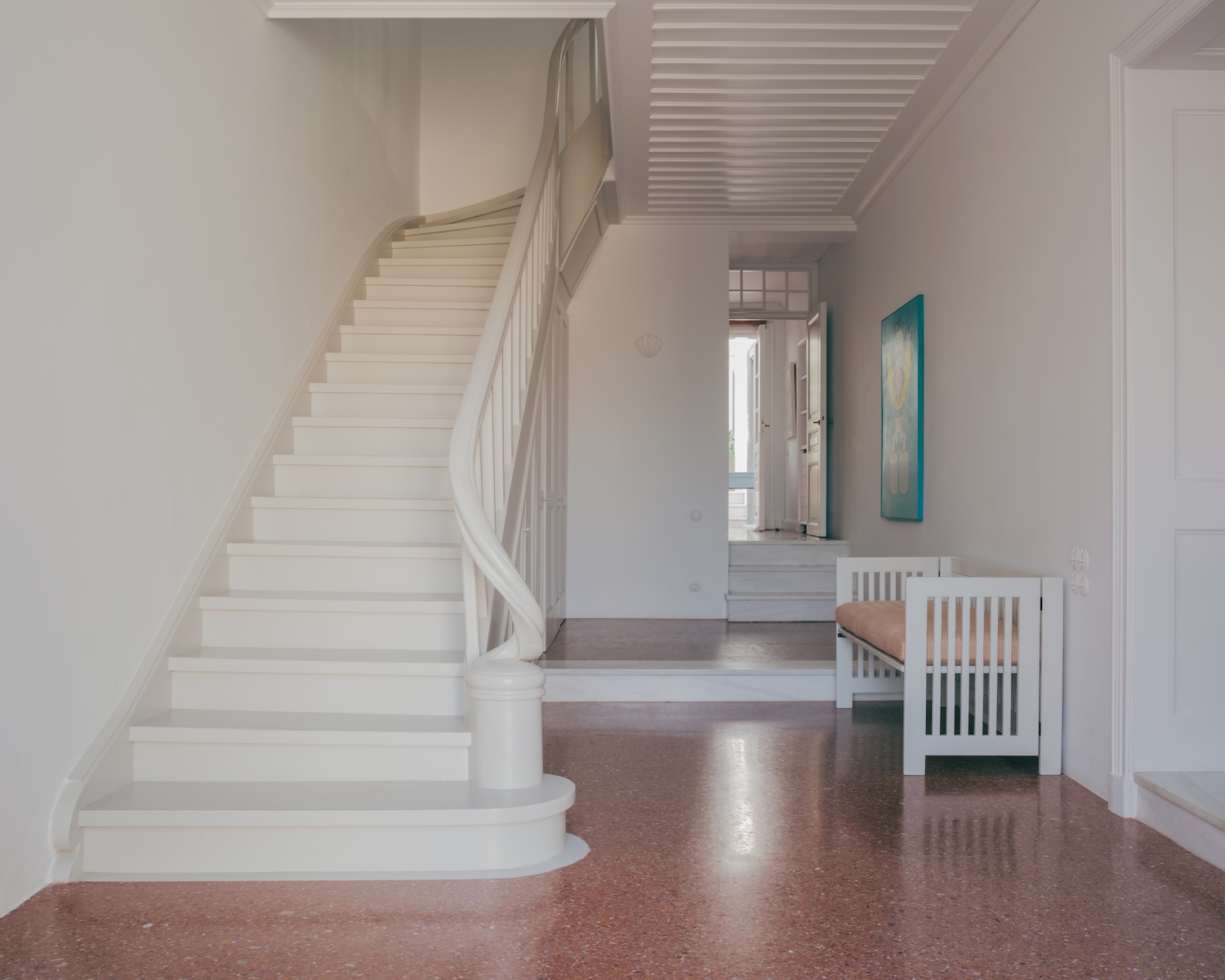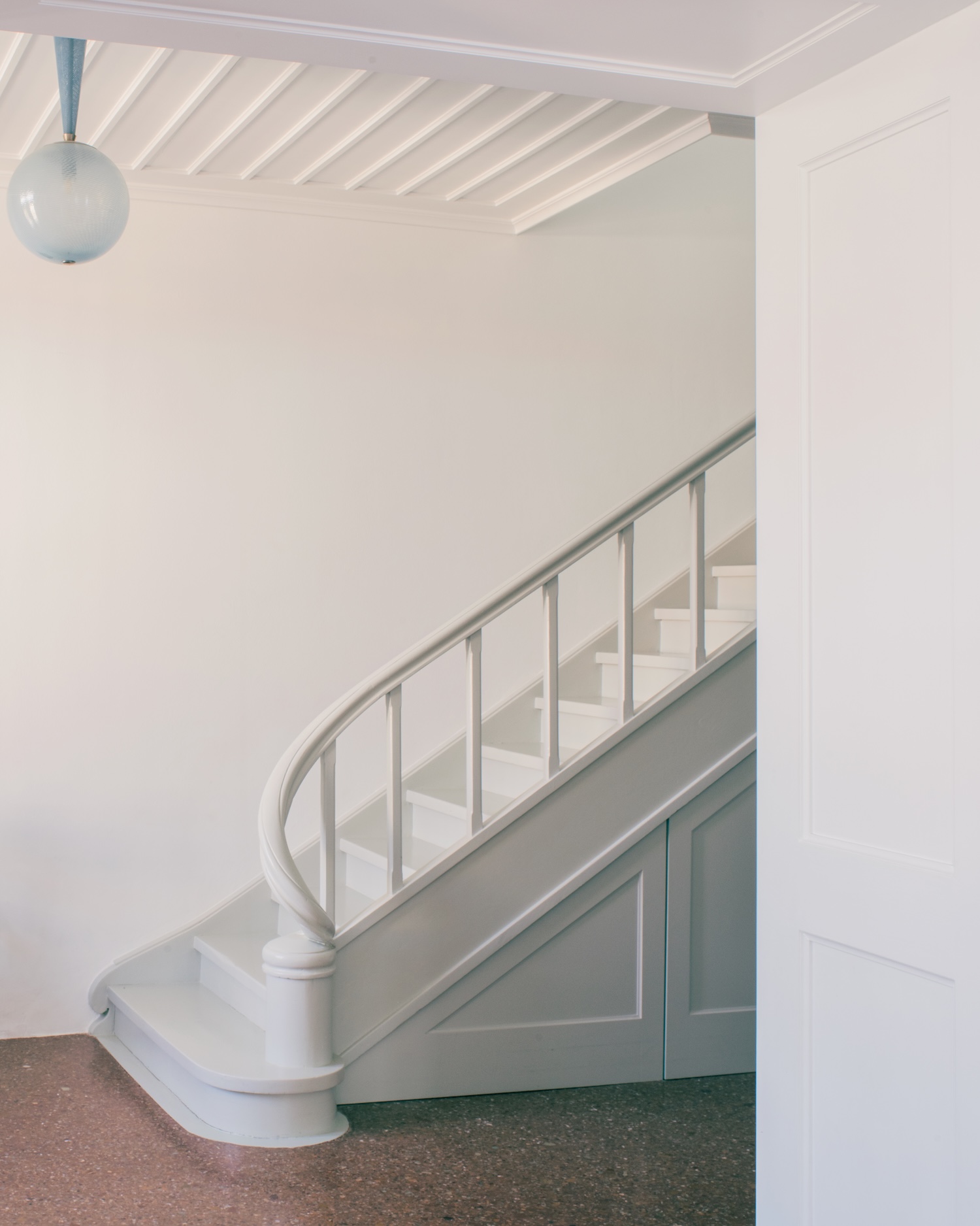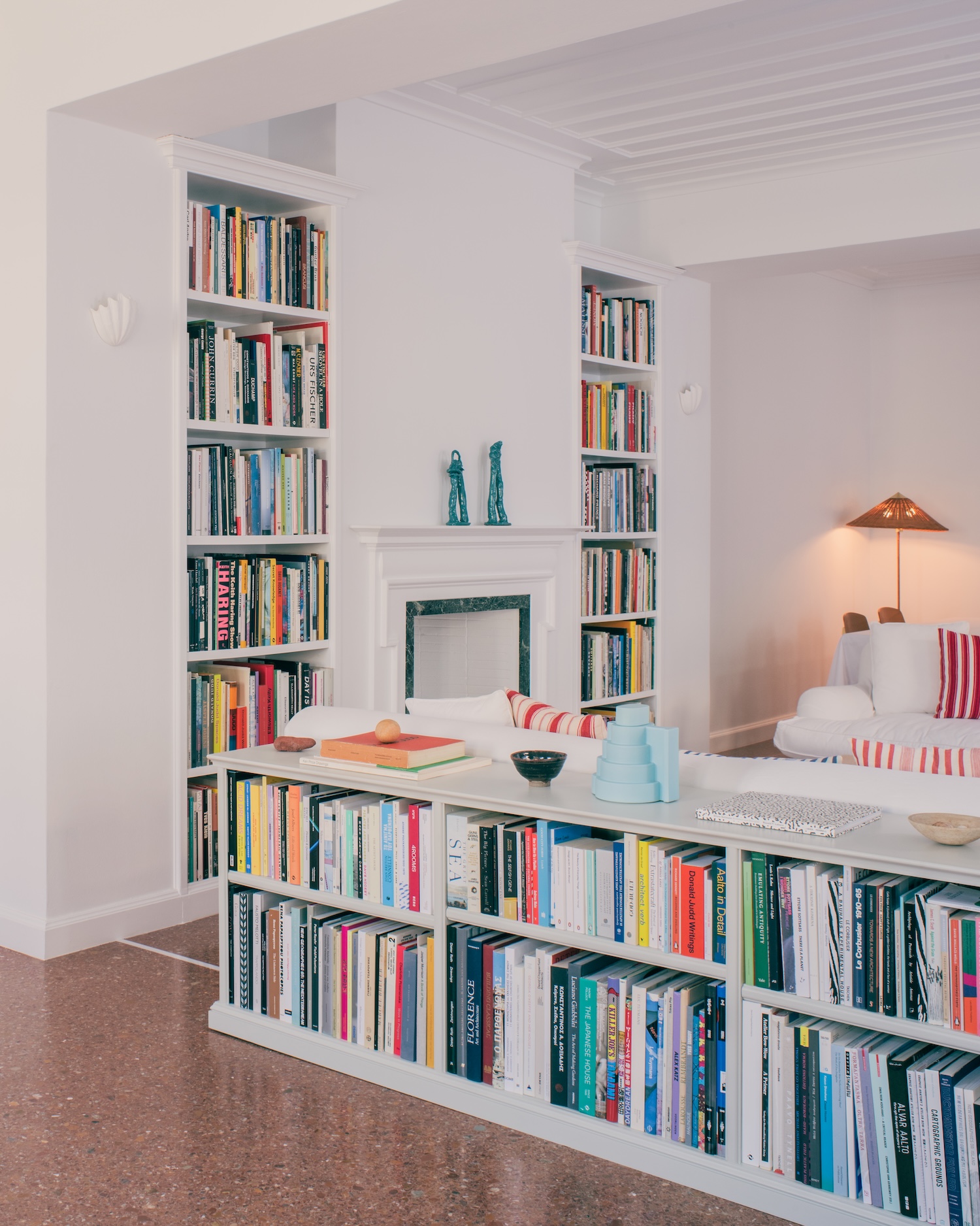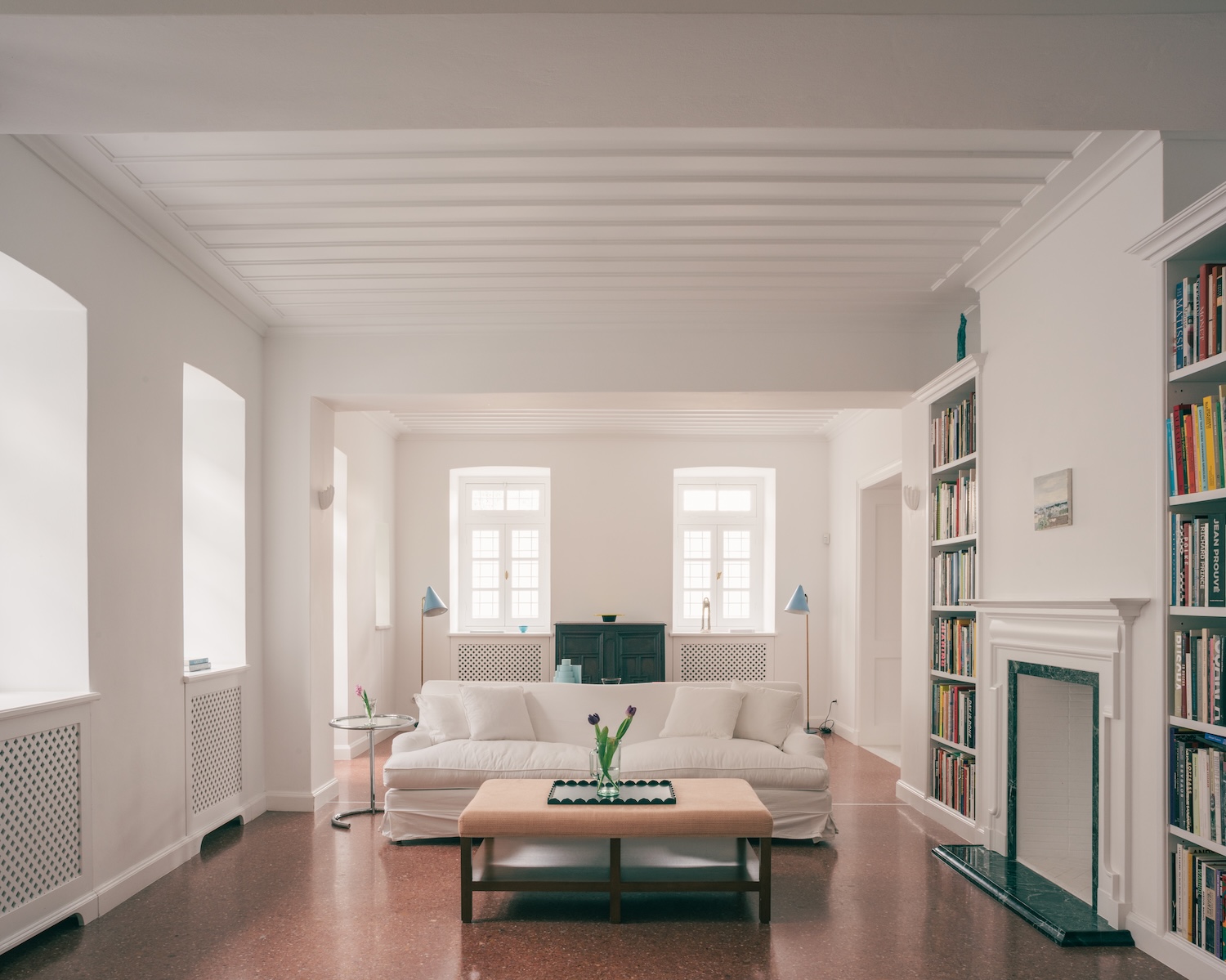
Plaka House minimalist residence located in Athens, Greece, designed by Local Local. This renovation of a listed neoclassical townhouse dating back to the 1800s sits on a narrow stone-paved alley in Plaka, one of Athens’ oldest and most atmospheric neighborhoods, completed over six months reflecting the architects’ site-sensitive design ethos. Rather than impose a style, Local Local listens closely to the architecture and geographical nuances of the site, drawing out character through material choices and calibrated interventions beneath the Acropolis within rich architectural tapestry surrounded by 19th-century neoclassical façades, Ottoman-era balconies, and Byzantine and Roman remnants.
Originally renovated by previous owners in the 1990s, the house remained structurally sound but stylistically outdated, defined by glossy marbles, heavy wood finishes, and an aesthetic that jarred with both the building’s heritage and the surrounding urban fabric. Local Local approached the project as an opportunity to reconnect the home with its setting through a contemporary lens, bringing sensitivity, lightness, and calm to the interiors while respecting the constraints of its listed status, demonstrating how heritage building renovation can address previous inappropriate interventions without compromising protected architectural features.
The house spans two levels with communal areas including kitchen, living room, family room, office, and courtyard on the ground floor, and bedrooms, guest room, and staff quarters above. By pruning overgrown trees and repainting the courtyard walls, Local Local transformed the garden into a light-filled extension of the living space while a rooftop terrace offers sweeping views of the Acropolis and the layered rooftops of Athens. The vision centered on creating a bright, open family home within the thick stone walls of the original structure which provide excellent natural insulation.
Natural light was a key challenge with limited window openings typical of the era. To address this, the studio opted for an almost entirely white, monochromatic palette across walls, ceilings, and joinery, enhancing brightness and spatial cohesion. This chromatic strategy demonstrates how paint color can dramatically improve perceived luminosity in historic buildings where heritage protection prevents window enlargement or additional opening creation, maximizing existing daylight penetration through reflective interior surfaces.