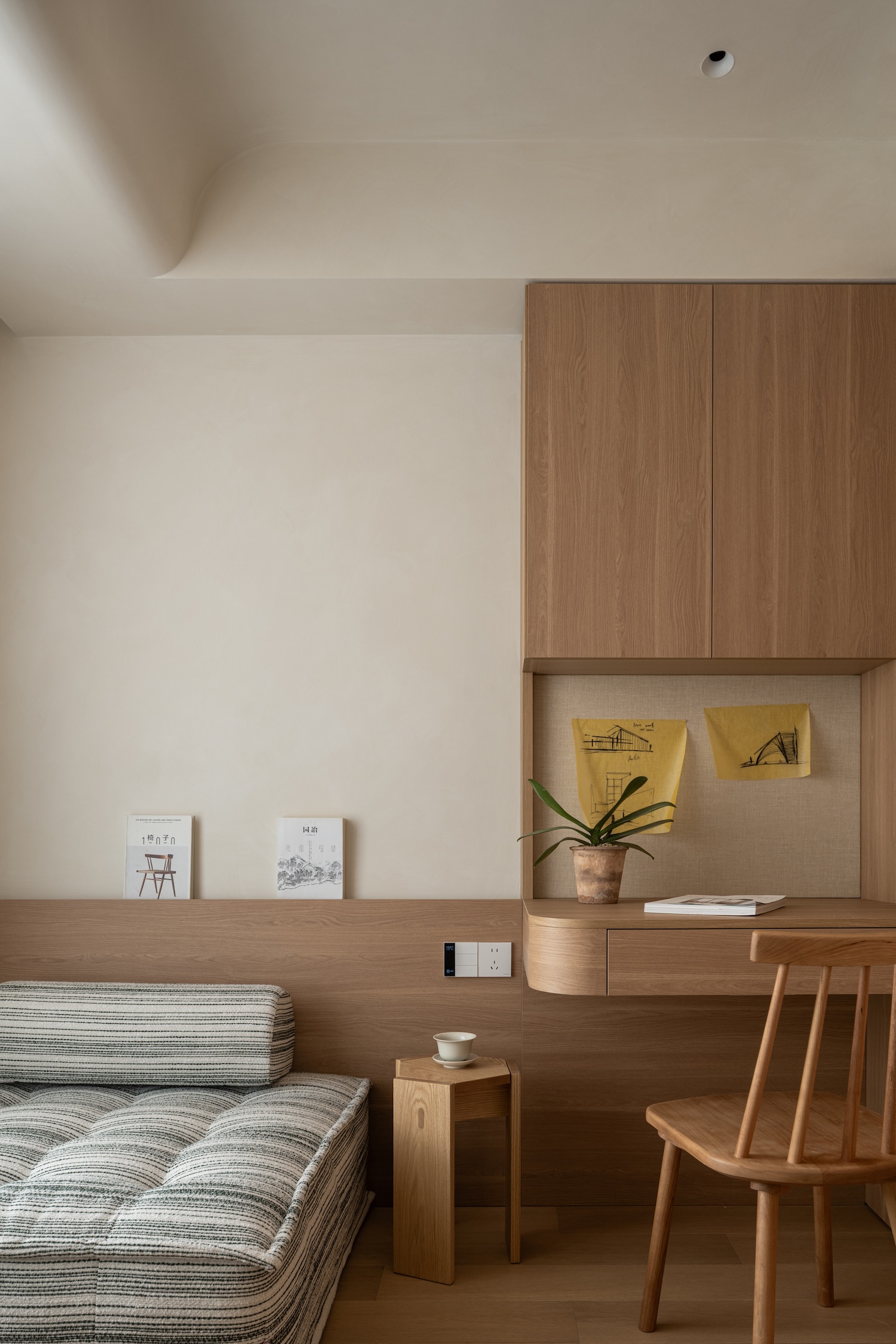
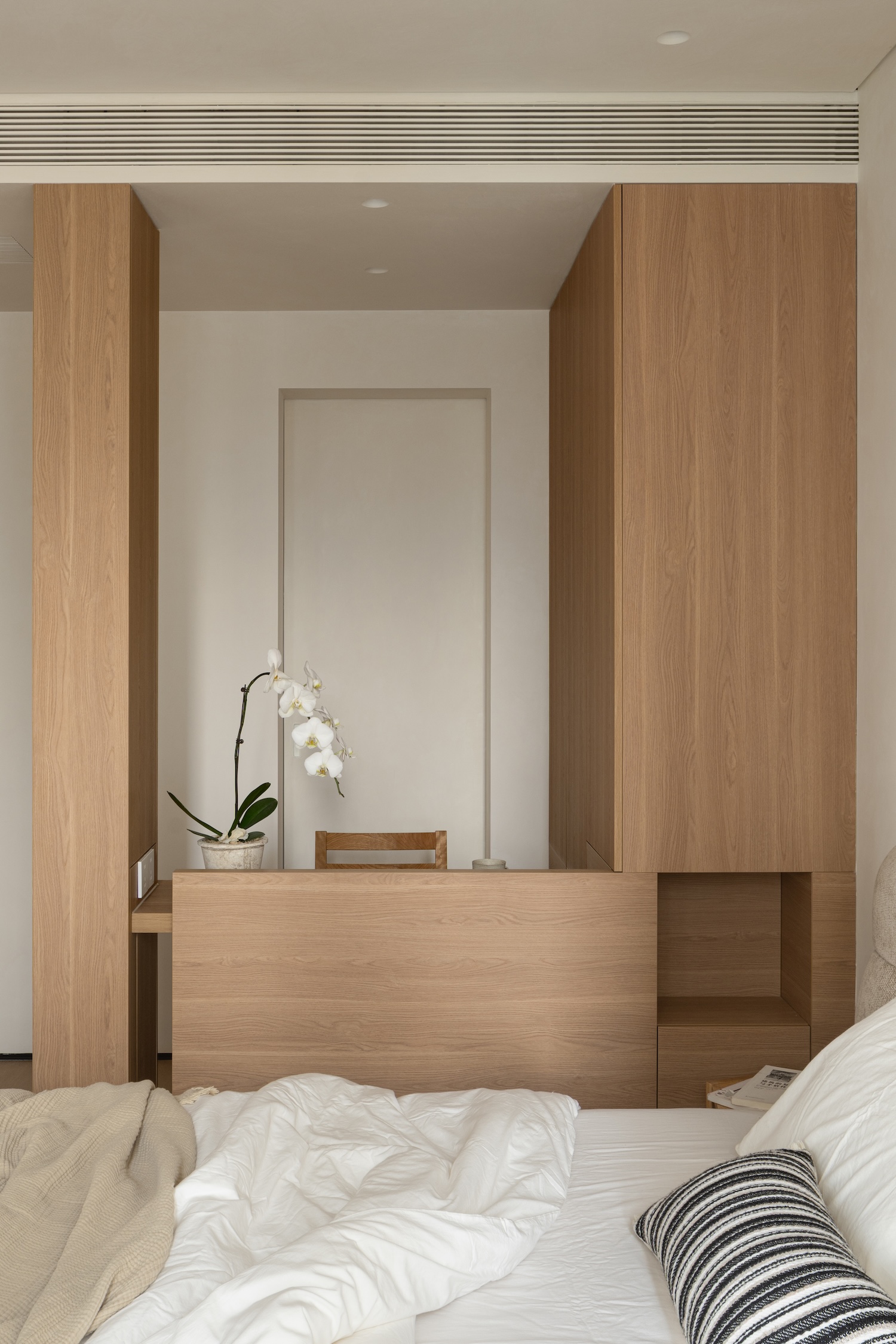
A Serene Retreat is a minimalist apartment located in China, designed by XU Studio. The project – a home for a young couple and their cat – takes its most striking risk at the threshold. Rather than treating the entryway as a transitional afterthought, the designers carved a sunken foyer into the plan, a screened and stepped-down volume that borrows from the centuries-old Chinese garden technique of jie jing, or borrowed scenery. You move through layers of concealment and reveal before the living spaces open up, each turn calibrated to compress and then release your sightline. The effect recalls the sequential unfolding of a hand scroll painting, where narrative builds through controlled disclosure rather than immediate panorama.
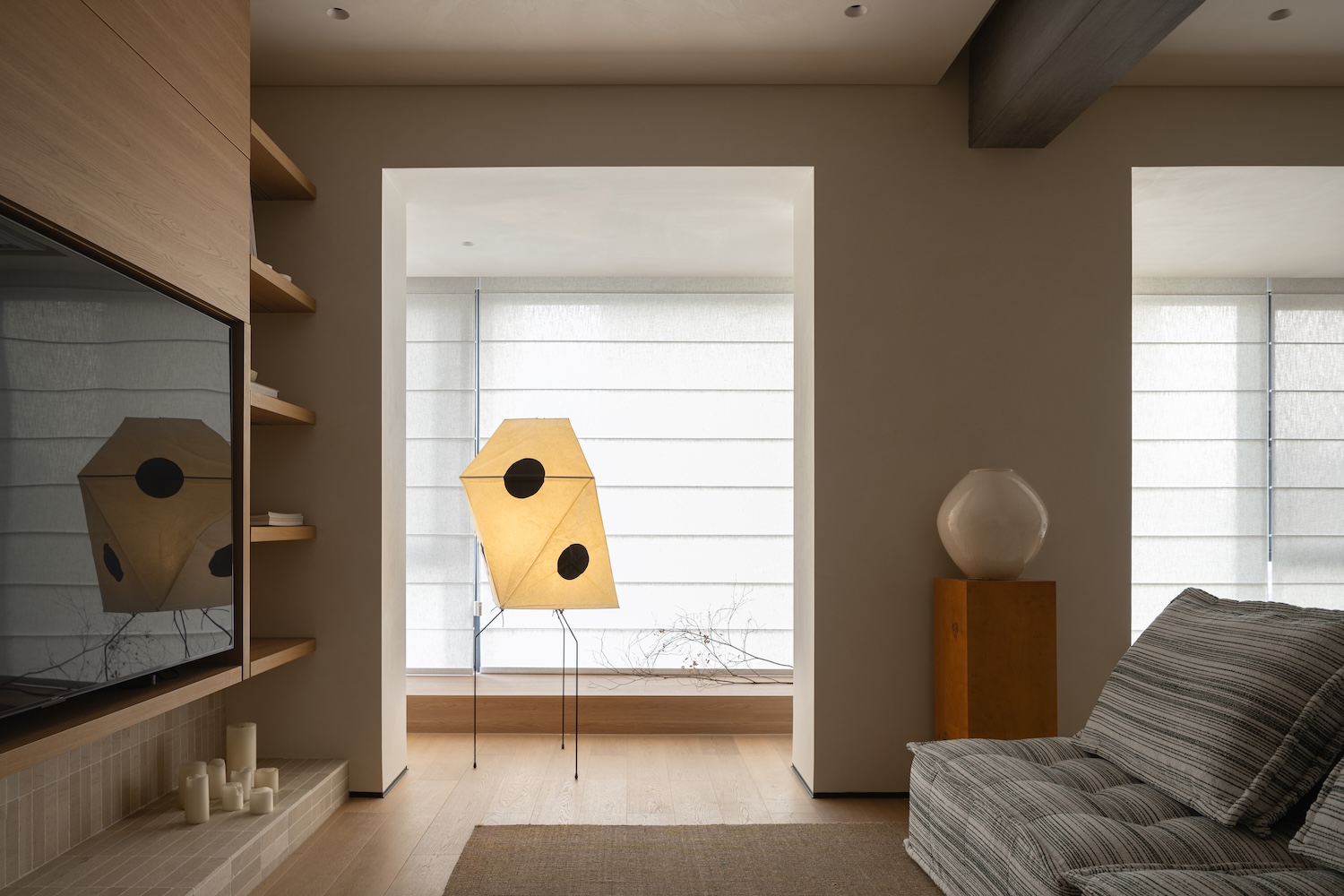
This progressive entry sequence does practical work, too. By pulling the foyer down and screening it from the main volume, XU Studio carved privacy from an otherwise open plan. The living room, dining area, and balcony read as a single continuous field once you pass through – a result of stripping out every non-load-bearing wall the original layout imposed. That demolition freed the apartment to accommodate overlapping programs: a reading corner bleeds into a lounge zone, which shares territory with platforms and perches scaled for a resident cat. The plan treats domesticity as a fluid condition rather than a series of boxed-off rooms, a philosophy that owes something to the flexible spatial thinking of Japanese architect Sou Fujimoto, though here the vocabulary stays warmer and more materially grounded.
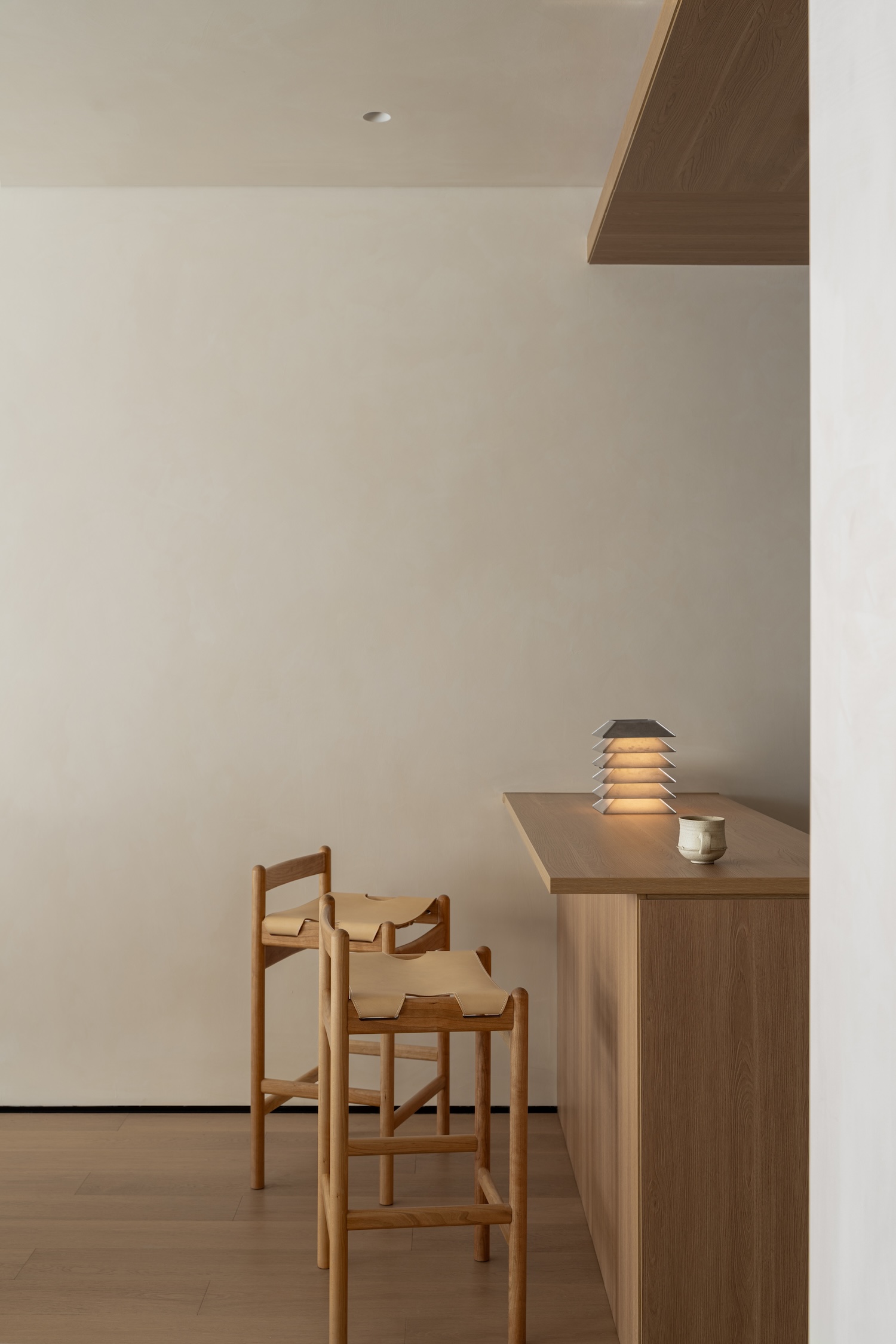
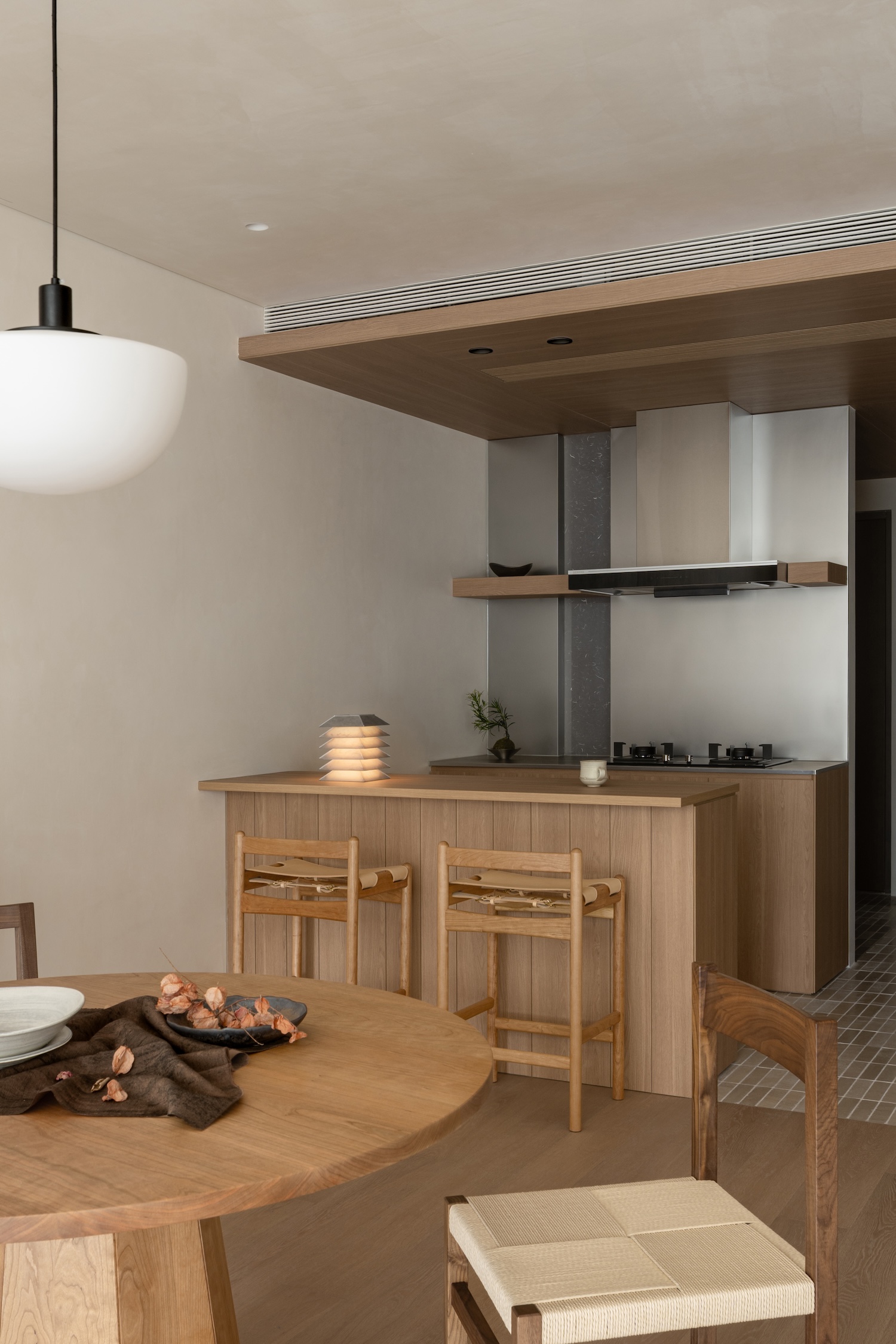
Wood veneer runs across the ceiling from the foyer through to the kitchen in one unbroken plane, its grain lending a soft directionality that pulls you deeper into the home. The surface has the quiet cadence of a summer pavilion – a reference the designers lean into – where overhead timber structures create shelter without enclosure. Between the kitchen and dining area, a clean bar volume slots in like a fitted stone in a dry-stack wall. It serves triple duty as prep surface, casual eating counter, and social anchor, dissolving the boundary between cooking and gathering without relying on the now-standard kitchen island formula.