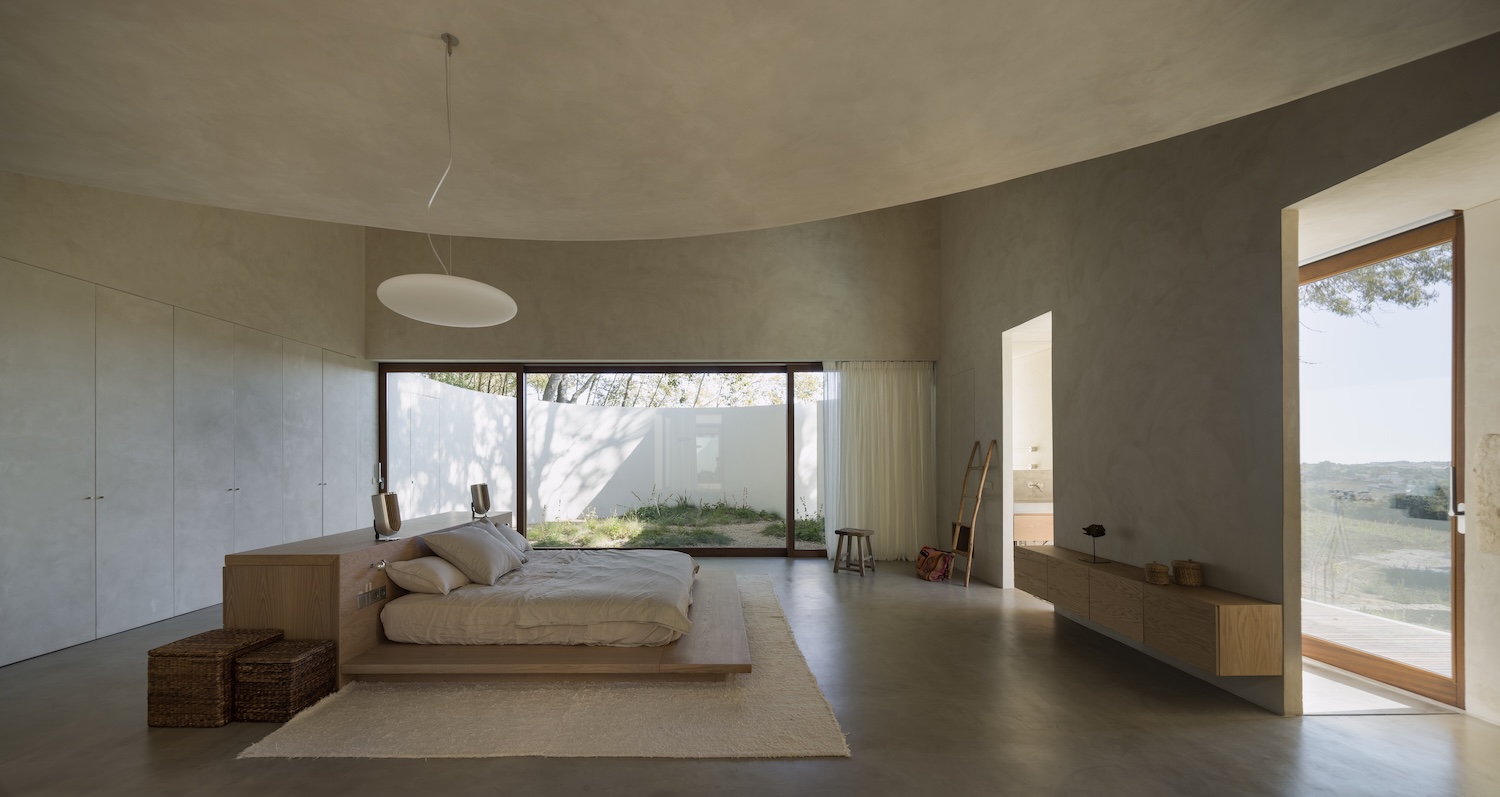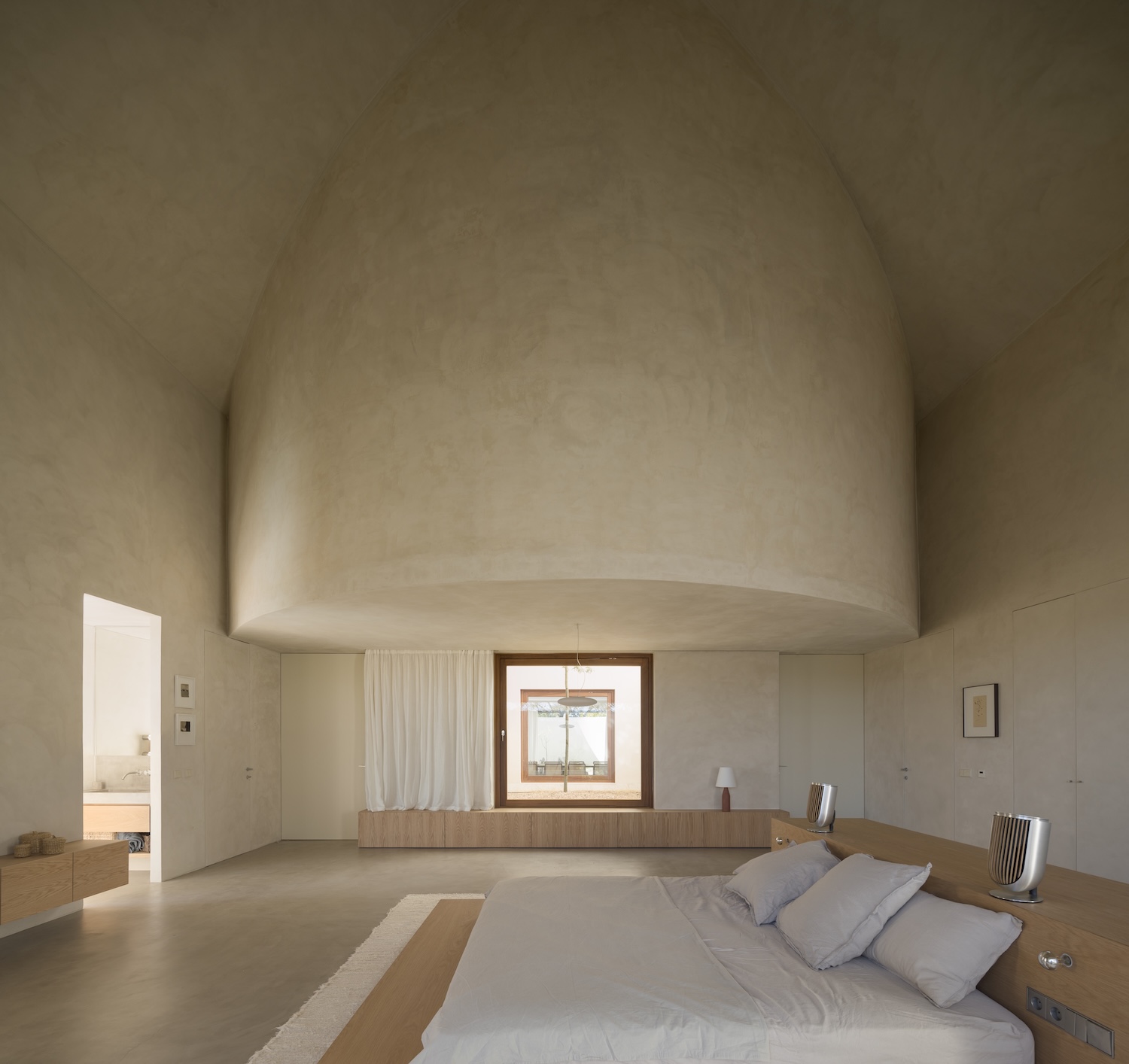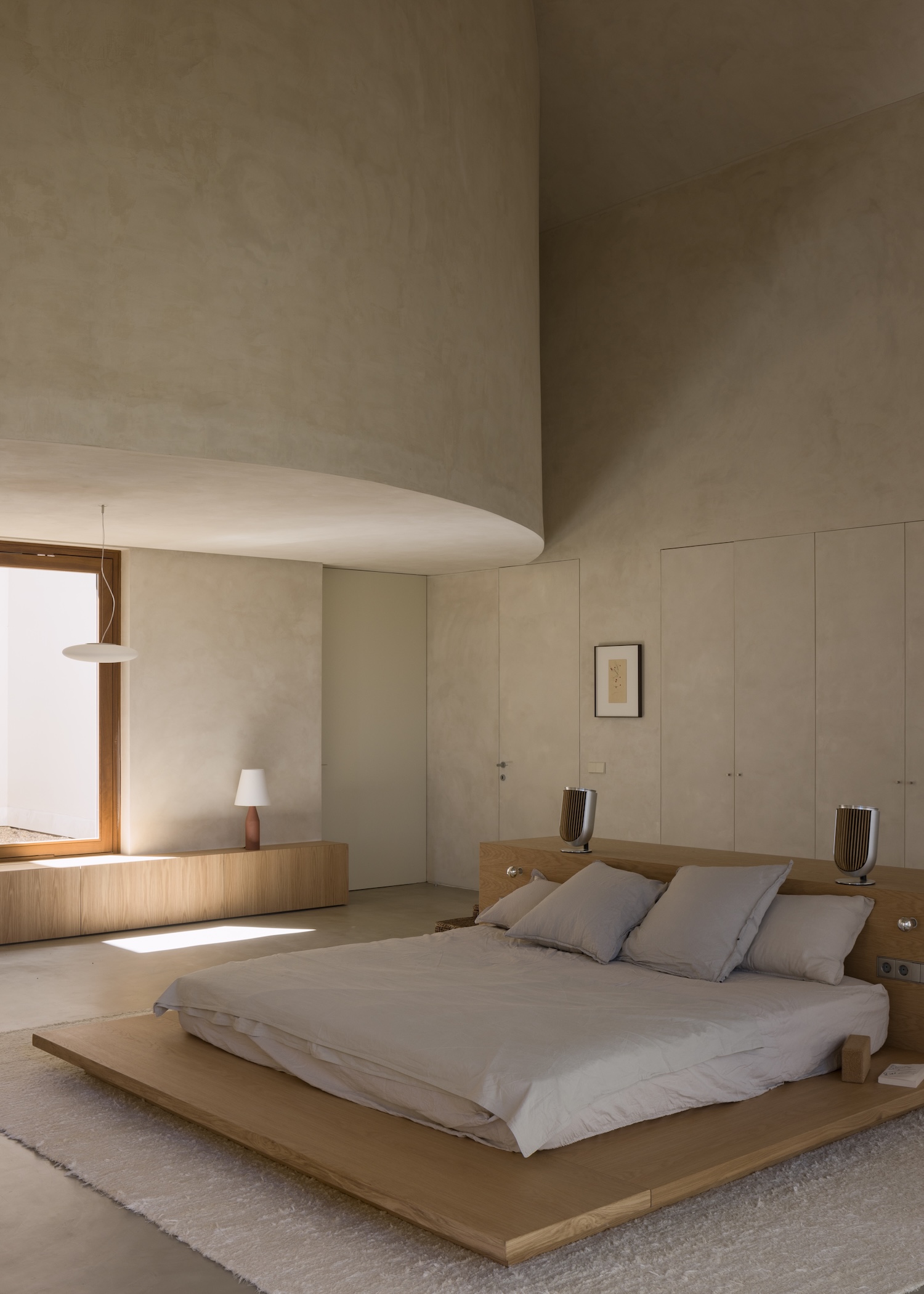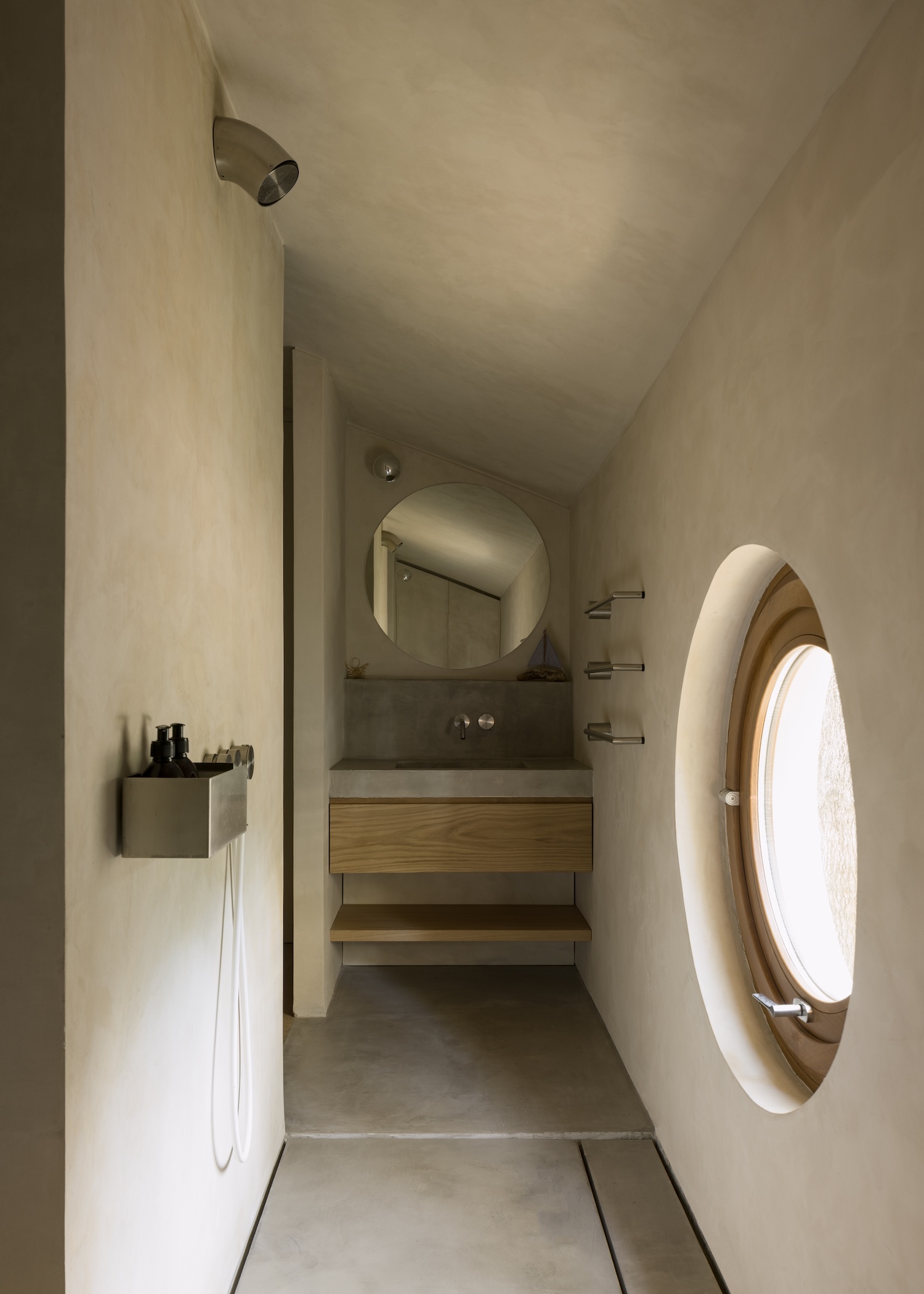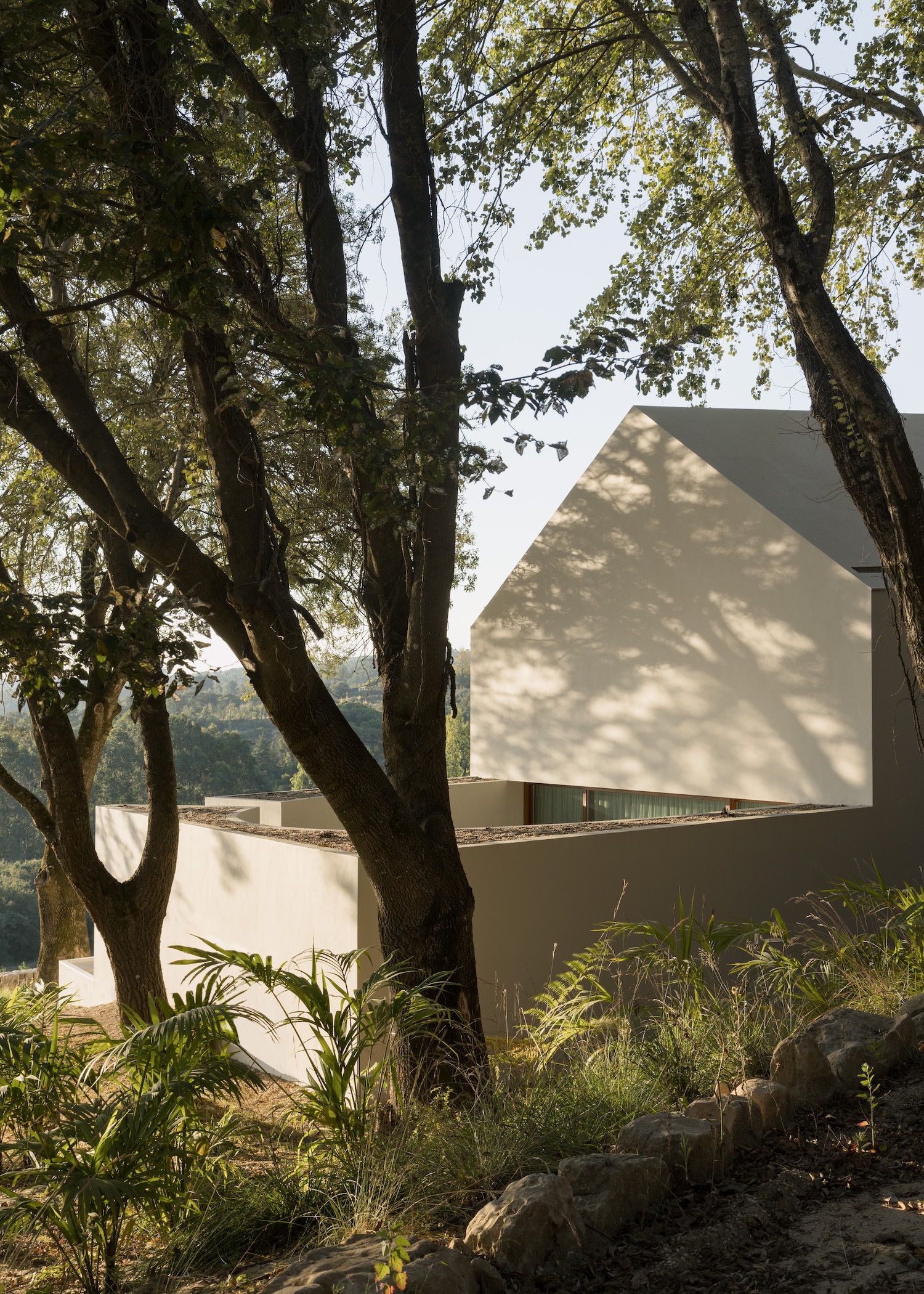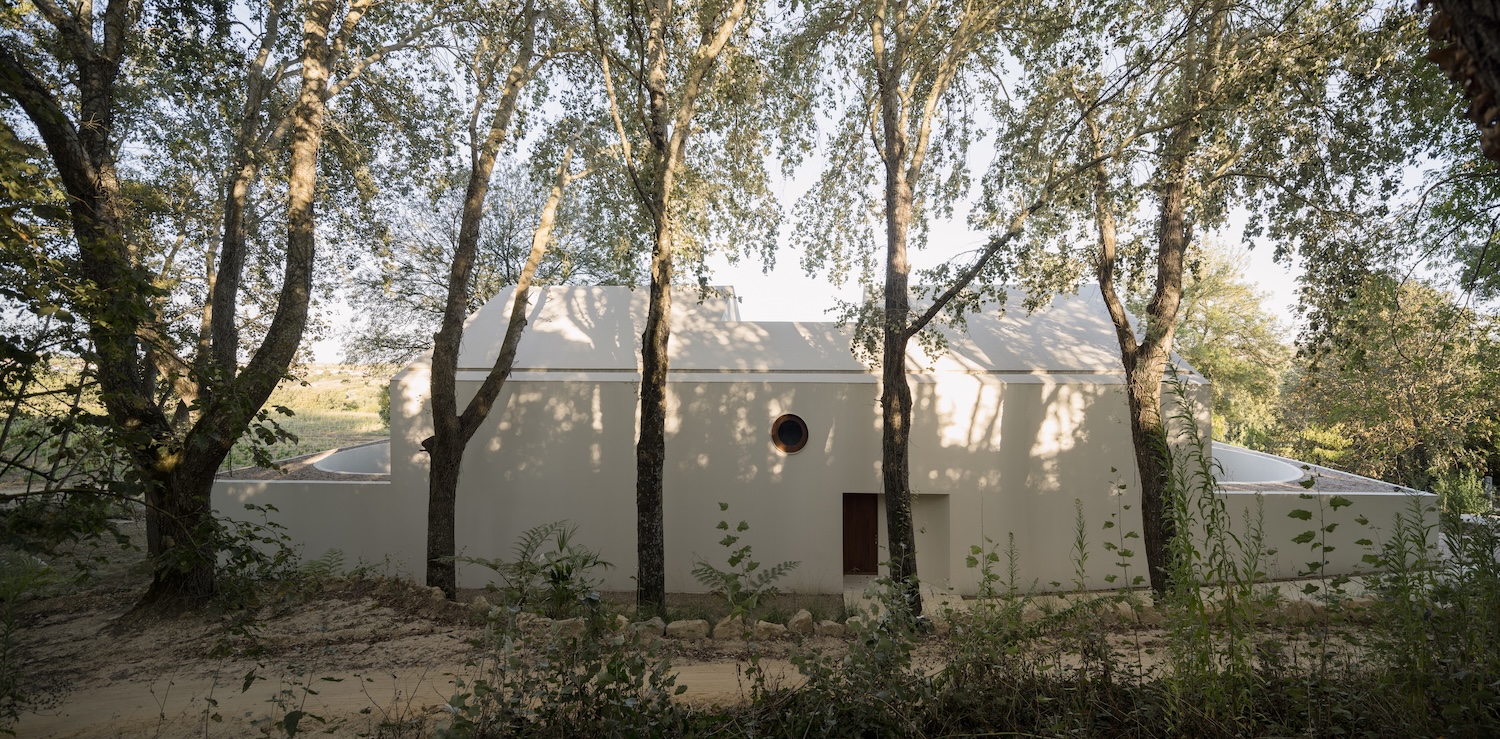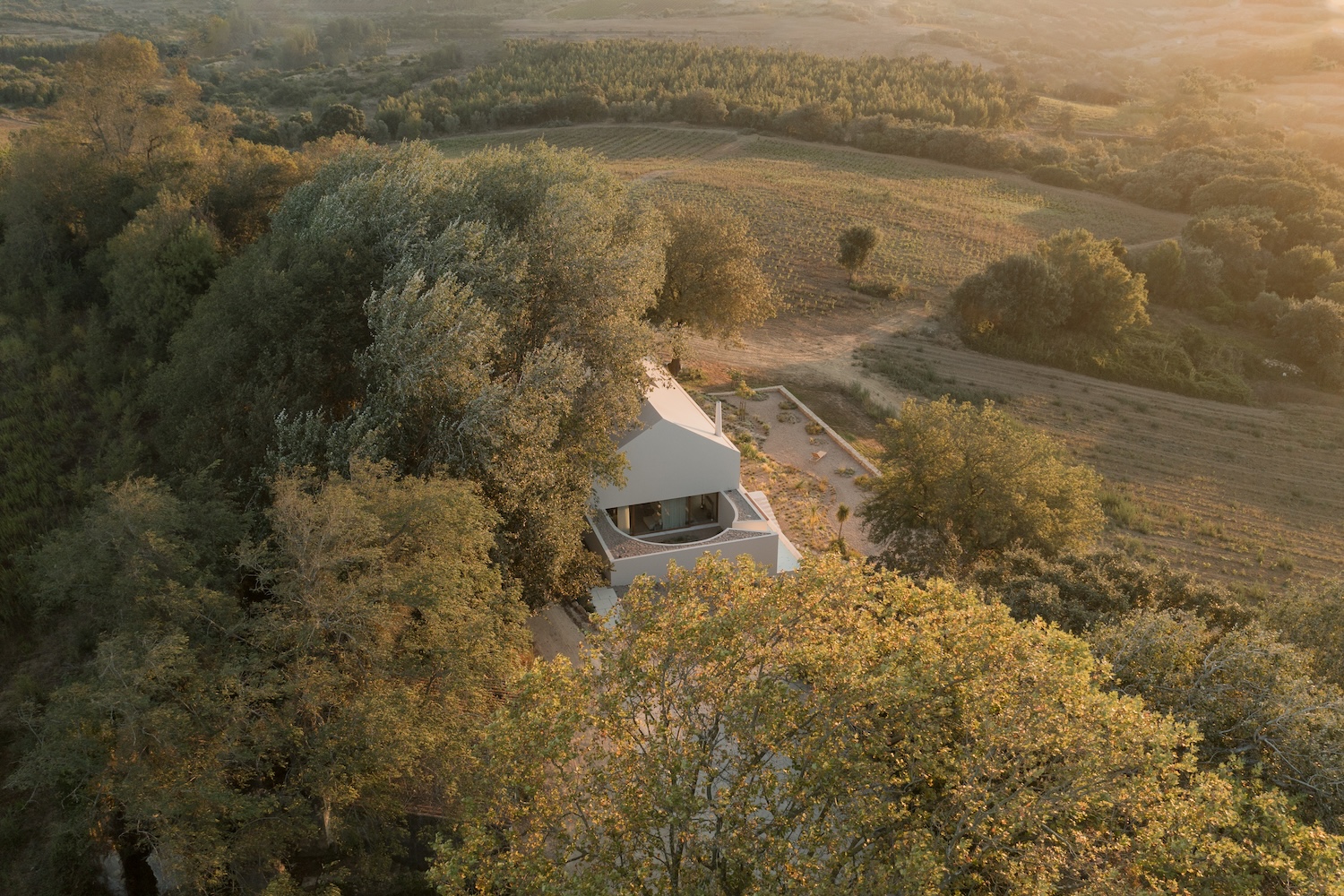
Quinta do Álamo is a minimalist residence located in Alenquer, Portugal, designed by Atelier Matteo Arnone. This house for two DJs 40 minutes from Lisbon demonstrates how pre-existing winery ruins can transform into contemporary homes maintaining dialogue between winemaking tradition memory and modern creative professional requirements. The Quinta surrounded by vineyards telling long wine production history offers unique natural and cultural setting informing architectural approach balancing historical preservation with contemporary spatial needs.
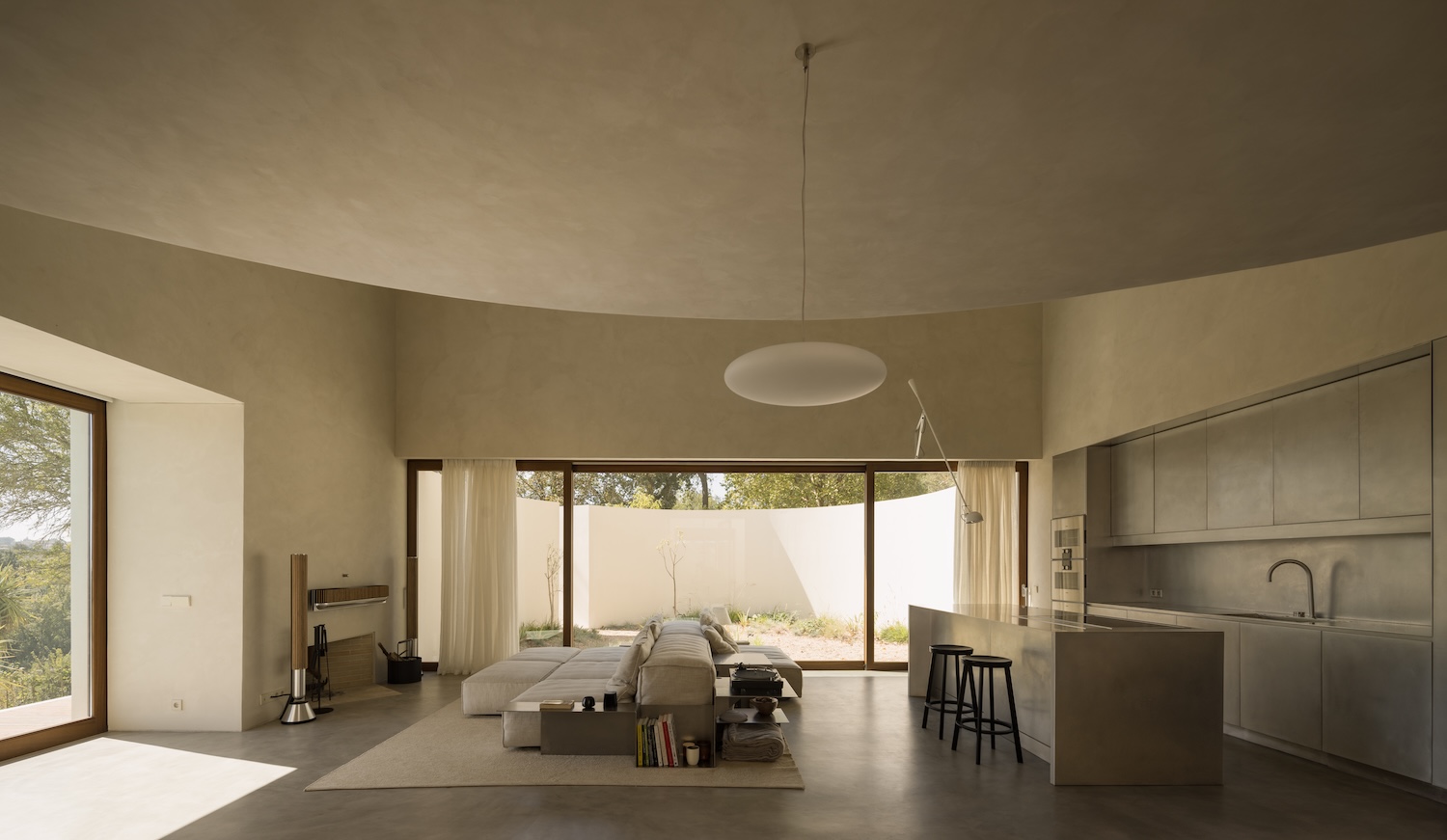
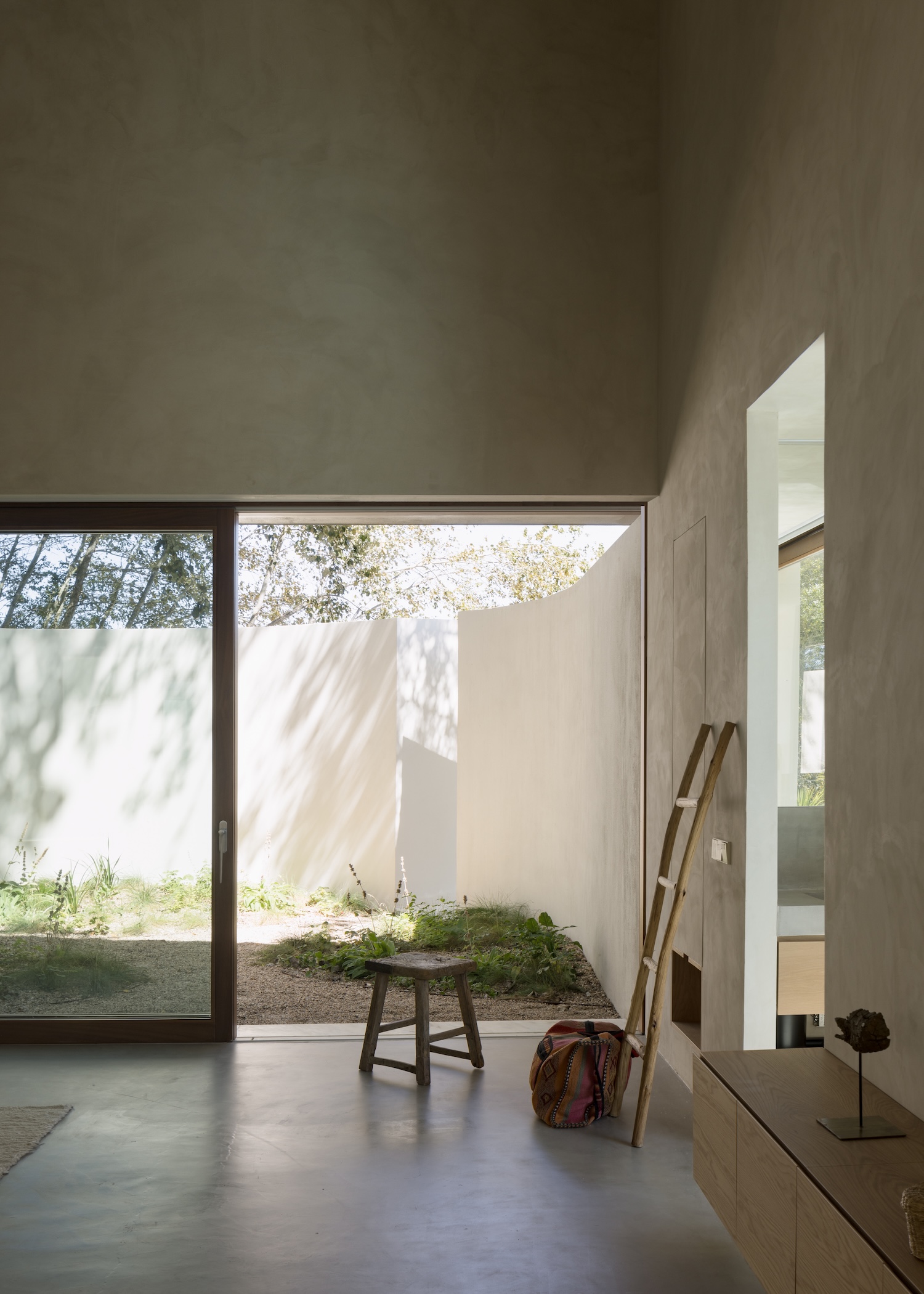
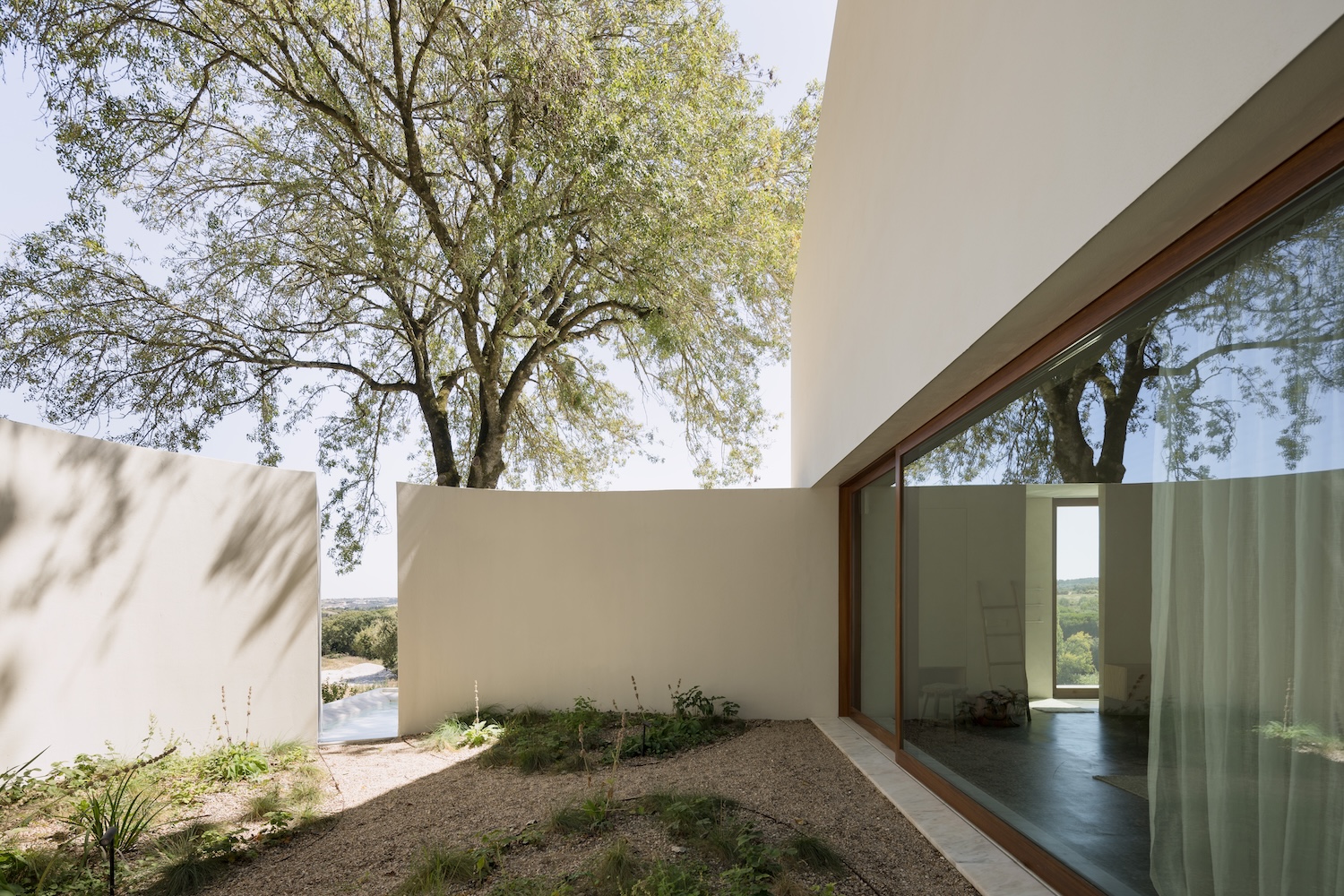
The architecture brings life through pre-existing ruin renovation – old winery originally used storing large wine barrels – transforming historical memory into contemporary home characterized by perfectly symmetrical floor plan and strong interior-exterior space connection. Lower floor main living spaces including living room-kitchen area and single bedroom arrange symmetrically, each opening onto semi-circular patio embracing space. This organizational strategy demonstrates how symmetry can establish clear spatial hierarchies while curved patio forms soften geometric rigor preventing compositional stiffness.
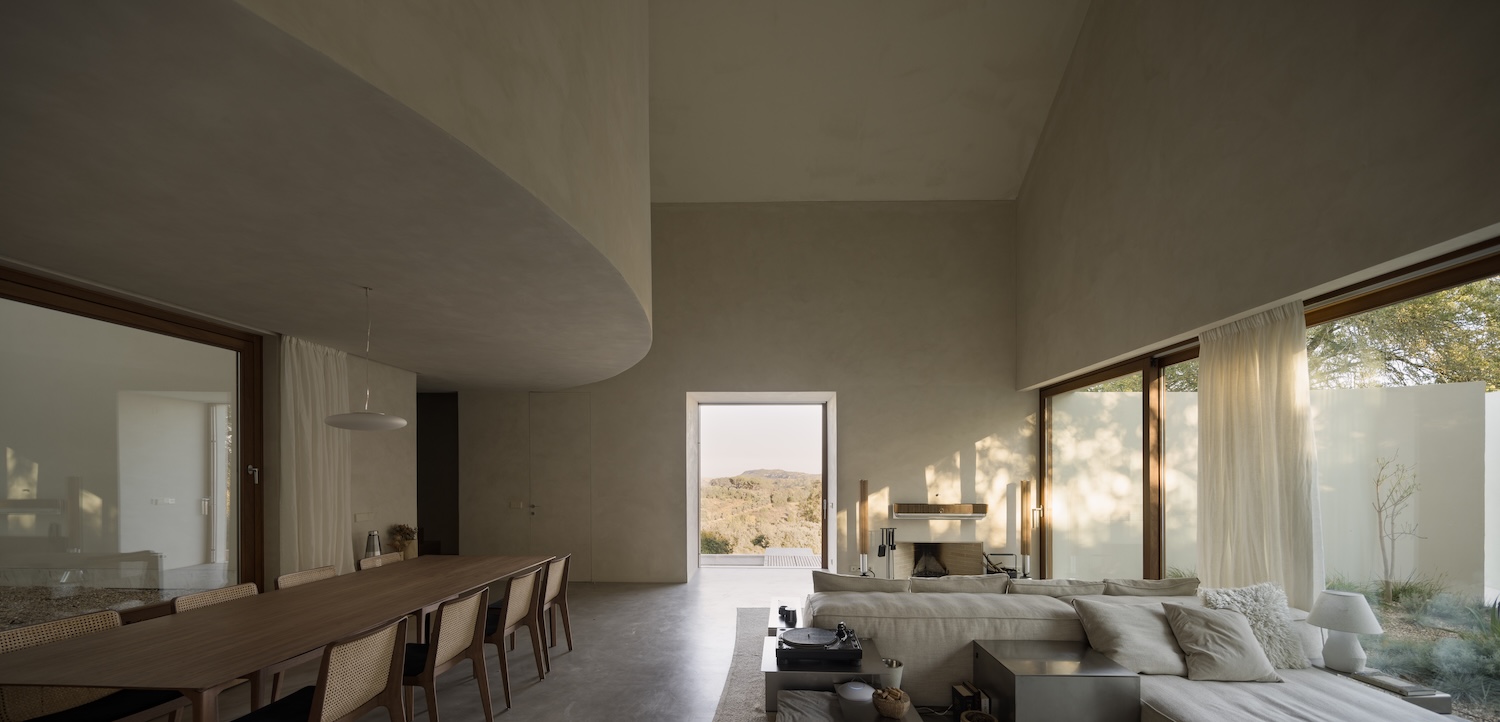
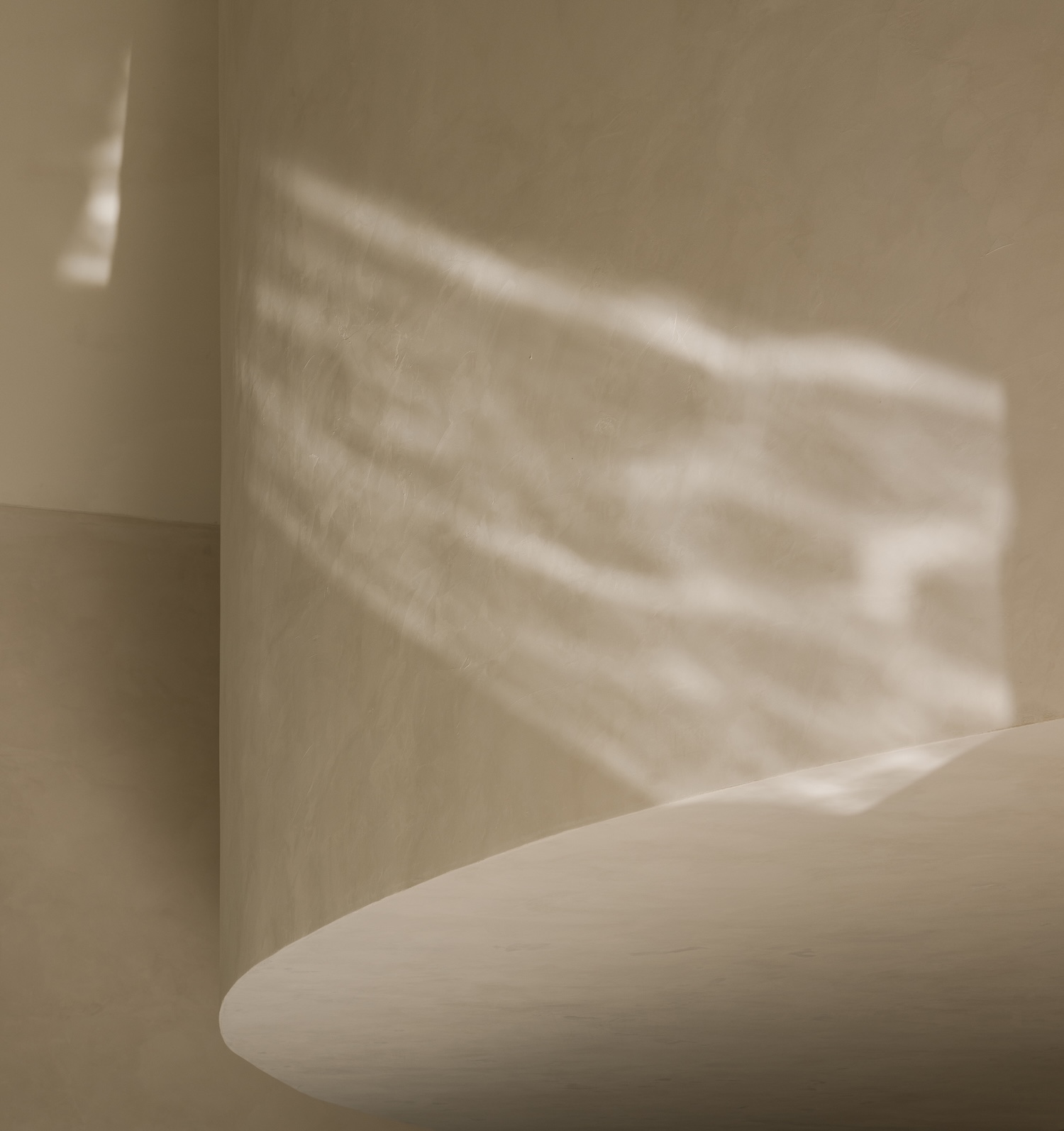
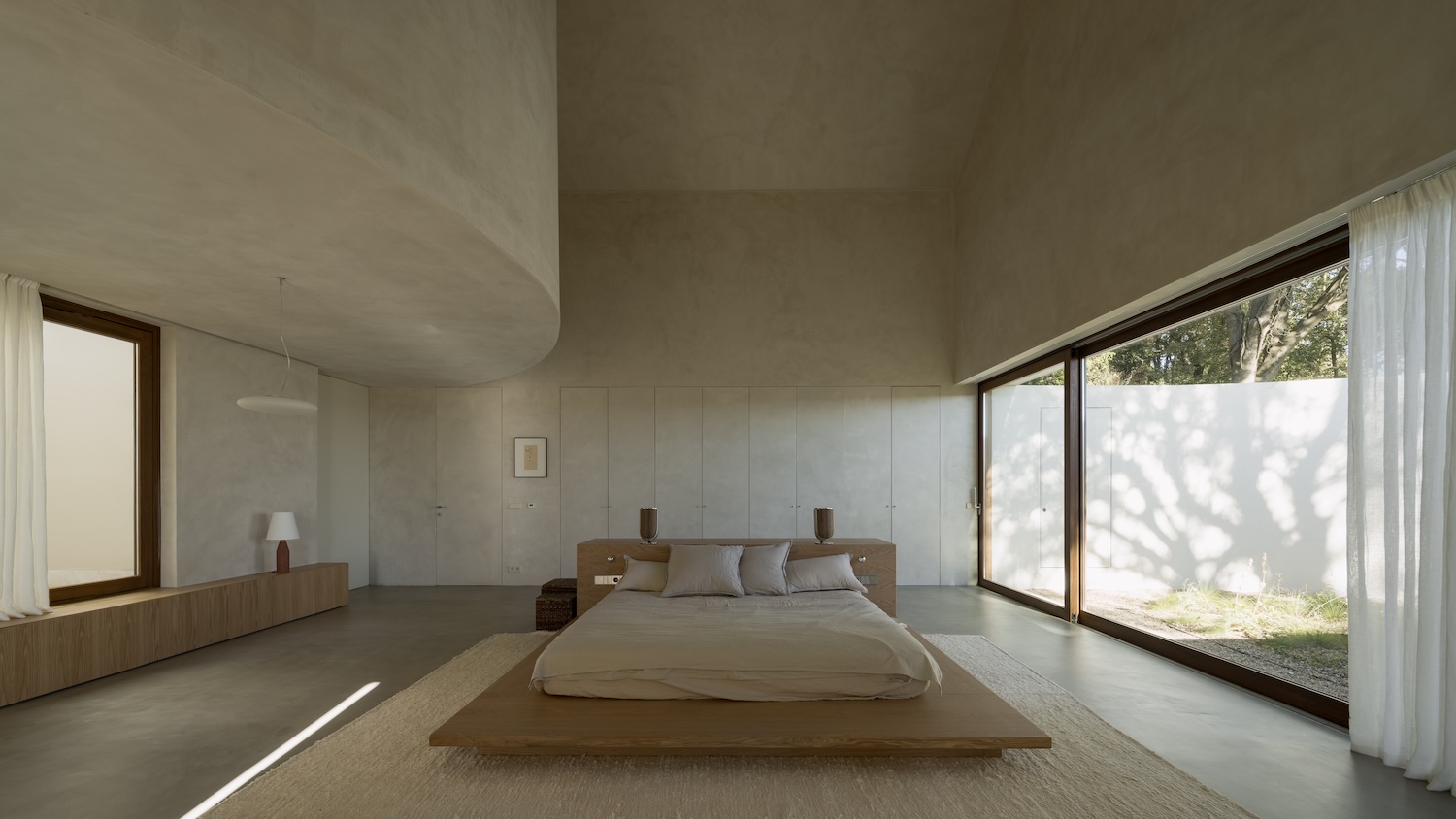
The patios beyond defining inside-outside boundary turn threshold into aesthetic and harmonious element with curved shape eliminating sharp corners fostering fluid continuity dissolving physical separation creating private corners bathed in natural light. Third patio positioned between bedroom and living room-kitchen area introduces more intimate dimension bringing light to upper-floor recording studios while establishing delicate visual connection between living spaces. This multi-functional courtyard strategy demonstrates how outdoor spaces can serve lighting, circulation, and visual connection roles simultaneously maximizing spatial efficiency.
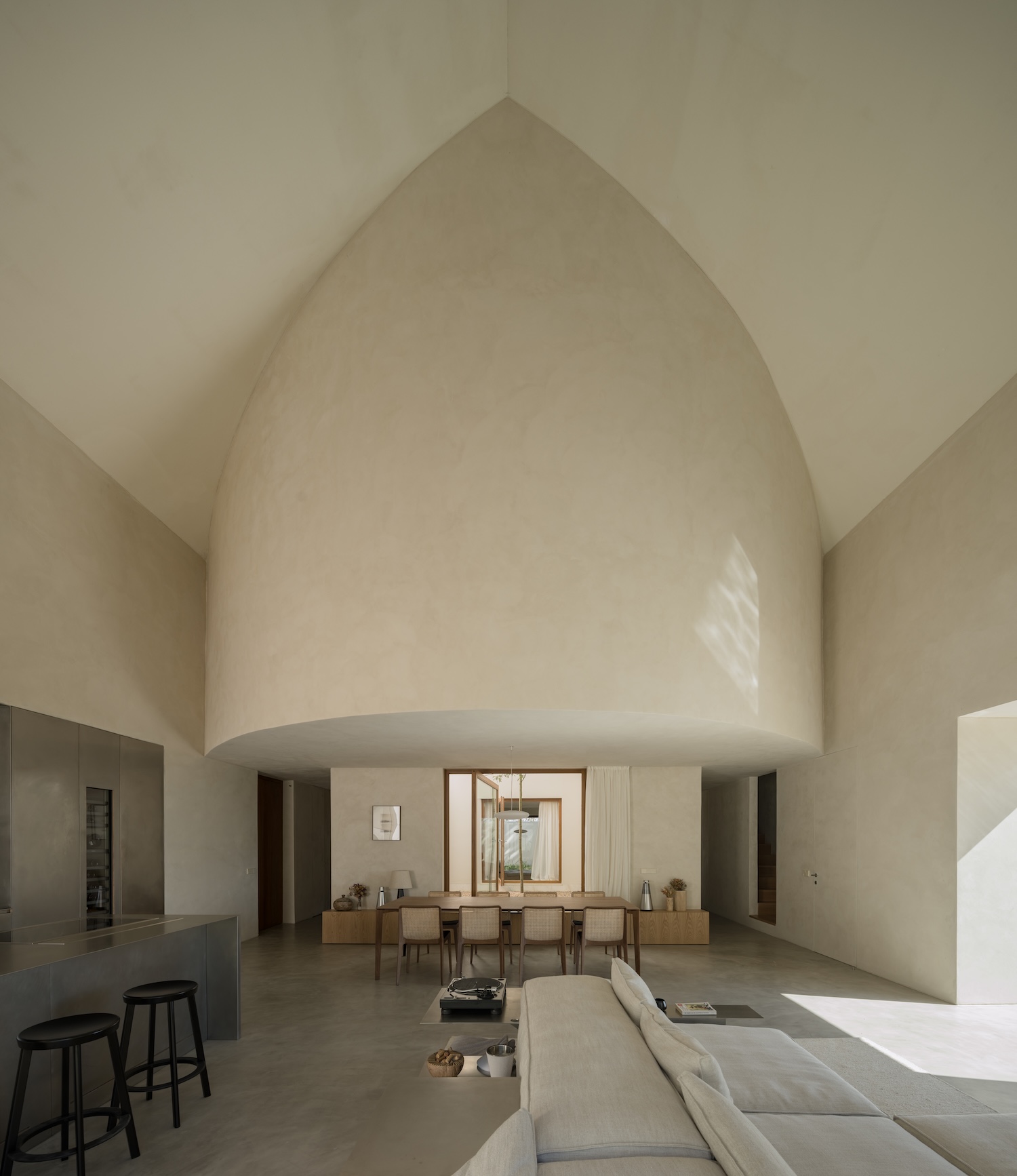
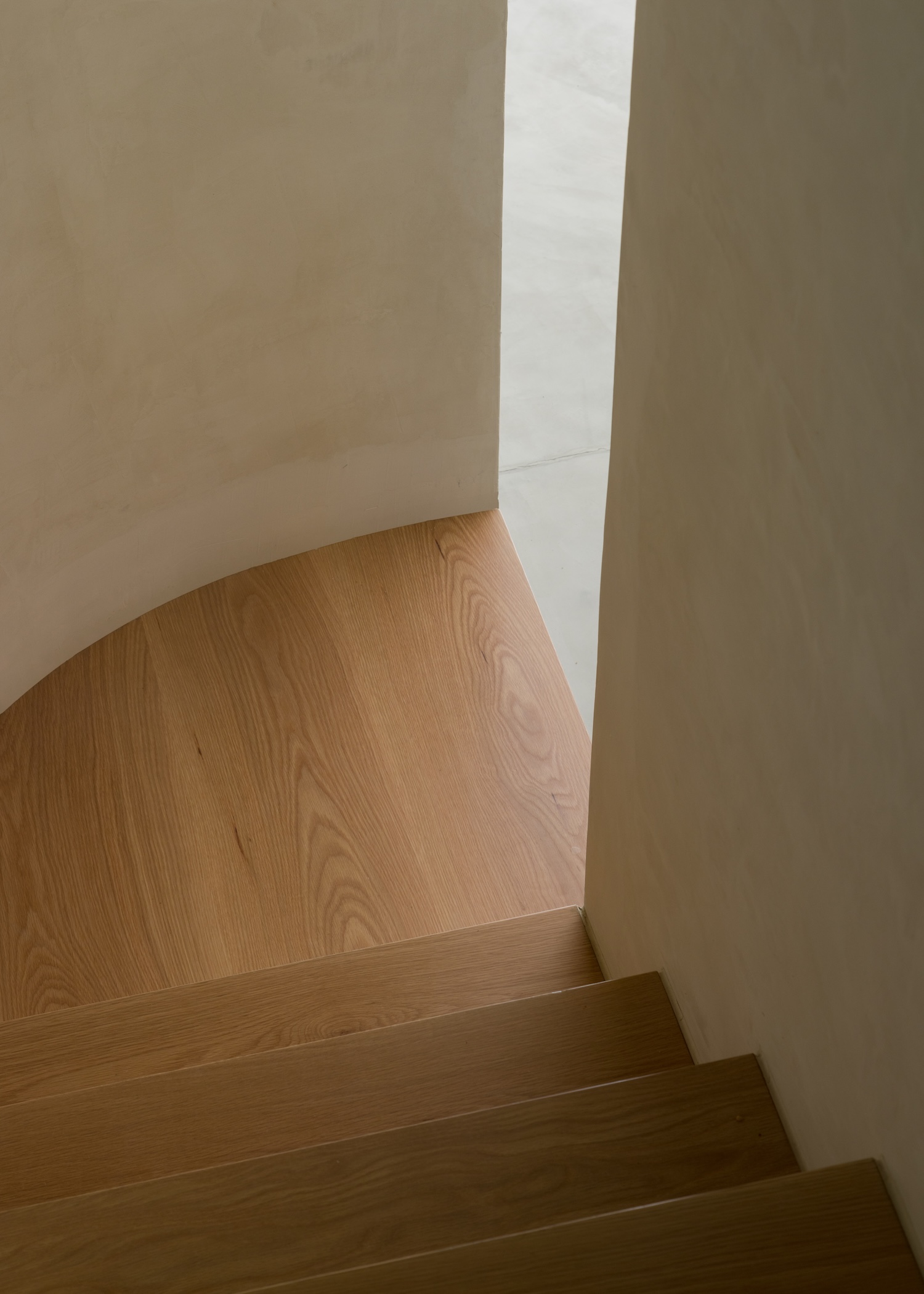
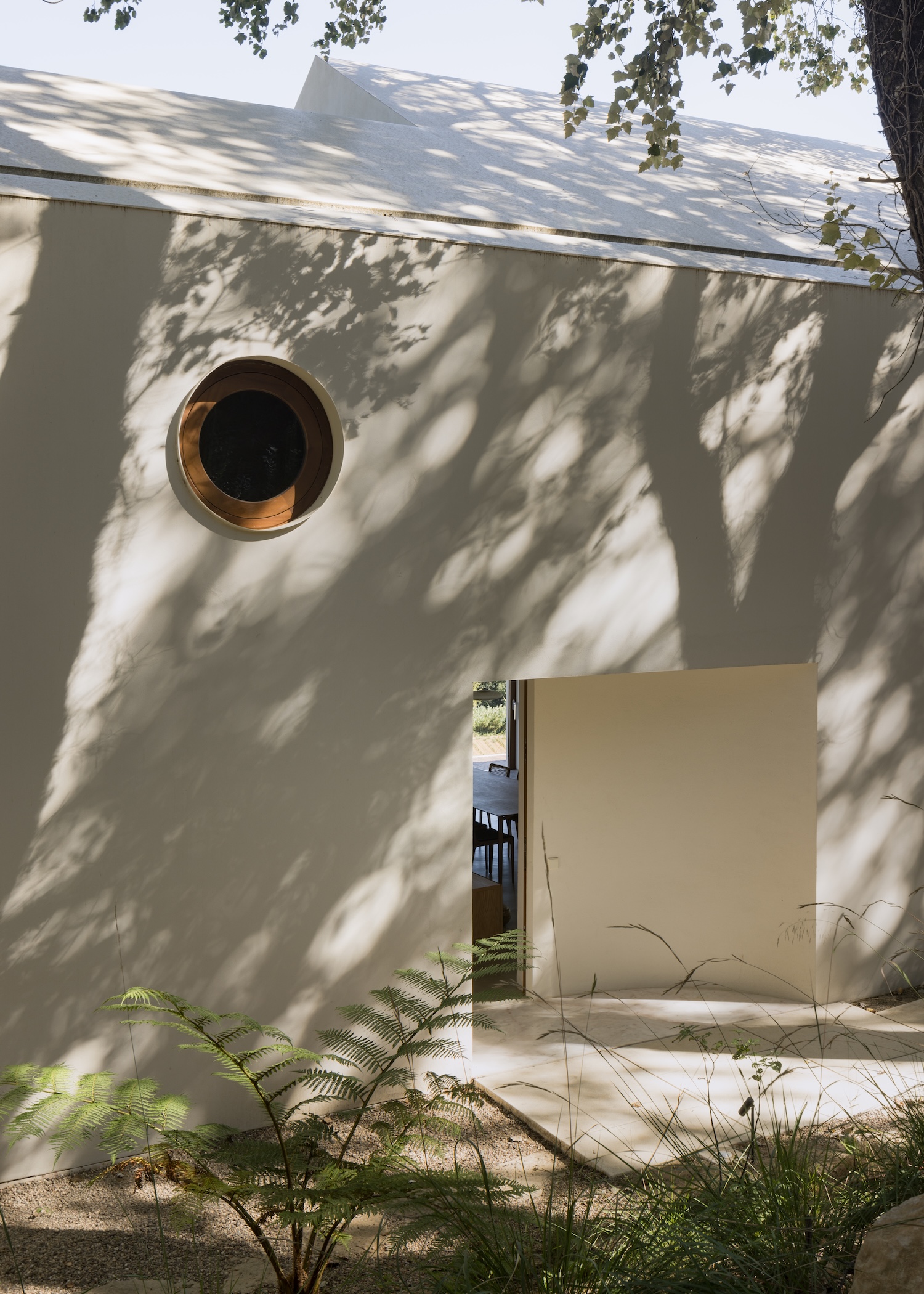
Architectural solution stands out through thick perimeter wall use incorporating essential house functional elements doing more than serving structural purpose by integrating features like staircase leading to upper-floor studios plus storage spaces and built-in furniture. This choice ensures minimalist orderly aesthetic optimizing overall construction organization, demonstrating how substantial wall construction can accommodate varied programmatic requirements eliminating need for freestanding furniture and visible infrastructure that might compromise spatial clarity.
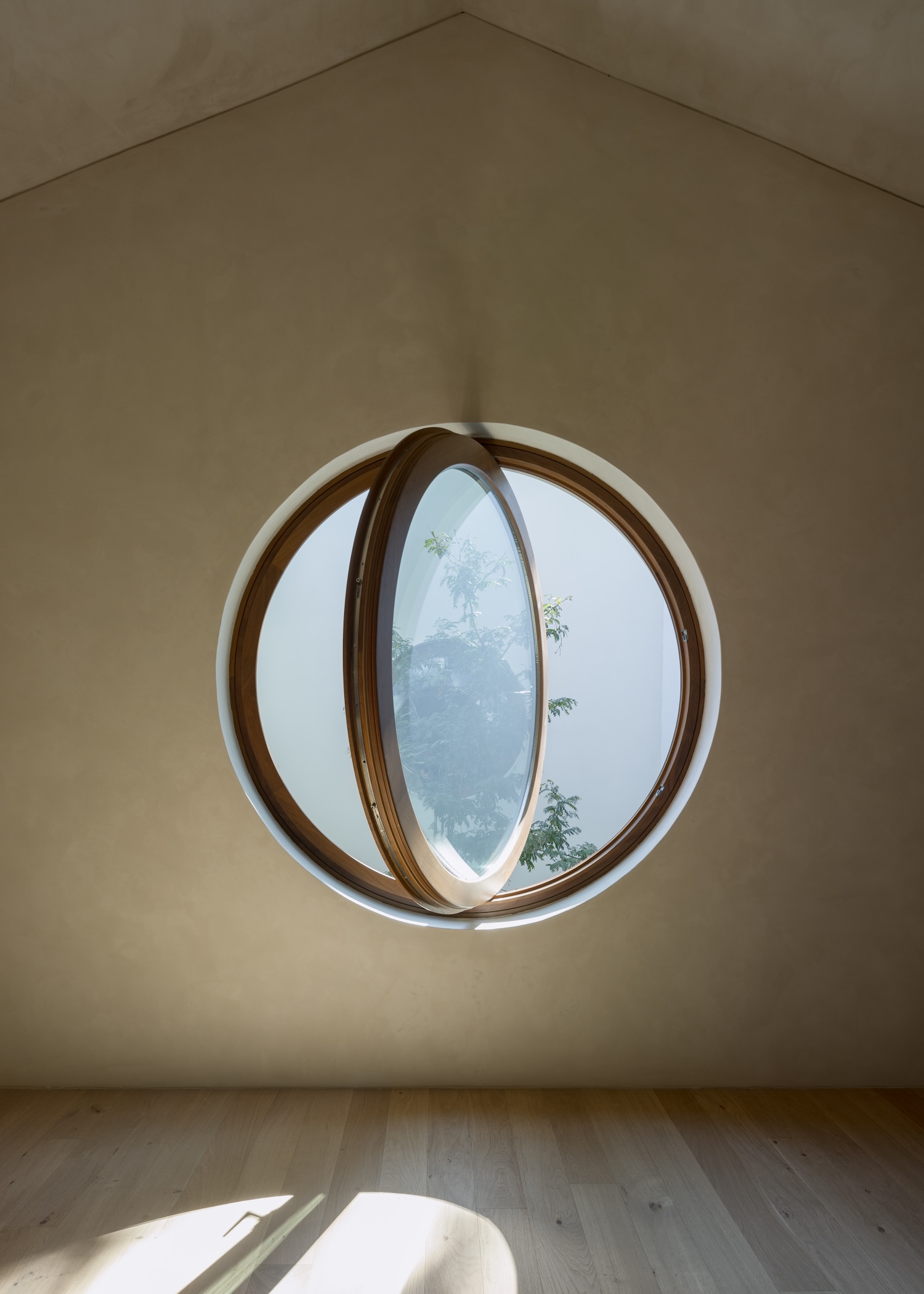
Upper-floor recording studios with circular shape reflect house creative soul designed meeting owners’ professional needs. This formal choice demonstrates how room geometry can address specific functional requirements where circular plans eliminate parallel surfaces that might create acoustic standing waves problematic for music production and recording activities. The studio positioning above main living areas provides acoustic separation preventing household activities from interfering with professional recording work.