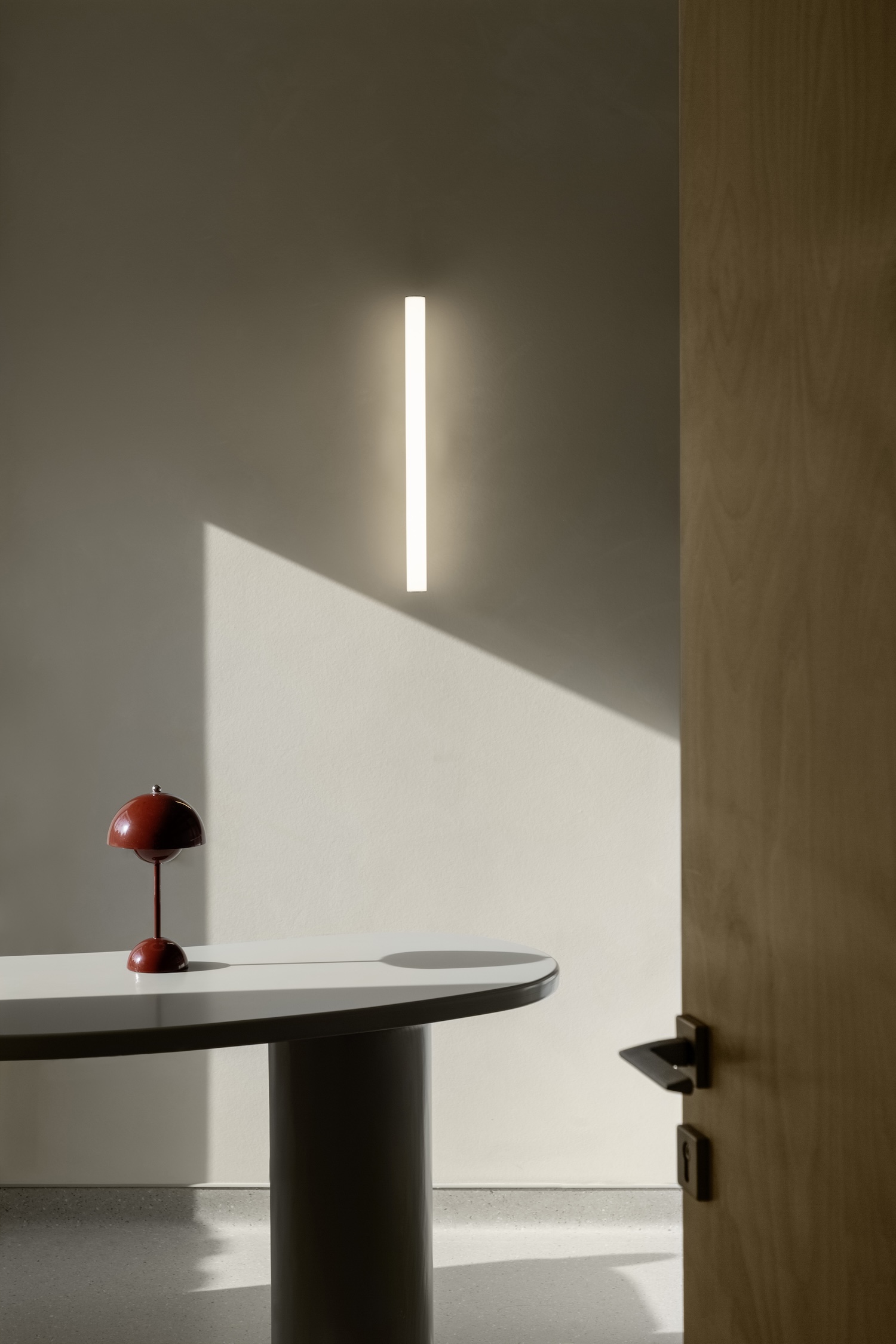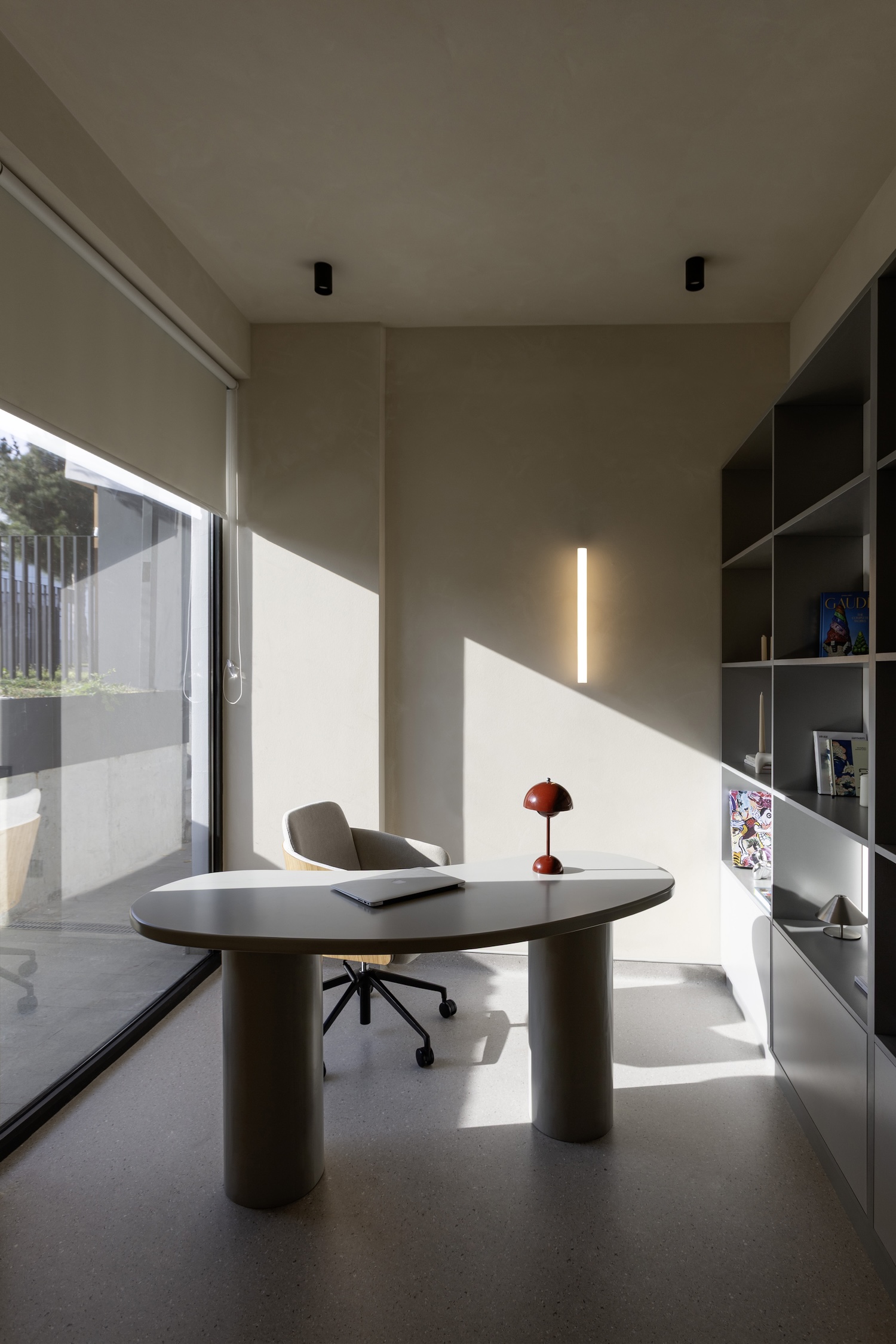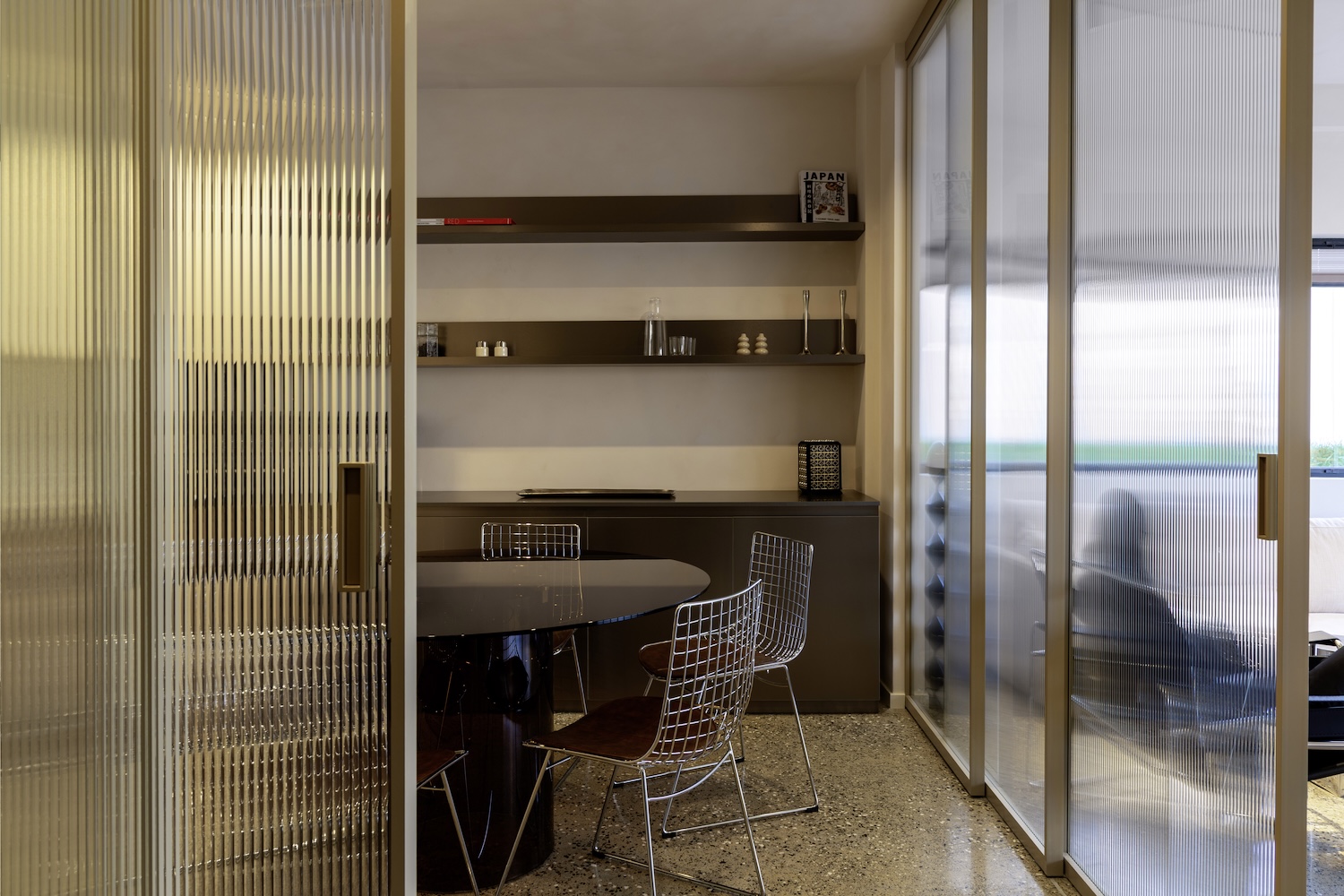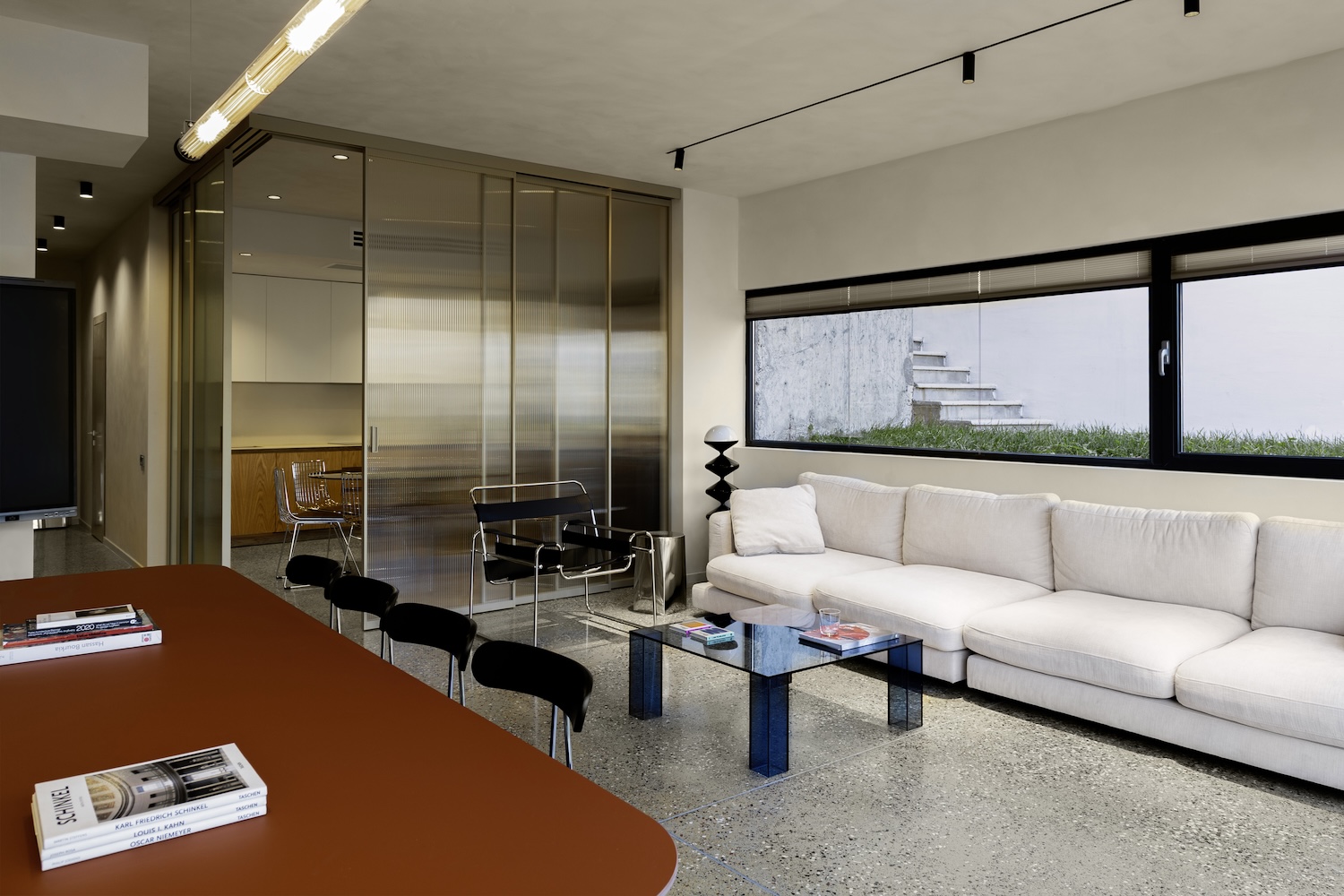
Redbow Event’s Office is a minimalist workspace located in Tbilisi, Georgia, designed by of a Home Studio. Designing for a creative agency presents a particular tension – how to channel expressive energy into a space that still functions as a disciplined workplace. At 230 sqm across three floors, of a Home Studio’s solution for Redbow Events navigates this challenge through an architecture of transparency, using light itself as the primary material for bridging play and professionalism.
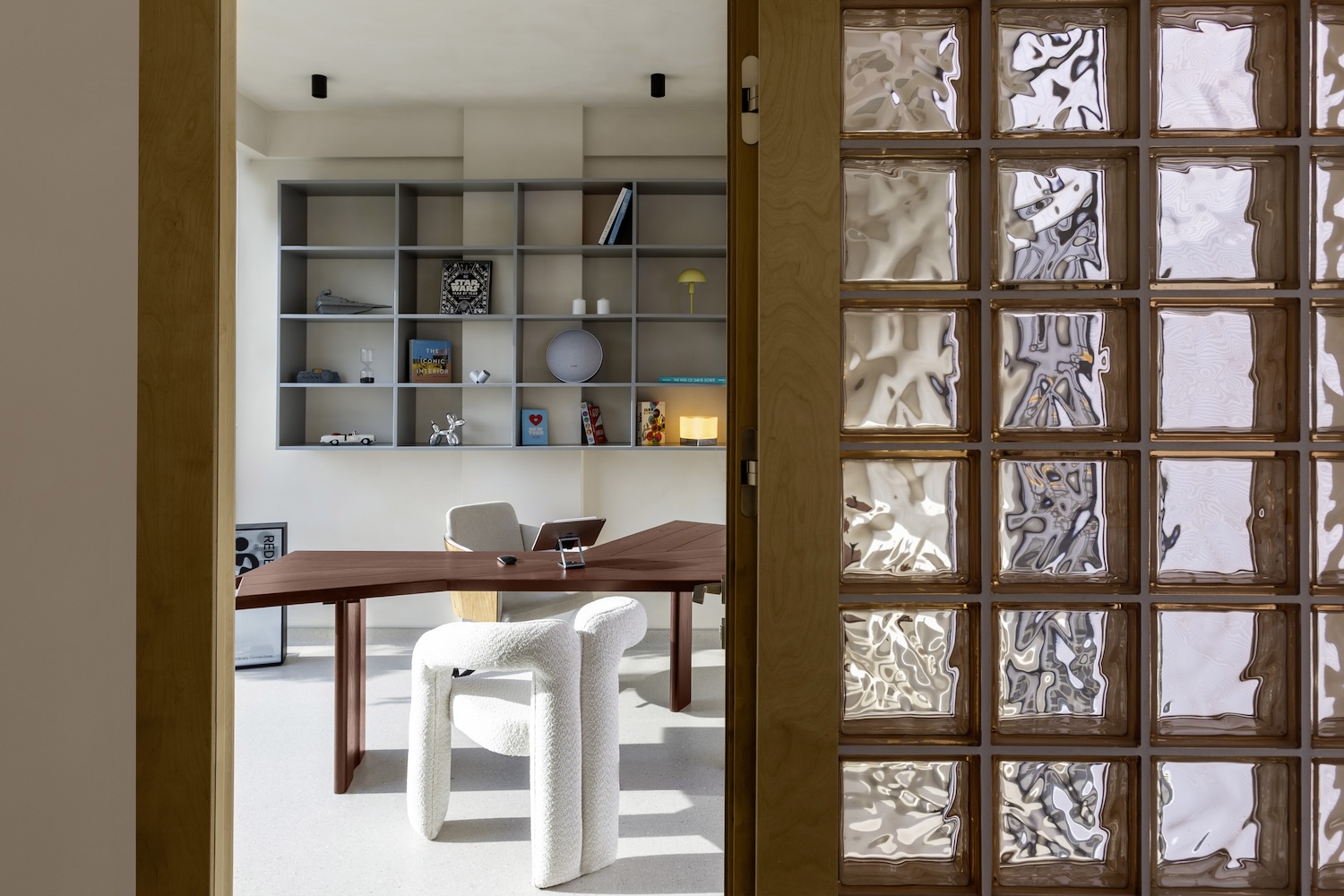
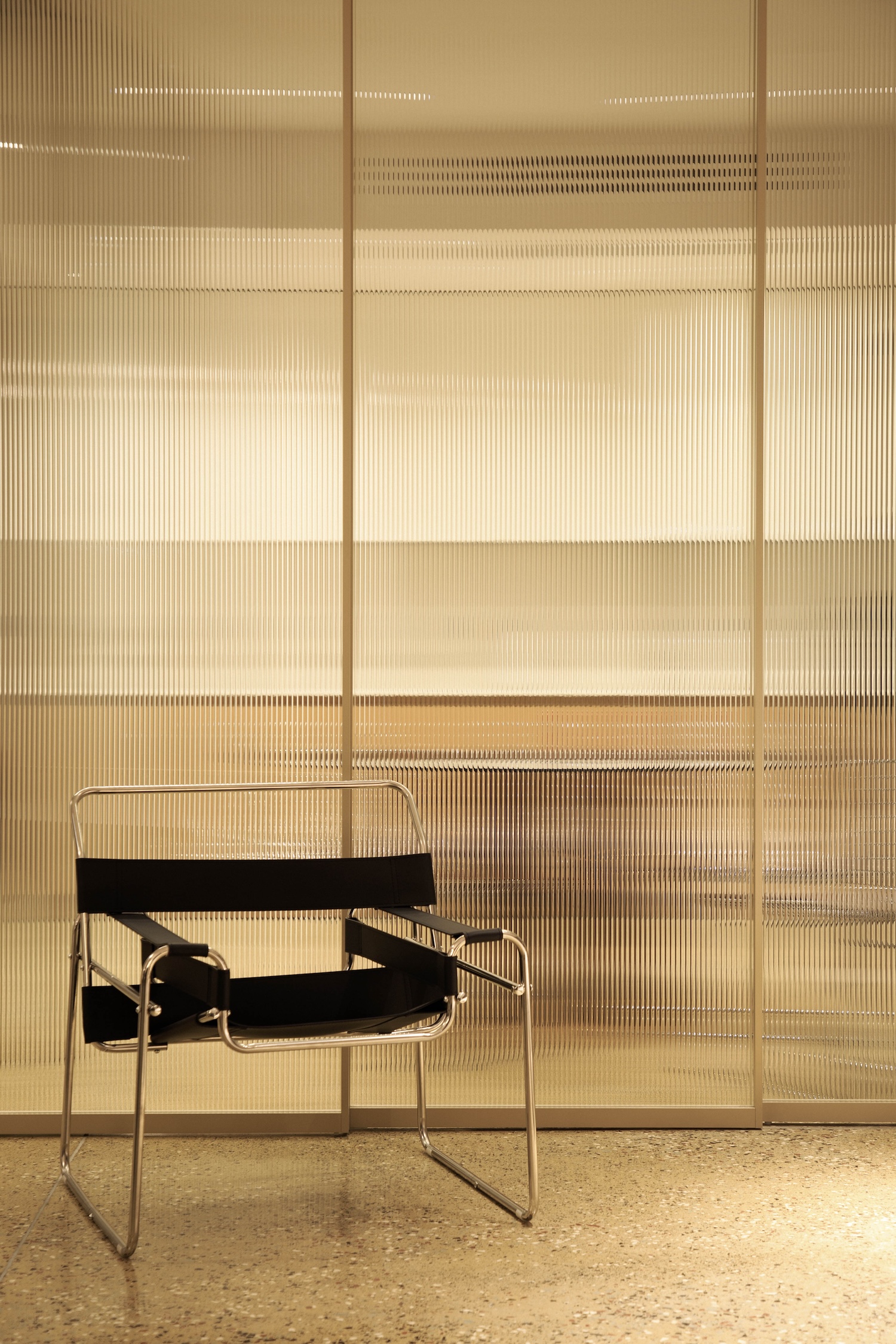
The spatial strategy hinges on a vertical progression from communal to concentrated. The ground floor anchors social life, with a kitchen and meeting area joined by a movable glass partition that allows the two zones to merge or separate depending on need. A red meeting table acts as the interior’s emotional anchor, its saturated color radiating outward to set the tonal register for the entire project. The choice is deliberate – red as both brand signal and spatial activator, a single bold gesture that eliminates the need for decorative excess elsewhere.
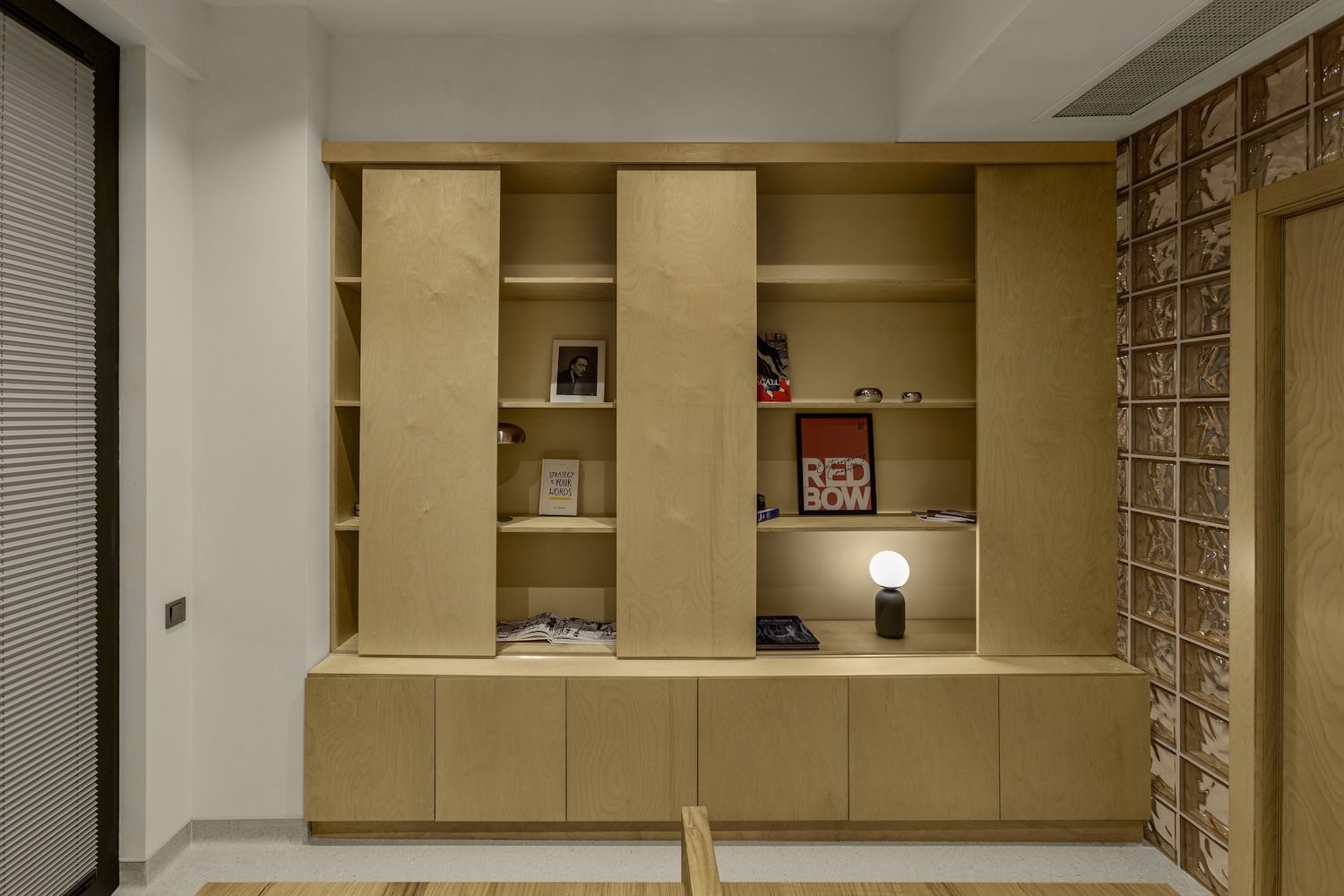
Rising through the building, the program shifts toward focused individual work on the second and third floors. Here, the most distinctive material decision takes hold: rose-tinted glass blocks enclose each workstation, creating partitions that filter daylight into a soft, warm glow. Glass block architecture carries deep modernist associations – from Pierre Chareau’s Maison de Verre to the industrial loft vernacular – but the rose tint pushes the material away from clinical transparency toward something more intimate. Light passing through these blocks does not simply illuminate; it colors the atmosphere, lending even routine desk work a sense of warmth and enclosure without isolation.
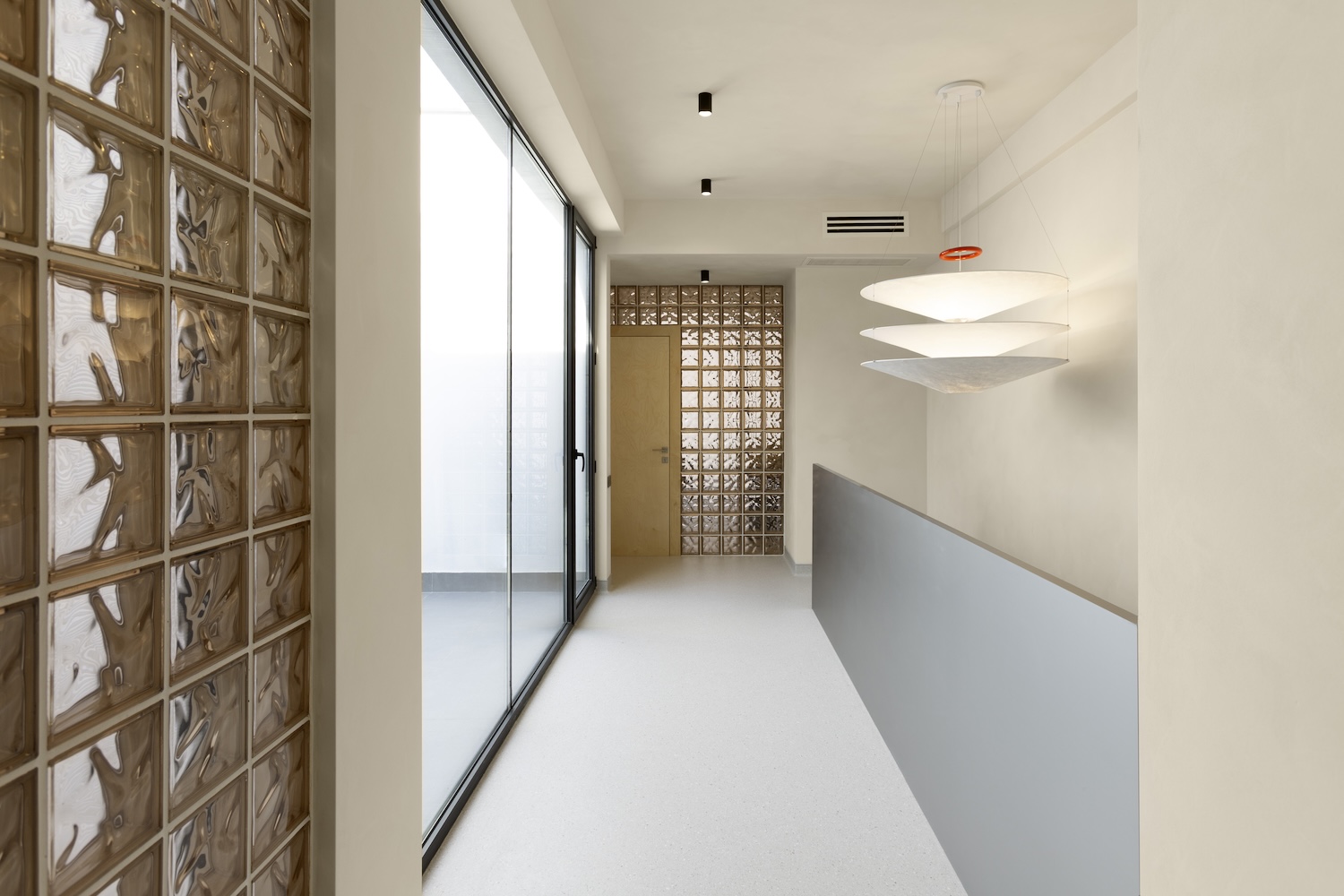
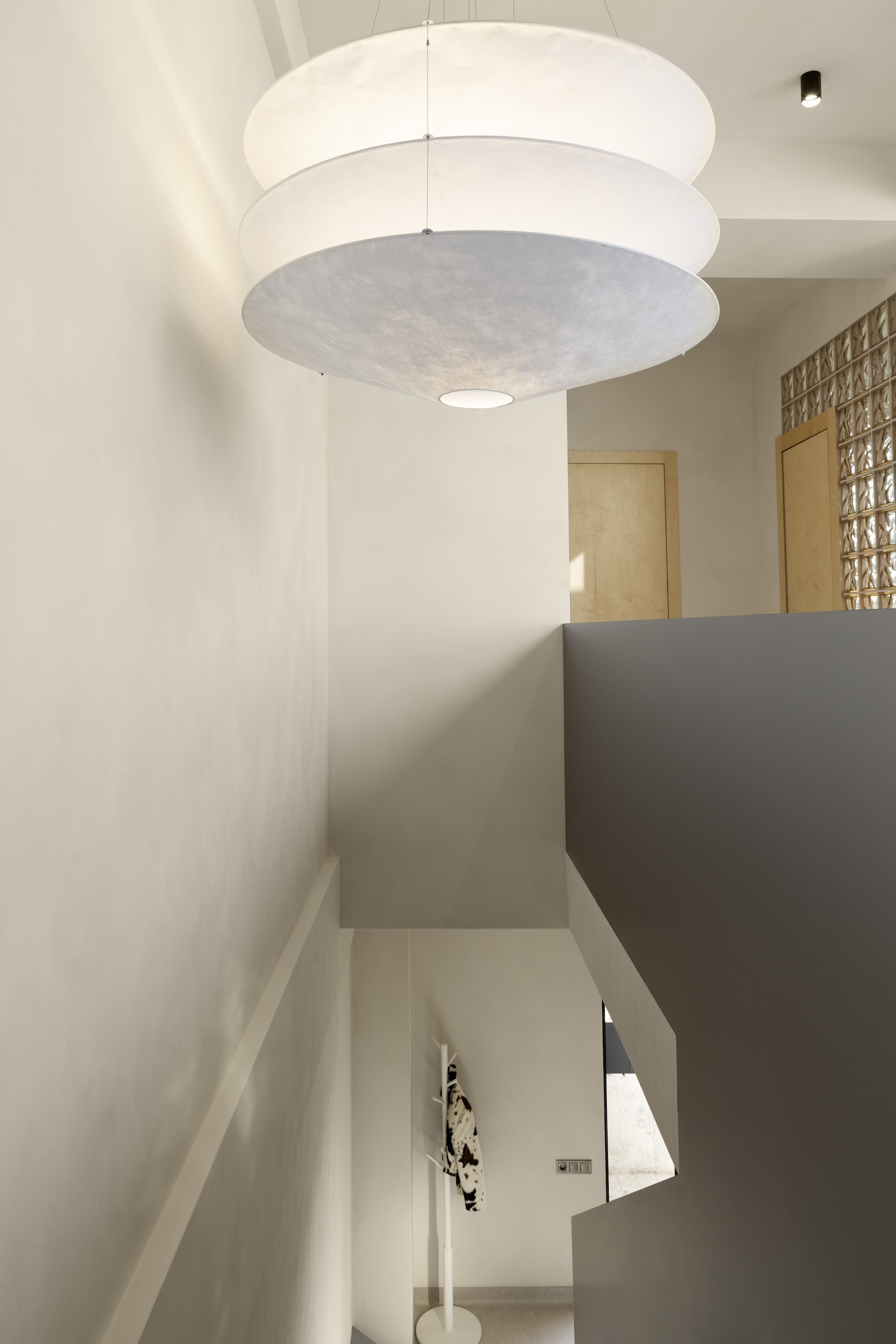
The corridors extend this logic, their walls also constructed from glass blocks that visually define circulation zones while refusing to interrupt the flow of natural light. The result is a workplace where boundaries exist but rarely feel absolute. Transparent and translucent surfaces replace solid walls almost entirely, creating sightlines and light pathways that connect the floors into a single, breathing environment. Subtle changes in floor level further distinguish functional zones without resorting to hard separations, allowing movement and communication to happen organically.