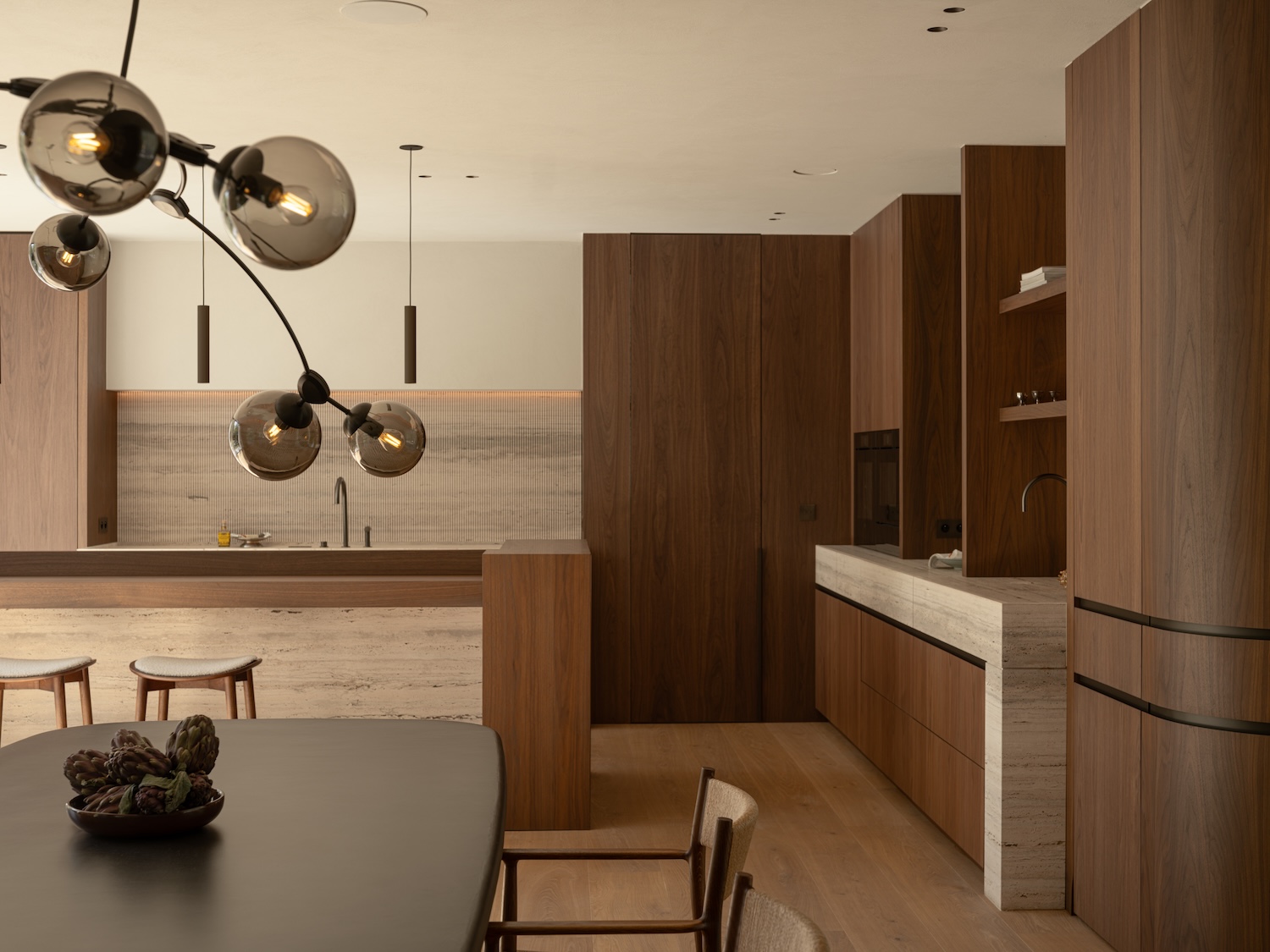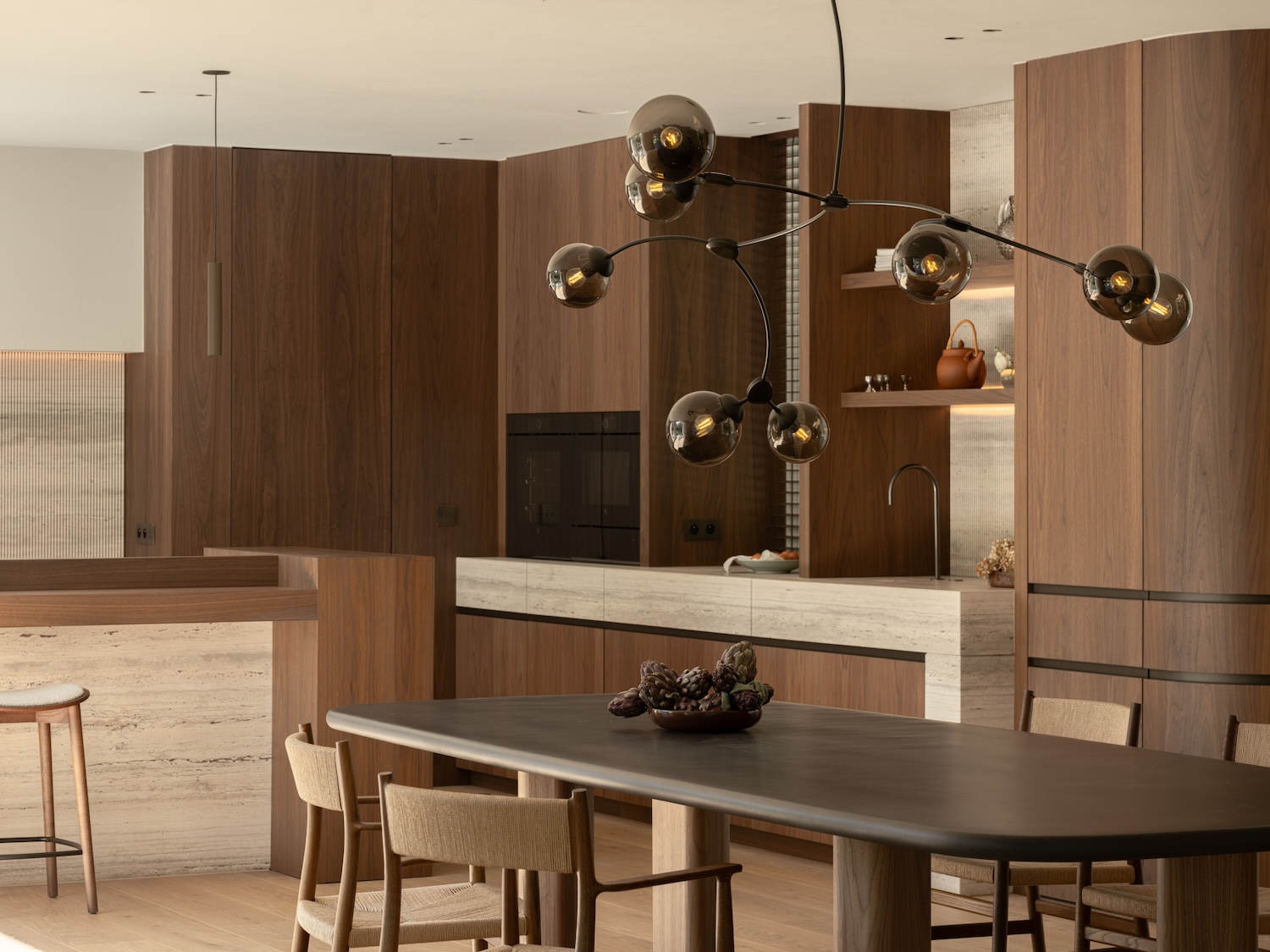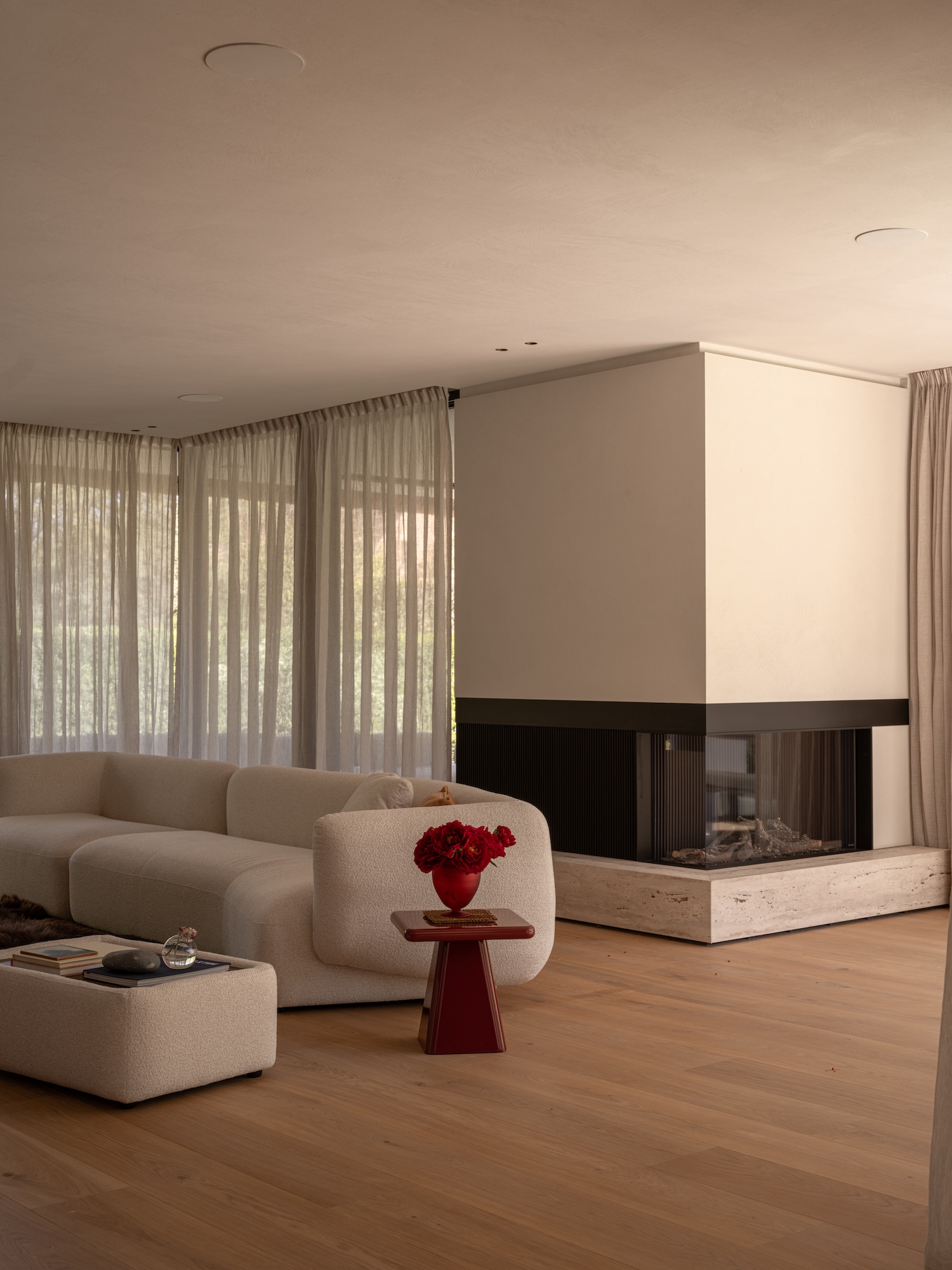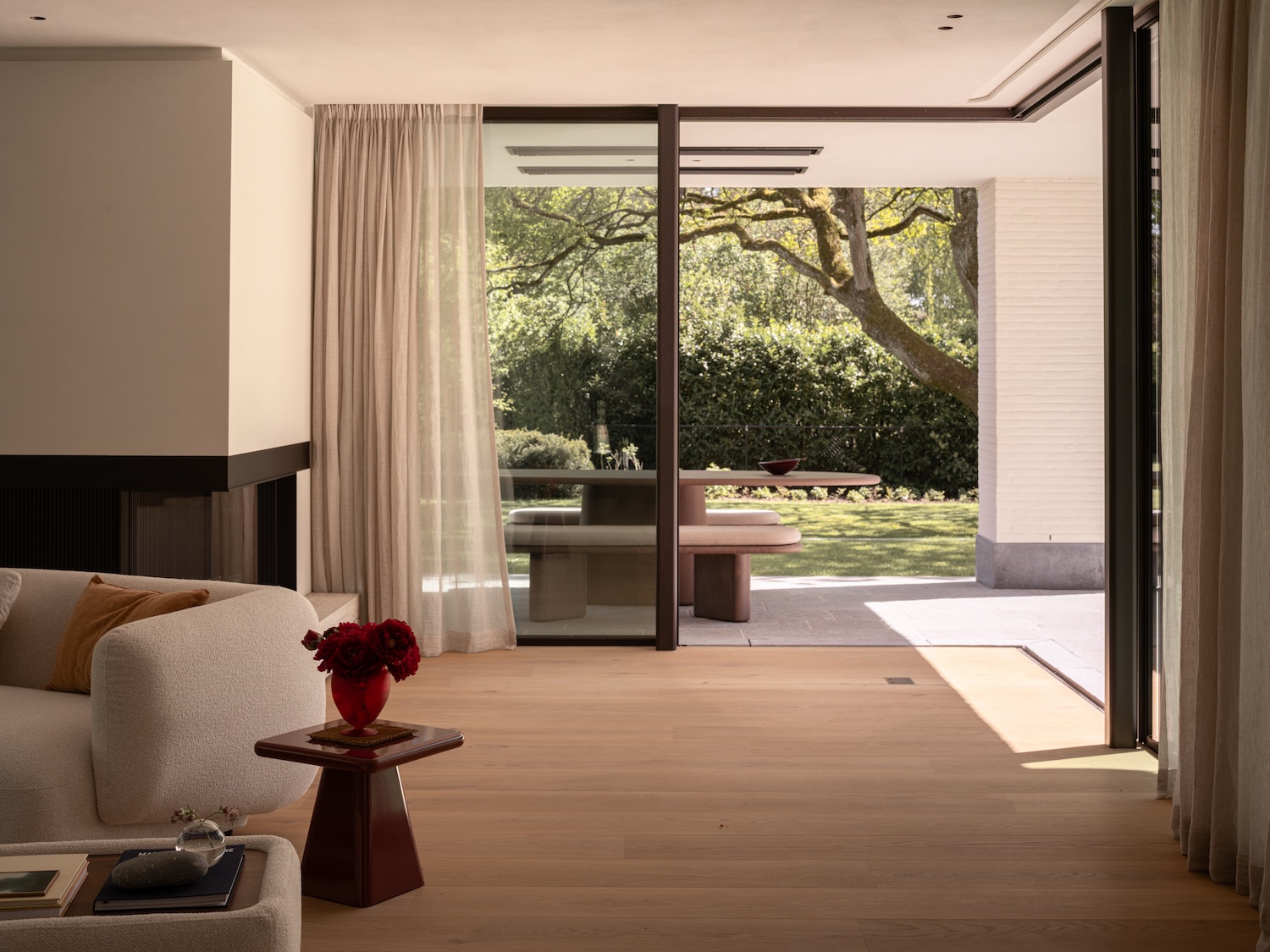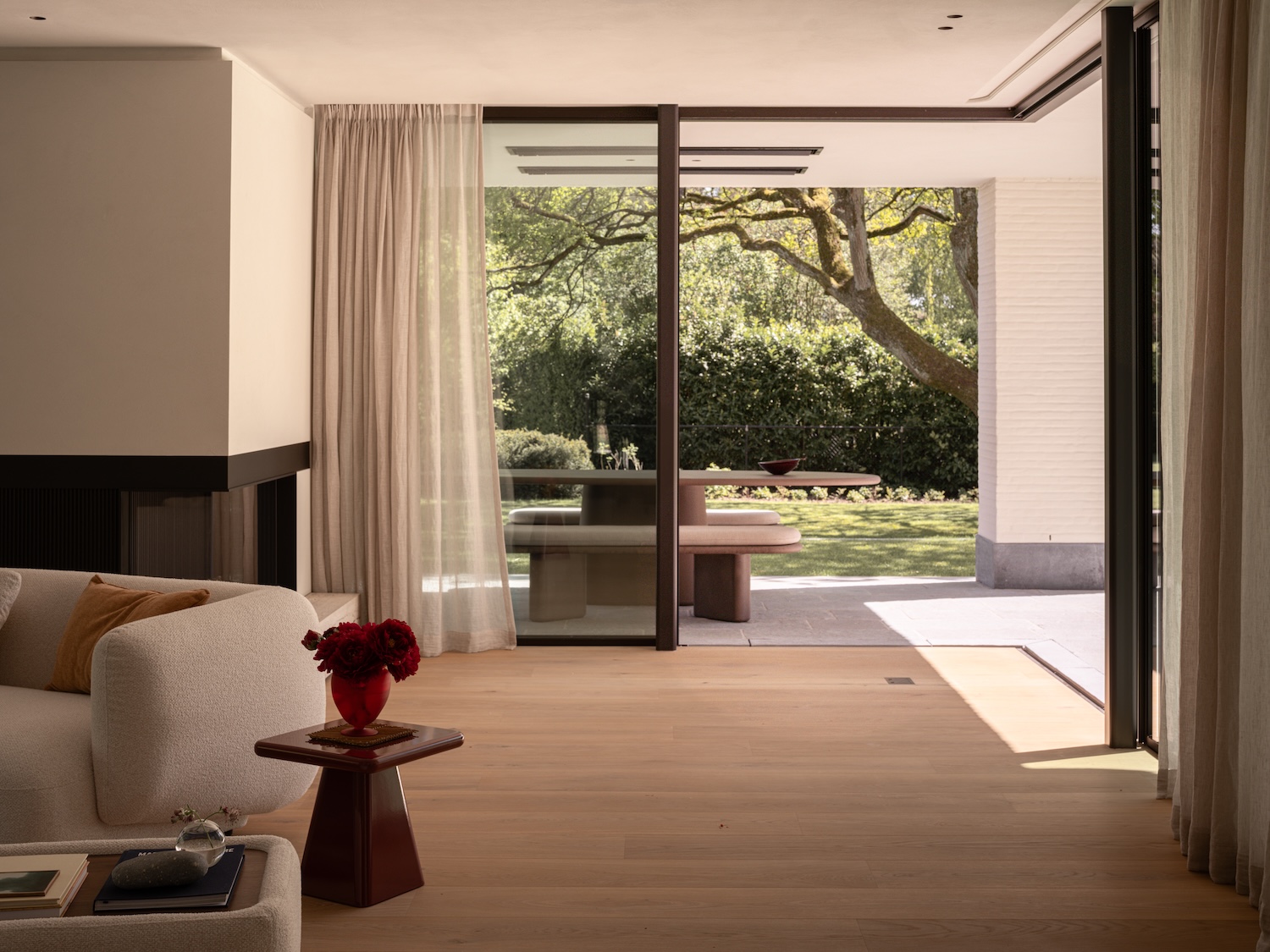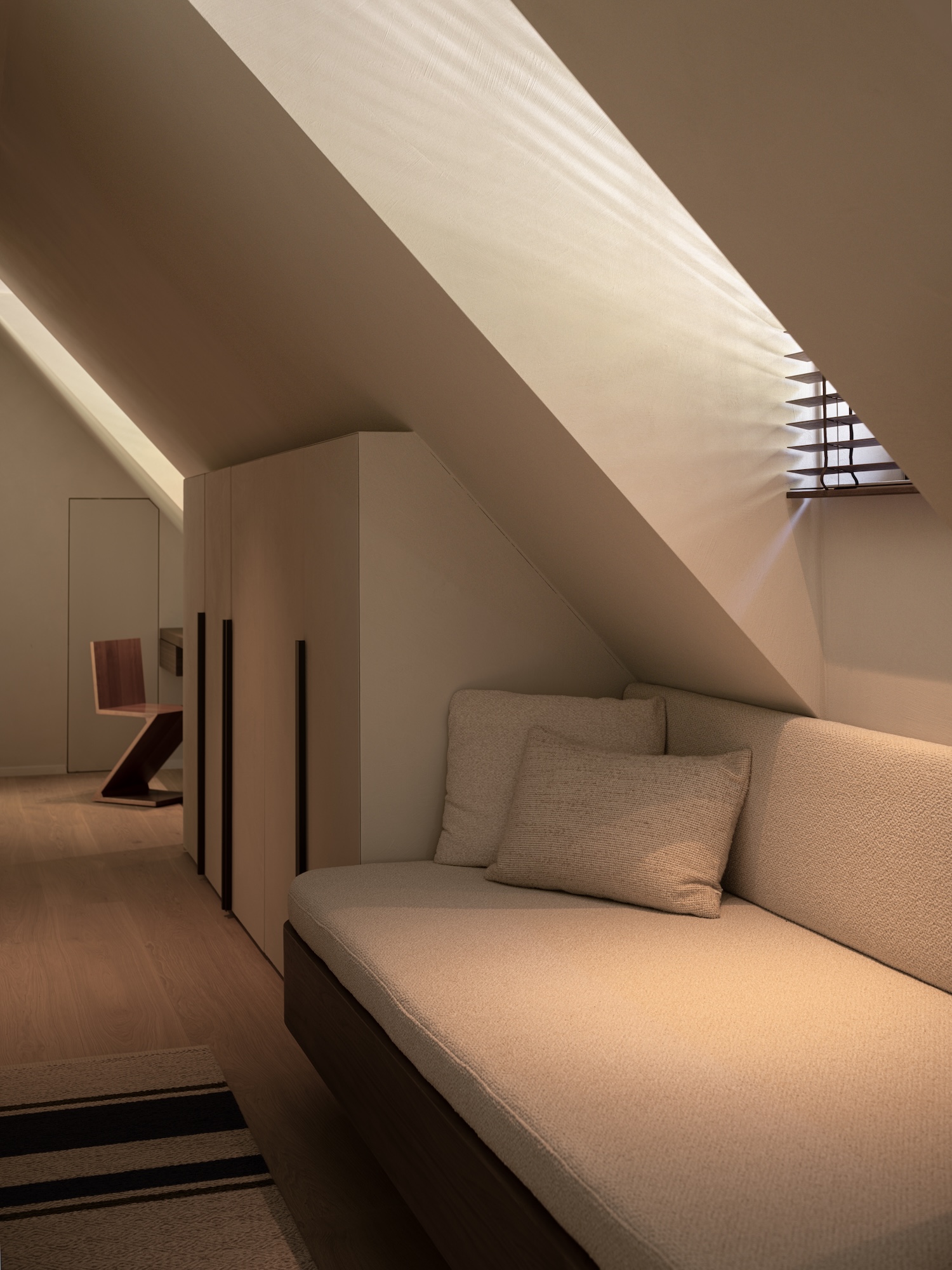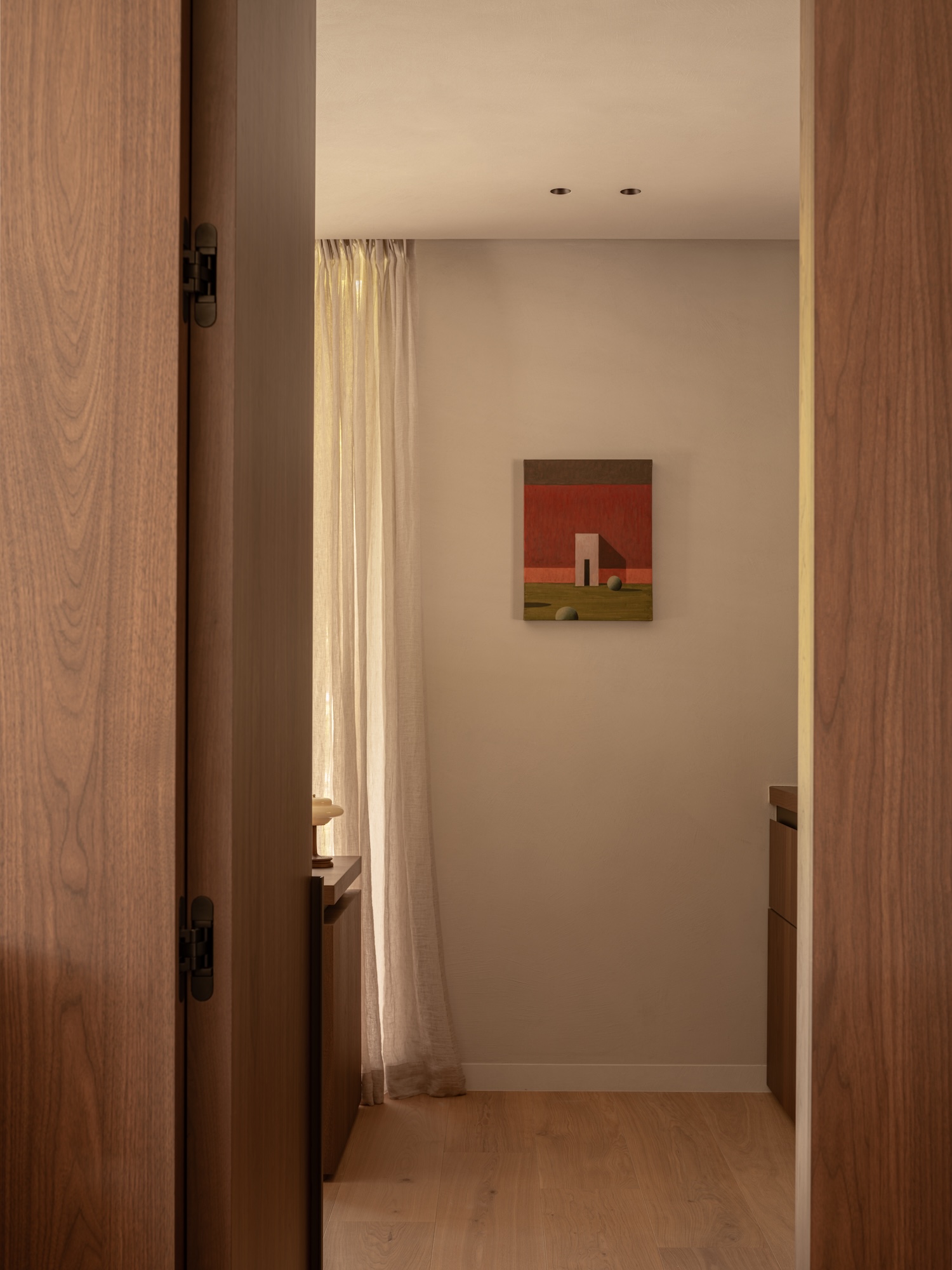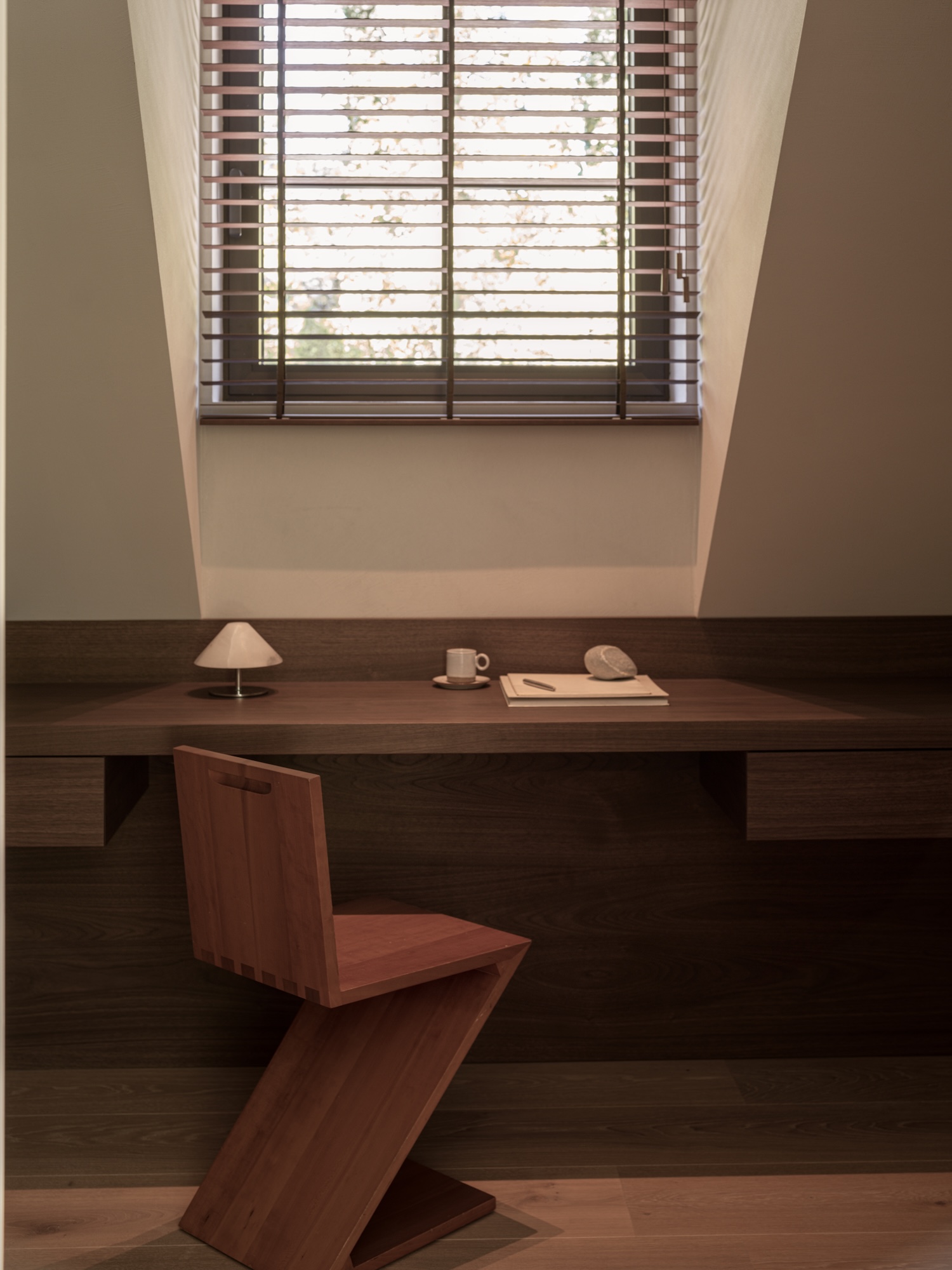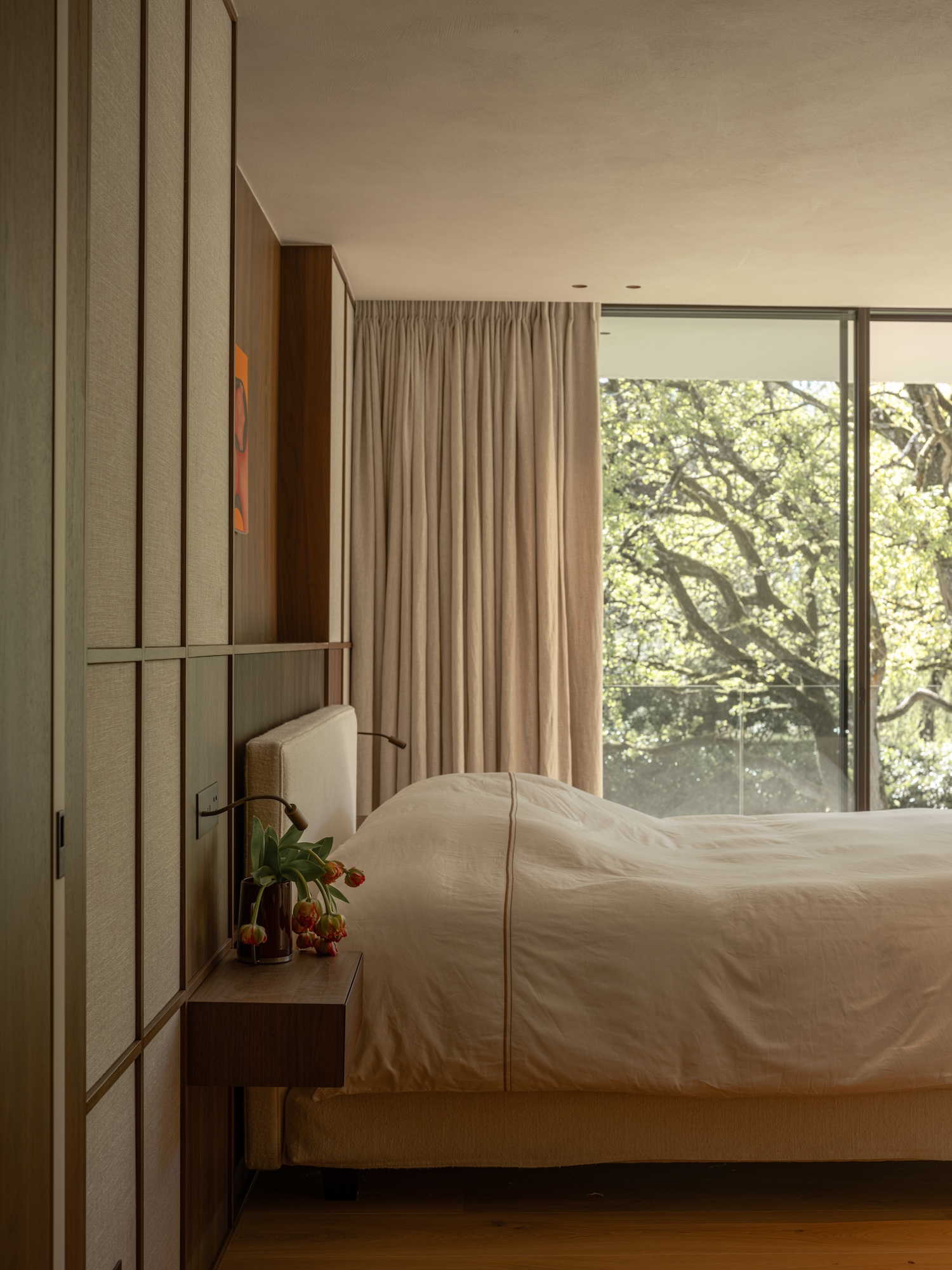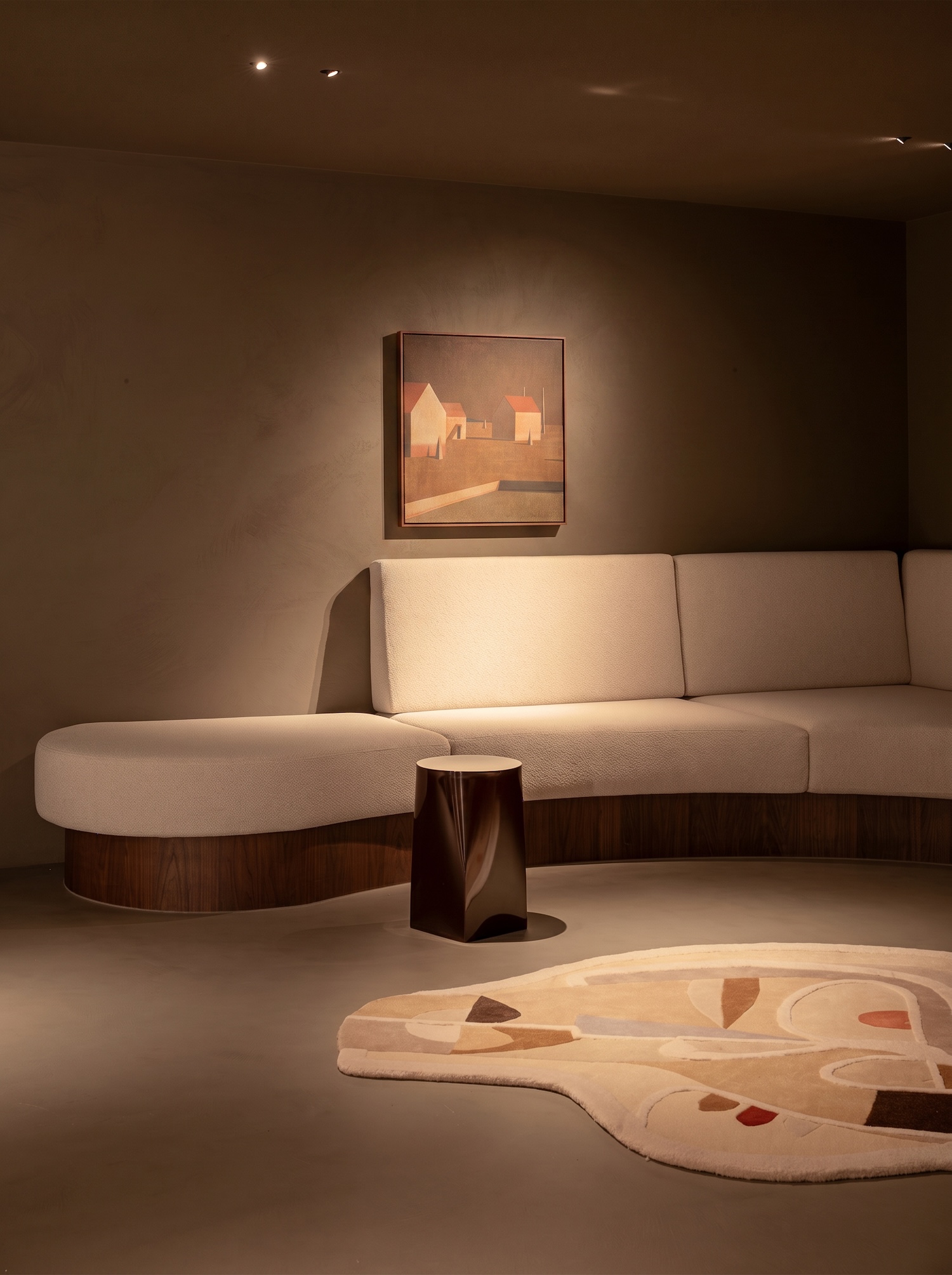
Residence RBK is a minimalist villa located in Antwerp, Belgium, designed by Britt Van Namen. The central challenge of Residence RBK is one that confronts any large-scale residential commission: how do you produce warmth at a scale that naturally resists it? At over 600 square metres, the thatched-roof villa in the Belgian province of Antwerp could easily have tilted toward spectacle. Instead, Britt Van Namen – whose Ghent-based studio has built a reputation since 2015 on tactile, warmly minimalist interiors – used the project to demonstrate that intimacy is not a function of square footage but of material decision-making.
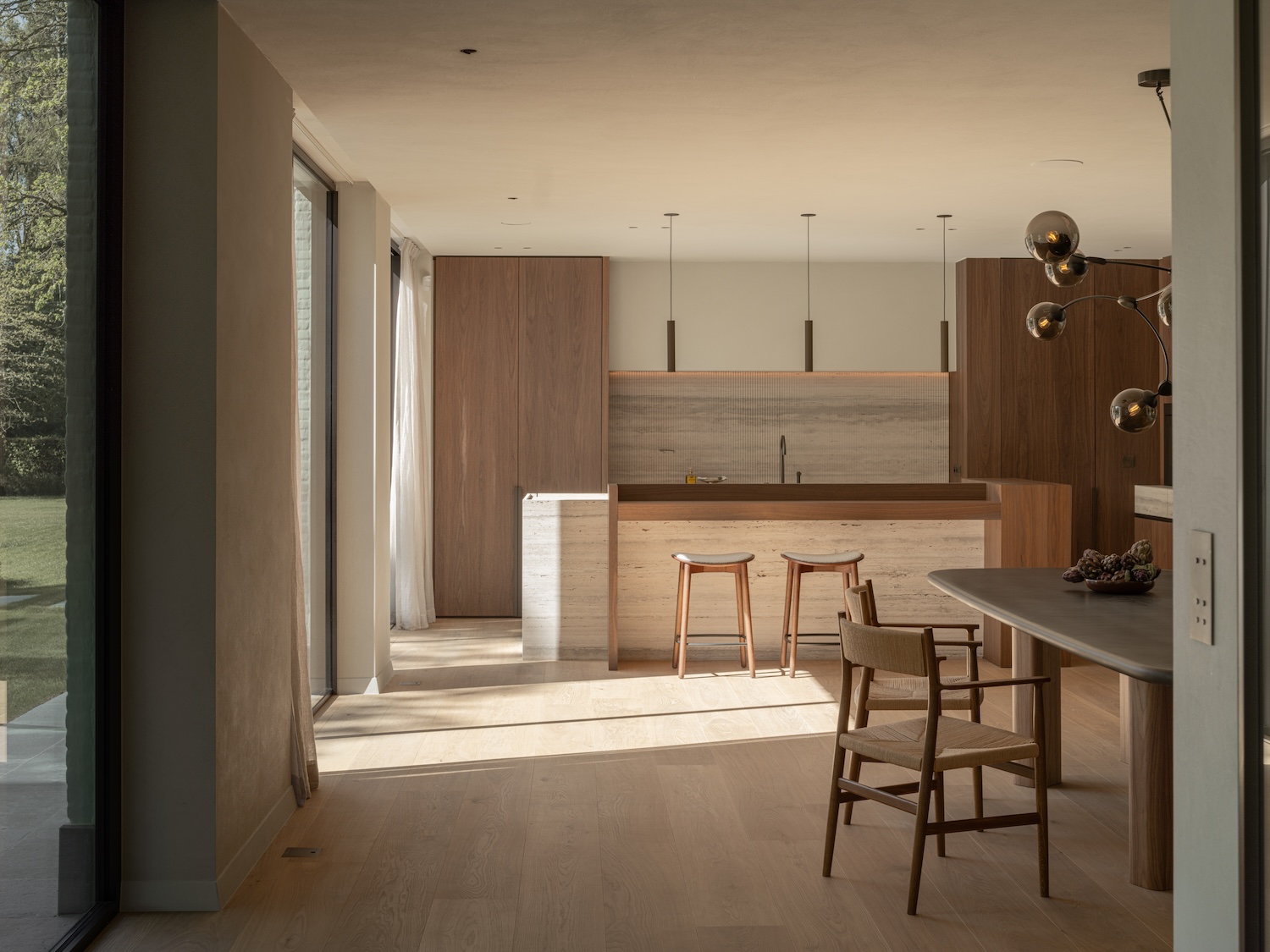
The spiral staircase anchoring the entrance hall is where this argument is made most clearly. Cast in travertine with rounded treads and a walnut handrail, it reads simultaneously as structural element and sculpture – closer in spirit to the monumental staircases of Carlo Scarpa than to the showpiece feature stairs common in contemporary luxury residential work. The rounded geometry is not decorative but programmatic: the same curved language extends through all bespoke joinery, from the monolithic timber portal framing the master suite entrance to the kitchen cabinetry and the outdoor kitchen beyond. Repetition of a single formal idea across scales – from architectural threshold to cabinet detail – is one of the more disciplined moves in the project, preventing the interior from fragmenting into a collection of set pieces.
The material palette reinforces this coherence. Walnut, travertine, tinted glass, soft textiles and bronze accents are not deployed for contrast but for continuity – each surface calibrated to register differently under changing light while remaining tonally unified. Fluted travertine as a kitchen backsplash is a particularly considered choice: fluting adds depth and shadow without introducing a new material, while the stone’s warm fossil-grey keeps the kitchen visually connected to the entrance hall below. Textured painting techniques serve a similar function in the upper rooms, introducing surface variation that reads as tactile richness rather than ornamentation.