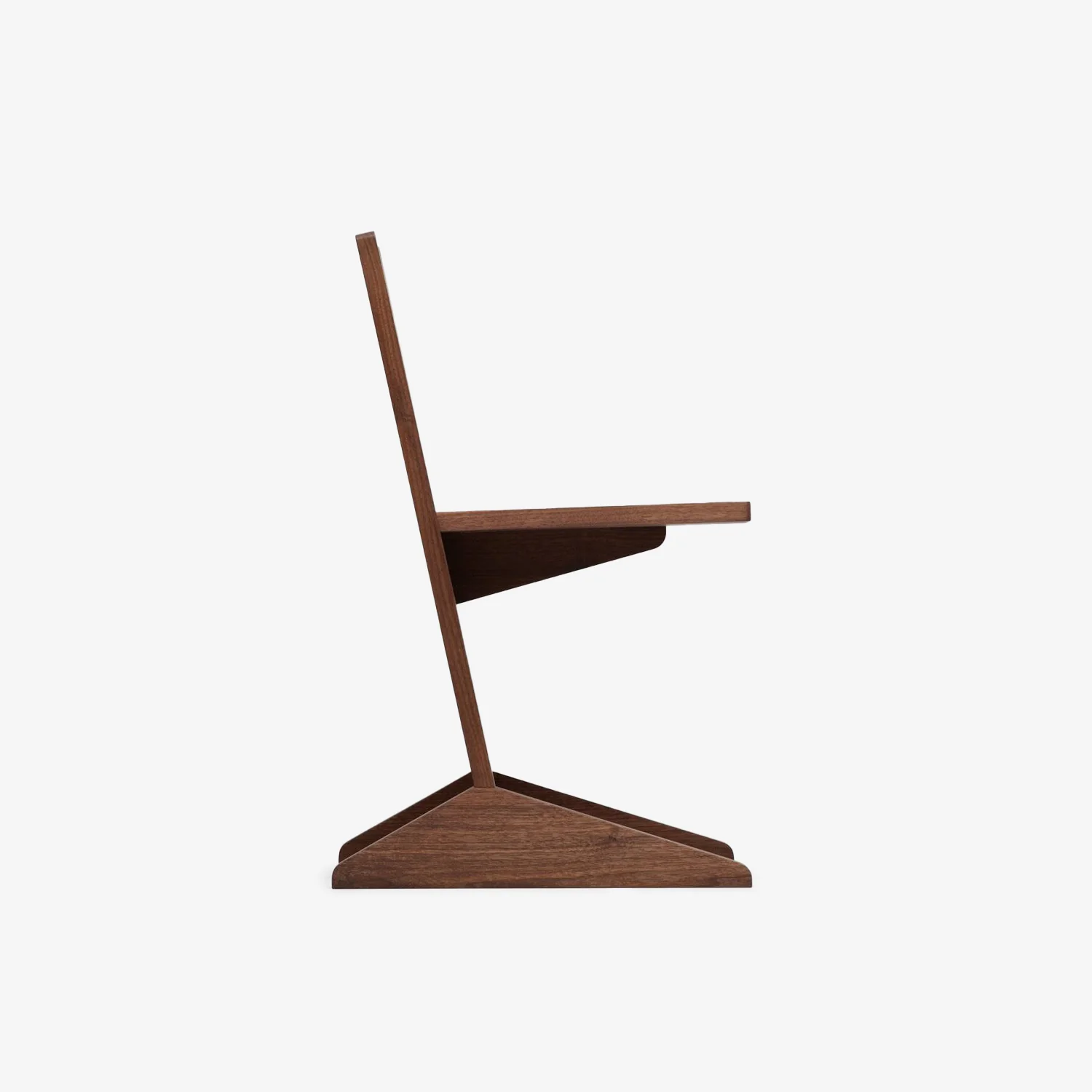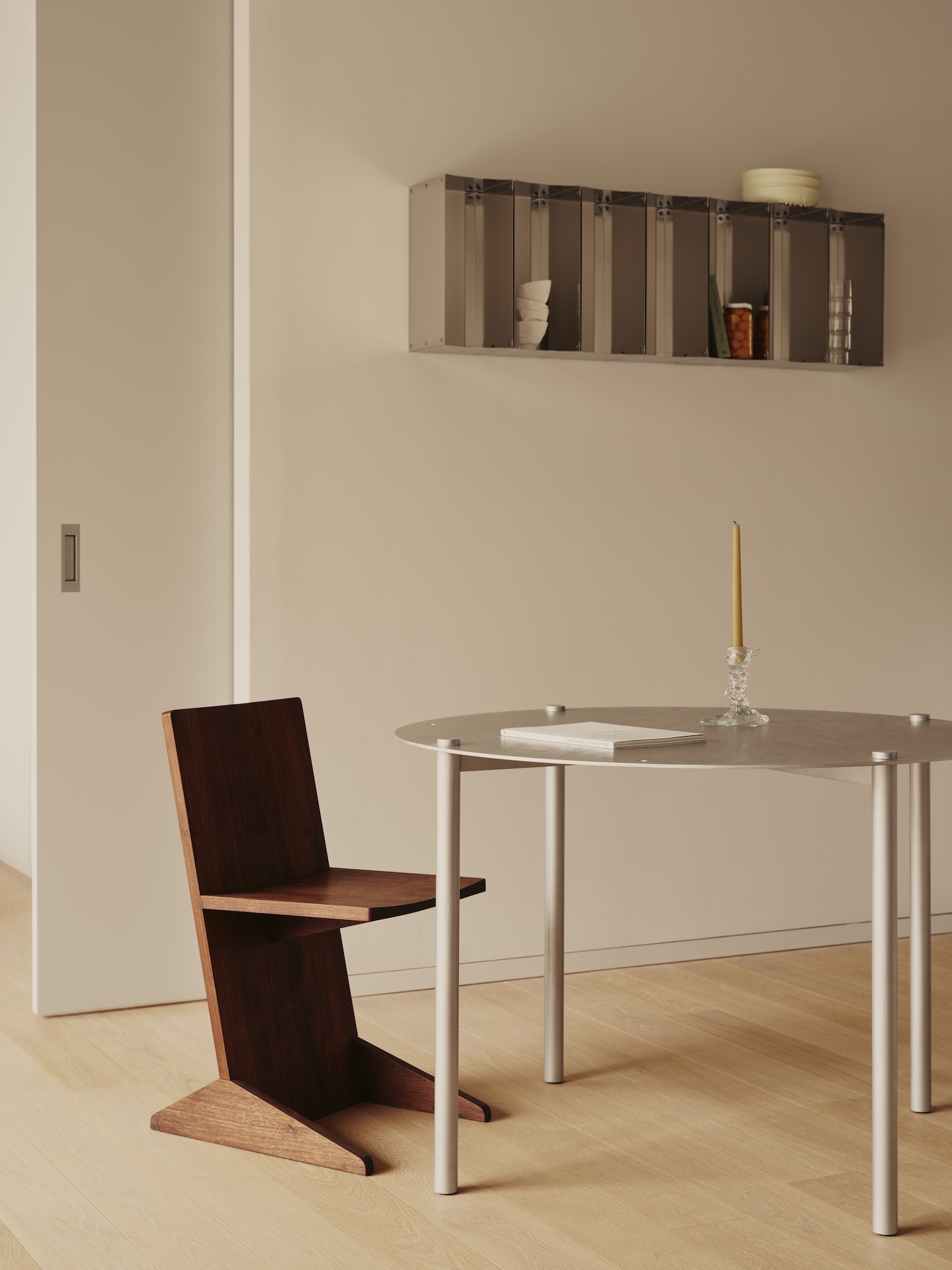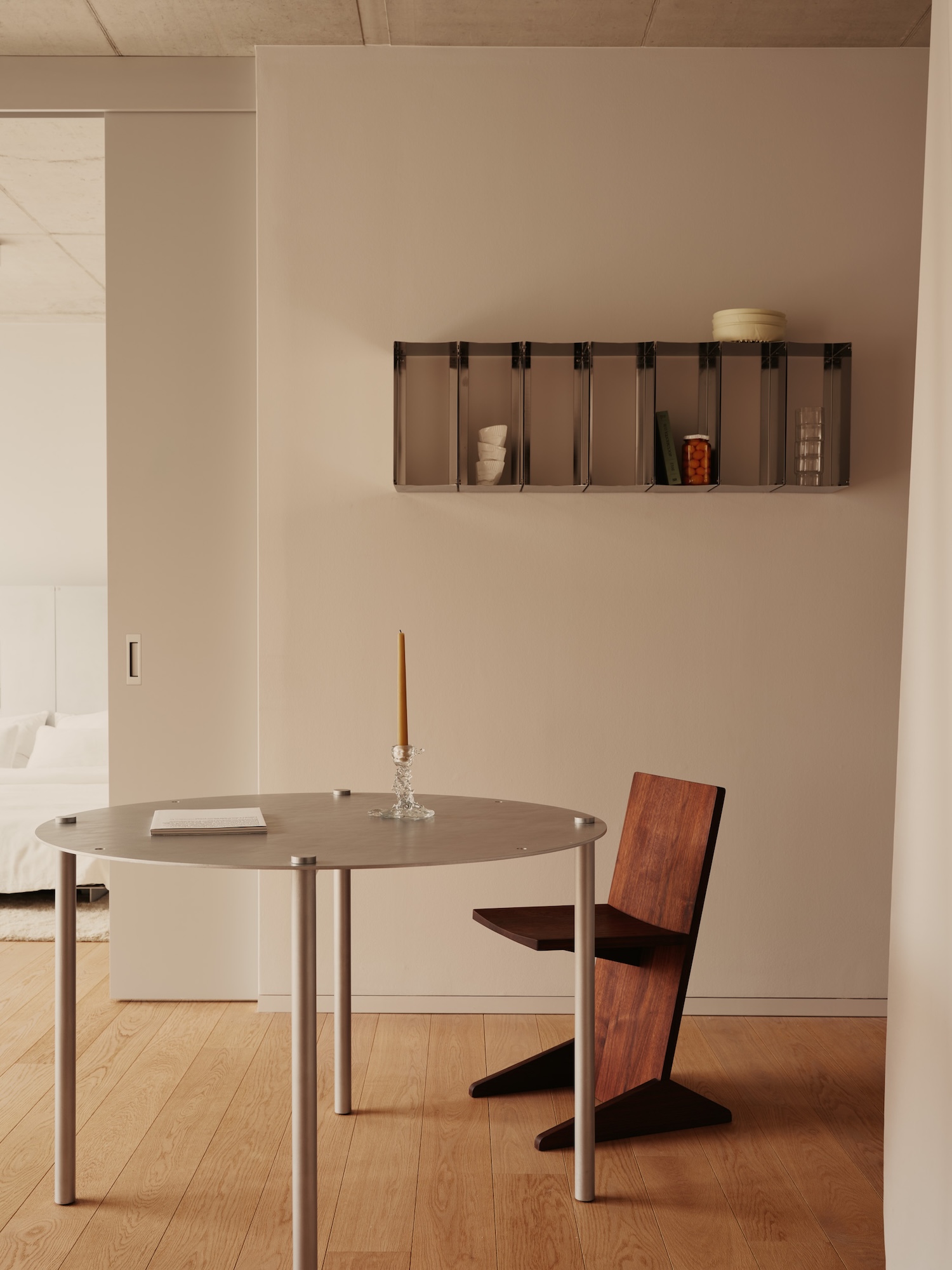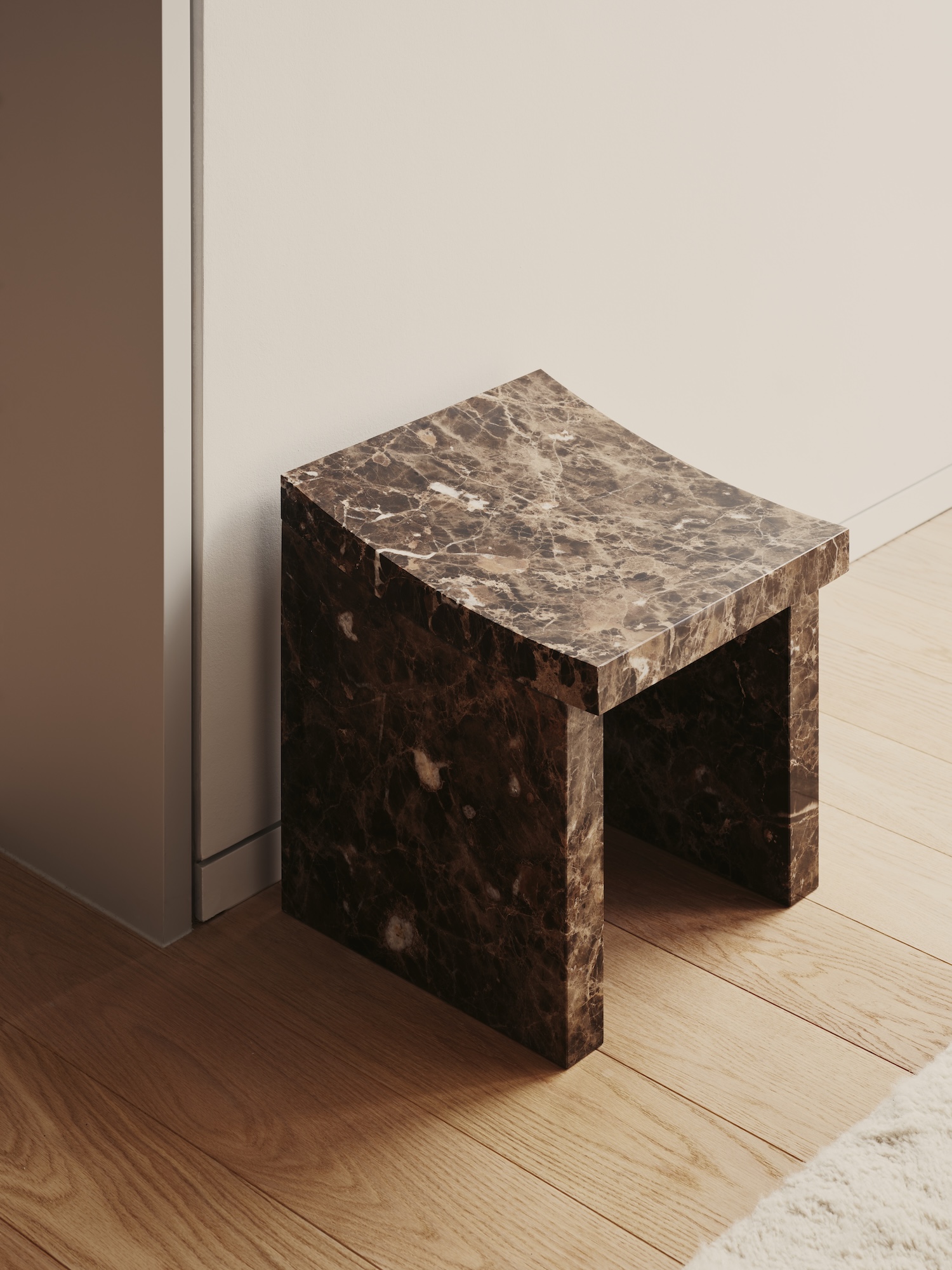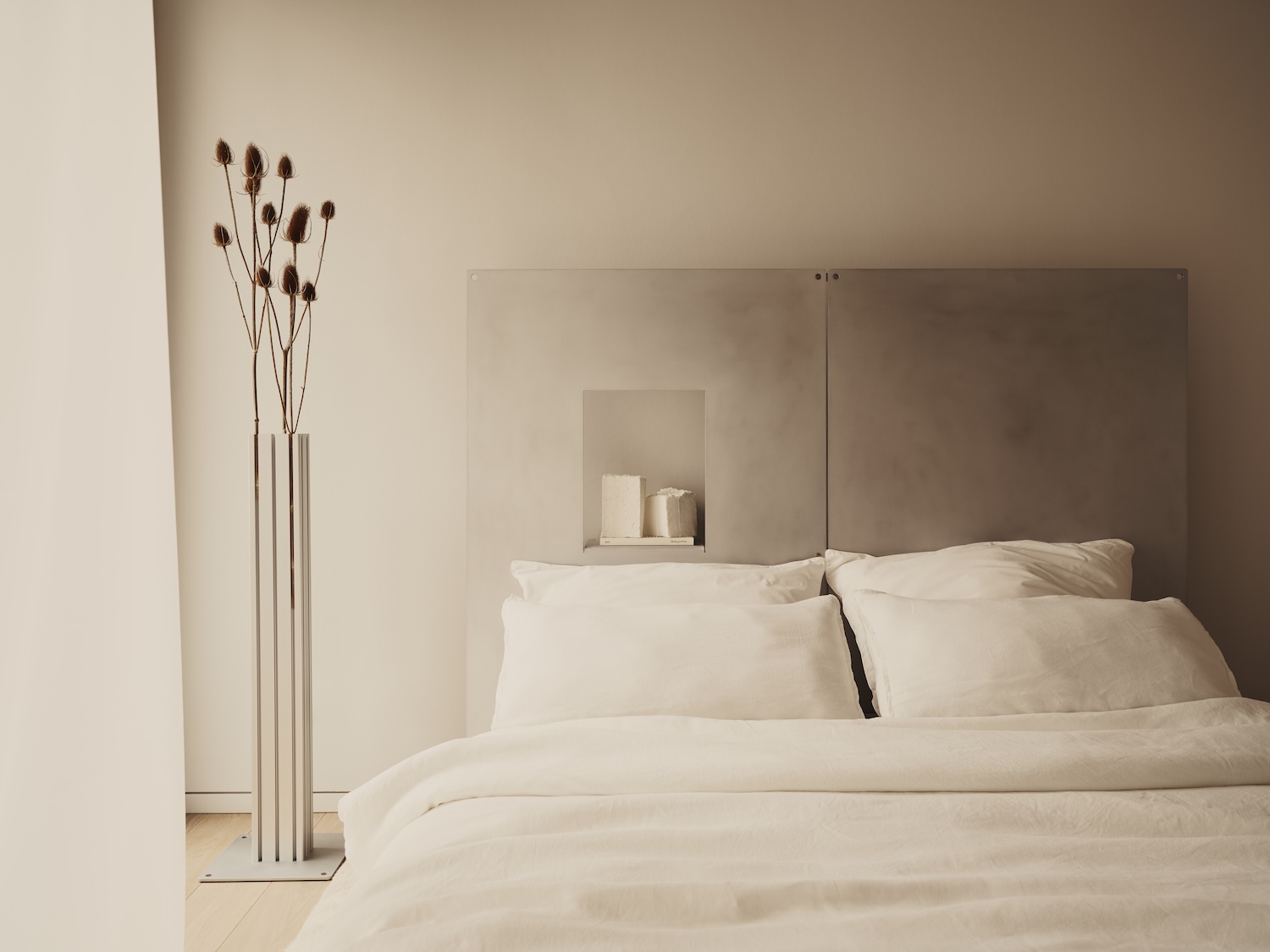
Rooms of AM Tacheles is a minimalist interior located in Berlin, Germany, designed by LOTTO Studio. Within the shell of AM Tacheles, the Herzog & de Meuron development anchoring Berlin’s Mitte district, the question of how to inhabit a building of such architectural weight becomes its own design problem. Curator Garth Roberts answered it by commissioning LOTTO Studio, the Berlin practice of Mirko Ihrig and Casey Lewis, to stage three vignettes inside Suite 04-41. The brief was not to decorate but to propose a mode of living, one that would hold its own against the apartment’s existing architecture by Grüntuch Ernst Architekten without competing with it.
The governing idea across the suite is the void. Every custom piece here is organized around what has been removed rather than what is present. Aluminum sheets are cut and bent into surfaces that carry rather than enclose, carpets are pierced with cutouts that allow vertical elements to pass through the floor plane, and gaps left in construction are absorbed into the vocabulary as storage. The negative space operates as a framing device, drawing attention to the apartment’s raw architectural materials while allowing each object to remain in conversation with the others. The approach recalls the compositional logic of Shiro Kuramata or the industrial material poetics of Max Lamb, though LOTTO’s execution stays closer to the building site than to the gallery.
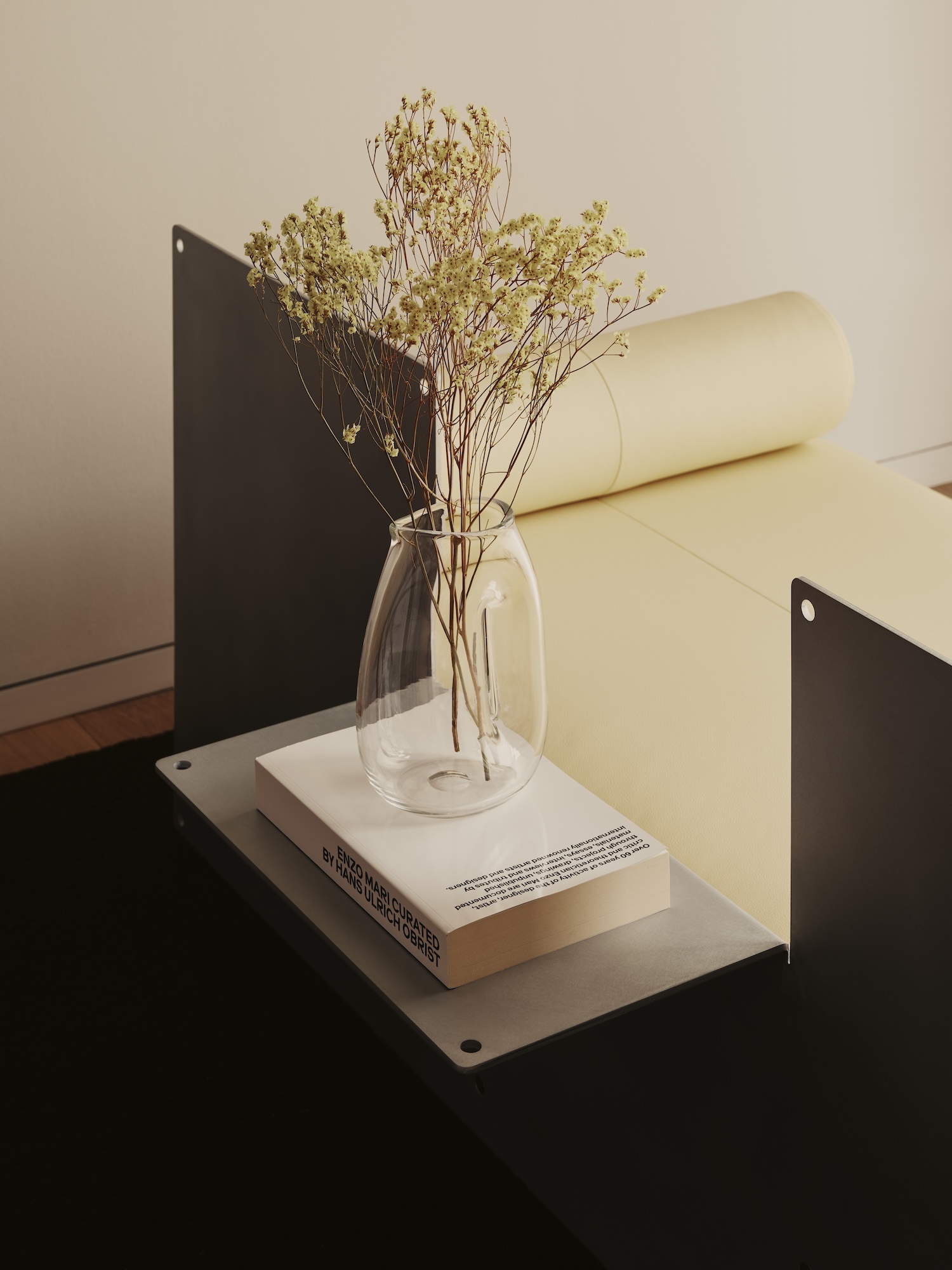
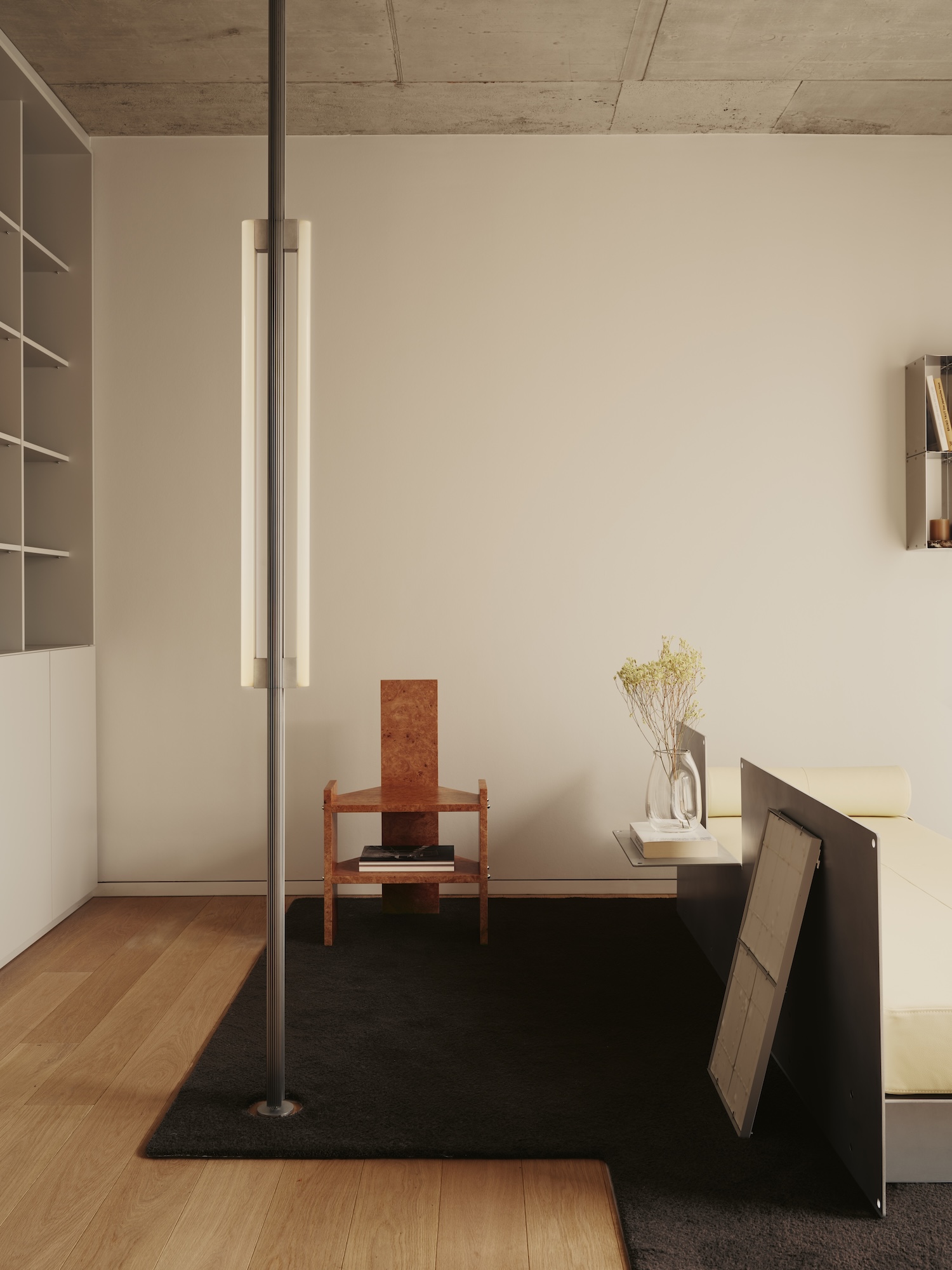
Entering the apartment, the living room vignette is anchored by a wool rug produced by CC-Tapis, pierced by a floor-to-ceiling lamp constructed from stock aluminum heatsink extrusions. The gesture is quietly radical: a commodity industrial profile, usually hidden inside electronics, becomes a luminous structural element. A butter yellow leather daybed faces the window, flanked by a burled maple chair whose figured grain provides the tactile counterpoint to the aluminum’s cool regularity. A framed ceramic work by Lucia Bachner rests against the daybed rather than hanging, a small refusal of convention that reinforces the curatorial rather than residential register.