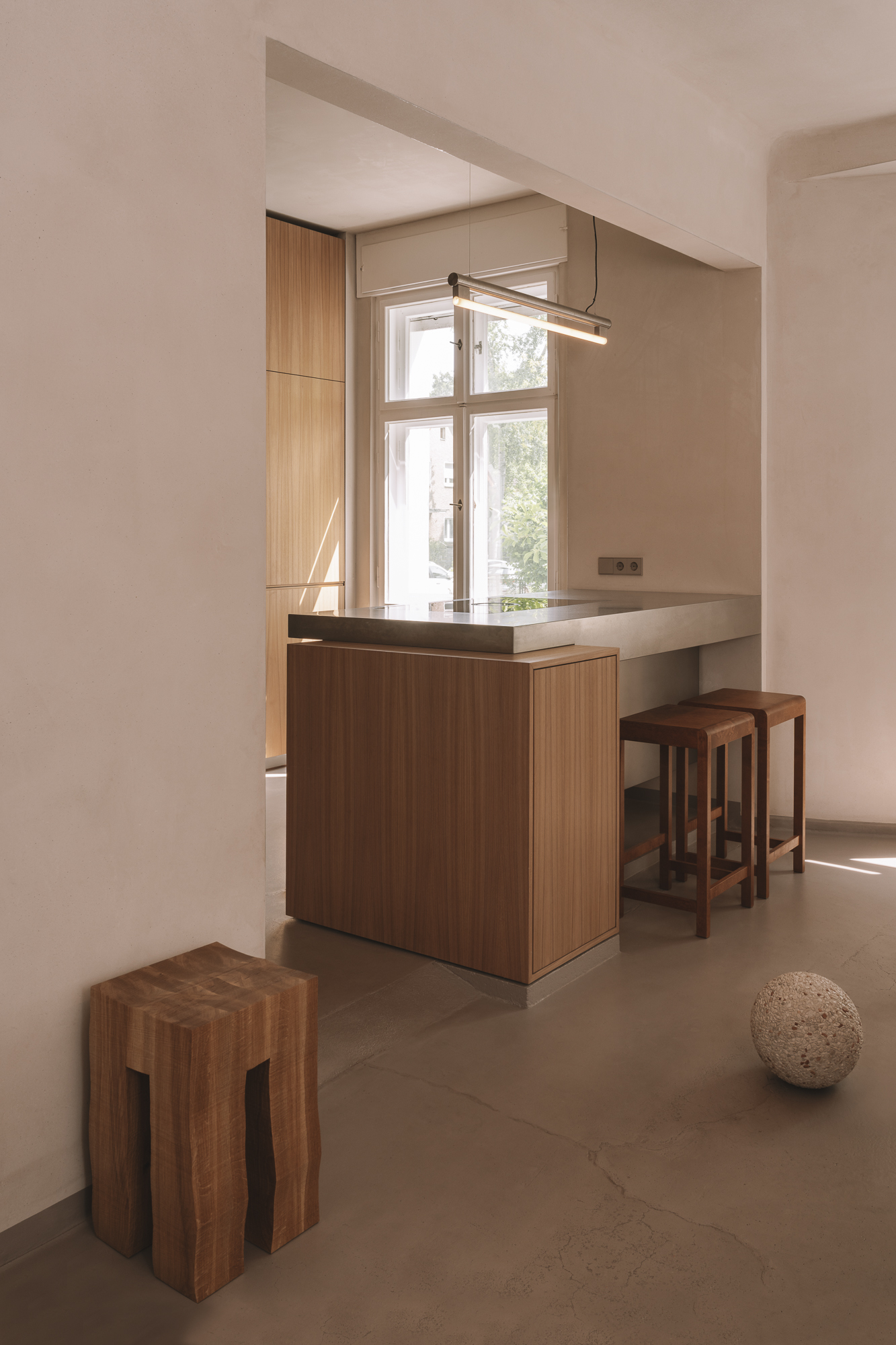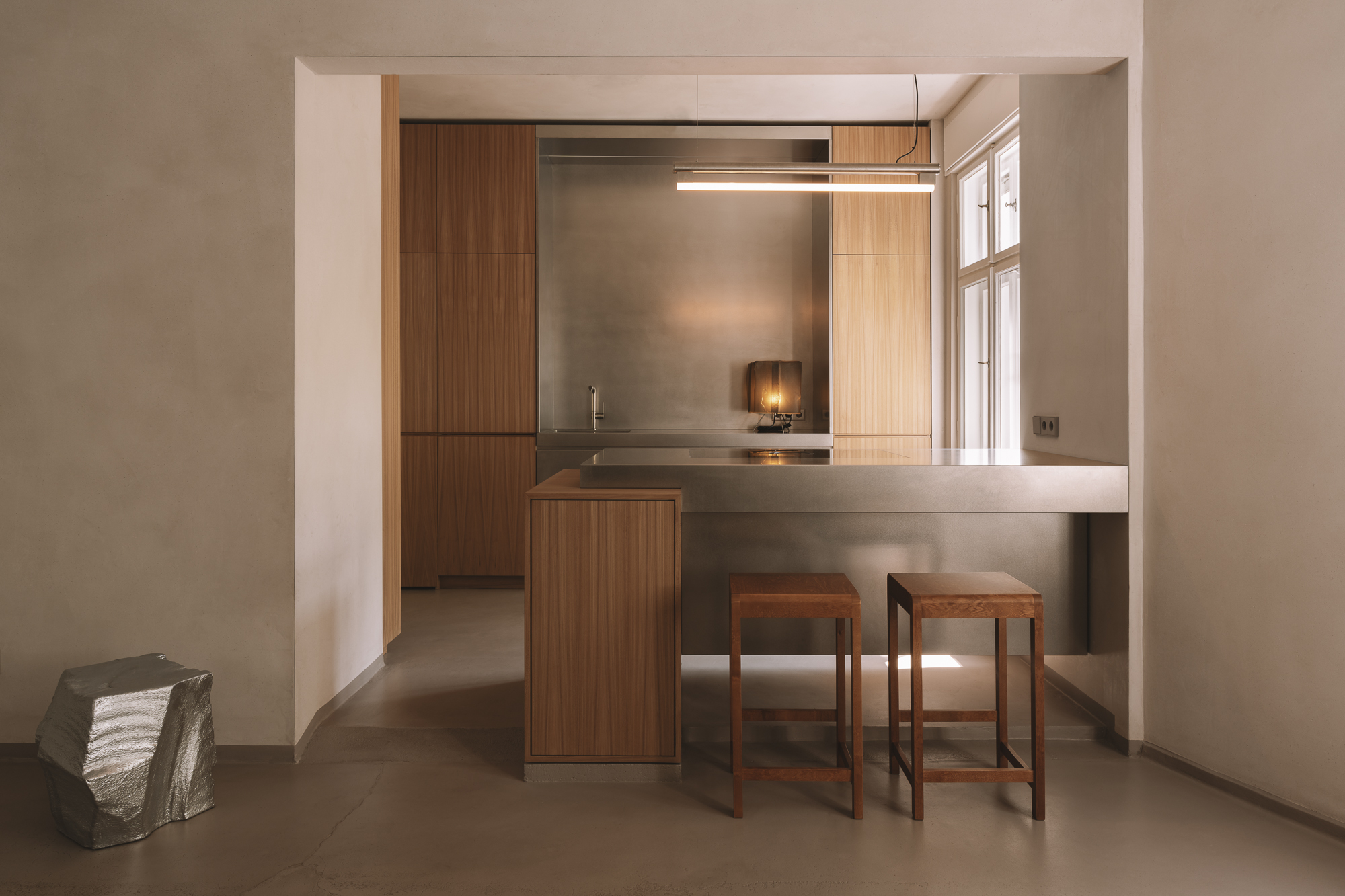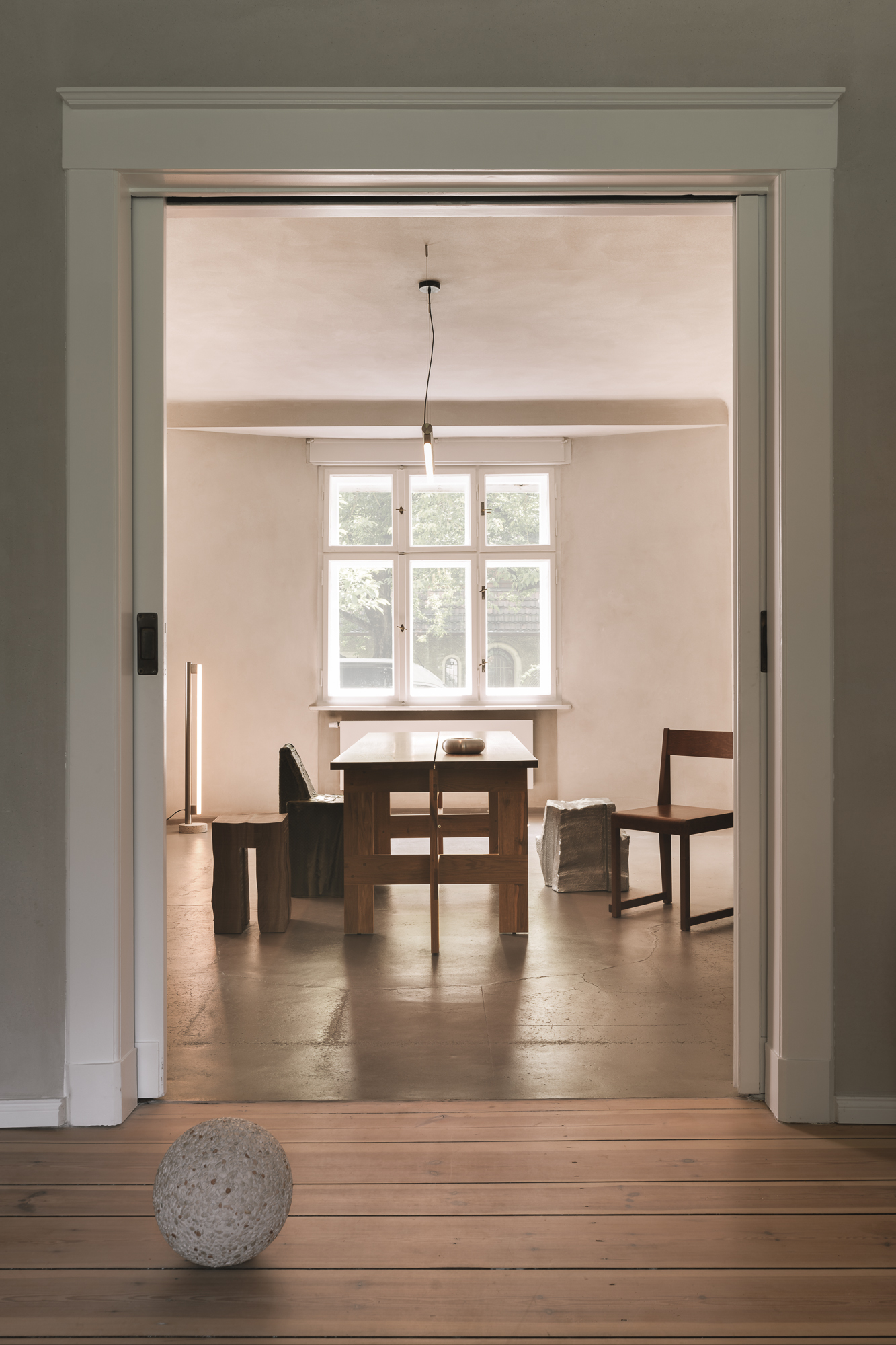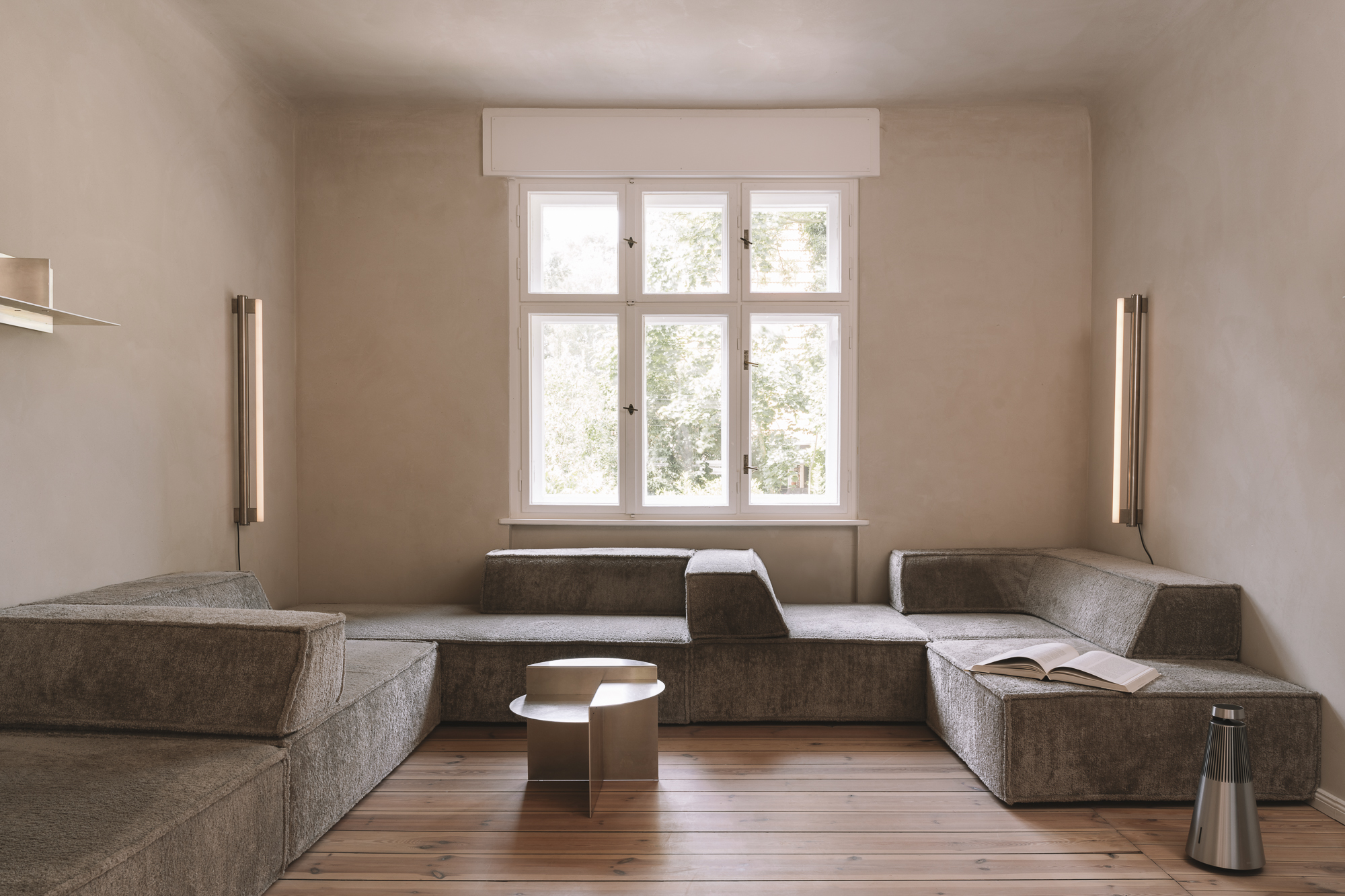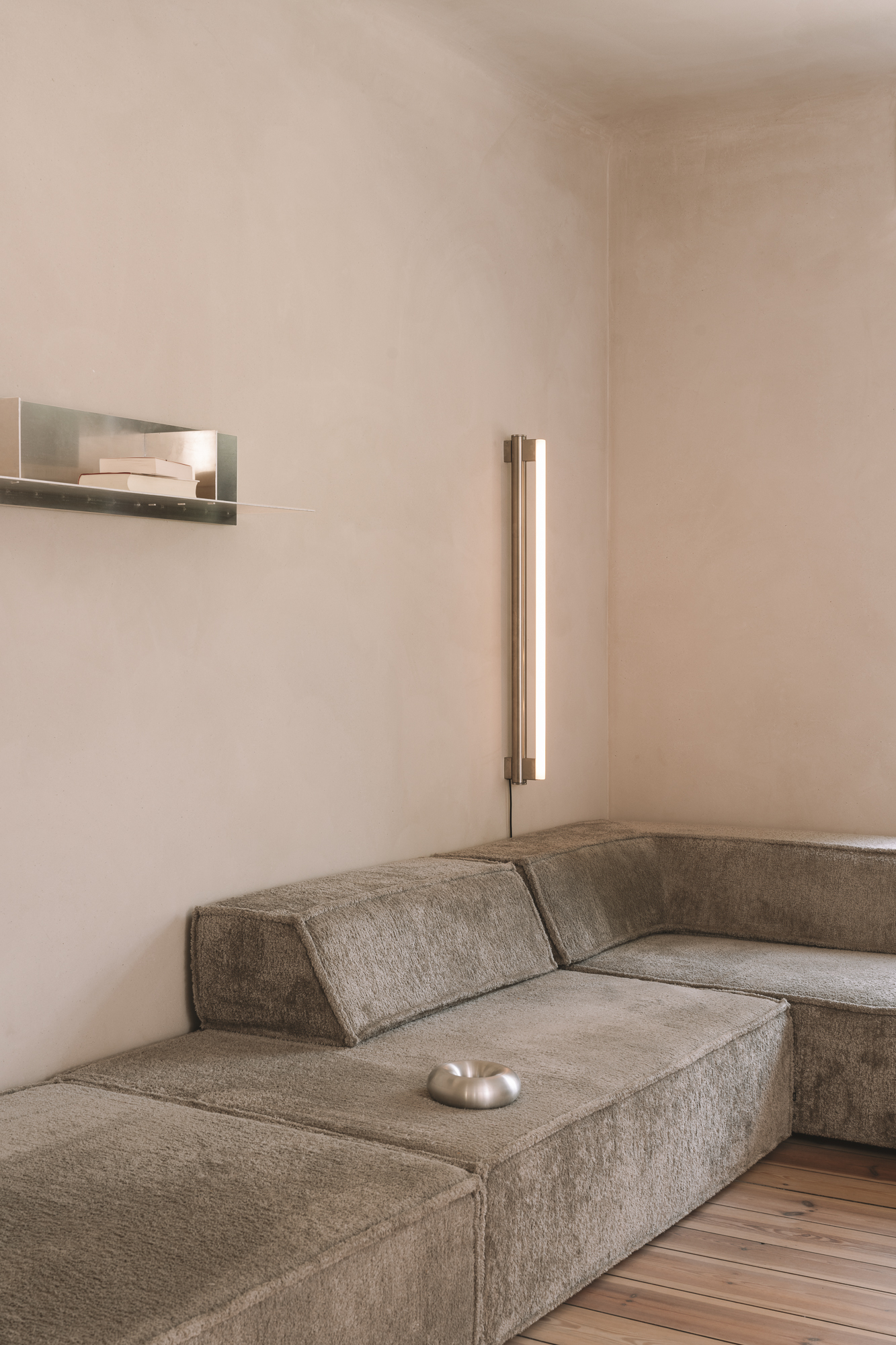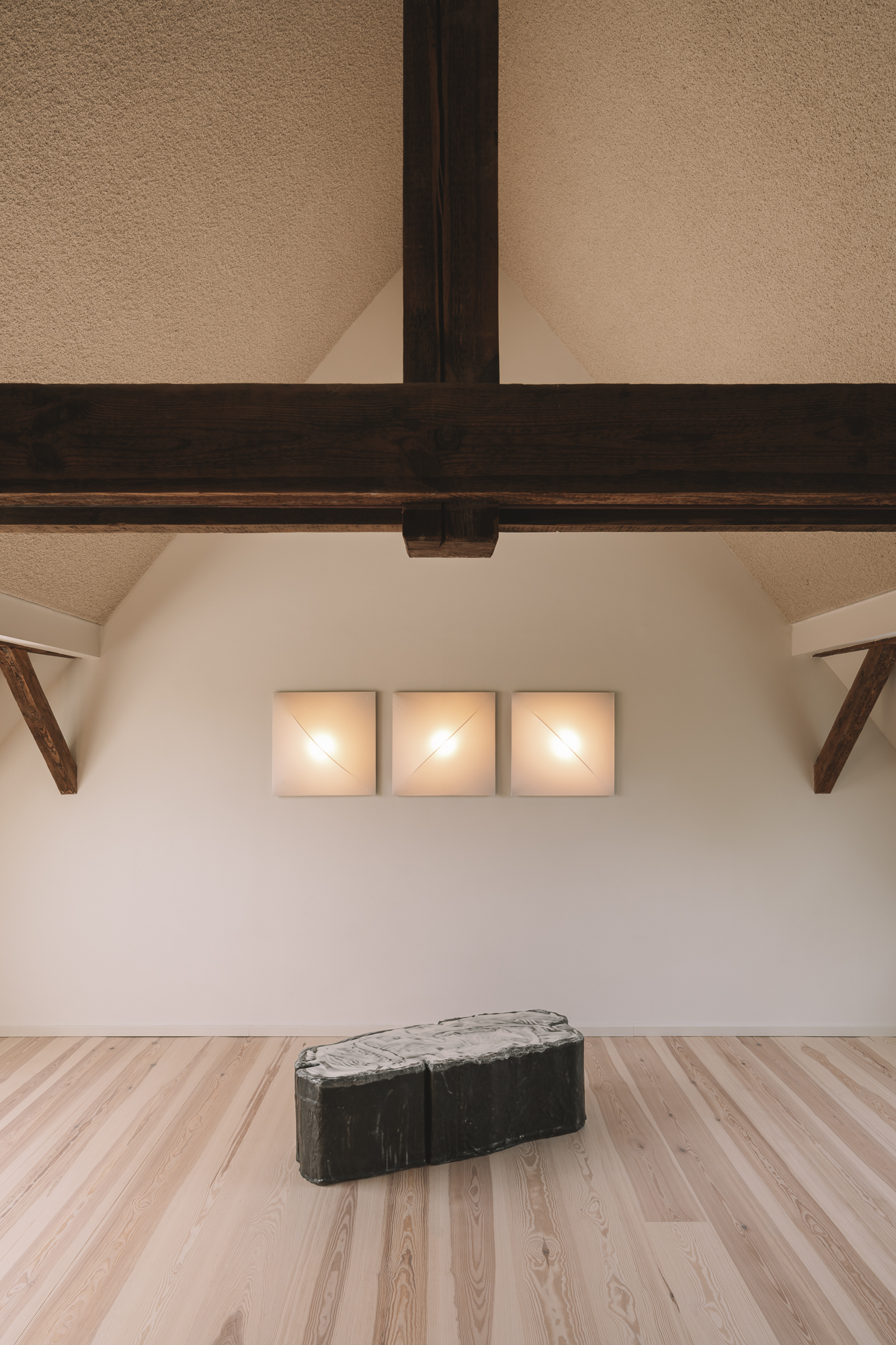
RPA19 is a minimalist house located in Berlin, Germany, designed by VAUST. The project emerges from VAUST’s understanding that true innovation lies not in dramatic rupture but in subtle recalibration. The 200-square-meter home becomes a laboratory for testing how materials can carry both memory and possibility. Natural plaster wraps the interior in earth tones that seem to breathe with the changing light, while restored baseboards and stair railings serve as quiet anchors to the building’s original character. This is architecture as palimpsest, where each layer reveals rather than obscures what came before.
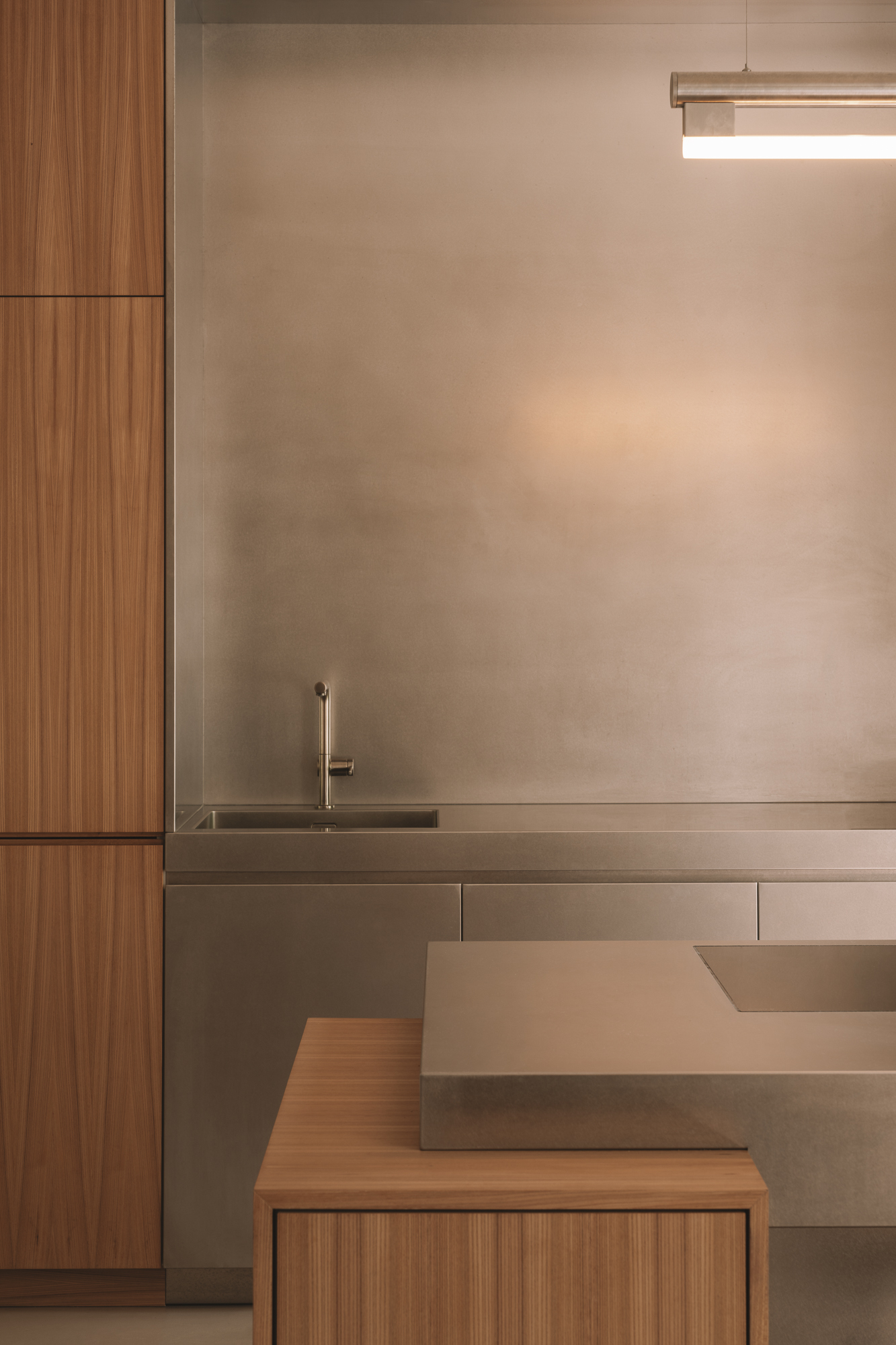
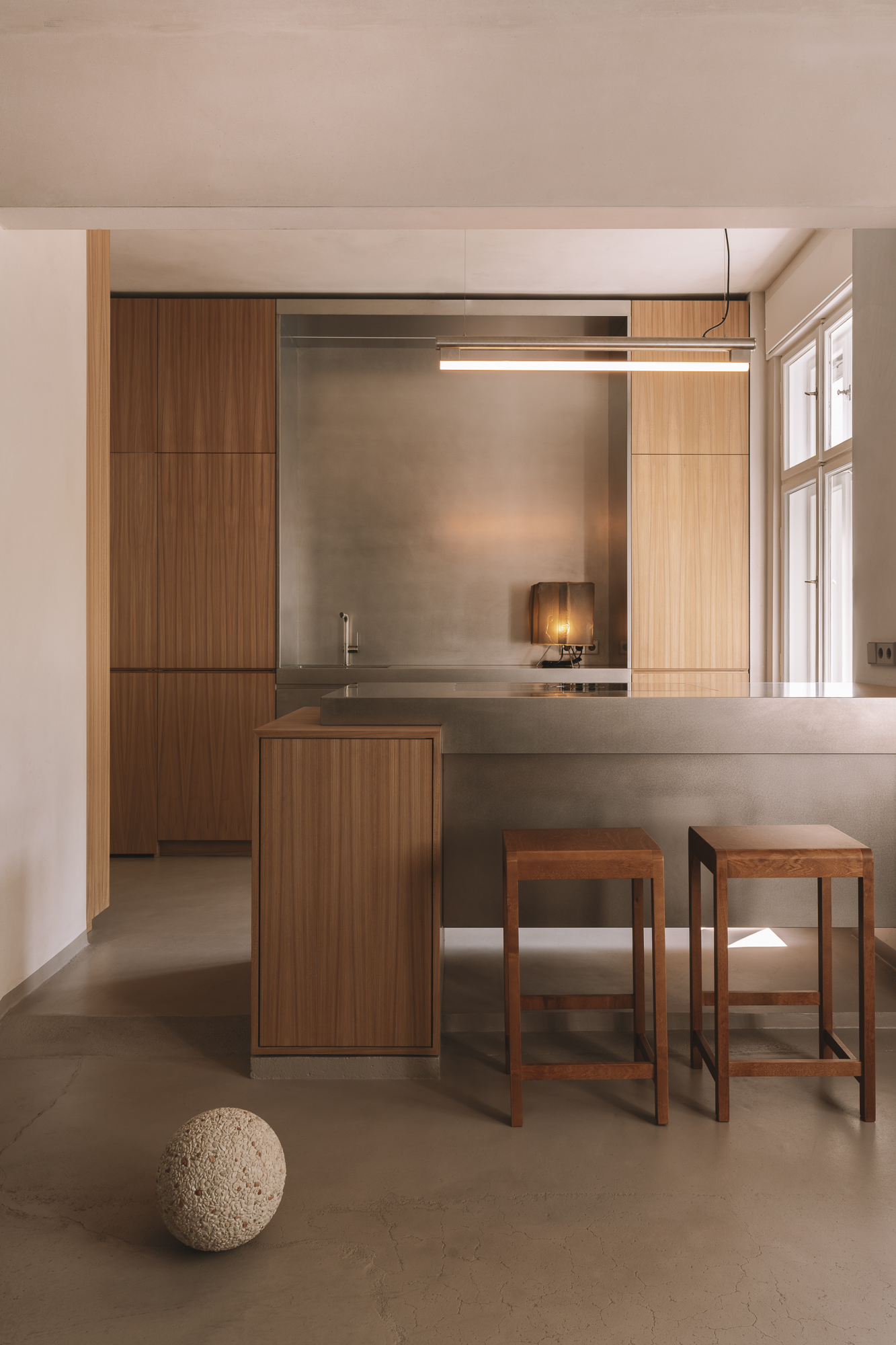
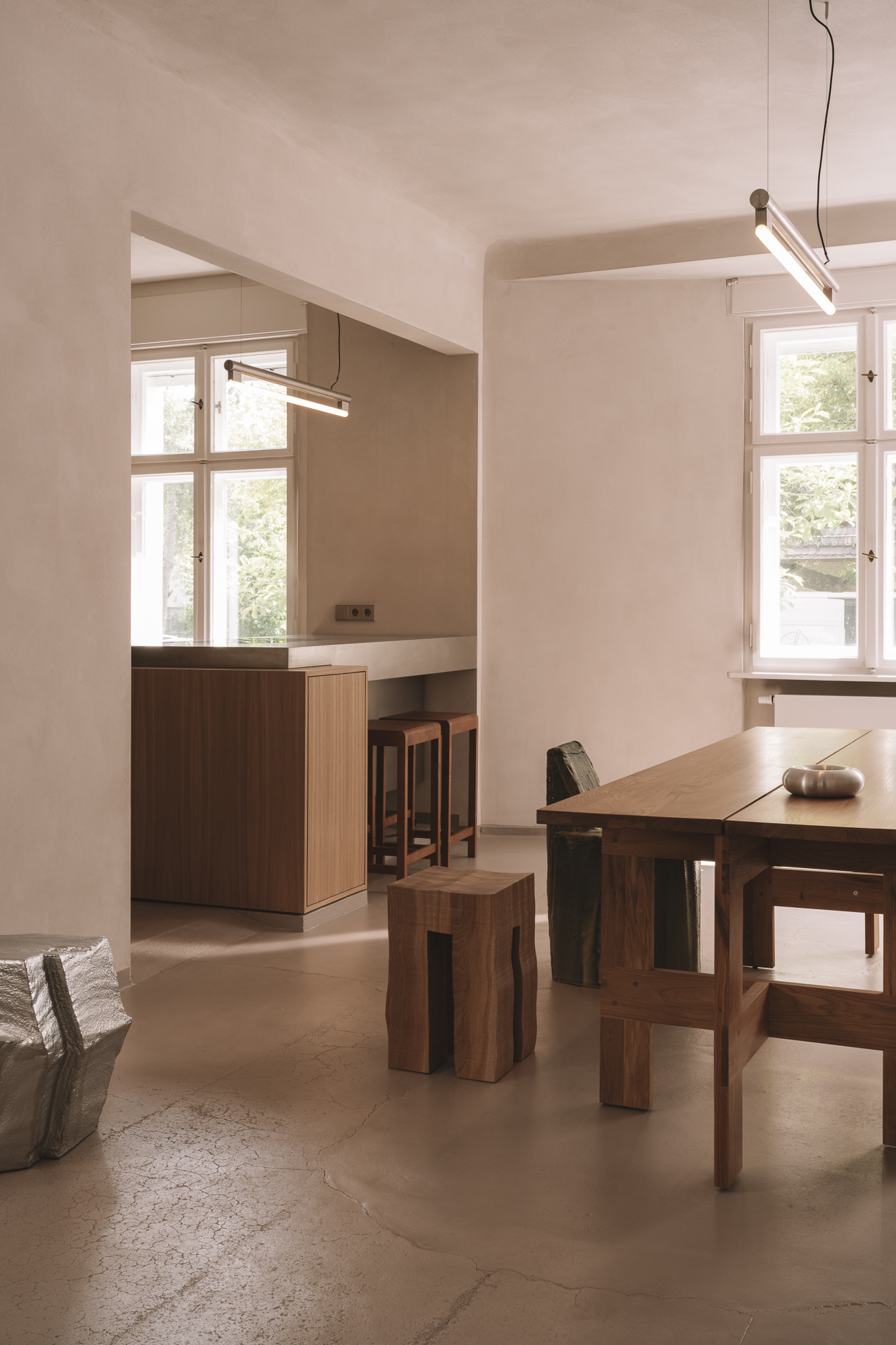
The kitchen island crystallizes this philosophy most powerfully. Rising from its wooden plinth like a modernist altar, the brushed stainless steel surface appears to defy gravity through sheer material confidence. This levitation effect speaks to a broader contemporary fascination with objects that seem to float, from Donald Judd’s wall-mounted boxes to contemporary lighting that hovers without visible support. Yet here, the miracle feels domestic rather than institutional, grounded in the elemental act of gathering around food.
VAUST’s material vocabulary operates through strategic restraint. The pairing of steel and elmwood creates what the studio describes as “calm tension” – a phrase that captures how opposing materials can achieve harmony through careful proportion and placement. The recessed sink niche, carved from the kitchen’s mass like a minimalist cave, demonstrates how subtraction can be as powerful as addition in creating spatial drama.
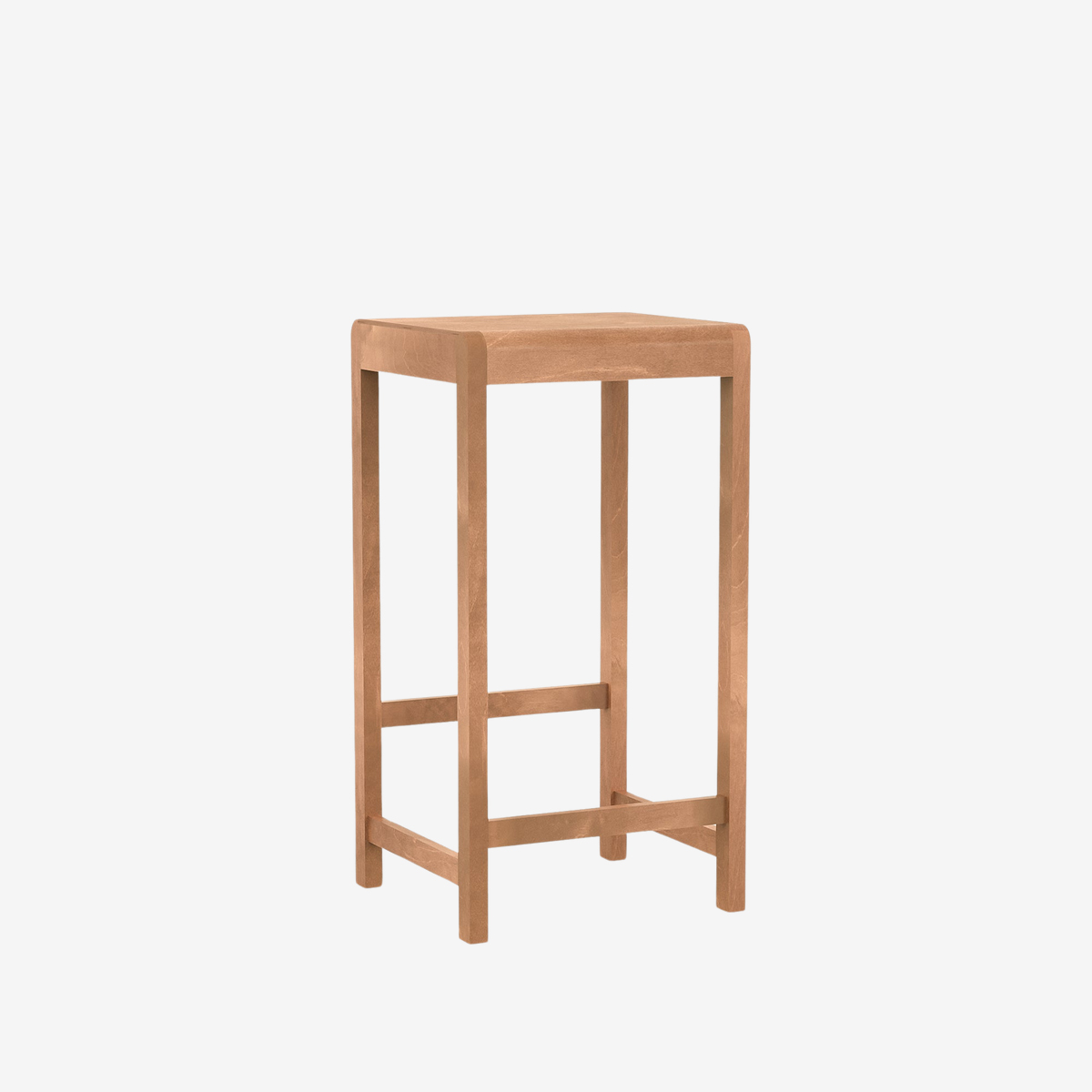
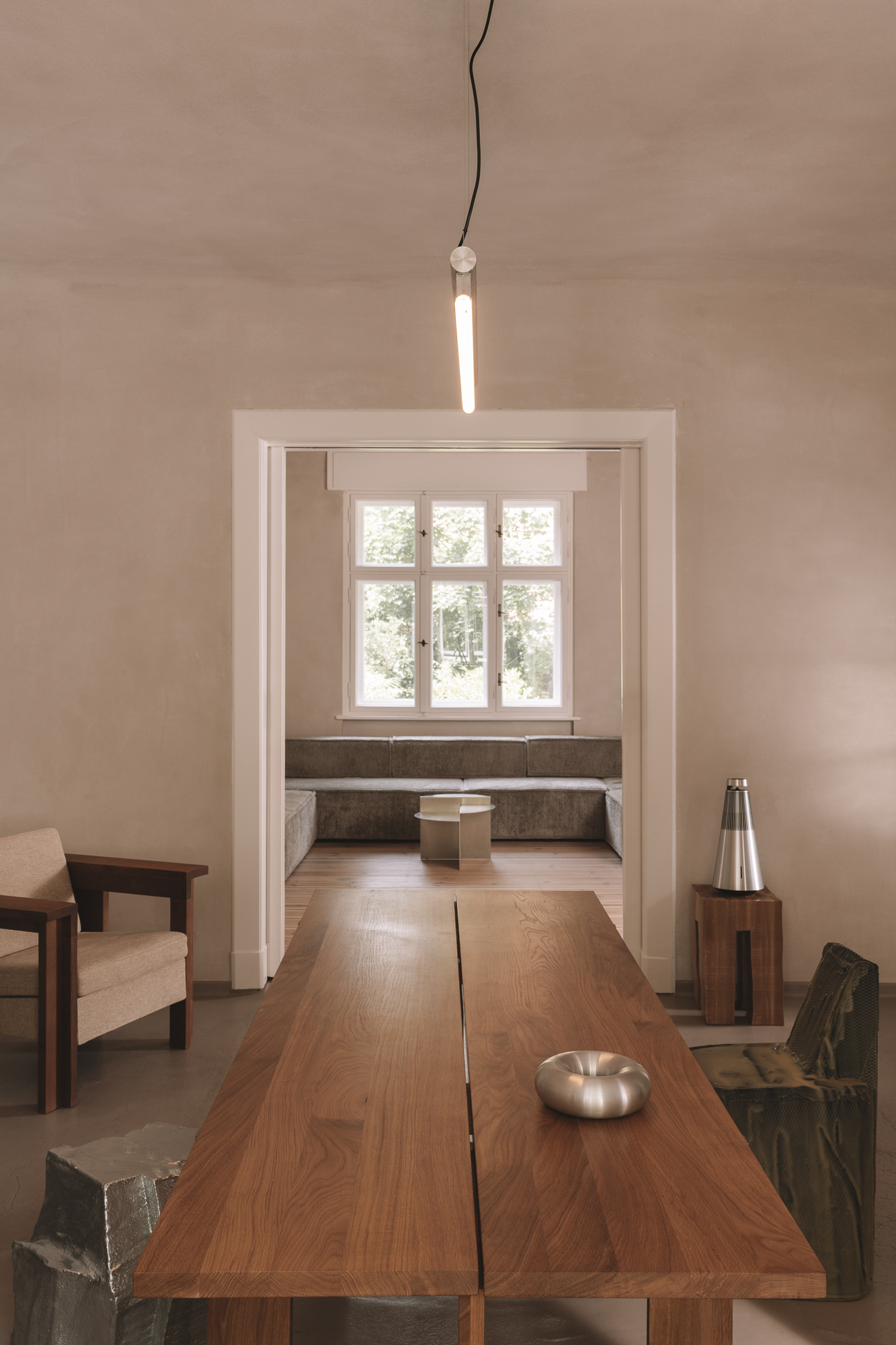
This architectural thinking extends naturally into the furniture selections, where the RM Chair by LS Gomma and Doodle Stool by Aleksander Oniszh punctuate spaces with sculptural authority. The inclusion of Kazuhide Takahama’s vintage seating reveals VAUST’s curatorial eye for pieces that share the home’s commitment to material honesty and functional poetry. Each chair, stool, and table becomes part of a larger conversation about how objects can accumulate meaning through careful arrangement and sustained attention.
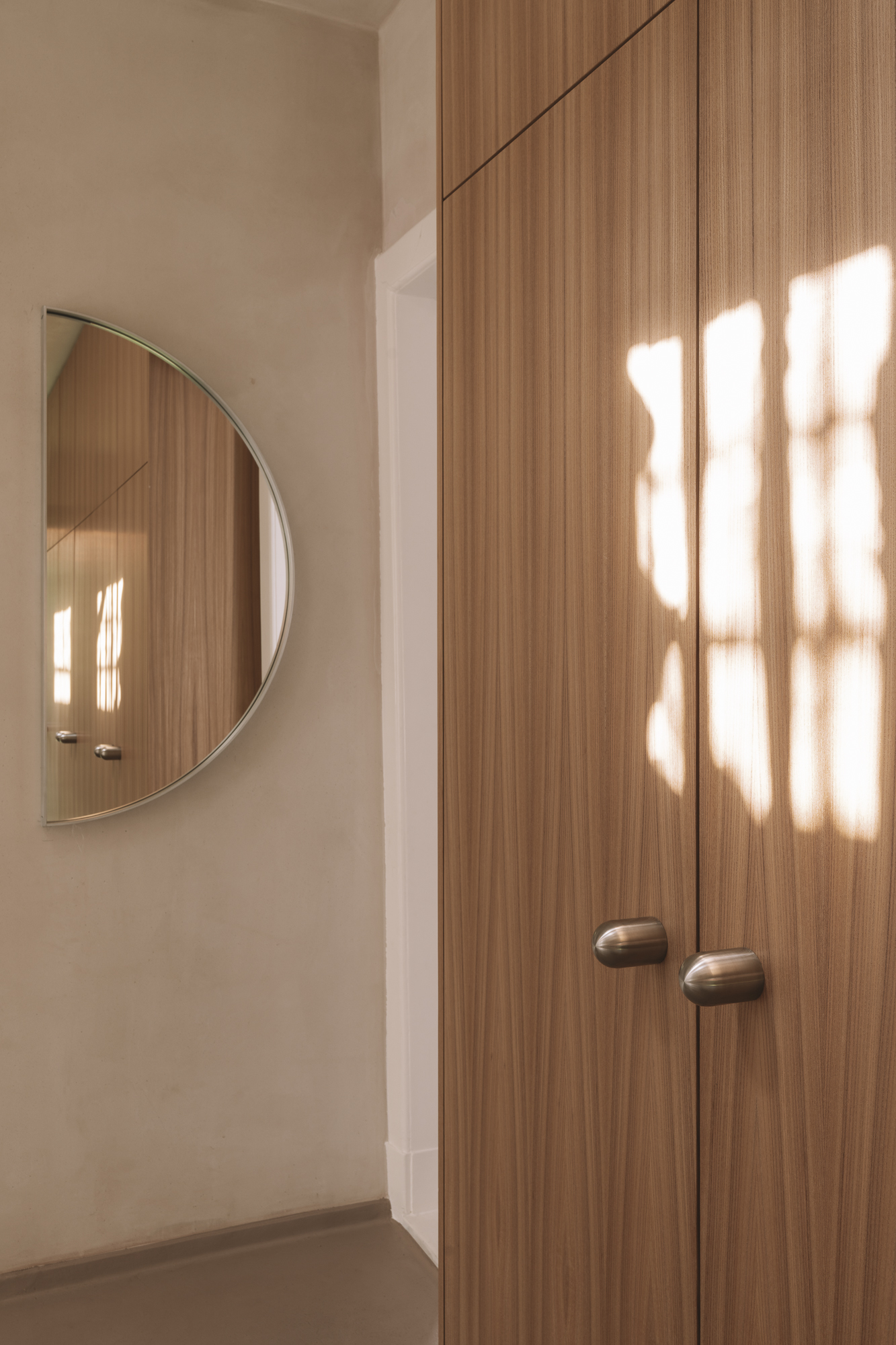
The custom hallway wardrobe, with its handmade handles bearing VAUST’s fingerprint, suggests a future where mass production gives way to artisanal specificity. This return to the handmade reflects broader cultural shifts toward authenticity and local production, positioning craft not as nostalgic retreat but as progressive practice.