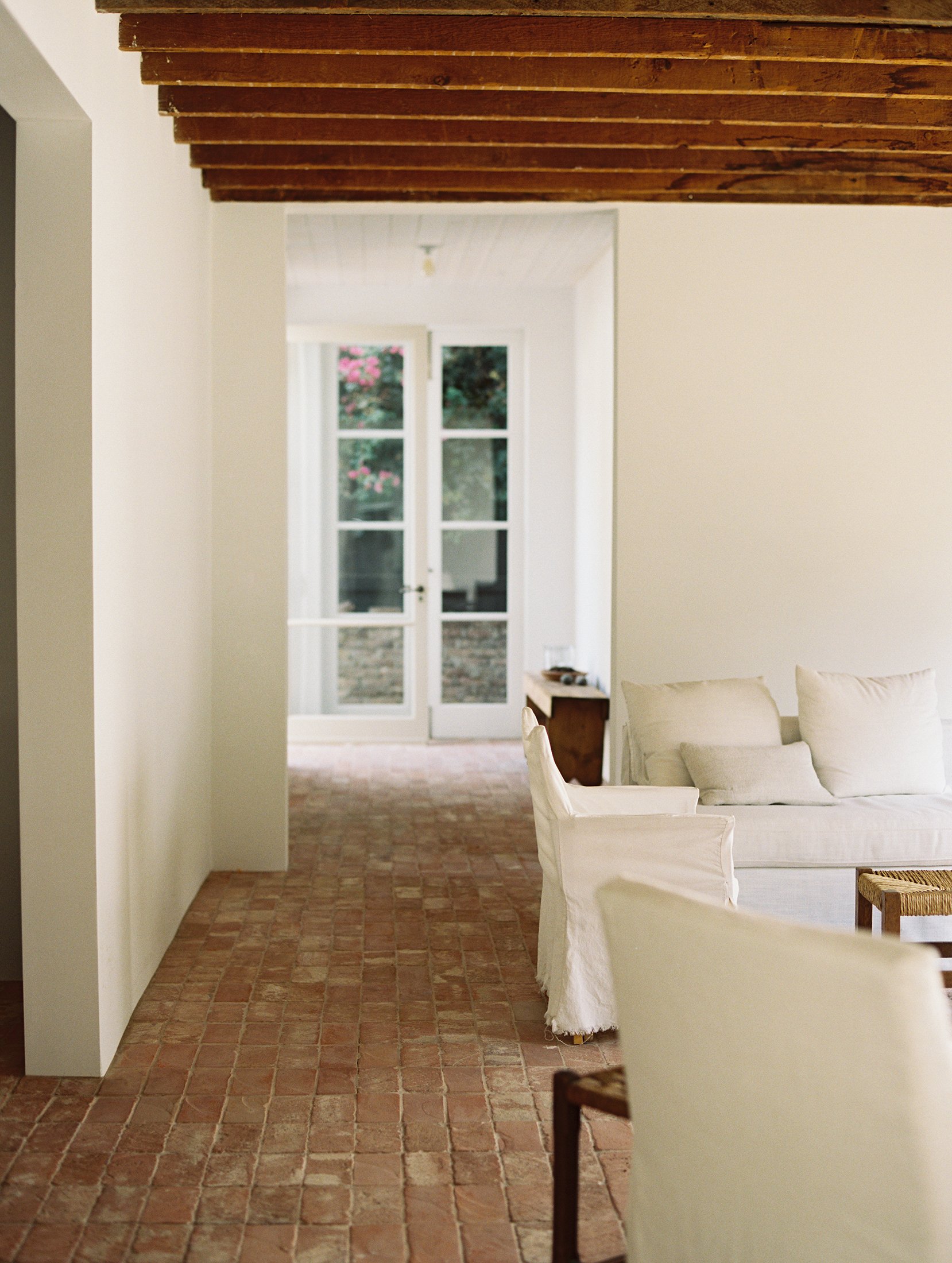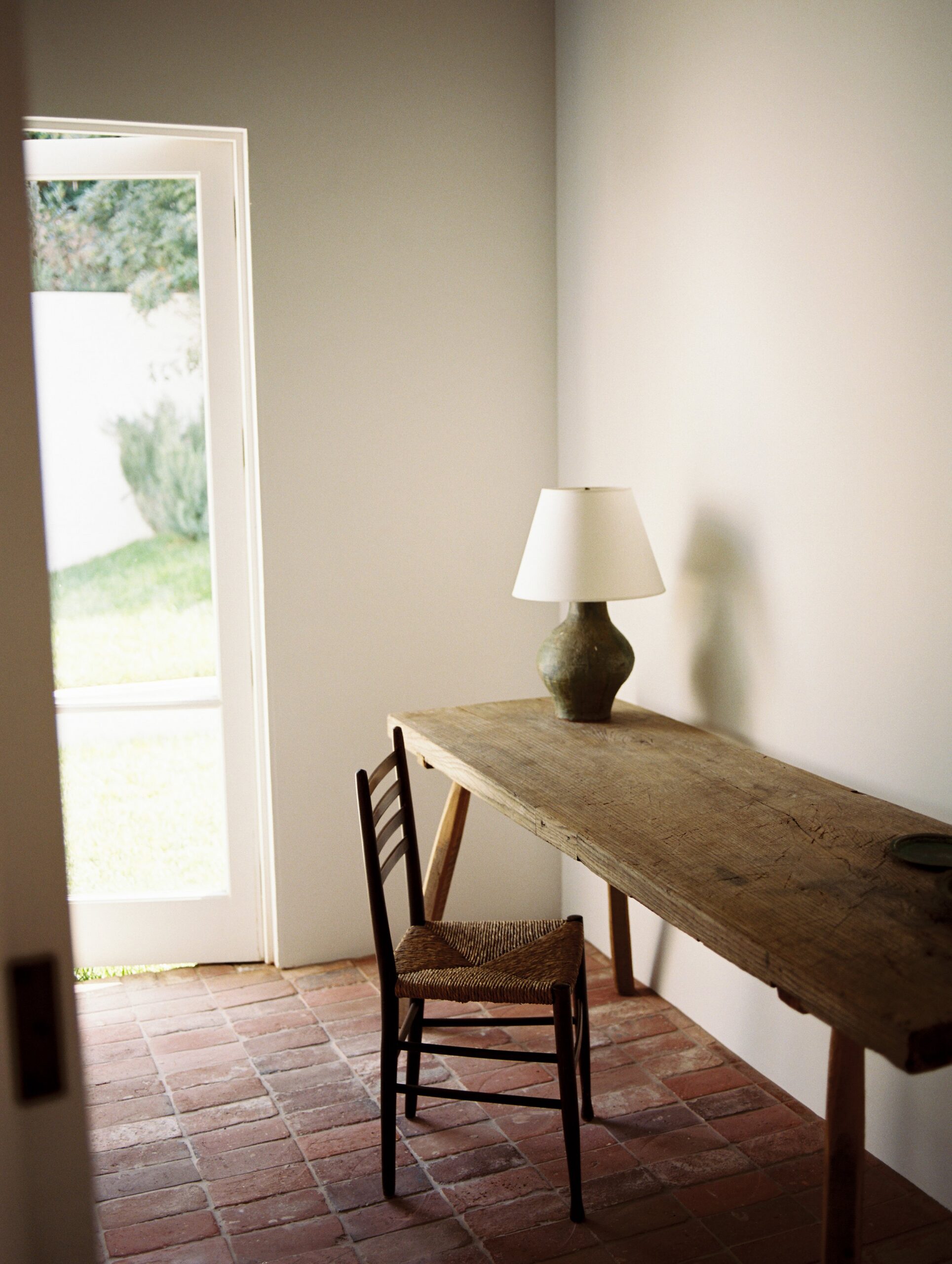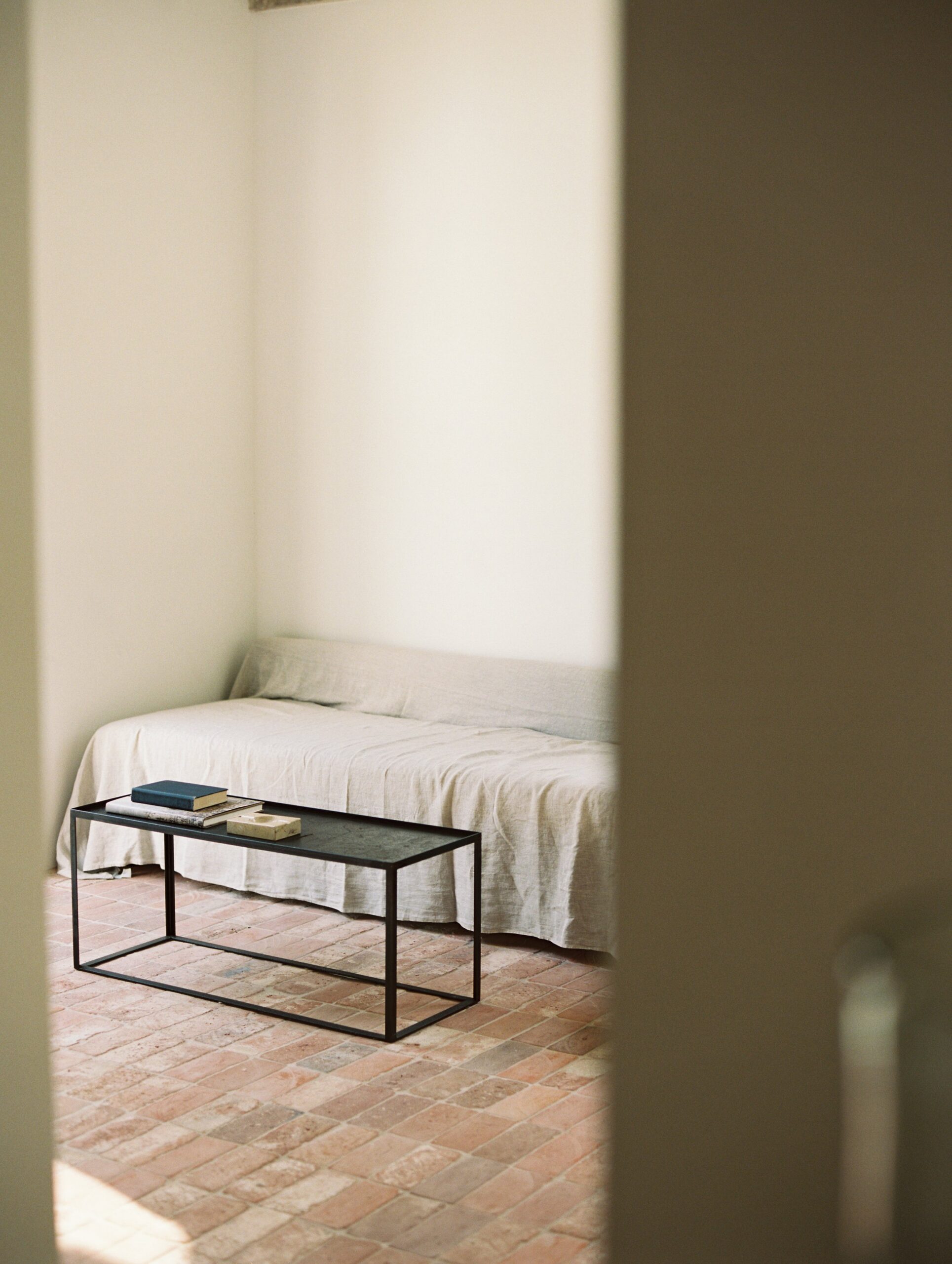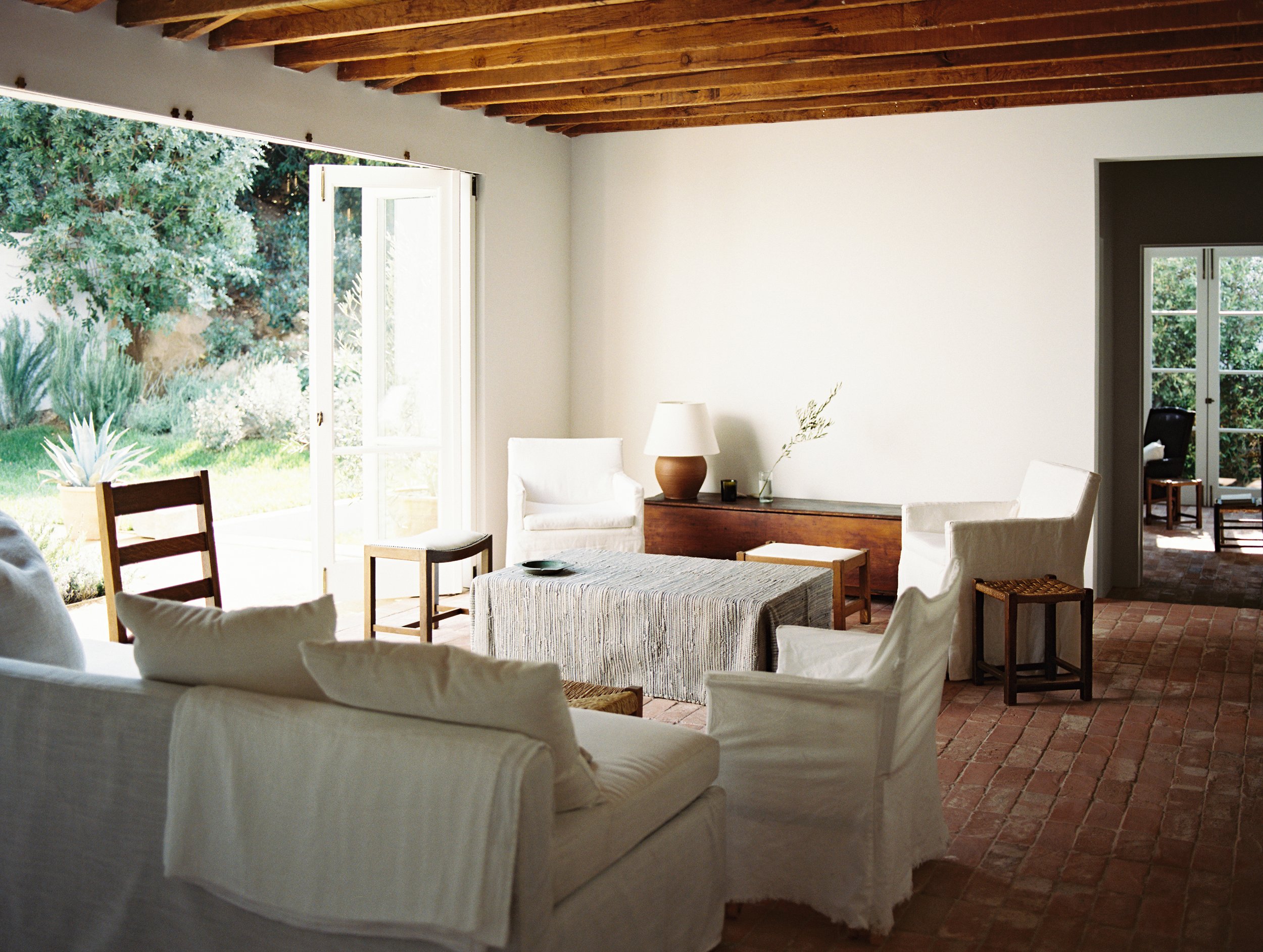
Spanish Courtyard House is a minimalist residence located in Silver Lake, Los Angeles, designed by Breland-Harper. The project begins with an act of recovery. A 1920s Spanish Revival structure, reduced to 1,200 square feet by a previous renovation that had stripped much of its character, still held enough of its original fabric to suggest what it could become again – stucco walls, tiled roof, bird-mouthed rafter tails. Breland-Harper’s response was to graft rather than contrast, extending the house with a 1,500-square-foot two-story addition that completes an architectural logic the original building had only started.
The addition squares off the corner of the site to form a central courtyard, which now serves as the connective tissue between all the home’s public spaces. This organizational move carries both practical and historical weight. The enclosed garden, with its high perimeter wall mediating a dramatic grade change between the site’s upper and lower levels, reads as a direct descendant of the paradise garden tradition – walled enclosures cultivated across Islamic and Mediterranean architecture as places of refuge and controlled nature. A lush square of green anchors the courtyard’s center, while potted plants handle the more pragmatic California reality of water scarcity.
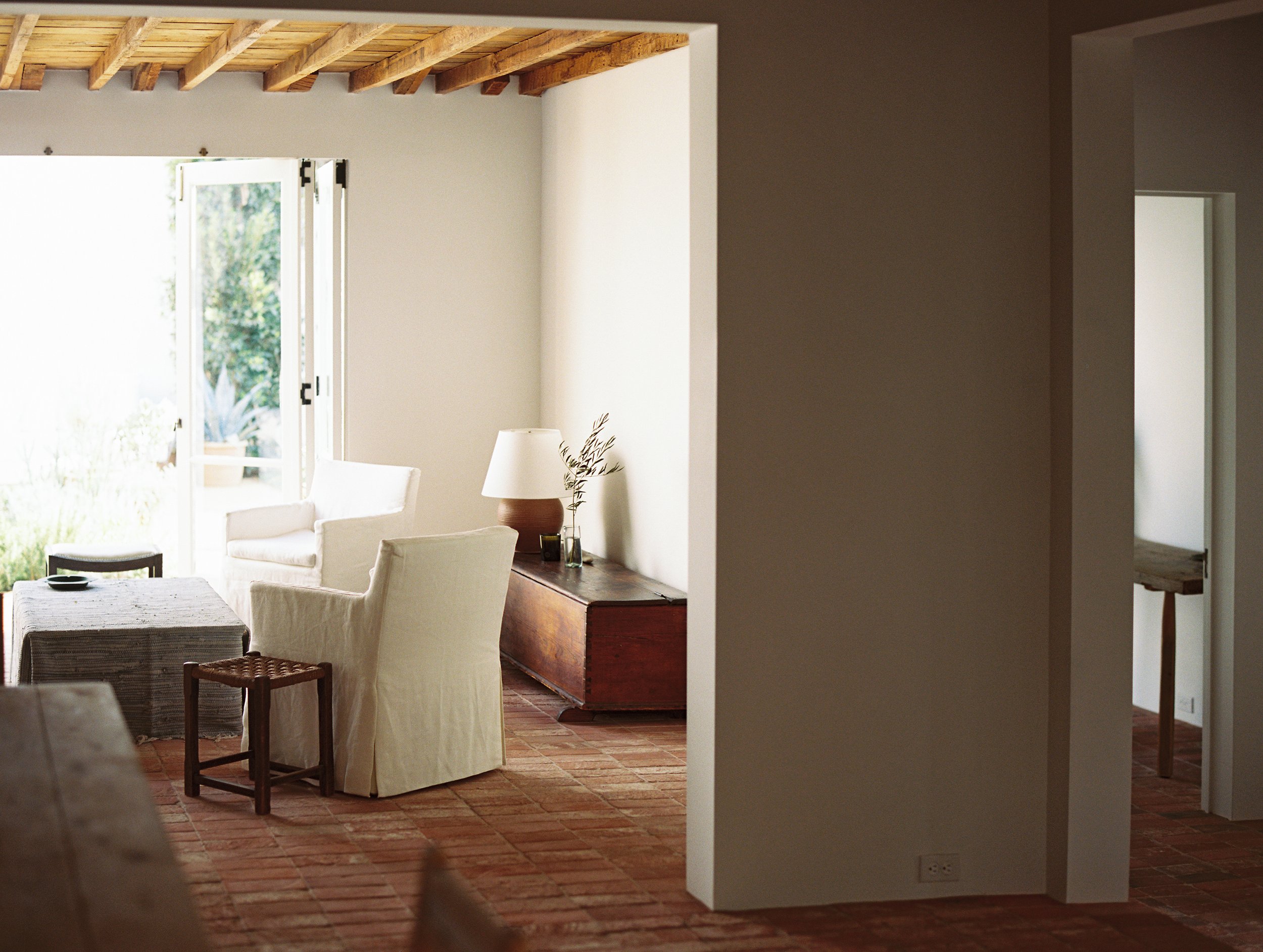
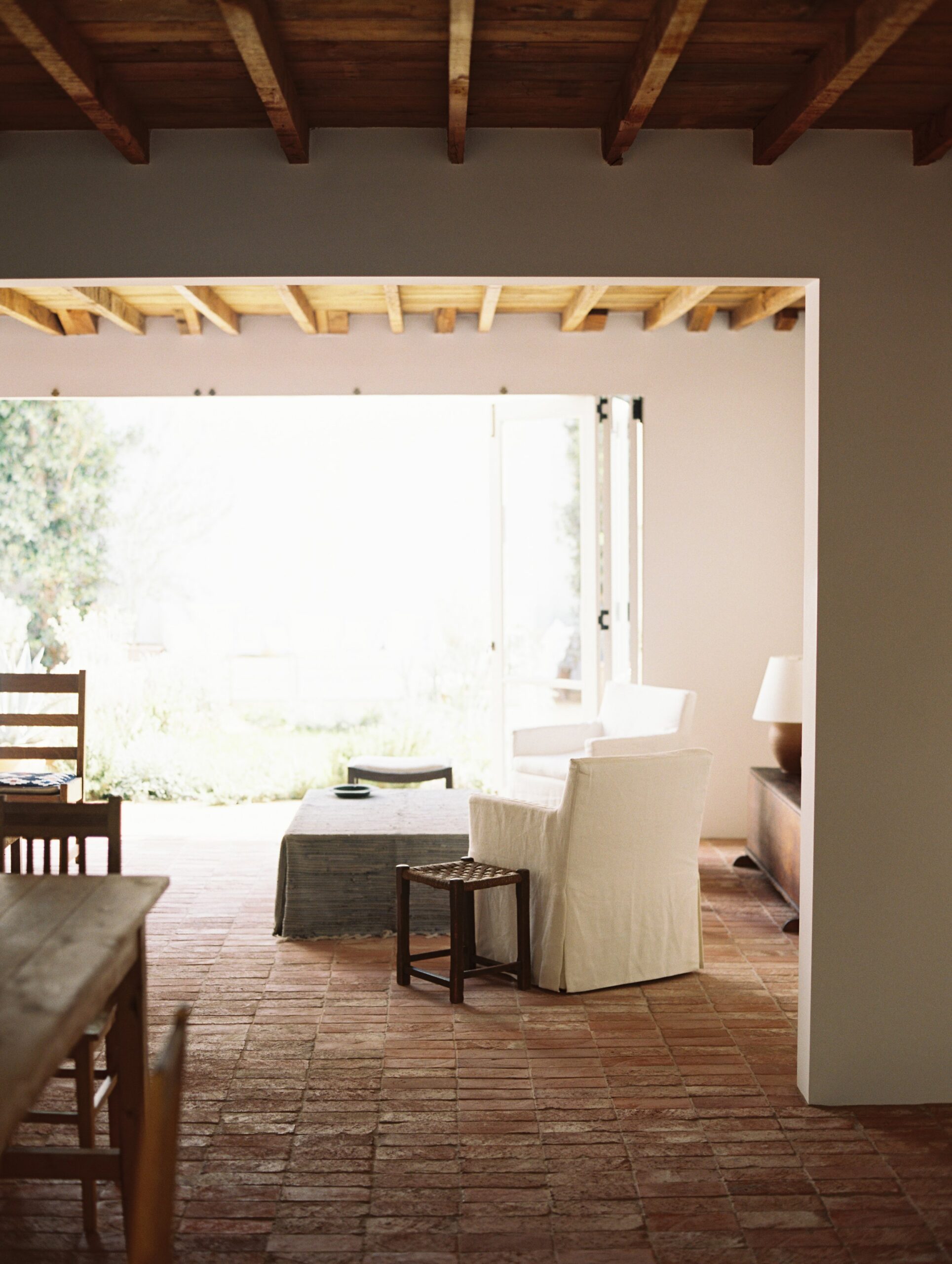
The kitchen relocated to the new wing as the social center of the house, oriented toward western light at sunset. Above it, the principal suite opens to panoramic views of the Silver Lake Reservoir. Floor-to-ceiling glass doors dissolve the boundary between the living room and the courtyard, allowing the space to shift between enclosed retreat and open-air terrace depending on how the doors are positioned. The fourteen-inch elevation difference between the addition and the original structure is resolved through a sequence of stepped thresholds, a detail that echoes the site’s natural topography without calling attention to itself.