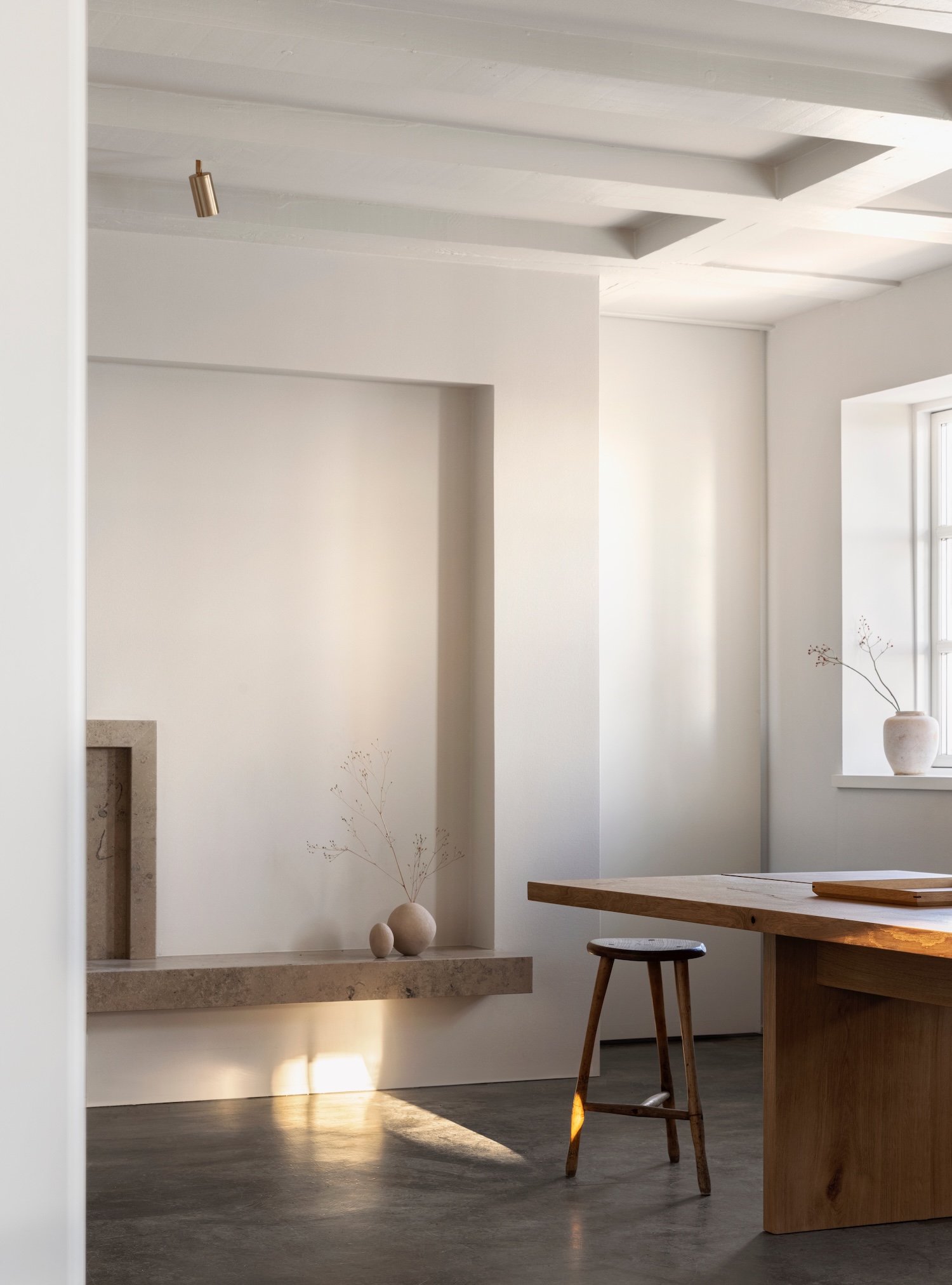
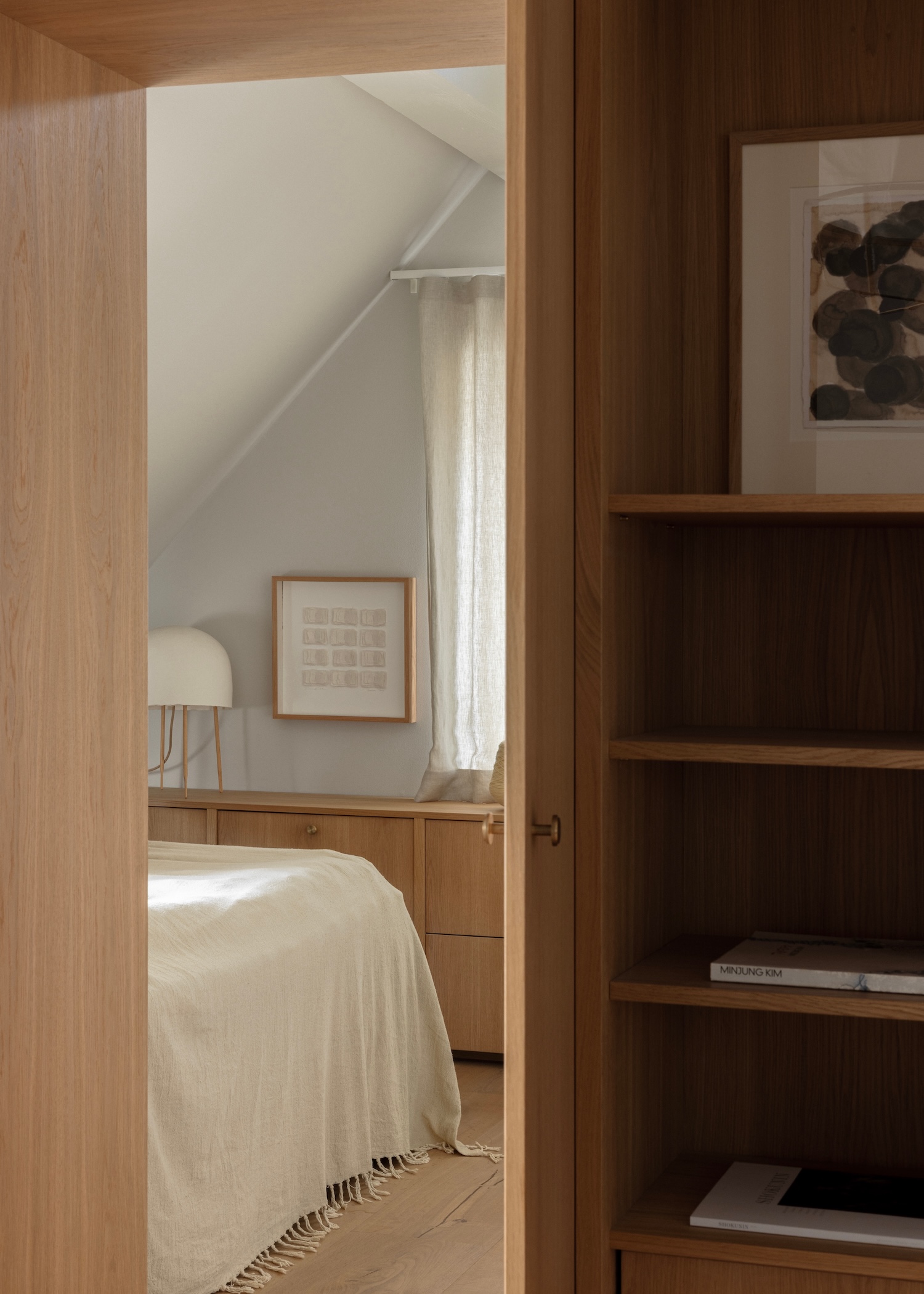
Strandgården is a minimalist residence located in Vedbæk, Denmark, designed by Norm Architects. This 1842 historic property transformation unites two separate dwellings into a single family home through interventions that allow history and modernity to coexist rather than compete. The Øresund shoreline location informs material and spatial strategies that blur boundaries between interior occupation and coastal landscape through carefully calibrated windows framing sea views and natural light patterns shifting with seasonal changes.
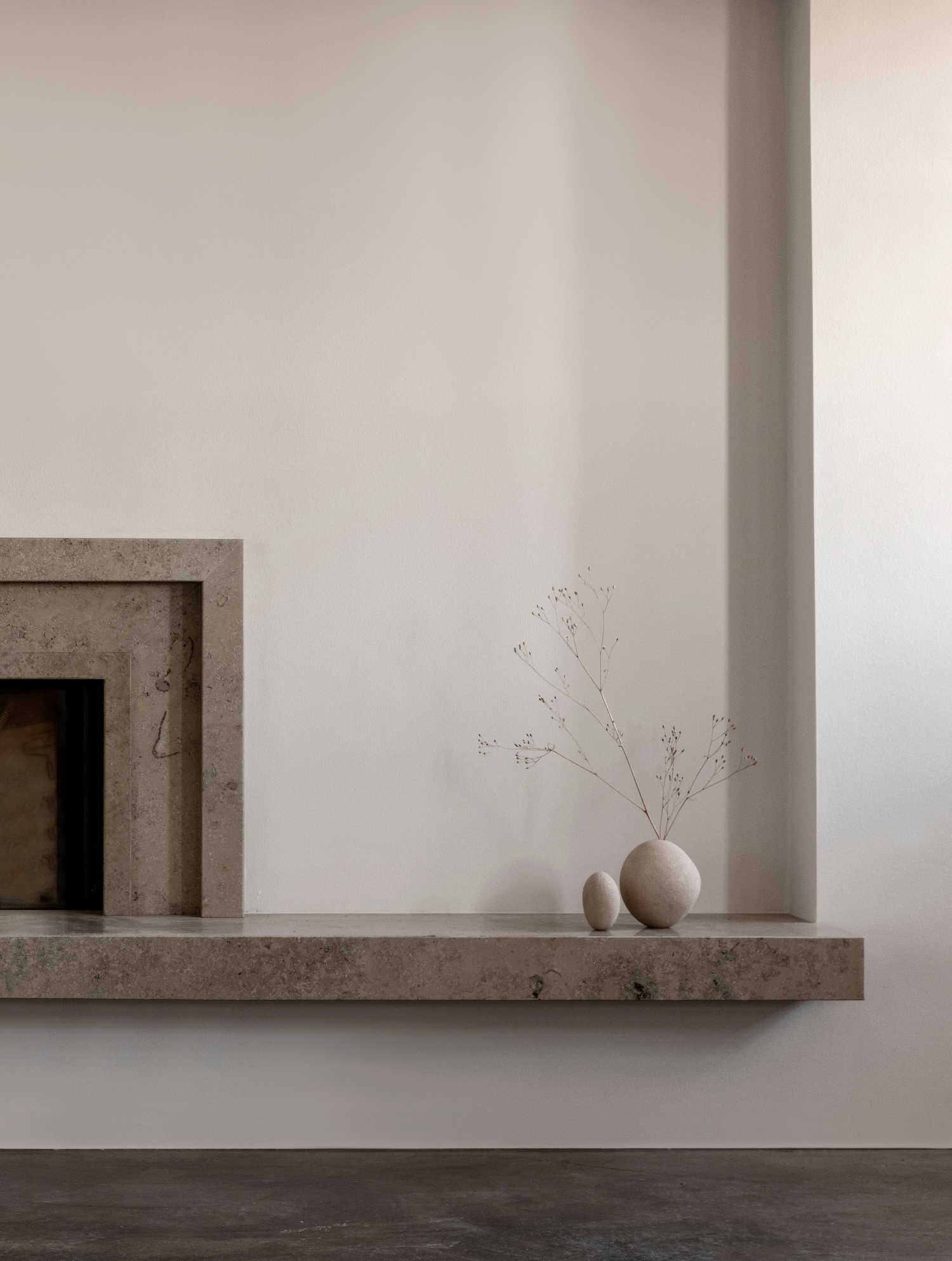
Inherited elements including tile floors and pitched roof structures remain as defining features placed in dialogue with new interventions – a connecting structure uniting the two houses, sculptural Jura Grau fireplace, kitchen functioning as social heart, and clay-covered bathroom where light grazes textured walls. This approach demonstrates Norm Architects’ preservation philosophy treating existing fabric as collaborative partner rather than obstacle requiring removal.
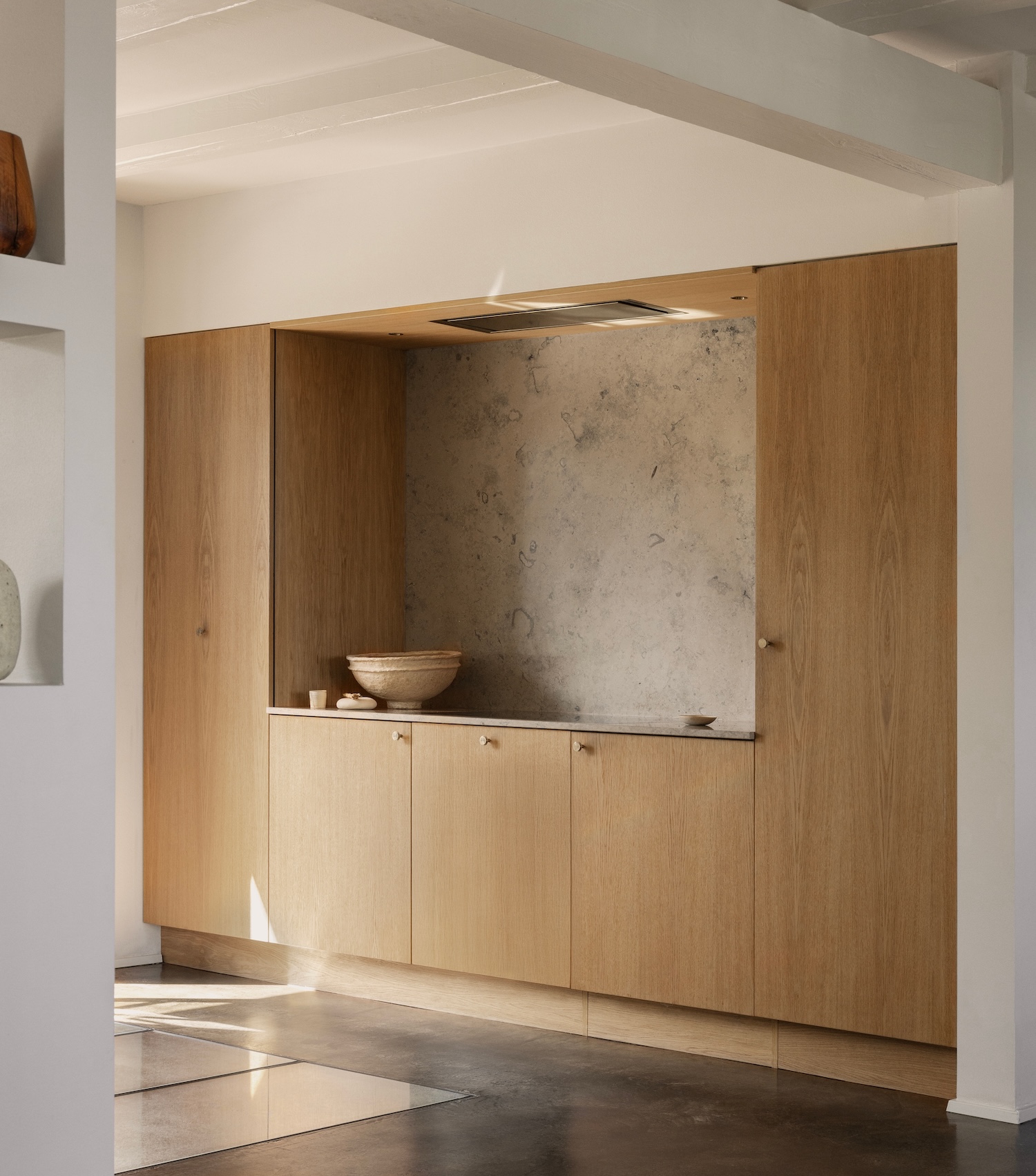
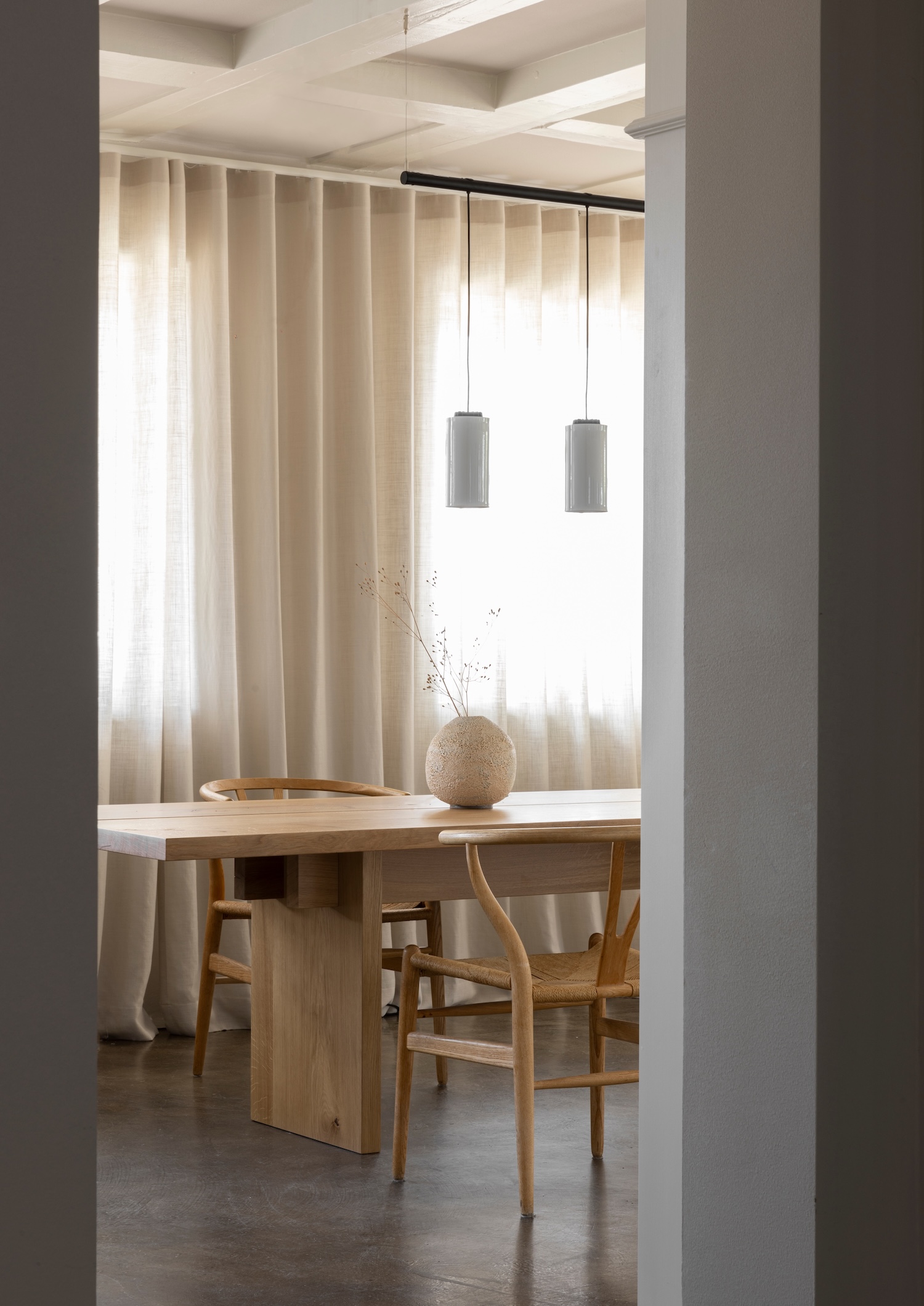
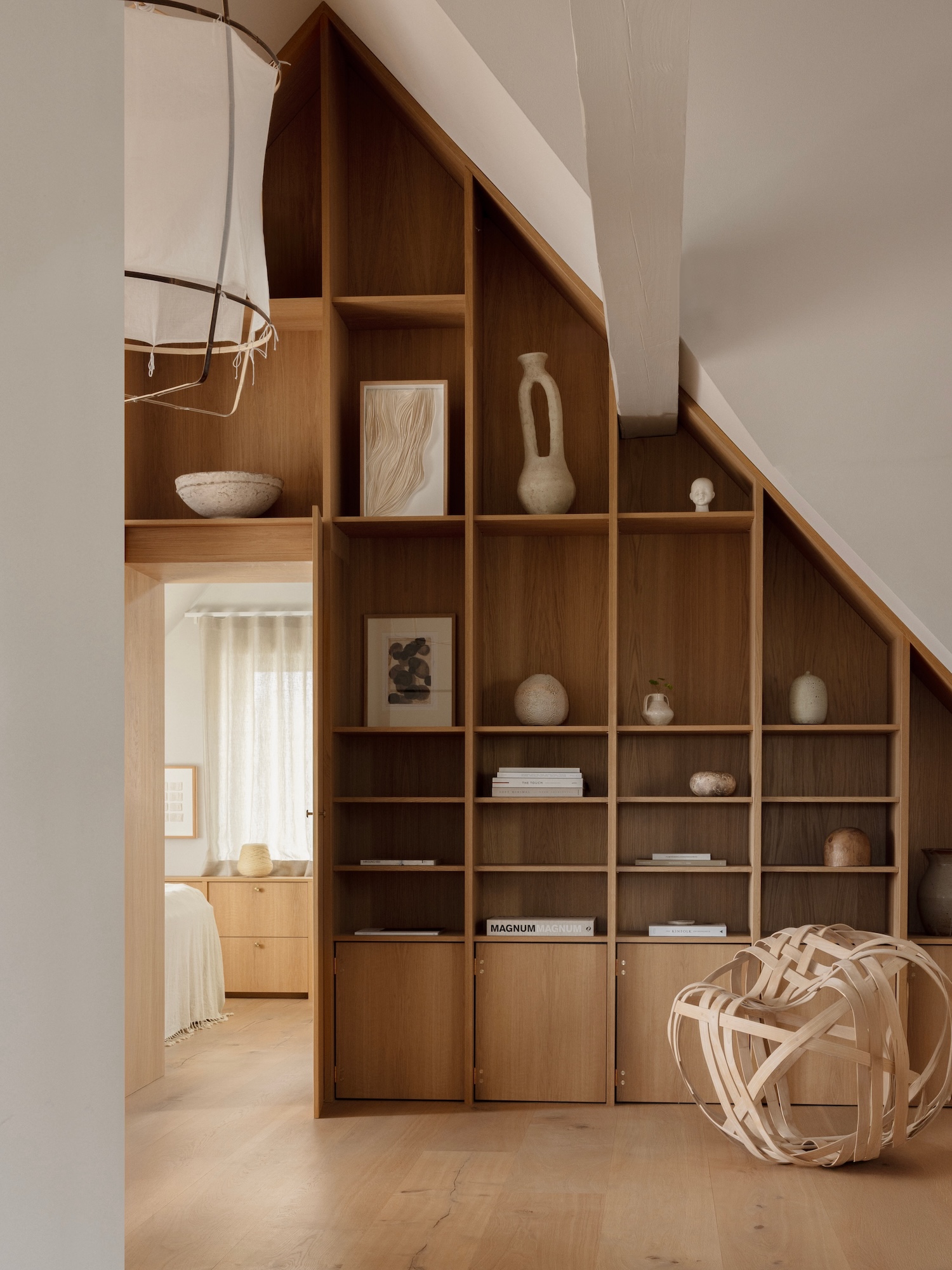
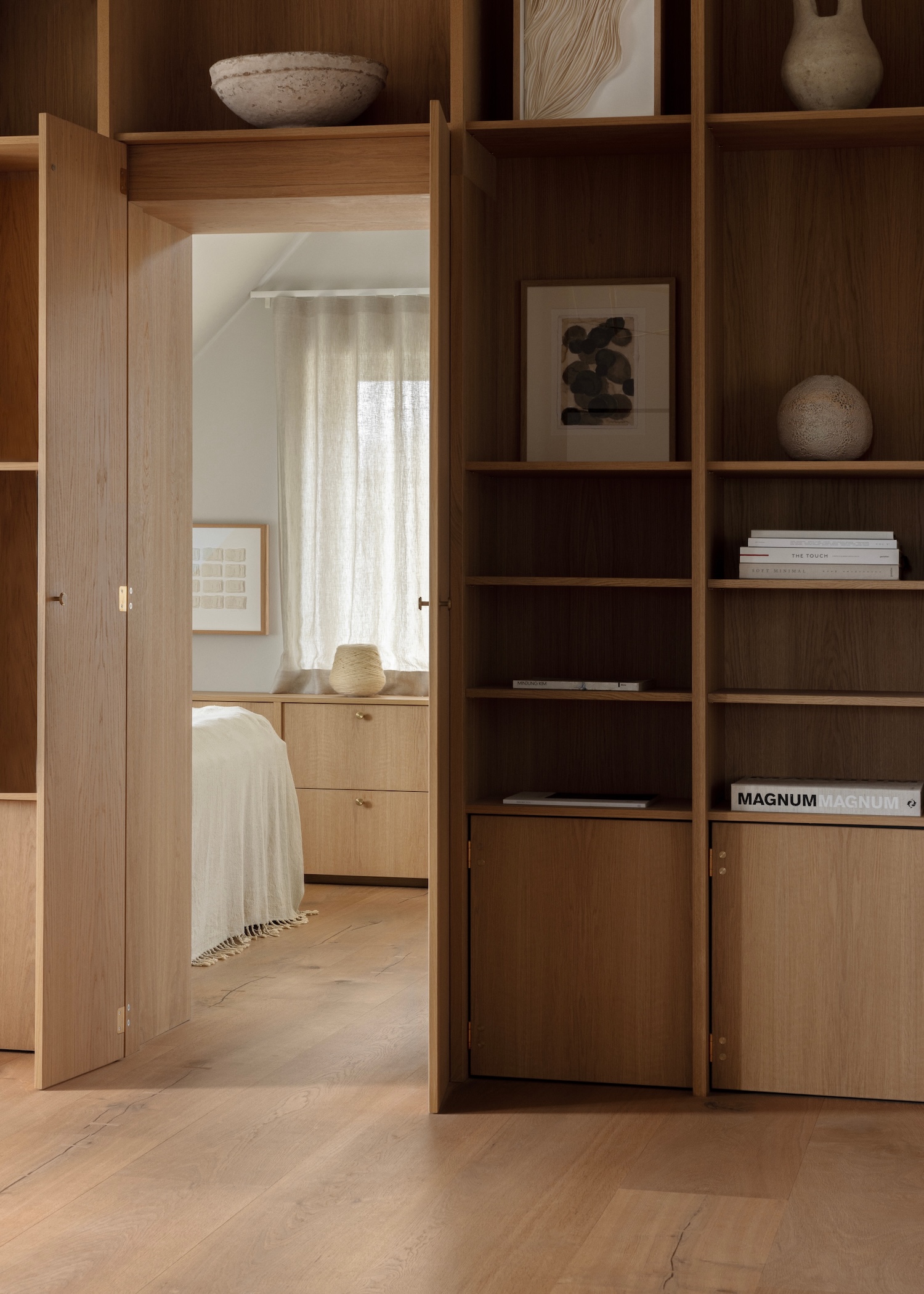
The material palette drawn from surrounding landscape employs sandy beiges, soft greys, and muted whites paired with oak and limestone that reference beach materials including sand, stone, and driftwood. This chromatic strategy grounds the interior in local environmental conditions while supporting what the architects characterize as Soft Minimalism principles balancing reduction with tactile warmth. Textured plaster, oak cabinetry, and stone surfaces provide depth that prevents the neutral palette from feeling sterile.
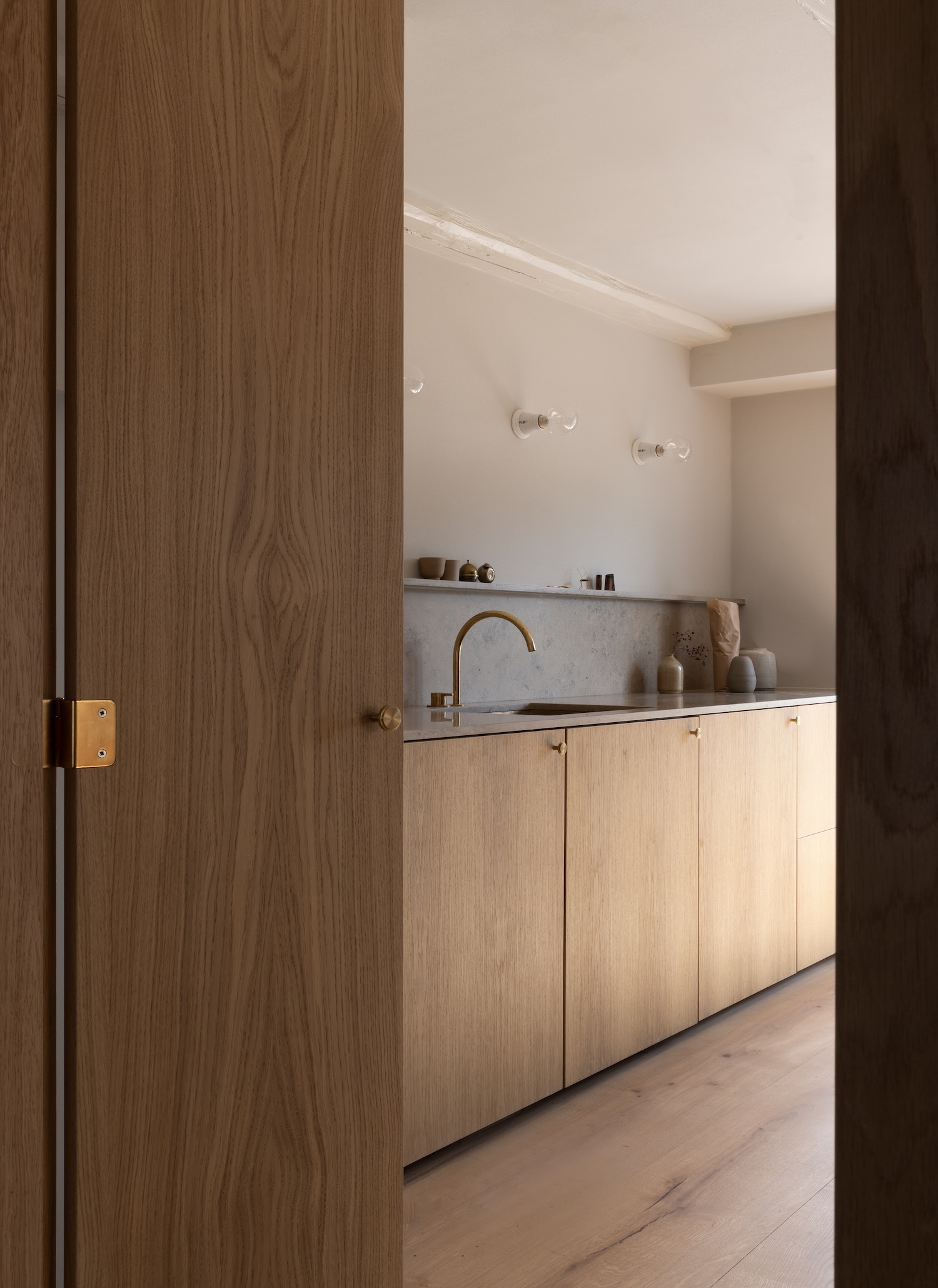
The kitchen positioned at the home’s center functions as social hub where family cooking, eating, and connection occur within minimalist aesthetic featuring handcrafted cabinetry and concealed storage. A glass floor insert reveals wine cellar glimpses below, creating vertical visual connection between levels. The adjacent dedicated wine kitchen employs oak cabinetry, stone countertops, and brass details with full wall of wine coolers providing storage and display.
The hallway unifying the two original houses becomes literal and symbolic passage carrying historical patina into contemporary clarity through restored original beams and tiled floors coexisting with pared-back oak, brass, and plaster surfaces. Cabinet-like doors line the space with quiet discretion leading to wine kitchen and walk-in closet, demonstrating how circulation can accommodate ancillary functions while maintaining spatial clarity.