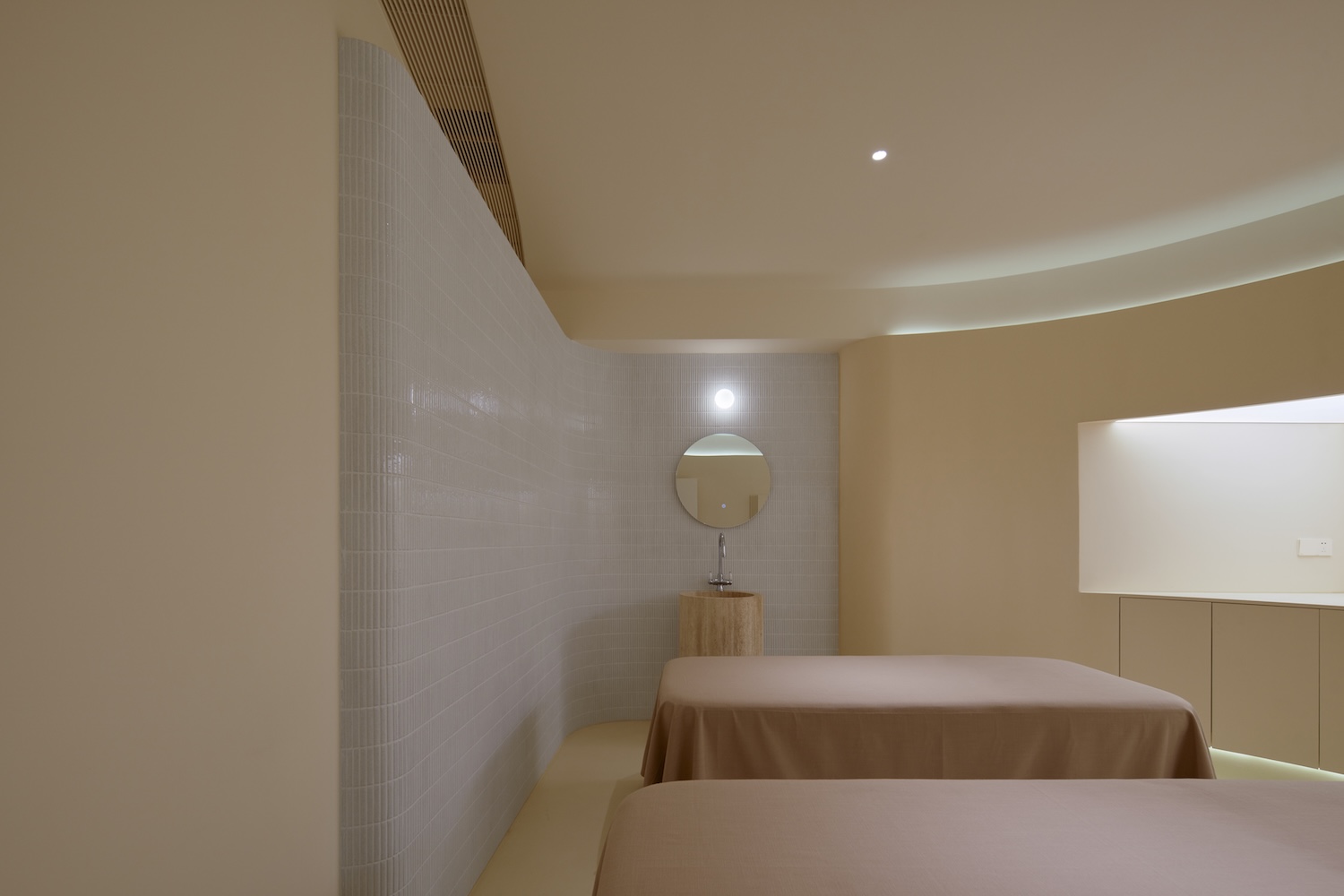
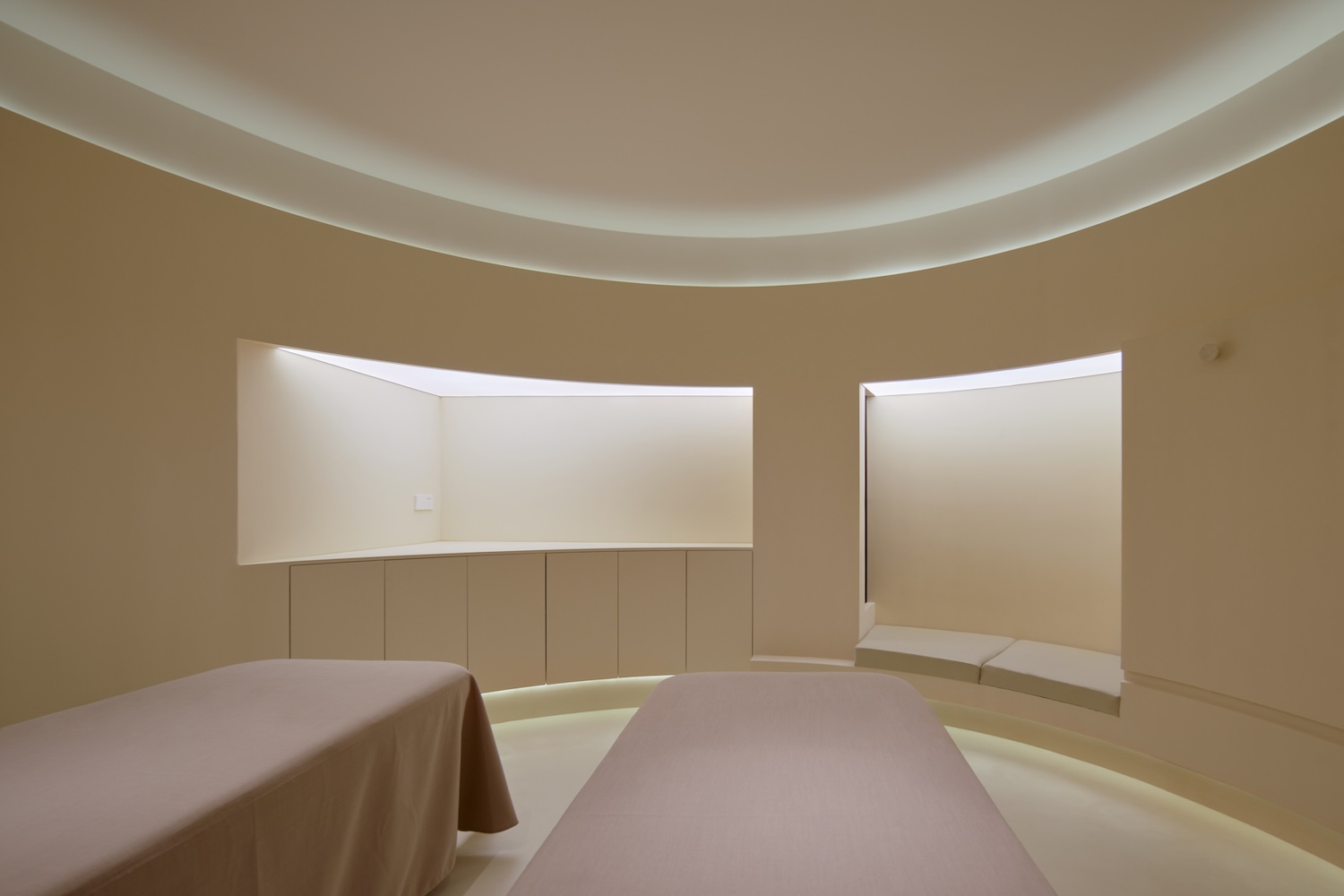
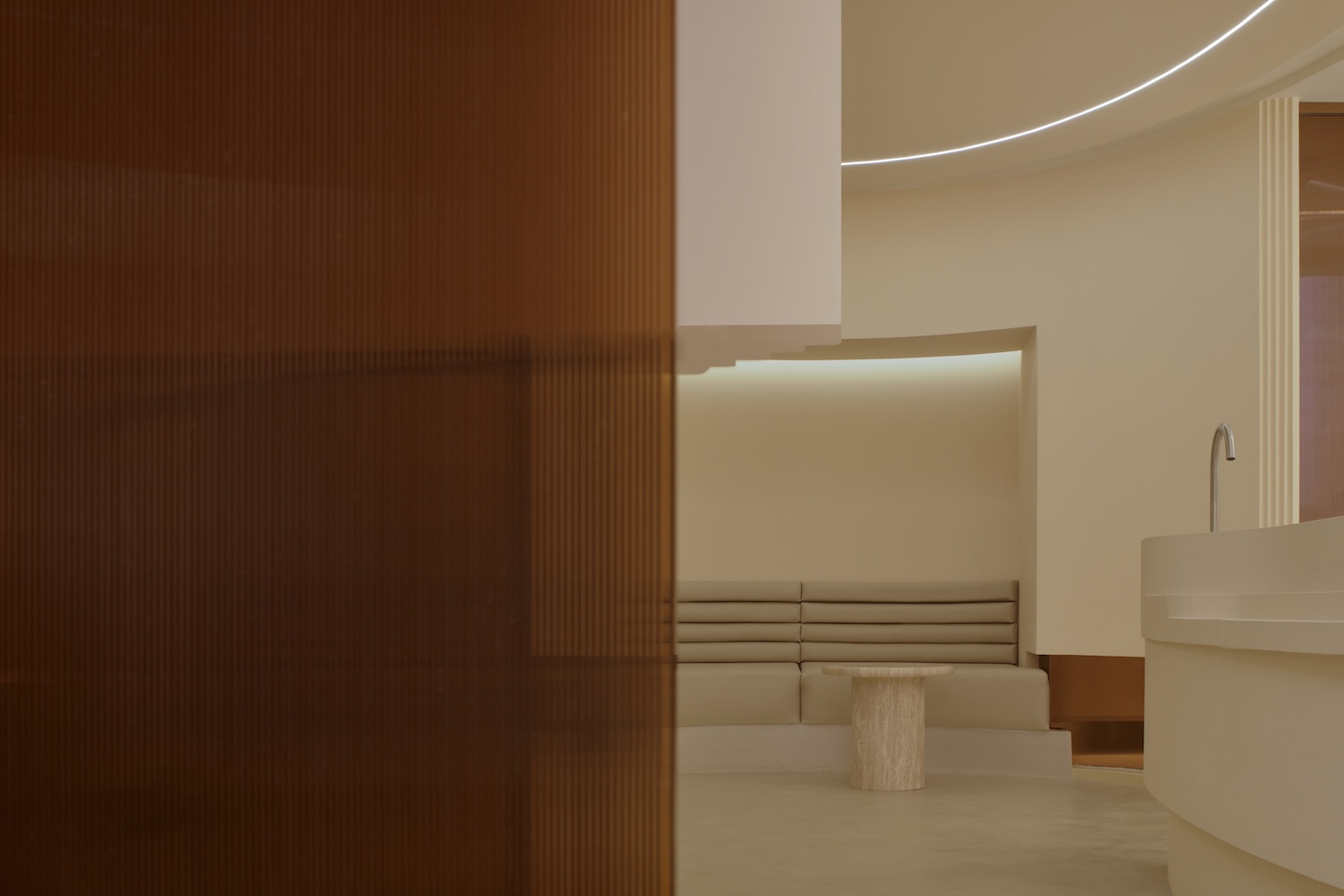
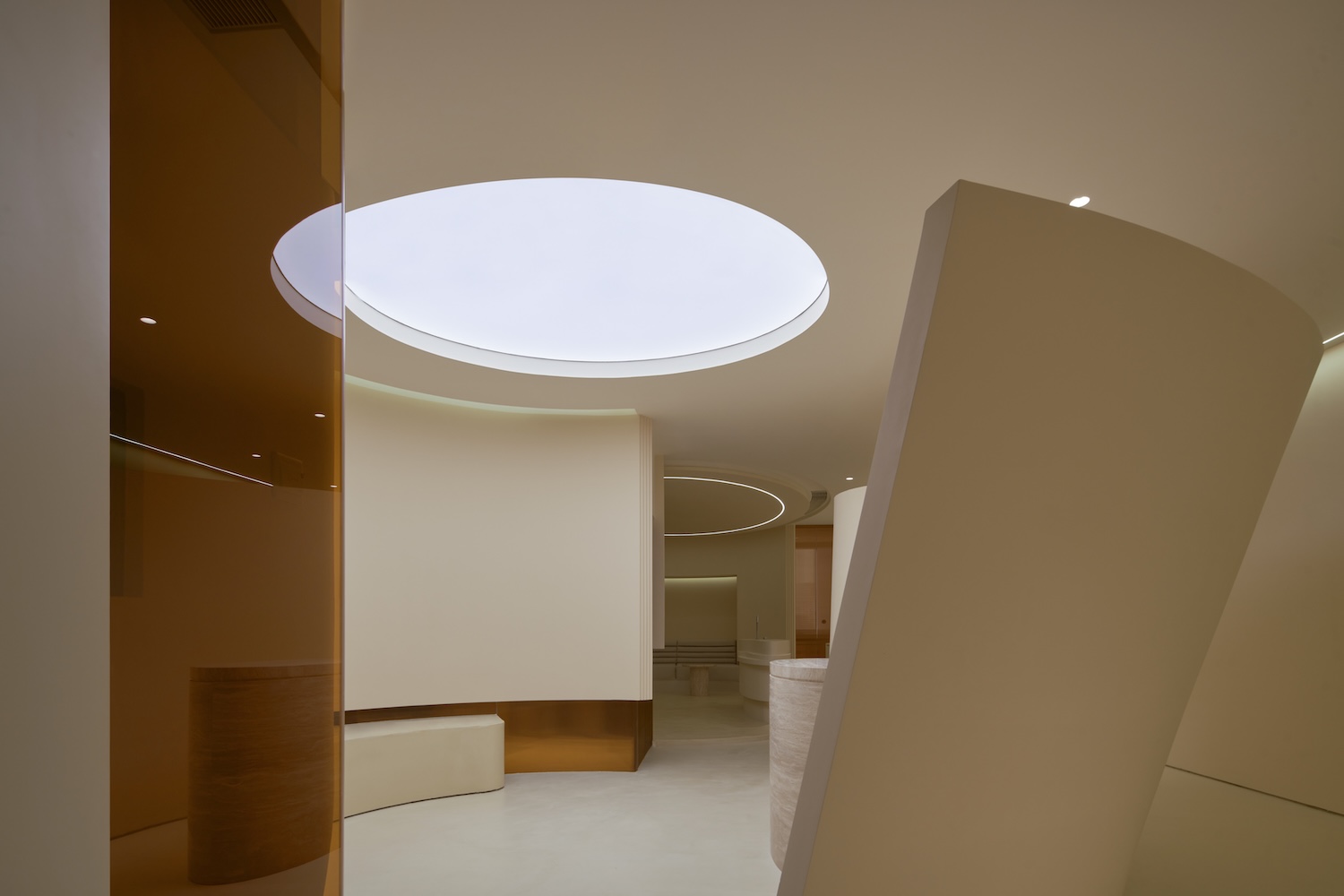
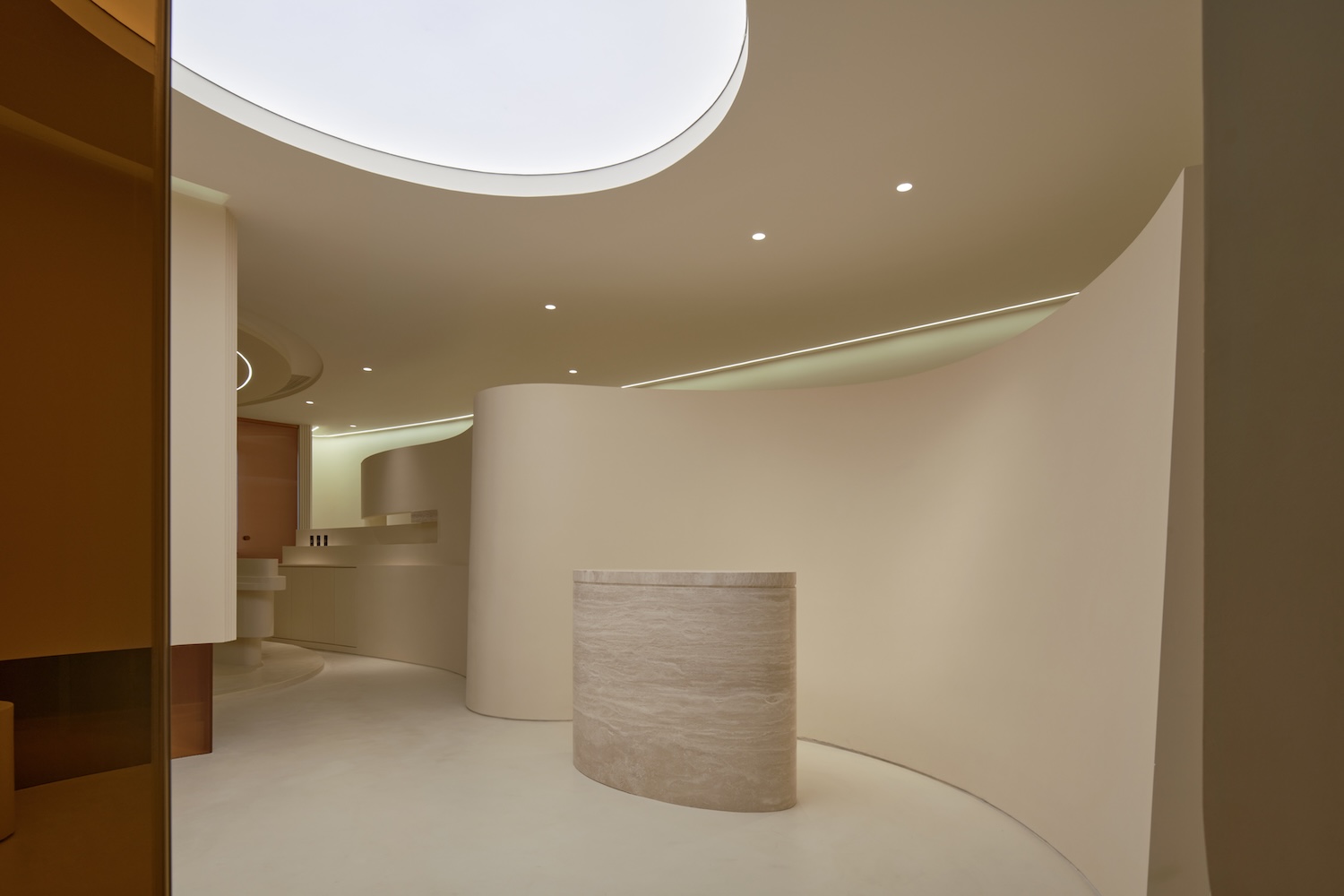
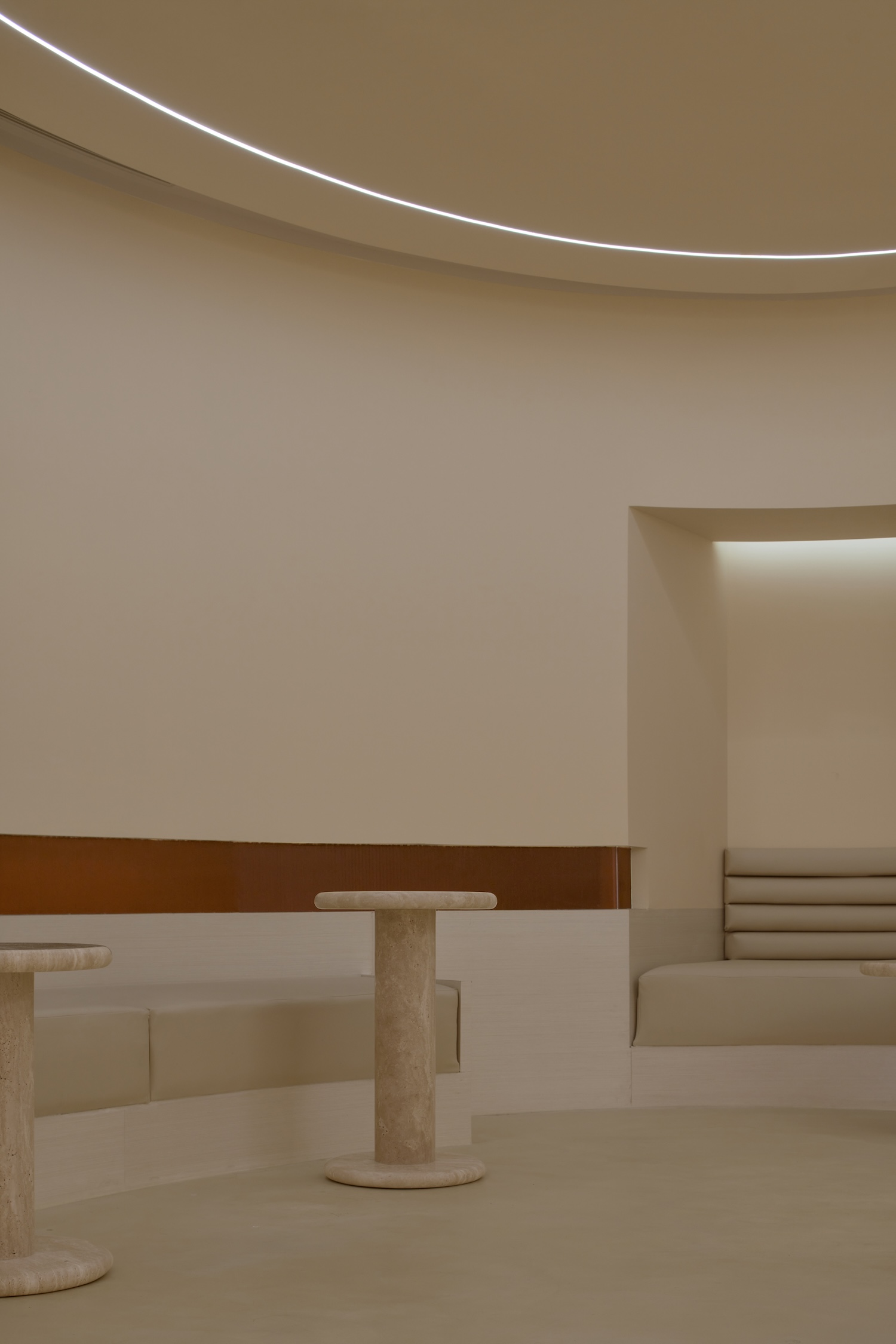
The Souffle is a minimalist spa located in Shenzhen, China, designed by Informal Design. In the bustling metropolis of Shenzhen’s Qianhai district, the Souffle emerges as a remarkable study in biomorphic design principles, where cellular structures inspire a flowing, therapeutic environment. The design’s most striking innovation lies in its interpretation of cellular division as an organizational strategy – a metaphor that transcends mere aesthetic choice to fundamentally shape the user experience.
At first glance, the space reads like a carefully orchestrated composition of organic forms, with overlapping elliptical zones defining distinct functional areas. But deeper examination reveals how this cellular-inspired architecture serves a sophisticated programmatic purpose. The primary circular spaces house core functions – reception, treatment rooms, and waiting areas – while interstitial spaces naturally accommodate auxiliary services like shower facilities and refreshment bars, much like the specialized organelles within a living cell.
The material palette demonstrates particular restraint and intention. Matte finishes replace glossy surfaces throughout, creating a subtle interplay of light and shadow that recalls the gentle gradients observed in microscopic imagery of living tissue. This choice not only reinforces the cellular concept but also serves the practical purpose of creating a visually soft, calming environment. Earth tones dominate, grounding the space while allowing the curved architectural elements to take center stage.
Perhaps most innovative is the designers’ approach to circulation. Rather than treating corridors as mere connective tissue, they become active participants in the therapeutic journey. Curved glass partitions and undulating walls create what the designers call a “flow state” – a conscious reference to both cellular fluid dynamics and psychological states of relaxation. This is architecture as choreography, with each transition thoughtfully composed to gradually decompress visitors from the urban chaos outside.
Lighting plays a crucial role in this choreography. Rather than uniform illumination, the designers employ a nuanced approach where light becomes a sculptural element, highlighting certain paths while letting others recede into gentle shadow. This creates what environmental psychologist Roger Ulrich might recognize as “positive distractions” – subtle visual elements that engage attention without demanding it.
The project represents an evolution in wellness design, moving beyond the expected tropes of spa aesthetics toward a more sophisticated integration of biological principles with human-centered design. In this sense, the Souffle becomes not just a place for physical restoration but a prototype for how architecture might more actively participate in the healing process.