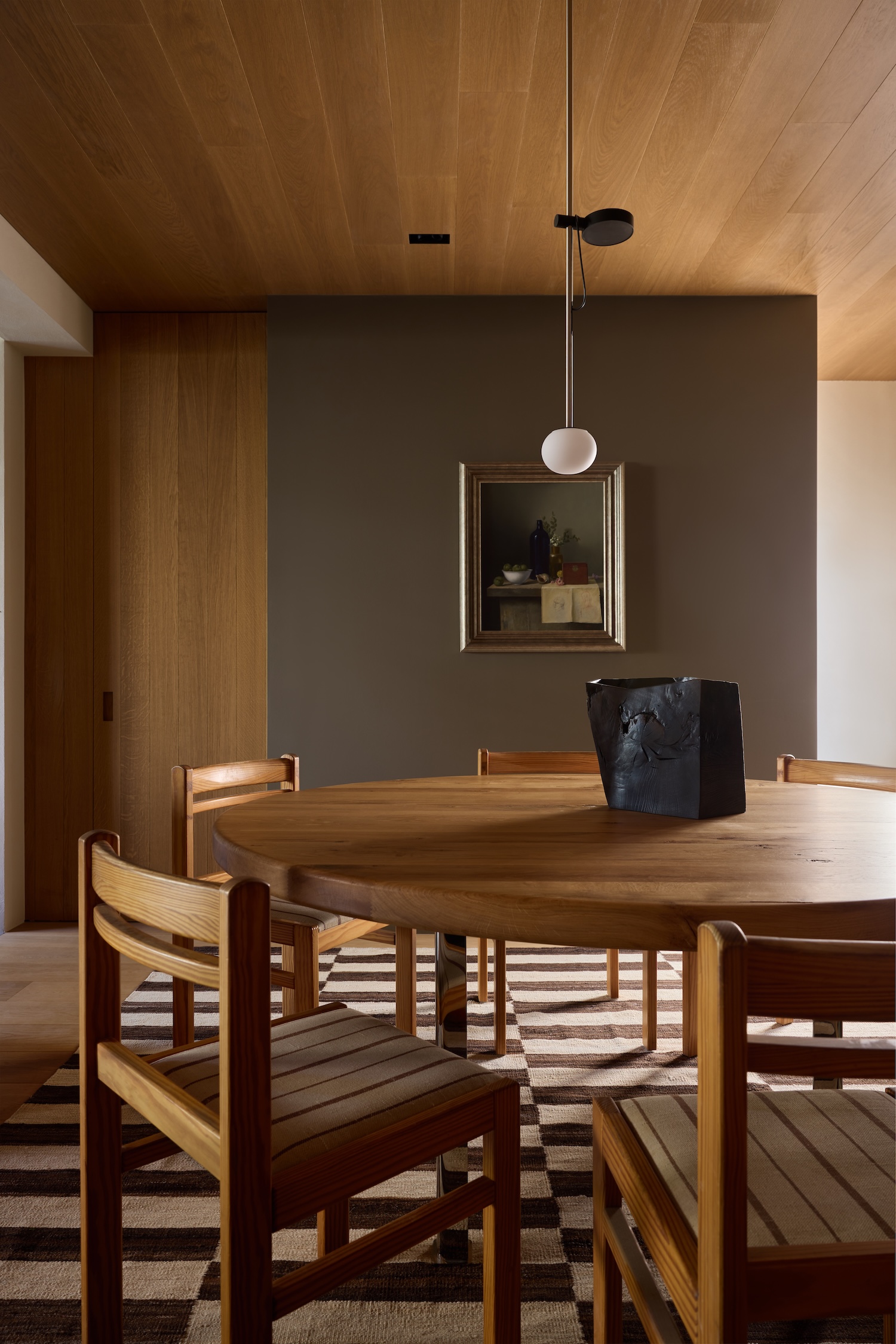
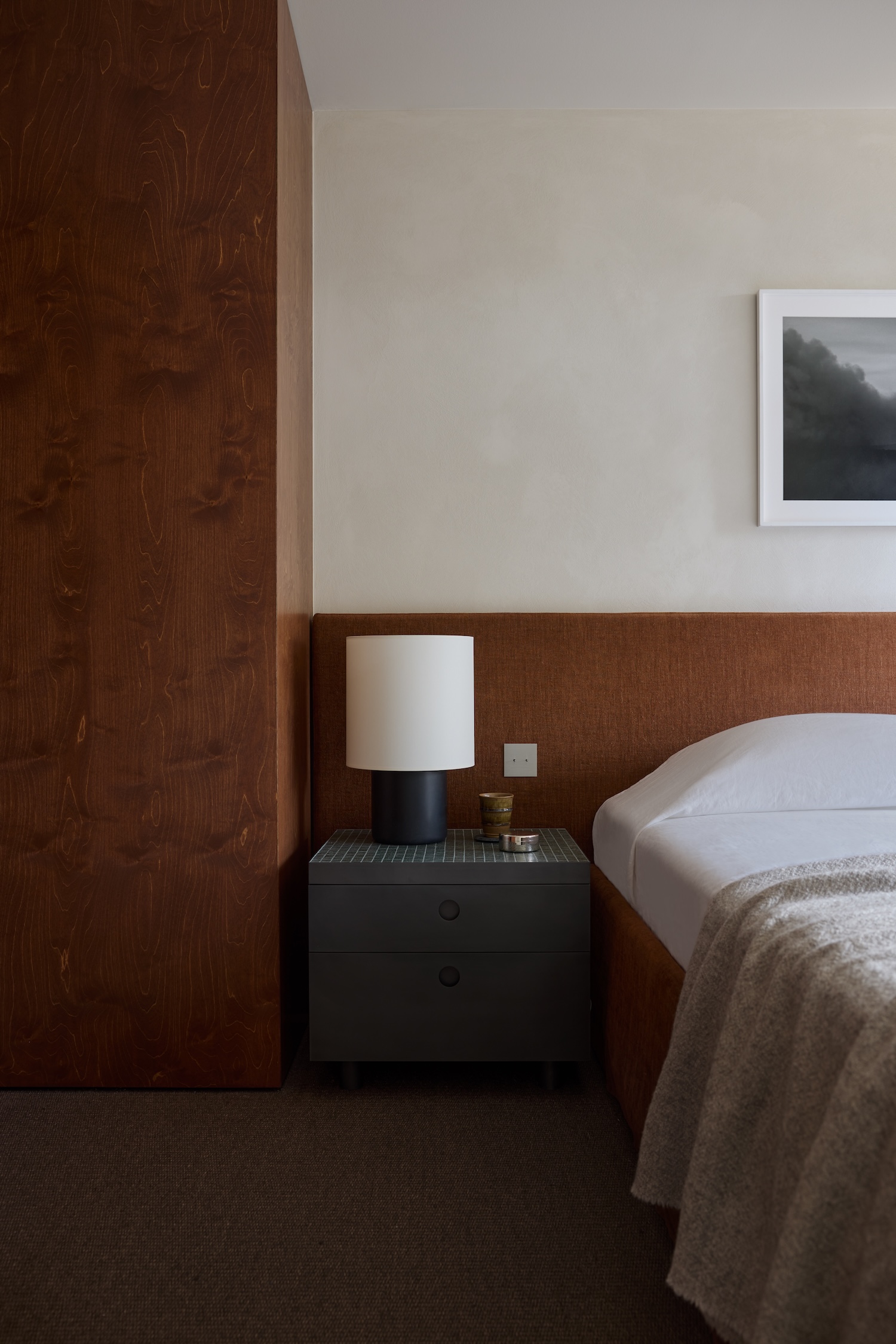
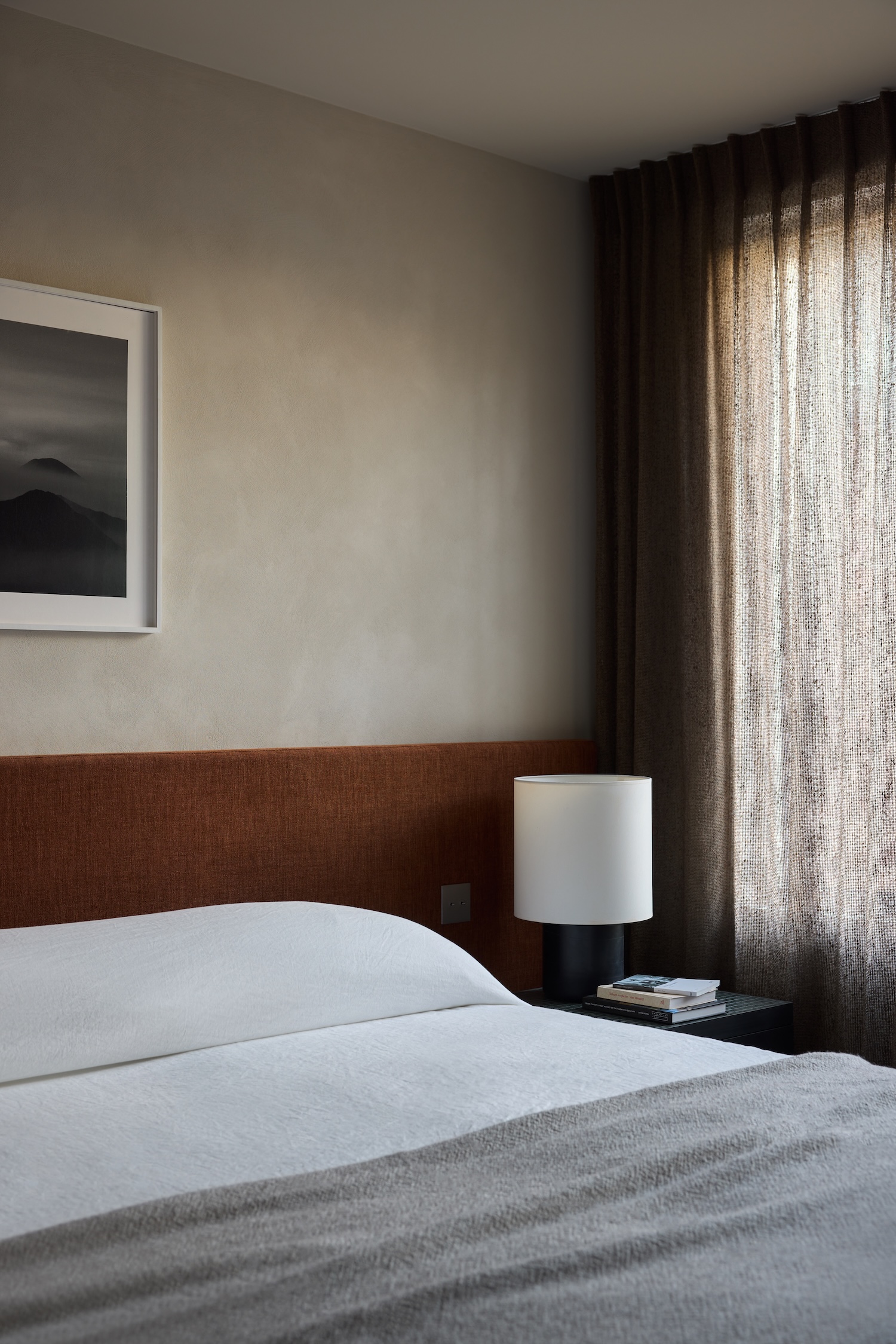
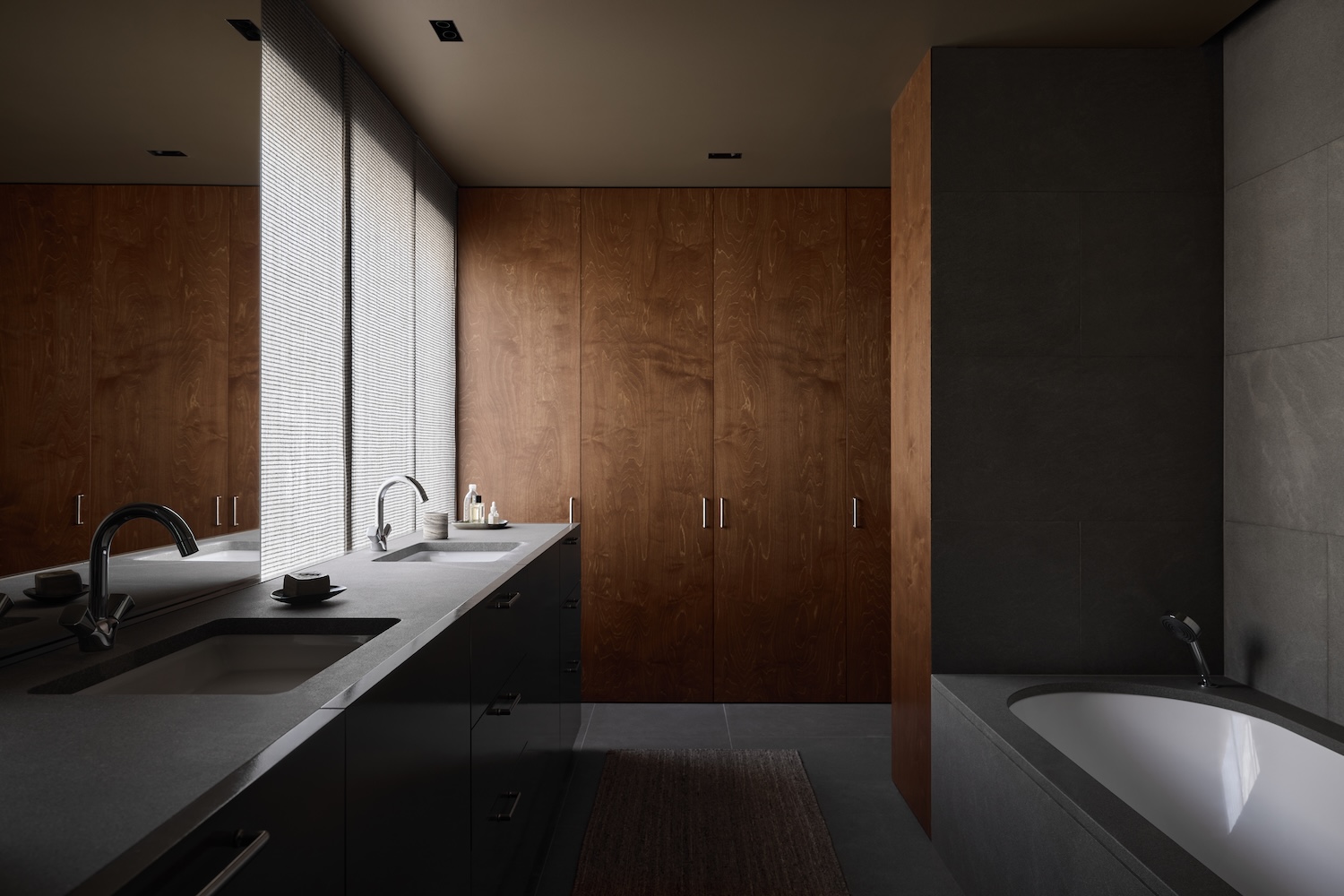
Townhouse VI is a minimalist residence located in Kortrijk, Belgium, designed by Decancq Vercruysse architects. This 1950s townhouse renovation embodies a profound understanding of how domestic space can serve as psychological sanctuary, where architectural decisions respond directly to the inhabitants’ emotional and physical rhythms. Architect Emiel Vercruysse and his partner Marie approached their own home as both clients and designers, creating a compelling case study in how personal introspection can inform spatial design.
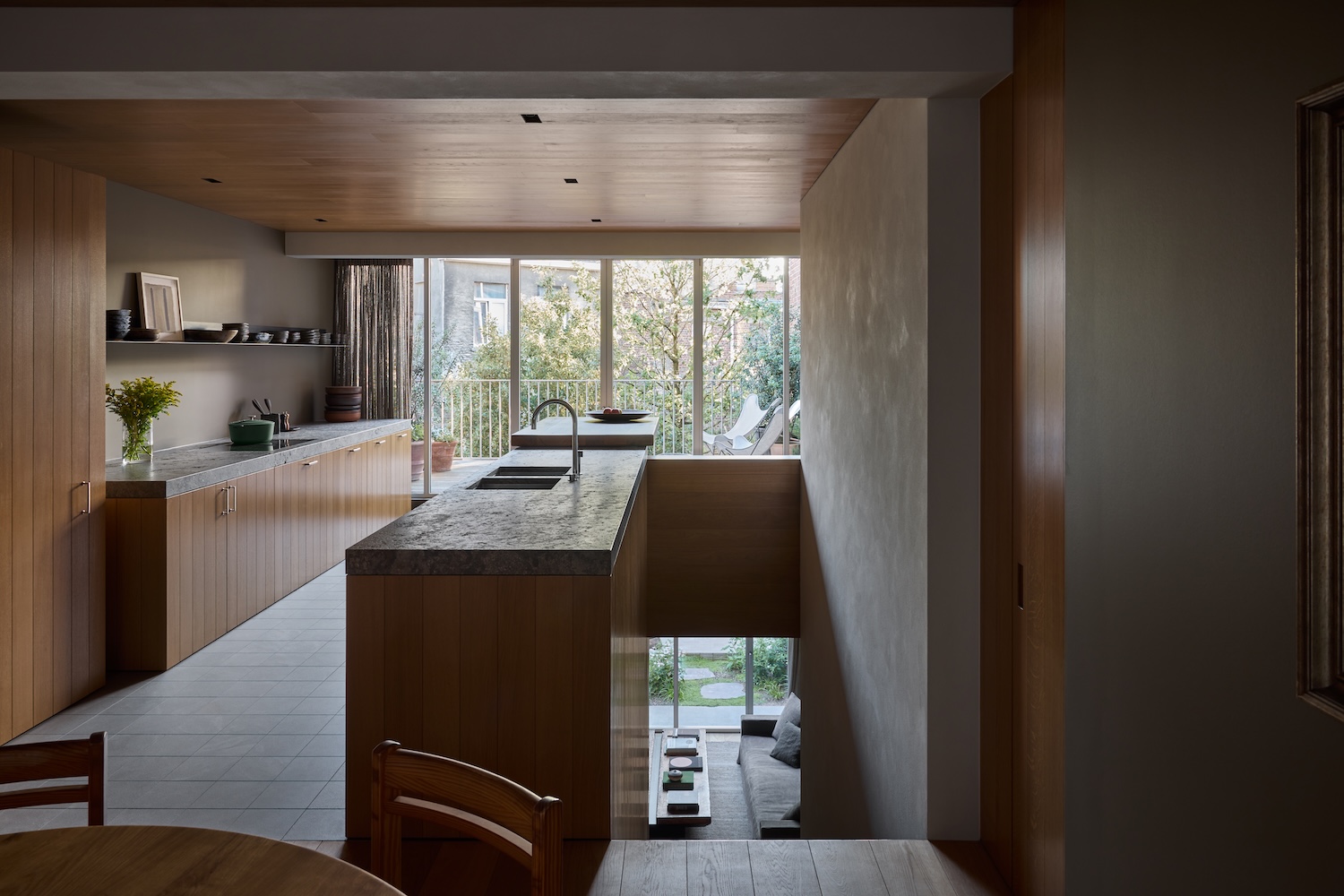
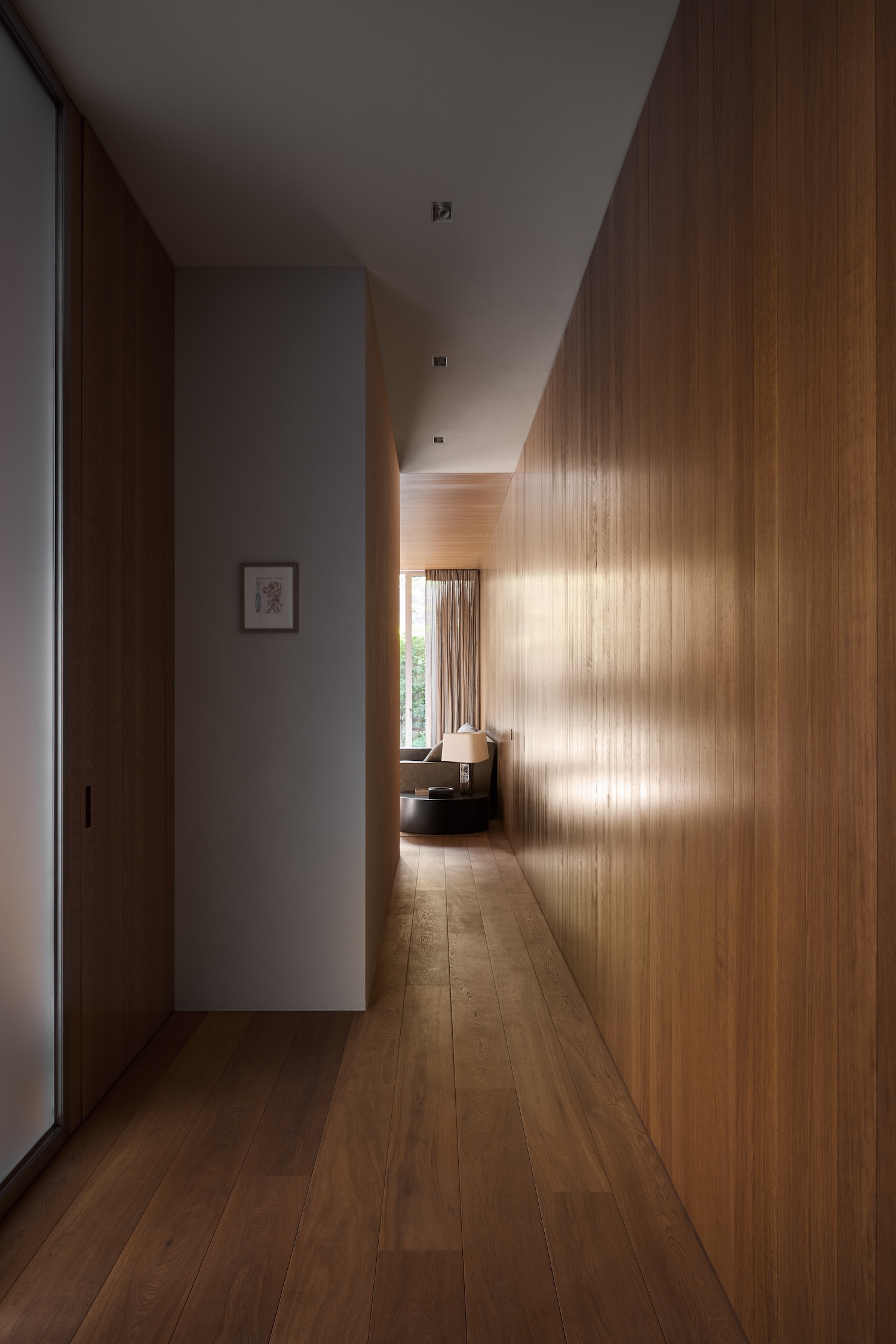
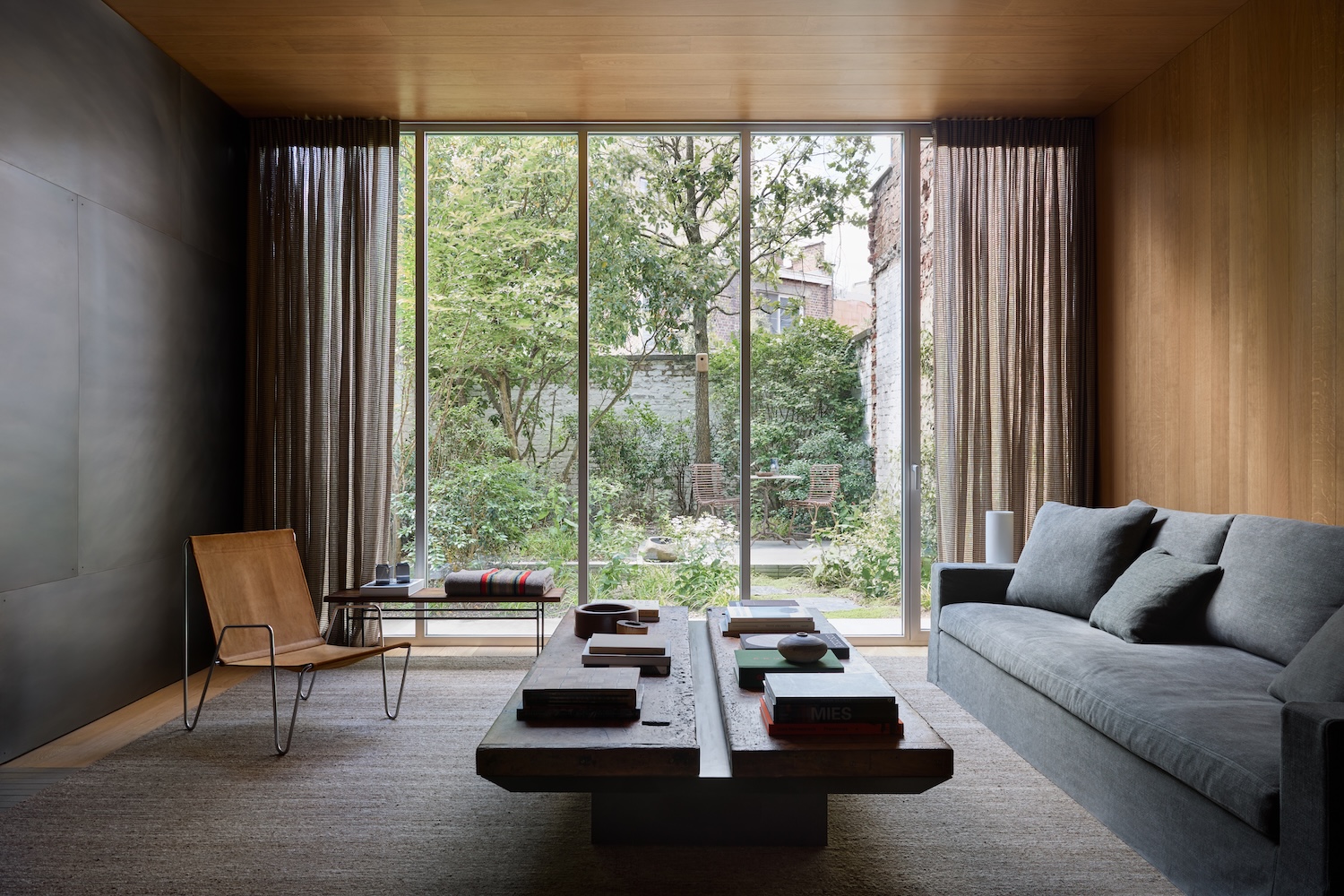
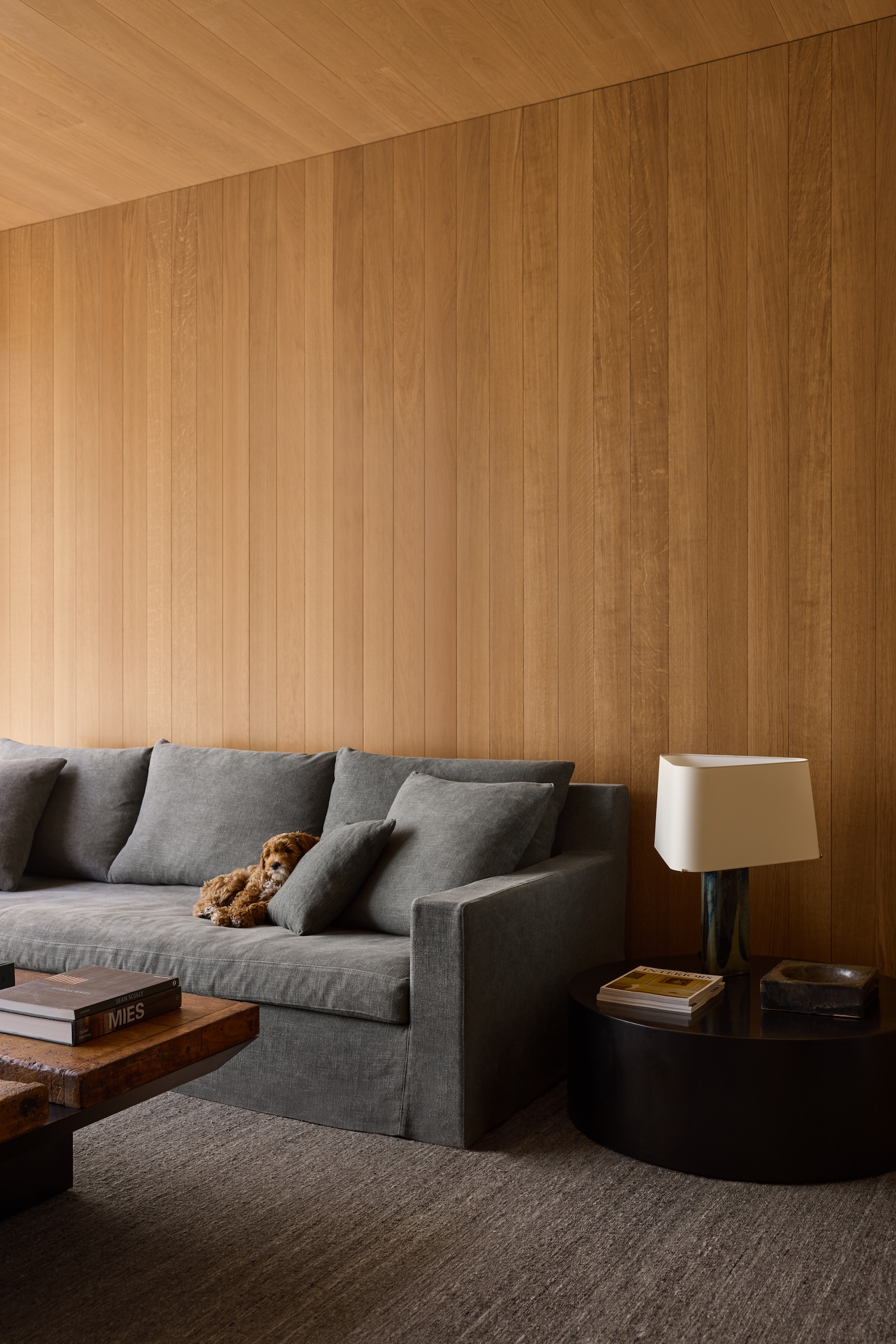
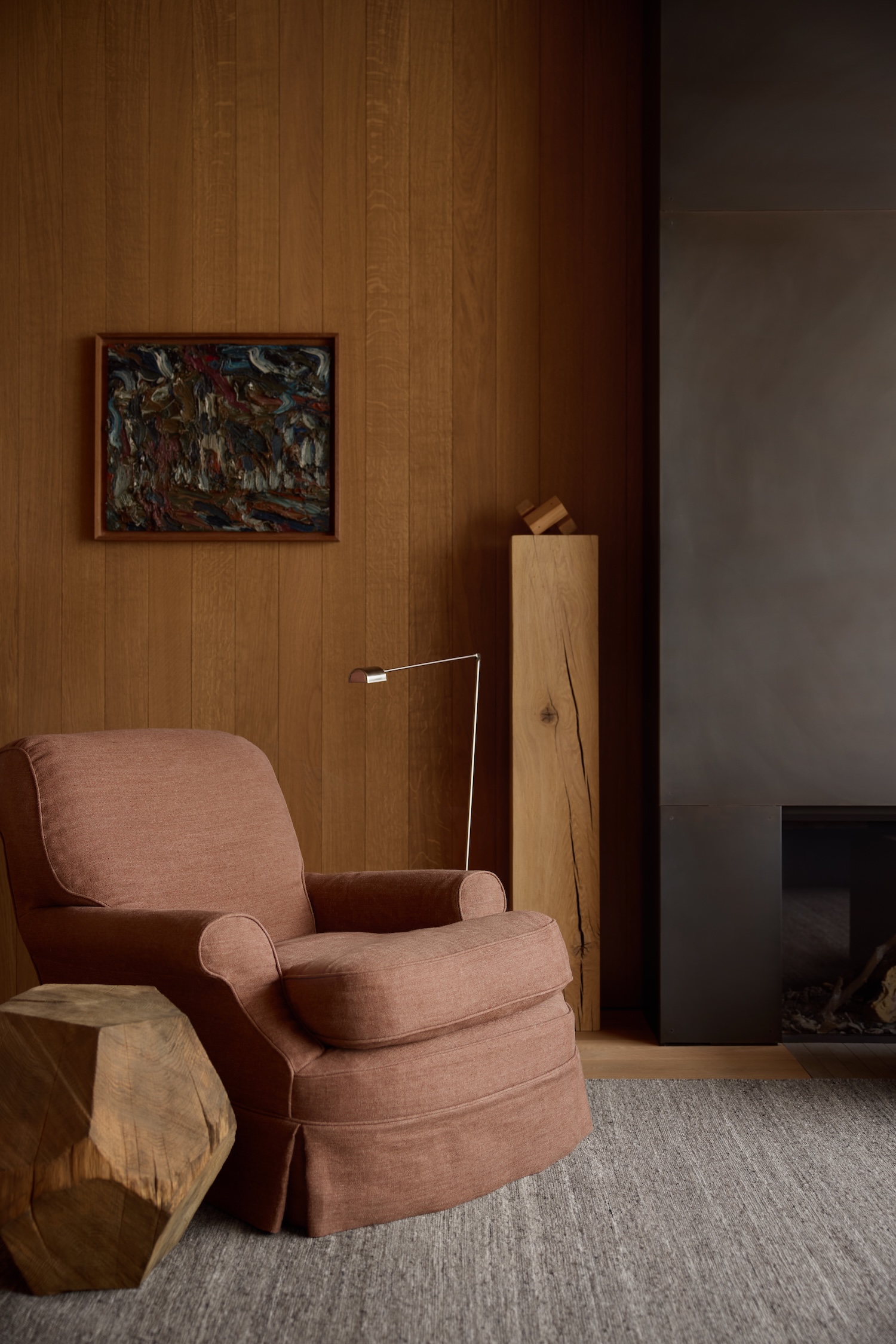
The ground floor transformation centers on establishing visual and physical connection to the garden through a new floor-to-ceiling window wall. This intervention dissolves the boundary between interior living space and the green-walled patio, creating what Vercruysse describes as essential connection to nature for psychological wellbeing. Oak wood panels line the interior walls, their warm tones complementing a bespoke patinated stainless steel fireplace that anchors the seating area. The space accommodates inherited pieces like an Axel Vervoordt coffee table alongside contemporary additions, demonstrating how thoughtful renovation can honor existing possessions while introducing new spatial qualities.
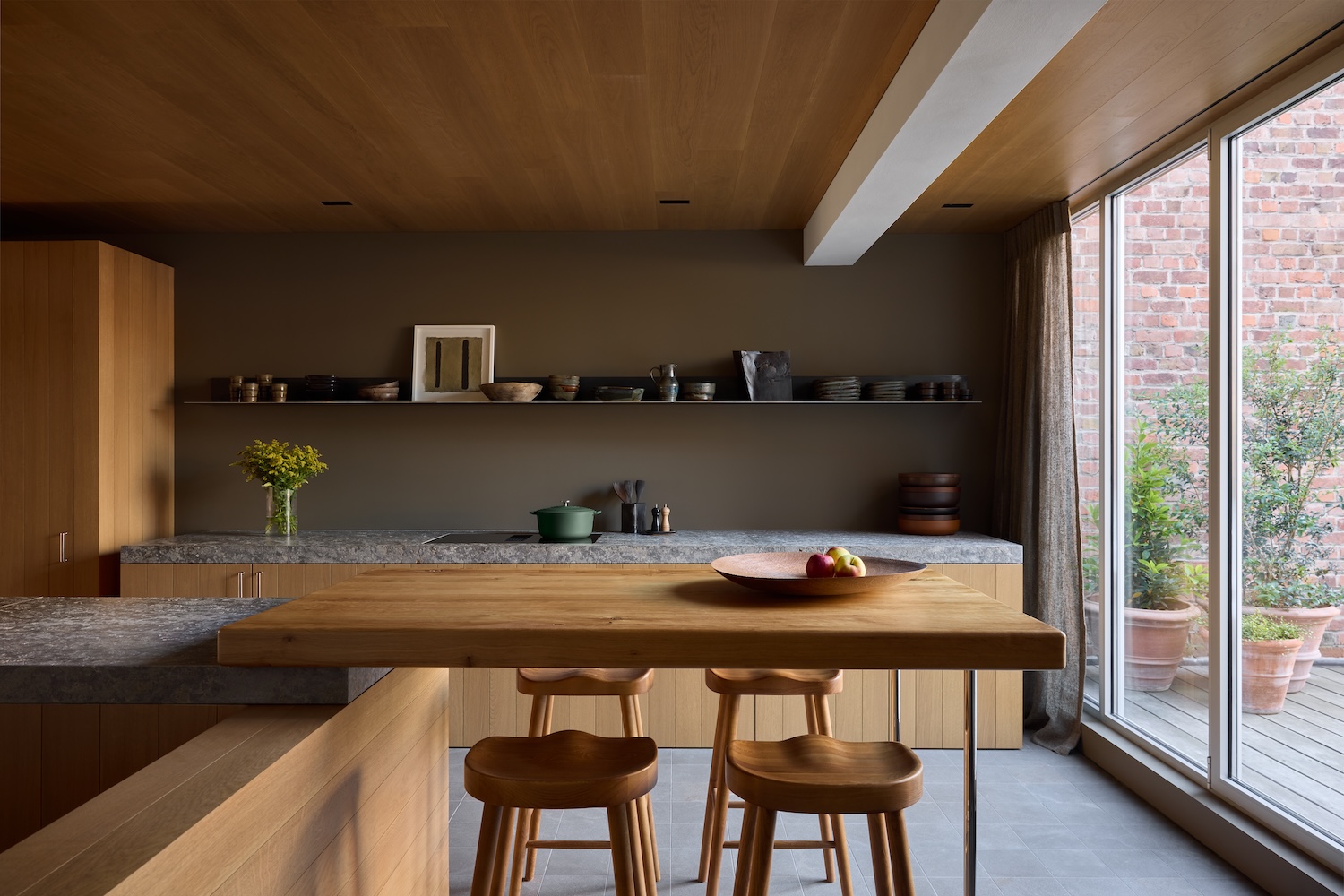
Vercruysse’s questioning of white paint as architectural default reflects broader conversations about color psychology in domestic environments. The darker palette throughout Townhouse VI draws from what he characterizes as more natural human preferences, referencing cave dwelling as precedent for spaces that attract, keep, and embrace inhabitants. This approach challenges contemporary minimalism’s association with stark white surfaces, suggesting instead that intimacy and calm might emerge from richer, more enveloping color choices.
Storage integration throughout the renovation addresses what Vercruysse identifies as one of comfort’s most crucial yet overlooked aspects. The entrance sequence includes dedicated space for coats, shoes, and bicycles, alongside a small shower for the family dog. This attention to transitional moments between exterior and interior reflects growing understanding of how domestic thresholds can reduce daily stress. In the kitchen, storage concentrates beneath stone countertops, leaving surfaces clear while maintaining easy access to frequently used items.