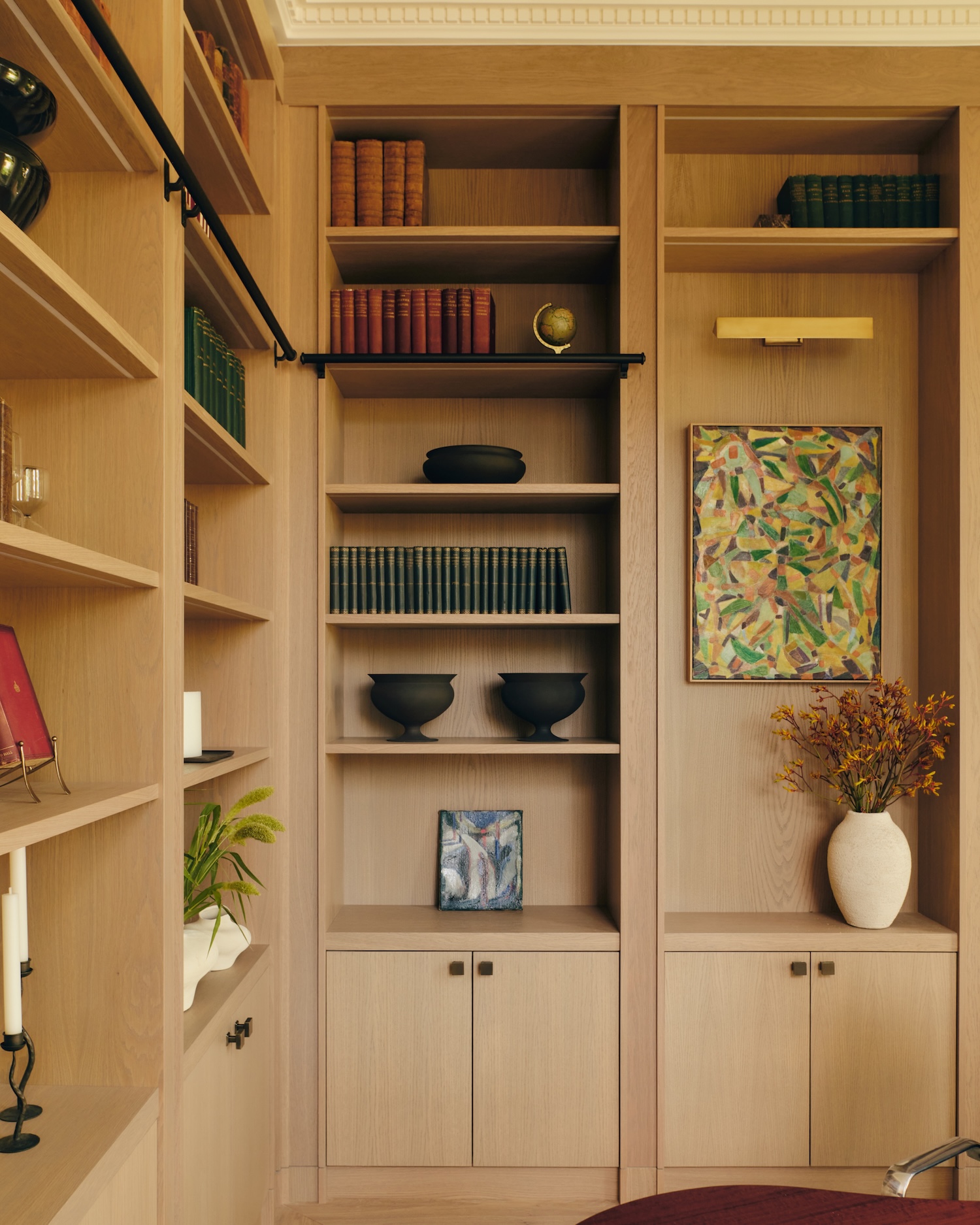
The library shelves at Tregunter, a Victorian townhouse in the Chelsea district of London, United Kingdom, where LAB Architects reworked the architecture and GANGAR designed the interiors, hold books bought from the grandson of a collector who was selling off his late grandfather’s rare volumes. GANGAR mixed those with contemporary titles and single secondhand editions instead of filling the cases with matching sets, producing shelves with the uneven density of a library built up over decades rather than installed in one pass.
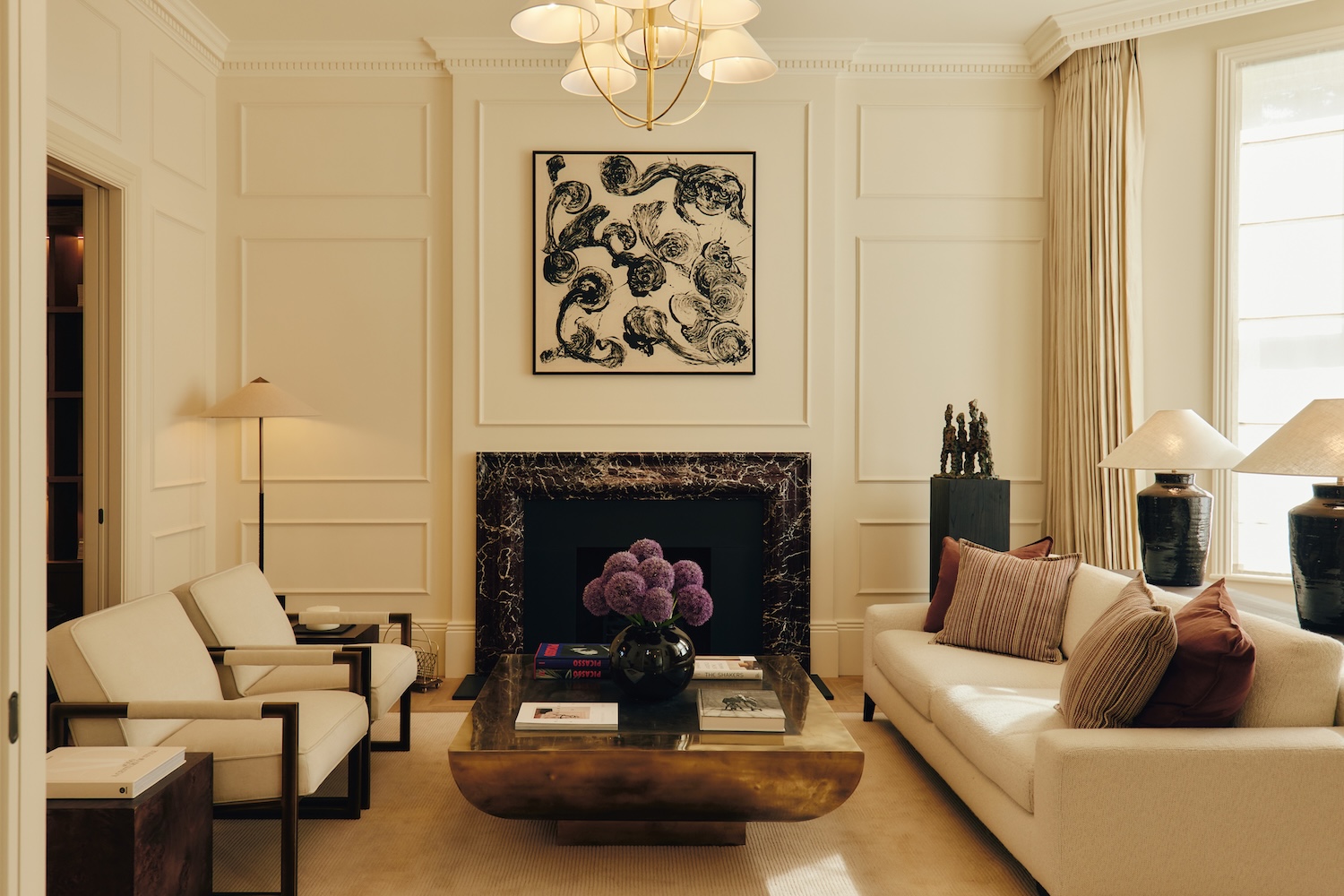
Bespoke joinery designed room by room carries that same measure into the wardrobes, where the principal dressing rooms are lined with herringbone and fine striped suiting cloth on the inside of the doors. In the front reception room, a patinated brass coffee table by British craftsmen Novocastrian sits below a Zen Van Songen painting and beside a bespoke rosso levanto fireplace. A four-poster bed in the principal bedroom is dressed in soft drapery.
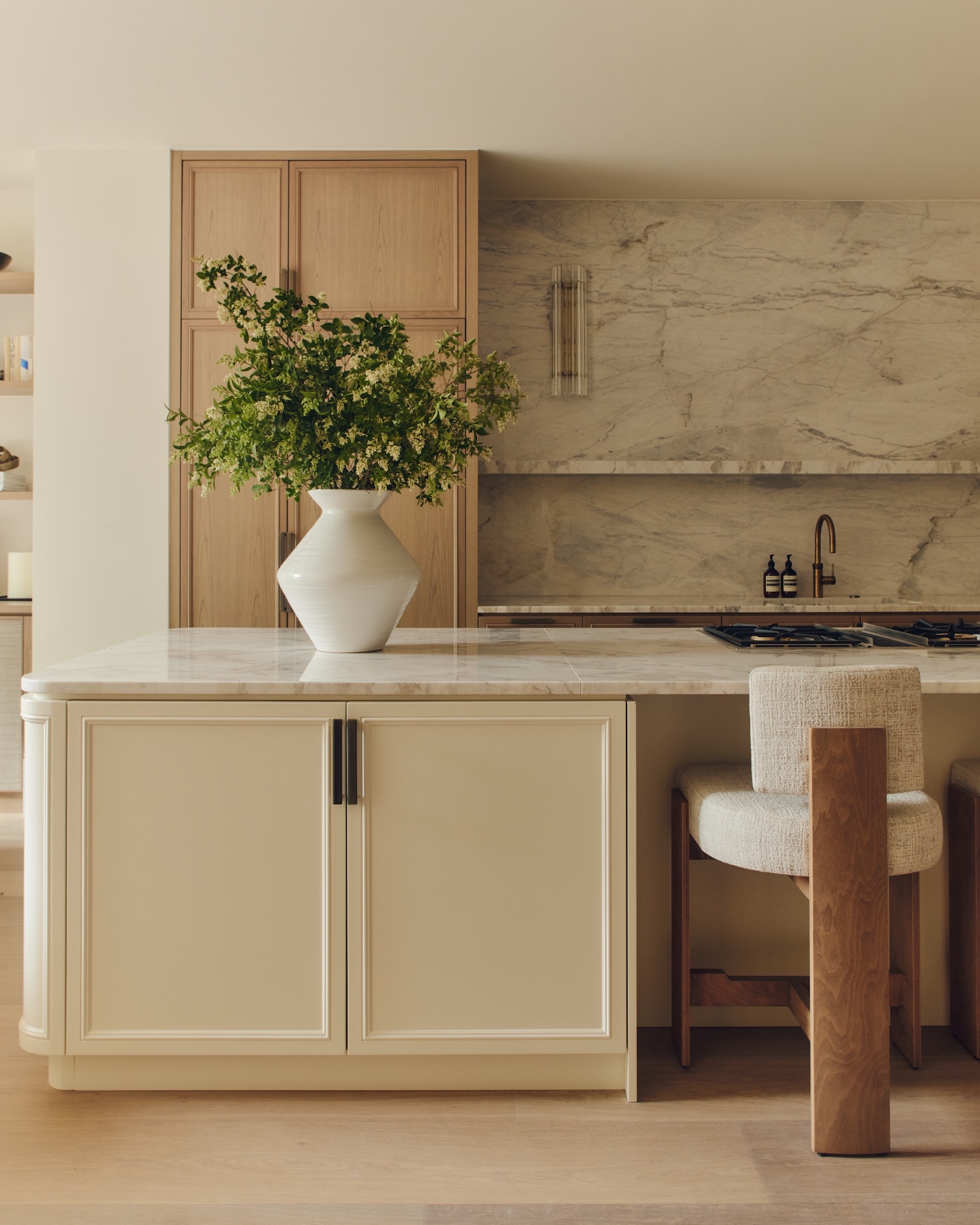
That same logic shapes the kitchen, where the island and its matching splashback were cut from a single slab of quartzite hand selected in a stone yard in Verona so the veining reads without interruption across both surfaces. Delicate beading applied to the cabinetry repeats detailing found on the upper floors, tying the contemporary kitchen back to the Victorian shell around it.
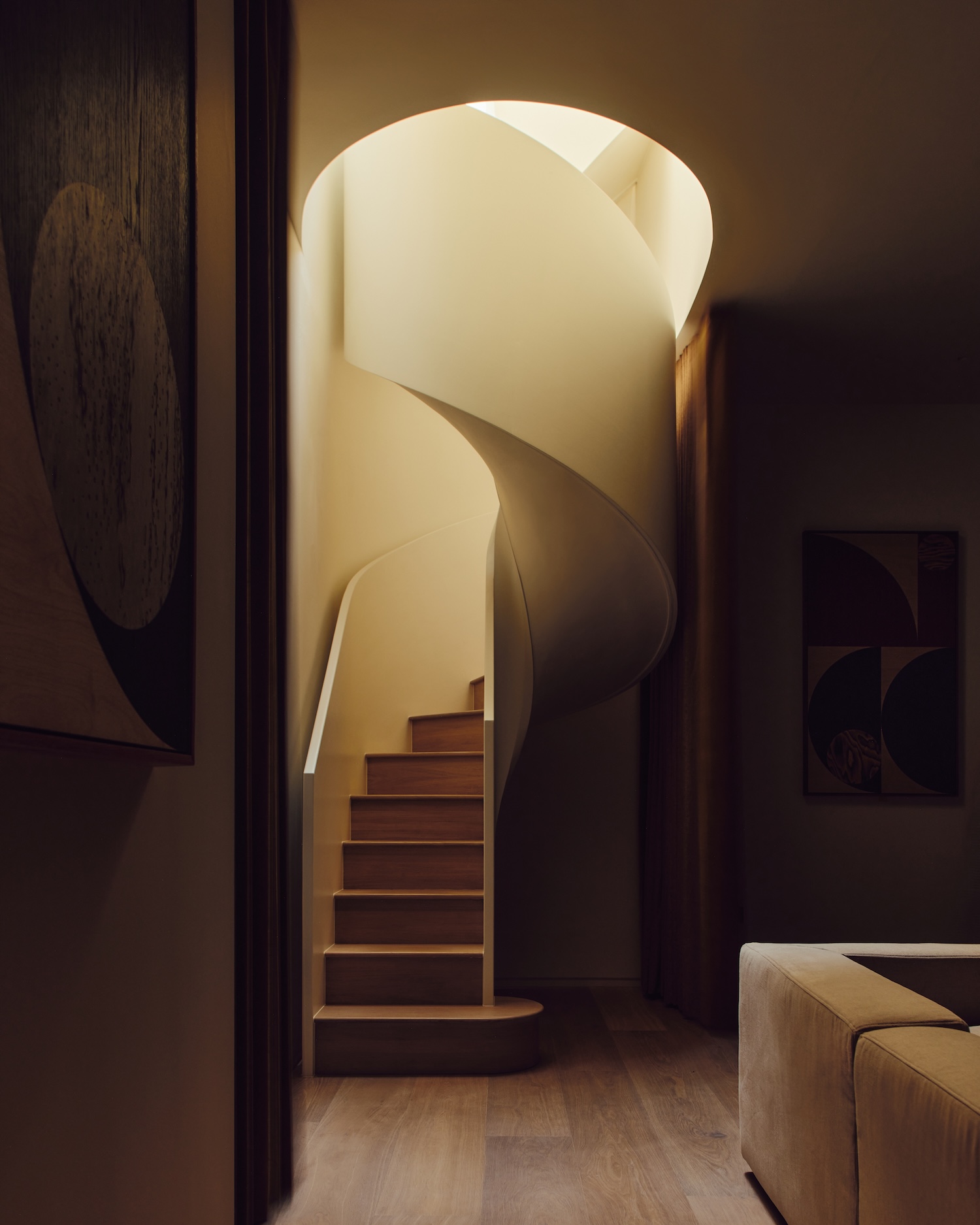
A helical staircase rises beneath a circular rooflight that drops daylight down through the stairwell, and a second helical stair further down brings light into the below-grade cinema room. Art was planned alongside the interiors from the start and curated room by room with Steingold Contemporary. Adam Holmes Davis’ textured paintings hang in the study, and silk commissions by Mada Vicassiau extend the house’s tailoring references into textile.
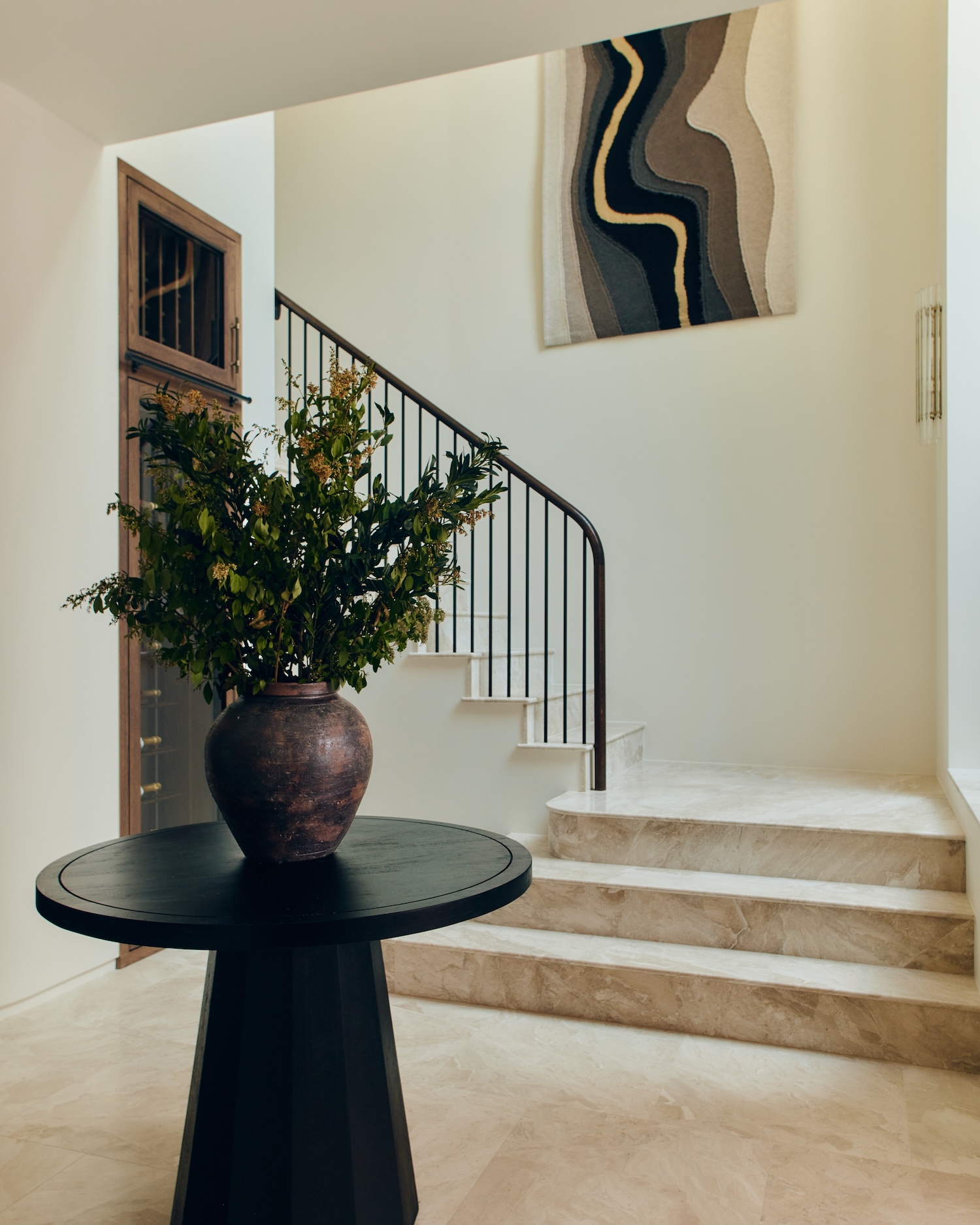
In the rear reception room, a commission by Mary West sits inside the joinery behind a sliding panel that conceals a television when it is not in use. At the lower level, a ten-foot hand-stitched textile by NEST titled Liquid History, based on the River Thames, hangs in the double-height space leading to the basement.