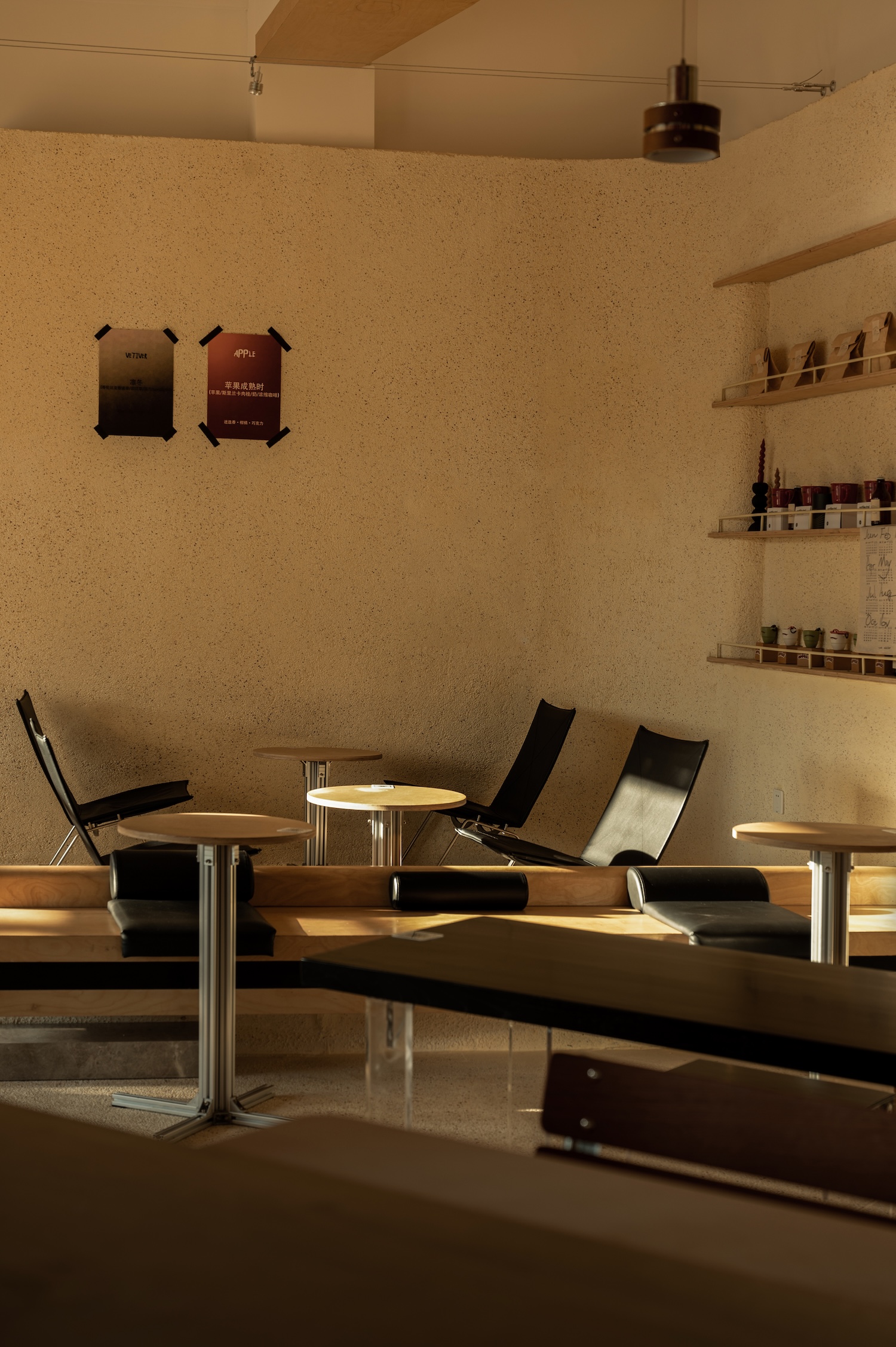
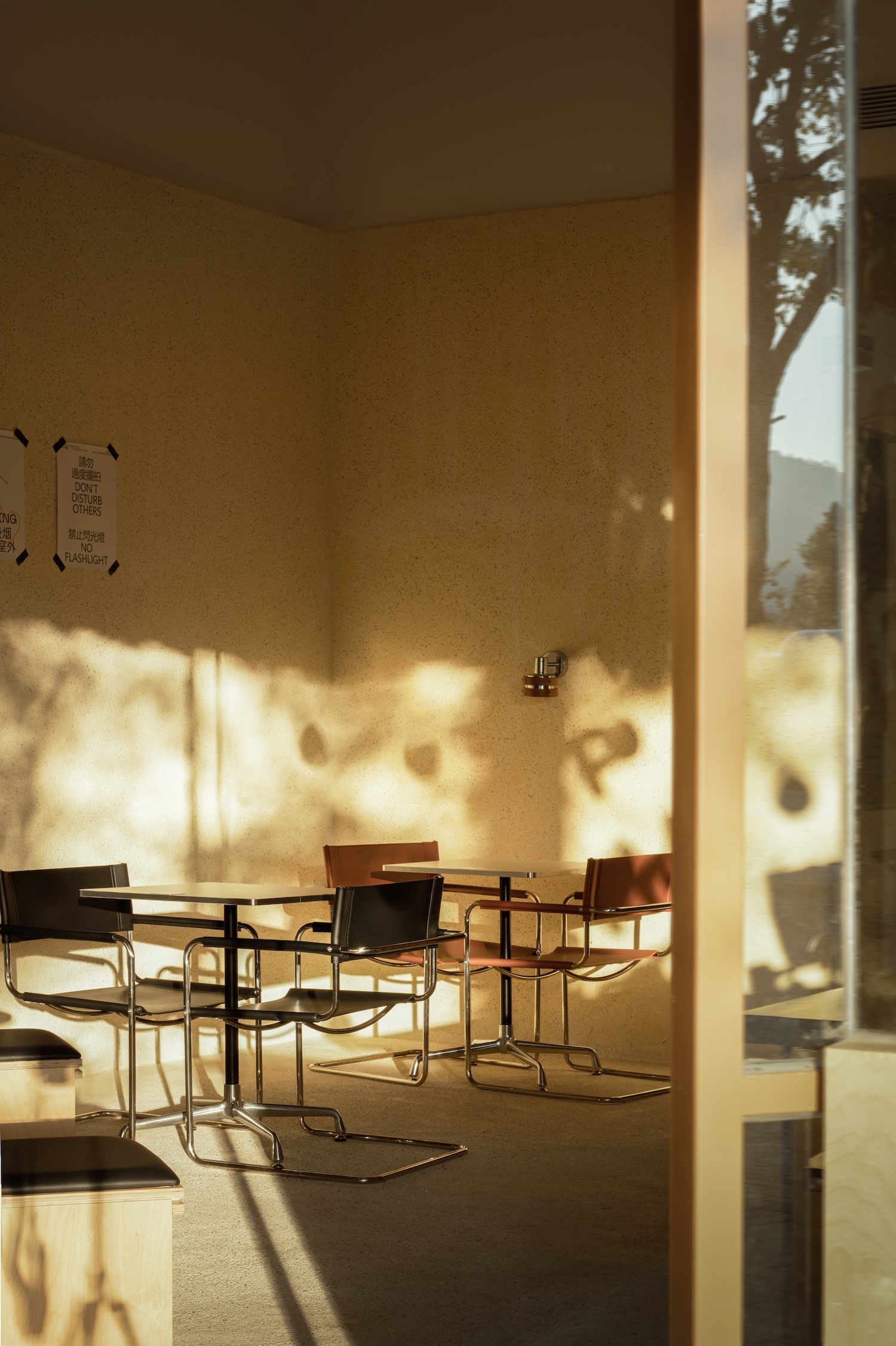
UP COFFEE is a minimalist cafe located in Fujian, China, designed by NianShang Architects. At the corner of a bustling residential neighborhood, UP COFFEE emerges as a masterclass in cultural synthesis. The 80-square-meter space demonstrates how contemporary design can create moments of pause in urban life while honoring traditional elements. The establishment’s most striking feature – a vibrant traditional lion dance head suspended from the ceiling – serves as both a cultural anchor and a bold design statement, challenging the minimalist aesthetic that defines much of the space.
The exterior sets a compelling architectural tone through its use of washed stone coating, a material choice that speaks to the modernist principle of honest materials while creating a clean canvas for natural light play. The bright yellow “UP” signage punctuates this restraint with purposeful energy, functioning as both wayfinding element and symbolic gesture toward elevation and aspiration.
At the heart of the space, the bar area exemplifies thoughtful material dialogue. The combination of light ocean board with solid steel countertops creates a sophisticated interplay of textures that references both industrial design and natural elements. This counter, essential to the café’s function, achieves a delicate balance between utility and aesthetic refinement.
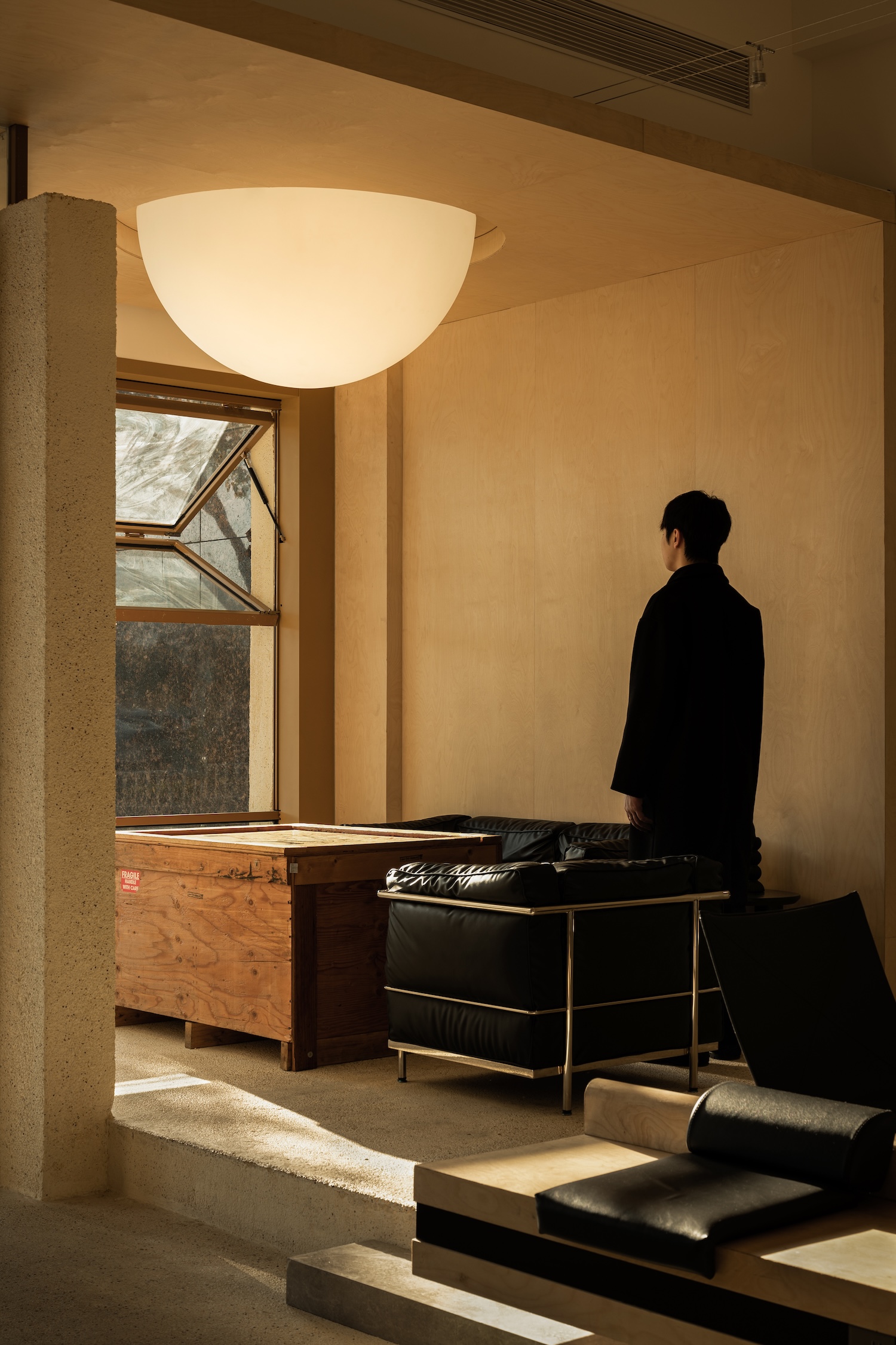
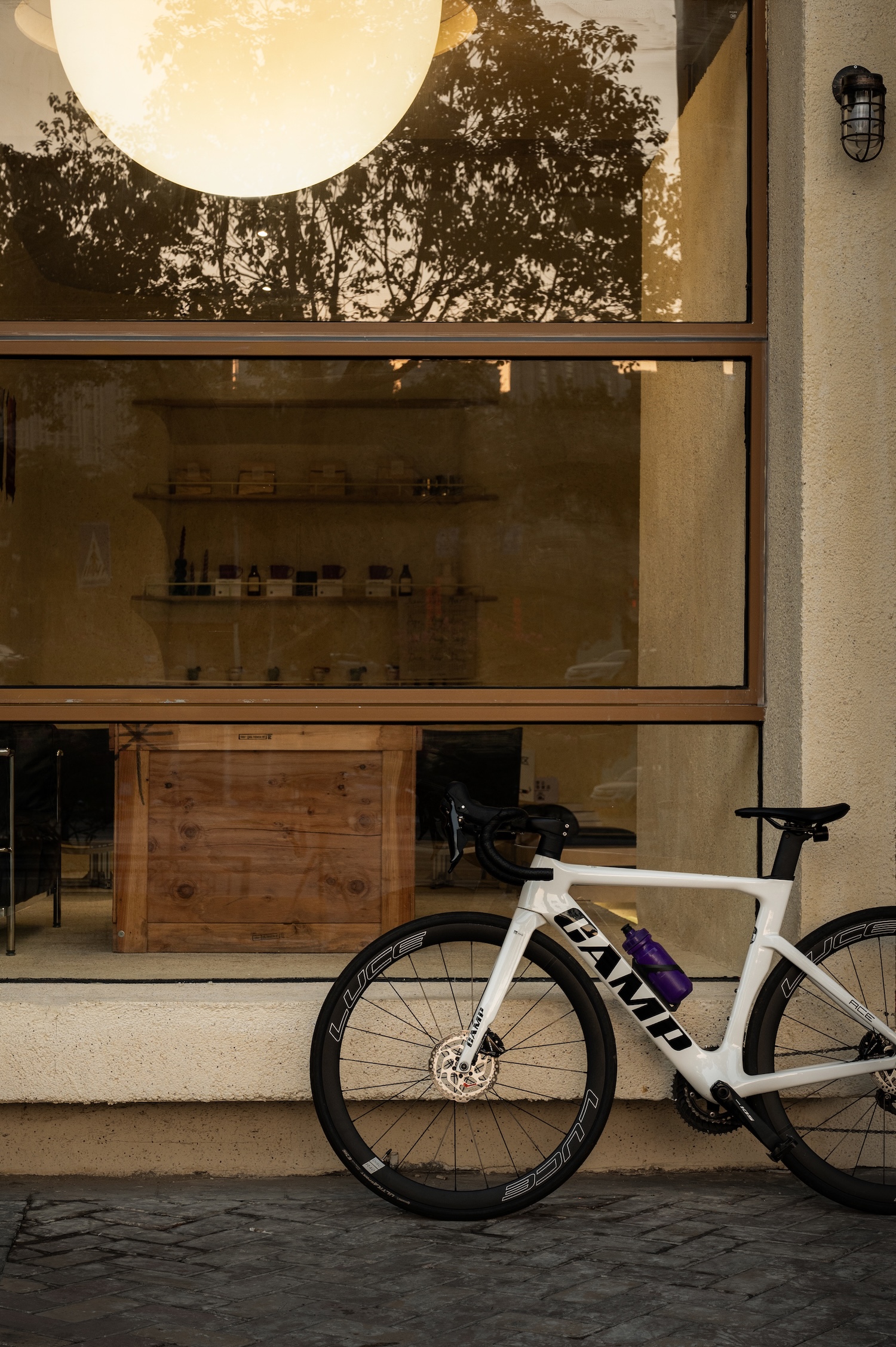
The seating area showcases a particularly noteworthy piece – a Bauhaus-inspired sofa in deep black, its metal framework harmonizing with surrounding wooden elements. This choice of furniture reflects a deep understanding of modernist design principles while providing comfortable functionality. Above it, a semi-floating acrylic spherical pendant light installation adds a contemporary accent, its form suggesting both morning sun and evening moon, creating an atmosphere that shifts subtly throughout the day.
The design successfully navigates between different cultural and temporal references: the traditional lion dance head speaks to Chinese heritage, while the clean lines and material choices echo international modernism. This juxtaposition creates a space that feels both rooted in local culture and connected to global design conversations.