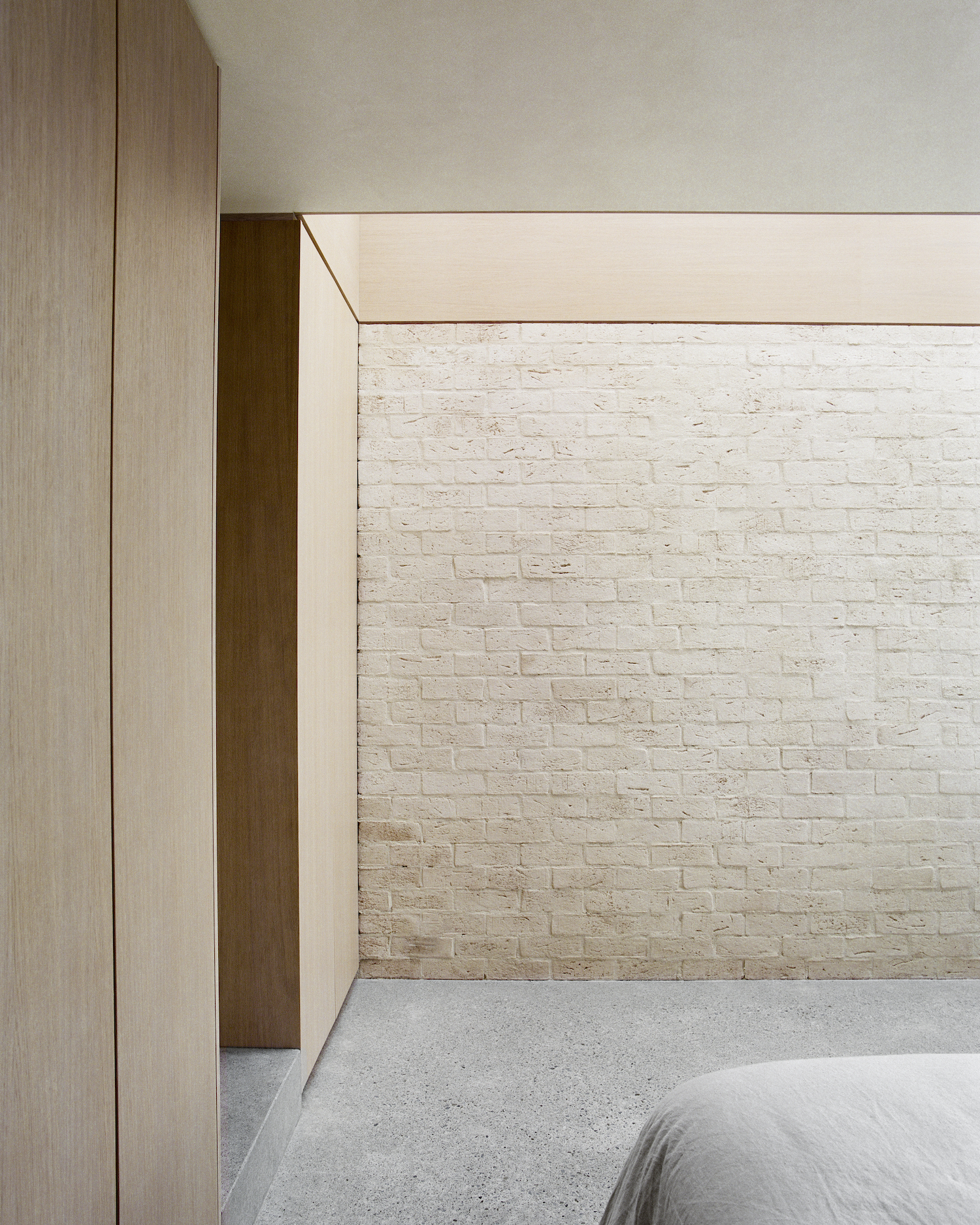
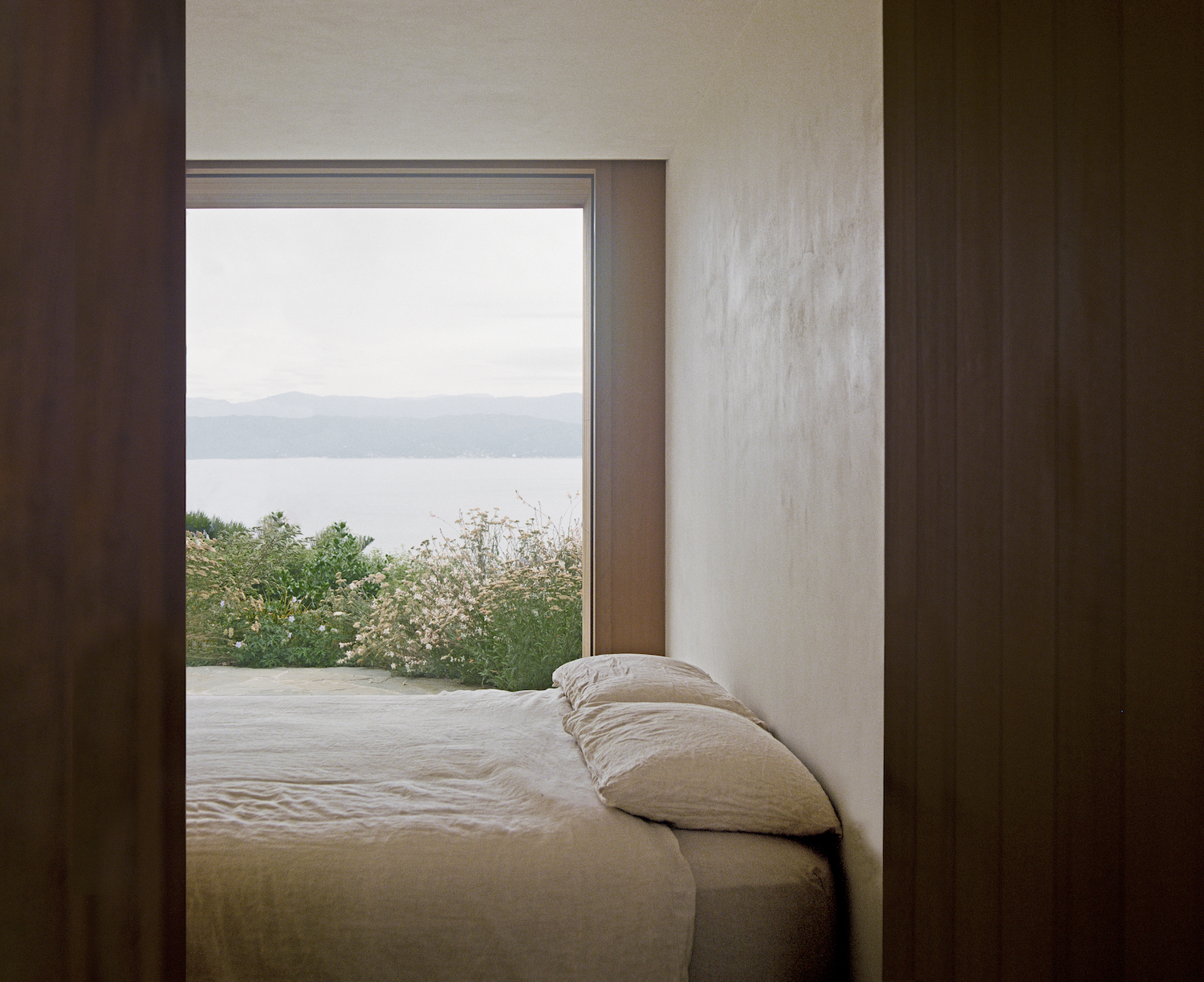
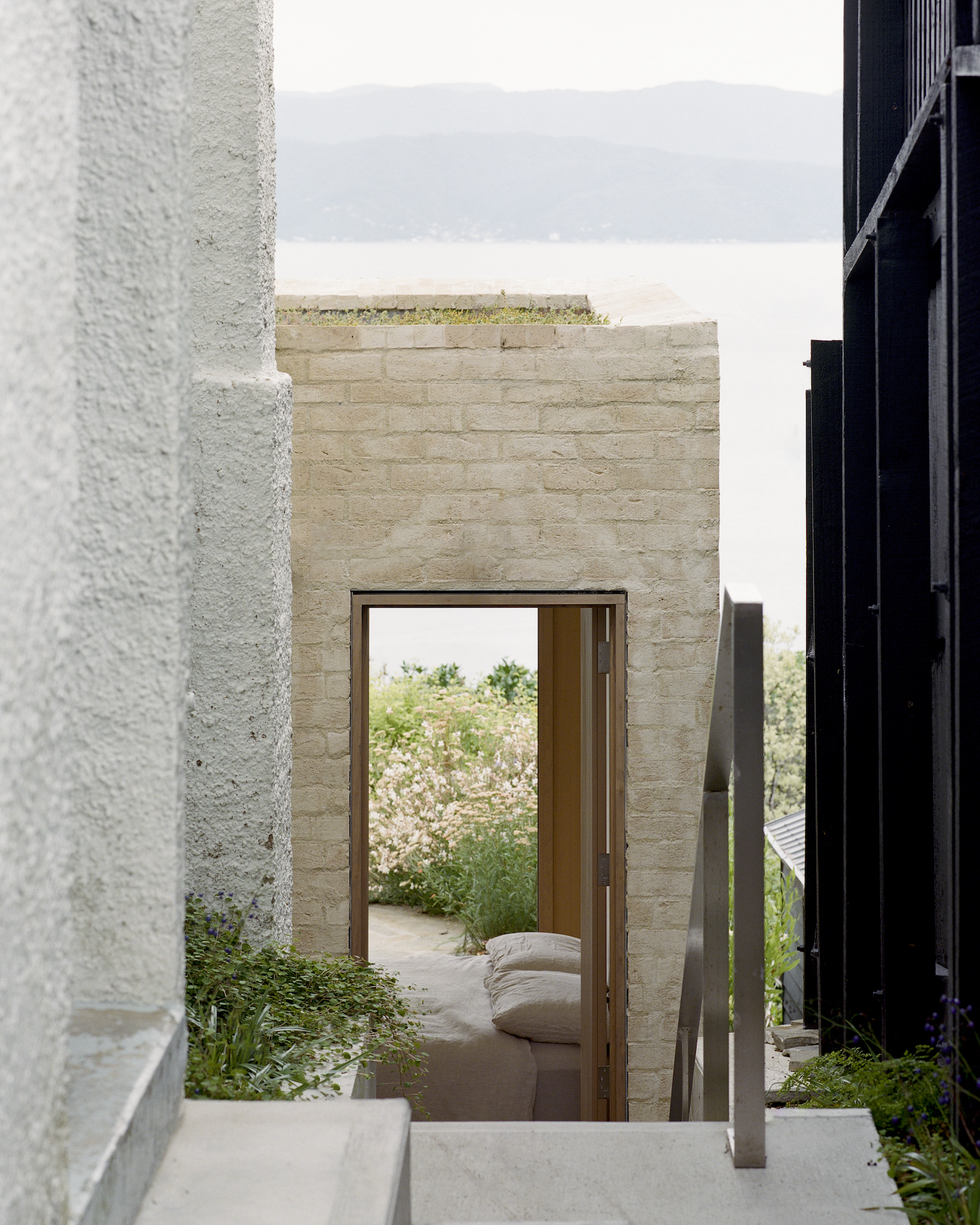
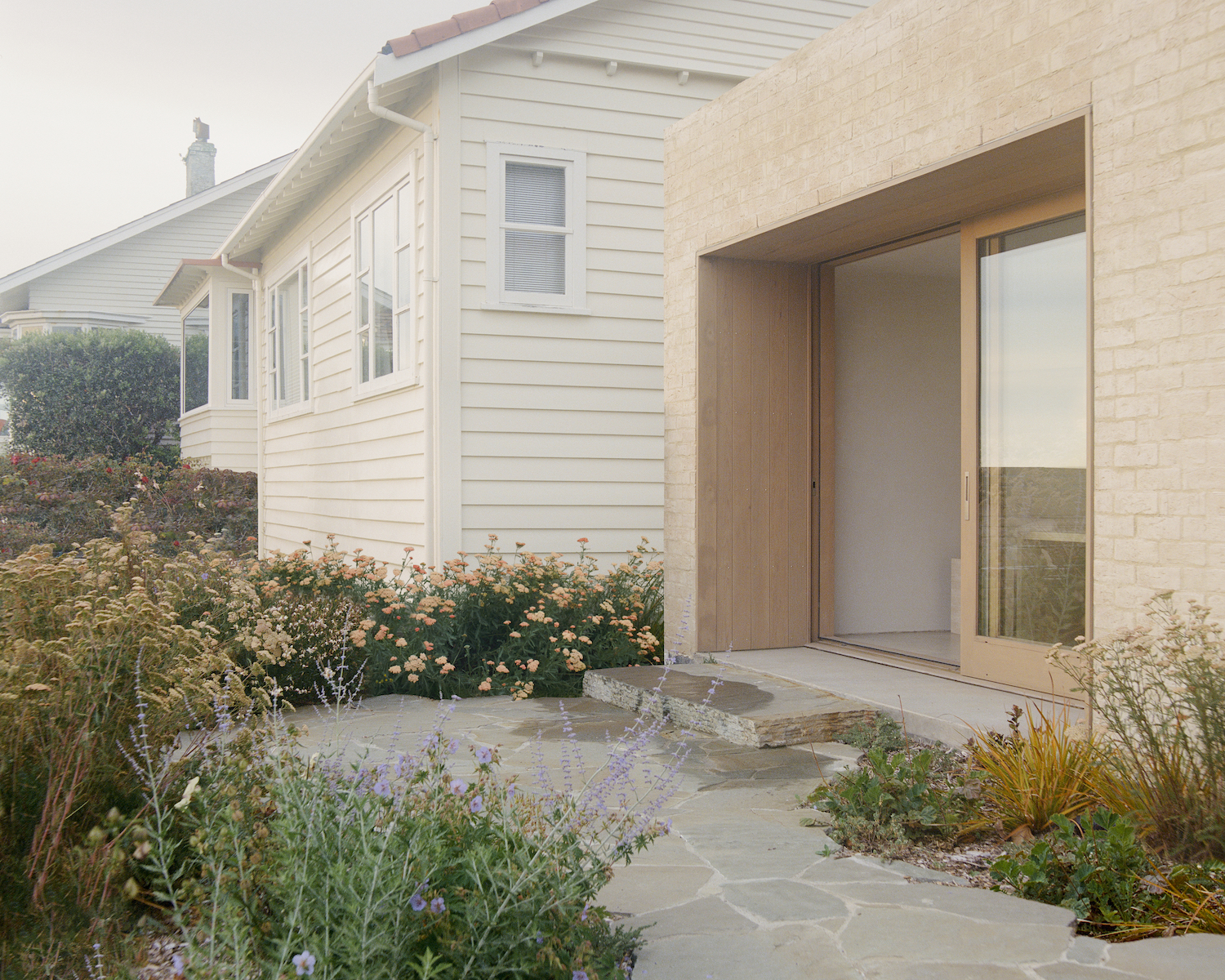
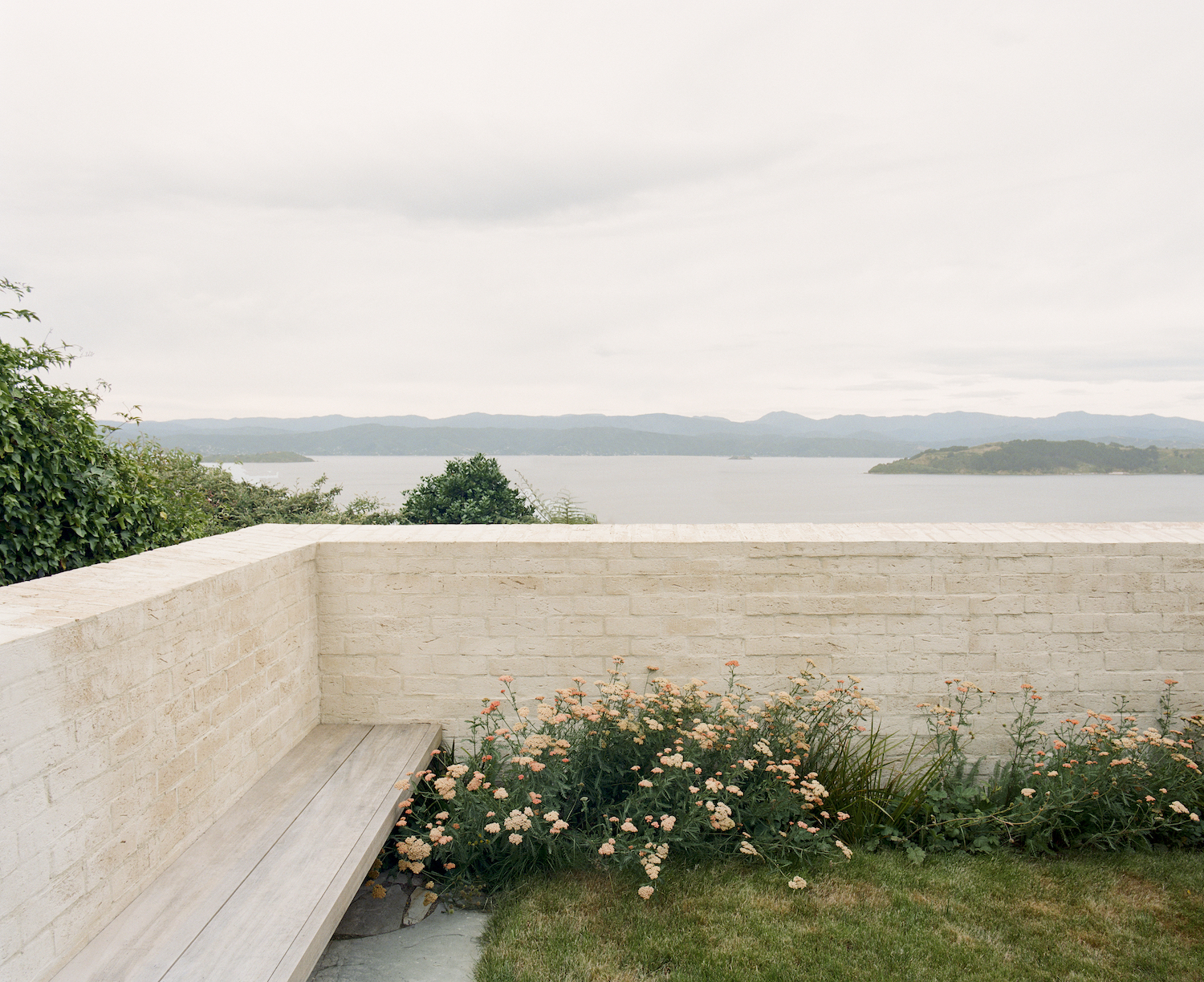
Upper Watt Residence is a minimal home located in Wellington, New Zealand, designed by Seear-Budd Ross. The project confronted the challenge of deteriorating brick retaining walls, which were both unsightly and unsafe. The property, situated on a ridge in Wellington, features a double brick home dating back to the early 1900s. This home, set on a 298m2 plot, boasts sweeping views of Wellington Harbour. The newly added extension, facing east, is shielded from the prevalent northern winds and seamlessly integrates with the hillside. Its design incorporates greenery around its periphery and on its rooftop, further blending it with the natural surroundings. Internally, the extension exudes tranquility, with a design palette comprising plaster, timber, and brick, all finely detailed.
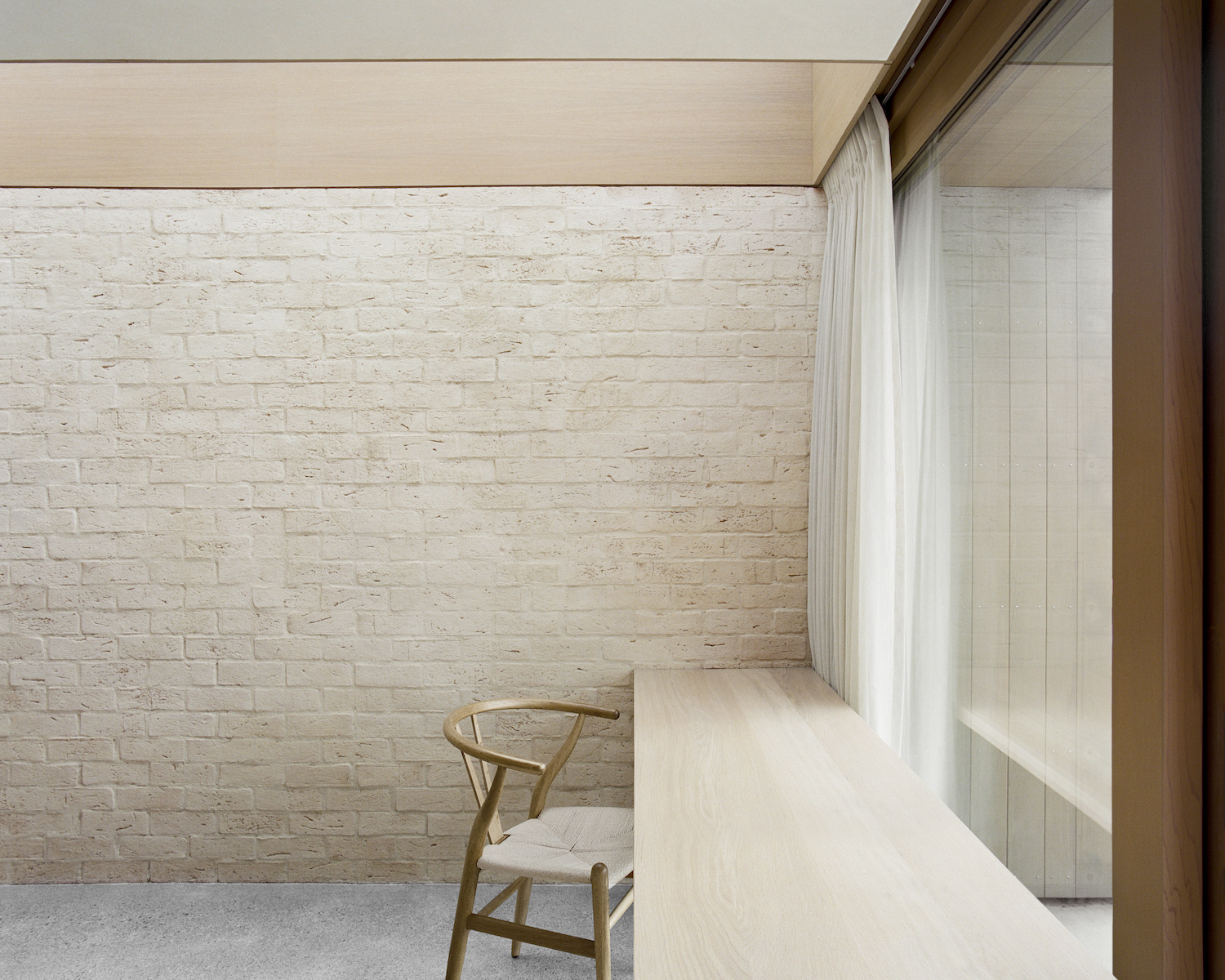
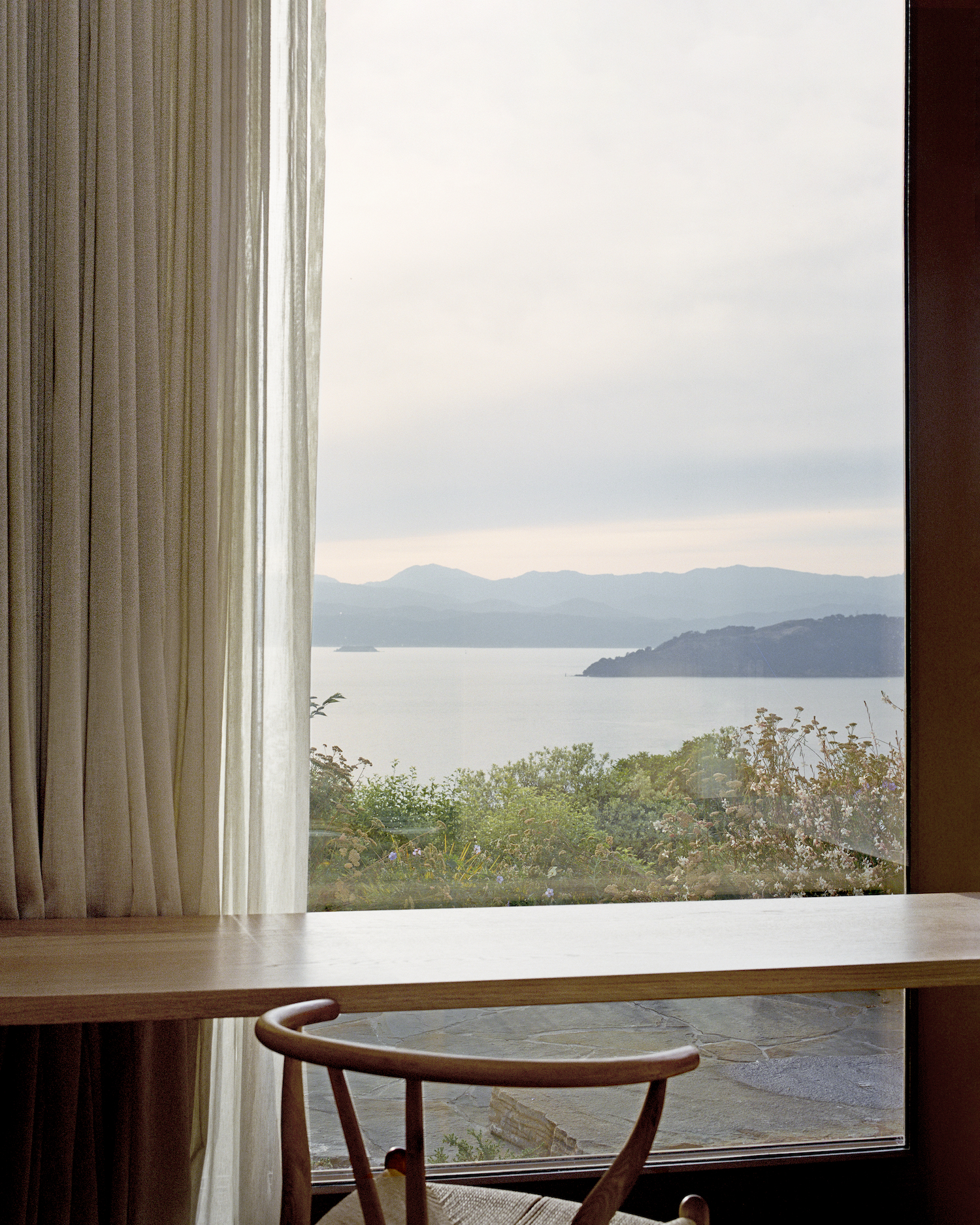
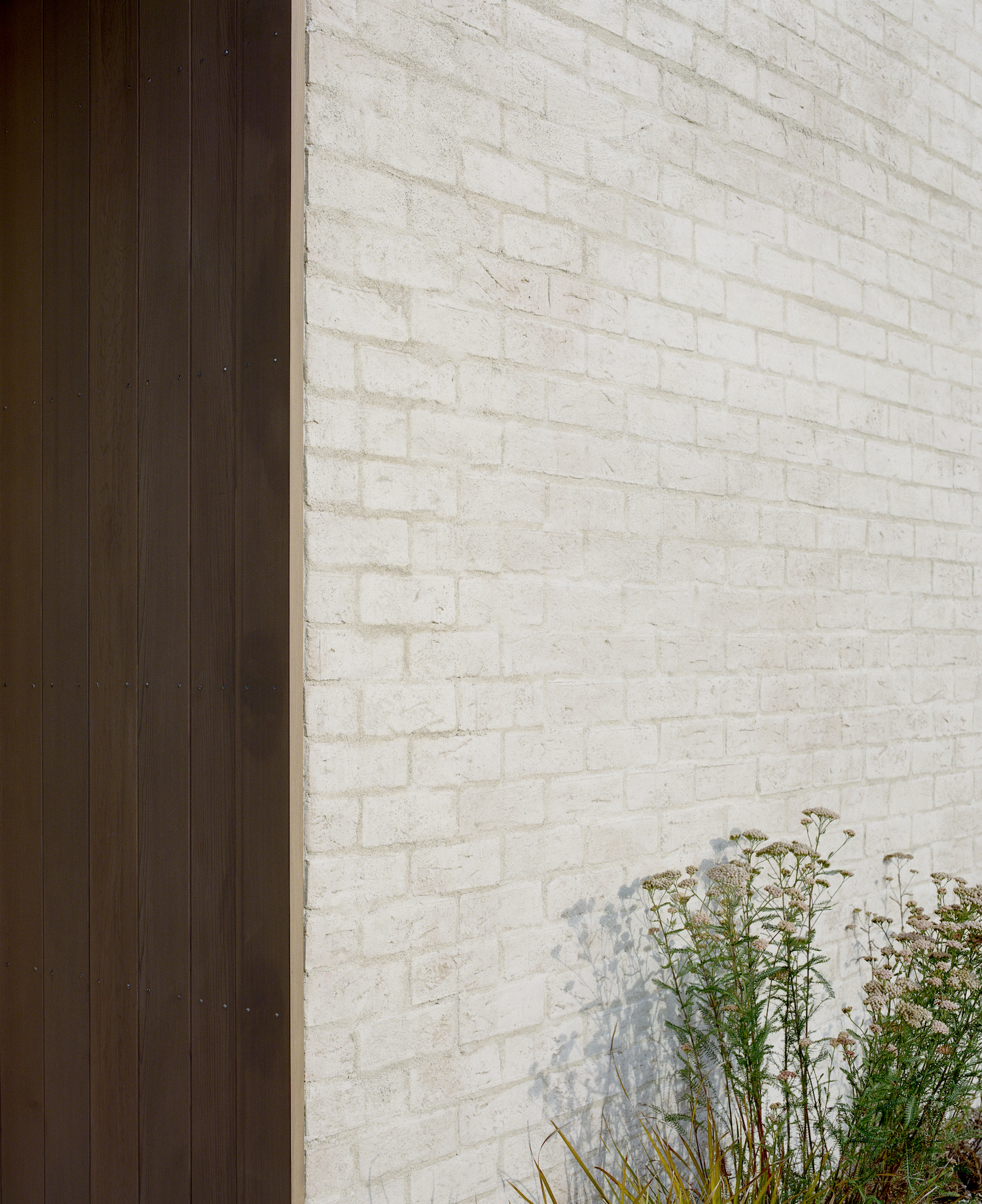
The east-facing façade maximizes the harbor views with extensive glazing. A strategically placed skylight on the northern wall introduces soft, natural light. The design thoughtfully responds to Wellington’s varying weather: offering a cozy shelter during windy days and an open, airy space connecting to the garden on sunny days. The exterior of the extension mirrors the original home’s double-brick construction, using lime-covered bricks for a low-maintenance yet aesthetically pleasing appearance. Custom mortar work, developed in collaboration with bricklayers, and a streamlined brick parapet enhance the building’s unified look. The roof, covered with a membrane and planted vegetation, and the engineered masonry walls, provide necessary support and retain the structure.
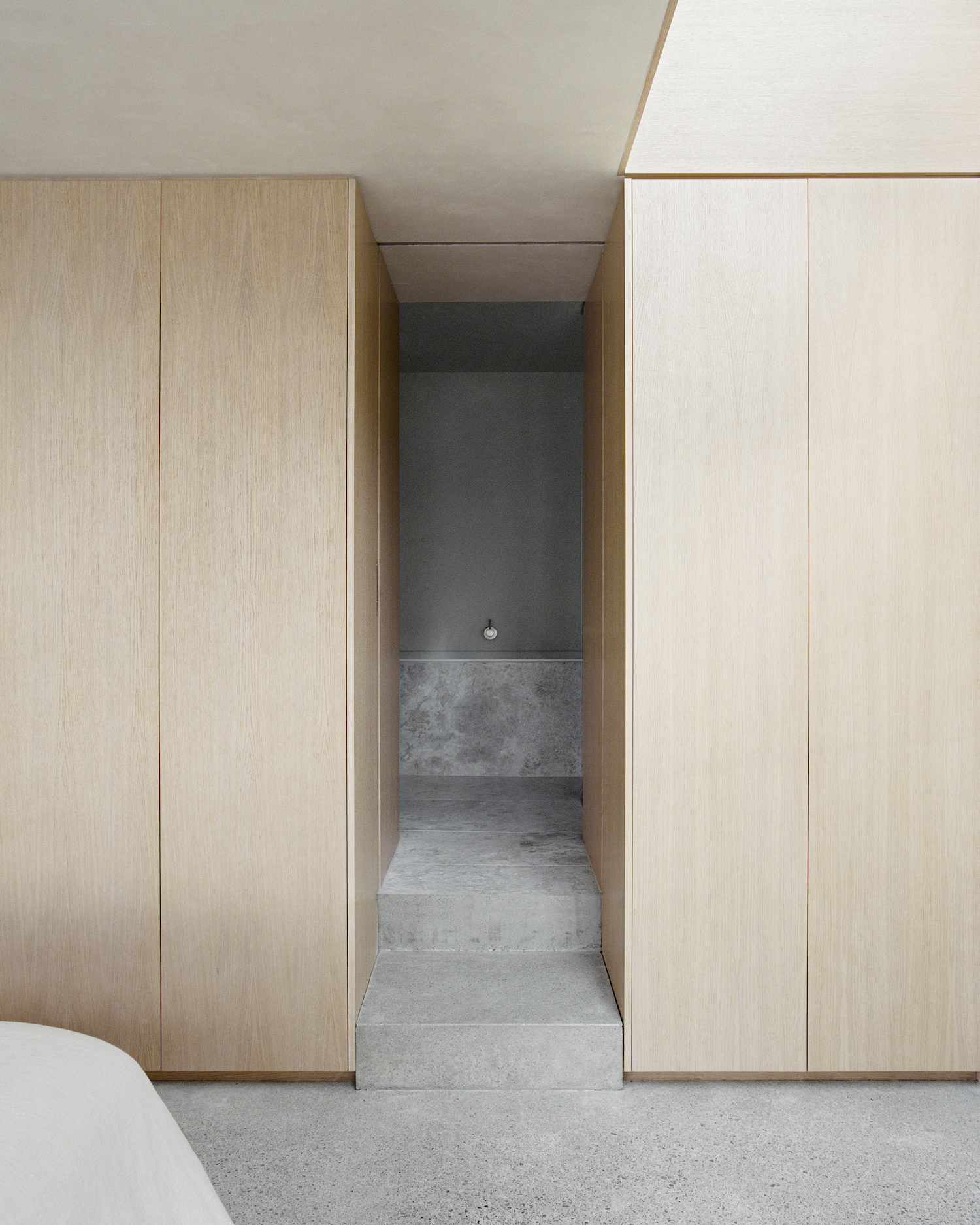
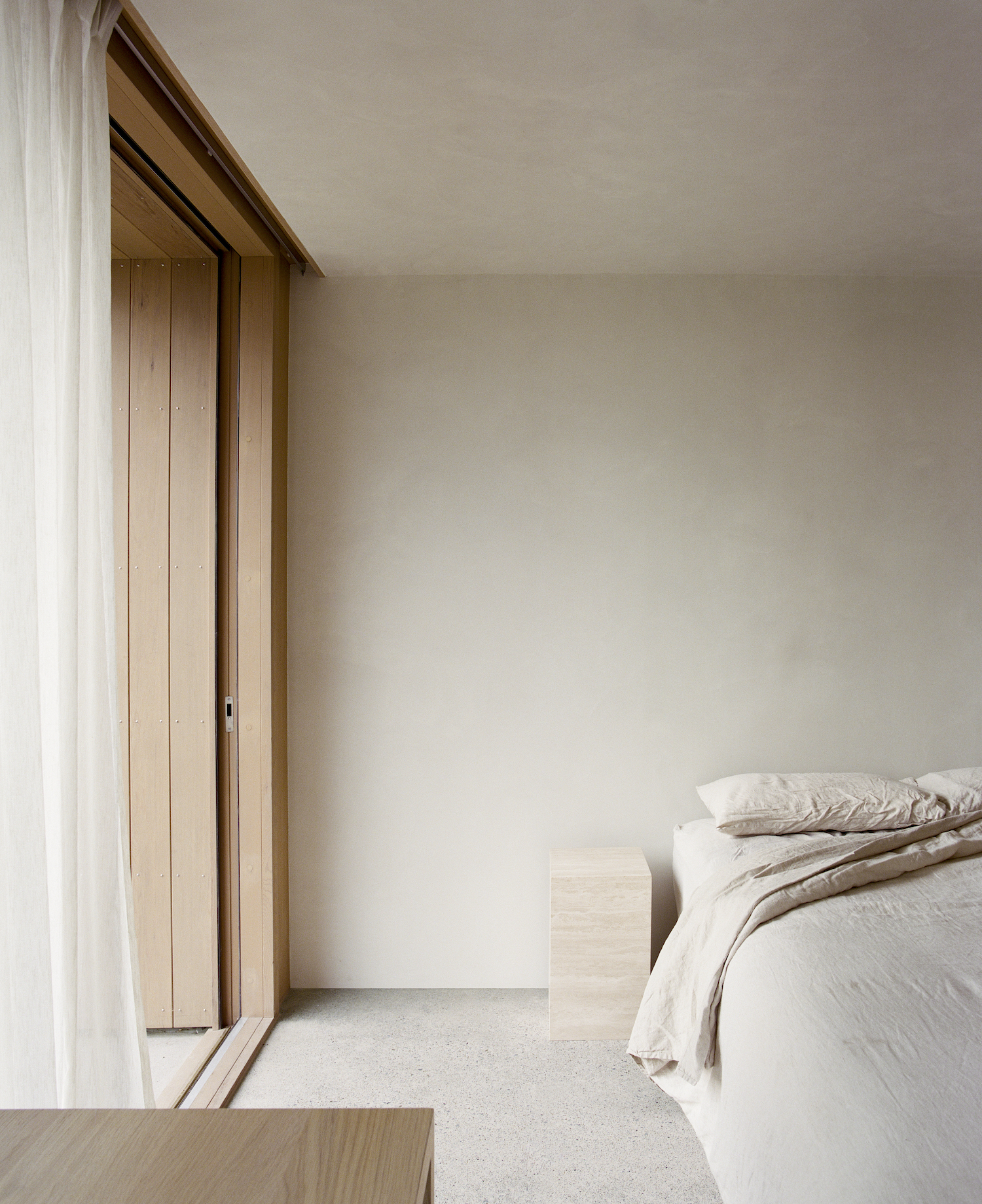
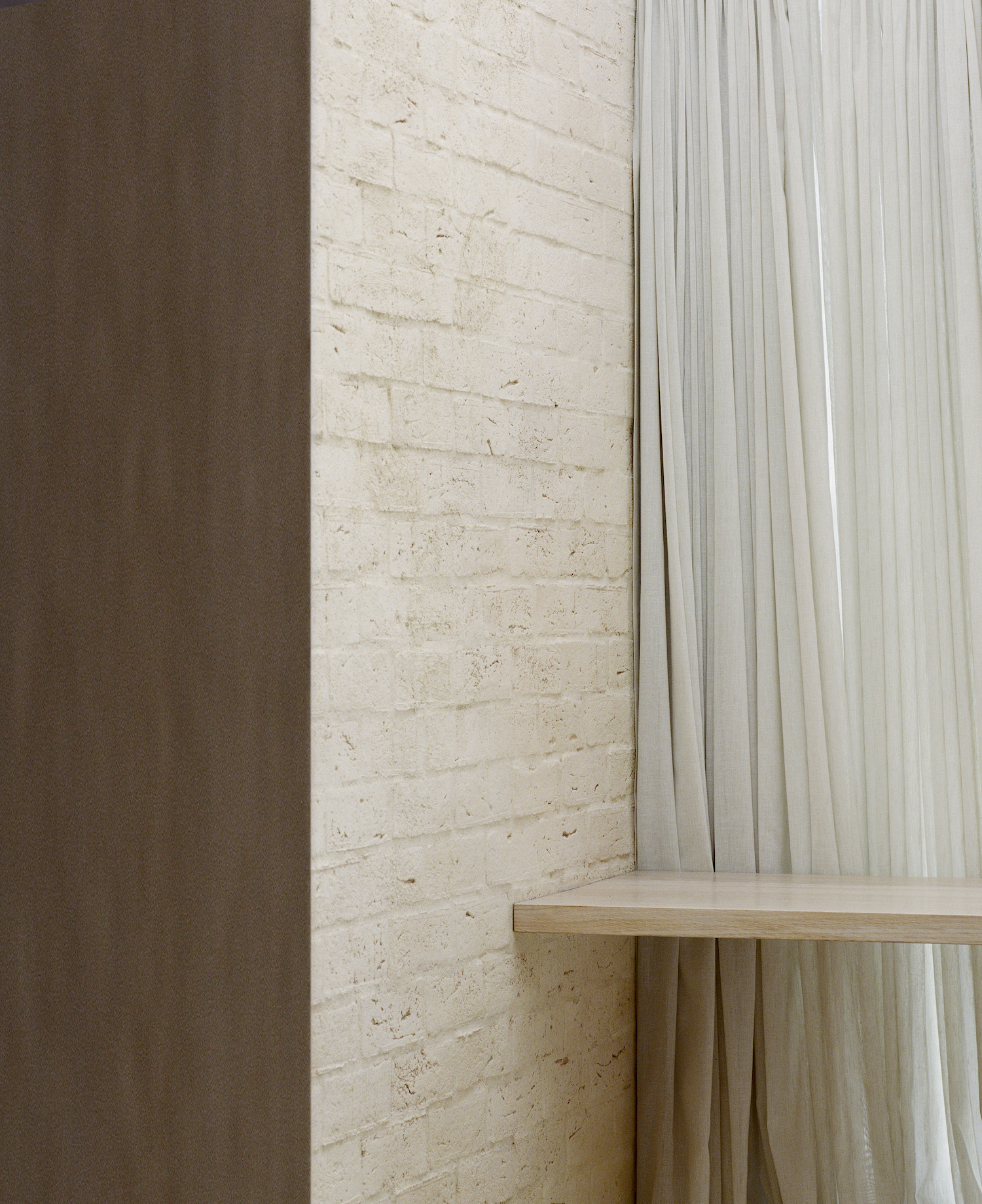
The interior features honed limestone tiles in the ensuite, harmonizing with the studio’s polished plaster. Light oak finishes and soft curtains complement the overall material palette. Emphasizing durability and quality, the chosen materials are designed to age gracefully, aligning with the client’s preferences. In terms of sustainability, the project predominantly utilizes natural materials like brick, timber, plaster, and stone. Enhanced insulation beneath the slab, in the walls, and the roof, along with strategic window placement, improve the home’s thermal efficiency. The green roof not only adds aesthetic value but also contributes to the site’s ecological footprint.