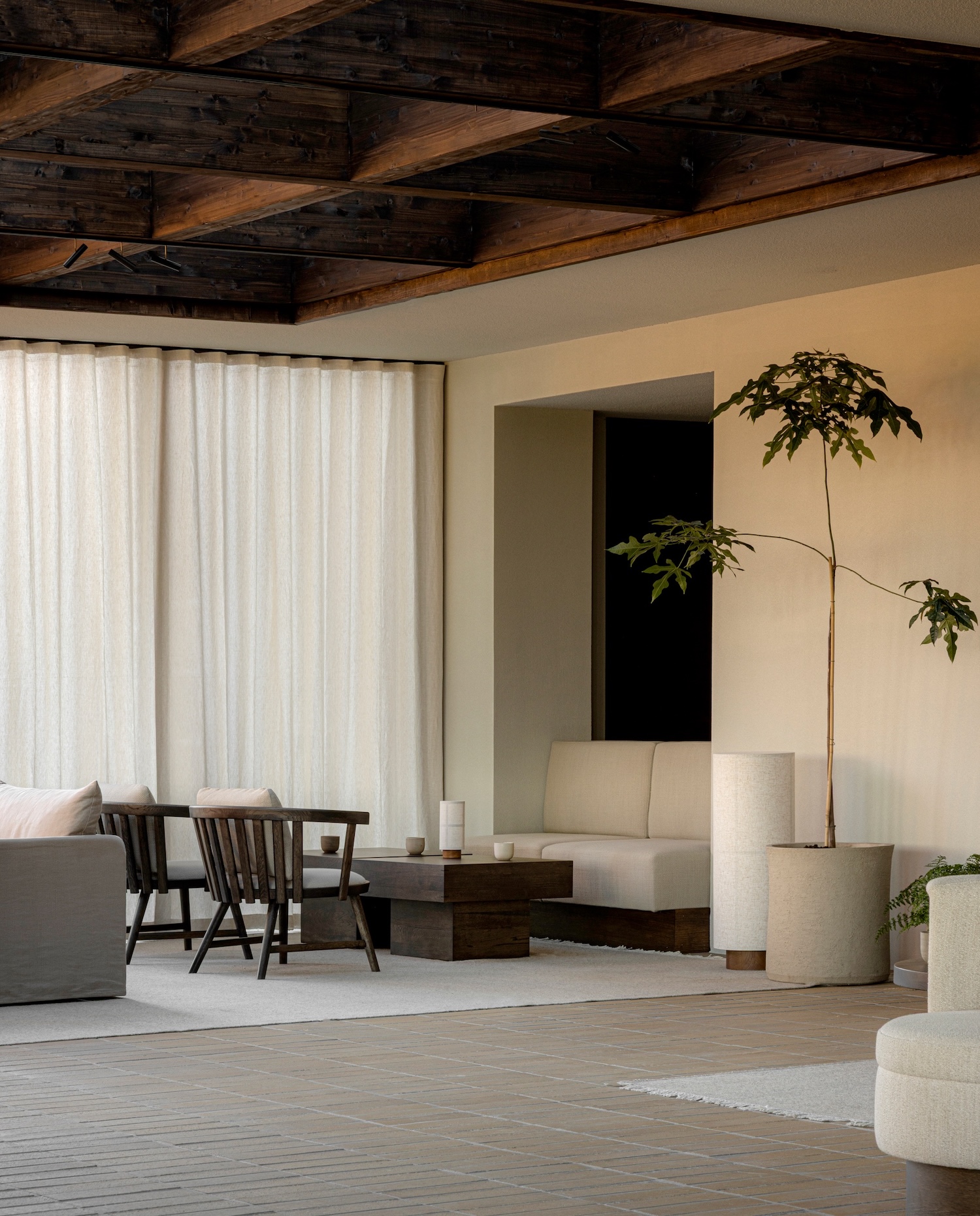
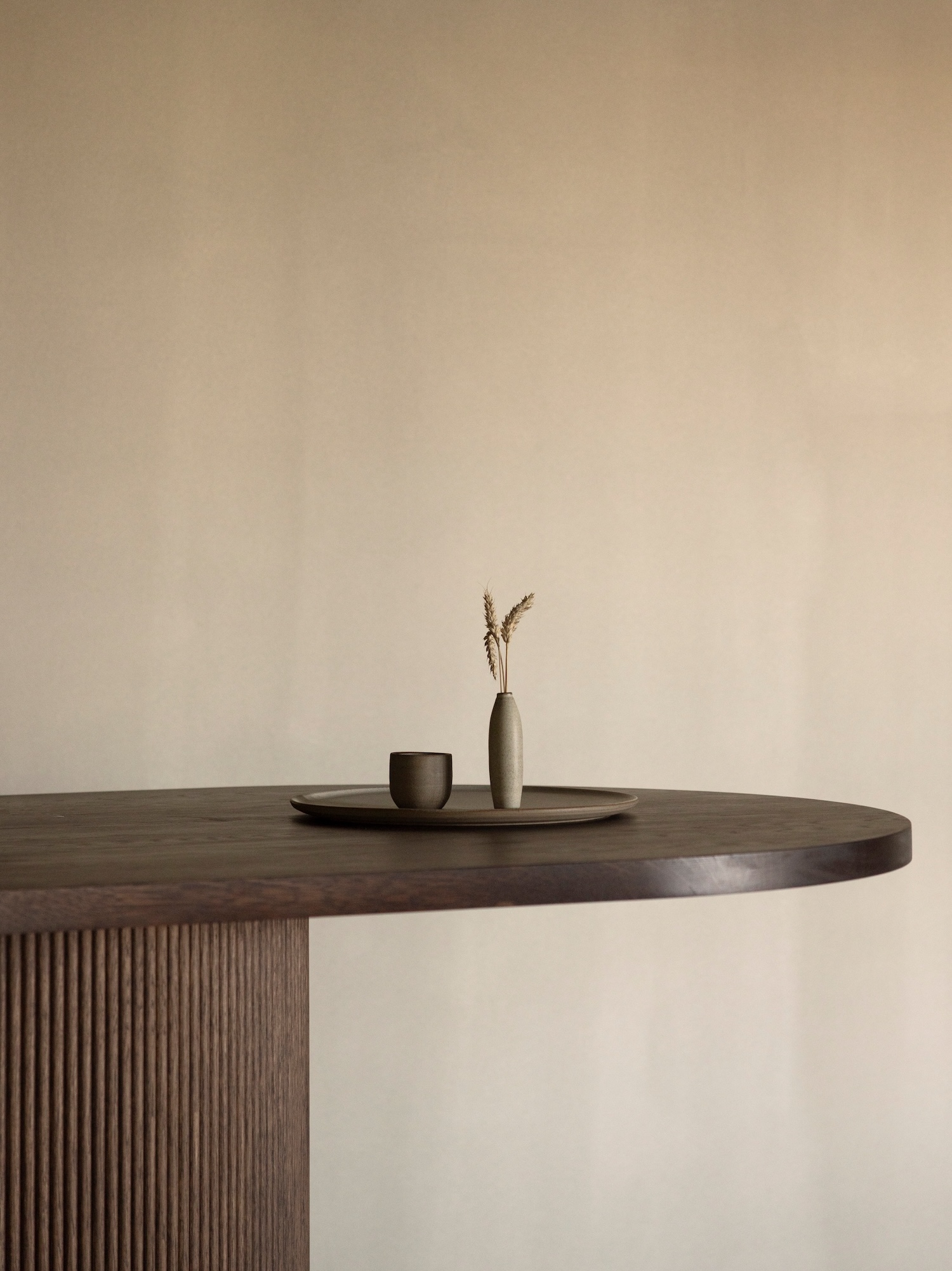
Vinhuset is a minimalist hospitality retreat located in Tvååker, Sweden, designed by Norm Architects. Set within the rolling terrain of Ästad Vingård, the project represents the third built chapter in an ongoing architectural dialogue between structure and landscape – following Restaurant ÄNG and the lakeside Sjöparken. Where those earlier interventions established a vocabulary of material restraint and sensorial awareness, Vinhuset extends the language into something more grounded, more integrated, serving as the connective tissue that binds the estate’s dispersed experiences into a coherent whole.
The building negotiates its hillside site through a series of interconnected levels that descend with the topography rather than resist it. Broad outdoor staircases and terraces fragment the perceived mass, allowing the structure to feel smaller than its actual footprint suggests. This strategy of volumetric diffusion recalls the stepped profiles of Nordic spa architecture, where buildings are often carved into terrain to minimize visual intrusion. Here, the approach is less about disappearing than about calibrating presence – the clean modernist façade stands in deliberate contrast to the forest context, yet the green roofs ensure continuity with the planted hillside, creating a visual oscillation between assertiveness and integration.
The entrance sequence begins beneath a timber pergola that filters light into shifting shadows across the façade, establishing a rhythm of enclosure and openness that continues throughout the interior. The reception area grounds the experience in heavier materiality – brick flooring, exposed timber structure, textured walls – creating an acoustic and tactile density that slows movement and heightens awareness. Adjacent, the boutique anchors its display around a long wooden counter set on carved stone, a gesture that references both the raw geology of the surrounding landscape and the craft-focused ethos of the Michelin-starred restaurant across the estate.
The spatial choreography unfolds vertically through a grand staircase in dark oiled oak, leading to upper levels where the material palette lightens perceptibly. This shift from dark to light, heavy to airy, mirrors the experiential progression from arrival to immersion. A colonnade defines the yoga and relaxation spaces, its repetitive structure creating a meditative rhythm, while outdoor terraces extend seamlessly into the hillside, guiding visitors upward toward the rooftop panorama. Throughout, views are framed with painterly precision – not as decorative apertures but as calibrated moments of visual connection to the vineyard, the lake, and Restaurant ÄNG beyond.