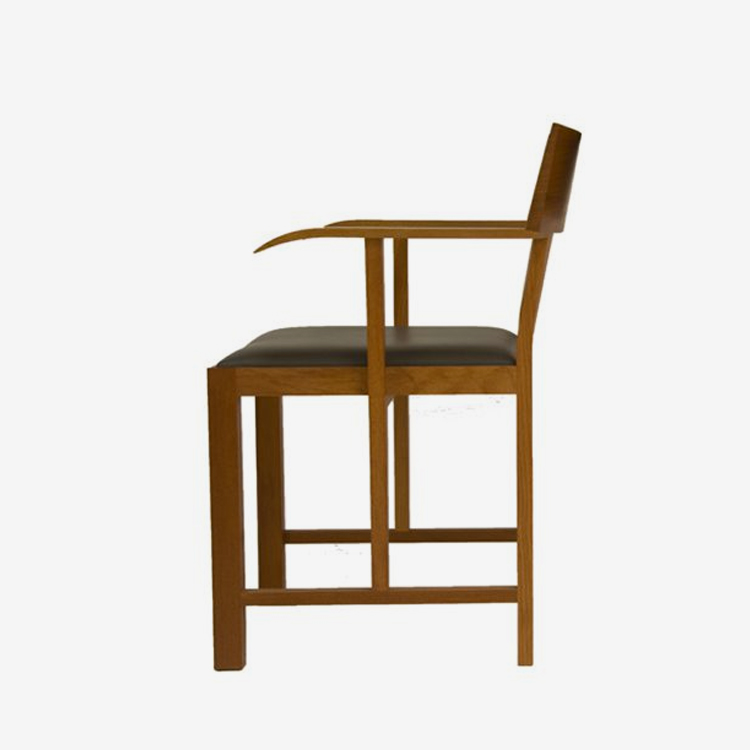
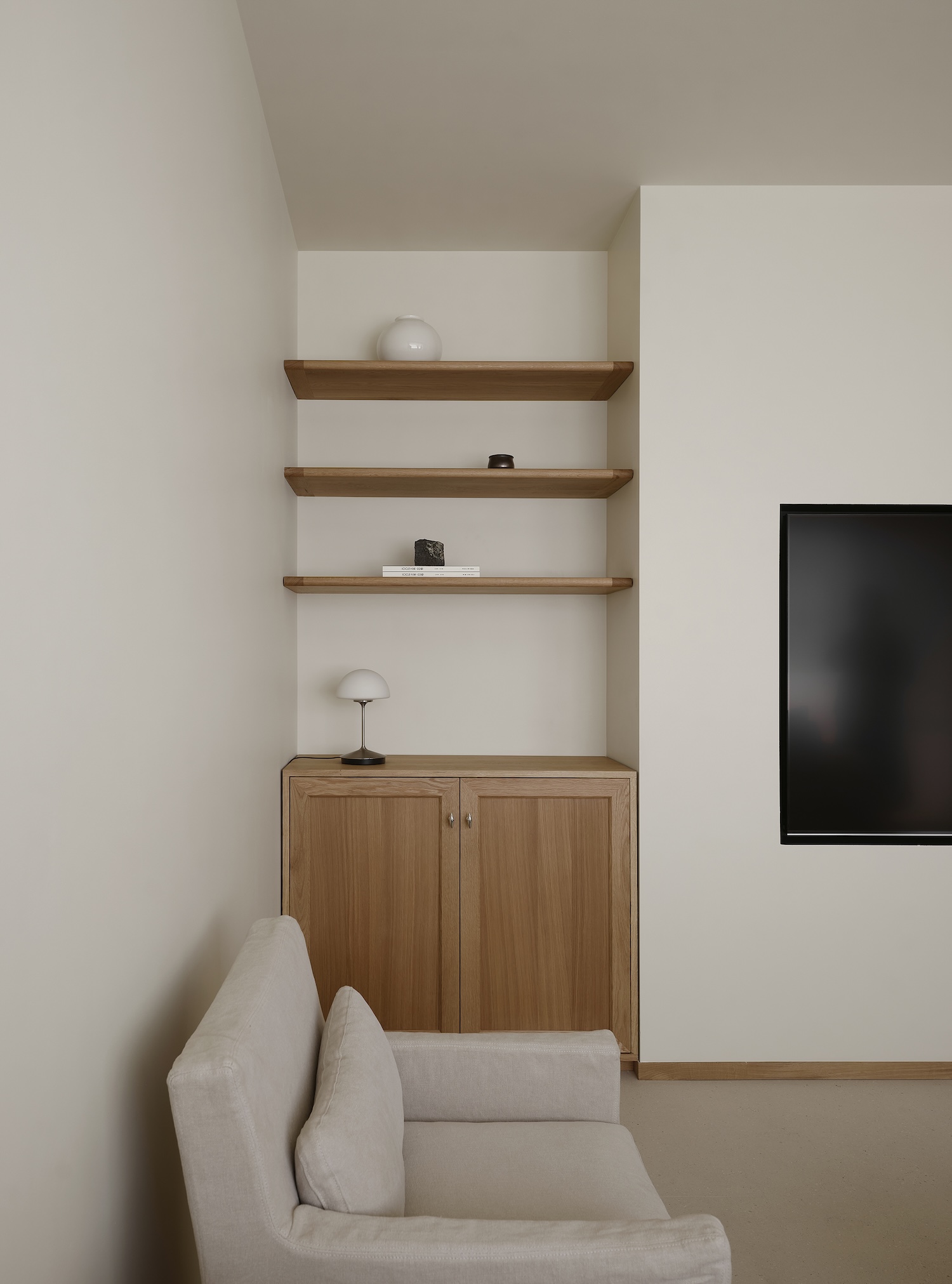
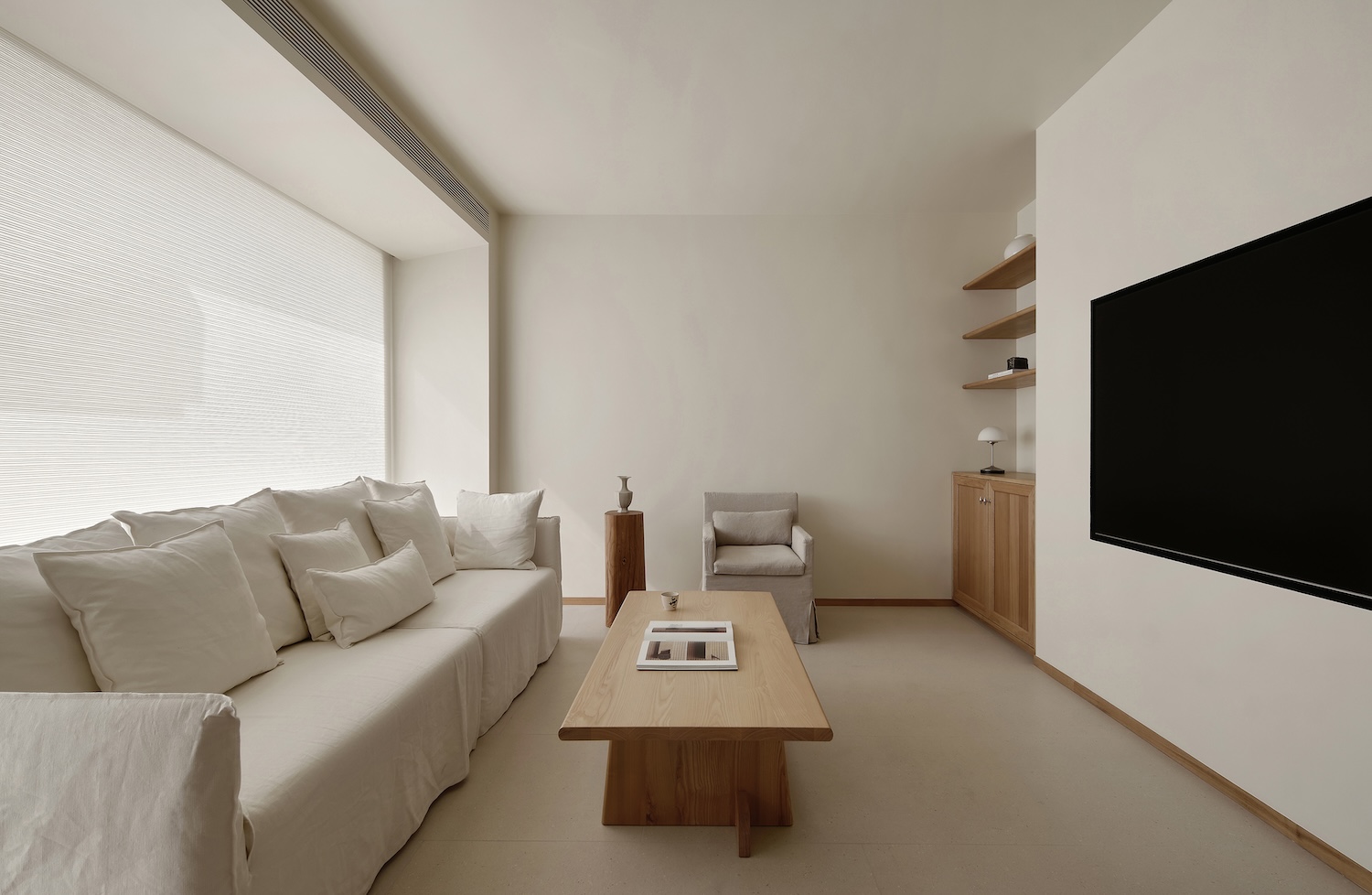
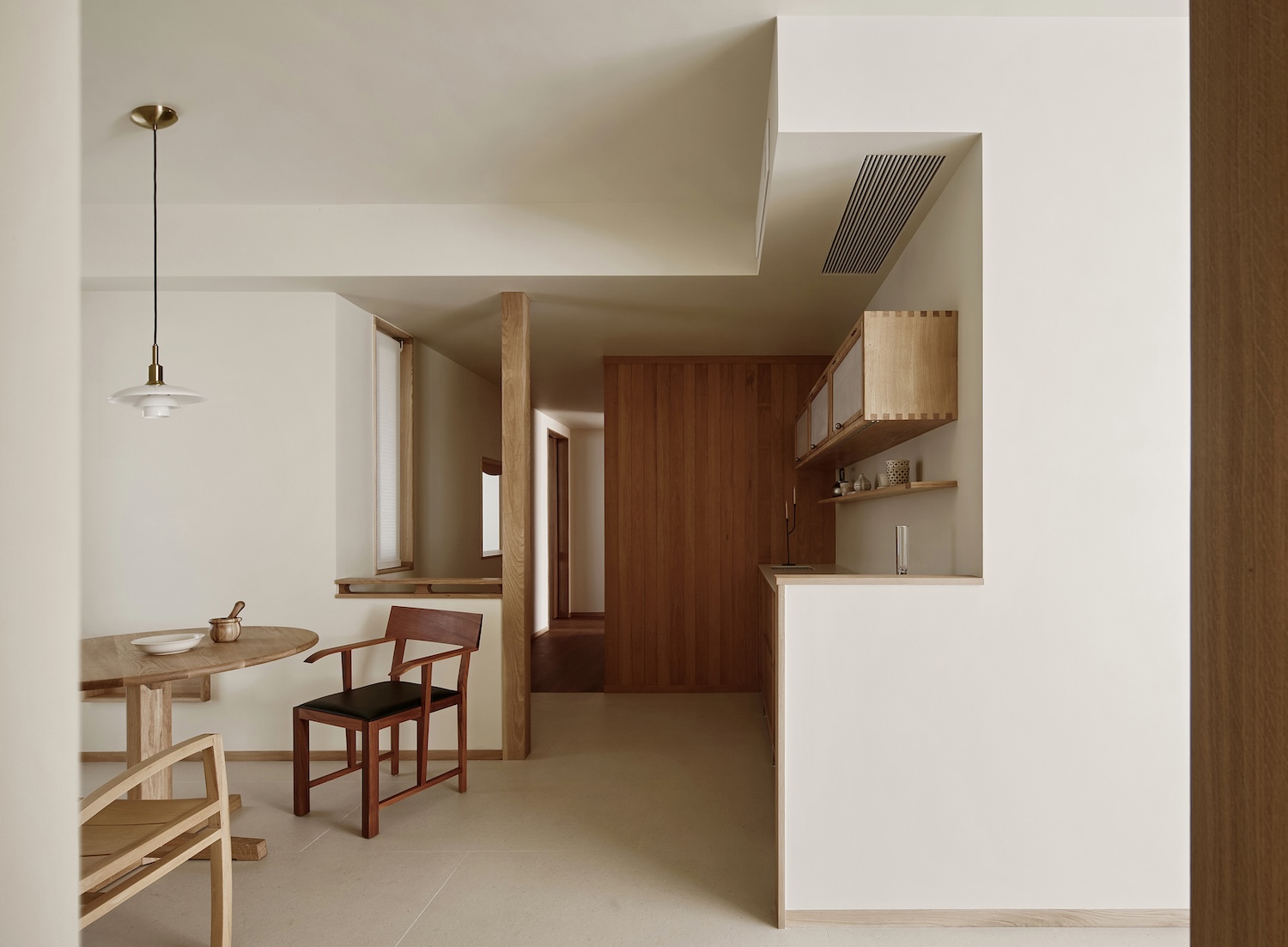
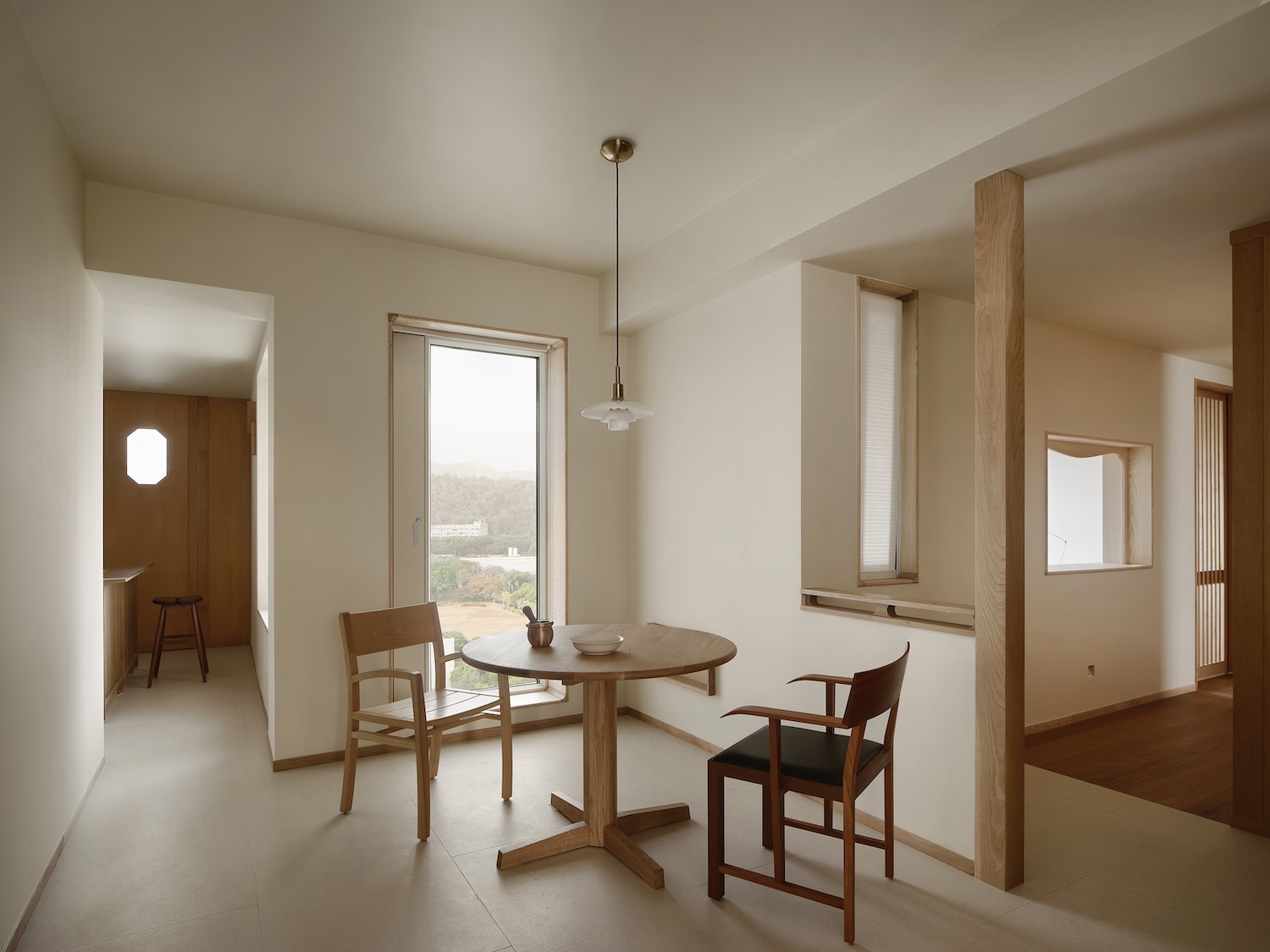
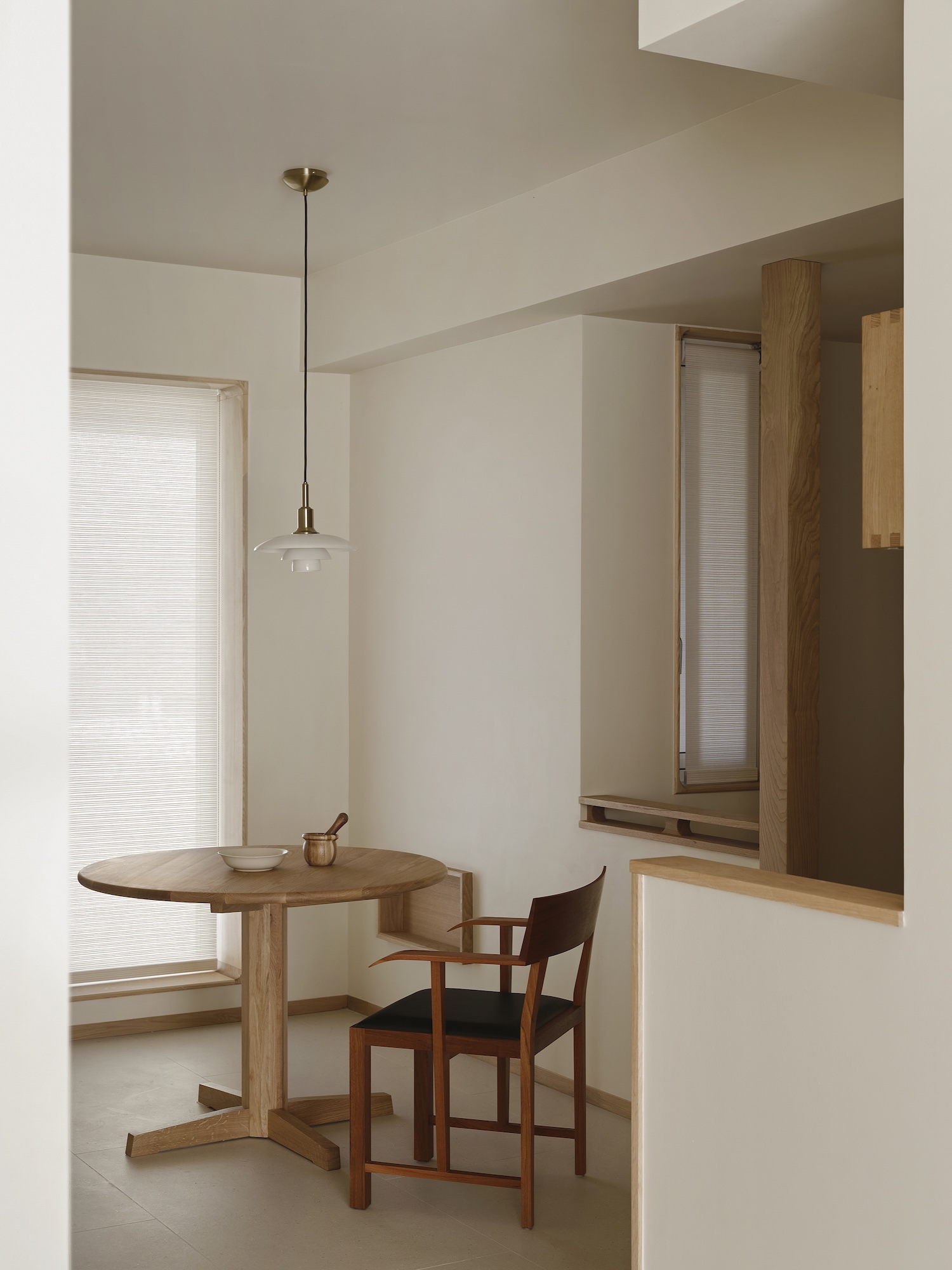
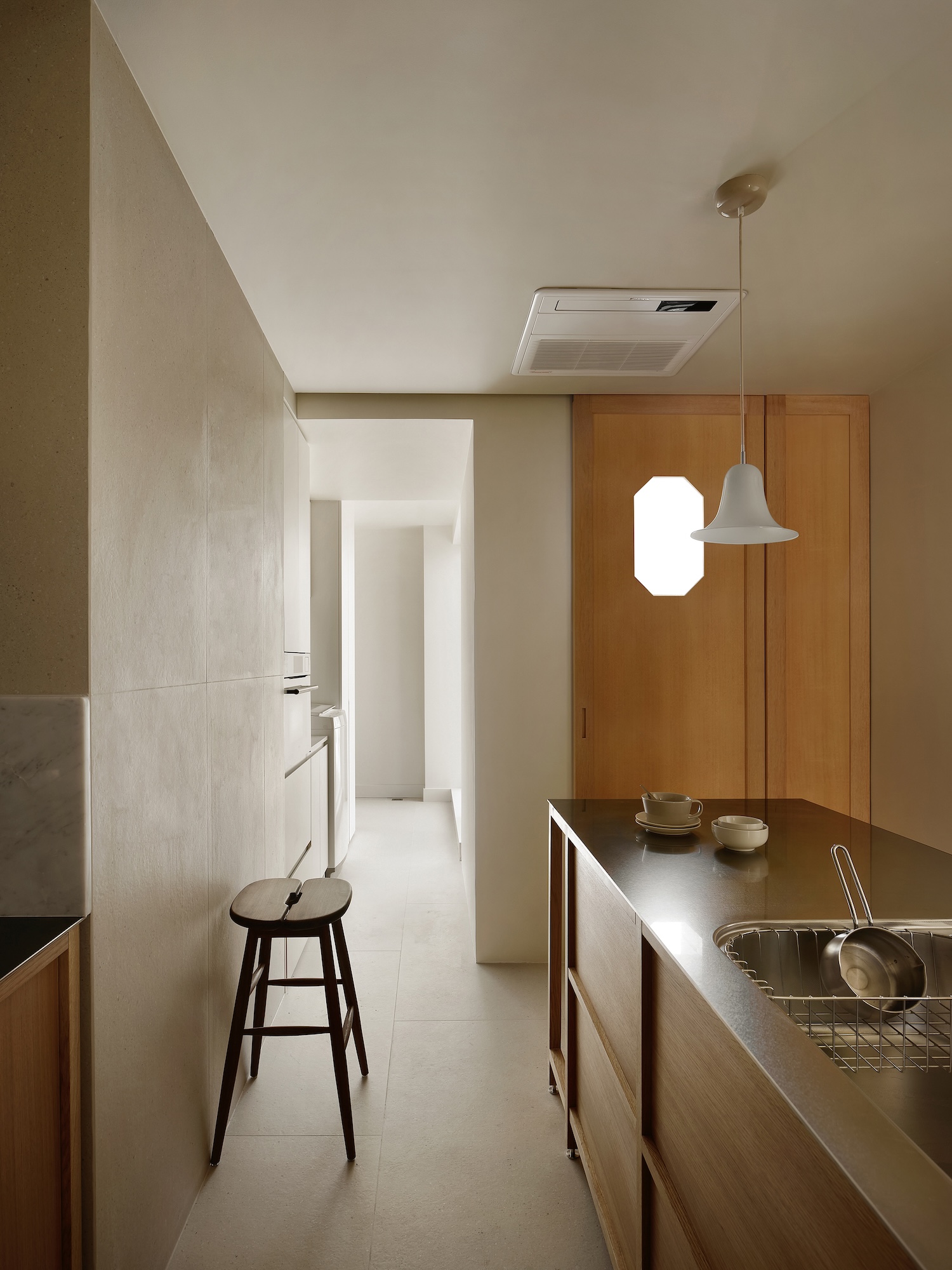
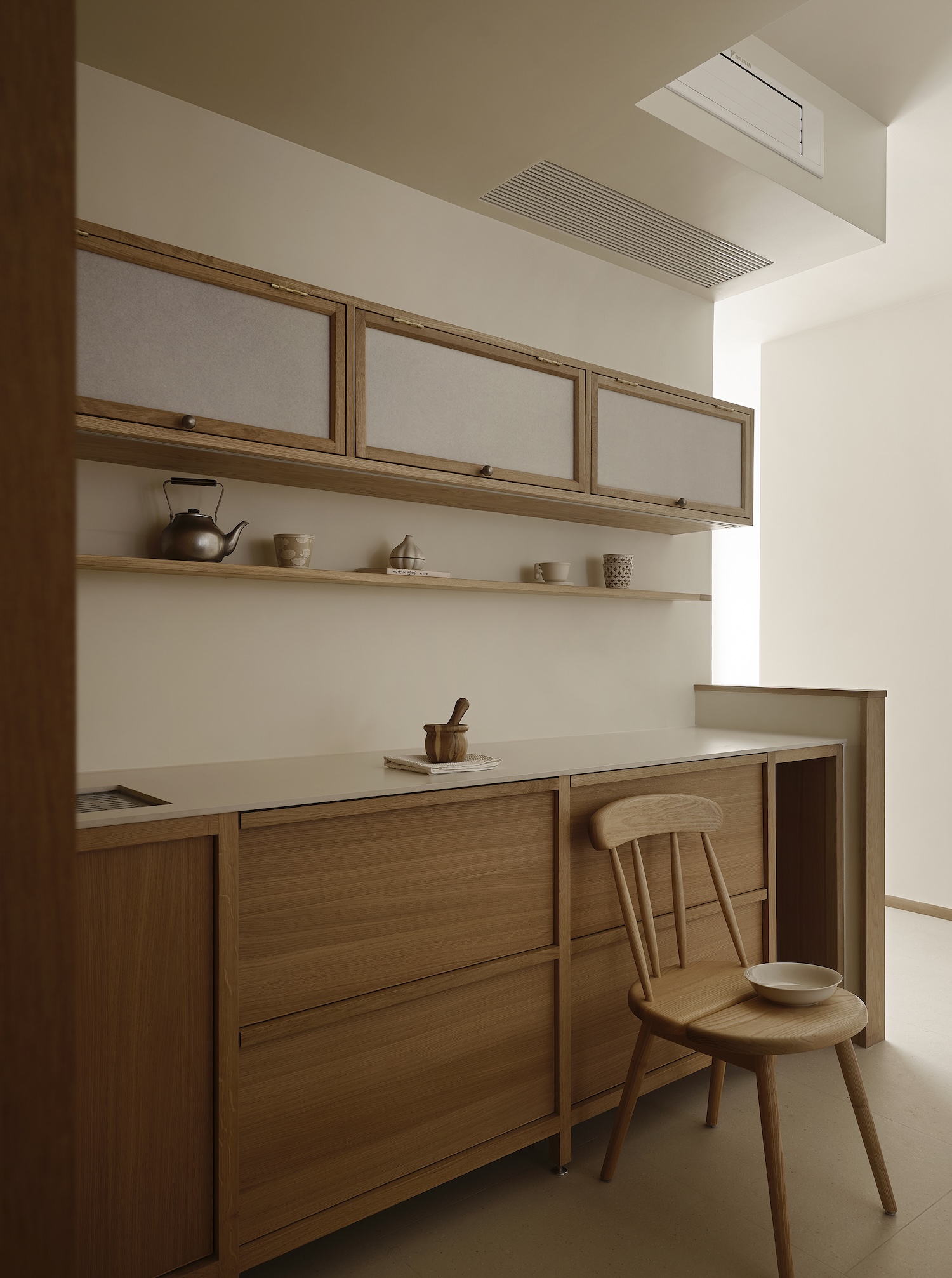
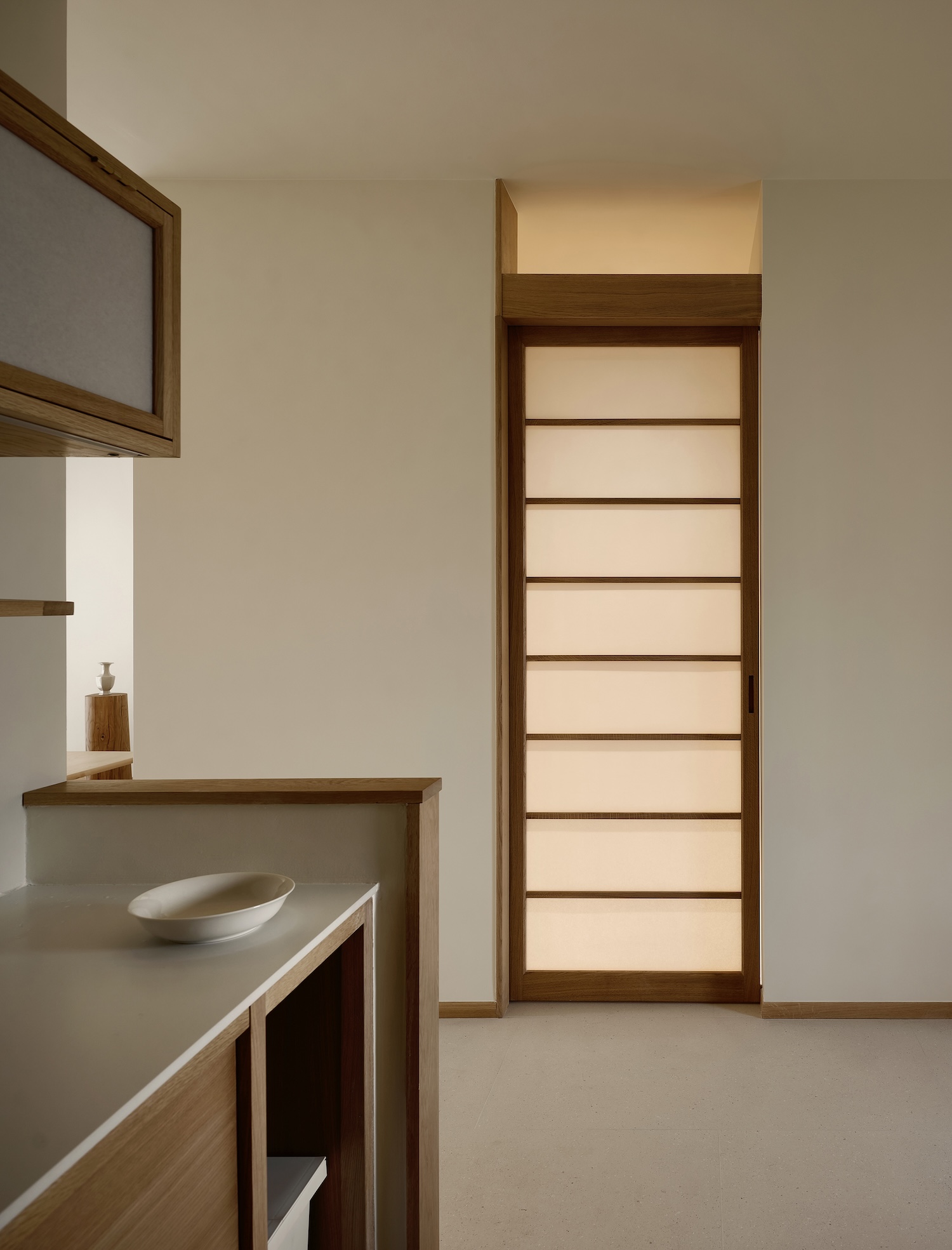
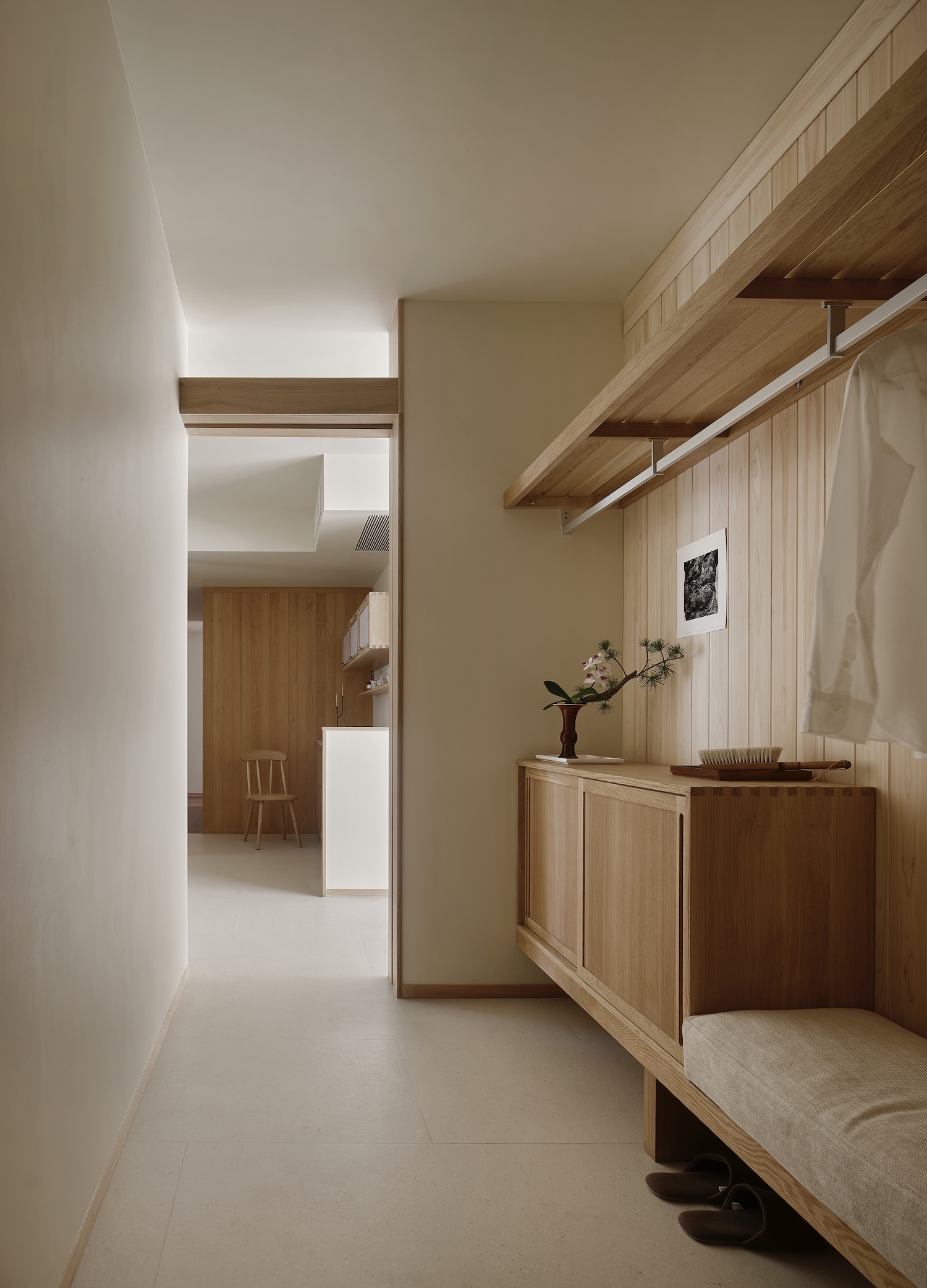
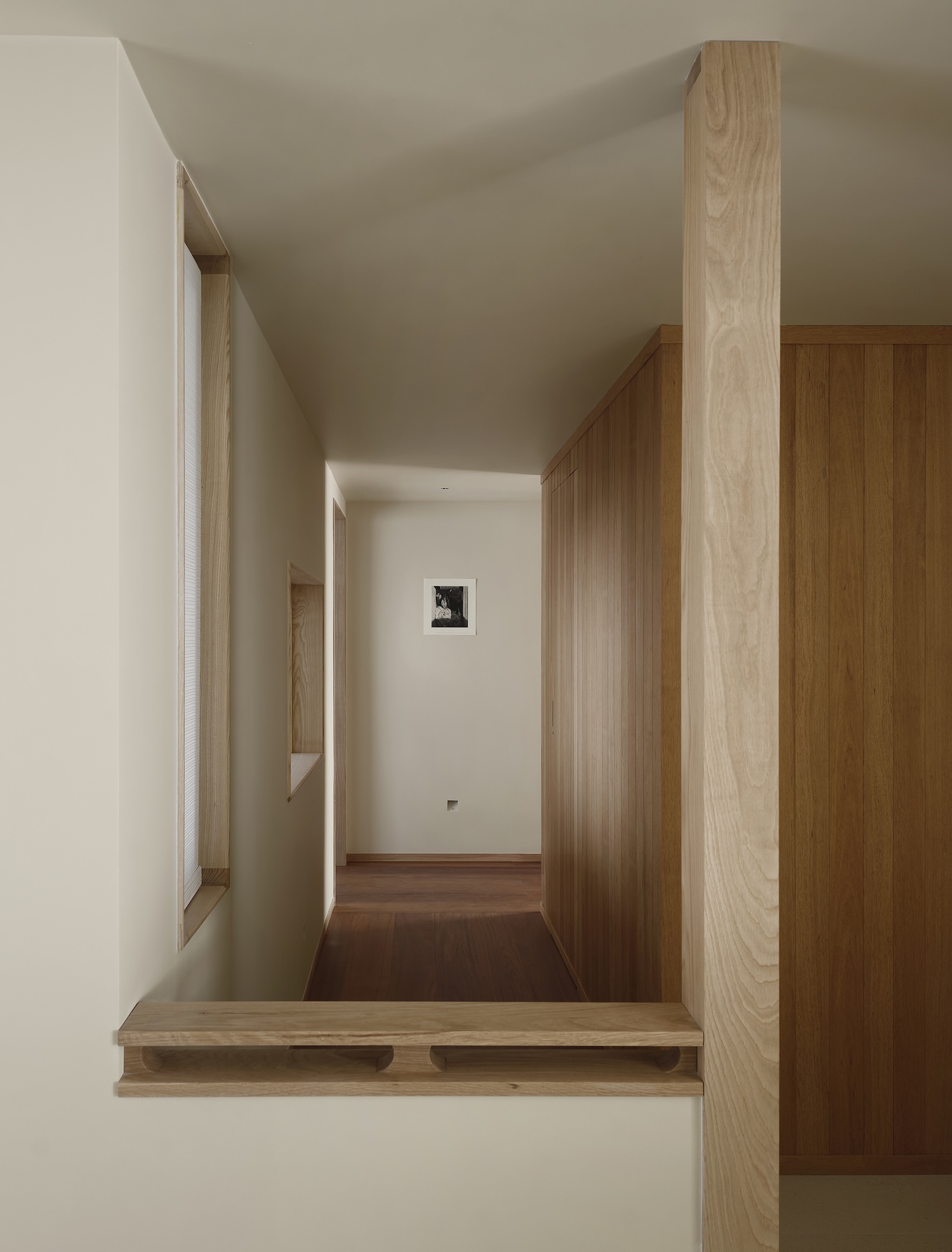
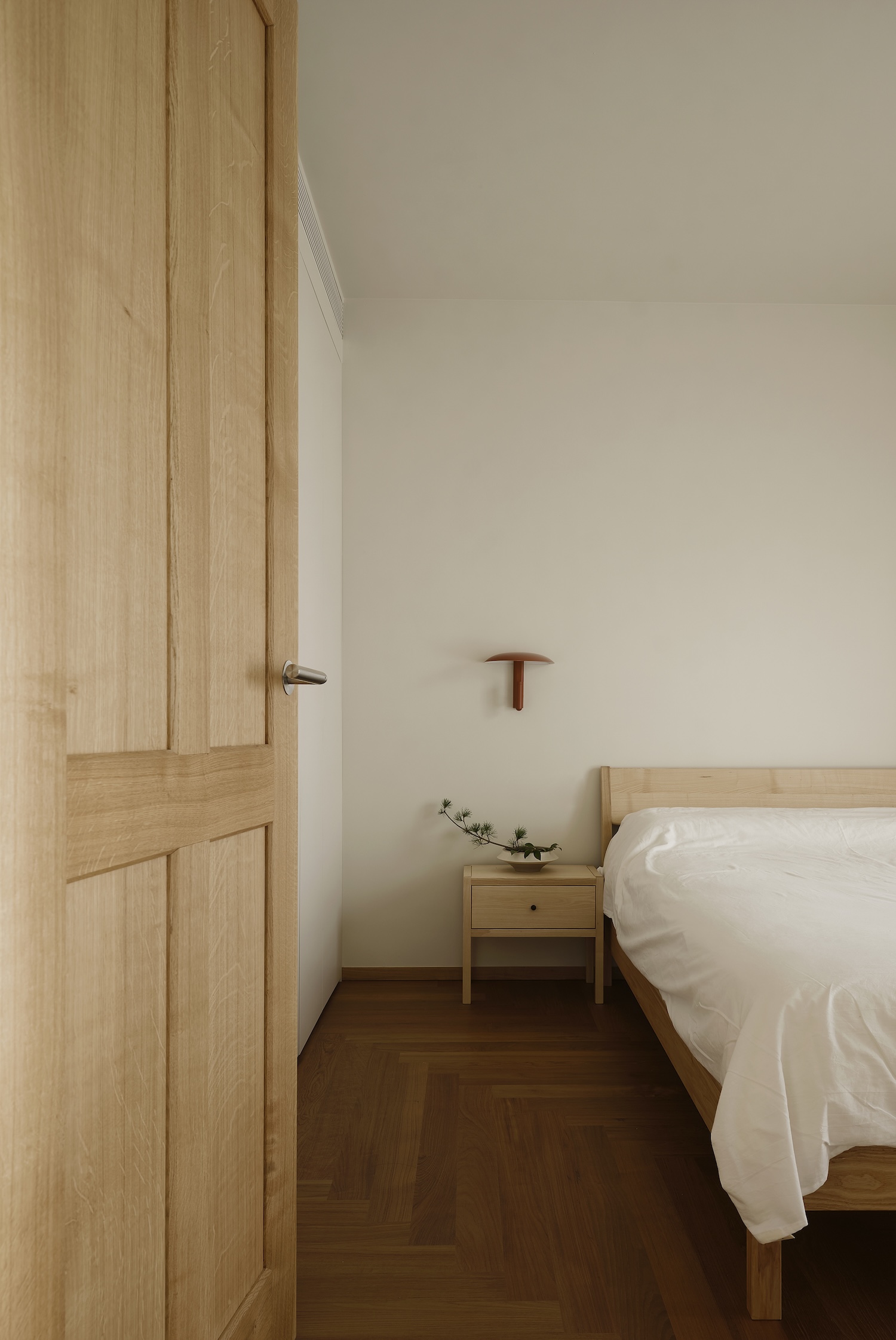
Where Every Step Has a View is a minimalist residential interior located in Shenzhen, China, designed by CureDesign. The traditional Chinese garden operates on a precise psychological logic: compress before you release. Visitors move through narrow passages, around blind corners, under low thresholds – and the garden opens. Space feels earned. CureDesign applied this exact principle to a 169-square-meter apartment for a retired woman living alone, and the result is a home that performs aging-in-place design as spatial philosophy rather than clinical accommodation.
The entry sets the project’s terms immediately. A yingbi – a spirit screen borrowed from courtyard architecture – sits just inside the front door, forcing a pause and a turn before the living space opens. This compression-and-release sequence, repeated in half-wall columns and a winding corridor, turns daily movement through the apartment into something closer to a garden promenade. The project’s name comes from its most decisive spatial move: by relocating the existing bathroom using the building’s sunken slab, CureDesign freed the corridor wall for five consecutive windows facing the mountain. A circulation path that was formerly a pinch point became a meditative passage.
Two unused guest bedrooms were merged into a single mountain-facing study – a decision that acknowledges how people actually inhabit space in retirement. Solitary living rarely requires two spare rooms; it does require a room with the right scale and the right view. The framed openings between spaces sustain the garden metaphor, separating rooms without isolating them, maintaining peripheral awareness without eliminating the feeling of enclosure.