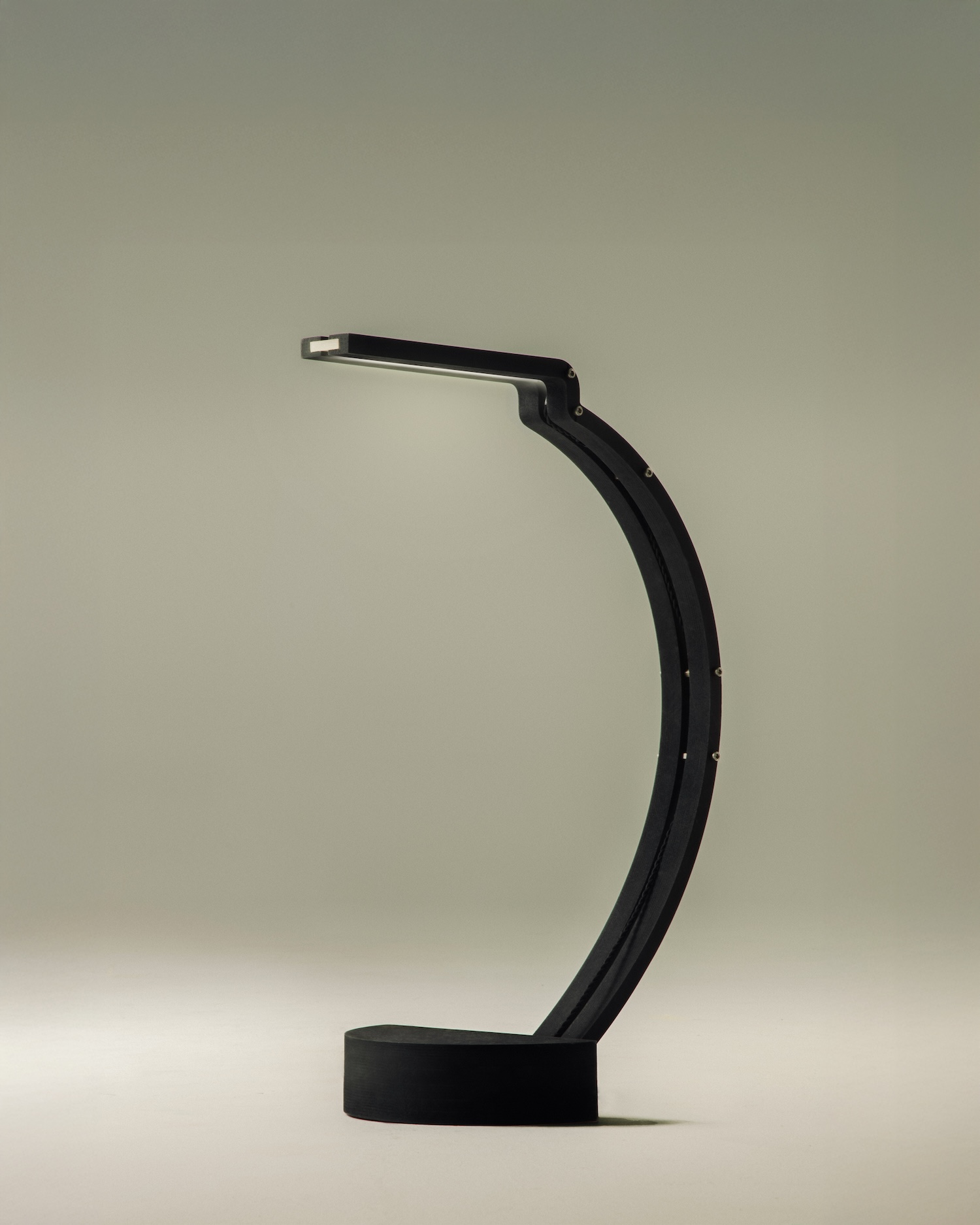
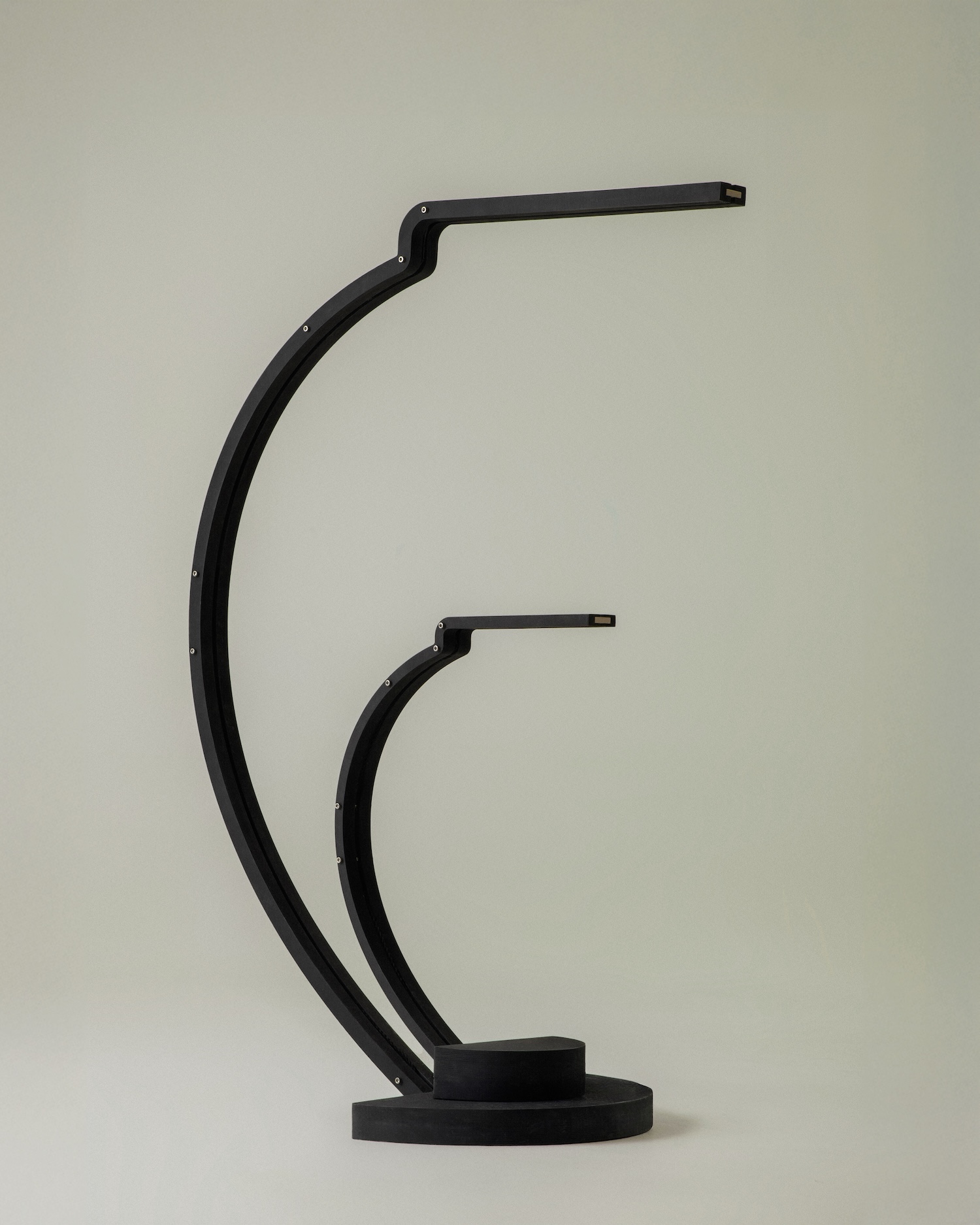
Moonlit is a minimalist lamp created by Seoul-based designer Habin Lee. The Korean Moonjar, with its deliberately imperfect roundness and milky white glaze, has long represented the Confucian ideal of understated elegance. These 18th-century porcelain vessels embodied a philosophy of restraint, their soft, voluminous forms suggesting fullness while maintaining an essential emptiness. Moonlit takes this philosophical framework and rebuilds it using the grammar of modern making: curved wooden frames joined by exposed bolts and nuts create a contemporary vessel for light rather than grain or water.
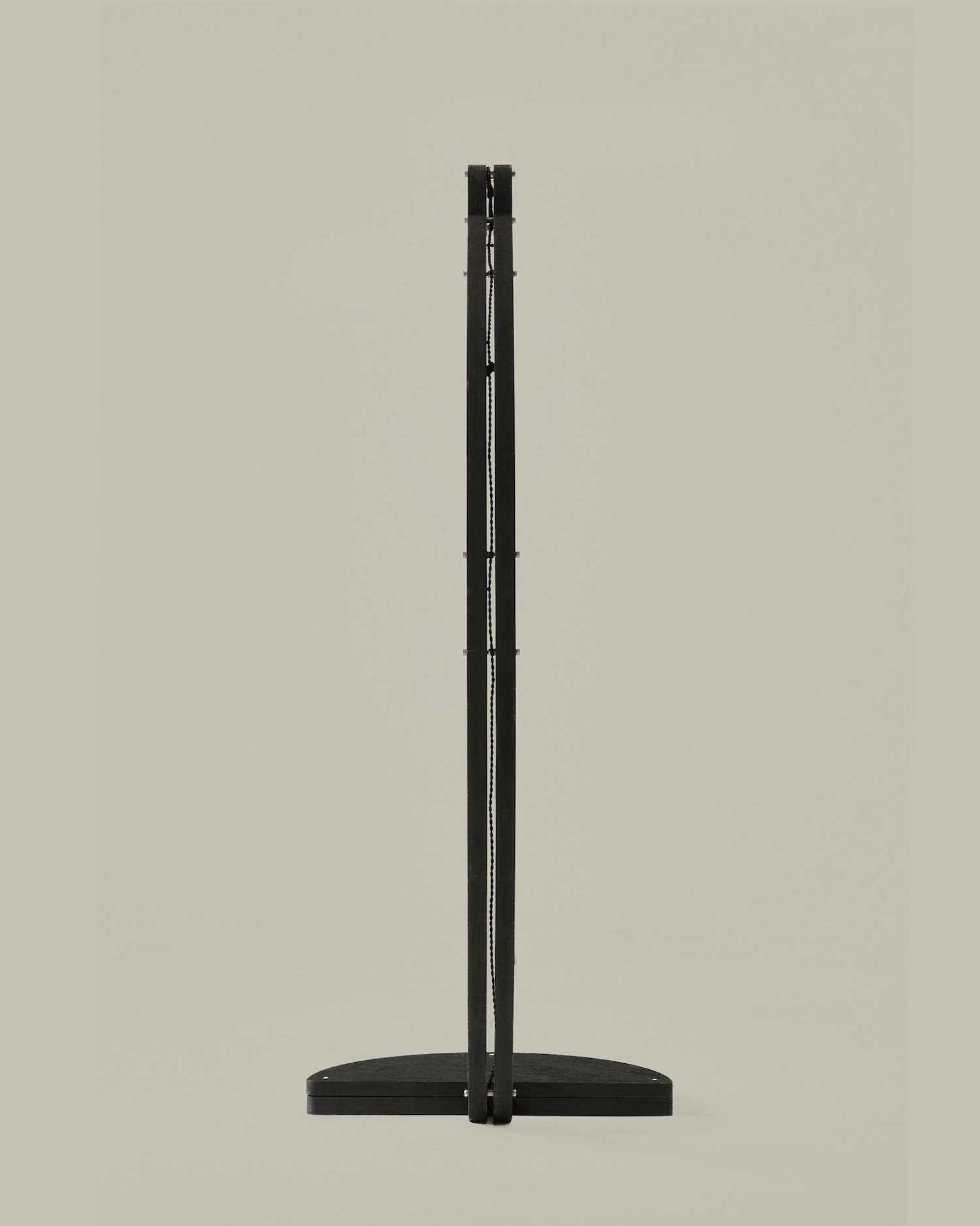
What makes this translation so compelling is its refusal to romanticize tradition. Instead of hiding the mechanics of construction beneath decorative flourishes, the designer celebrates the raw honesty of industrial joinery. Those exposed bolts and nuts serve as more than functional elements; they become a kind of visual punctuation that reads as both brutalist intervention and meditative rhythm. The single power cable running along the structural axis reinforces this honesty, turning electrical necessity into compositional element.
The lamp’s relationship with light reveals its most sophisticated qualities. When positioned horizontally, Moonlit creates crisp linear boundaries between illumination and shadow, transforming any room into a study of geometric precision. Rotate it to vertical, however, and something magical occurs: light filtering through the joinery creates delicate butterfly patterns that dance across surrounding surfaces. This transformative quality places Moonlit within a broader contemporary movement toward adaptive design, where objects respond dynamically to user interaction and spatial context.