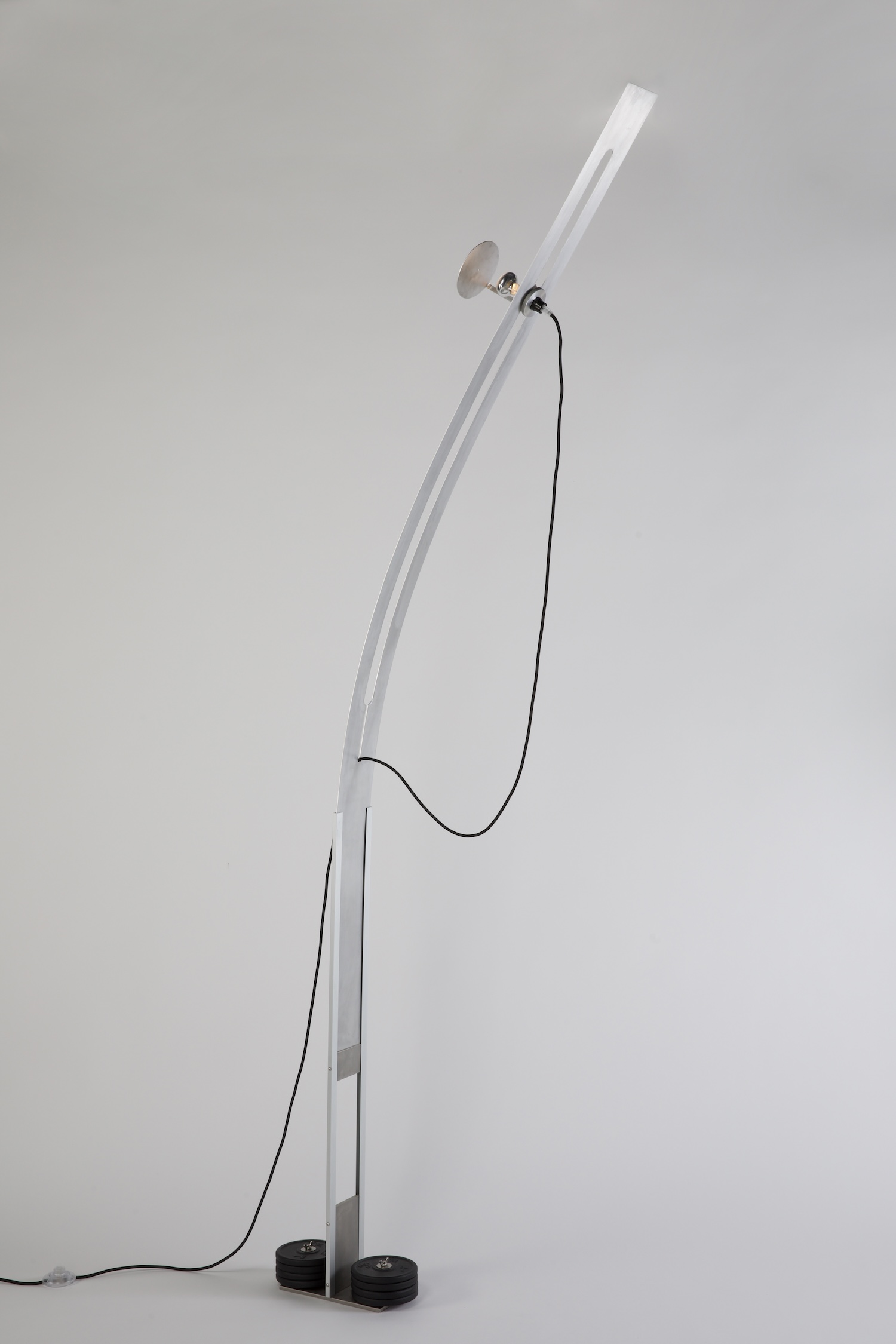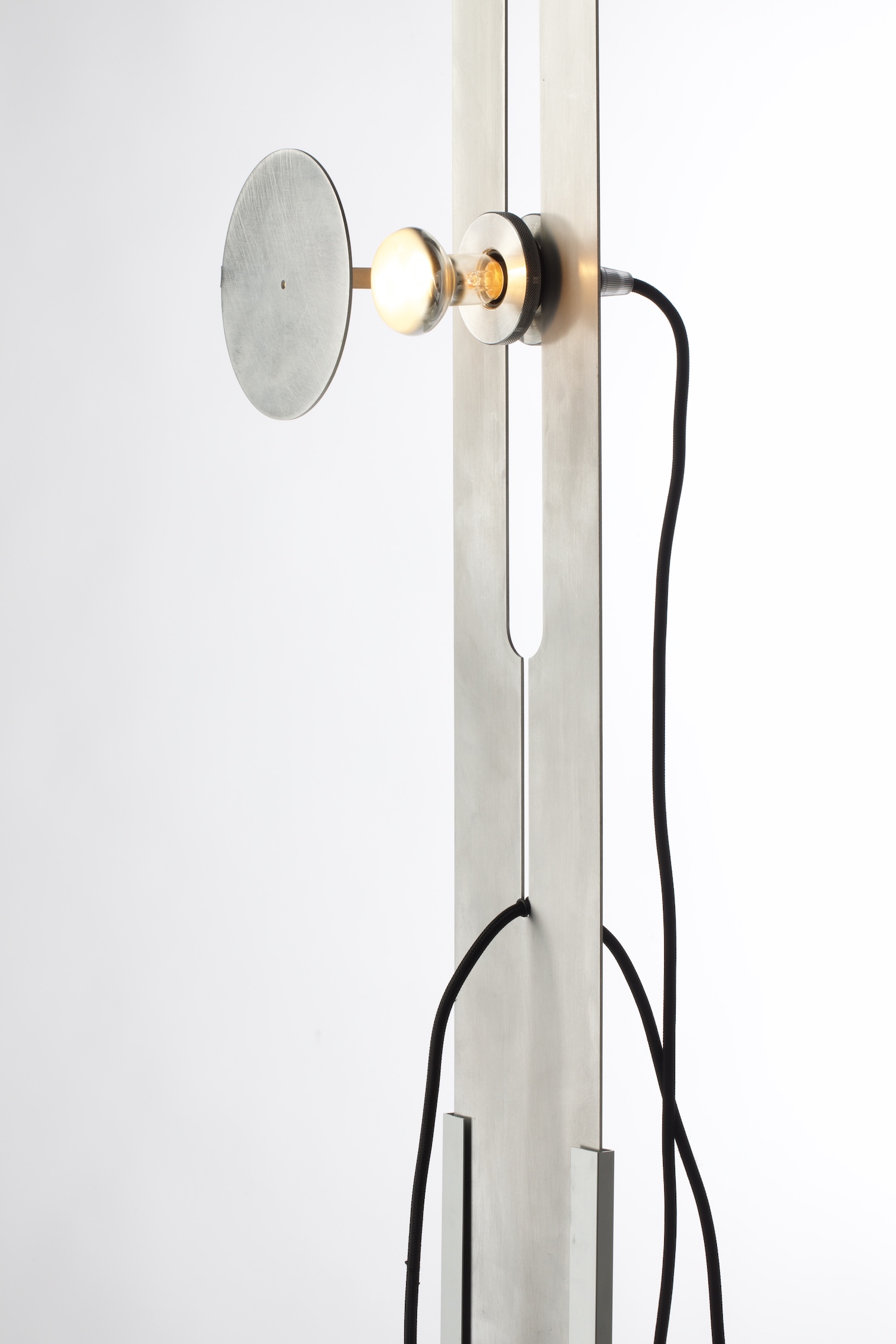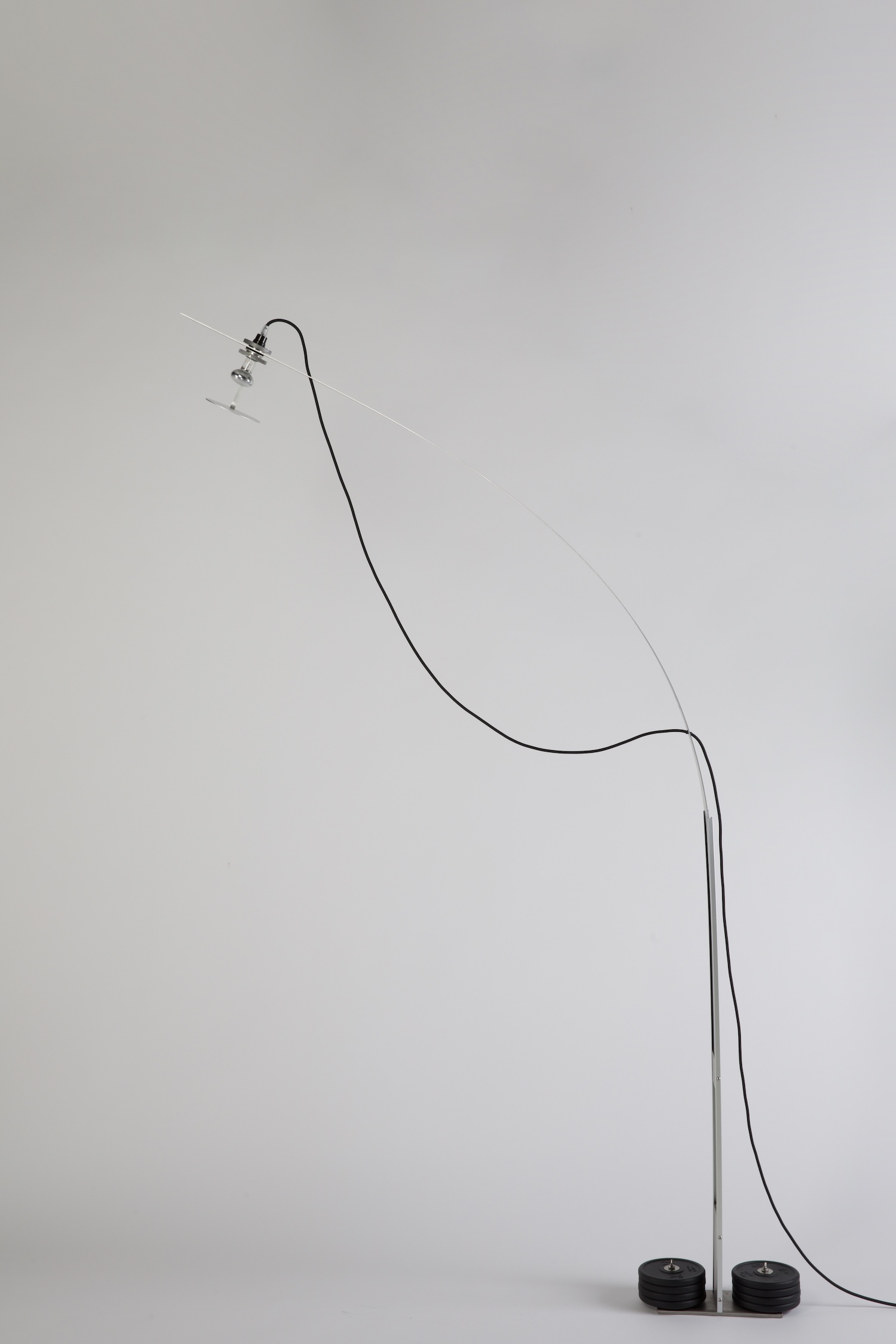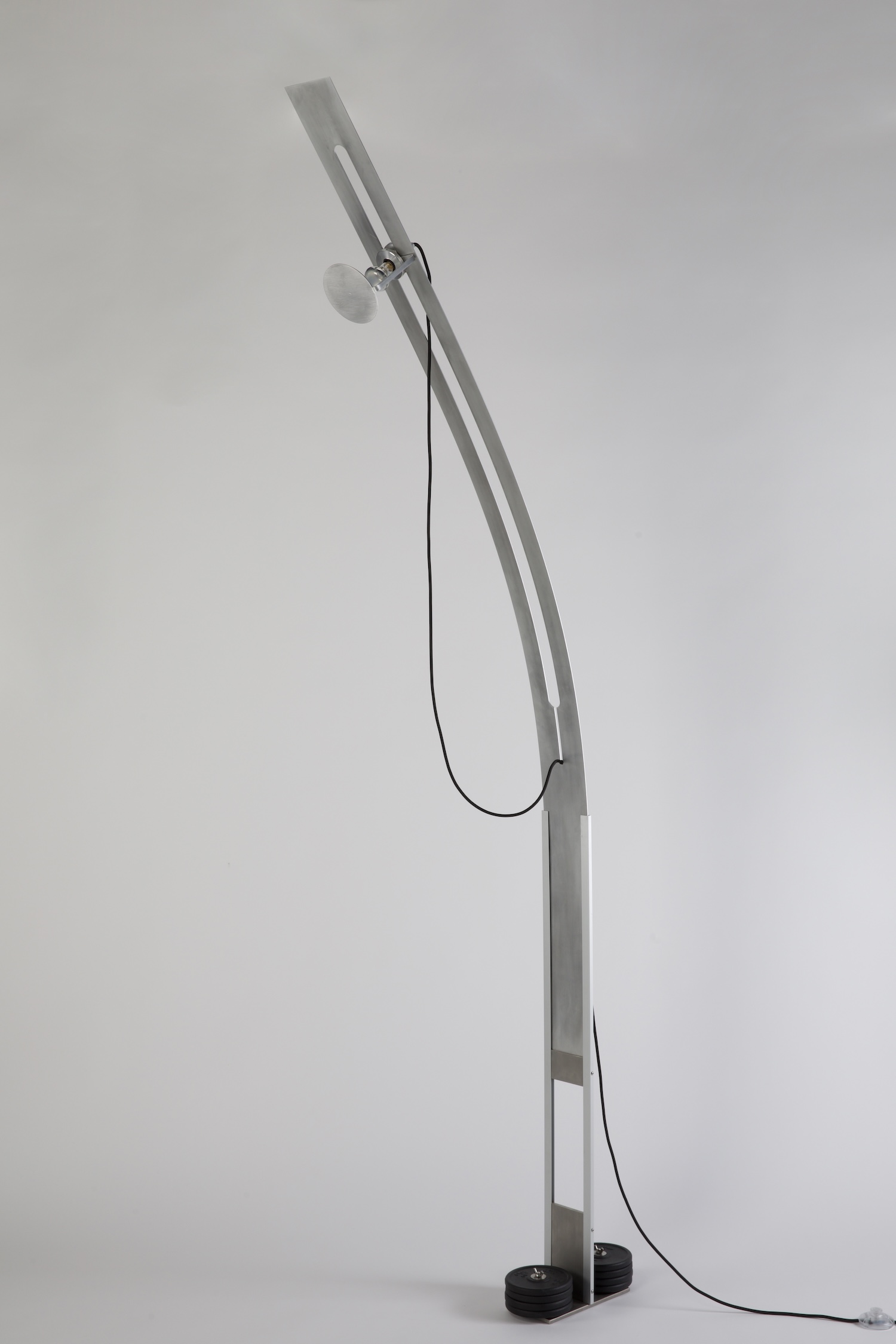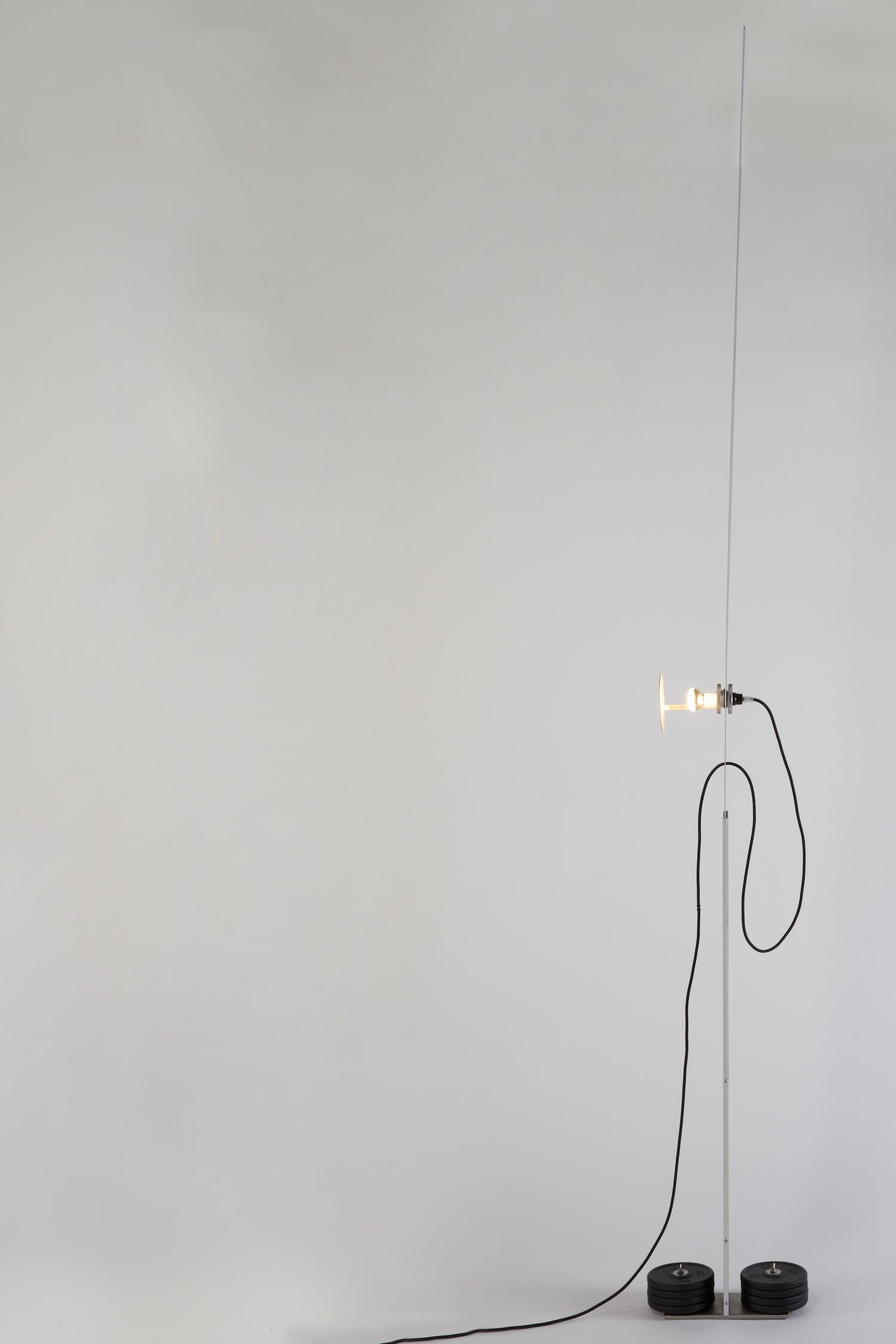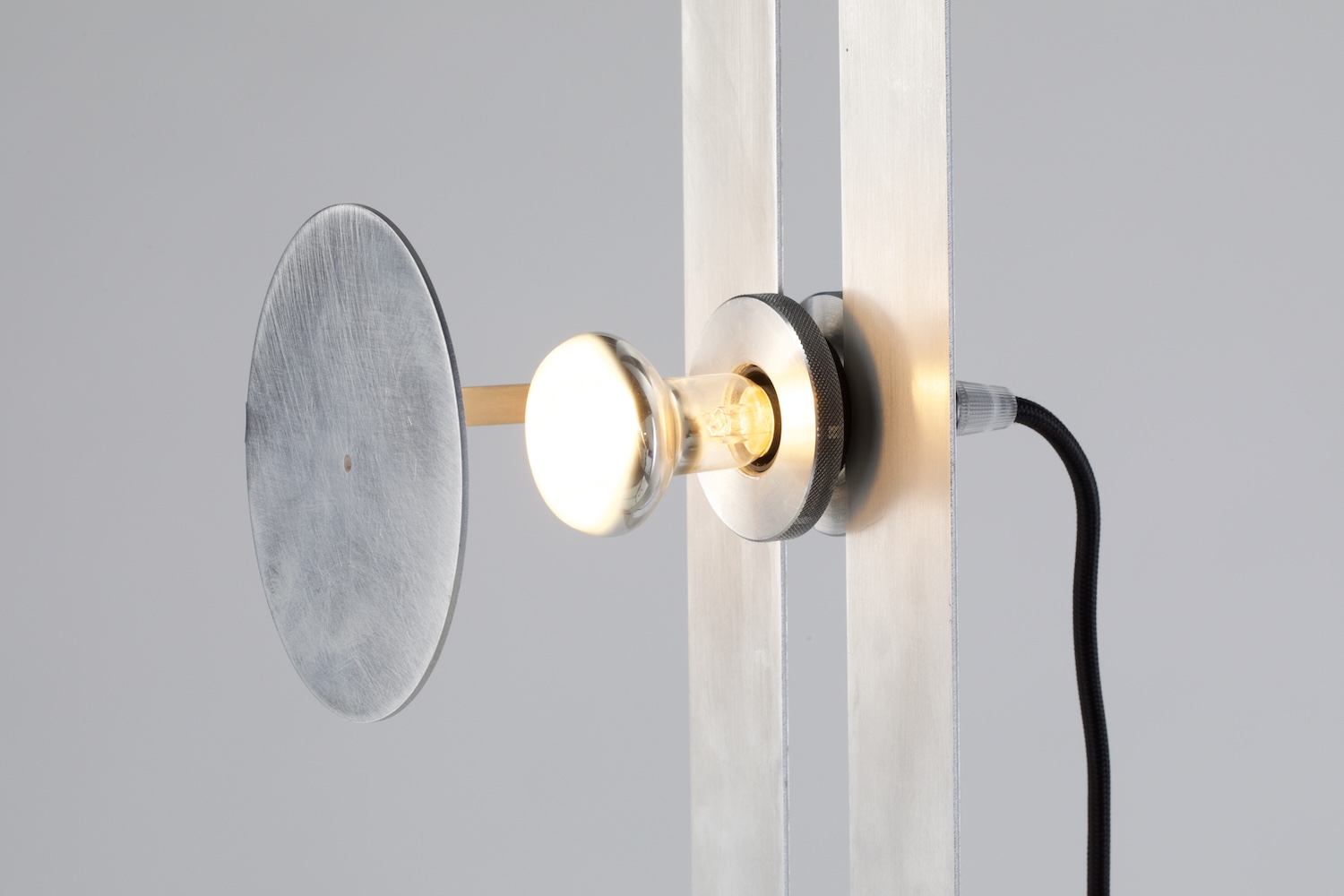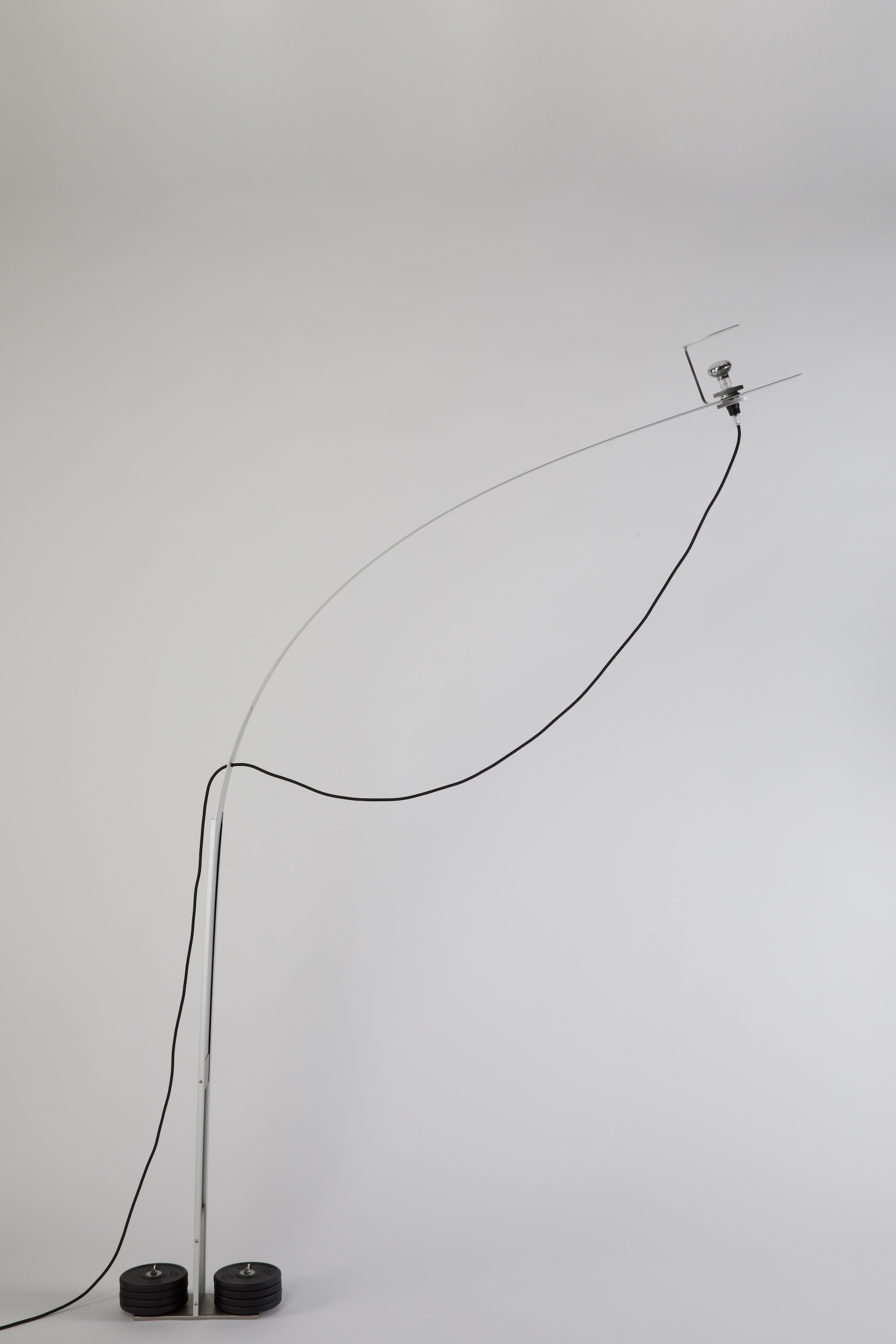
Two aluminum weights slide along the stem of the Zenit floor lamp, shifting position every time the shade tilts, recalibrating the fixture’s balance with each adjustment rather than locking it to one fixed angle. Zenit is a minimalist floor lamp created by Milan and Genova-based practice Controforma, built to read as a measuring instrument rather than a static light source, its long body tracking the movement of a clock hand or a compass needle as it pivots.
The shade sits atop a stem that rises nearly eight feet from a footprint just under five by nine and a half inches, and the geometry only holds because of what happens at the floor. Eight discs of cast iron are stacked at the base, their combined mass acting as the counterweight that lets the bulb swing outward and hover in space without pulling the stand over. The body above is worked from aluminum sheet, shaped into the lampshade, the knobs, and the smaller connecting components, while a stainless steel piece anchors the base to the iron discs.
Bare cable is common in fixtures at this scale, but Controforma wraps the cord in black fabric, specifies a clear plastic plug, and sizes the switch screws individually for each material they pass through, small details that keep the electrical hardware from reading as an afterthought against the machined metal. Fully assembled, the lamp weighs about 22 pounds, most of it concentrated in the iron discs that never move.