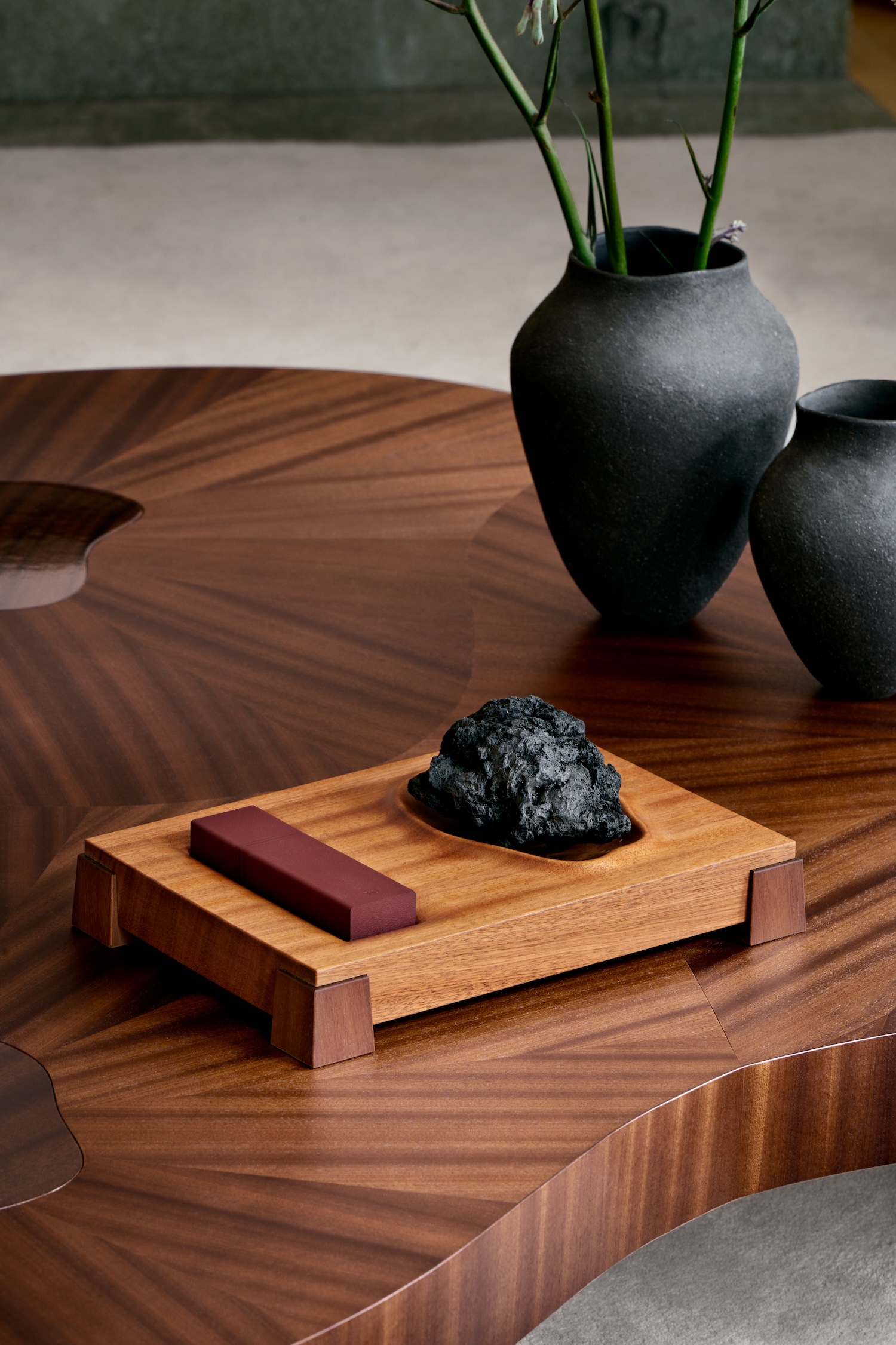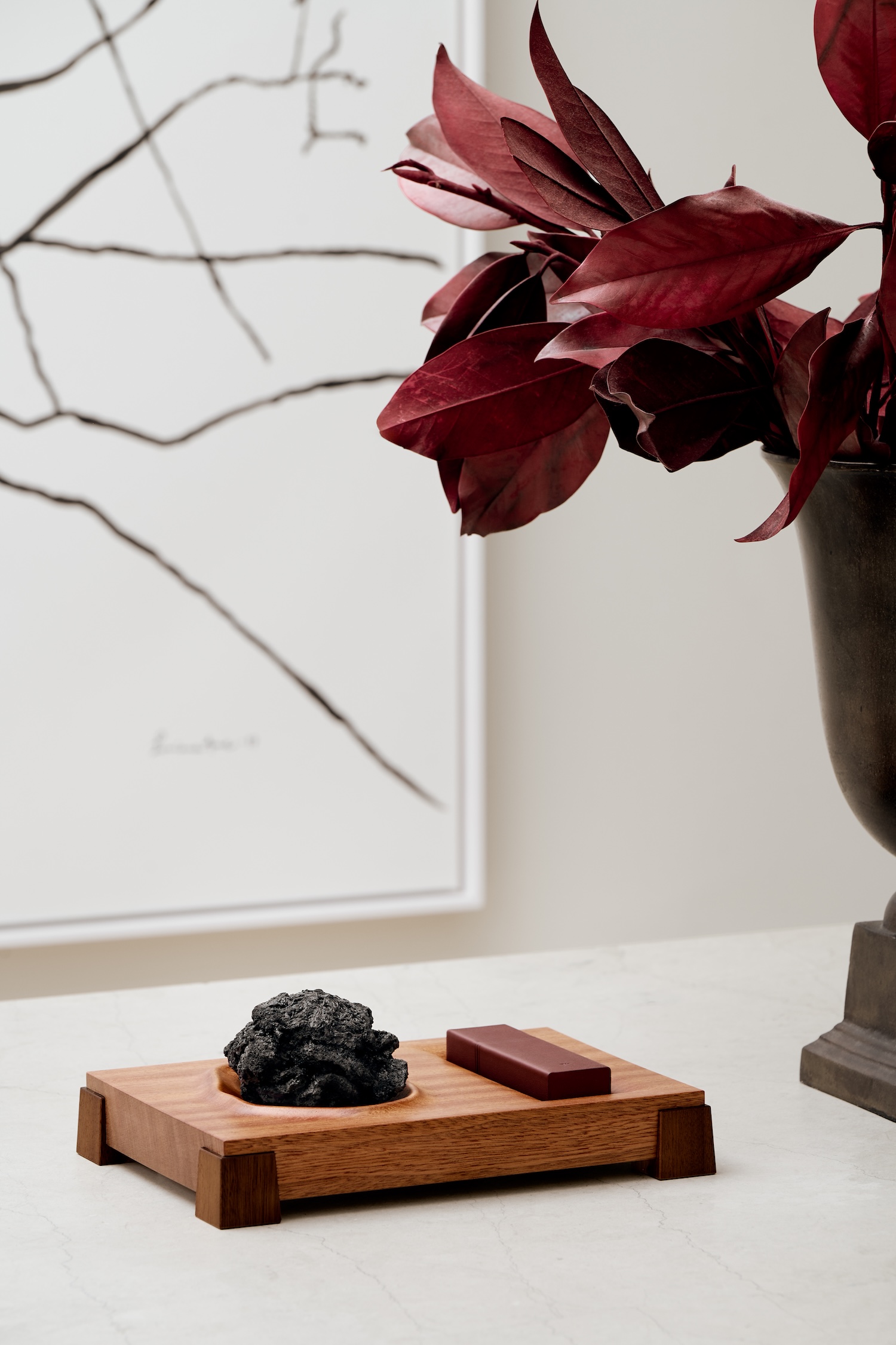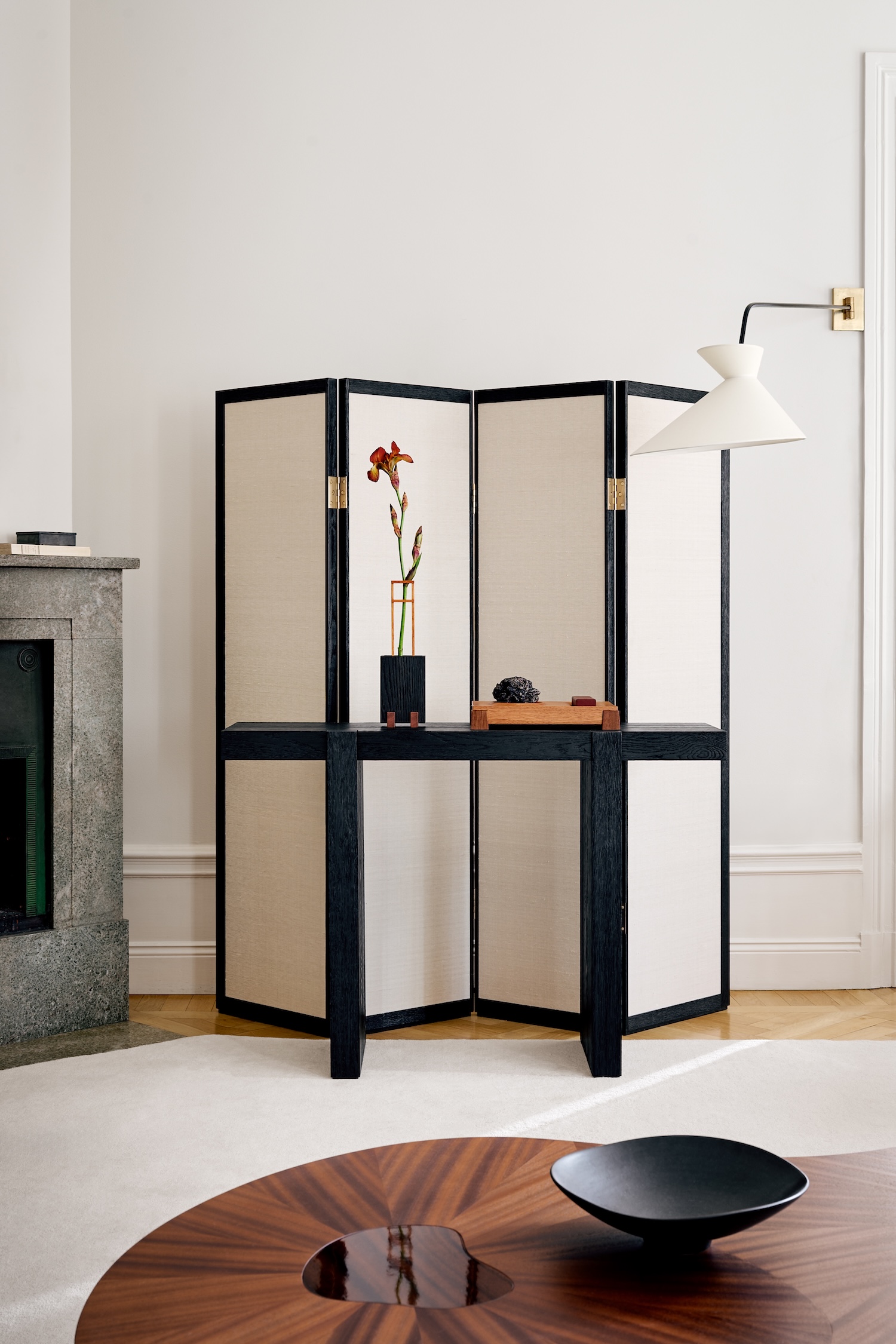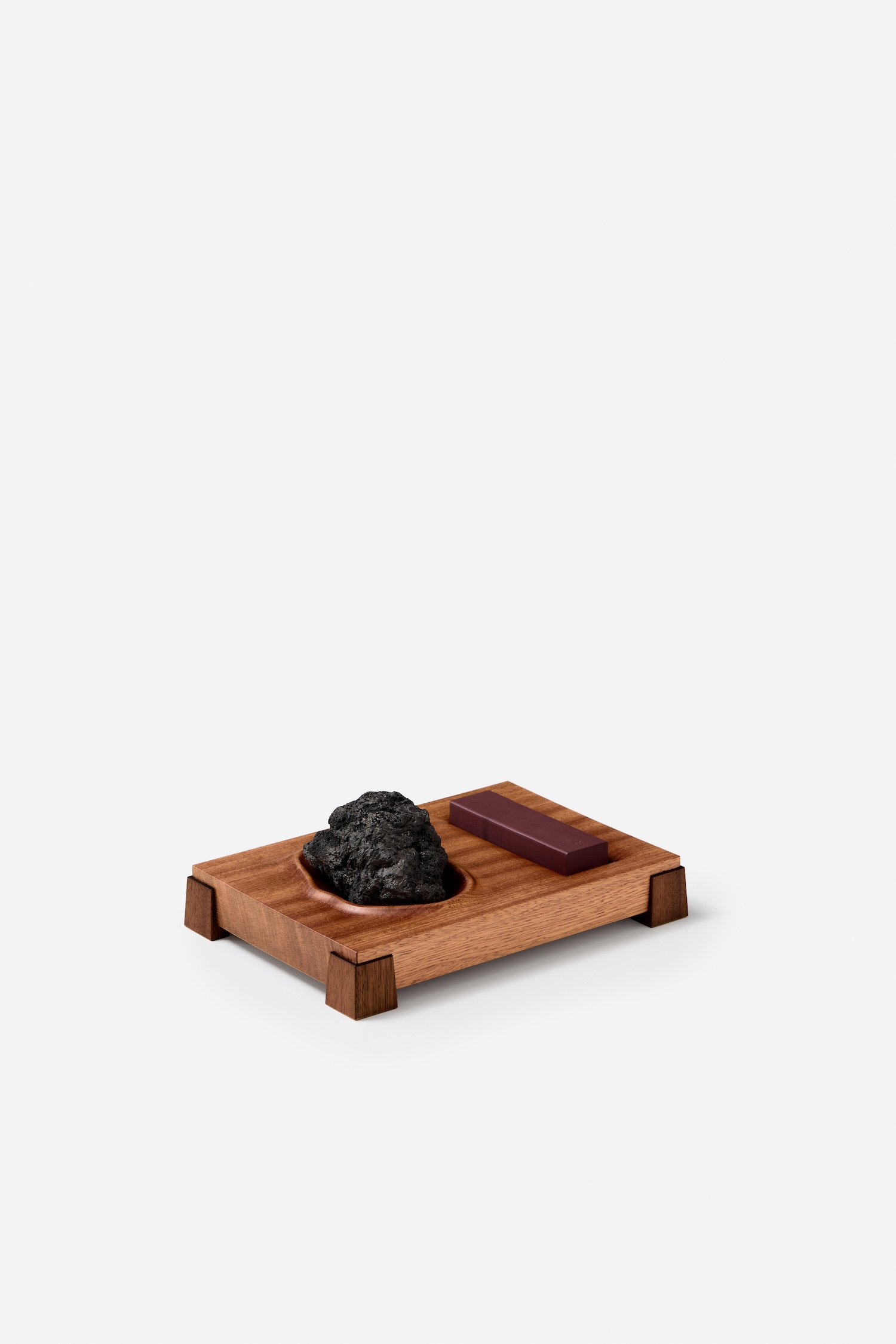
Sculpted Scent Tray L is a minimalist scent tray created by Stockholm-based studio Veermakers. The hand-sculpted mahogany tray emerges from this vision as both vessel and stage, its soft contours channeling the organic modernism that defined mid-century Scandinavian design. Yet where Finn Juhl or Arne Jacobsen might have stopped at form, Veermakers pushes deeper into experiential territory. The wood’s warm grain, enhanced by a satin clear coat, creates a tactile landscape that invites contemplation – a quality that recalls the Japanese concept of mono no aware, the bittersweet awareness of impermanence in beautiful things.
The choice of mahogany carries its own cultural weight. This wood, once the backbone of colonial furniture empires, finds new purpose here as a frame for mindfulness. The Stockholm workshop sources surplus material, transforming waste into wonder through skilled hands. Each tray varies slightly in shape and shade, embracing the imperfections that mass production has trained us to reject. This approach echoes the wabi-sabi philosophy that has quietly influenced contemporary design, suggesting that beauty emerges from acceptance rather than control.
At the collection’s heart lies an ingenious material pairing: volcanic lava stone as scent diffuser. This raw, porous fragment carries within its structure the memory of transformation – molten rock cooled and solidified, now repurposed as a medium for olfactory experience. The stone’s ability to absorb and slowly release fragrance creates a temporal dimension often missing from contemporary objects, where instant gratification typically trumps gradual revelation.
The signature fragrance itself, Veer Scent No. 1, represents a sophisticated understanding of how scent shapes space. Crafted in Grasse, France – the historic heart of perfumery – the blend opens with sun-warmed grass and citrus before settling into sandalwood and cedarwood base notes. This progression mirrors the design philosophy that governs Veermakers’ furniture: initial clarity giving way to deeper, more complex experiences over time.
The collection’s limitation to ten numbered editions positions each piece as both functional object and collectible artifact. This scarcity model, increasingly common in contemporary design, transforms everyday ritual into luxury experience. Yet the true innovation lies not in exclusivity but in synthesis – the seamless integration of fragrance into the design vocabulary typically reserved for furniture and lighting.