TOURISTS Homes is part of a larger boutique riverside retreat – TOURISTS – located in North Adams, Massachusetts, with design led by partner Ben Svenson, architect Hank Scollard, and interior designer Julie Pearson. In the dense woods of the Berkshires, where three historic trails converge, a white oak-clad structure emerges from the landscape like a modernist interpretation of a childhood memory. TOURISTS hotel doesn’t just occupy the site of America’s first scenic byway – it transforms our understanding of what a roadside lodge can be, while paying homage to the very history it reimagines.
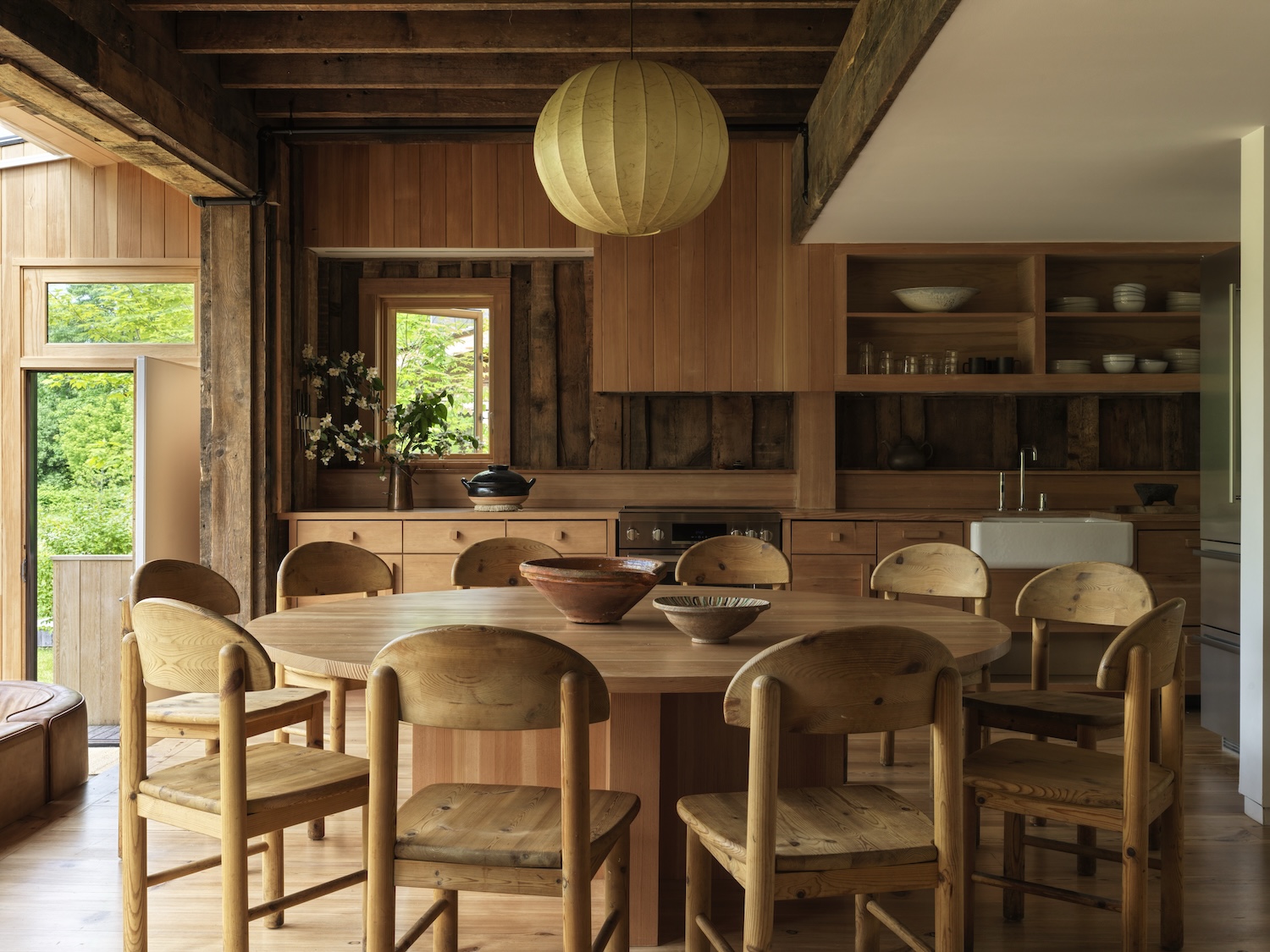
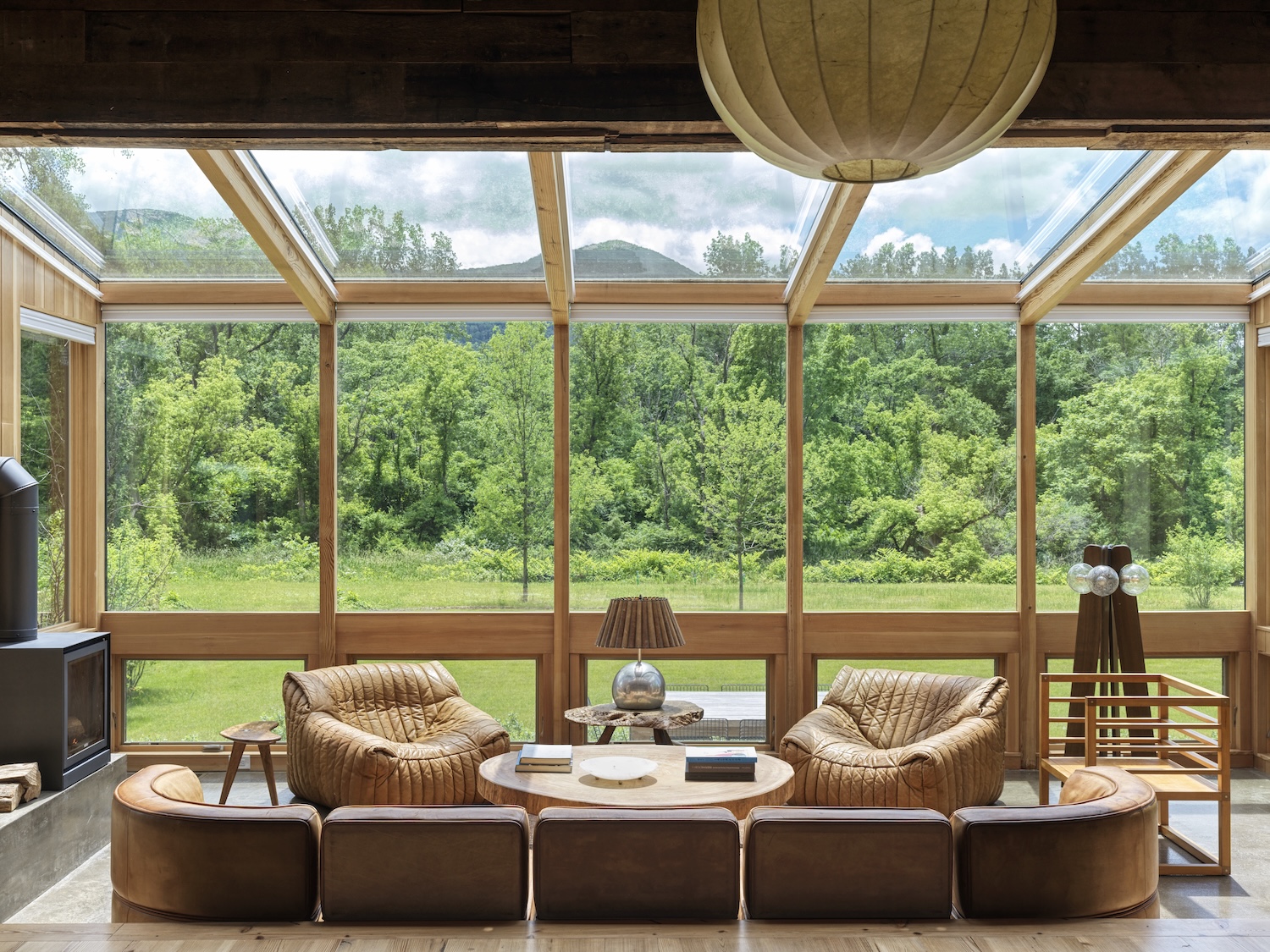
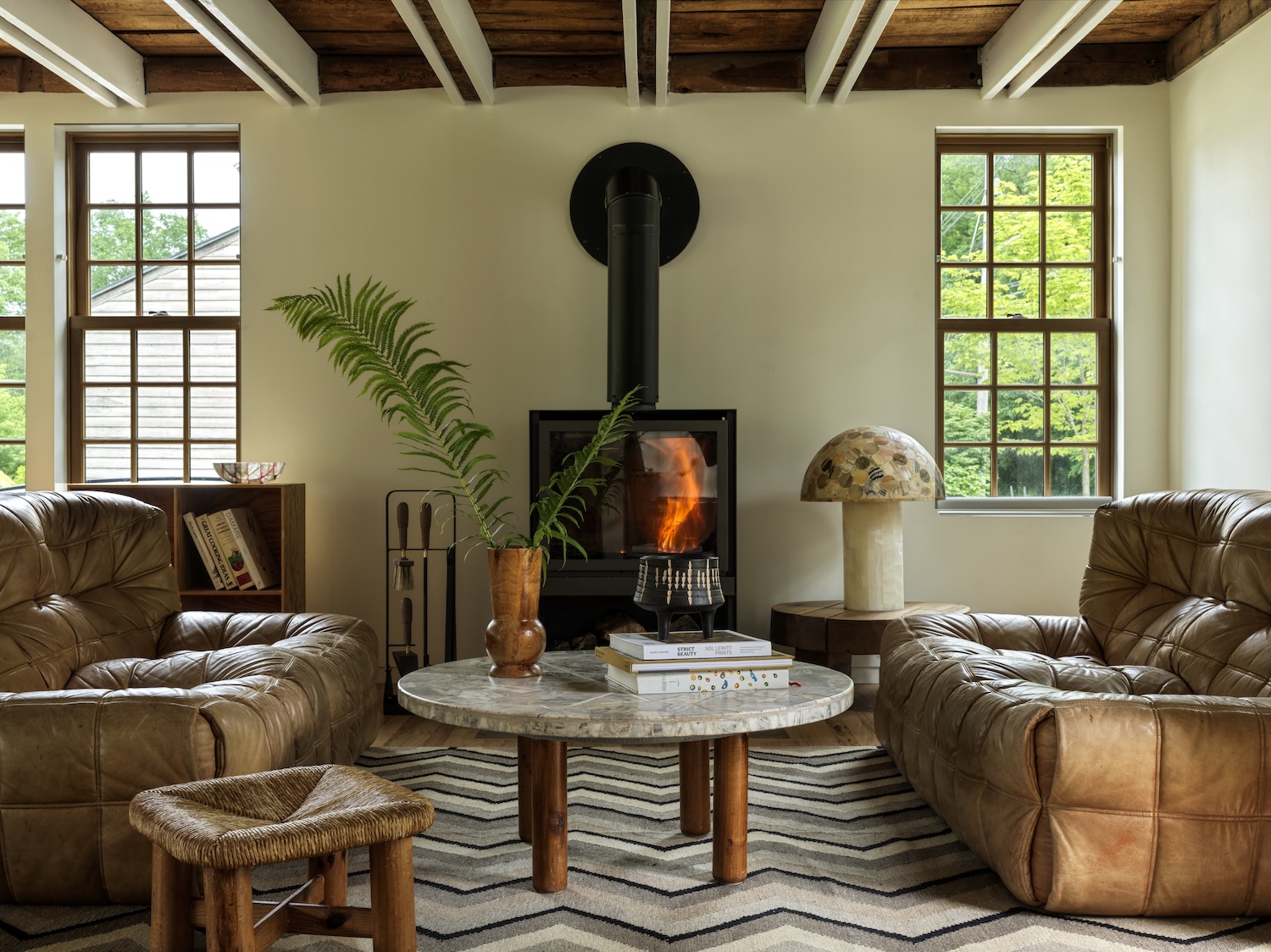
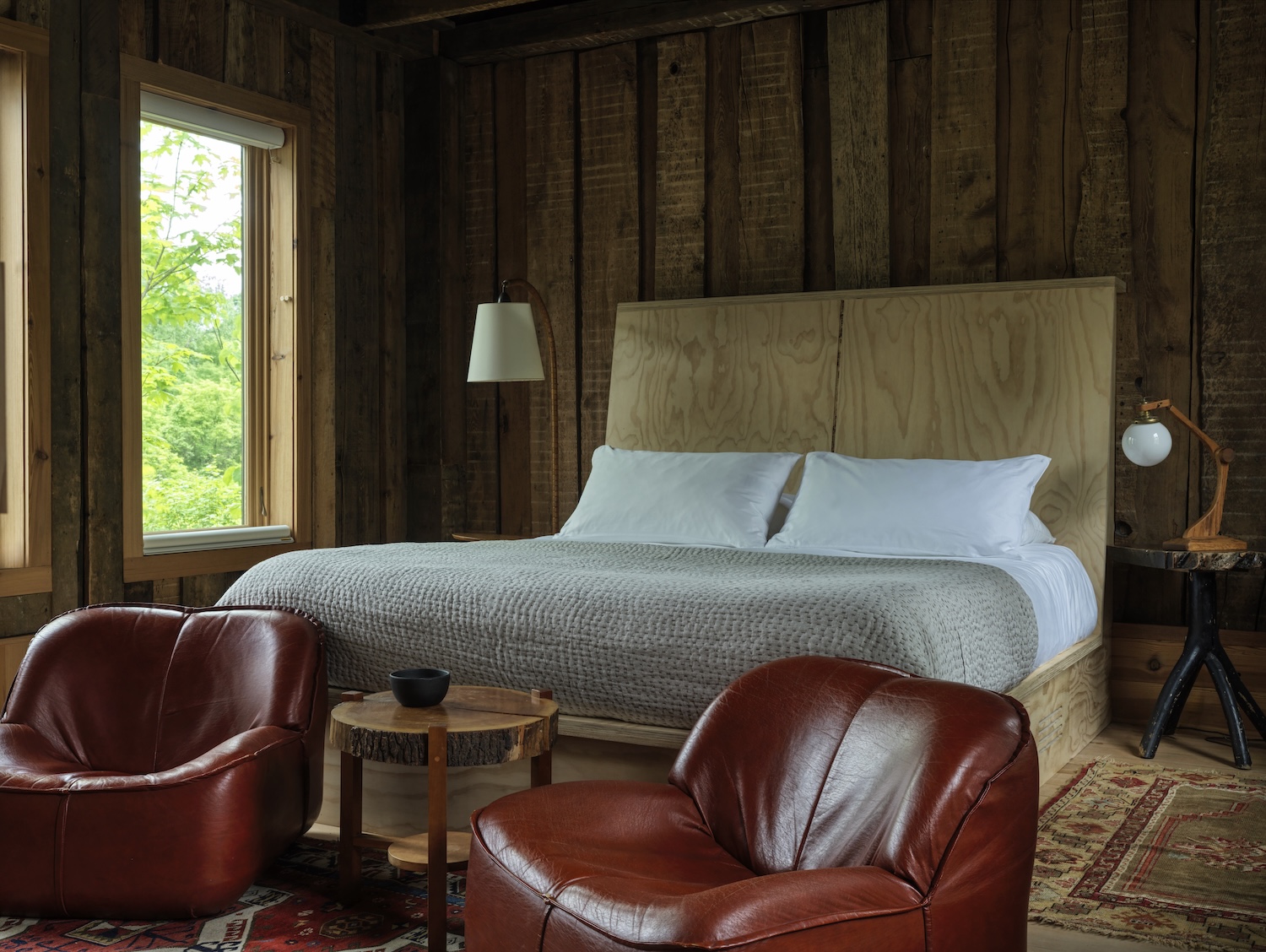
The lounge spaces within the property tell a compelling story about the evolution of American hospitality design. In the renovated 1813 farmhouse, now known as The Airport Rooms, the interiors strike a delicate balance between preservation and innovation. Here, daybed seating areas are thoughtfully positioned to frame views of the surrounding landscape, creating intimate conversation spaces that feel both contemporary and timeless.
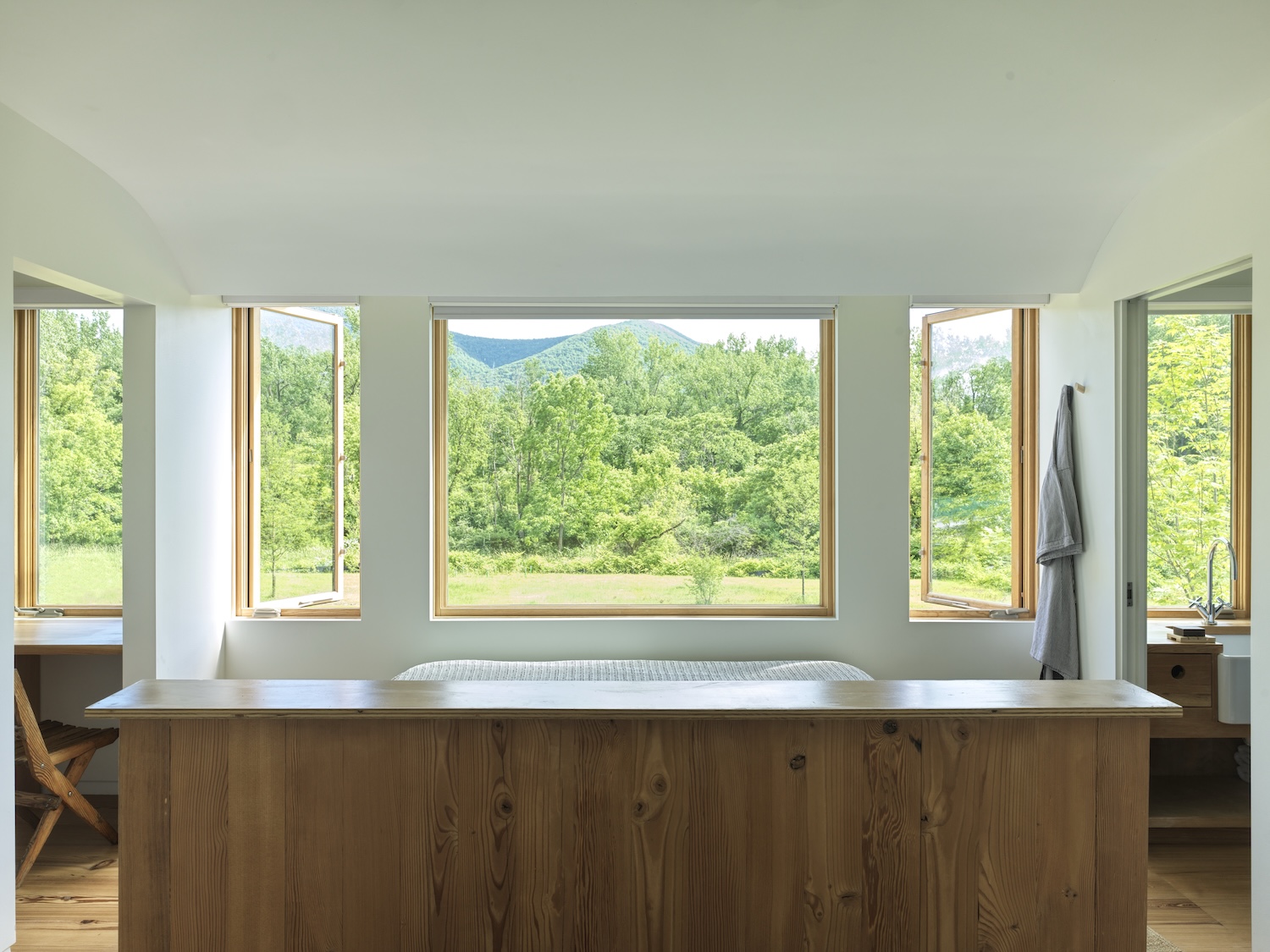
The guest rooms represent perhaps the project’s most elegant design solution. While retaining the iconic exterior circulation of the classic motor lodge – that rhythmic progression of doors that has become synonymous with American road trip culture – the rooms subvert expectations through their rear-facing windows. These expansive 6×6′ apertures, complete with built-in daybeds, transform each room into a private observatory of the natural world. The decision to include outdoor showers further dissolves the boundary between architecture and landscape, creating an experience that feels both luxurious and primordial.
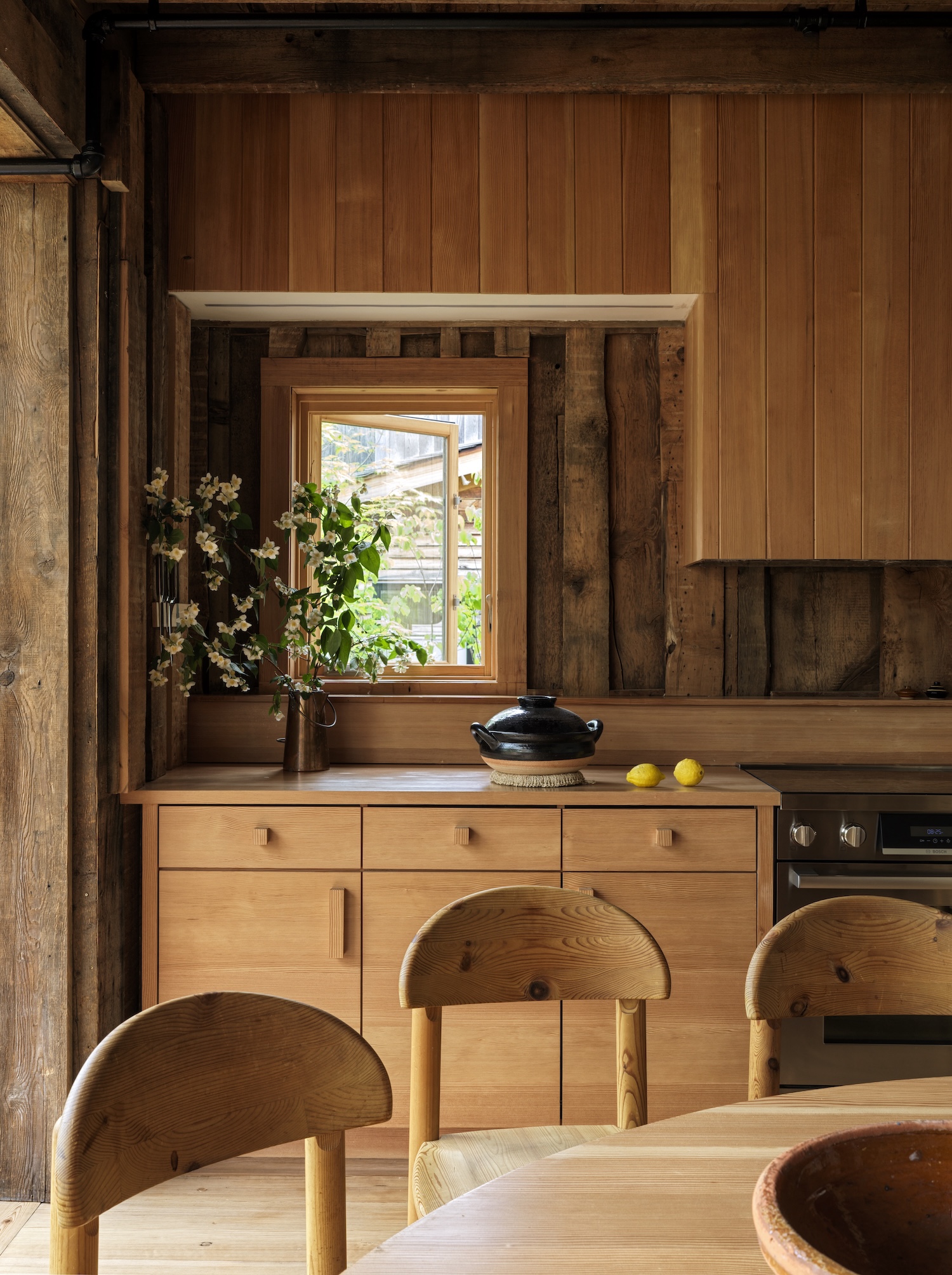
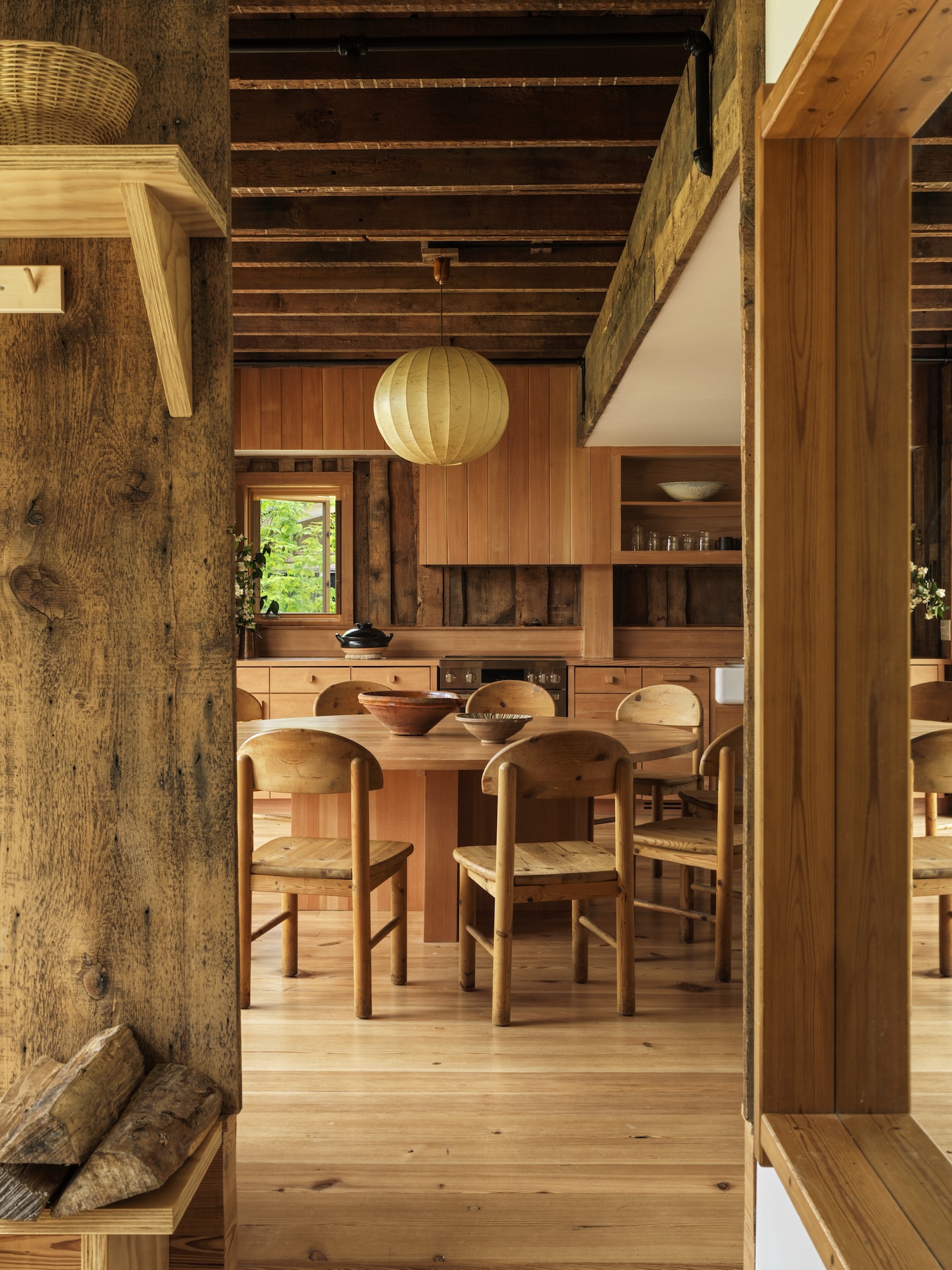
Materials play a crucial role in the narrative. The locally sourced white oak cladding isn’t merely an aesthetic choice – it’s a statement about regional identity and environmental consciousness. The wood’s natural weathering will allow the buildings to further recede into the landscape over time, embodying the Japanese principle of wabi-sabi that celebrates the beauty of impermanence. Inside, the custom cylindrical sinks and Dornbracht fixtures demonstrate an attention to craft that elevates everyday rituals into moments of quiet luxury.
The landscape architecture by Reed Hilderbrand deserves special attention for its role in weaving together the property’s diverse elements. The 220-foot suspension footbridge, fabricated by Gerhard Komenda, becomes more than a mere connecting element – it’s a threshold that transforms the act of crossing the site into a moment of suspension between the familiar and the unknown.
What makes TOURISTS particularly significant is how it addresses contemporary desires for authentic experience while acknowledging its own place in a continuing historical narrative. The hotel’s name itself – drawn from those simple roadside signs of the early 20th century – becomes a meditation on how we might thoughtfully reinterpret the past rather than simply preserve or reject it.