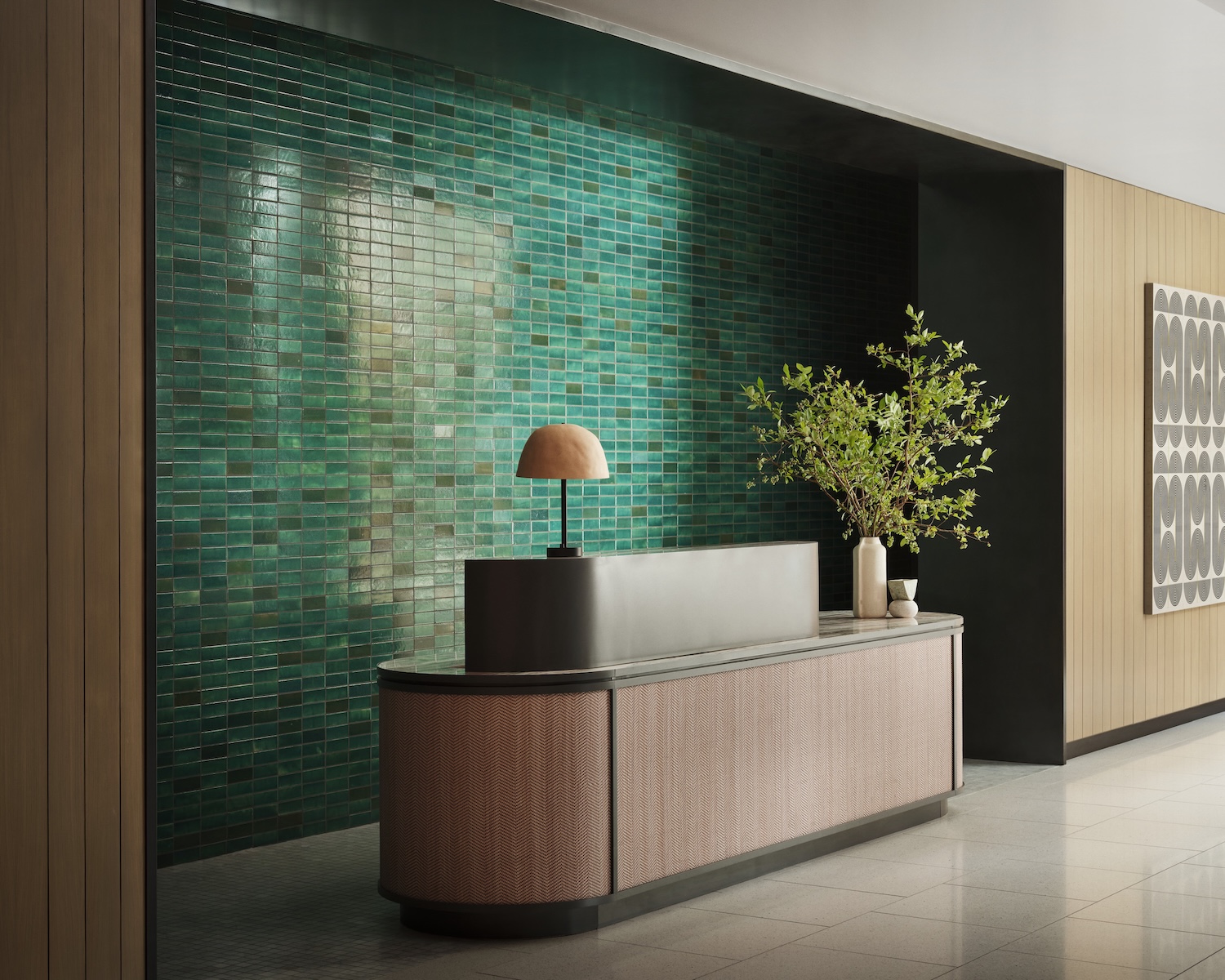
The Huron is a new luxury condominium development in Brooklyn, New York, designed by Morris Adjmi Architects. A reception desk with an onyx top stands as more than just a welcoming point at The Huron – it’s a manifesto of Morris Adjmi Architects’ nuanced approach to post-industrial luxury. This singular element embodies the project’s core tension: how to honor Brooklyn’s manufacturing heritage while crafting spaces that speak to contemporary definitions of comfort and refinement.
The architectural language begins with a dialogue between past and present. The buildings’ glass and steel towers, with their distinctive I-beam profiles, echo the muscular industrial forms that once defined the Greenpoint waterfront. Yet these elements are reimagined through a contemporary lens, with the two towers conceptualized as abstract smokestacks – a poetic transformation of industrial heritage into residential sculpture.
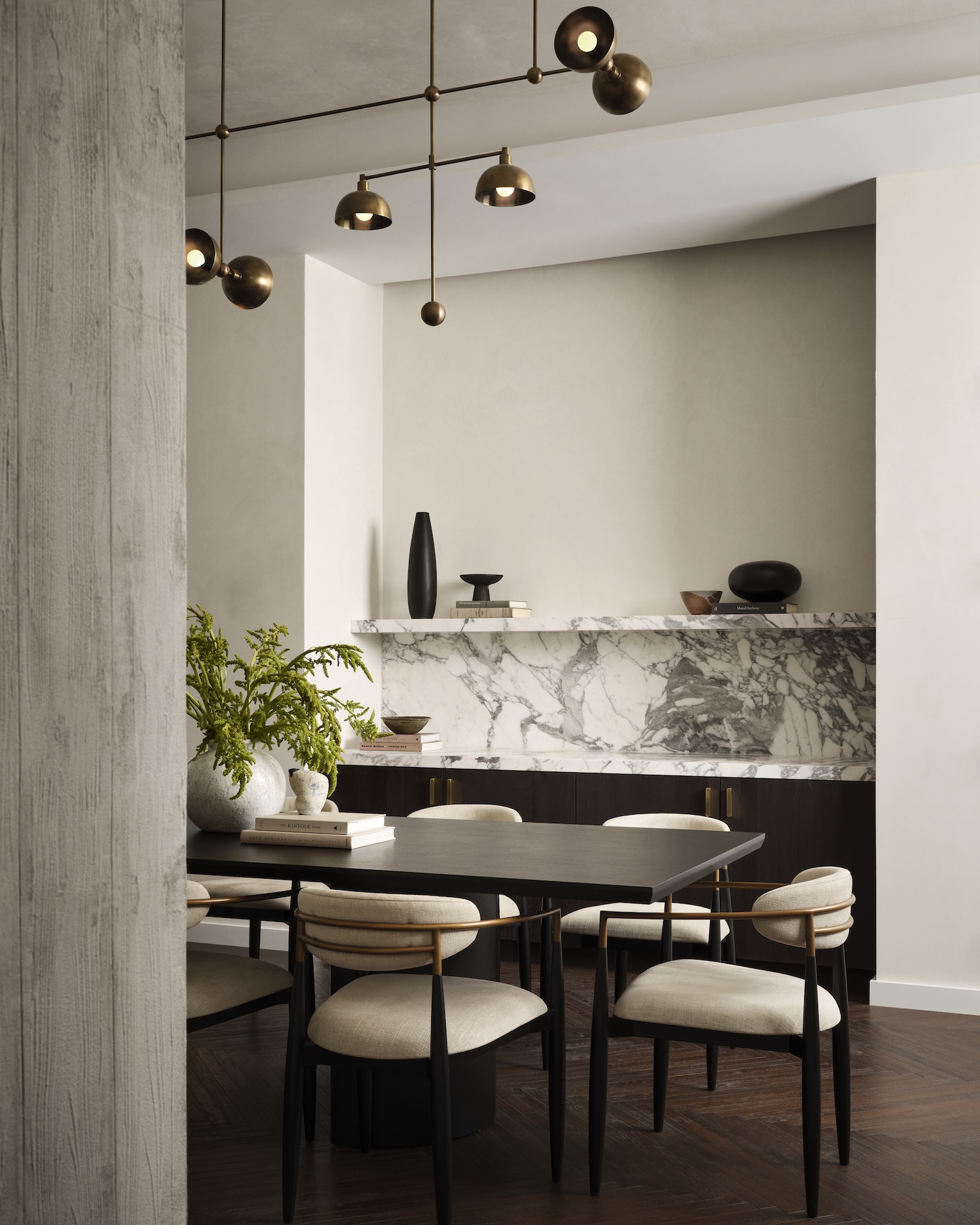
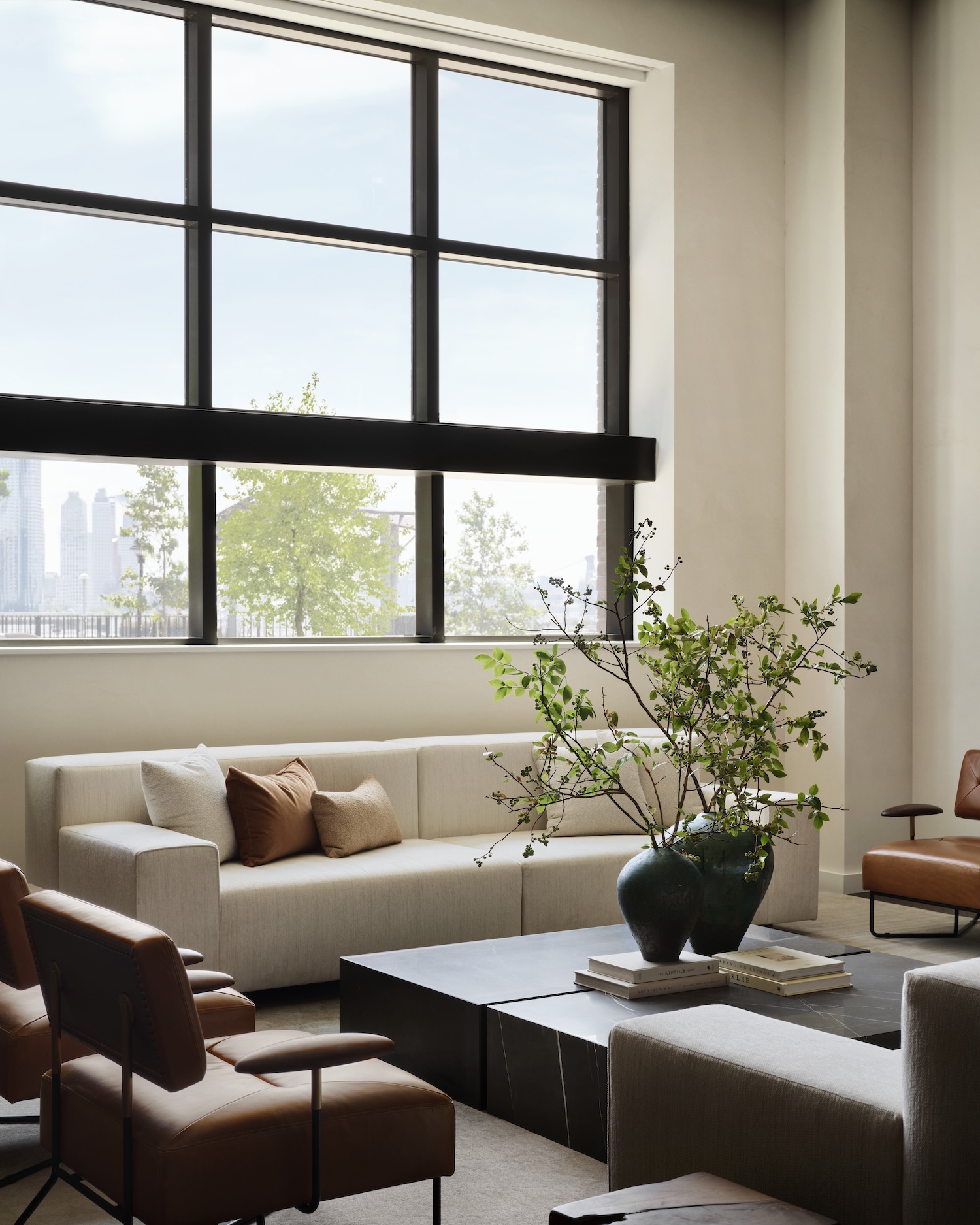
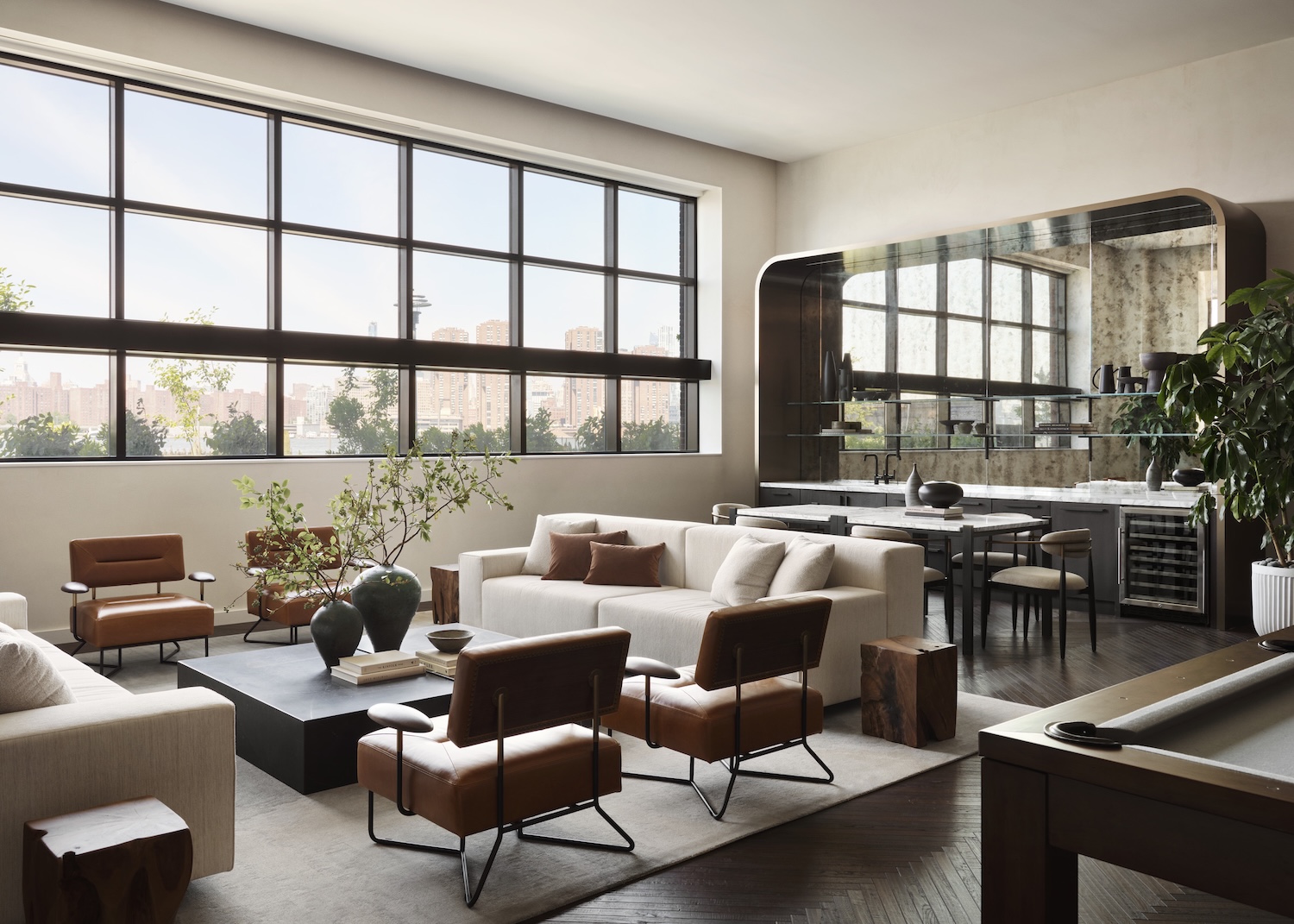
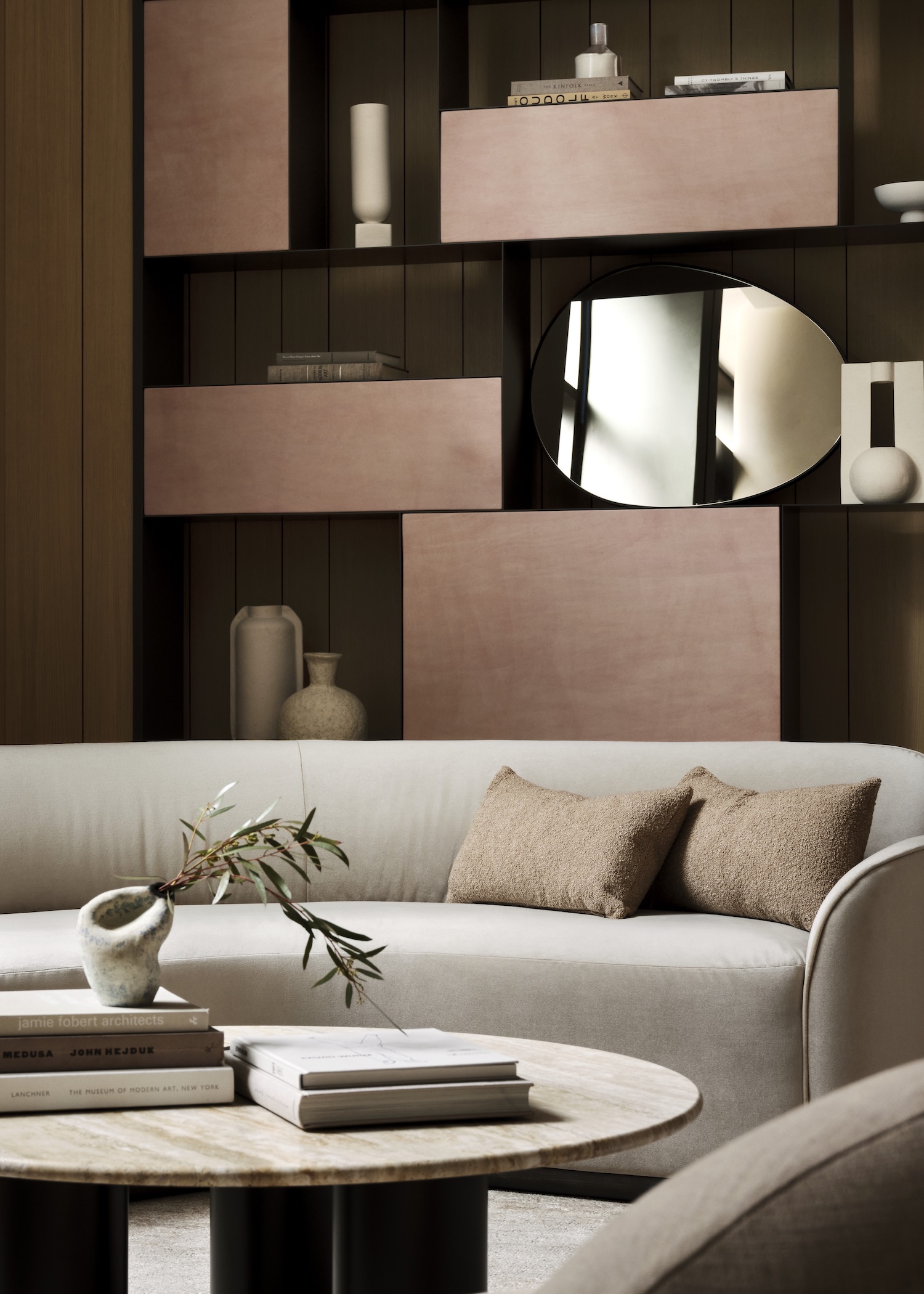
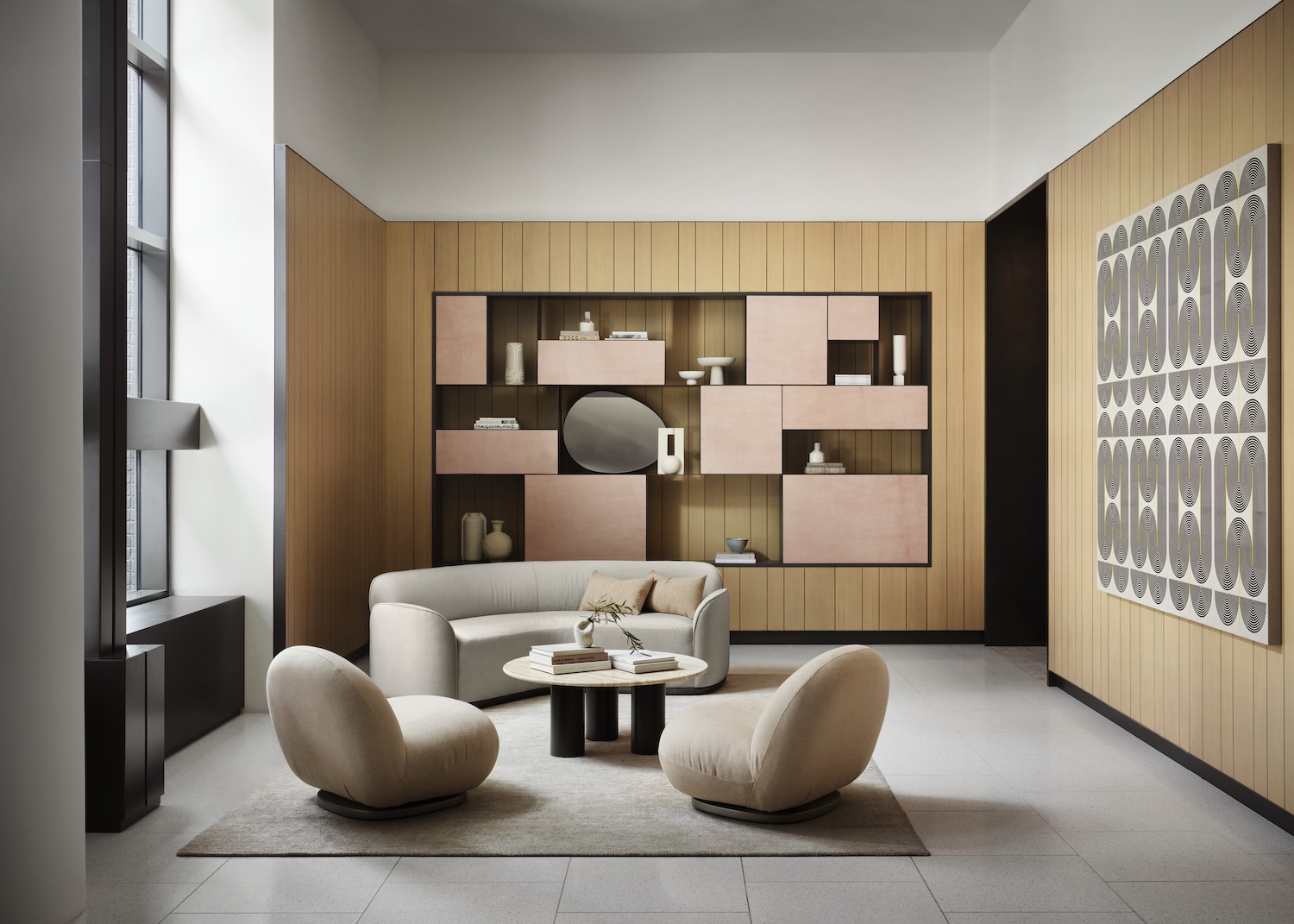
In the communal spaces, the material palette tells a story of transformation. The lobby’s sofa by Giulio Marelli and chairs by Gubi create curved, organic forms that soften the building’s rigid geometries. This interplay continues throughout the amenity spaces, where a Mark Jupiter table with metal-finish curved legs demonstrates how industrial materials can be sculpted into graceful forms. The pendant lamp above it, rendered in abstract brass, further reinforces this marriage of industrial heritage and contemporary refinement.
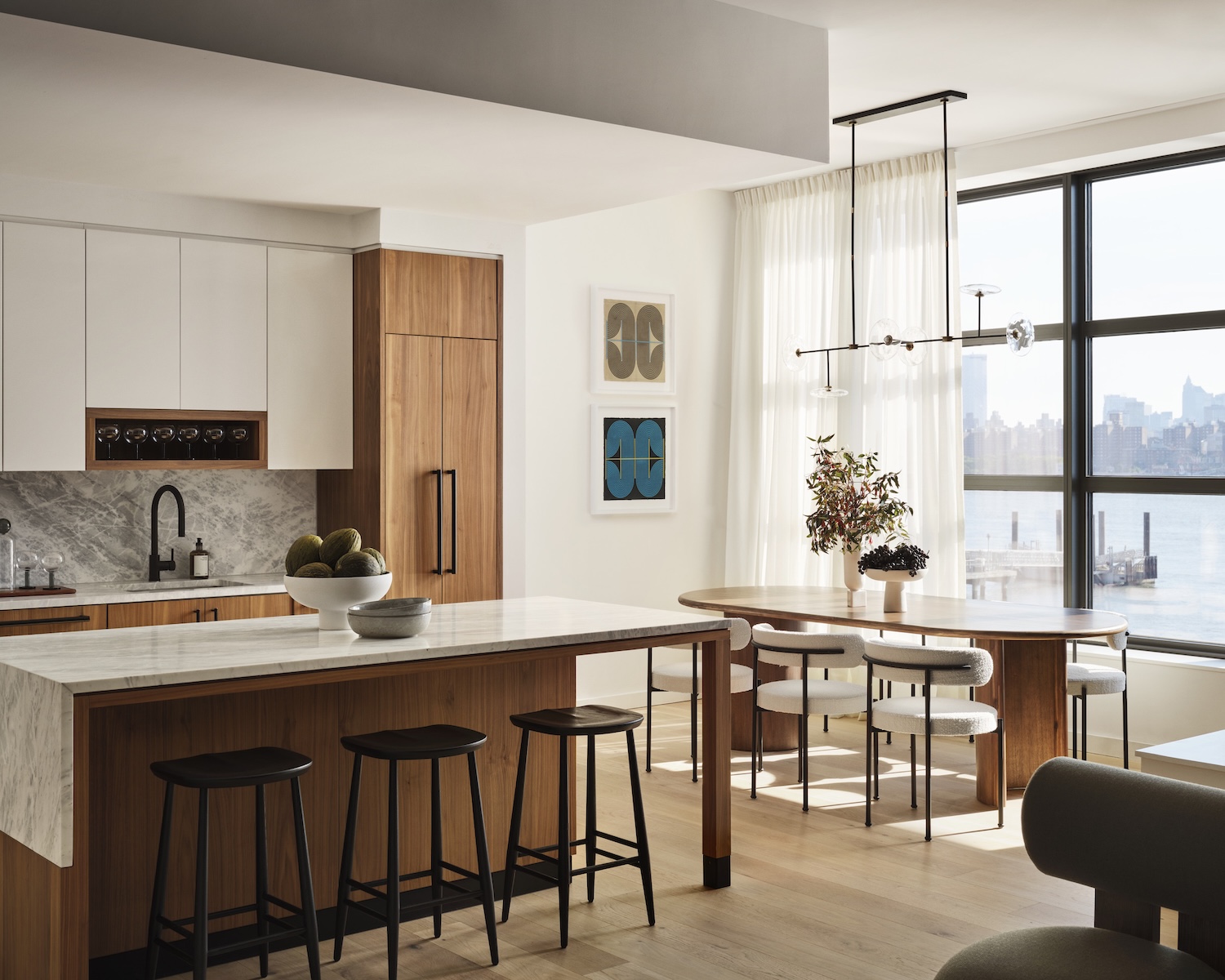
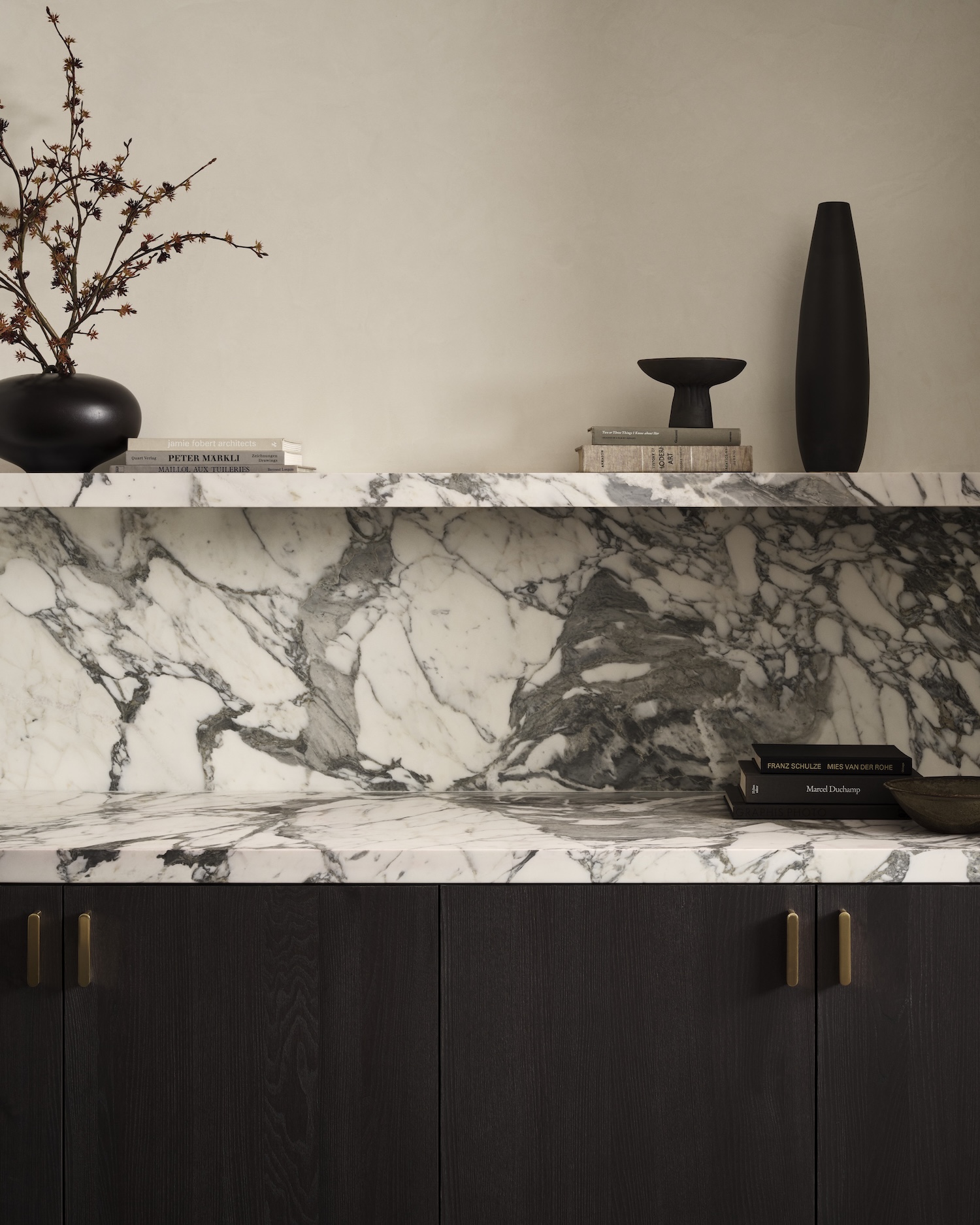
The designers’ material choices reveal a sophisticated understanding of craft traditions. The hand-glazed tiles in shades of green behind the reception desk speak to both artisanal techniques and industrial production. This duality extends to the residential units, where Greek marble waterfall islands in kitchens create a dialogue with the building’s industrial framework, while walnut veneers add warmth and tactility.
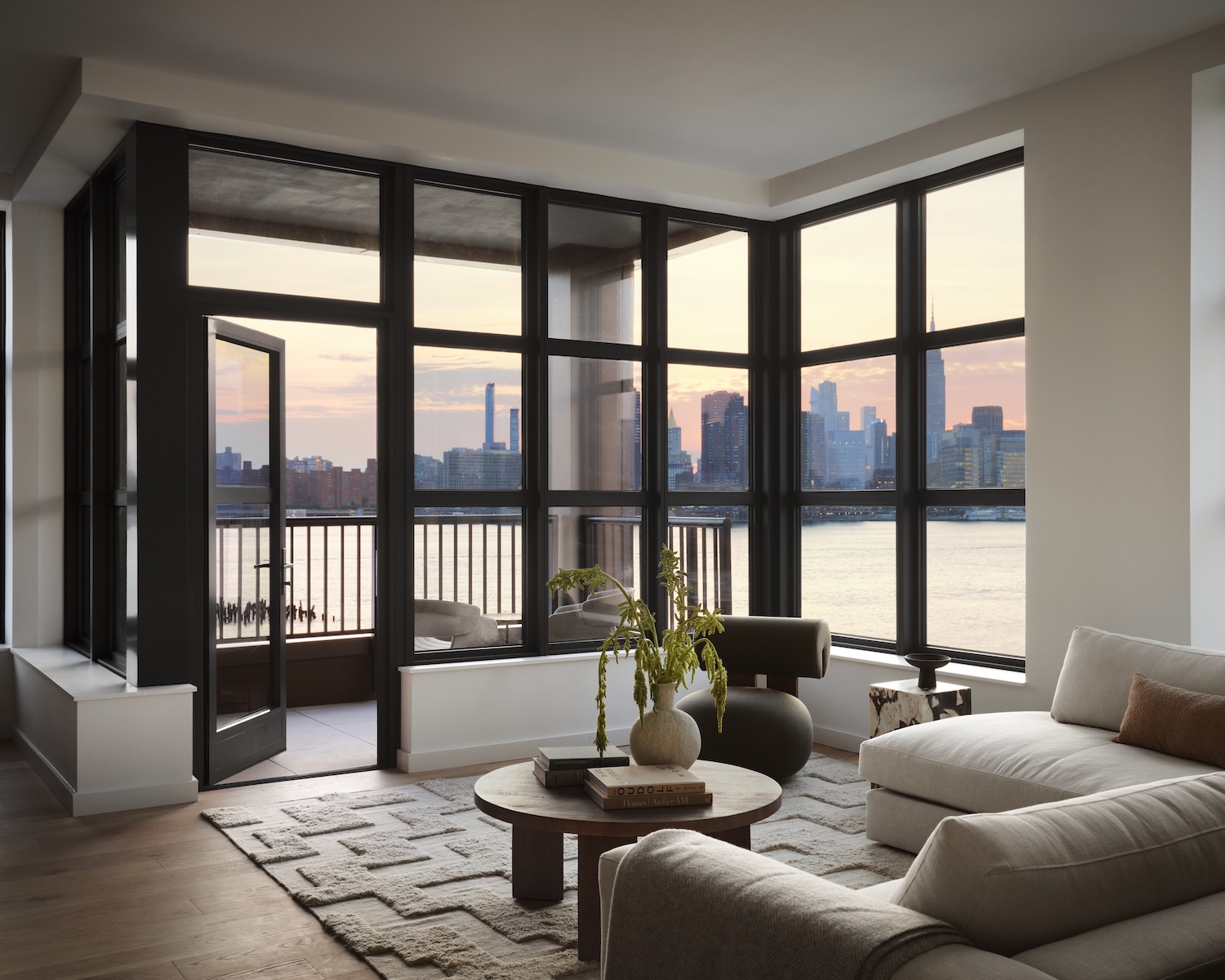
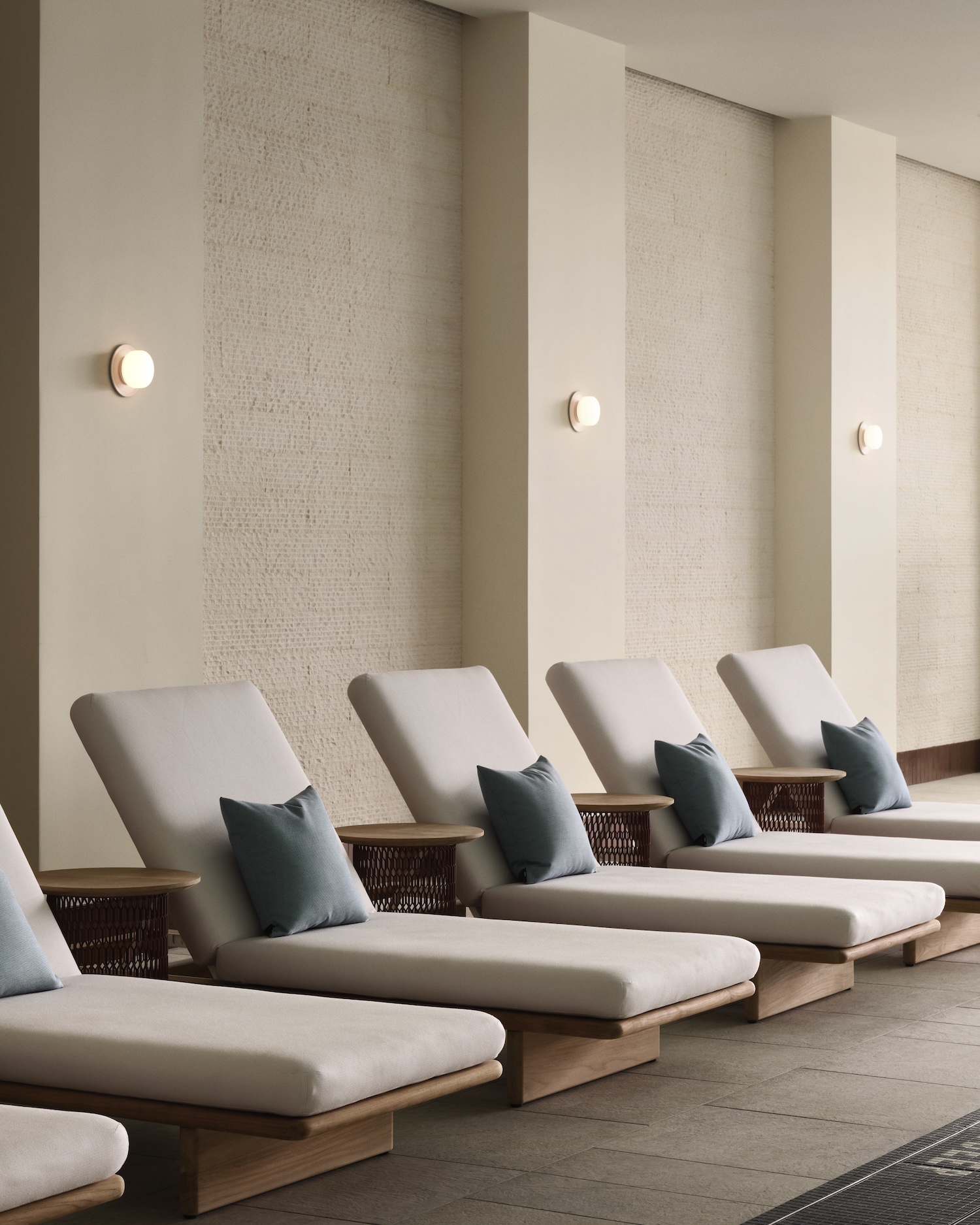
Perhaps most telling is the 50-foot saltwater pool, where limestone tile rises dramatically to the ceiling between structural columns. Here, the architects have transformed what could have been a purely functional space into a contemplative environment where the industrial grid becomes a frame for spectacular East River views. The porcelain floor’s transition into black mosaic tiles spelling out “H” demonstrates how even the smallest details can carry historical weight while remaining thoroughly contemporary.