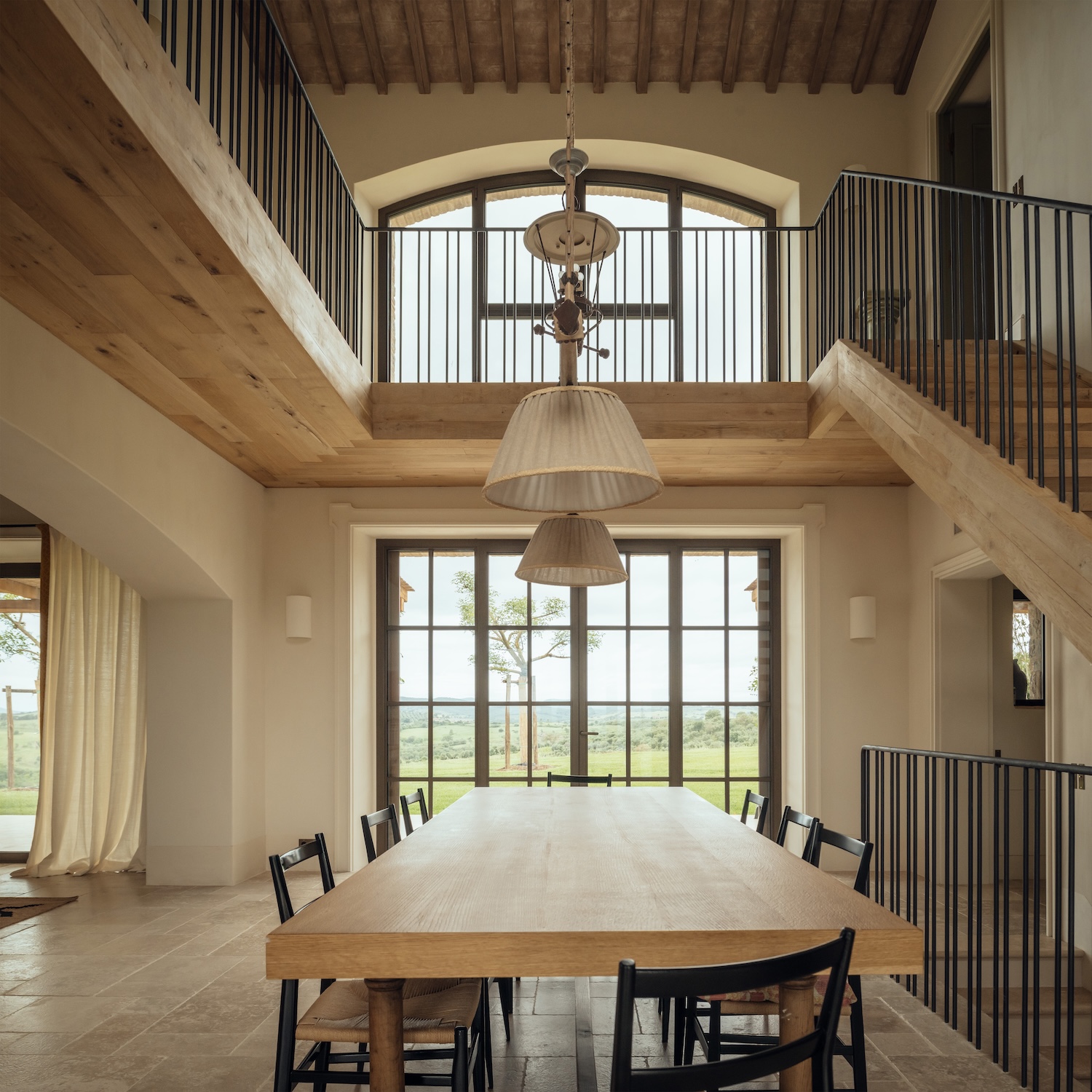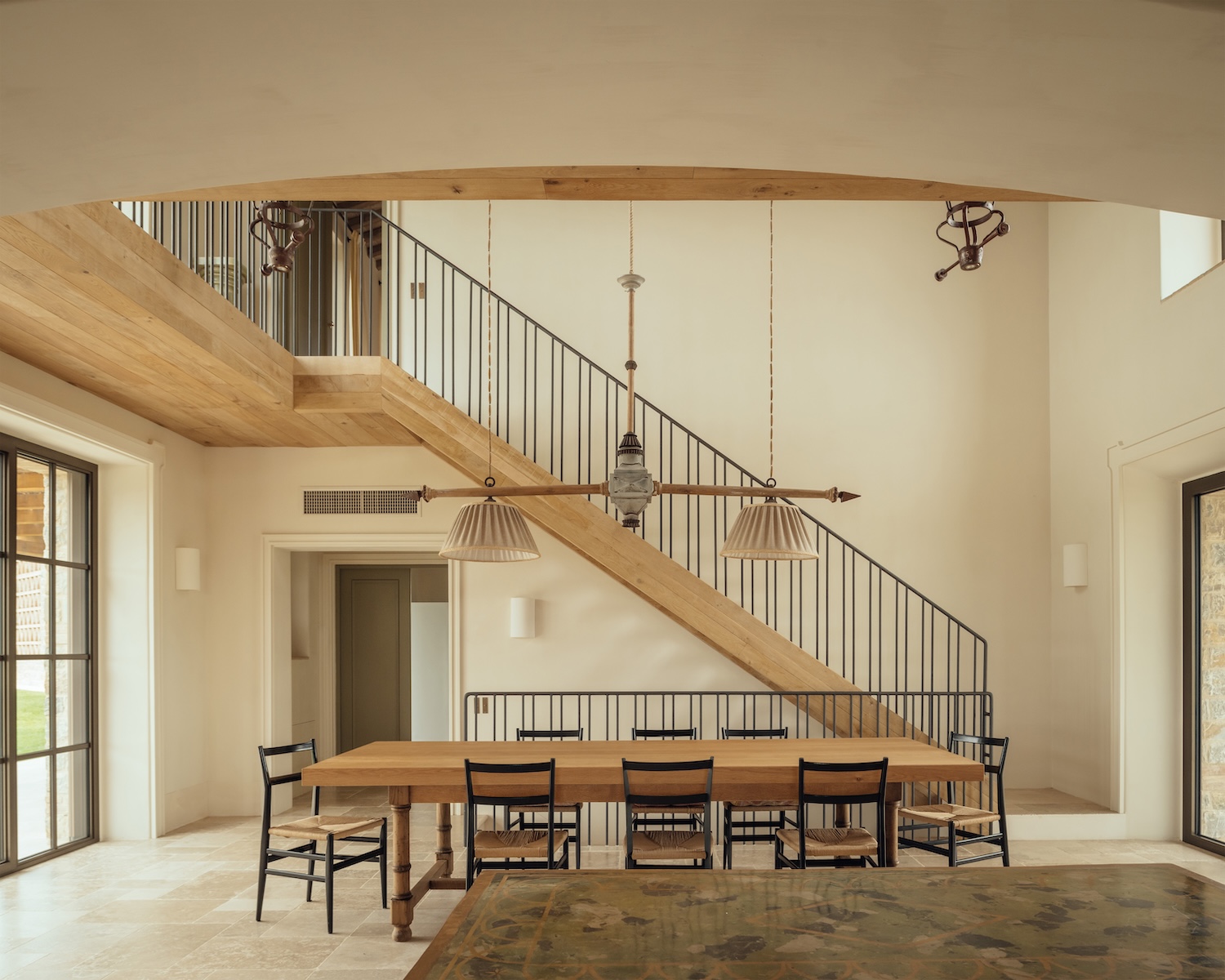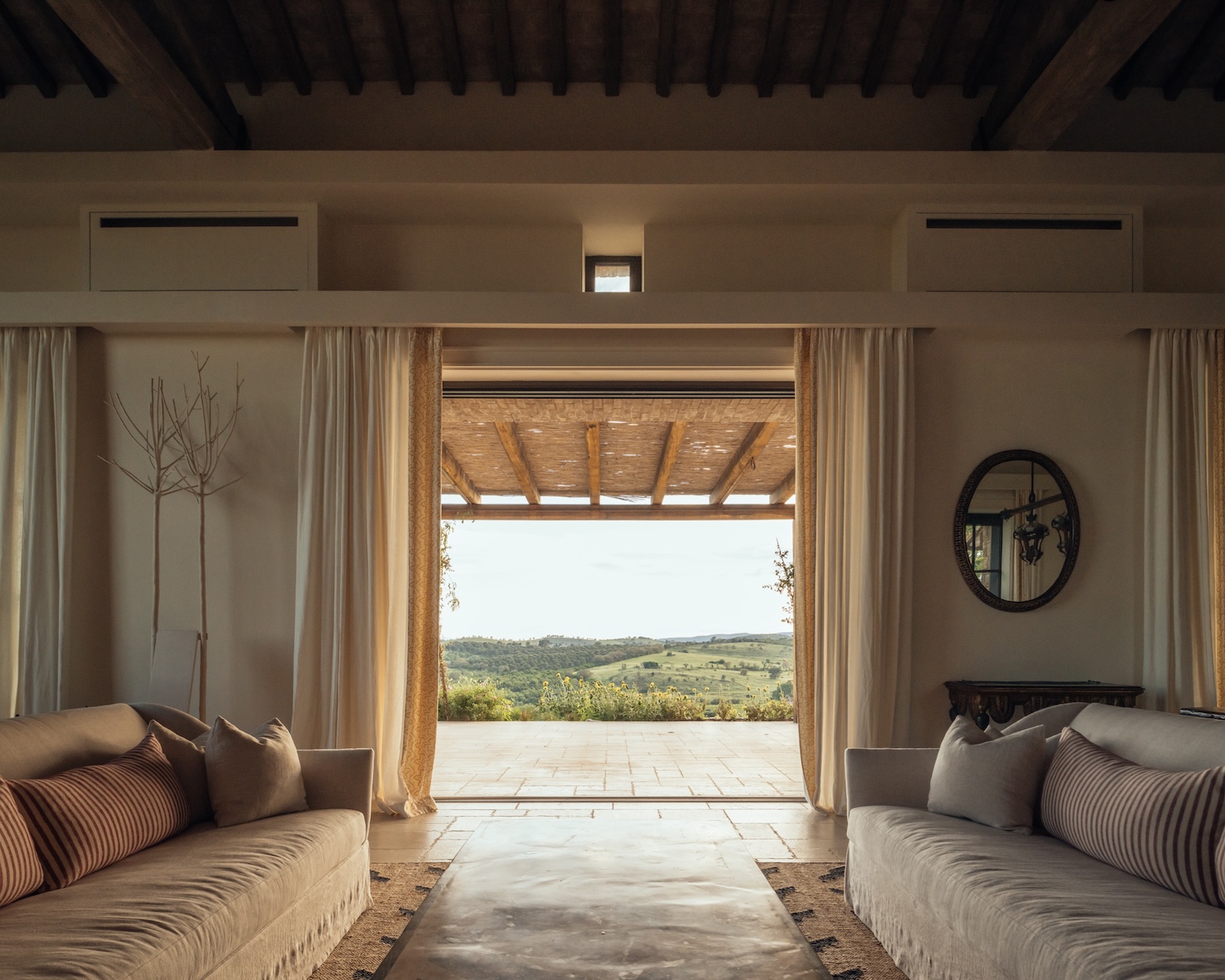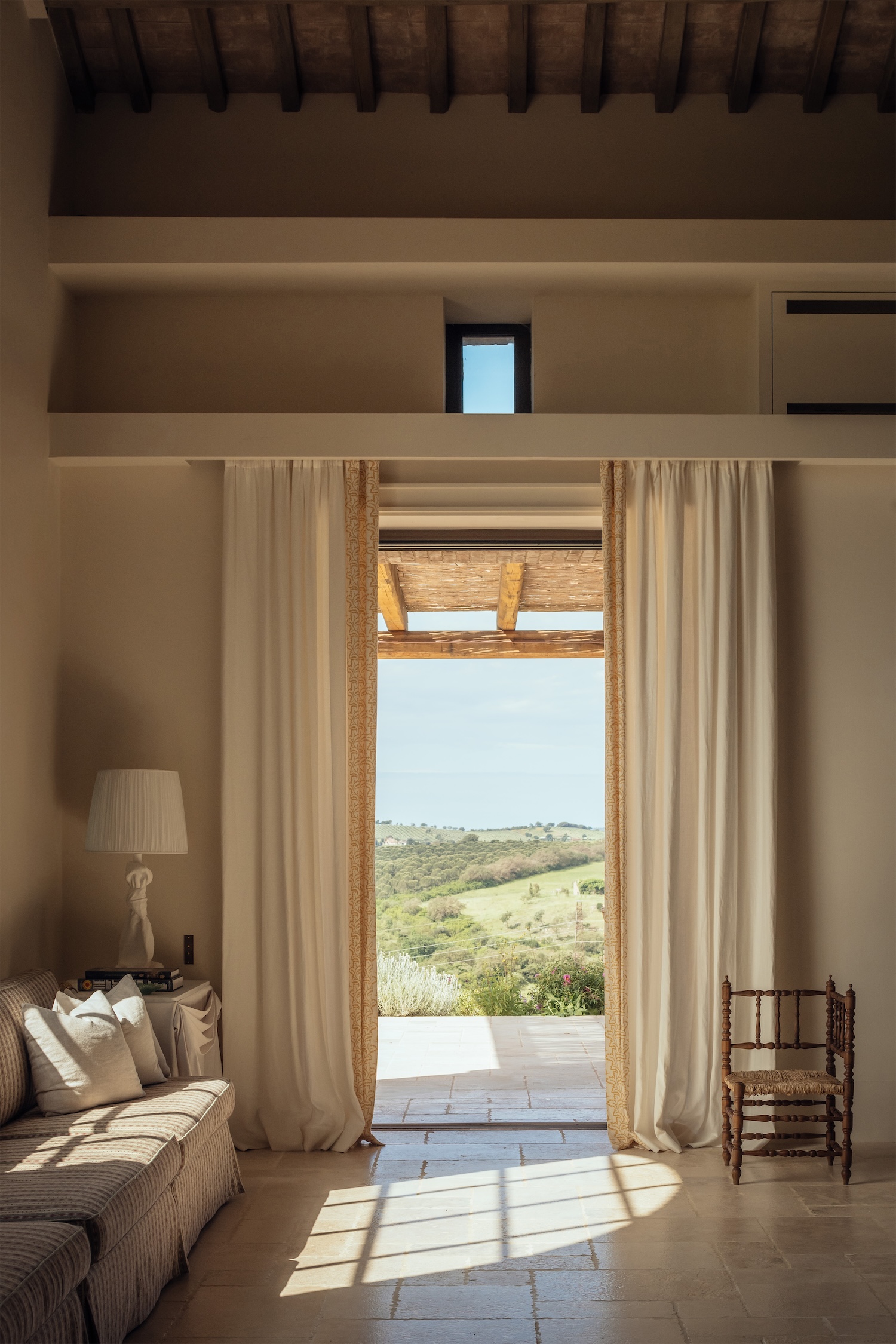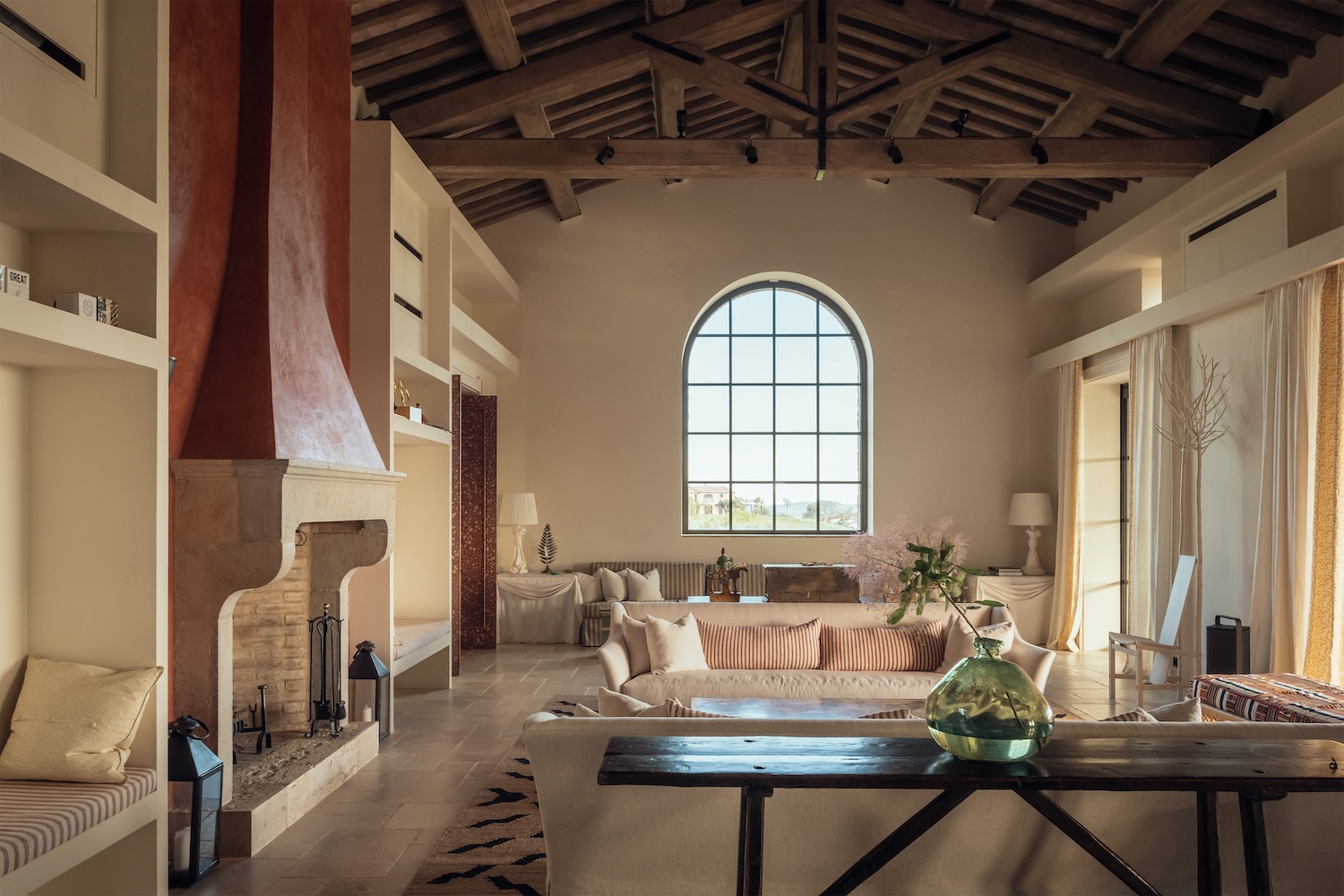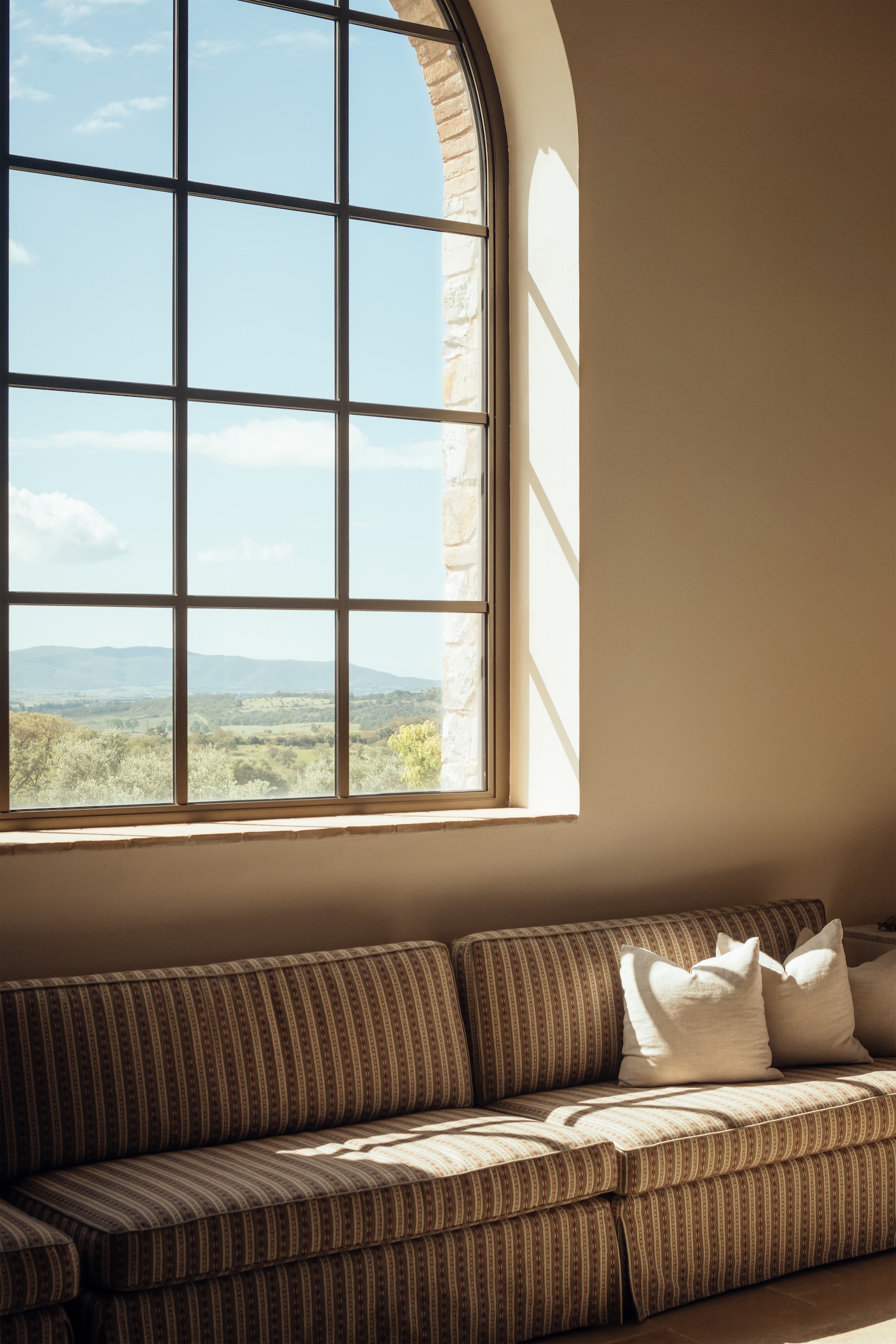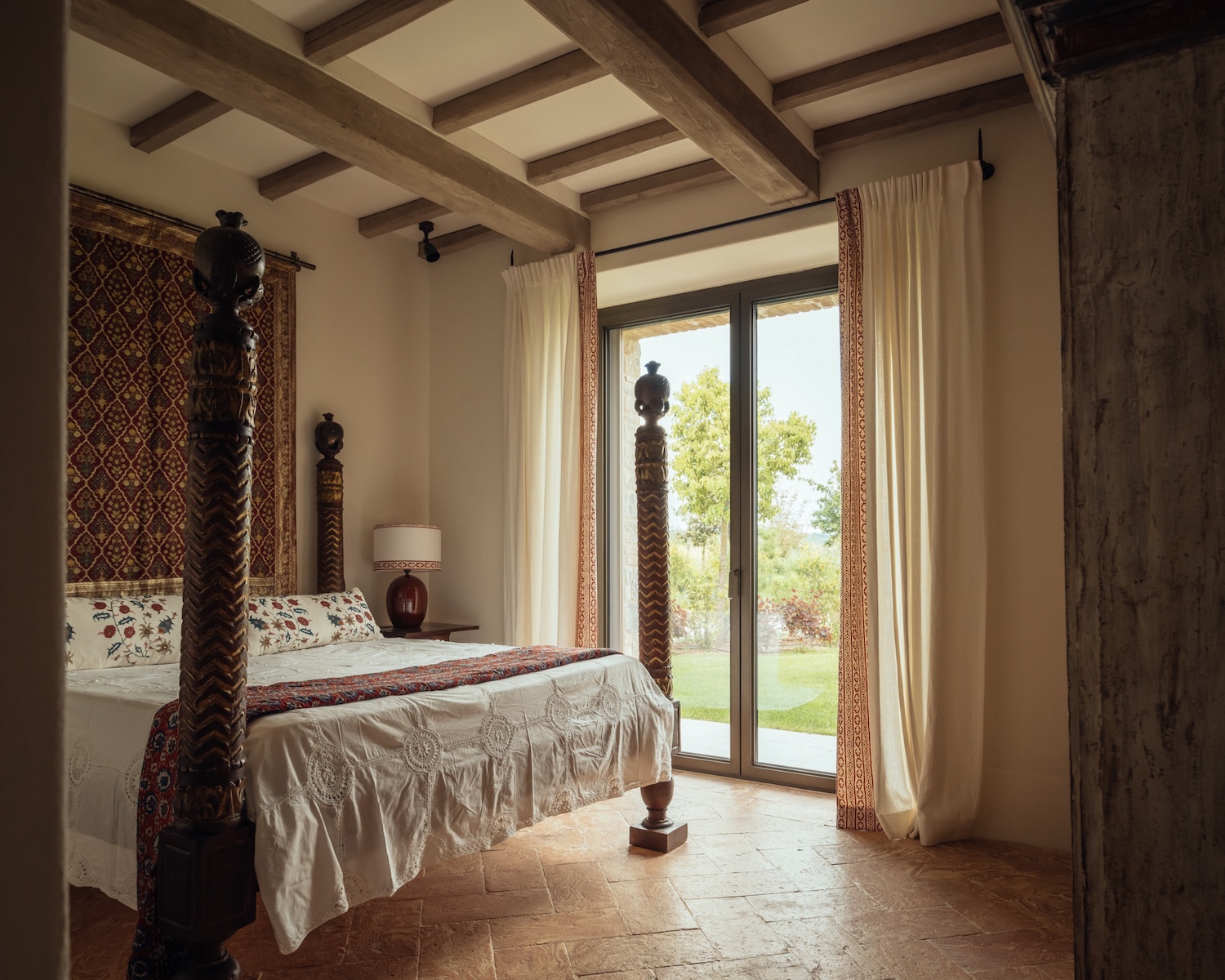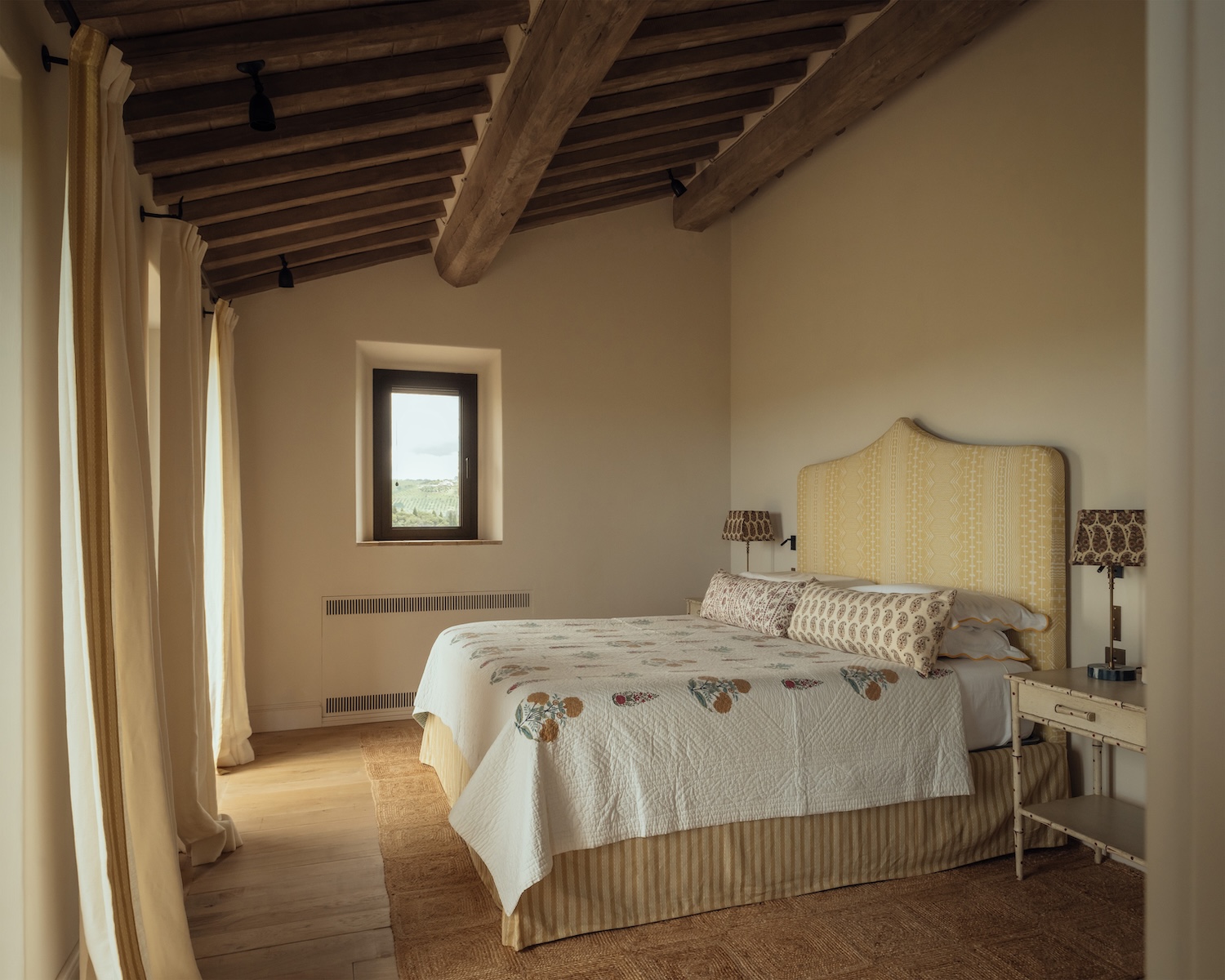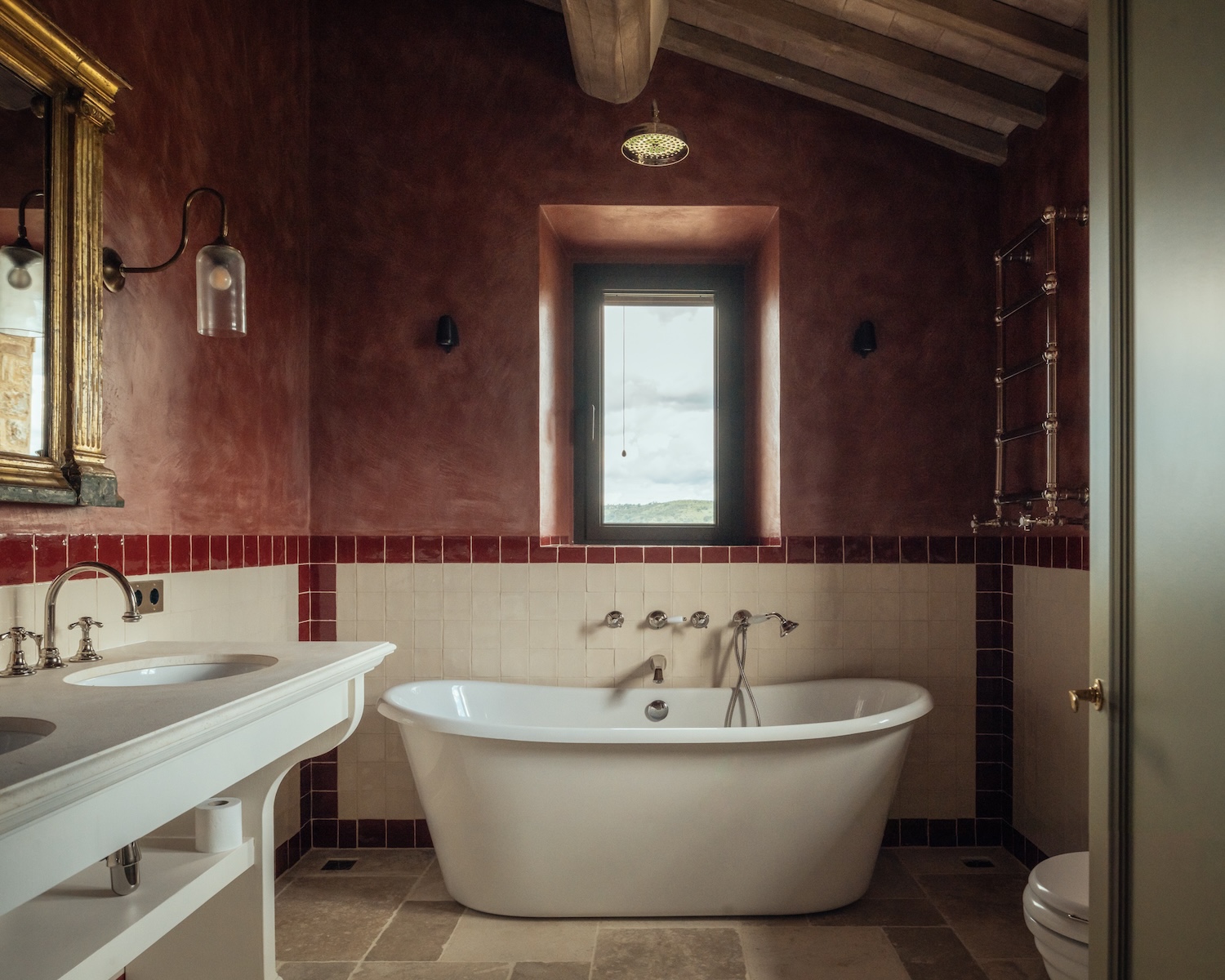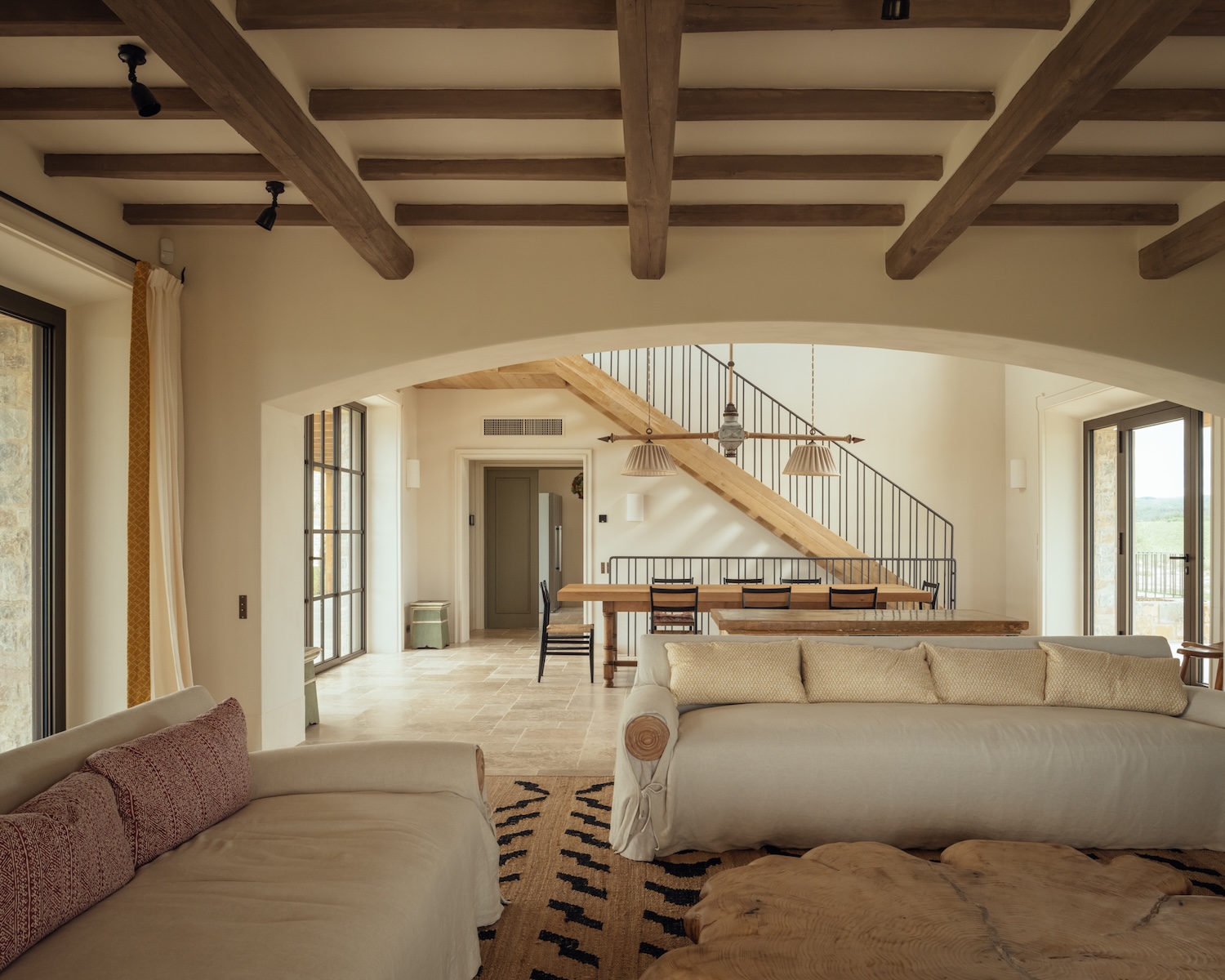
Ercolina is a minimalist residential estate located in Tuscany, Italy, designed by McLean Quinlan. Interior concepts were developed with Tommaso Ziffer in collaboration with Studio GAA Architects. Later on, a Spanish interior design studio came onboard to refine the interiors and decorative scheme. Antique furniture is paired with frescoed doors and ceilings, set against sweeping views of the landscape. These layered elements enrich the spaces without overwhelming the architecture’s quiet restraint, allowing light, proportion and the surrounding landscape to remain central. The Maremma region of southern Tuscany carries a particular architectural memory – hilltop settlements, defensive towers, and stone construction worn into the landscape over centuries. Ercolina, a private estate spread across two hilltops within thirty hectares of olive groves, draws on this inheritance without reproducing it. McLean Quinlan’s first completed project in Italy demonstrates how vernacular literacy, when applied with discipline, can produce architecture that reads as neither restoration nor imposition.
The estate comprises three buildings – the Tower, the Barn, and a guest house – positioned across adjacent hills roughly 150 metres apart. Their placement was driven by topography, prevailing breezes, and sightlines stretching toward the lagoon of Orbetello and the Argentario peninsula. The Tower occupies the footprint of a former chicken coop, a pragmatic decision that enabled the preservation of mature olive trees and allowed shade to penetrate the architecture naturally. This kind of site responsiveness – working with existing access routes, established planting, and long views – characterises the practice’s approach from the earliest stages of design.
The Tower’s slender proportions reference the medieval civic towers scattered across central Italy, from San Gimignano to the hillside settlements of the Maremma itself. Rather than citation, the form functions as orientation – a vertical landmark that anchors the estate within the broader landscape without commanding it. Arched openings and carefully proportioned windows draw from local precedent while calibrating generously to the light and views. Curved geometry reappears throughout, informed specifically by the stonework of nearby Magliano, whose defensive walls and historic structures provided a close material and formal reference rather than a regional abstraction.
Stone pulled directly from the site’s ground forms the primary walling material, connecting the buildings literally to their terrain. Shallow terracotta roofs and traditionally detailed openings – including the Barn’s angled tiled windows – reinforce the material logic. The deliberate use of Italian tiles, locally sourced stone, and conventional detailing gives the buildings an apparent age that sidesteps the self-conscious newness common to contemporary rural retreats. The architecture registers as familiar within its landscape rather than inserted into it.