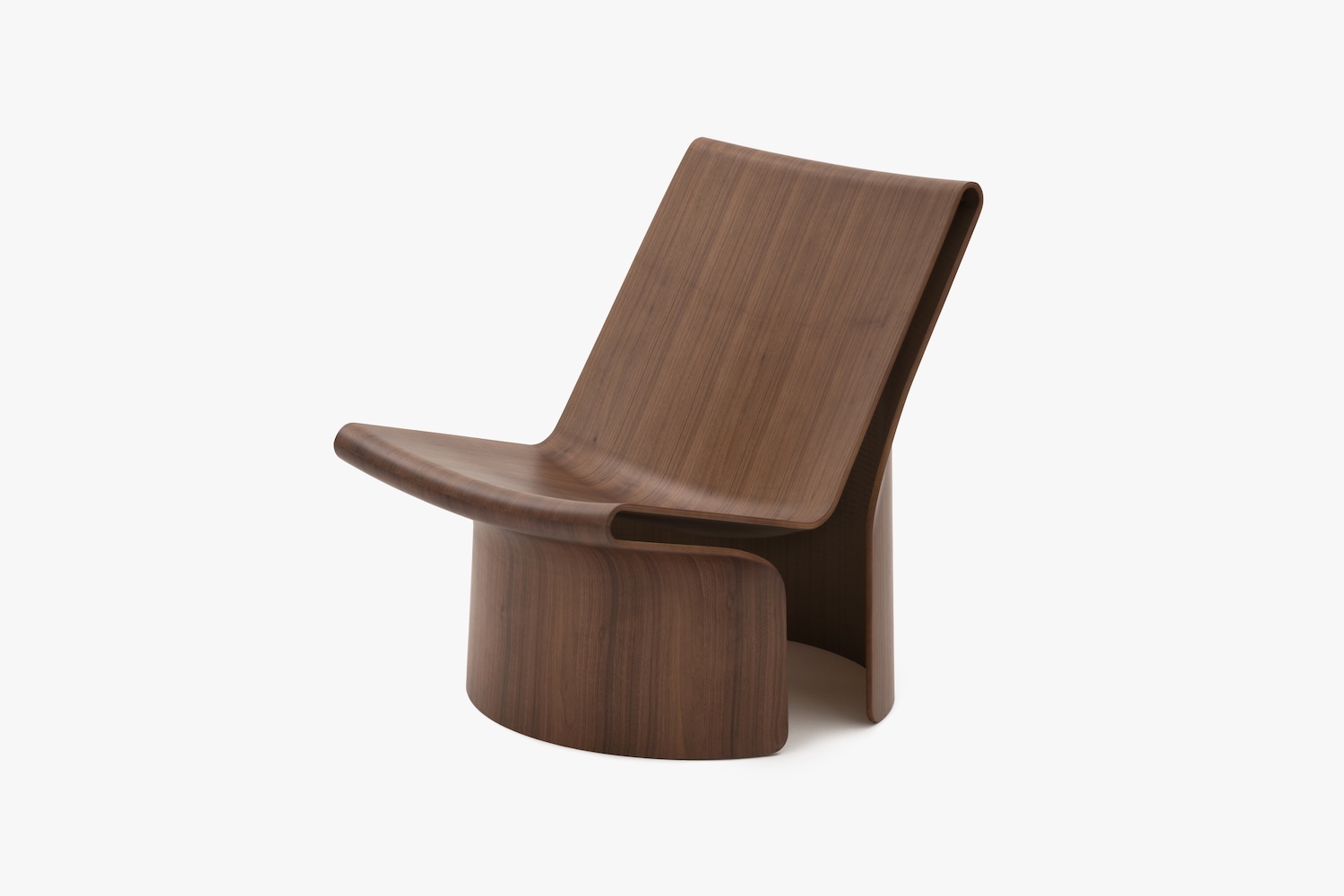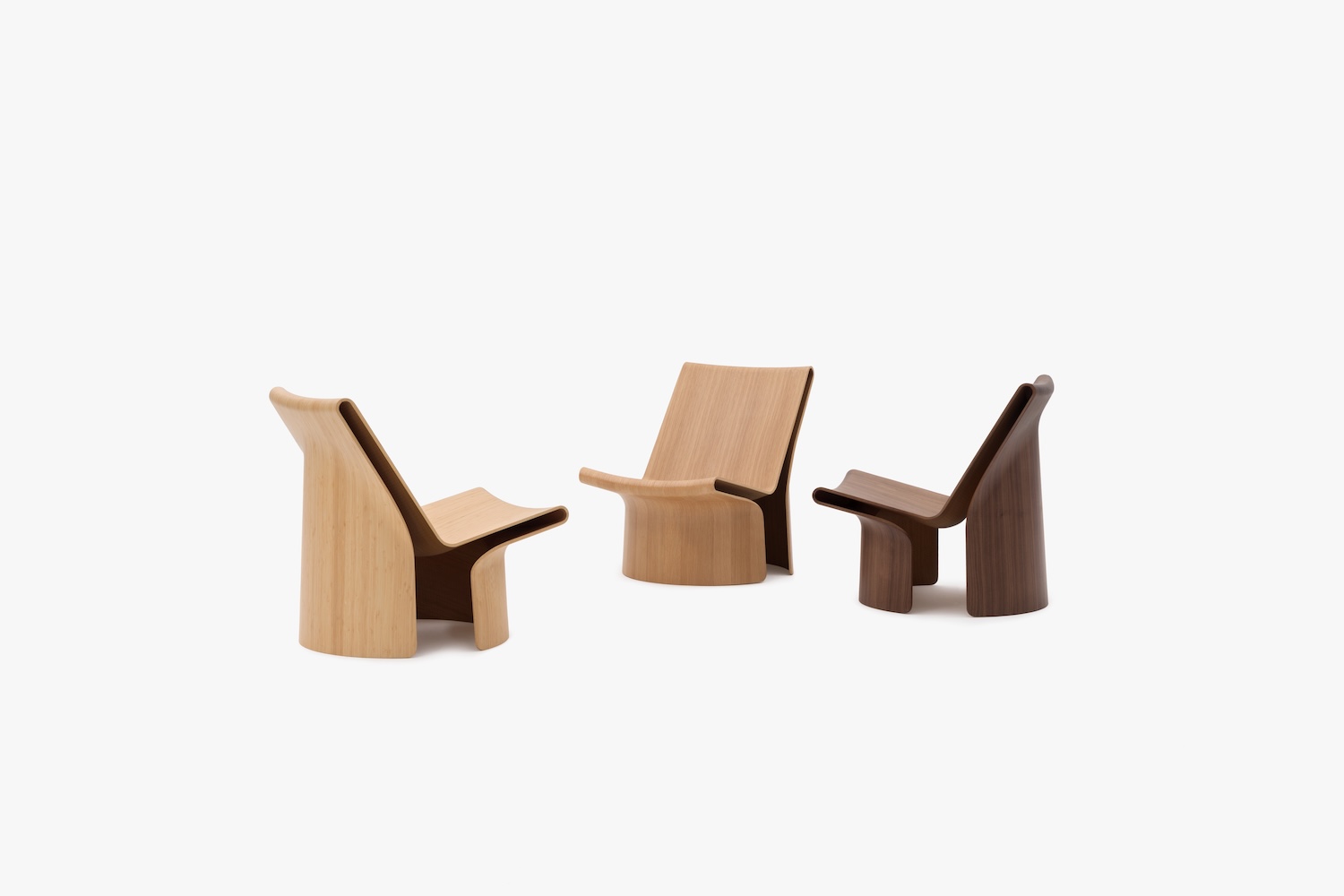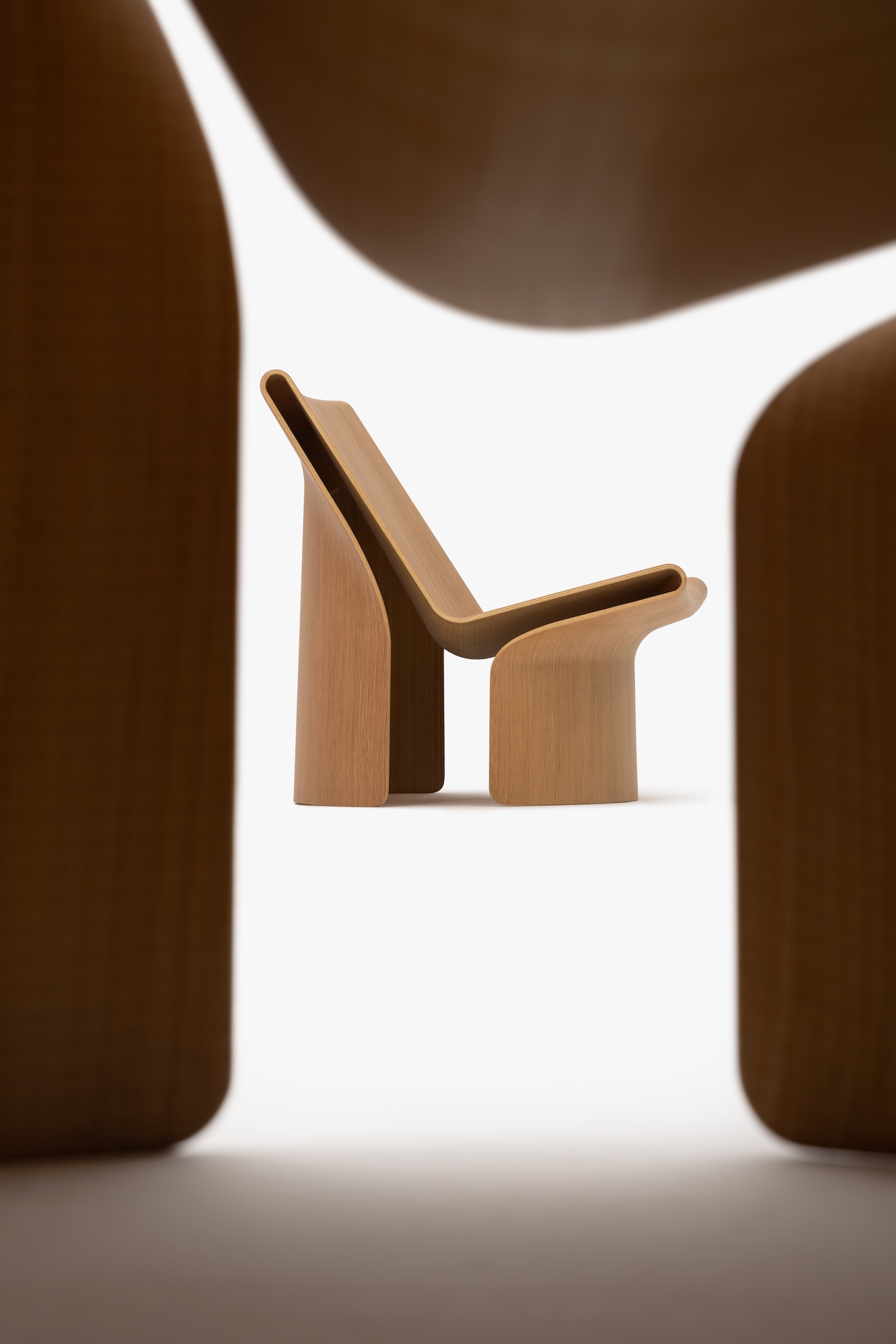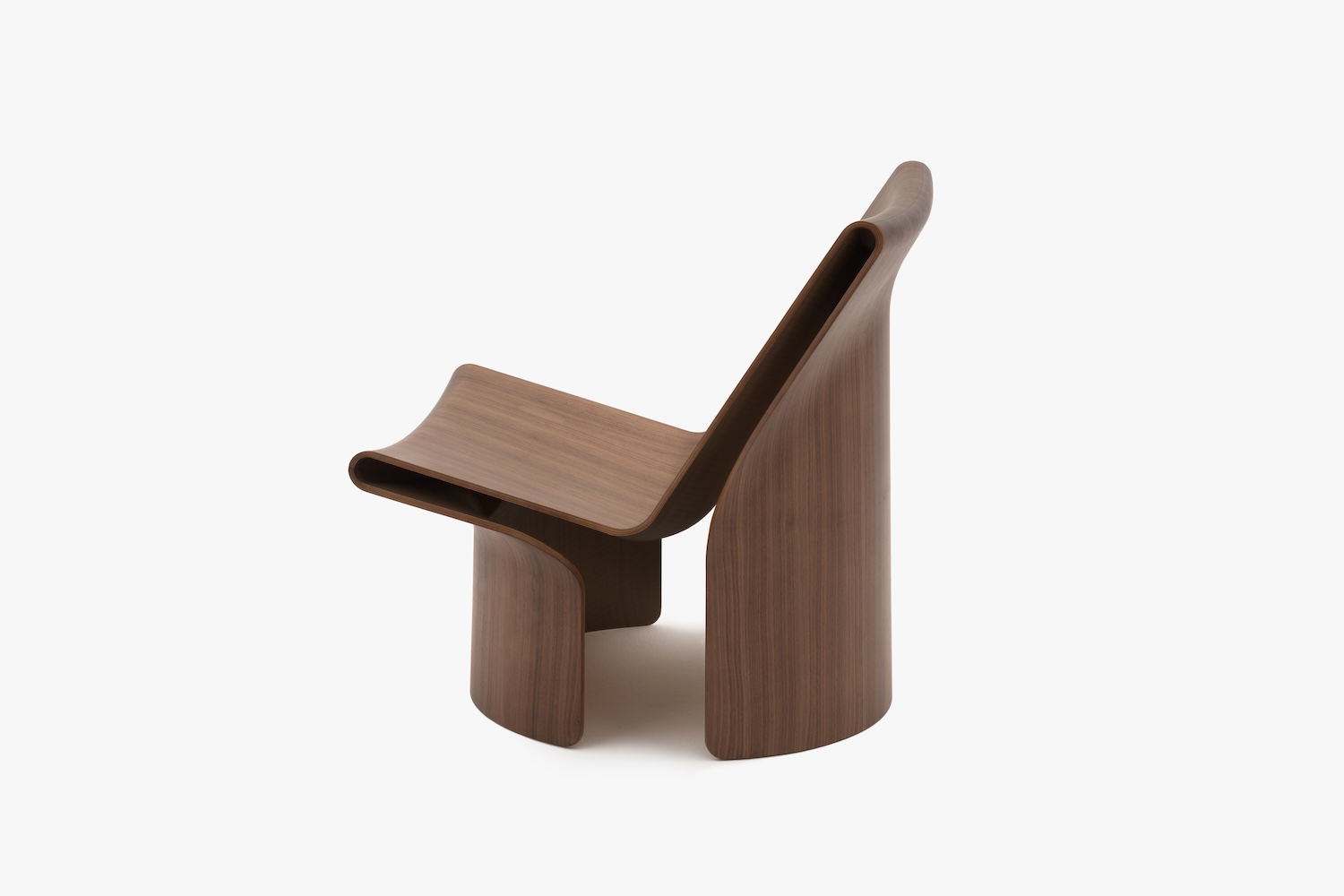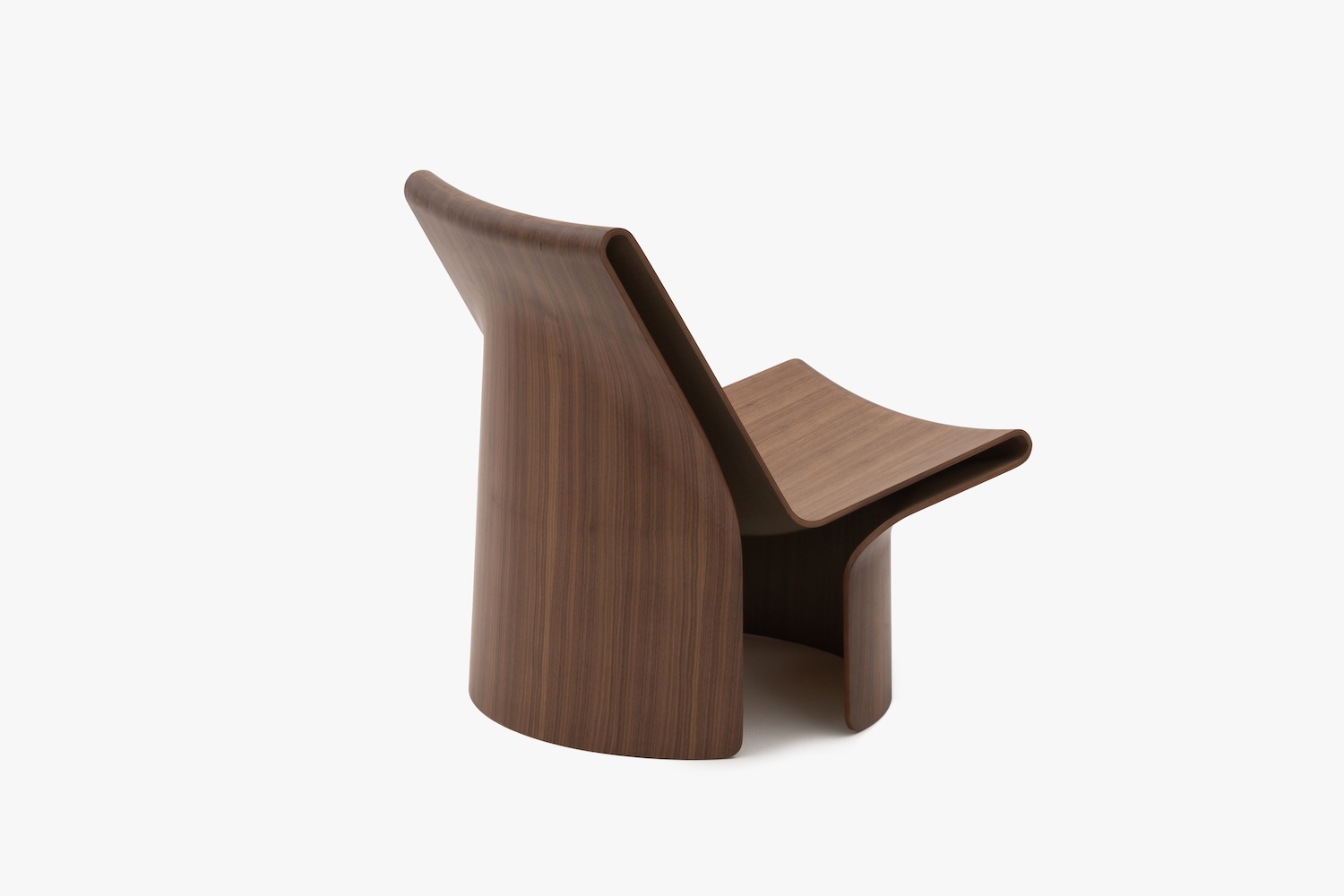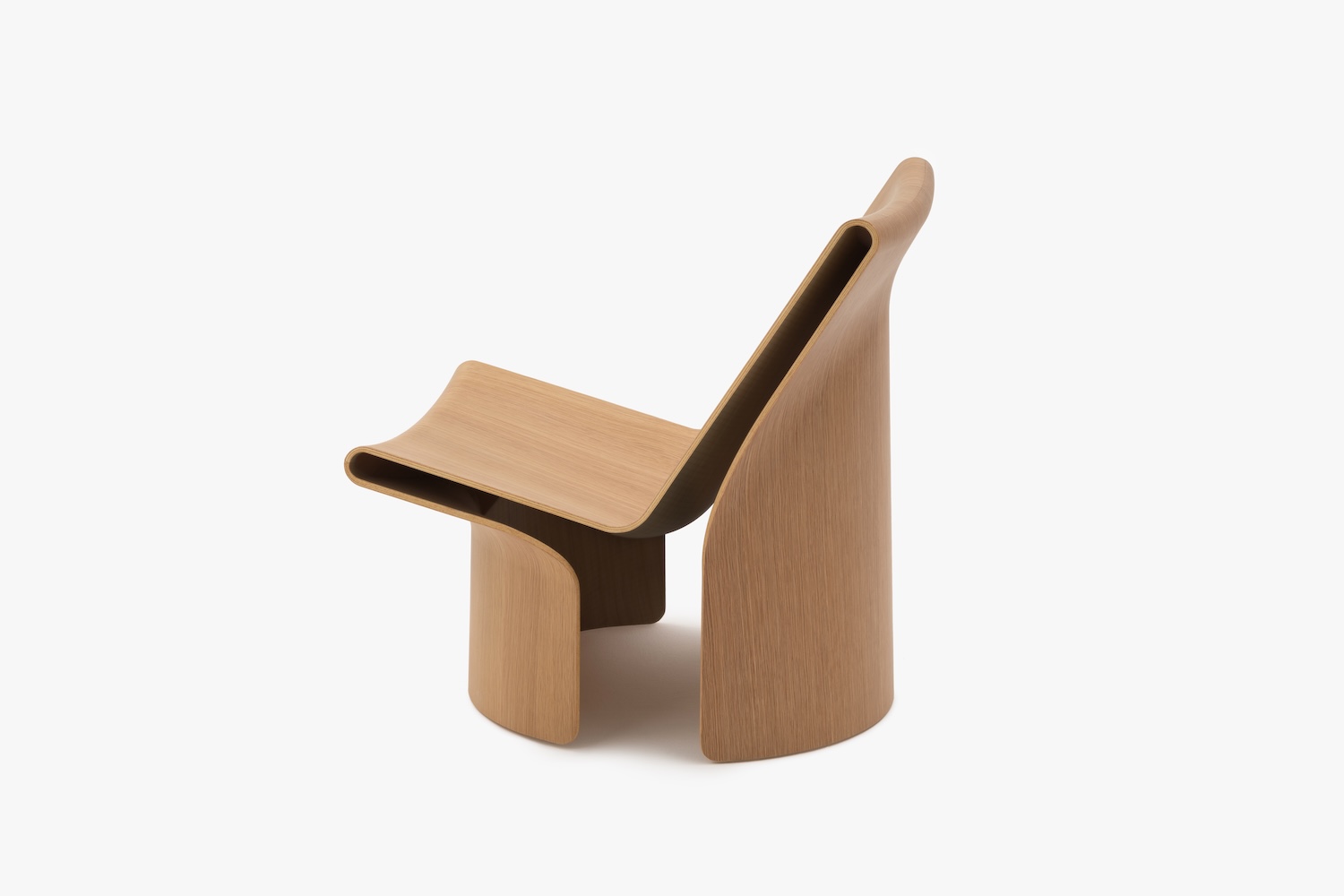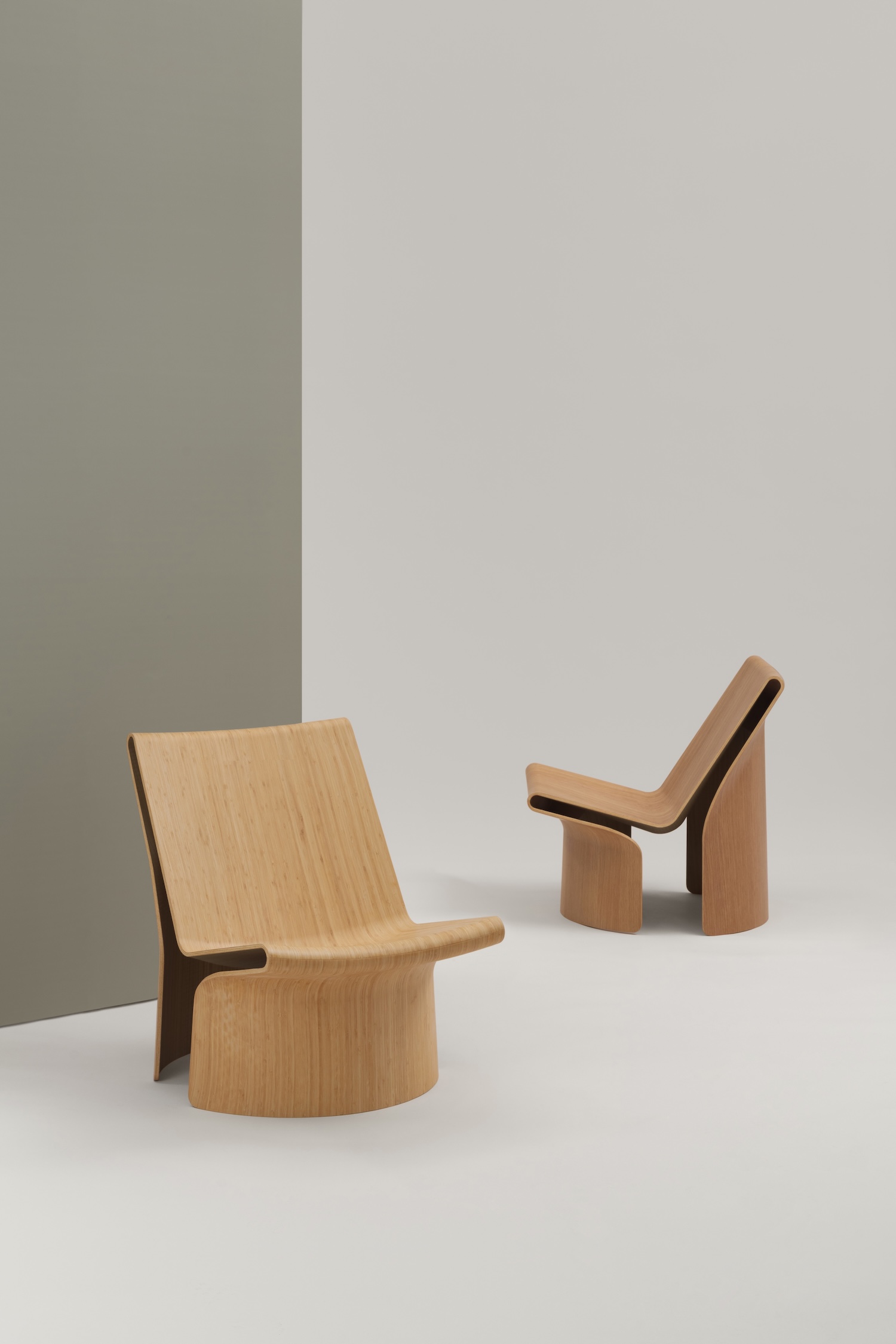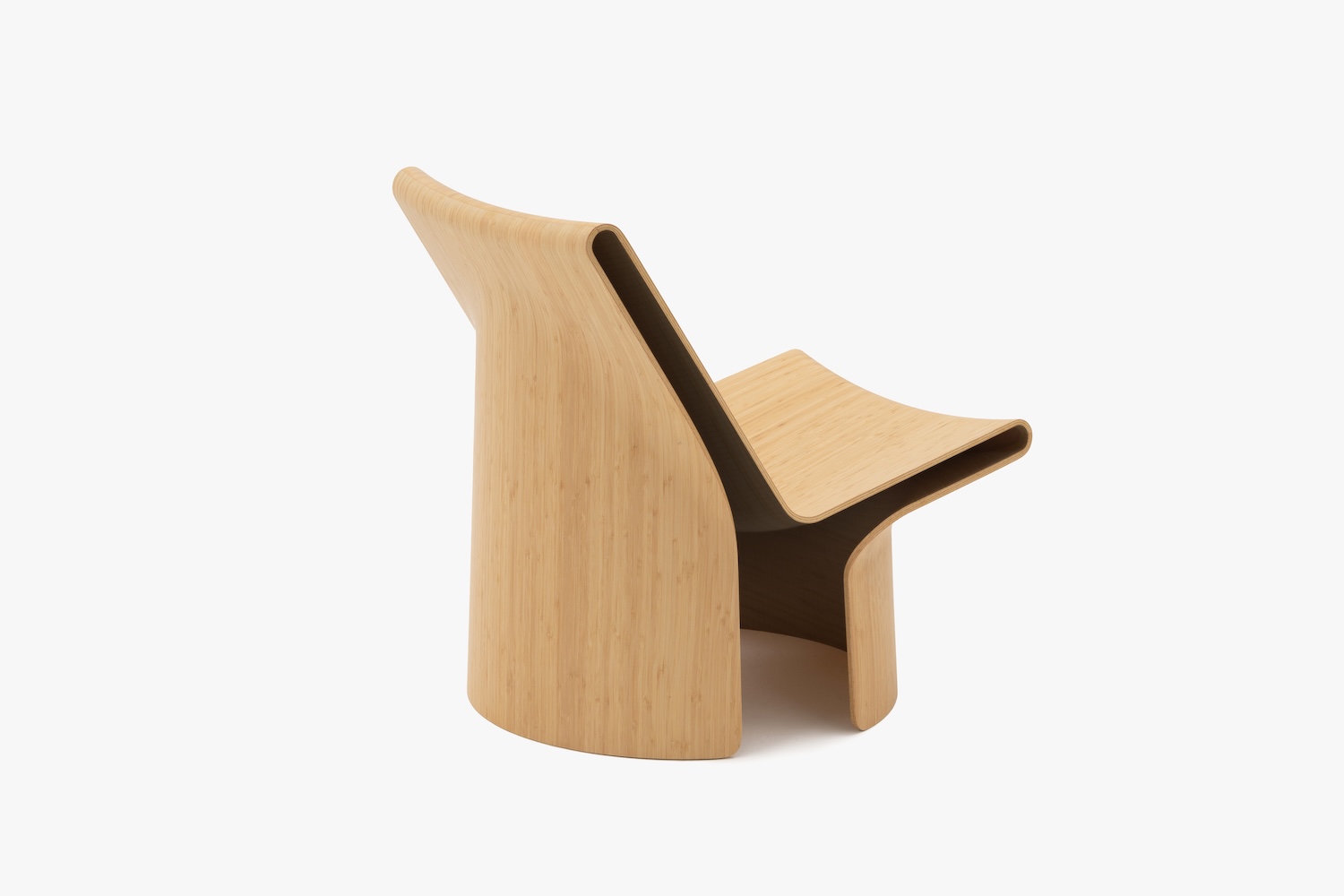
Layup Chair is a minimalist lounge chair created by Vancouver Island-based independent designer Nathan Martell, produced in collaboration with Established & Sons. Bent plywood carries one of the longer traditions in modern furniture design – from the compound-curve experiments that Eames and Saarinen entered into MoMA’s 1941 Organic Design for Home Furnishings competition, to the production breakthroughs those experiments eventually made possible. Each generation of designers working in the medium has found itself negotiating the same tension: what the material wants to do versus what the designer needs it to do. Martell approaches that tension directly with Layup, using 3D-molded veneer to push the boundary further than conventional bent plywood manufacturing typically permits.
The construction consists of three discrete pieces of 3D-molded veneer joined into what reads as a single continuous form. That seamlessness is the central technical achievement. Where most bent plywood chairs resolve their geometry through visible joinery or upholstery that conceals structural transitions, Layup absorbs those transitions into the surface itself. The result is a chair that presents as a sculptural gesture – one uninterrupted sweep of material from back to seat to base – while concealing the complexity required to produce it. A bamboo plywood core runs through the structure, lending both consistency of flex behavior and a sustainability-oriented material logic that aligns with the visible finish options in bamboo, oak, and walnut.
The name carries a deliberate double meaning. Layup references the laminated construction of the veneer assembly – each layer of material laid up against the mold to build the form. It also borrows from basketball slang, where a layup is the simplest shot on the court. Martell uses the term ironically: a chair that appears visually effortless and structurally resolved was, in practice, repeatedly declared impossible to manufacture. The joke runs through the project, and it connects to something more substantive about how the chair came to exist. Martell originally developed the concept for a competition organized by a plywood manufacturer – a context that rewarded conceptual ambition over production pragmatism. That origin freed him to propose something beyond the limits of available technology at the time.