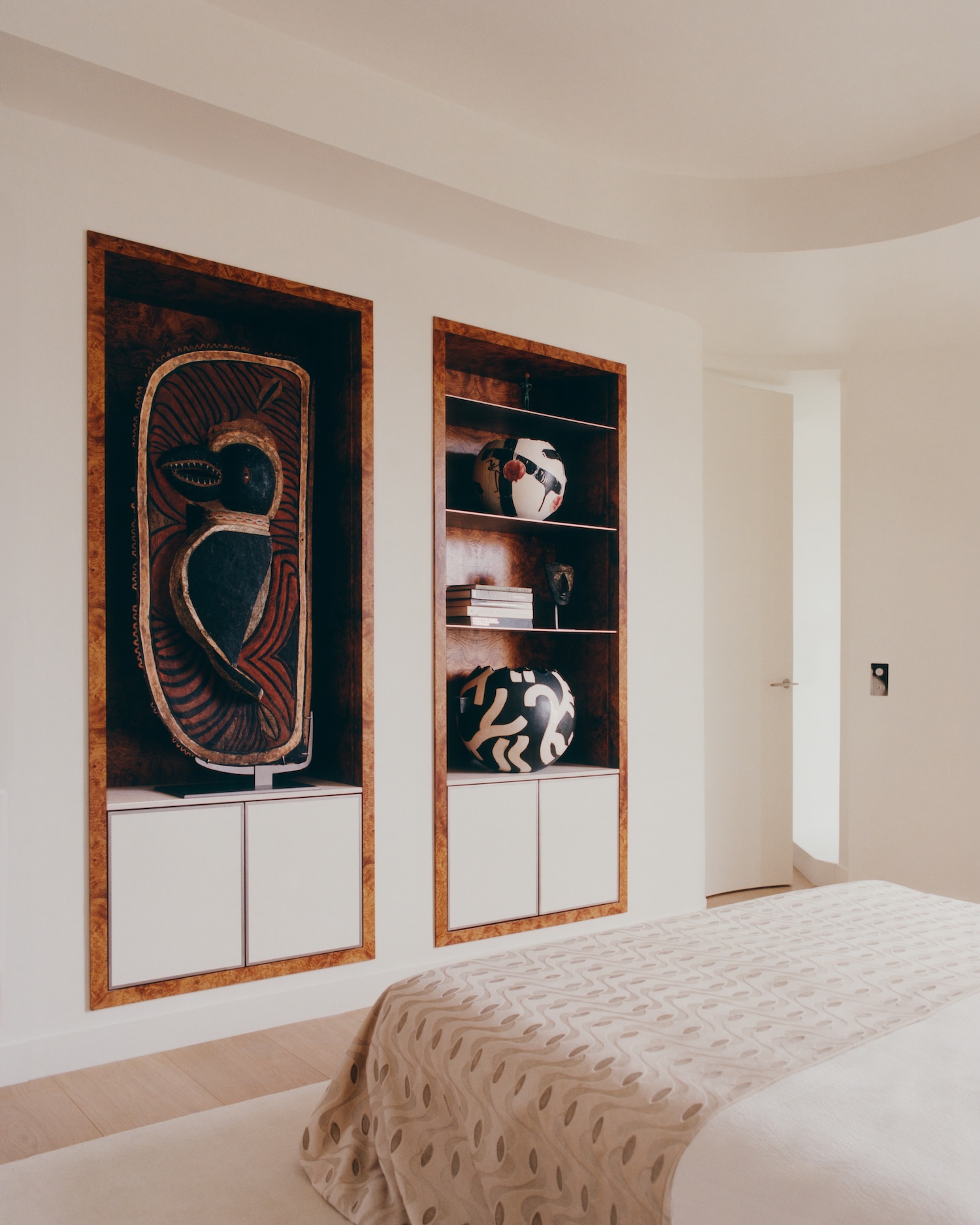
Panthéon is a minimalist apartment located in Paris, France, designed by Rudy Guénaire. Perched on the penultimate floor of a 1920s building above the city’s zinc rooftops, the apartment frames the dome of the Panthéon and uses that vantage as a premise. Guénaire treats the interior as a place outside of time, letting distant eras drift into one another until chronology loosens its grip, a sensation he likens to the temporal slippage of a Nabokov novel. The strategy is not pastiche. It is a careful collision of periods held together by a single material gesture.
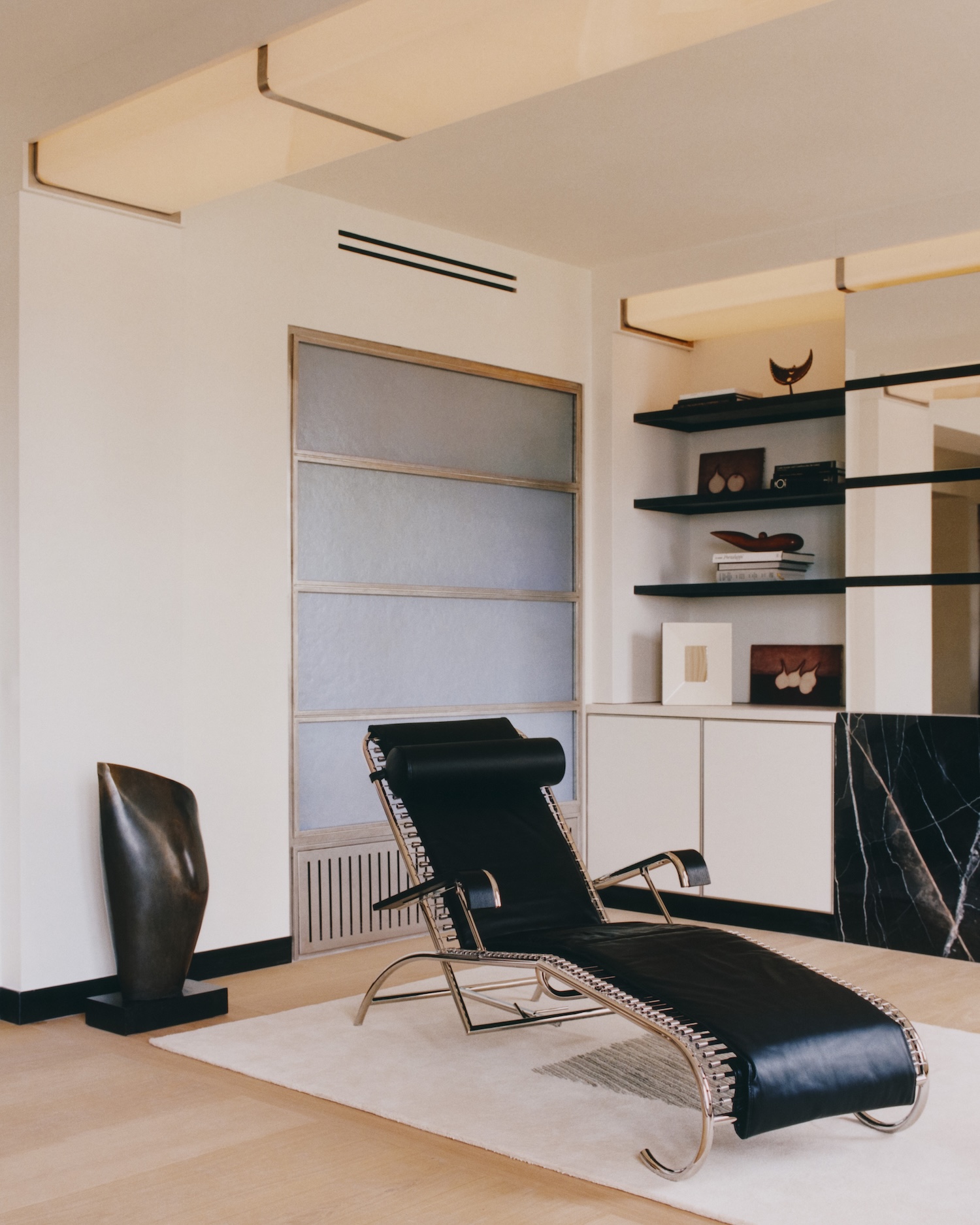
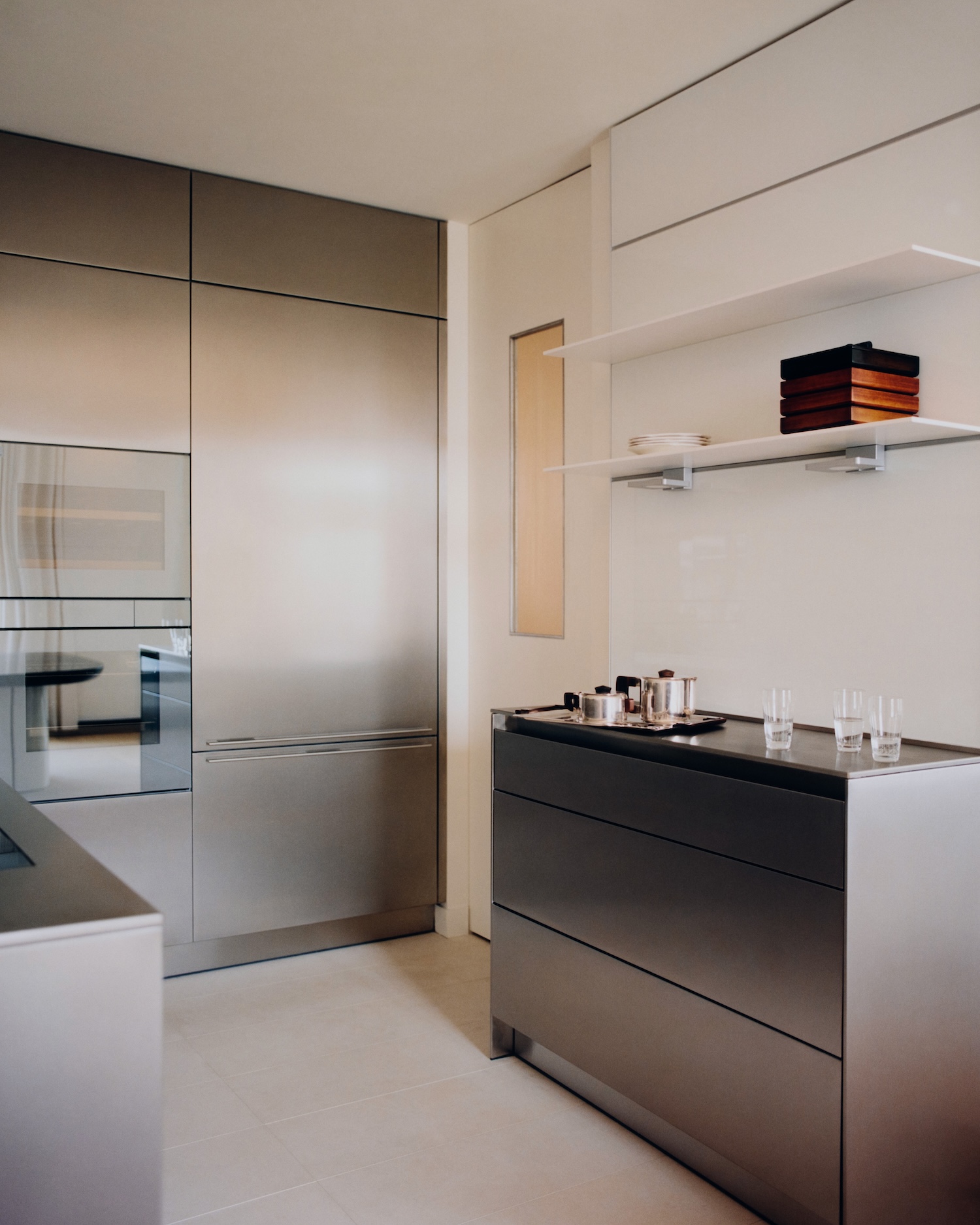
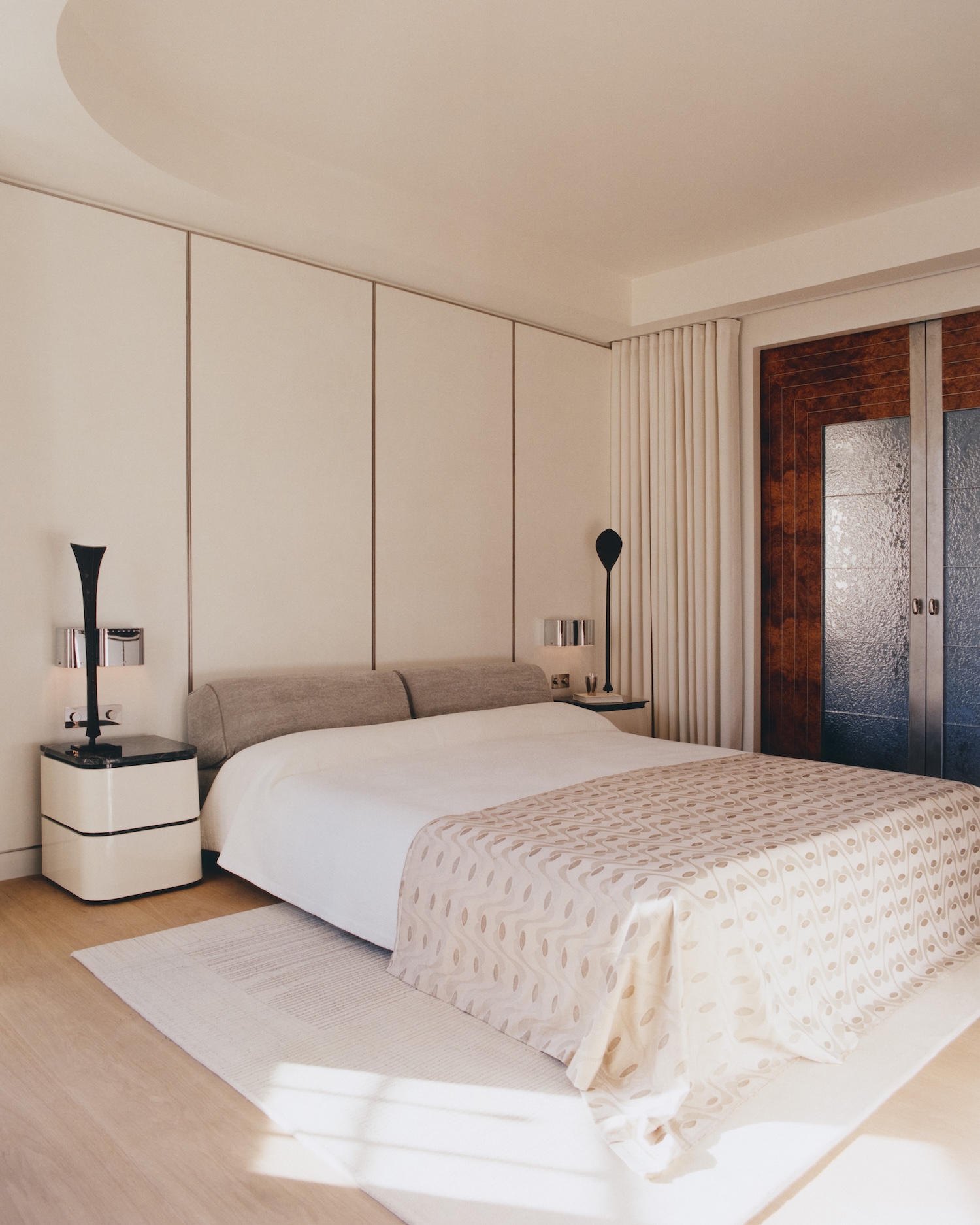
That gesture is stainless steel. The entrance nods to Gae Aulenti’s interiors at the Palazzo Pucci in Florence, the moment Guénaire identifies as the metal’s passage into the avant-garde. From there it becomes the connective tissue of the project. Stainless-steel marquetry frames handmade glass panels by Raphael Barrois, and the technique reaches its fullest expression in the monumental doors to the primary bedroom. Their geometry recalls Art Deco, yet the execution belongs firmly to the present. The reverse face shifts register entirely, clad in amboyna burl and bordered by brushed steel inlays, a quiet argument that warmth and machine precision need not be opposites.
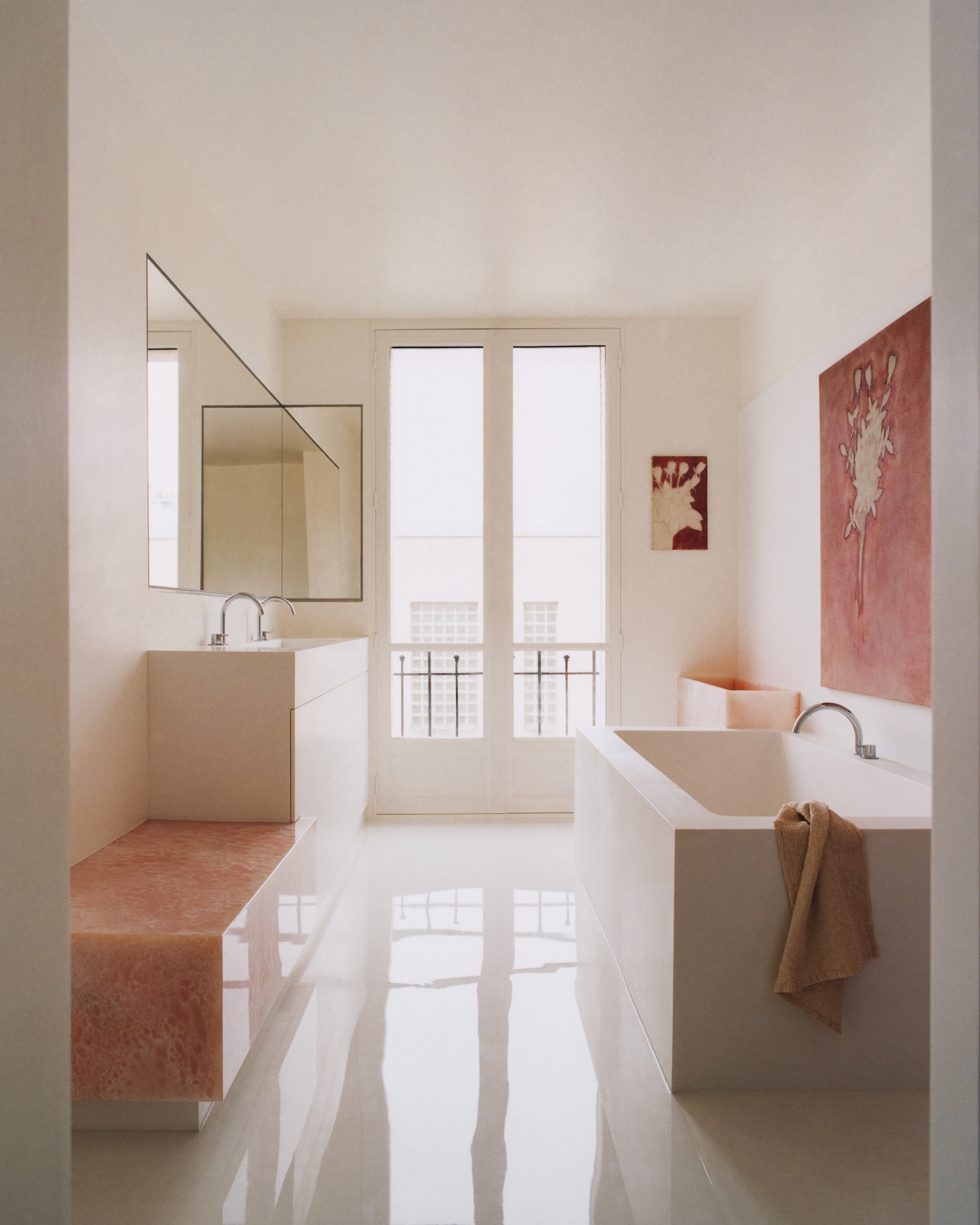
Material contrast drives the rest of the scheme. Crystal acrylic and resin sit beside oak floorboards that run six metres long and thirty centimetres wide, milled from German timber and laid to produce an almost acoustic softness. Iranian onyx supplies the most theatrical surfaces, lining two bathrooms in lagoon blue for the parents and strawberry-sorbet pink for the daughters, the stone’s translucence reading like weather trapped in mineral form.
Much of the furniture was conceived for the apartment after a journey through Brazil, and the influence registers in line rather than ornament. The living room coffee table reworks Elsa Peretti’s Bean, its two legs tracing complex curves that approach but never meet. The dining table pairs a smoked pearwood top with four gently curved legs in high-gloss lacquer, while a nearly invisible bench floats on a crystal resin support. Lighting follows the same logic of disappearance. Cast acrylic fixtures set within stainless steel recall the obsessive integration of light into 1920s interiors, diffusing a warmth that never declares its source.