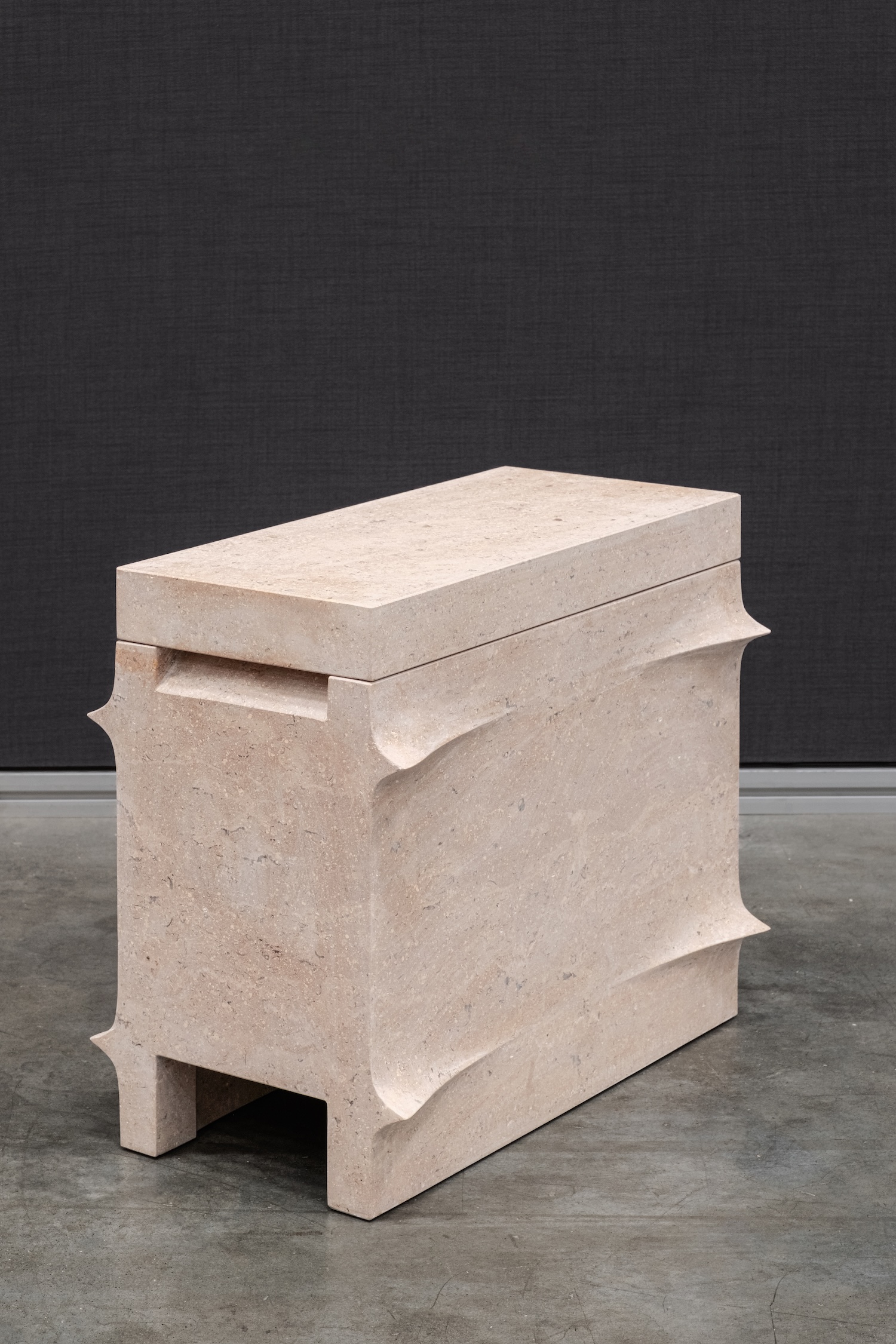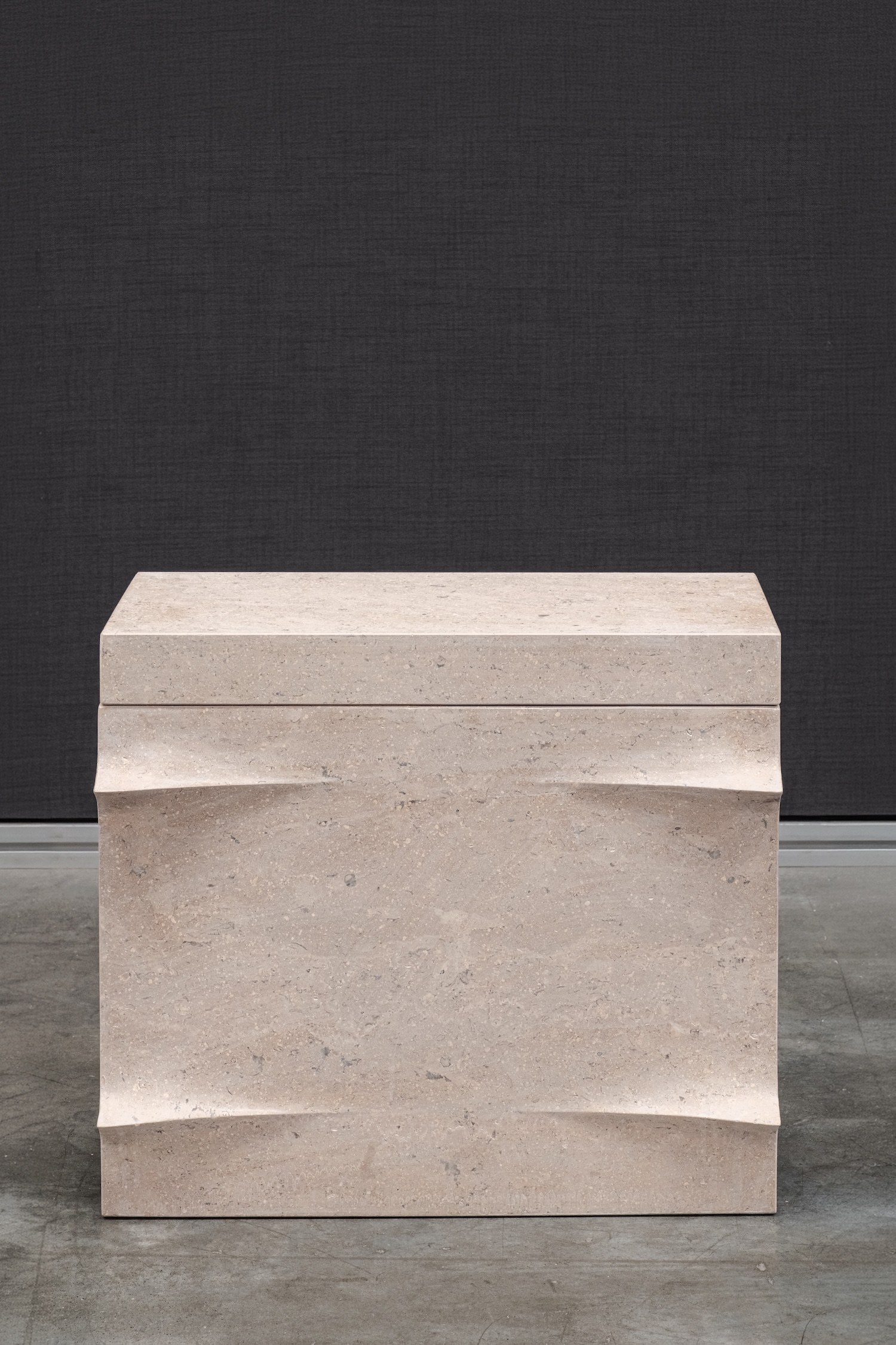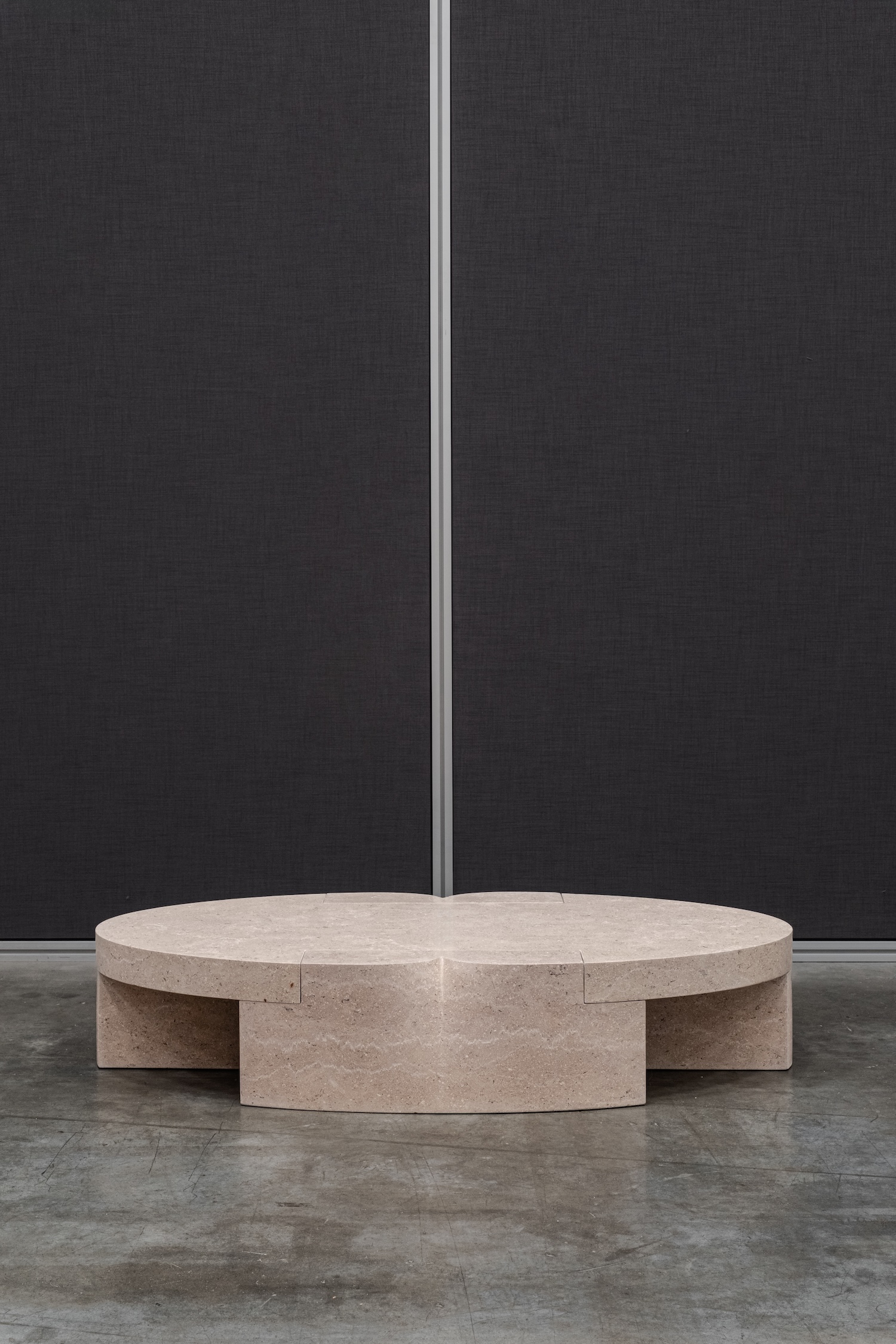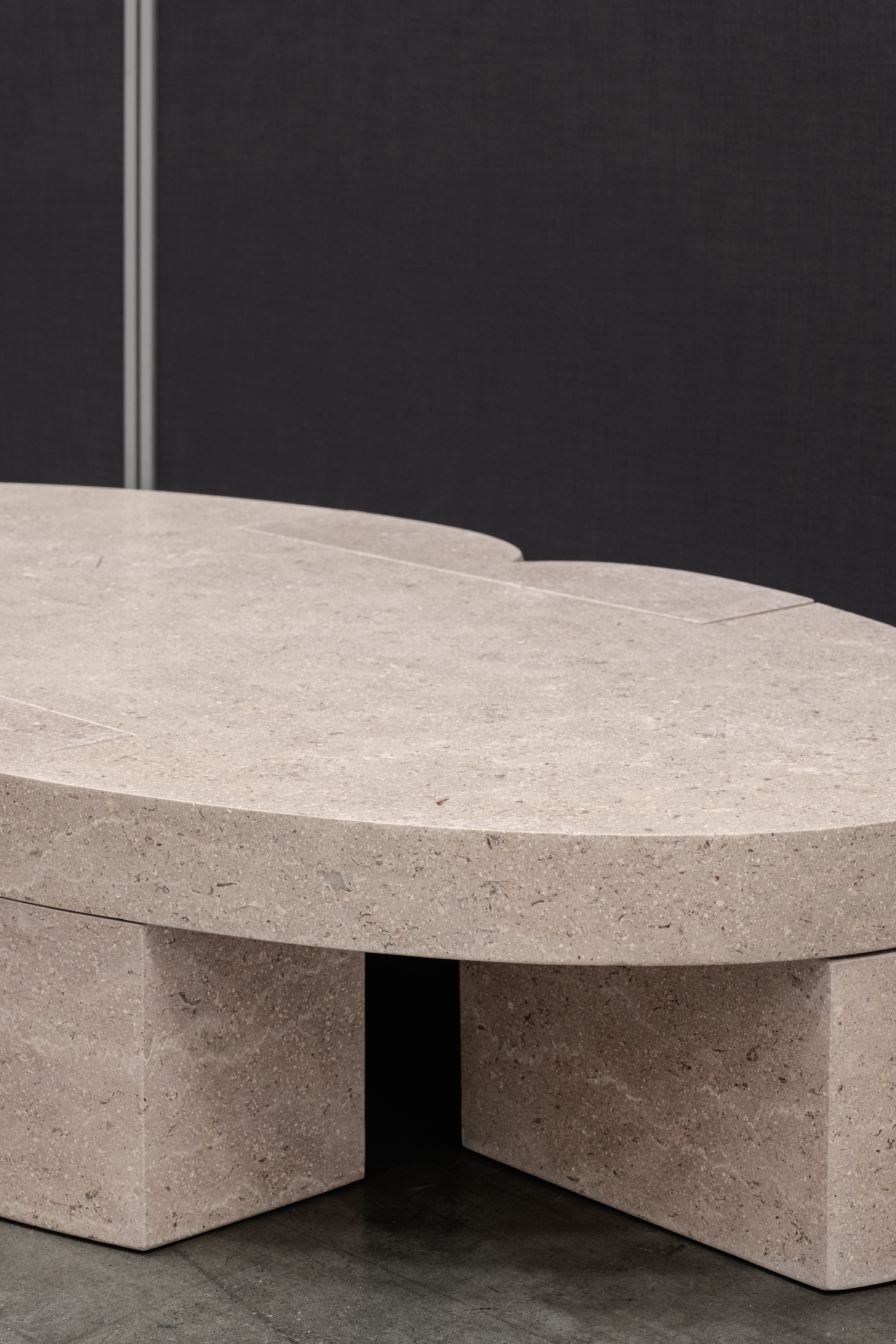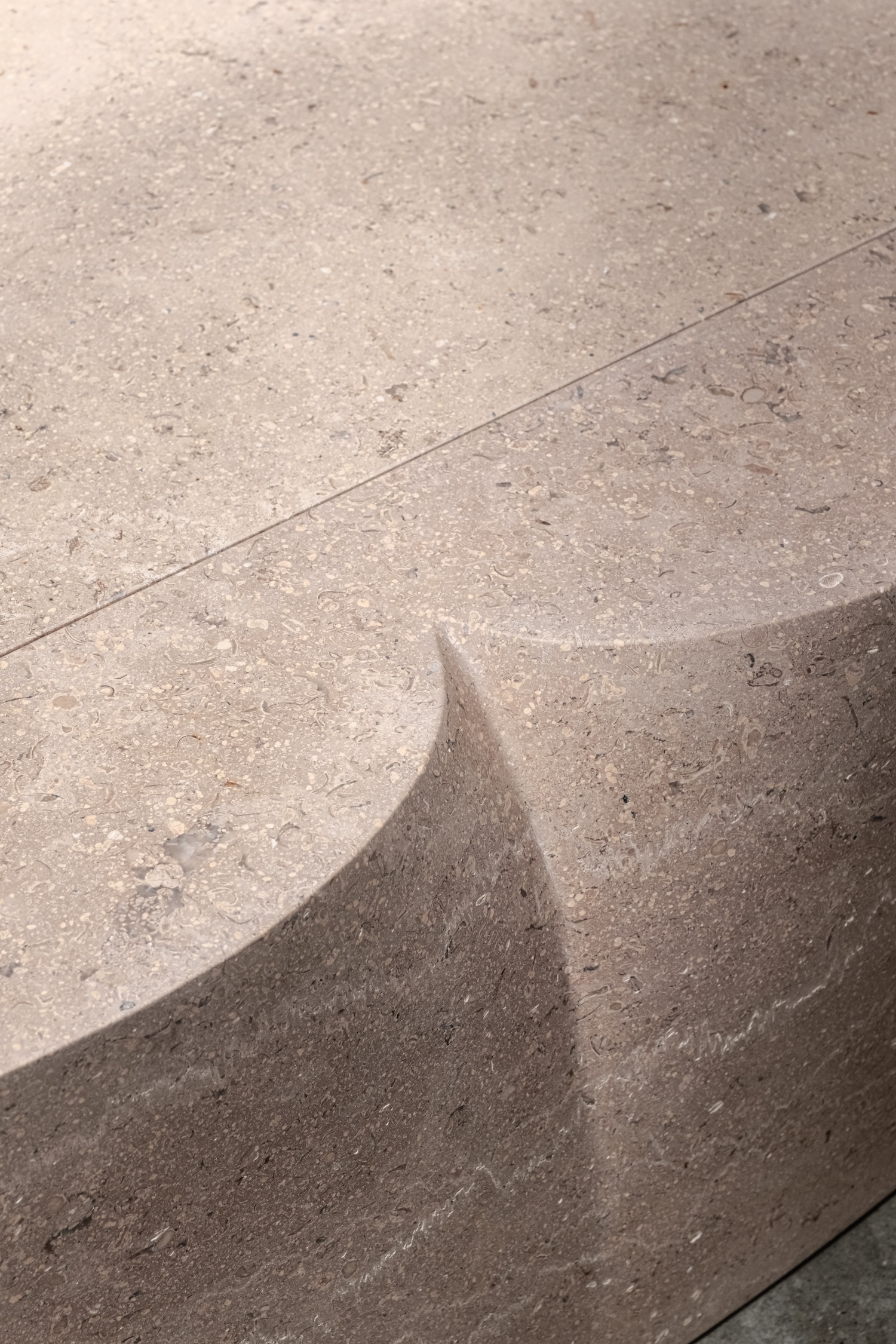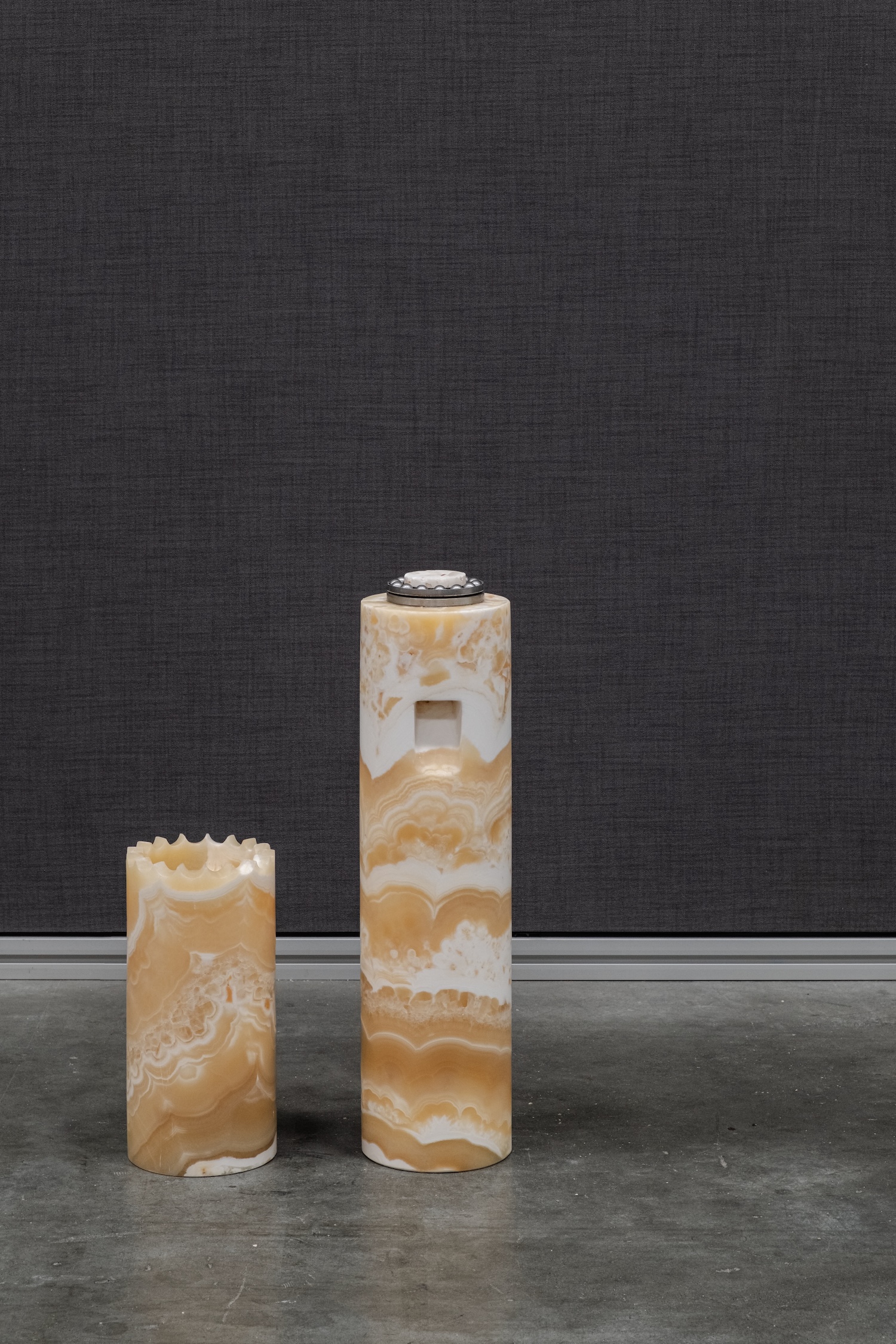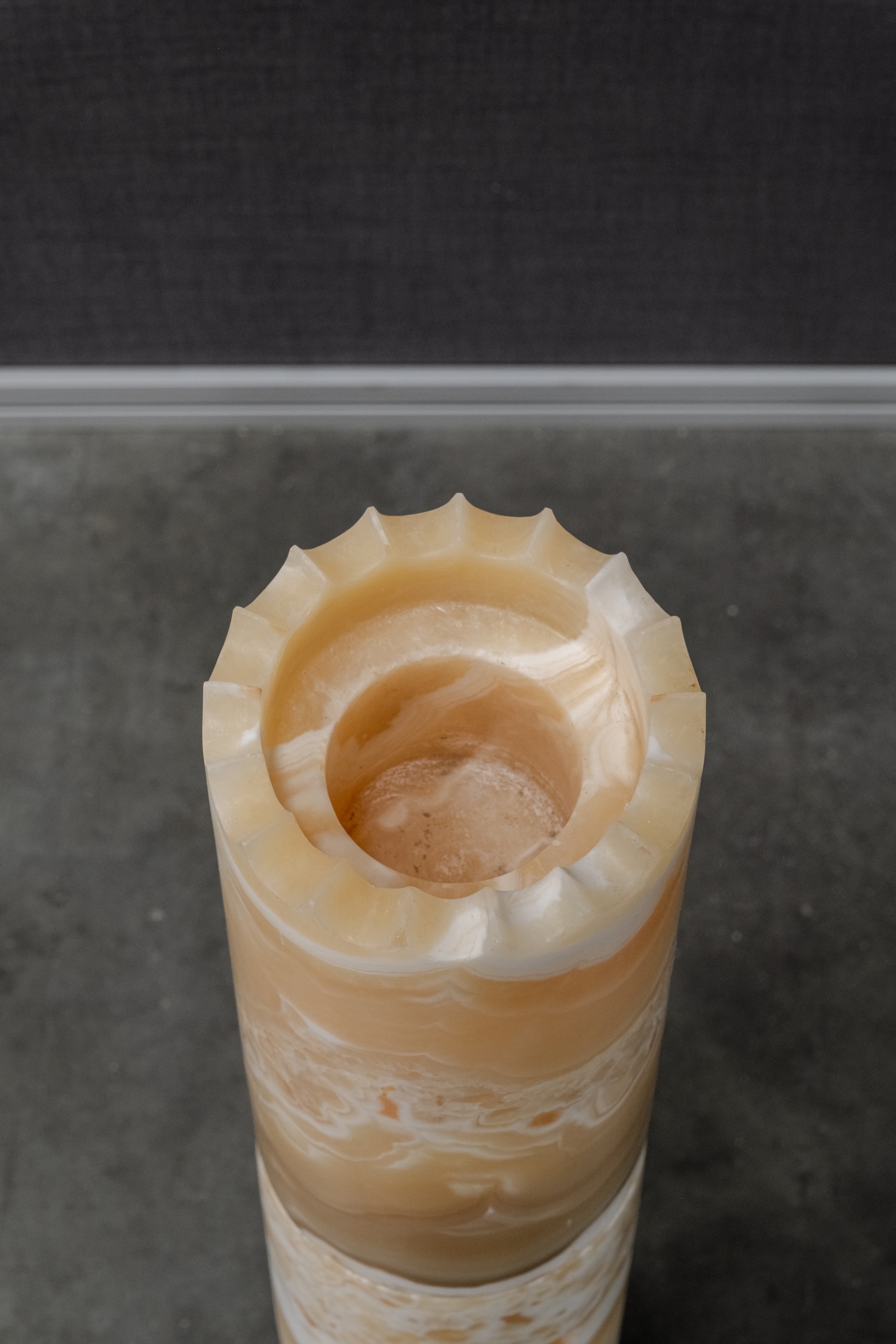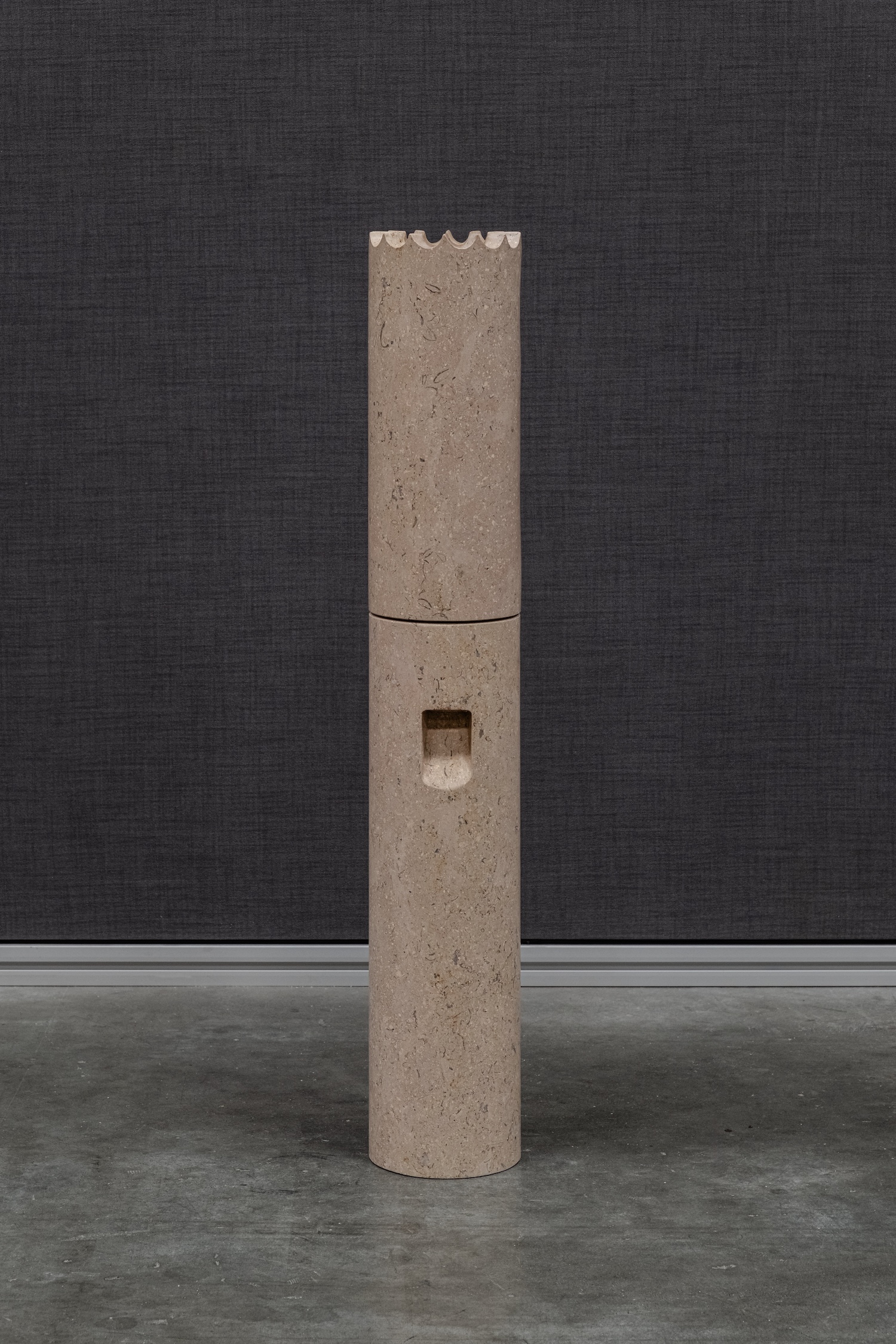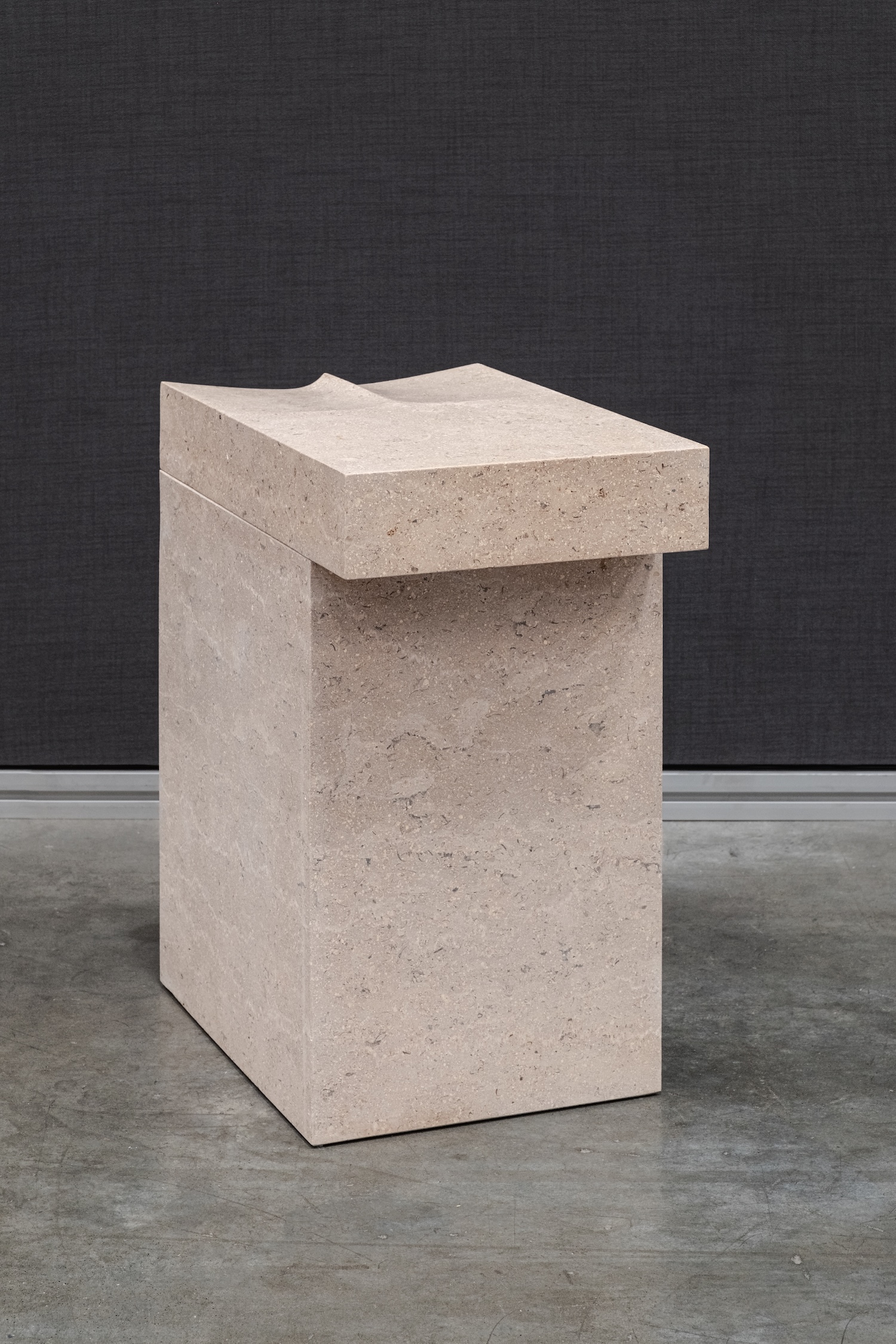
Tight Spot is a minimalist stone object collection created by Montpellier-based design studio Heim+Viladrich. The collection takes a single gesture and turns it into an entire structural language. Working with stone, a material that reads as both immovable and quietly workable, Lauriane Heim and Johan Viladrich apply a pinch to otherwise uncompromising volumes. A concave or convex compression presses into the mass, and that small intervention reorganizes how the whole object is understood. What begins as a strict geometric outline relaxes into an organic surface, as though the block had briefly behaved like clay before settling back into permanence.
That tension between hardness and apparent softness is the conceptual core of the work. The studio chose to respect stone as a raw material and avoid elaborate transformation, treating Tight Spot as a study in simple geometric form rather than virtuosic carving. The pinch is intuitive rather than decorative, an economy of gesture that does the structural and the expressive work at once. There is a long lineage of carving stone to suggest something yielding, from the illusionistic flesh of Baroque marble to Noguchi’s restrained basalt, but here the lineage is stripped back to a minimal deformation, closer to the logic of pressing a thumb into wet plaster than to figurative sculpture.
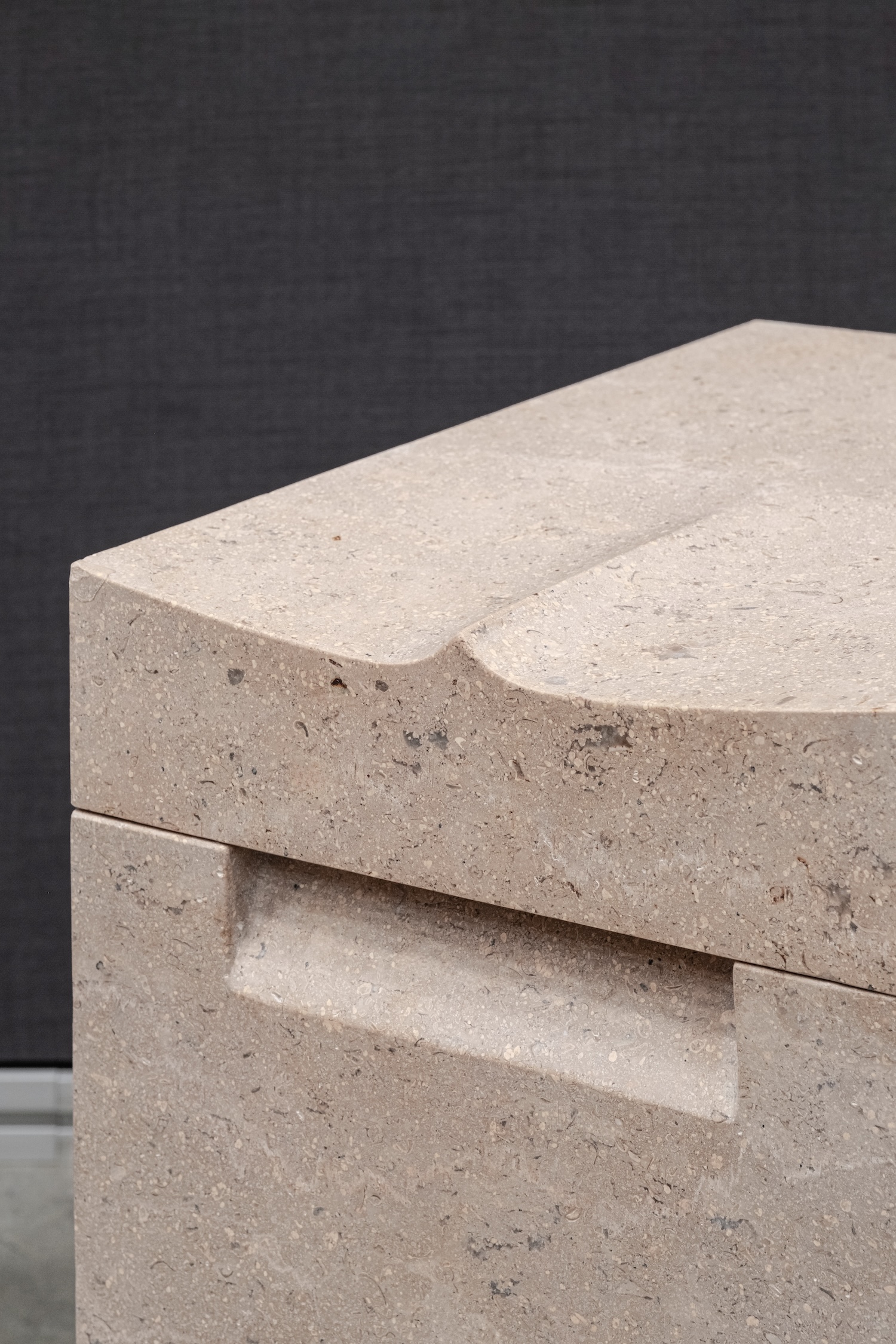
Material choice anchors all of this. The pieces are cut from Sinai Pearl, a sand limestone whose faintly shell-textured surface carries the memory of its sedimentary, marine origin. Finished in matte, the stone refuses gloss and keeps attention on weight and grain rather than reflection. The collection was developed with the brand Abi and produced at Marmonil, a third-generation Cairo stone company, and that grounding in an established Egyptian working culture matters. These are not gallery abstractions detached from craft but objects shaped by a workshop that understands how this particular limestone splits, holds an edge, and accepts a recessed curve.
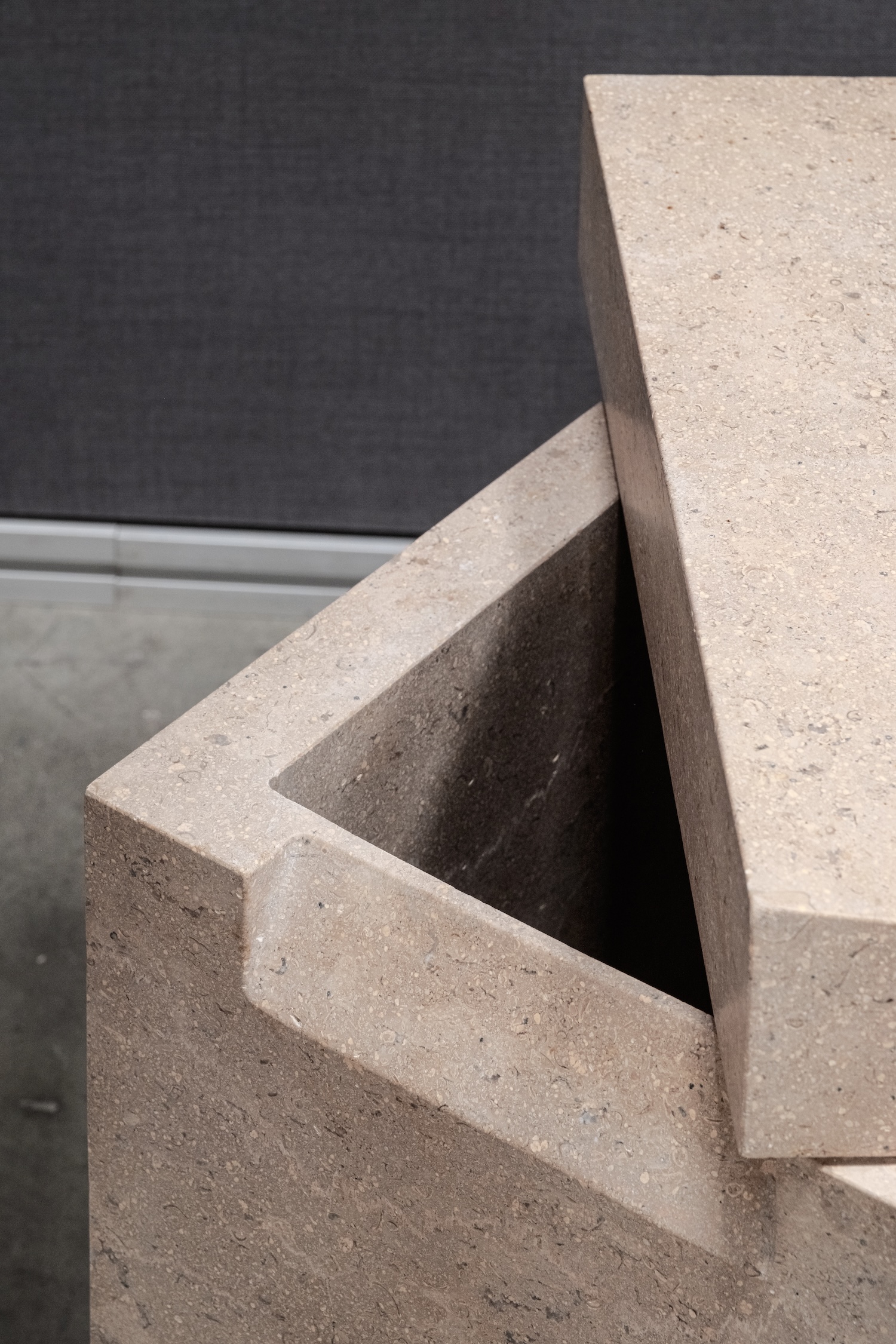
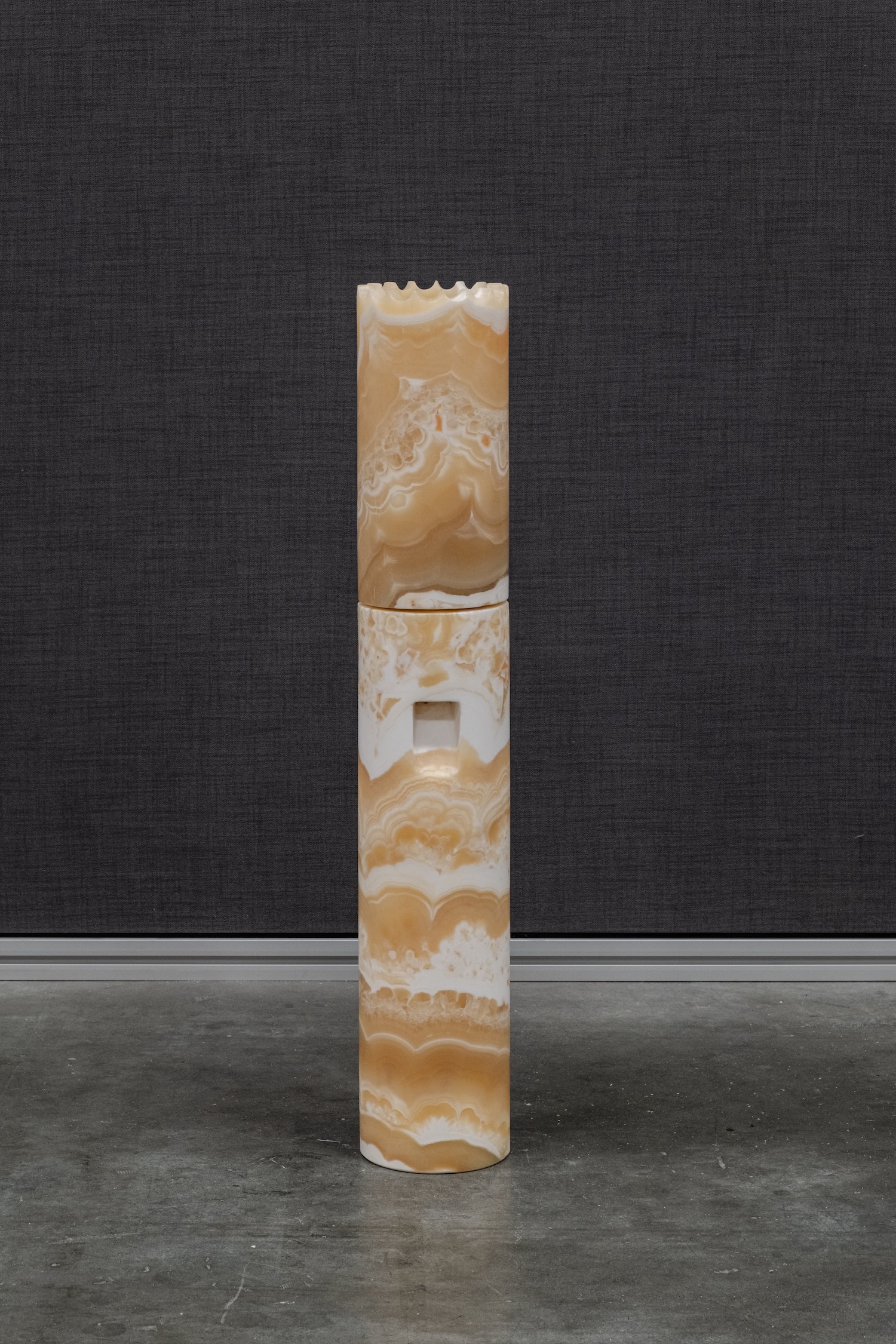
Across the four typologies, table, seat, ashtray, and chest, the pinch shifts register according to function. In the ashtray it carves the precise edge where a cigarette can rest. In the stool it marks and softens the point of contact, signaling where the body belongs. In the chest the gesture turns almost ornamental, reading as a protective fold rather than a use. One concept, four readings, which is what gives the ensemble its coherence. Because every piece is cut from the same stone and governed by the same move, they form a homogeneous family while remaining individually legible.