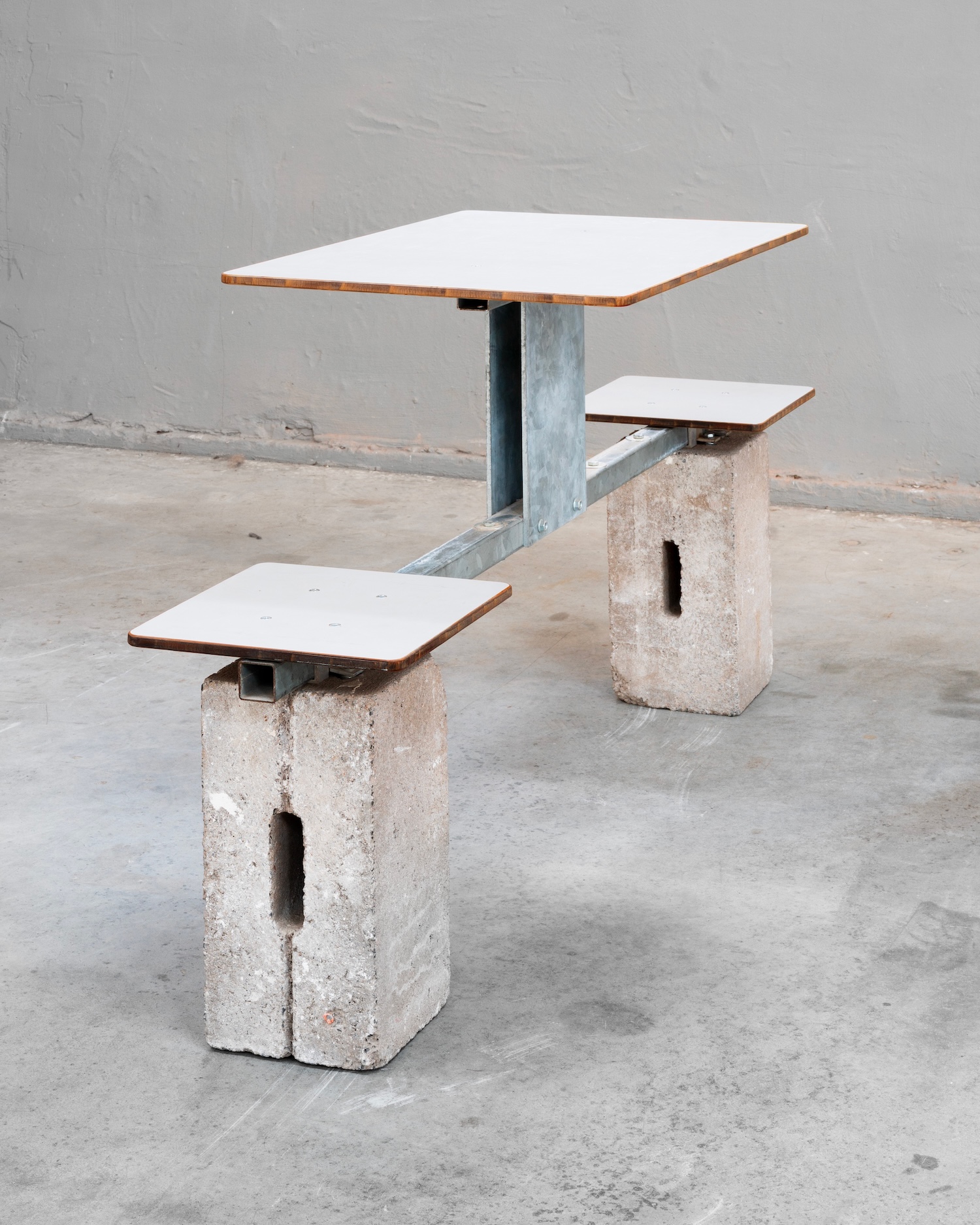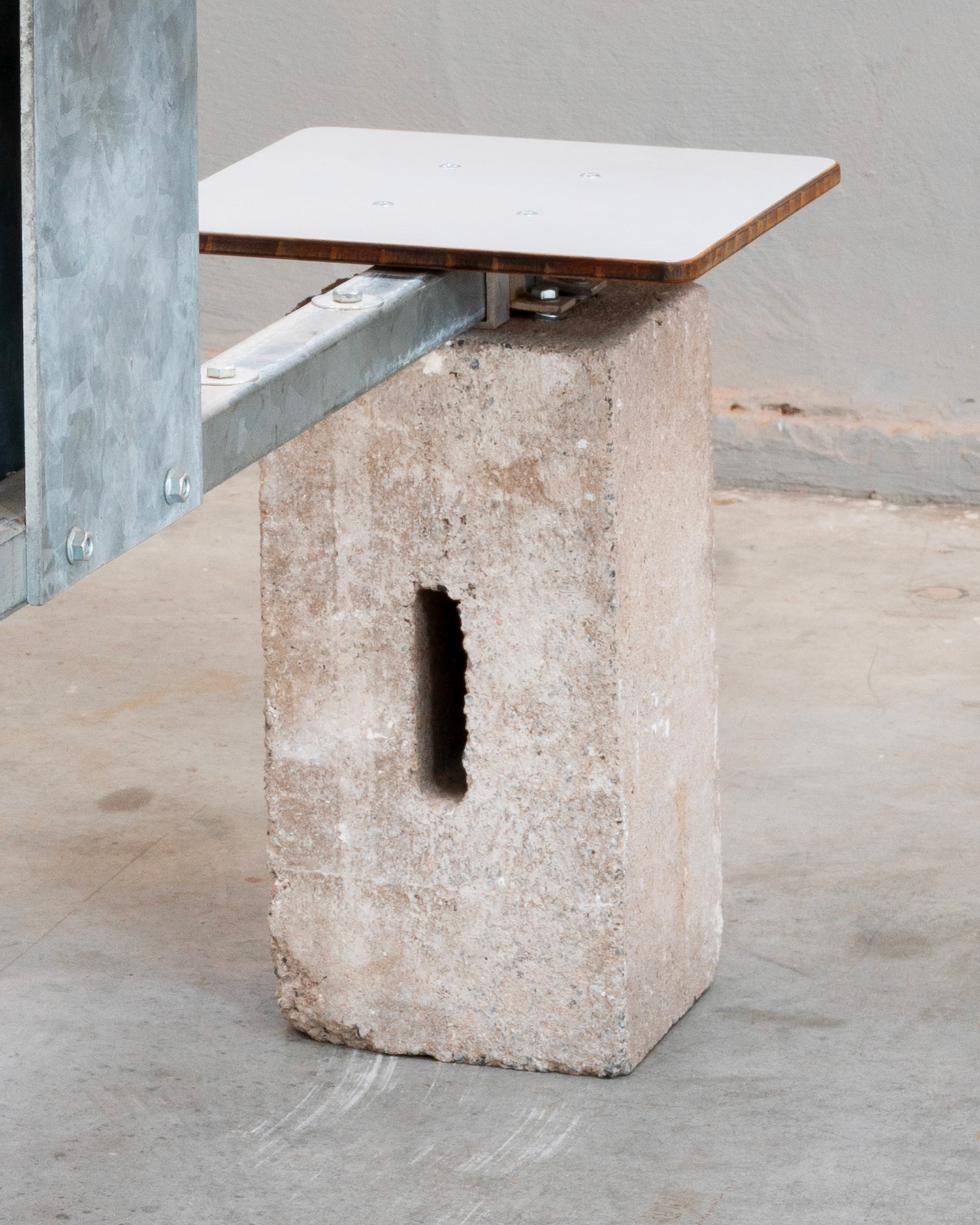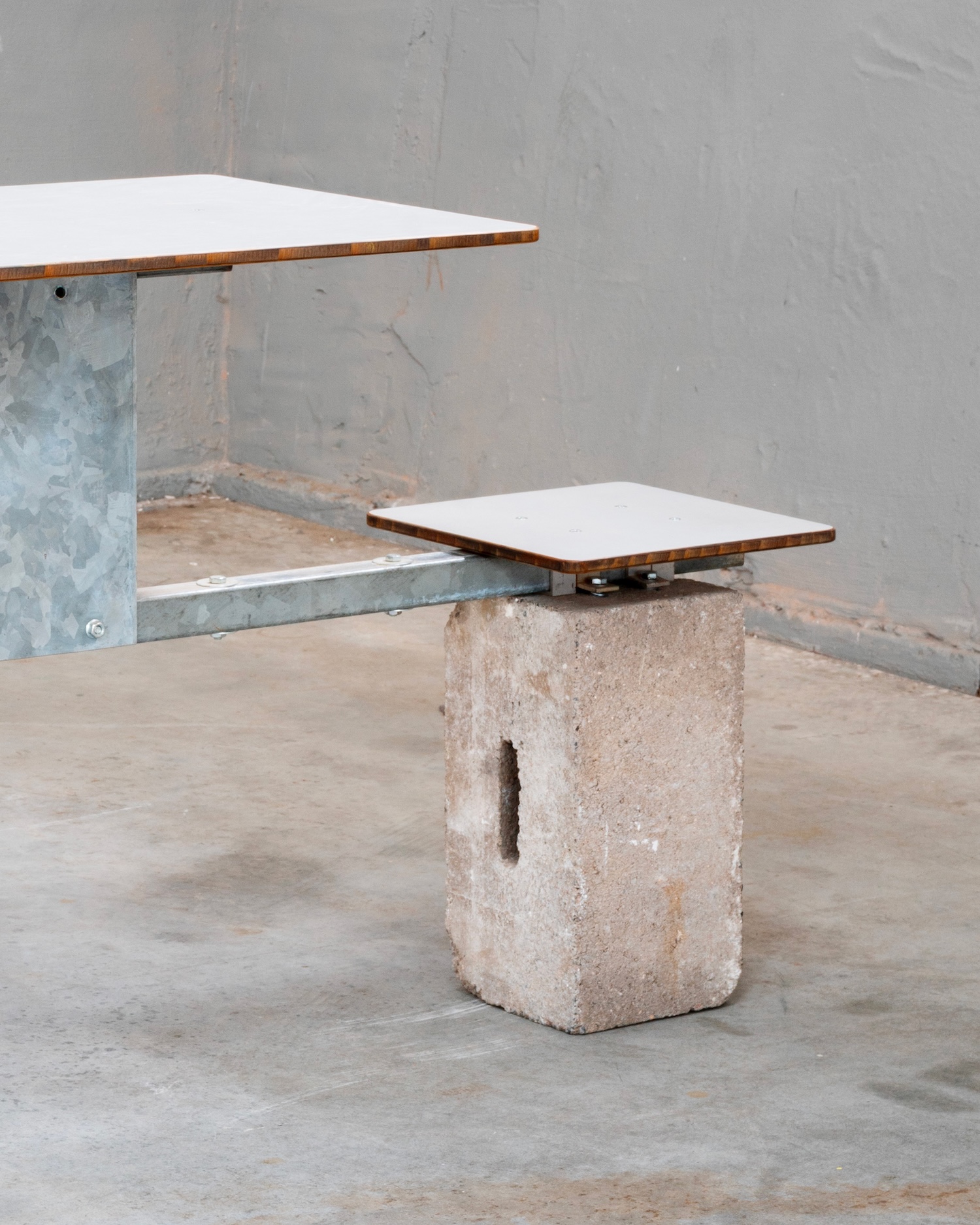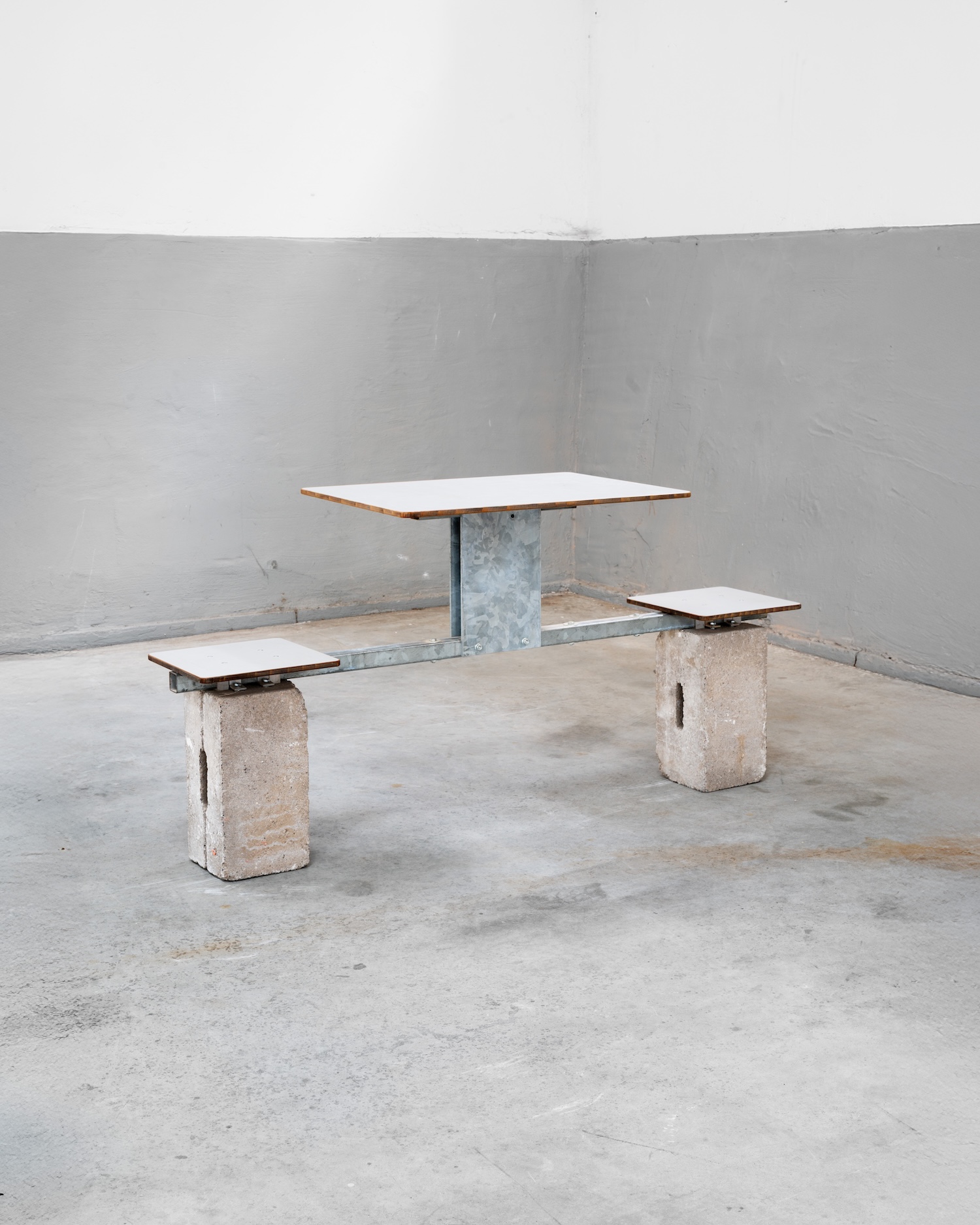
Two concrete blocks carry the Pic-Nic Table, a demountable outdoor table by designer Dries Hamels in Brussels, Belgium. They sit at either end as the supports, their mass doing the work a welded frame would normally handle, held to the rest of the structure by mechanical fasteners instead of a permanent joint.
The other parts arrived from earlier lives too. A galvanized steel bar spans between the blocks and carries the load of the top. The surface is built from old HPL panels, high-pressure laminate salvaged from a previous use and chosen partly because the material was made to survive weather and handling and has already proven that it can. None of the components were fabricated for this table. Each was repurposed from something else and left raw, so scuffs, oxidation, and factory markings stay visible on the finished object.
A picnic table is usually a single welded or joined unit, sized and fixed so that it reads as one object. Hamels builds the opposite. Every connection is a visible mechanical assembly, which means the table comes apart as easily as it went together. The blocks, the bar, and the panels can each return to circulation or be reassembled into something else.
Refusing glue and welds keeps each element legible as its own material with its own history, and keeps the whole structure modular. The mechanical approach also loosens the form from the constraints of a fixed frame, since the parts are located by their fasteners. Hamels treats the finished object as a temporary arrangement, its components on loan from previous uses and available for the next one.