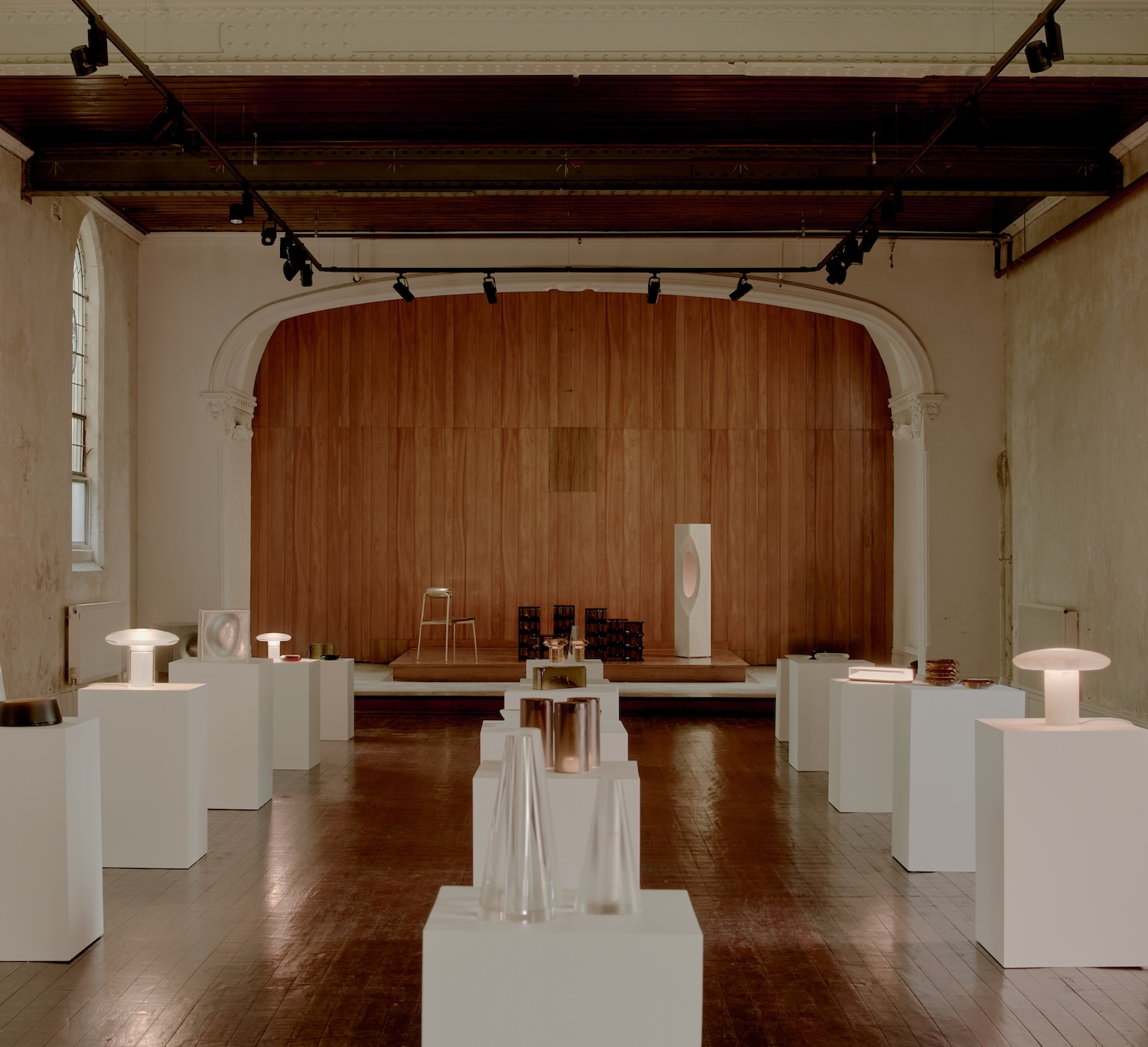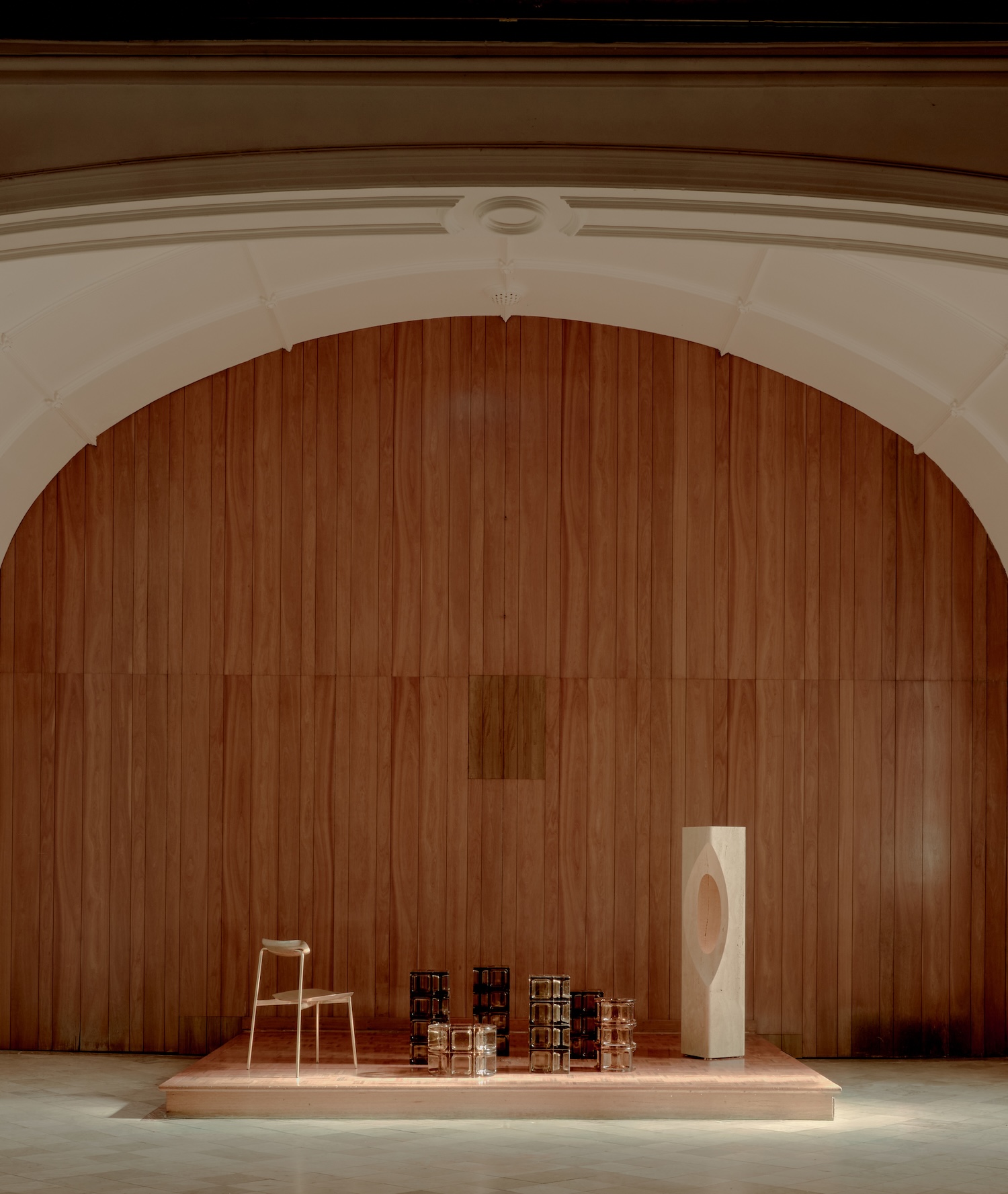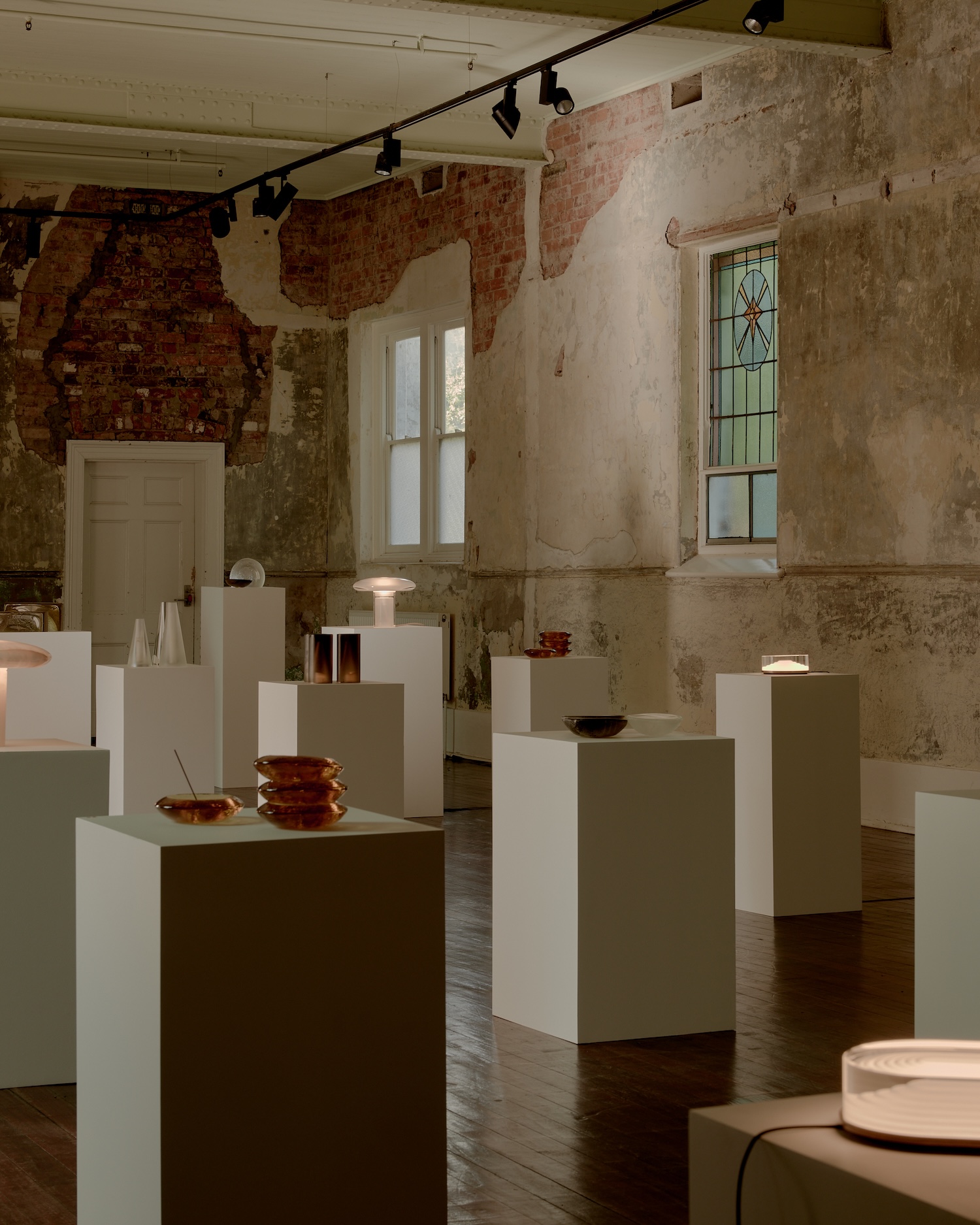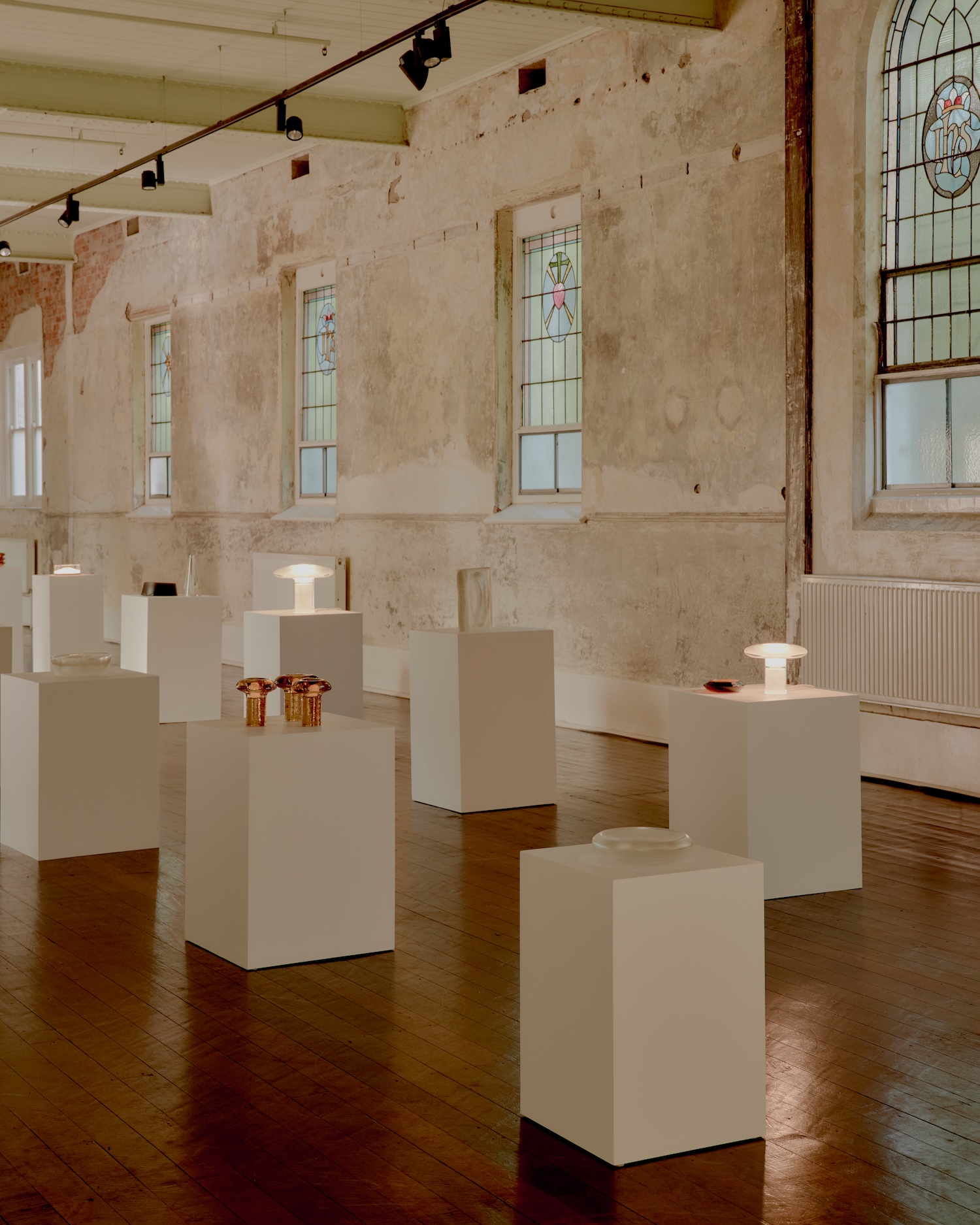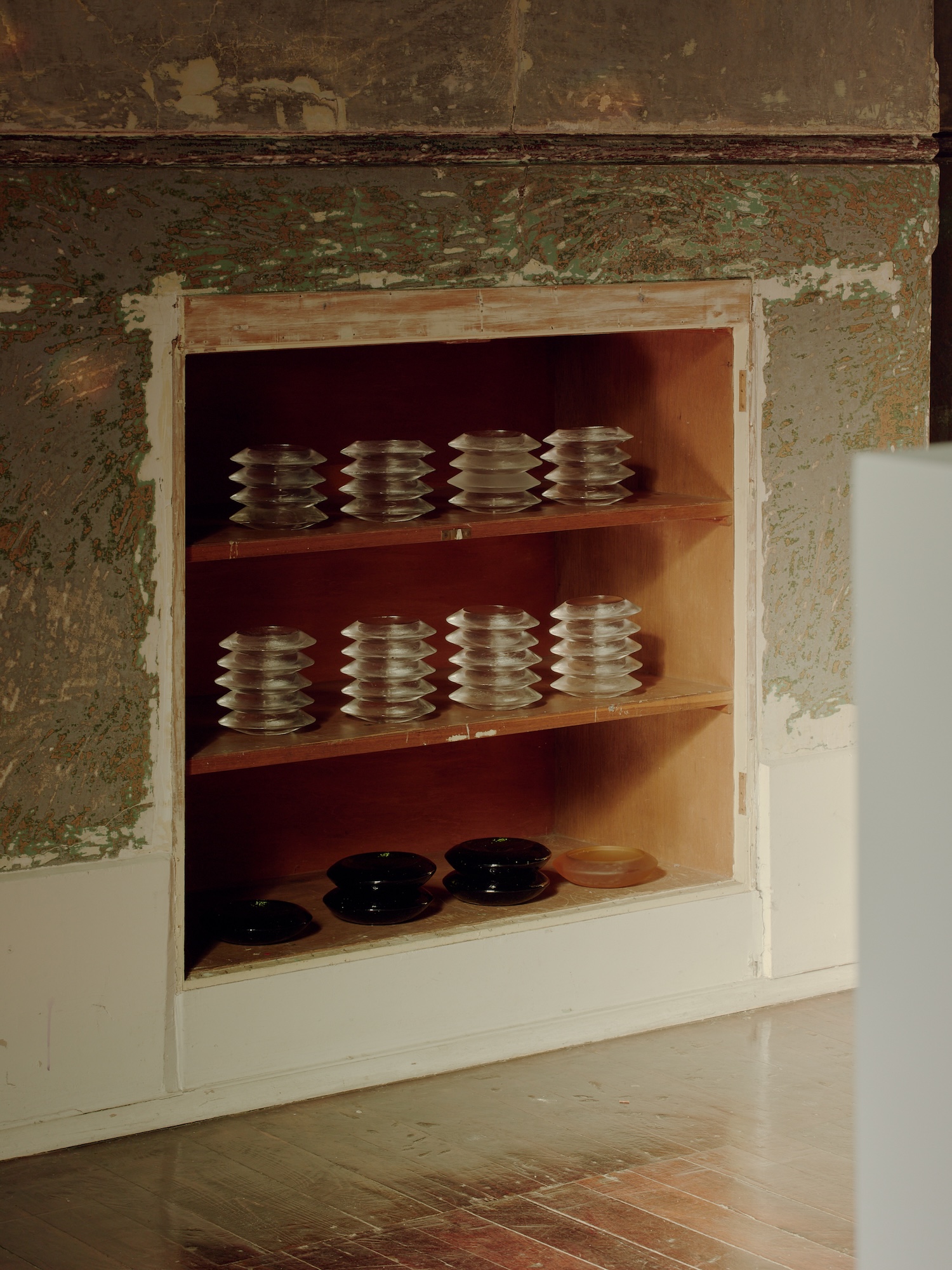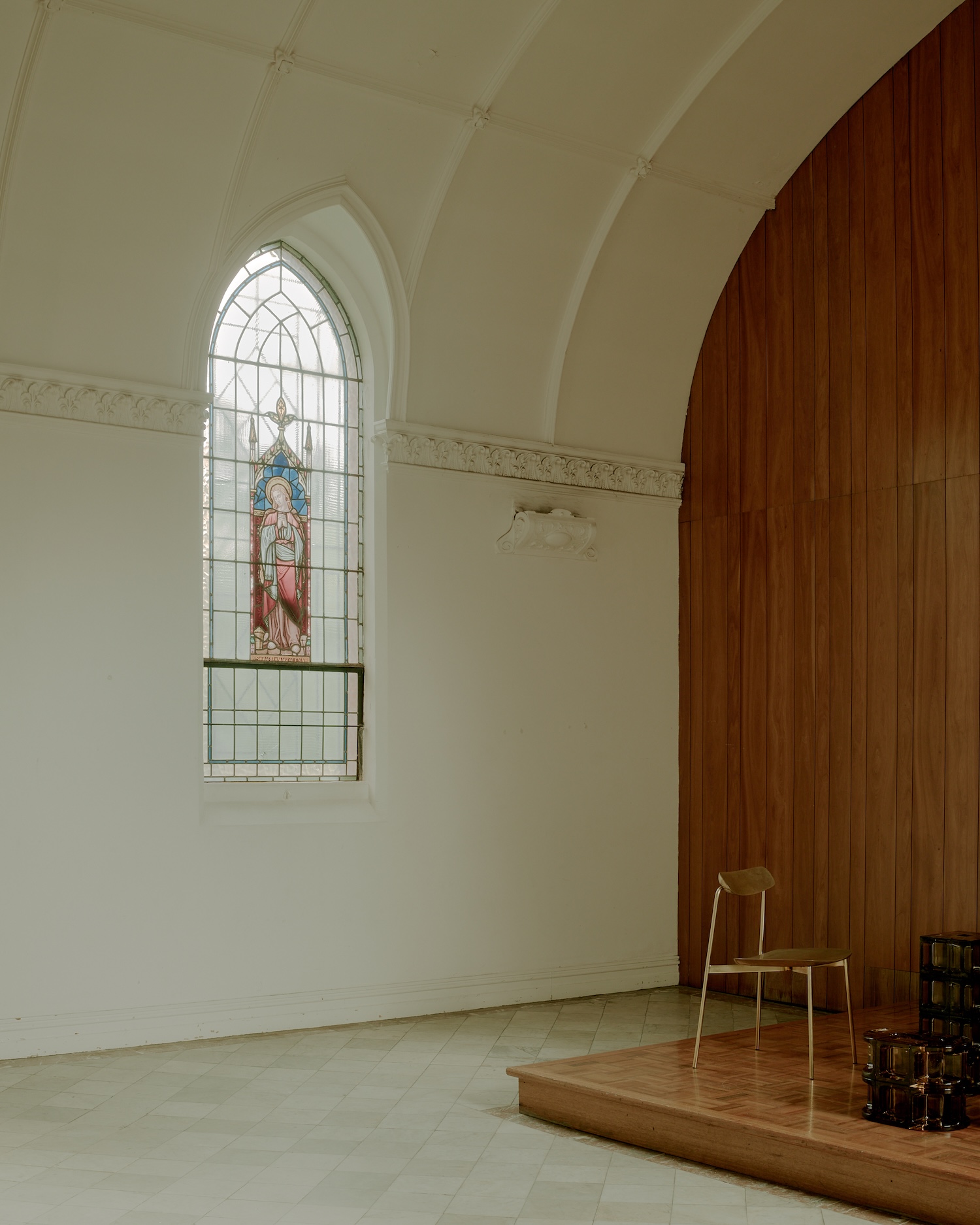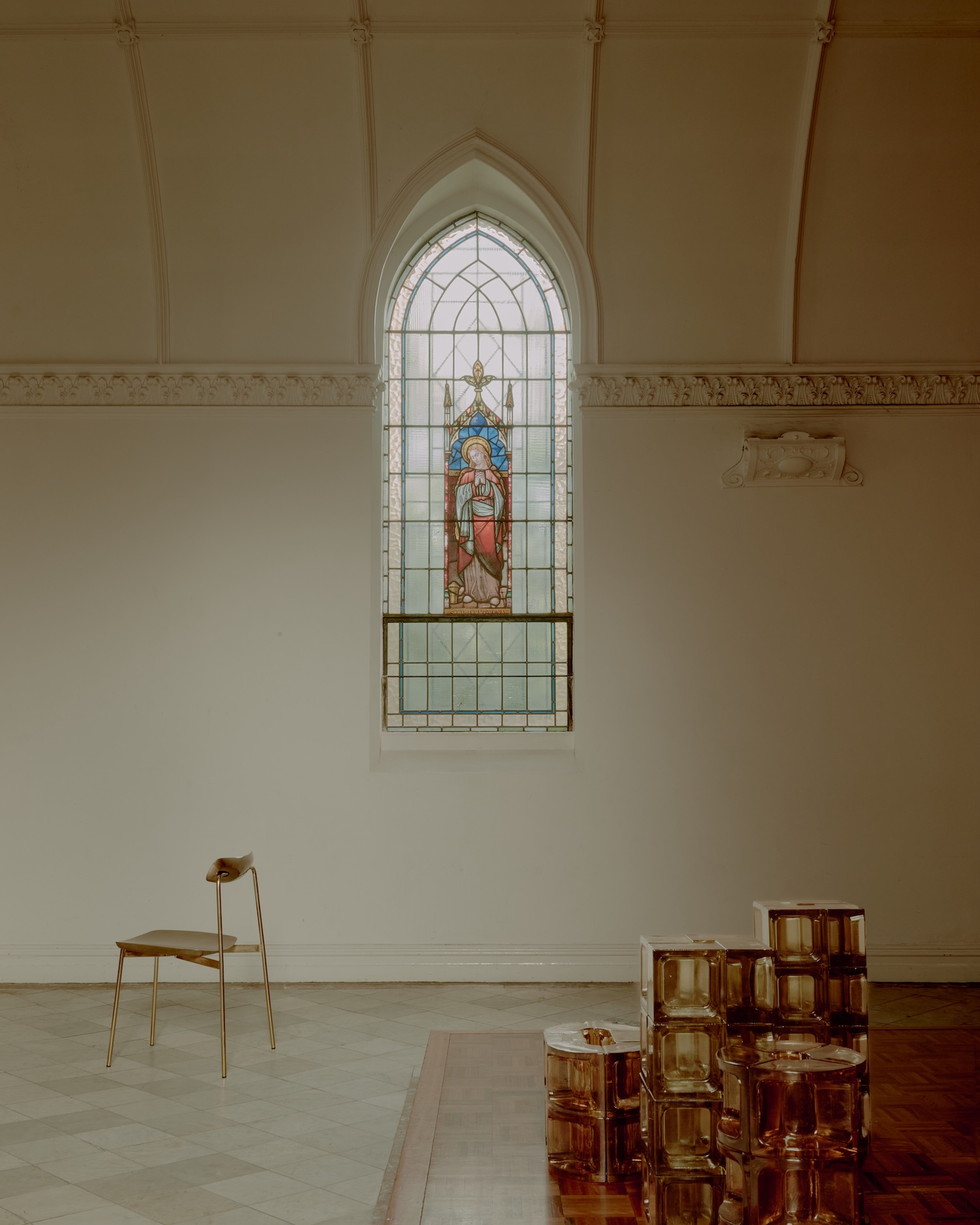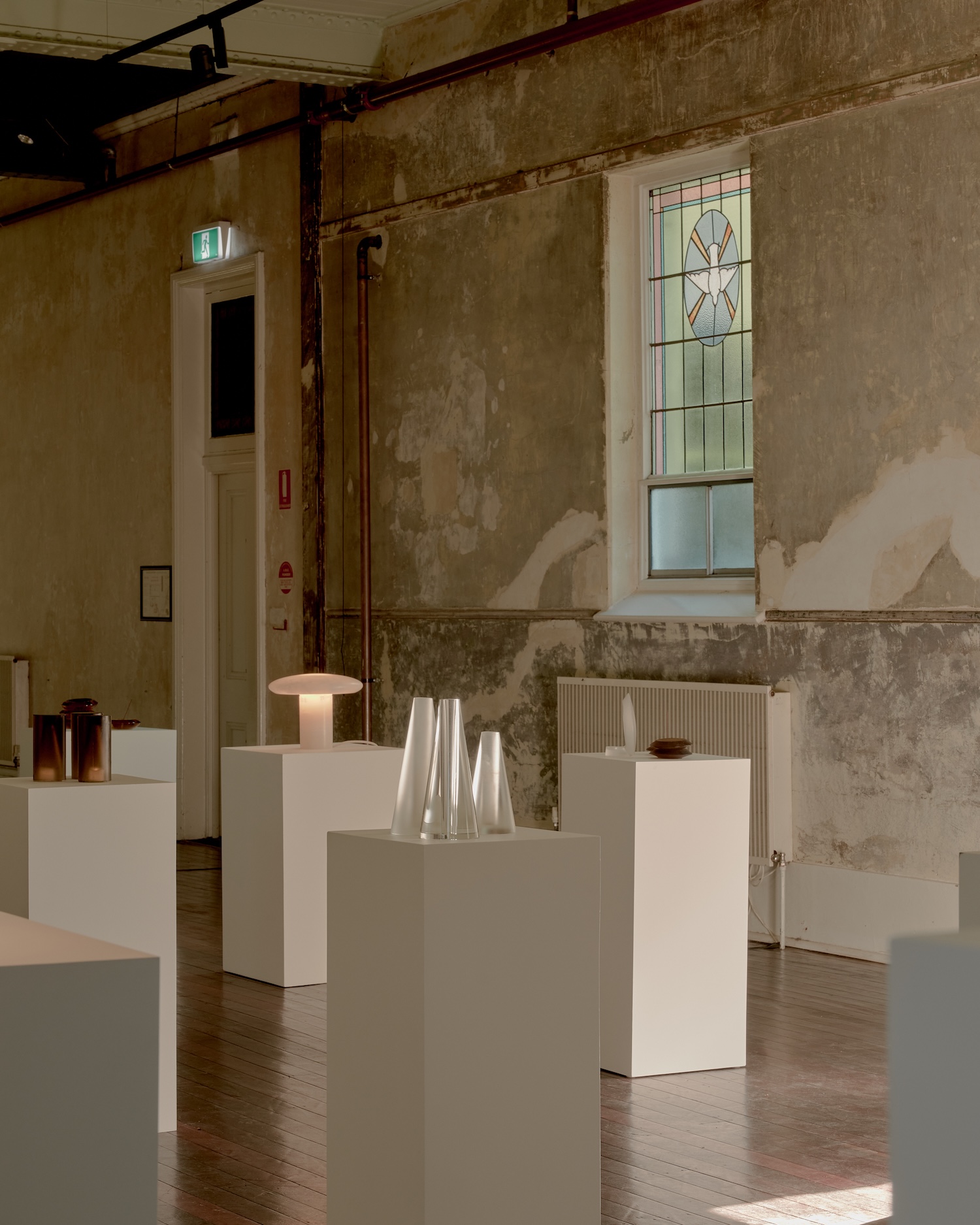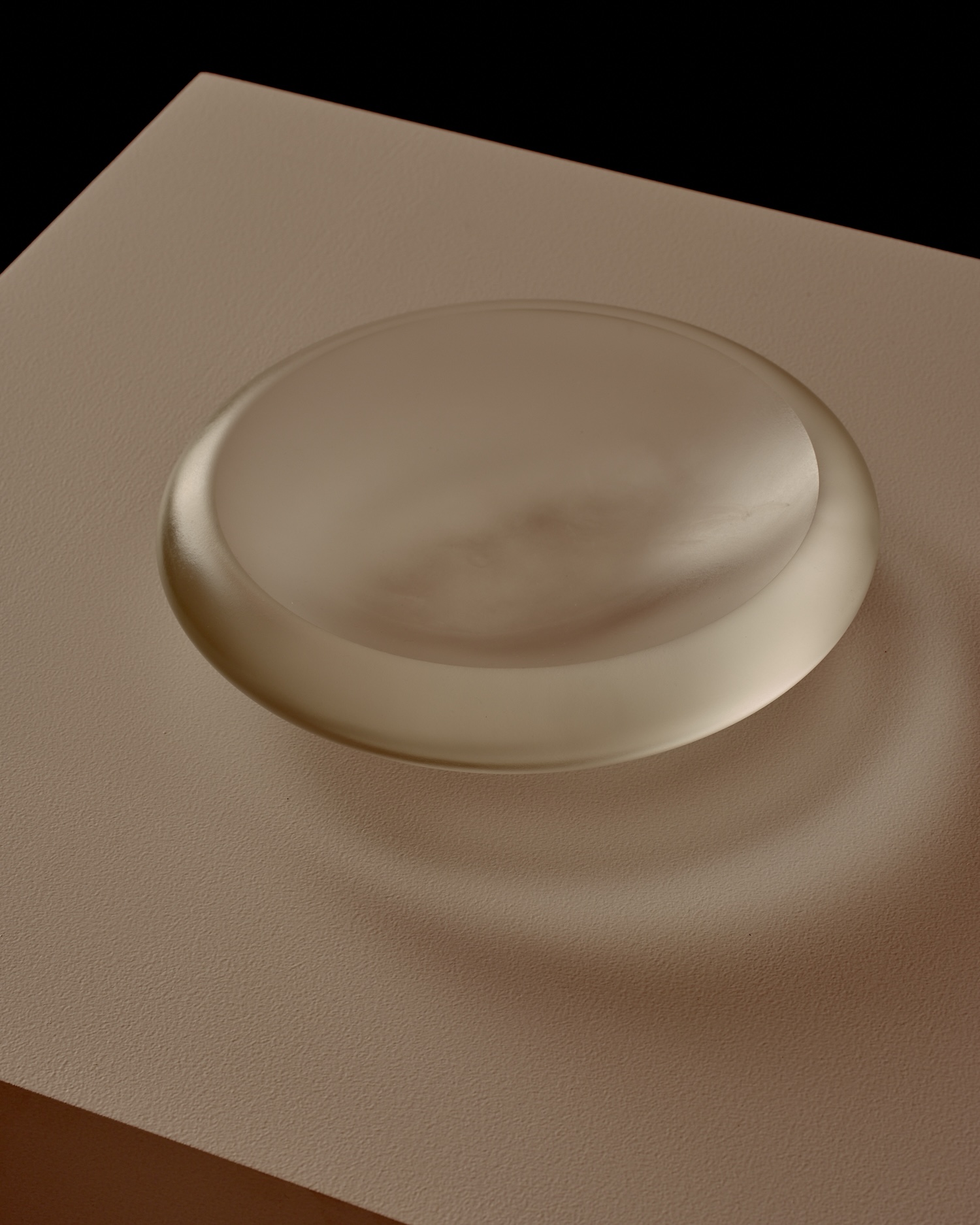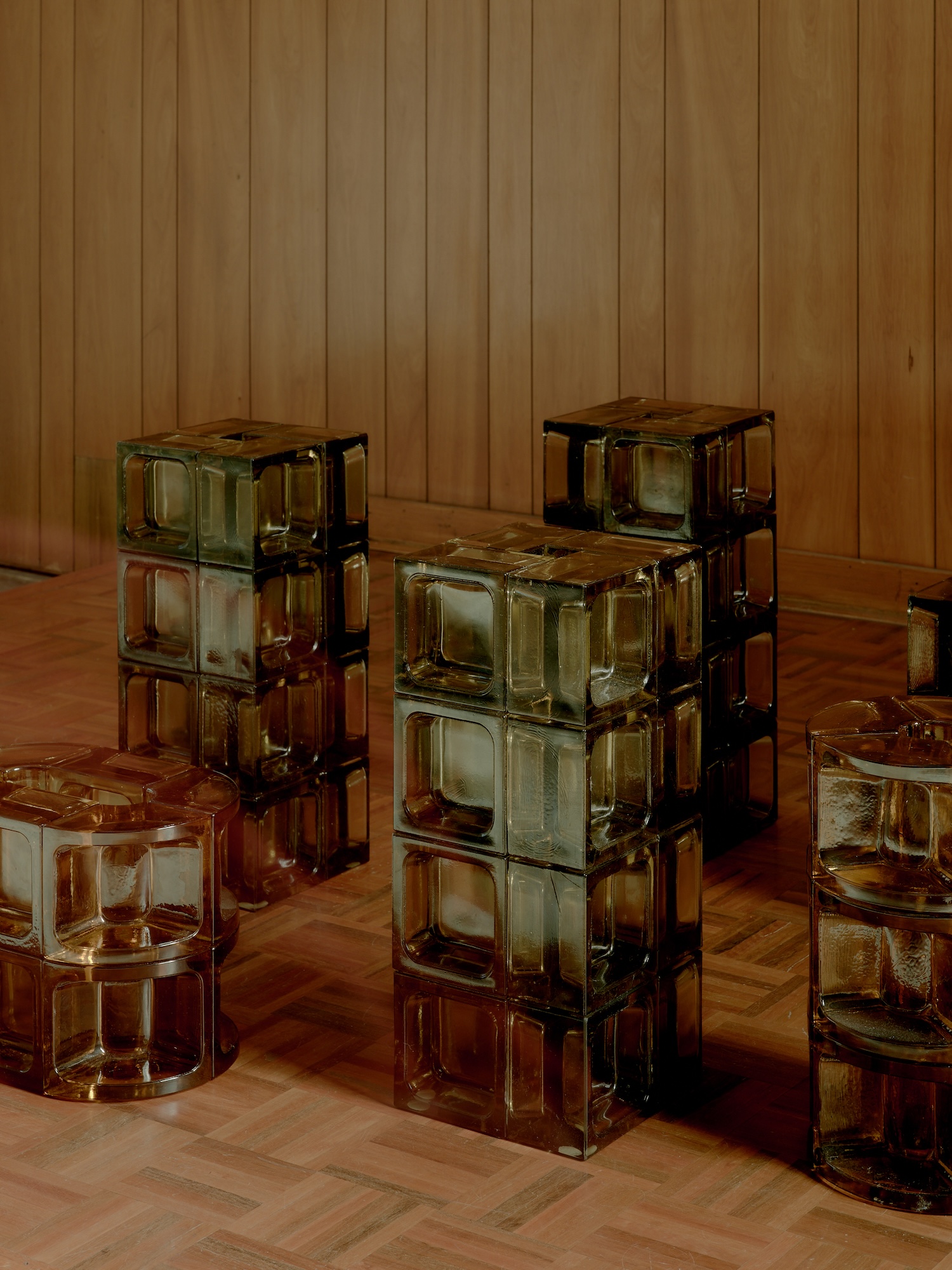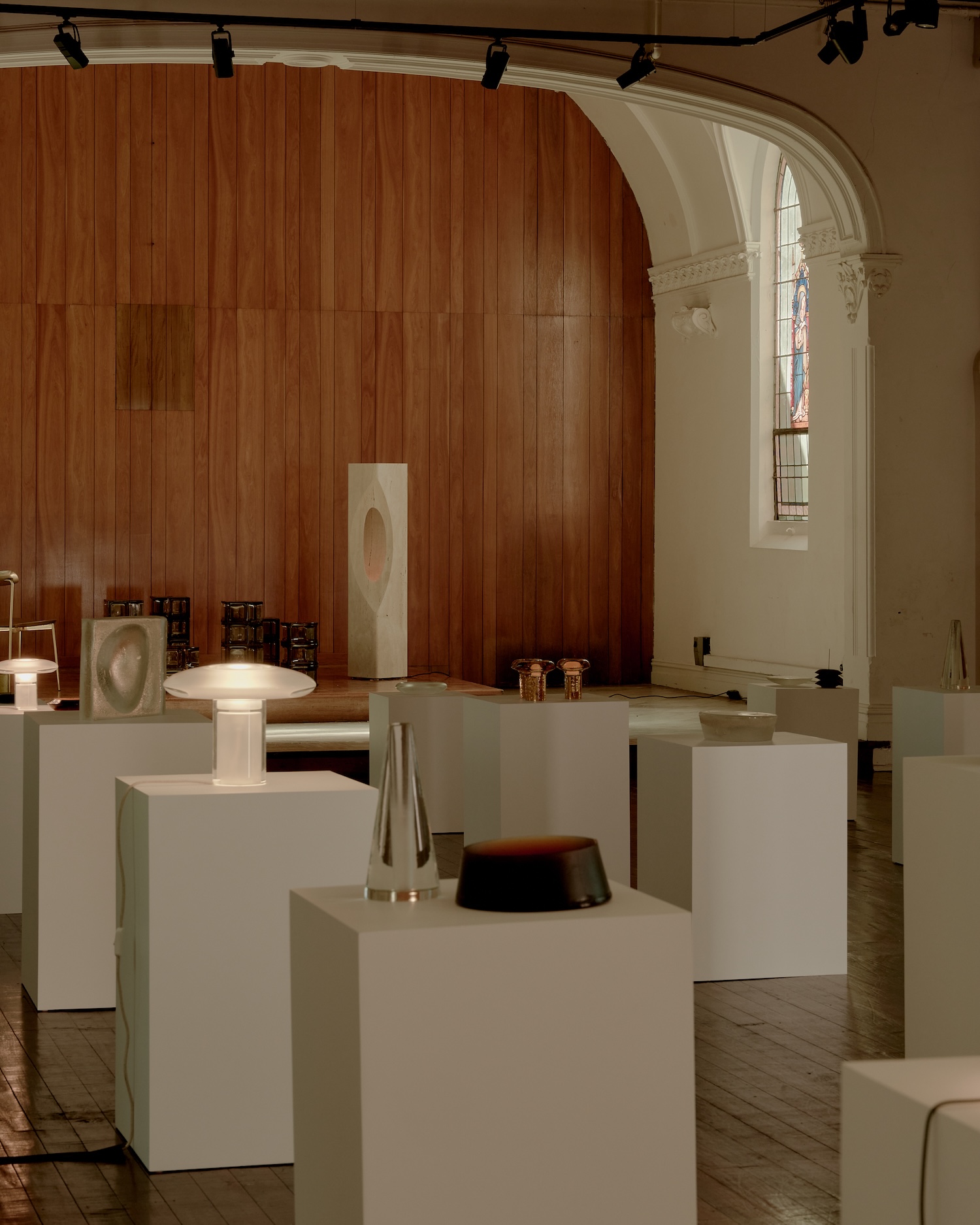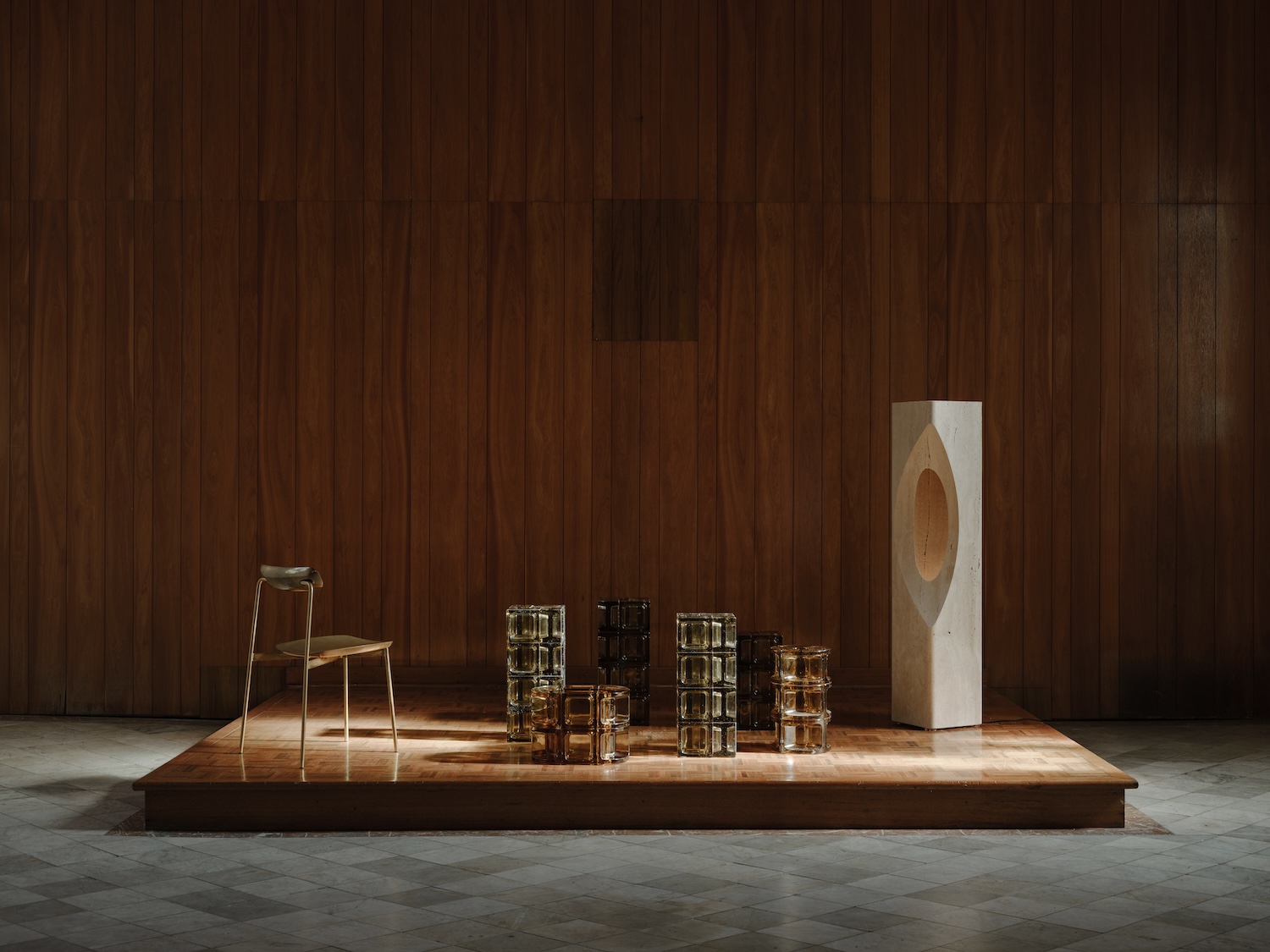
Arum is a minimalist solo glass exhibition by Sydney-based designer Tom Fereday, presented at Canberra Glassworks in Canberra, Australia. Its title comes from the Latin arenarum, meaning of sand, a reference to the raw material every piece in the show starts from. The exhibition brings together work from Fereday’s Sana and Mazer editions, a set of new sand cast Mazer pieces developed with Canberra Glassworks, and a preview of a lamp made with the Powerhouse Museum.
Much of Fereday’s work is produced offshore. The industrial character of the designs relies on large-scale manufacturing environments that offer precision, efficiency, and methods unavailable in Australia. Arum places that production next to small-batch work with Australian artisans, and the Mazer range is where the two meet. The new Mazer editions are sand cast at the Canberra workshop, so each piece is formed in the same material the exhibition is named after.
The Sana collection, Fereday’s first homewares range, is made from solid cast quartz glass and was developed through research into wellbeing in the domestic interior. In Arum, the Sana and Mazer pieces are shown as limited-edition sculptures that foreground the structural potential of glass. Mazer also exists as furniture, including a chair and a bench, and the glass editions carry those forms into cast glass.
Fereday founded his practice in 2012 after completing an honors degree in industrial design at the University of Technology Sydney. He works across furniture, product design, and lighting, and treats technical construction, form, and exhibition as a single problem. His collaborative lighting for other manufacturers appears alongside the glass editions, including the Port Lamp for Rakumba and the Nola Lamp for NAU Design. The new Mazer Tea Lamp, previewed in the exhibition, was developed with the Powerhouse Museum and is formed from raw cast glass.