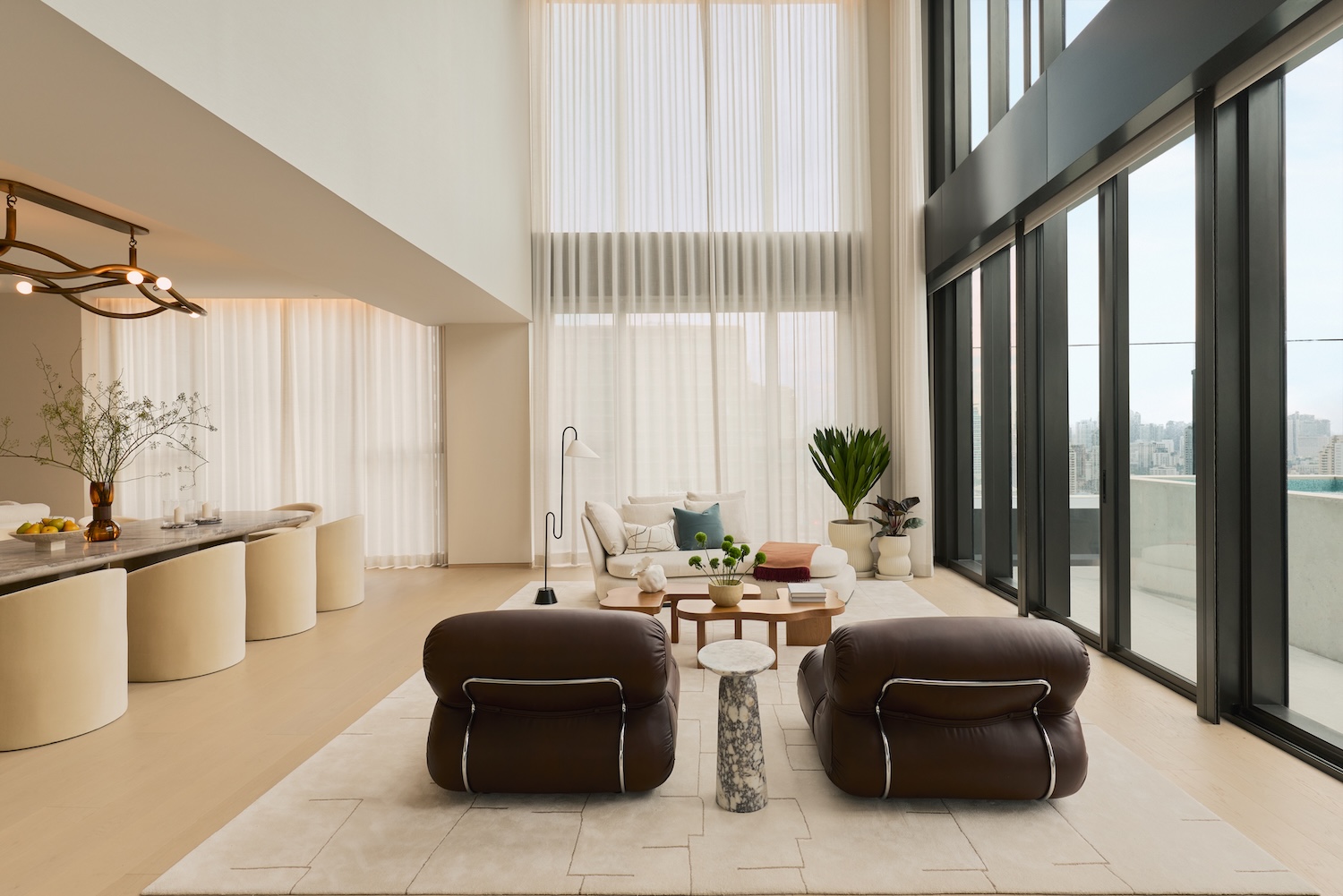
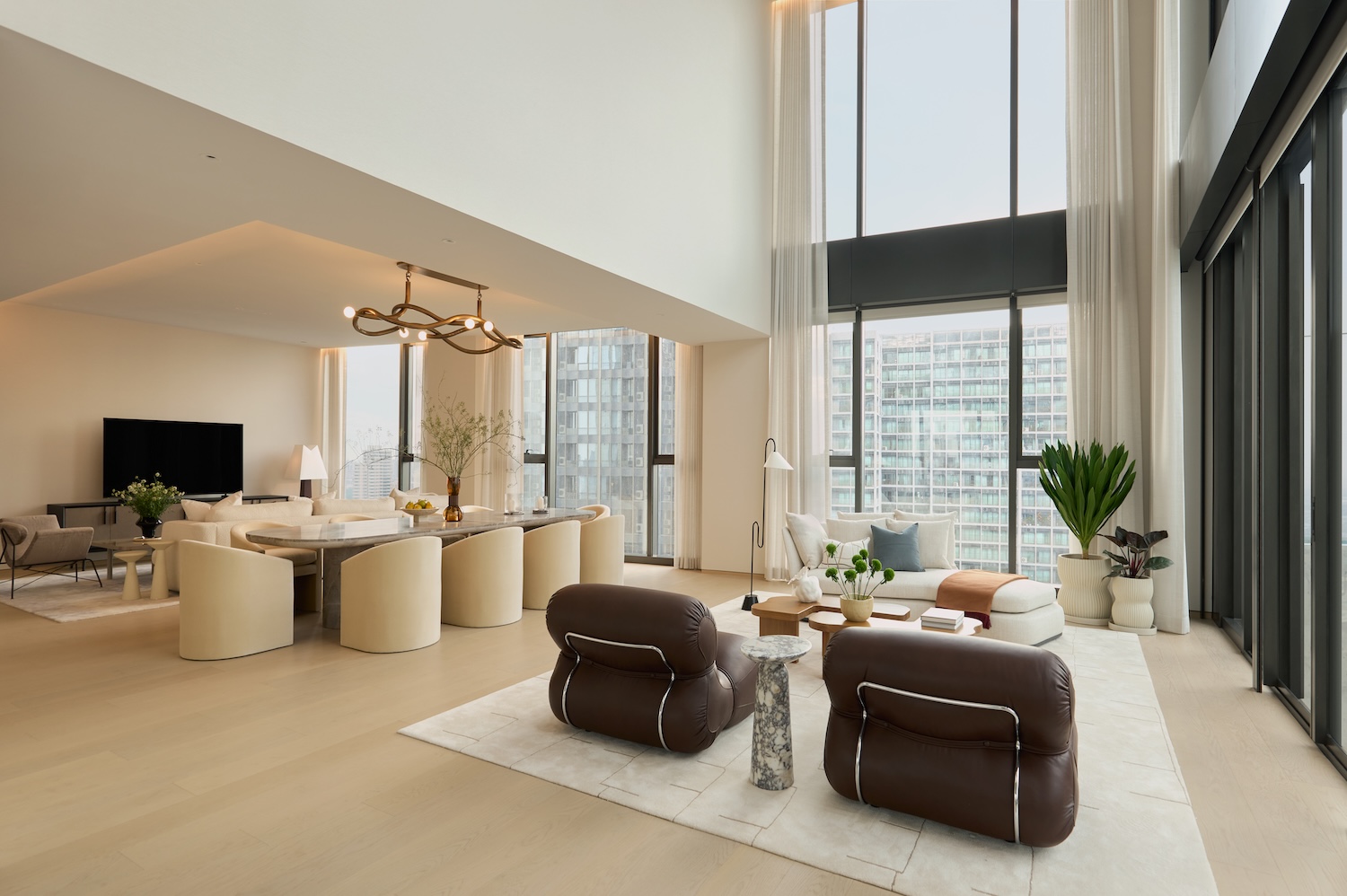
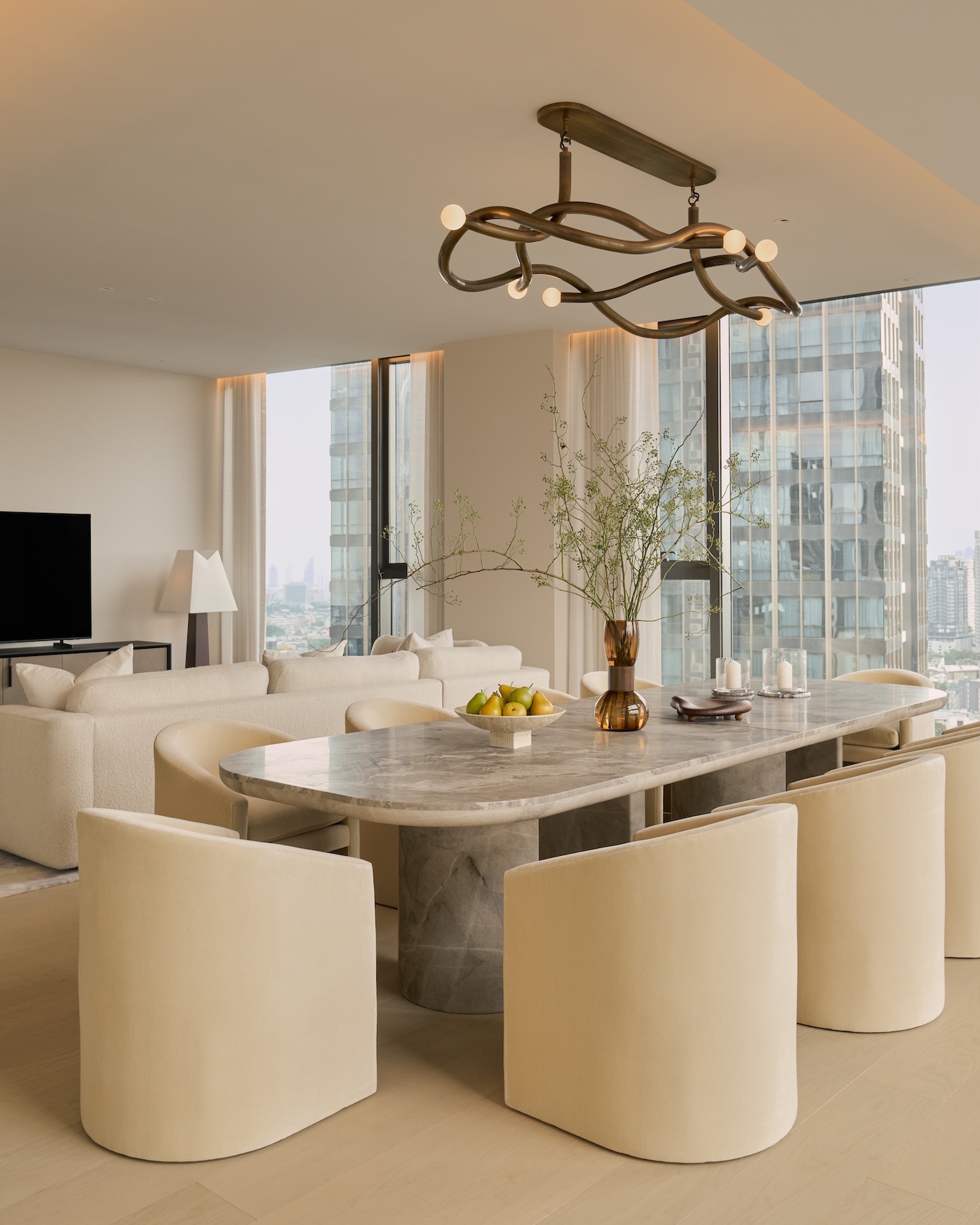
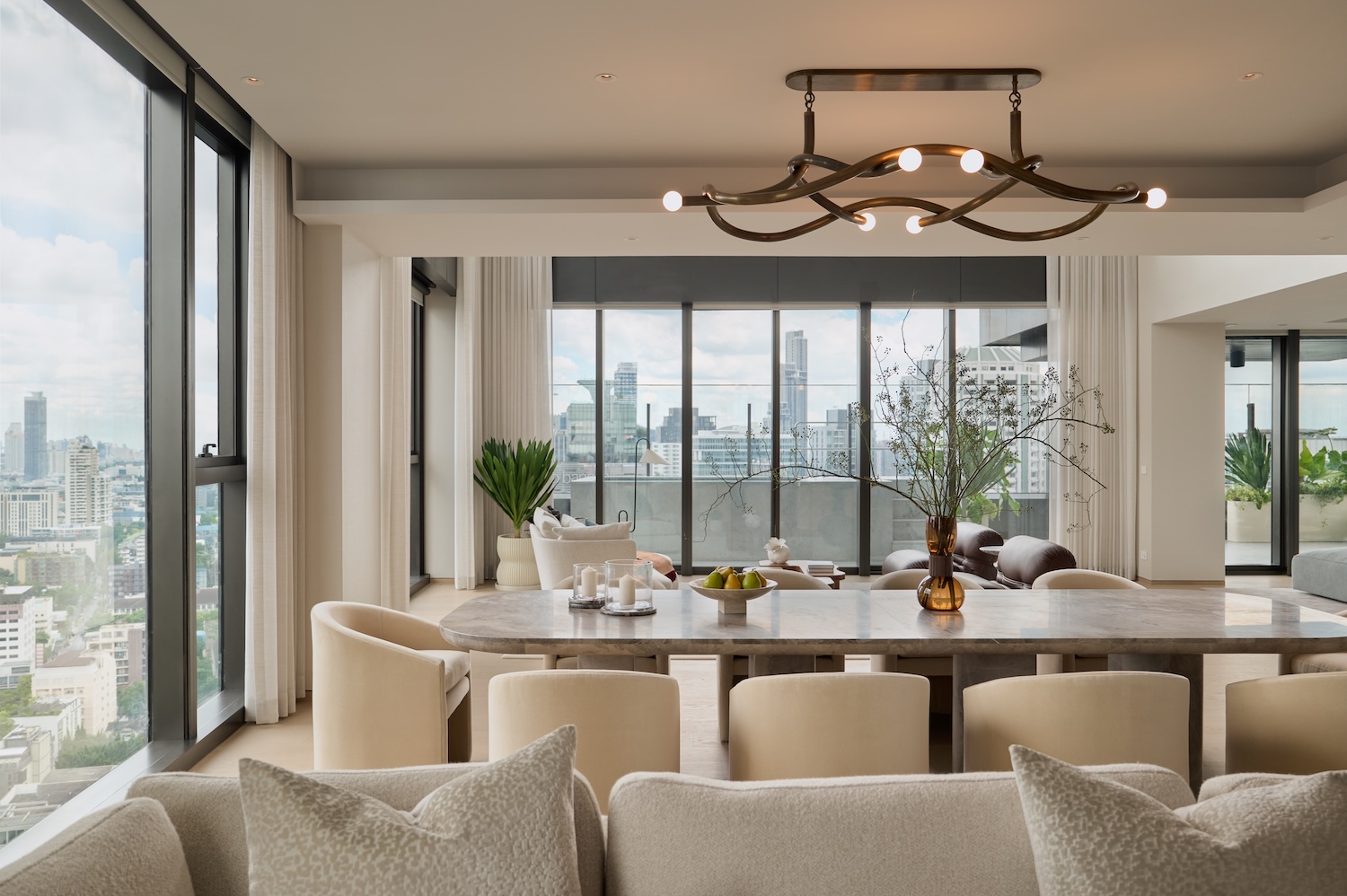
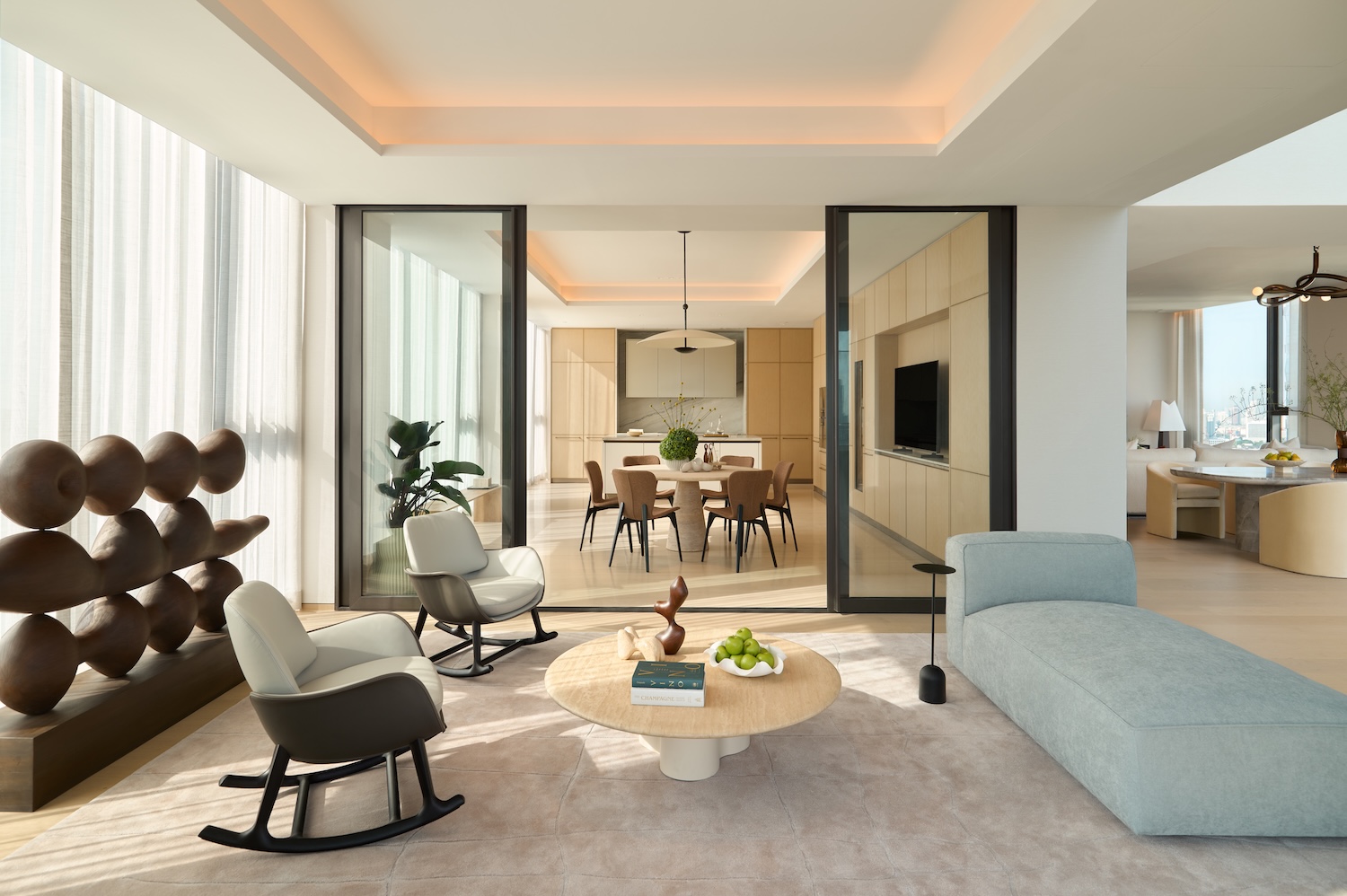
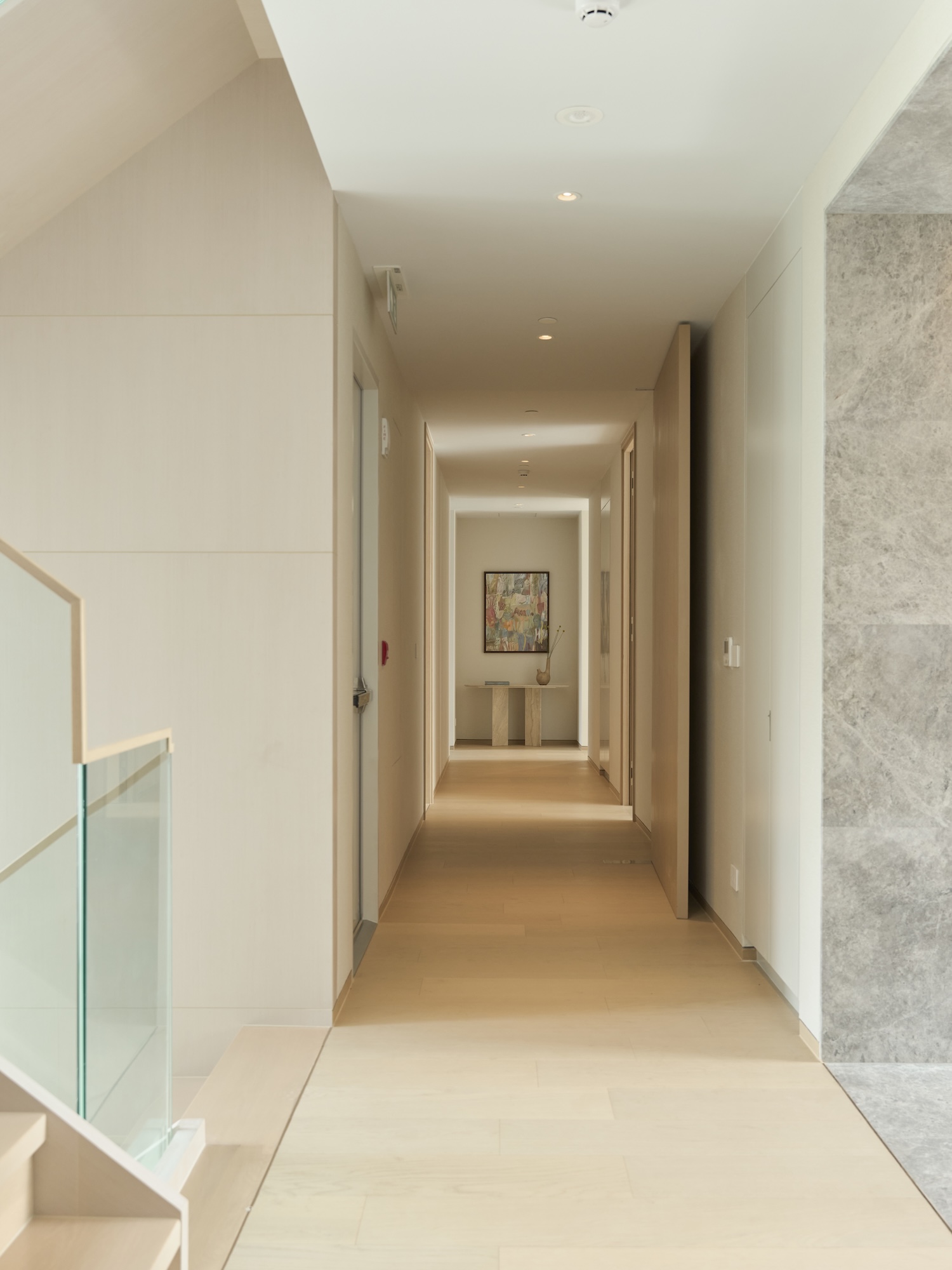
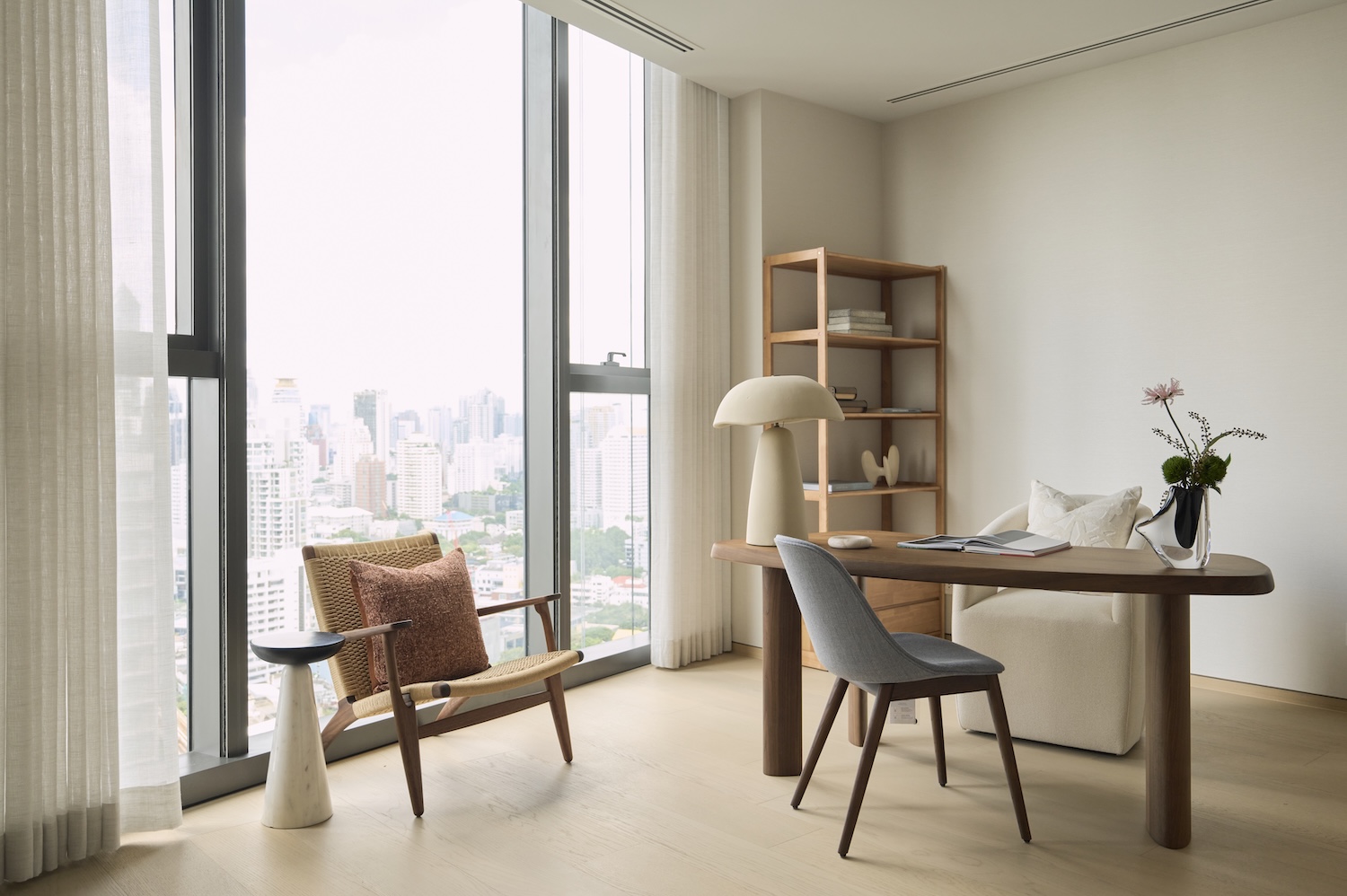
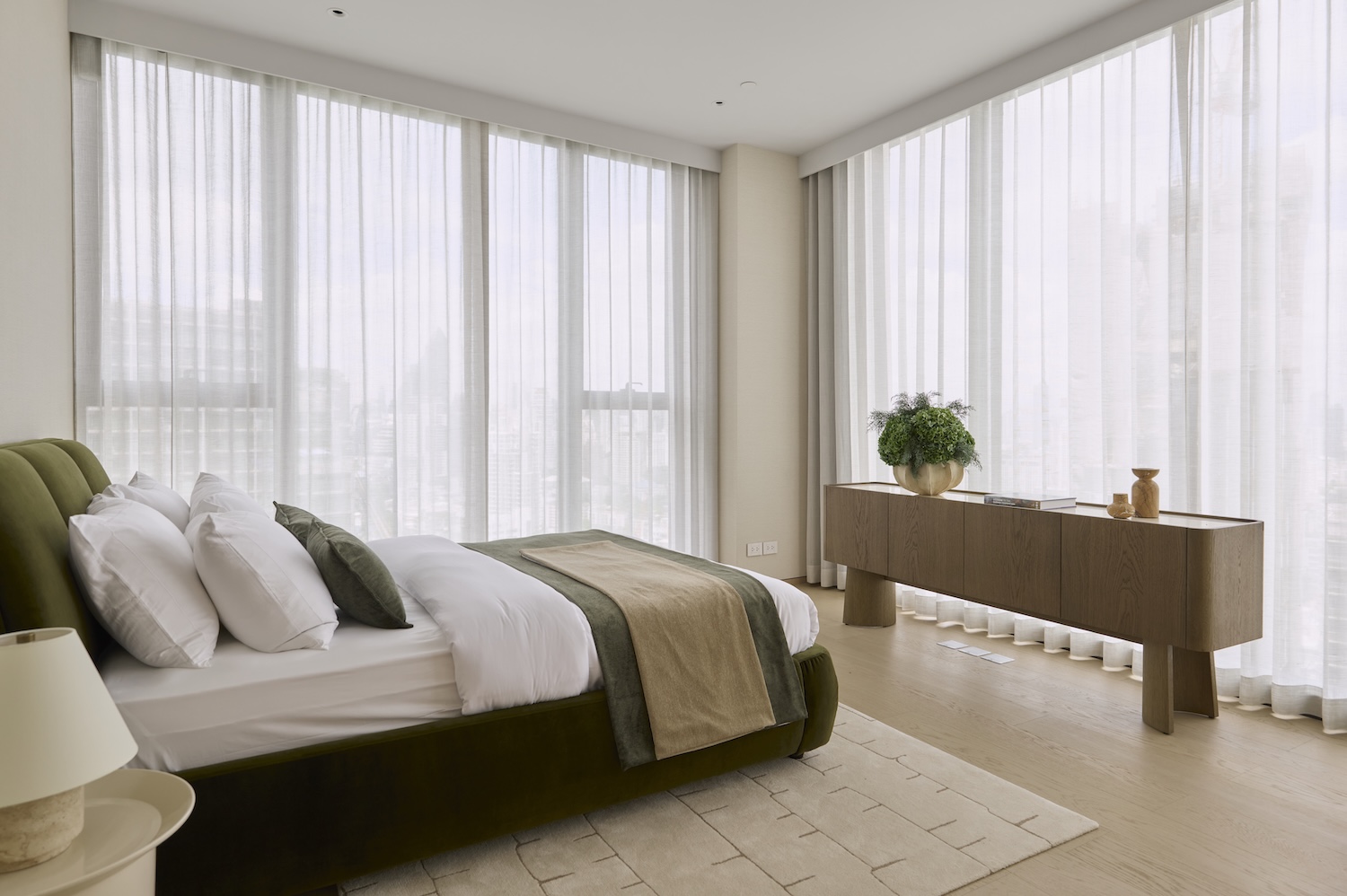
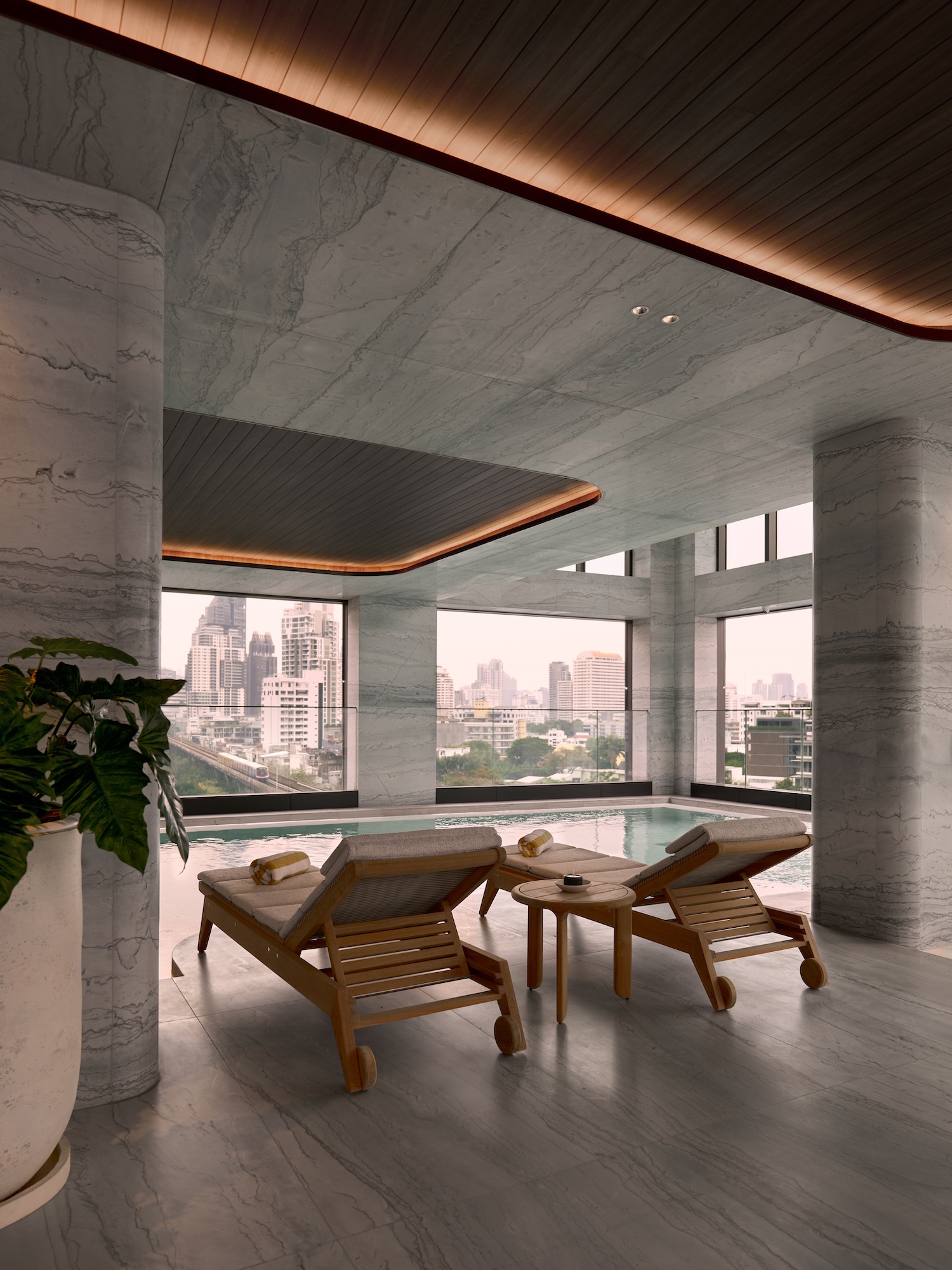
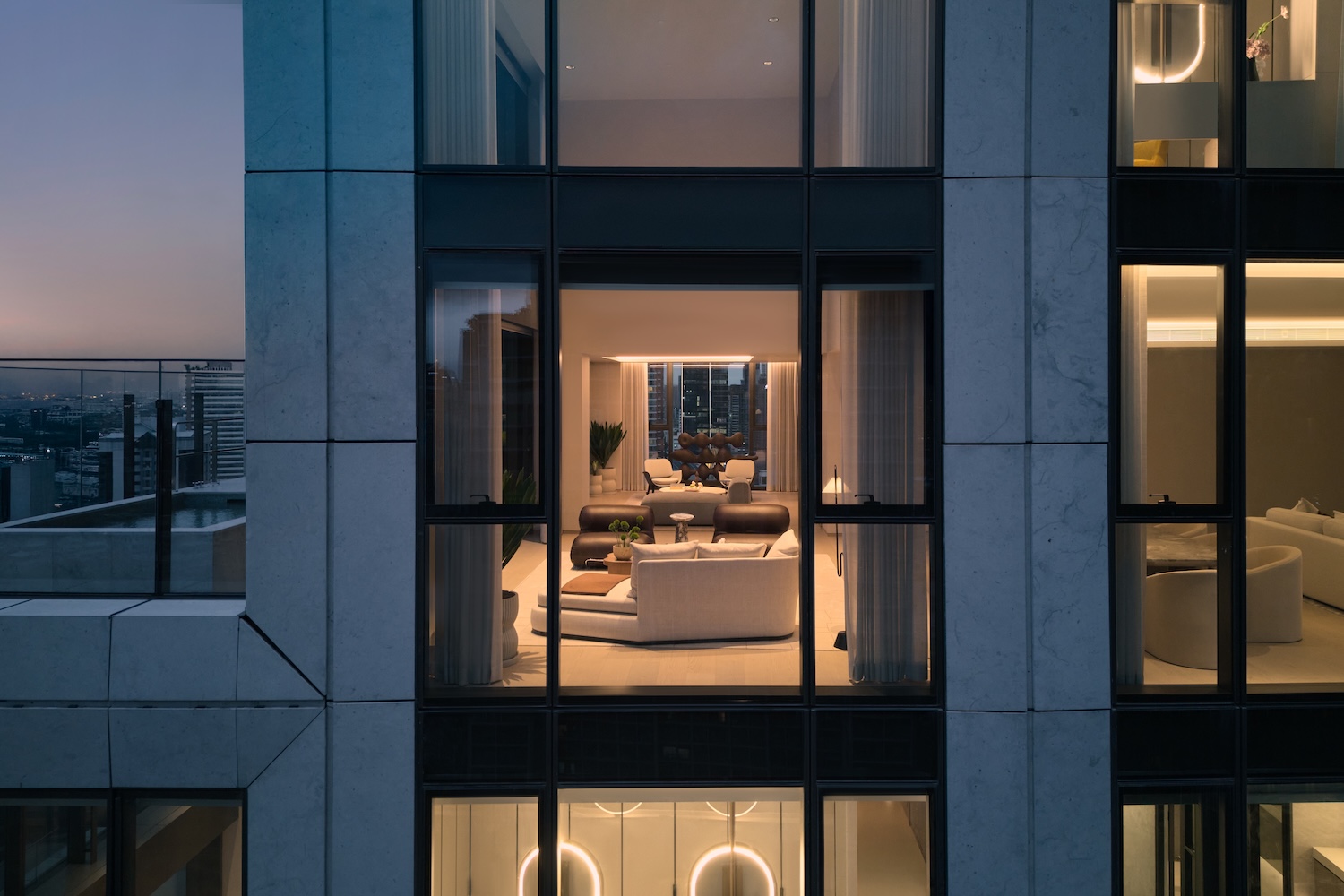
SCOPE Thonglor is a minimalist penthouse located in Bangkok, Thailand, designed by Thomas Juul-Hansen. The persistent problem with the vertical city is that height tends to flatten domestic life into a single plane. A penthouse, however lavish, usually resolves into one floor stacked above others, its grandeur measured in glazing and elevation rather than in the spatial sequence that defines a house. The Triplex Residence at SCOPE Thonglor confronts this directly by reintroducing the one thing towers habitually strip away: the staircase as an organizing principle of dwelling. Across 765 square meters and three private levels occupying floors 26 through 28, Juul-Hansen rebuilds the logic of a townhouse at altitude, where movement between floors restores the gradient of privacy that single-level apartments collapse.
That ambition has a lineage. Le Corbusier proposed the immeuble-villas in the early 1920s as a way to grant every apartment a double-height living volume and a private terrace, smuggling the proportions of a freestanding villa into collective housing. The Triplex pursues the same reconciliation a century later. Its Great Room, a corner volume with double-height ceilings and panoramic exposure, performs precisely the function Corbusier theorized: it gives the interior a vertical breath that horizontal floorplates cannot supply, and it anchors the residence around a room that reads as architecture rather than accommodation.
The foyer is laid in Tundra Grey marble, a stone whose muted carbonate veining reads as gravity rather than ornament, while the primary bathroom pairs Nordic Grey walls against White Sivec flooring, a Macedonian dolomitic marble prized for a crystalline brightness that resists the yellowing common to softer whites. Large-format slabs throughout reduce grouting to near invisibility, allowing each surface to behave as a continuous field. The decision is tactile as much as visual, since fewer joints mean fewer interruptions to the hand and eye moving across a wall.
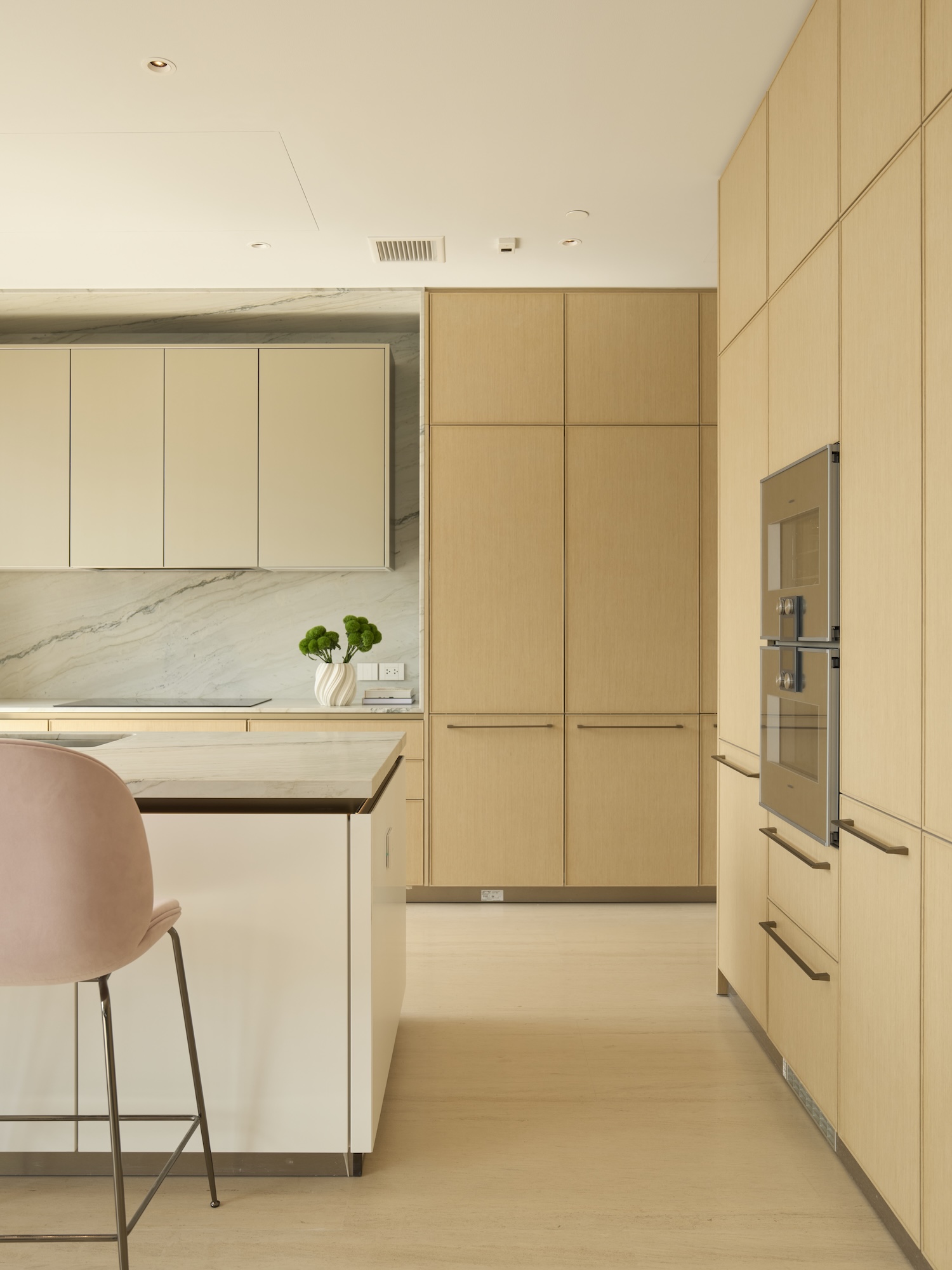
The kitchen concentrates the project’s argument about scarcity. Built by SieMatic to Juul-Hansen’s drawings and capped at eighteen examples worldwide, it is topped in Bellagio Quartzite and outfitted with Gaggenau, Sub-Zero, and Liebherr systems. The number matters less as a marketing figure than as a statement about authorship: a custom cabinetry program produced in a closed edition operates closer to furniture commissioning than to specification, returning the kitchen to the status of a designed object rather than an assembled utility.