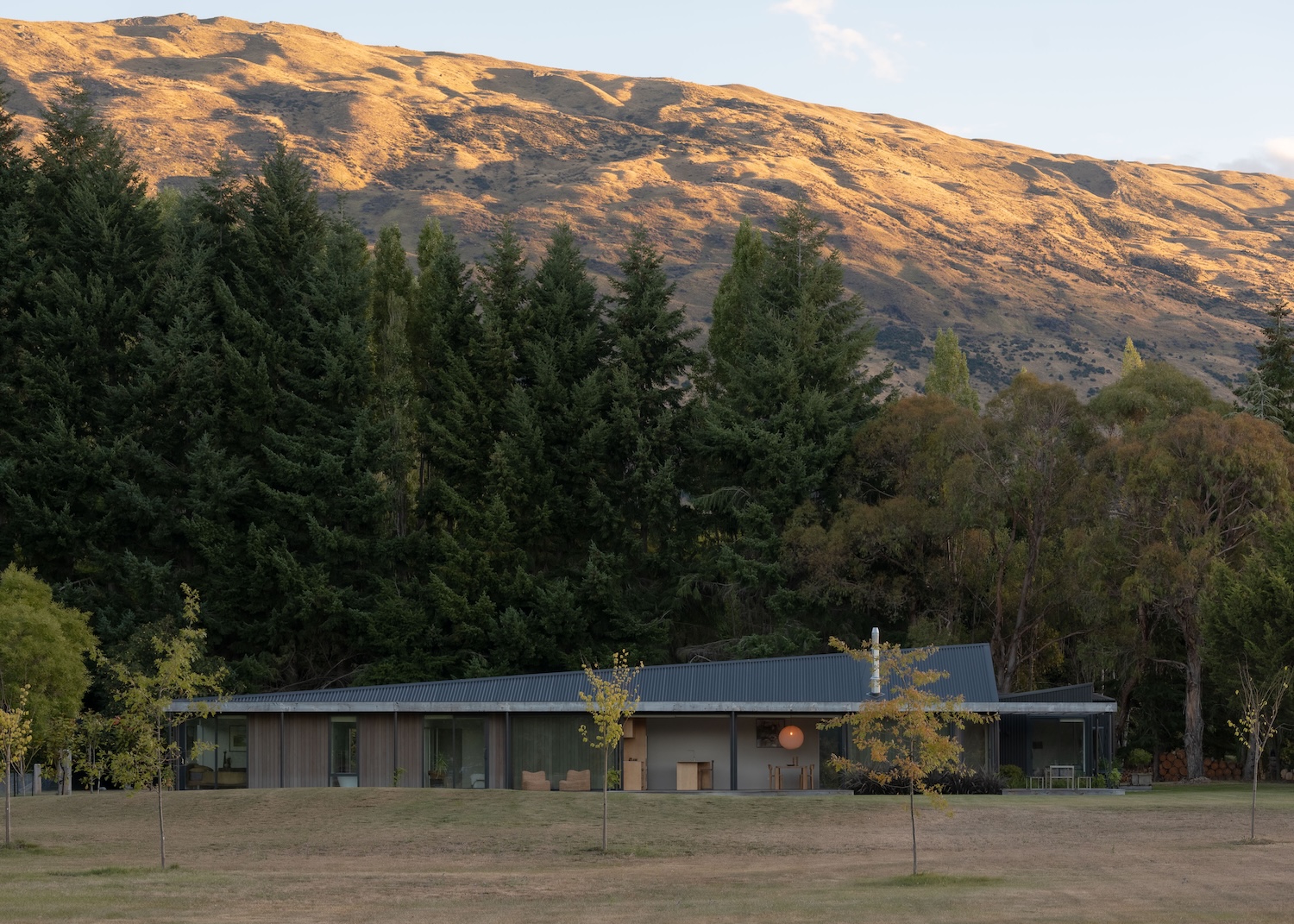
Mount Barker House is a minimalist residence located in Wānaka, New Zealand, designed by Nuku. Architecture that treats a site as a continuation rather than a blank slate has to reckon with what is already standing, and here that reckoning is literal. A family had returned to this land at the base of Mount Barker since the 1970s, first to a modest timber crib built to house a generation of children, the kind of unfussy holiday dwelling that South Islanders have long understood as a vessel for gathering rather than display. Nuku chose to build beside that history instead of erasing it, carrying the same way of living forward into a structure sized to outlast the people who commissioned it.
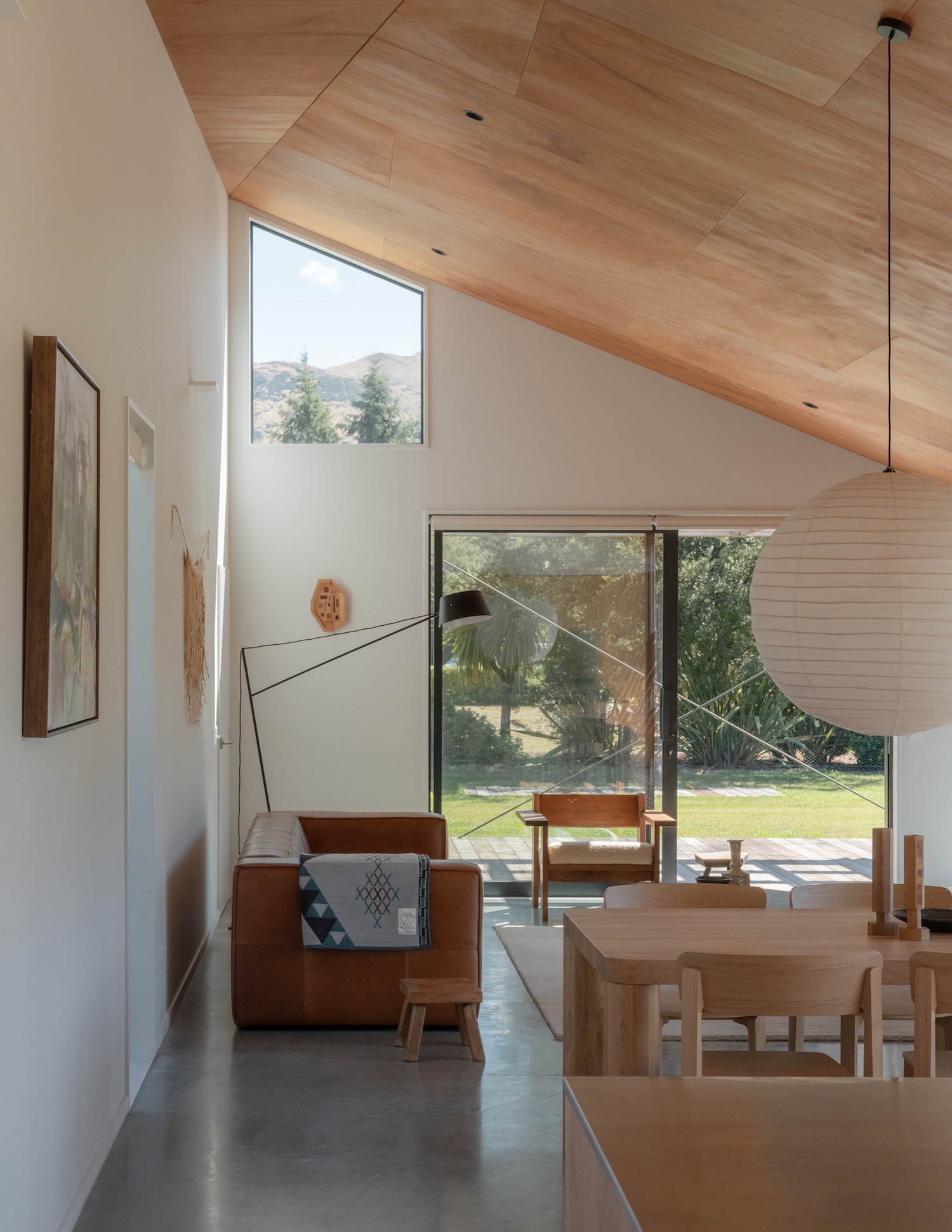
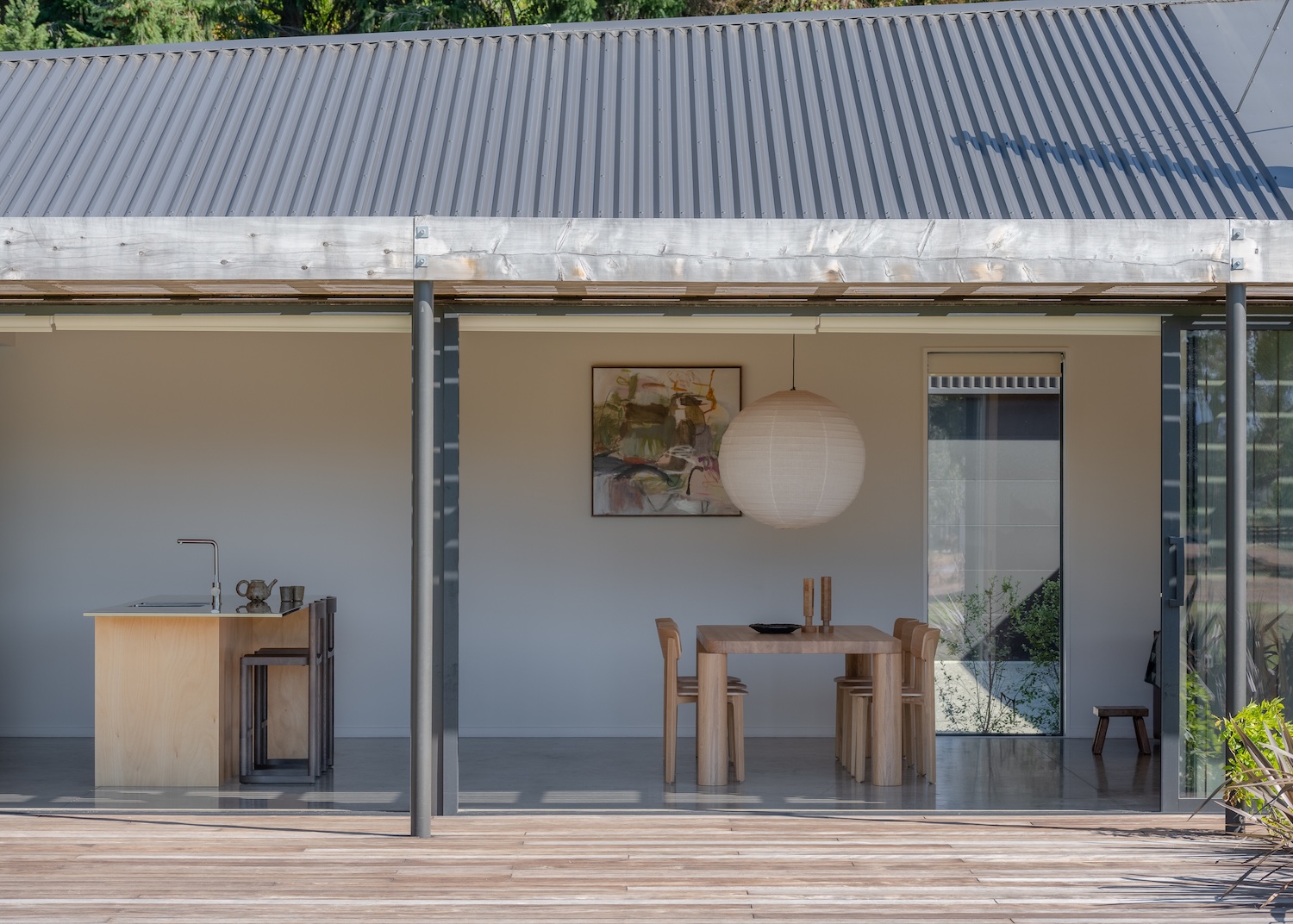
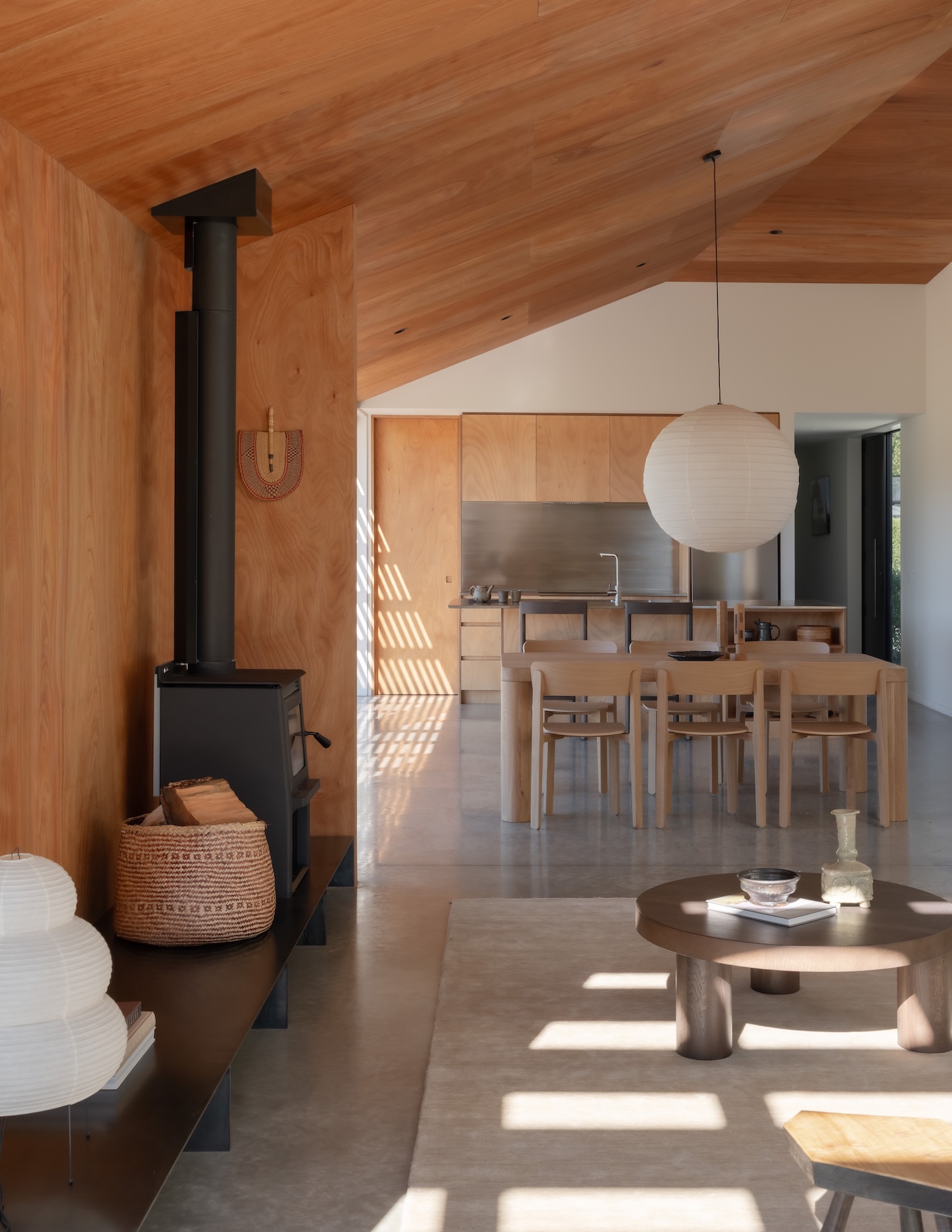
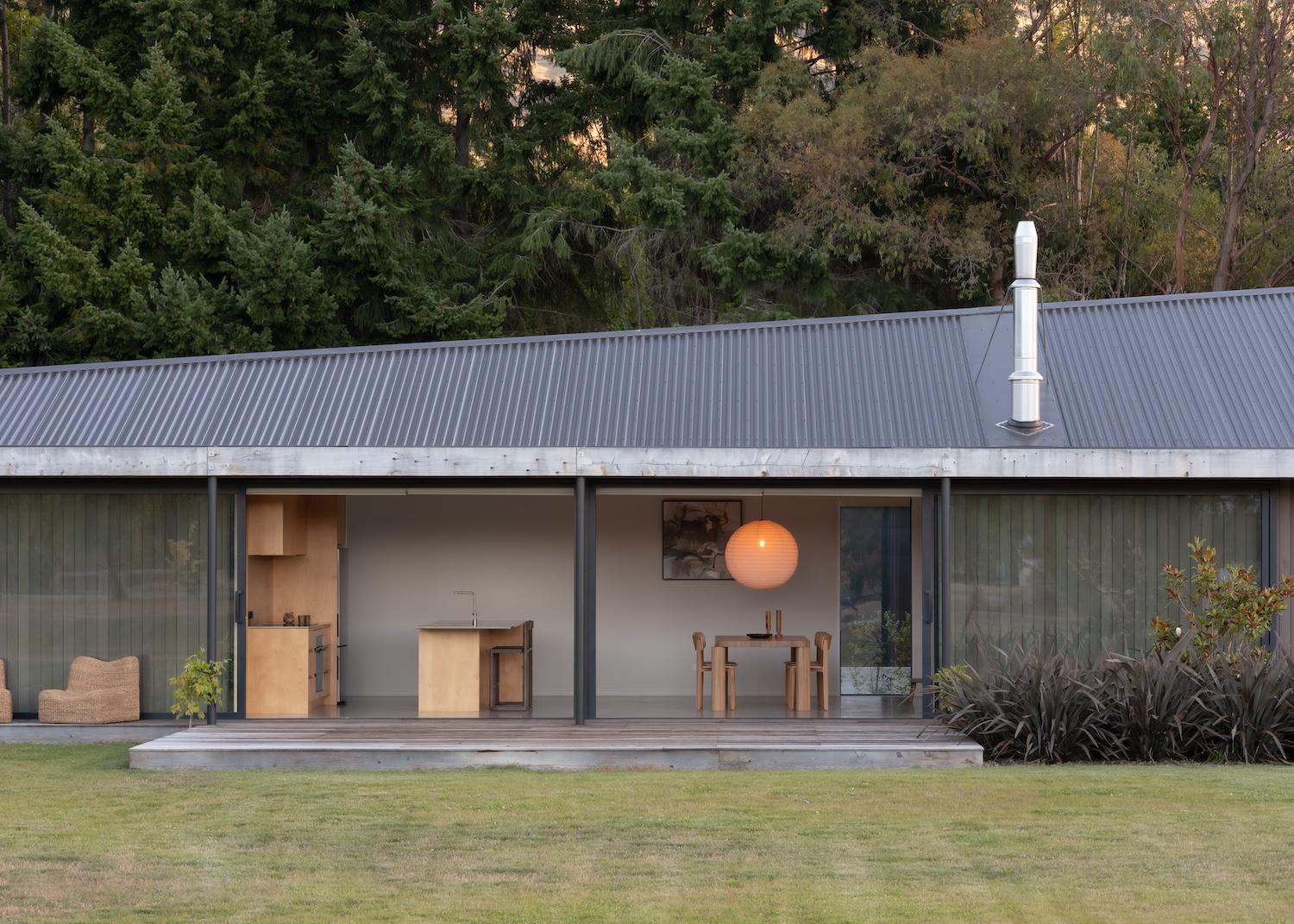
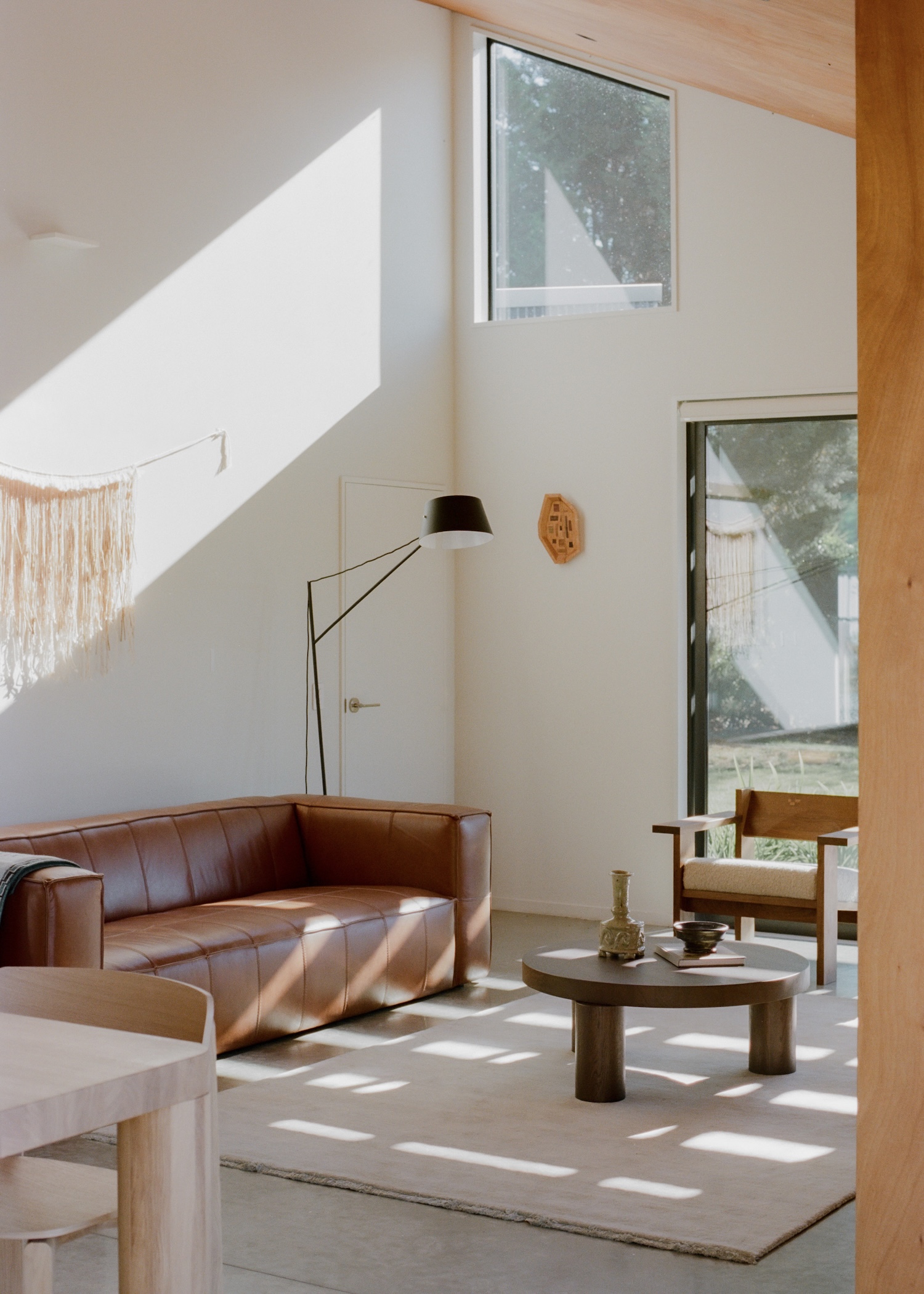
The plan resolves into two wings whose relationship is governed by orientation. A living pavilion opens north to the lawn, while a bedroom wing withdraws behind a planting threshold, a buffer that grants privacy without a wall. Above the living spaces the ceiling lifts toward a tall portrait window that holds Mount Roy whole, a framing device that fixes the eye on a single point while the mountain itself shifts through the hours with the changing light. This is the room performing the work of a viewfinder, editing the panorama down to one composed image.
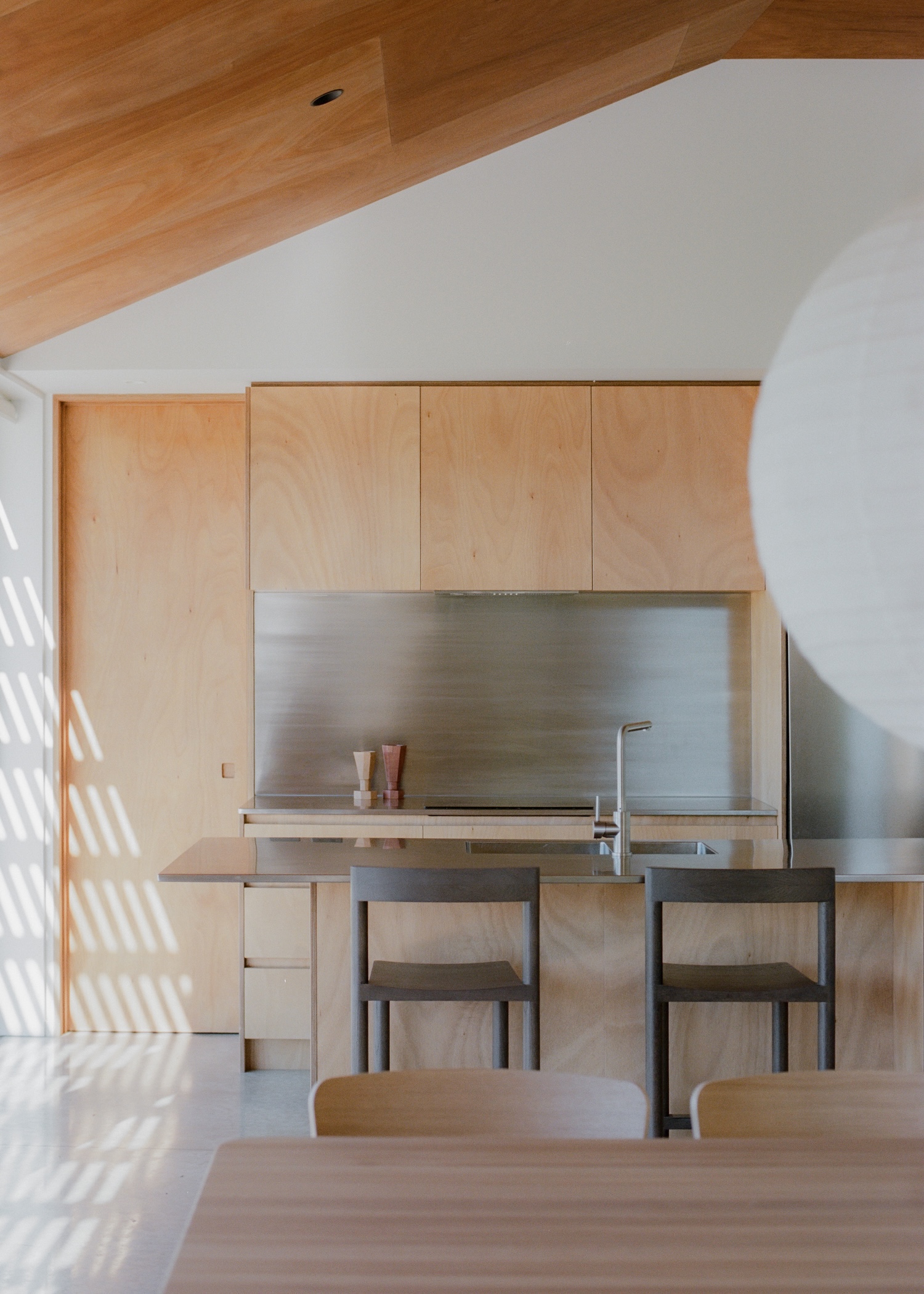
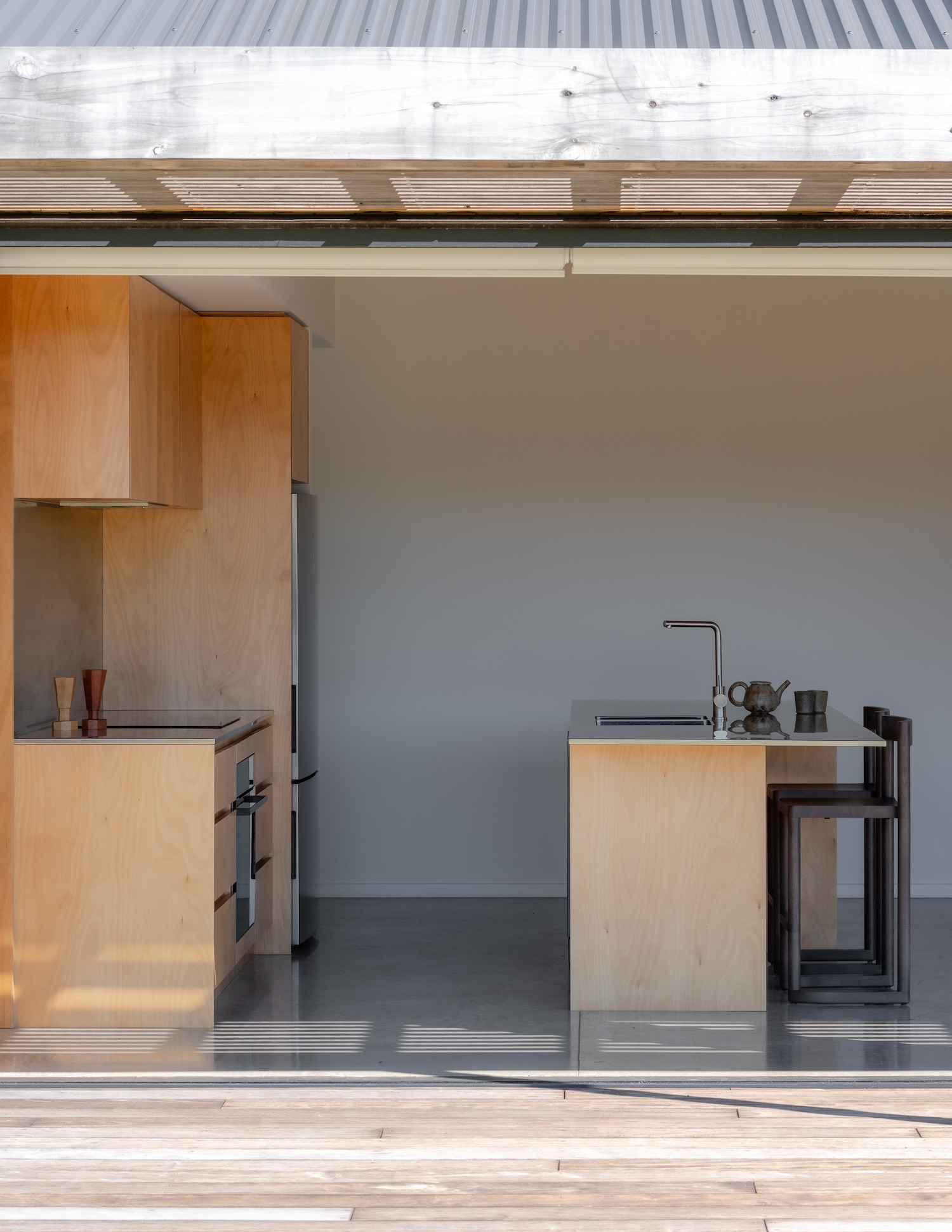
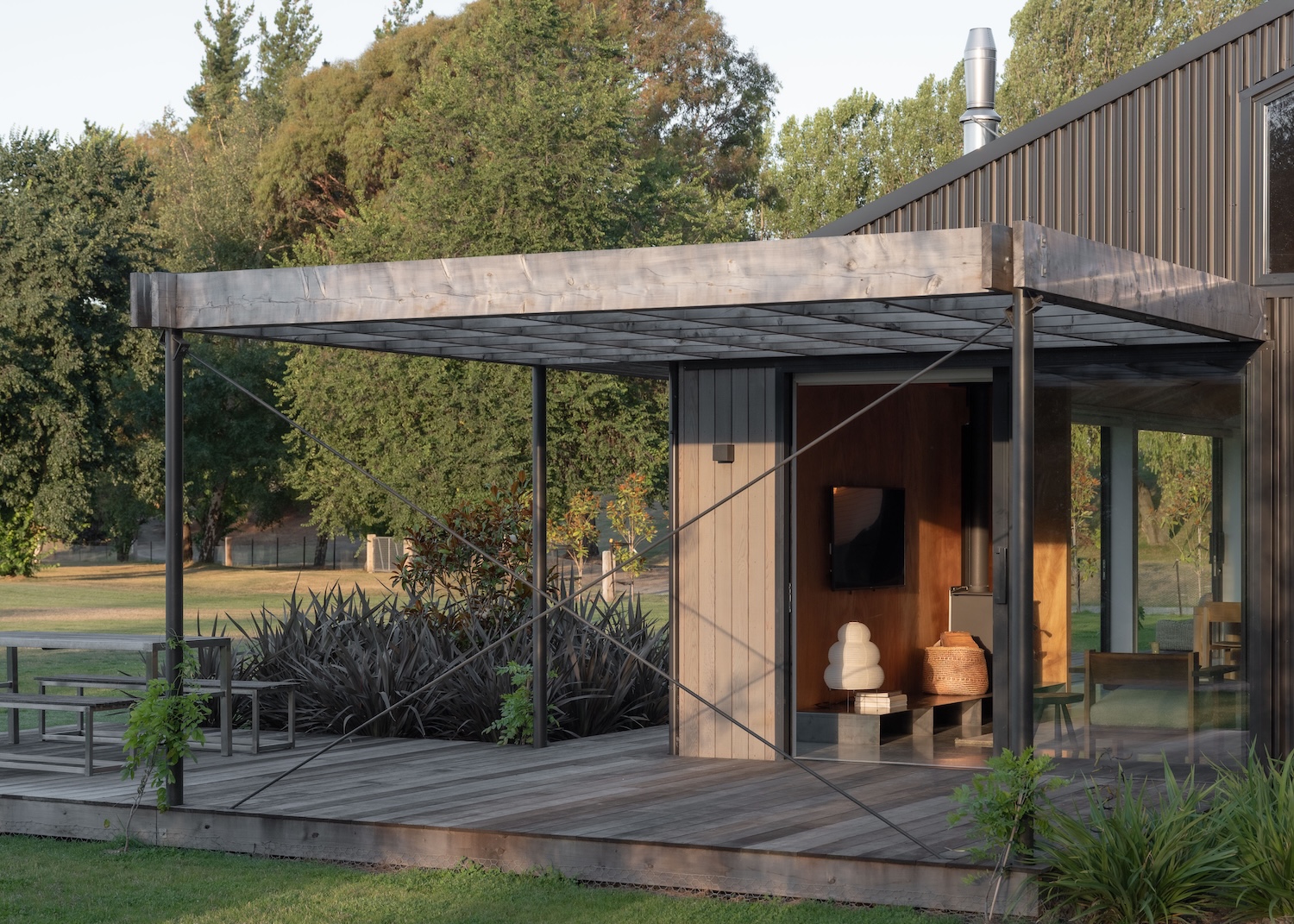
Beneath everything sits a burnished concrete slab doing the quiet labour of thermal mass, absorbing the high-altitude sun through the day and releasing it once Central Otago cools sharply after dark. The principle is old, going back to passive solar experiments of the mid-century, but the execution here is unsentimental: raw floor against stained timber ply on the ceilings and joinery, a kitchen of stainless steel and plywood built plainly and meant to be used hard. The macrocarpa pergolas extend this environmental tuning outward, the northern run slatted at an angle calibrated to admit the low winter sun and rebuff the steeper summer one. Macrocarpa, the Monterey cypress naturalised across New Zealand farmland, is a fittingly regional choice, a timber most often milled for fenceposts and shelterbelts pressed into architectural service.
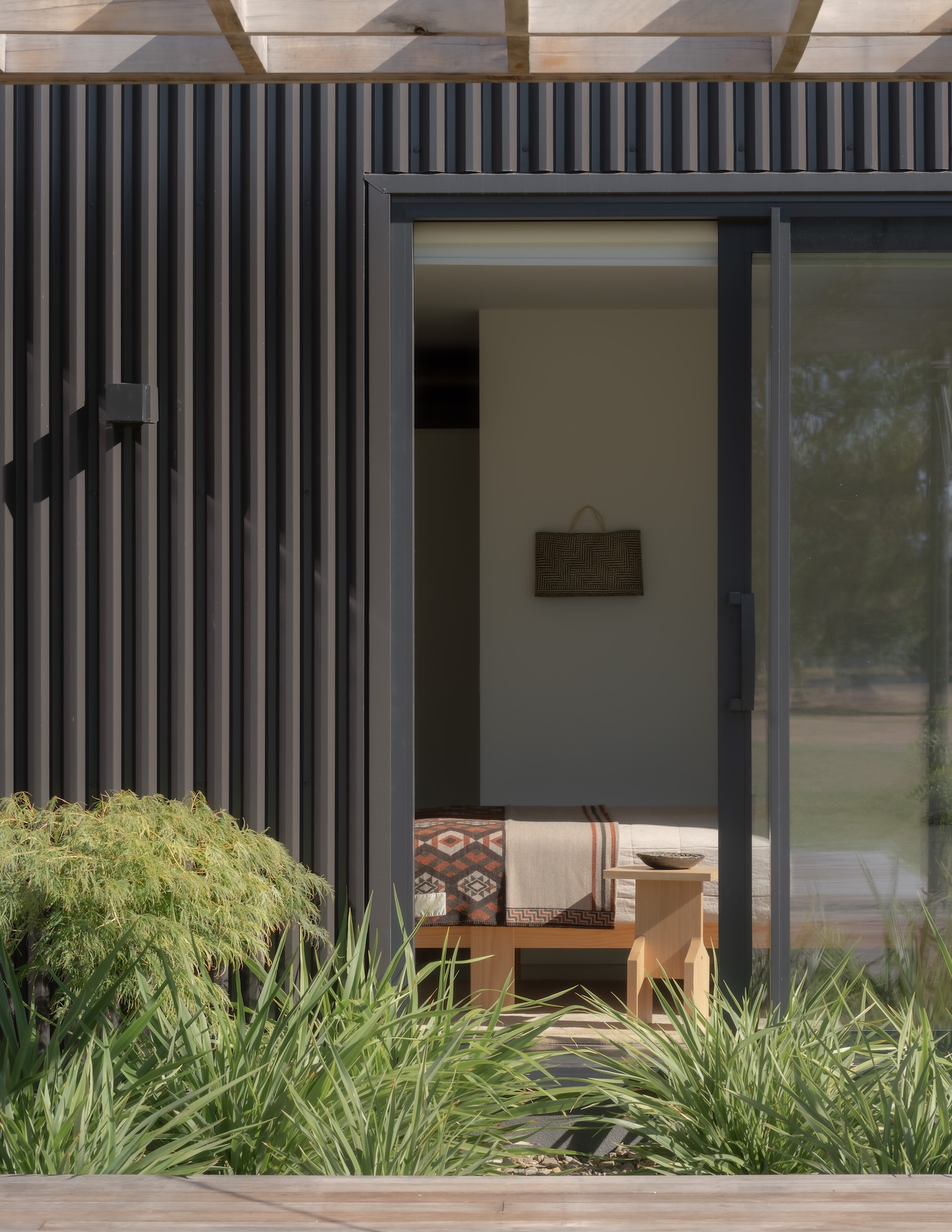
Cedar and dark profiled metal complete a palette assembled to weather rather than resist time, letting the house recede into its backdrop of foliage instead of asserting itself against the basin. Nuku frames the practice through three commitments, care, continuity, and integrity, and the building reads as a faithful test of them: detailing disciplined, palette restrained, the whole thing sized to what the land asks and nothing further.