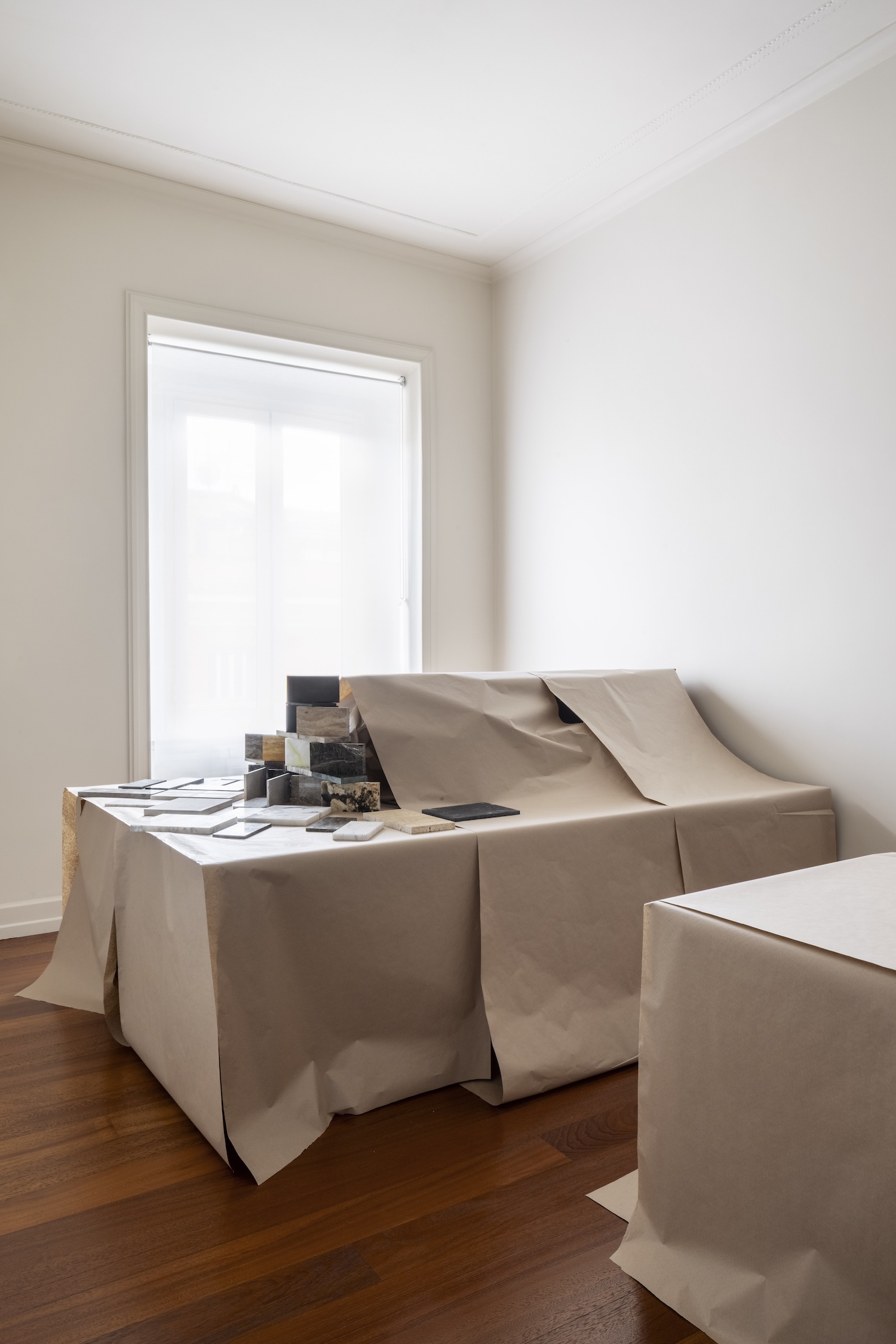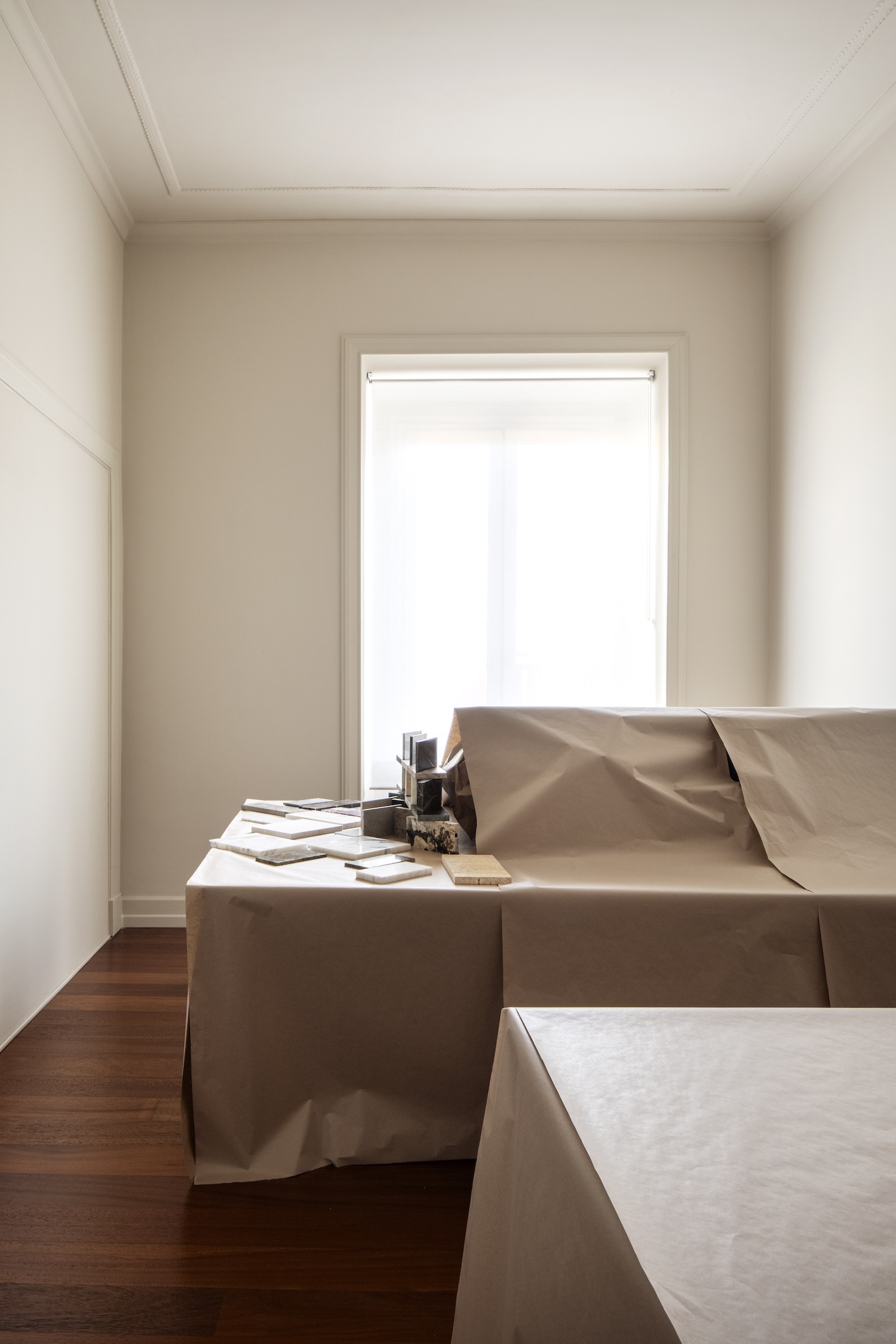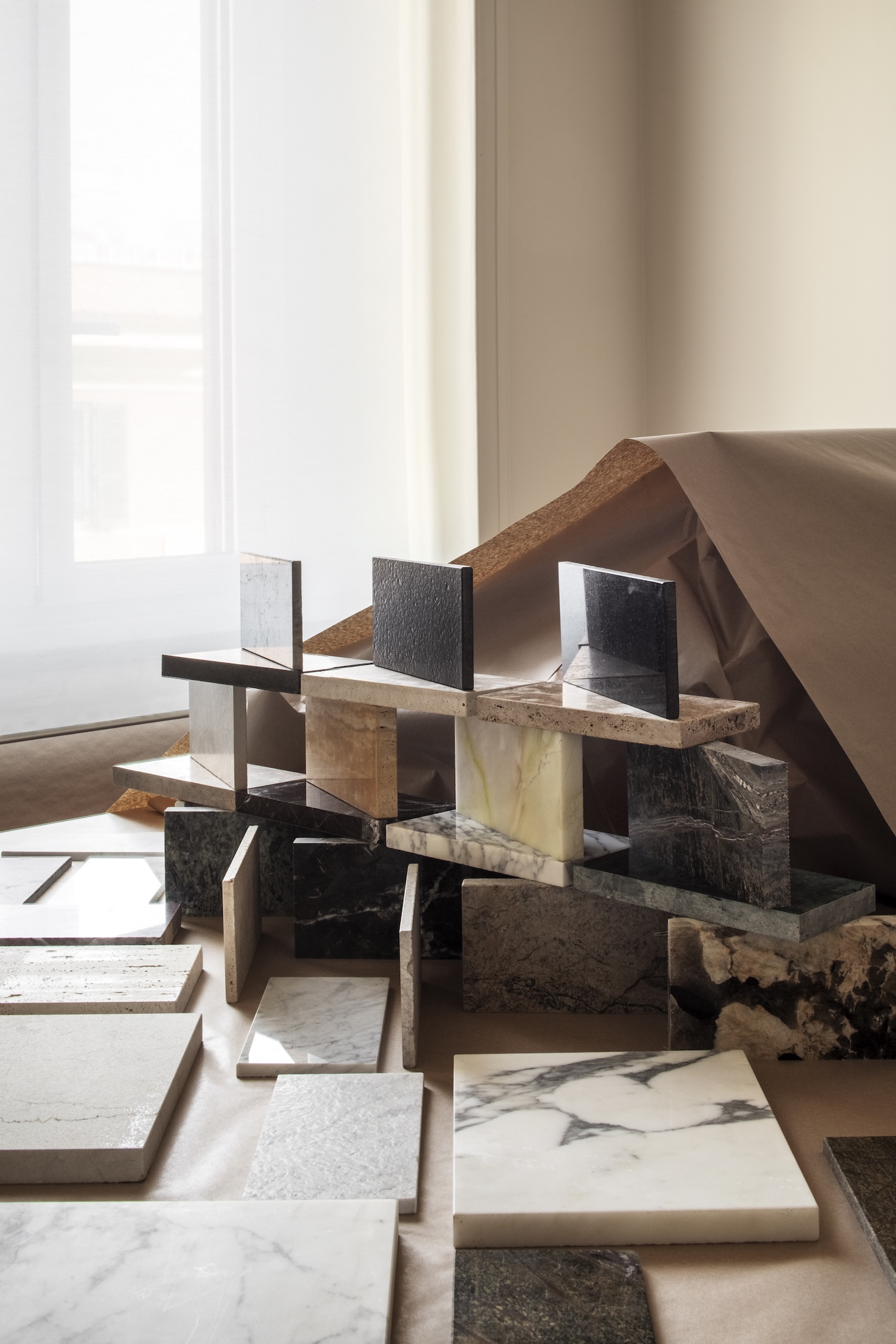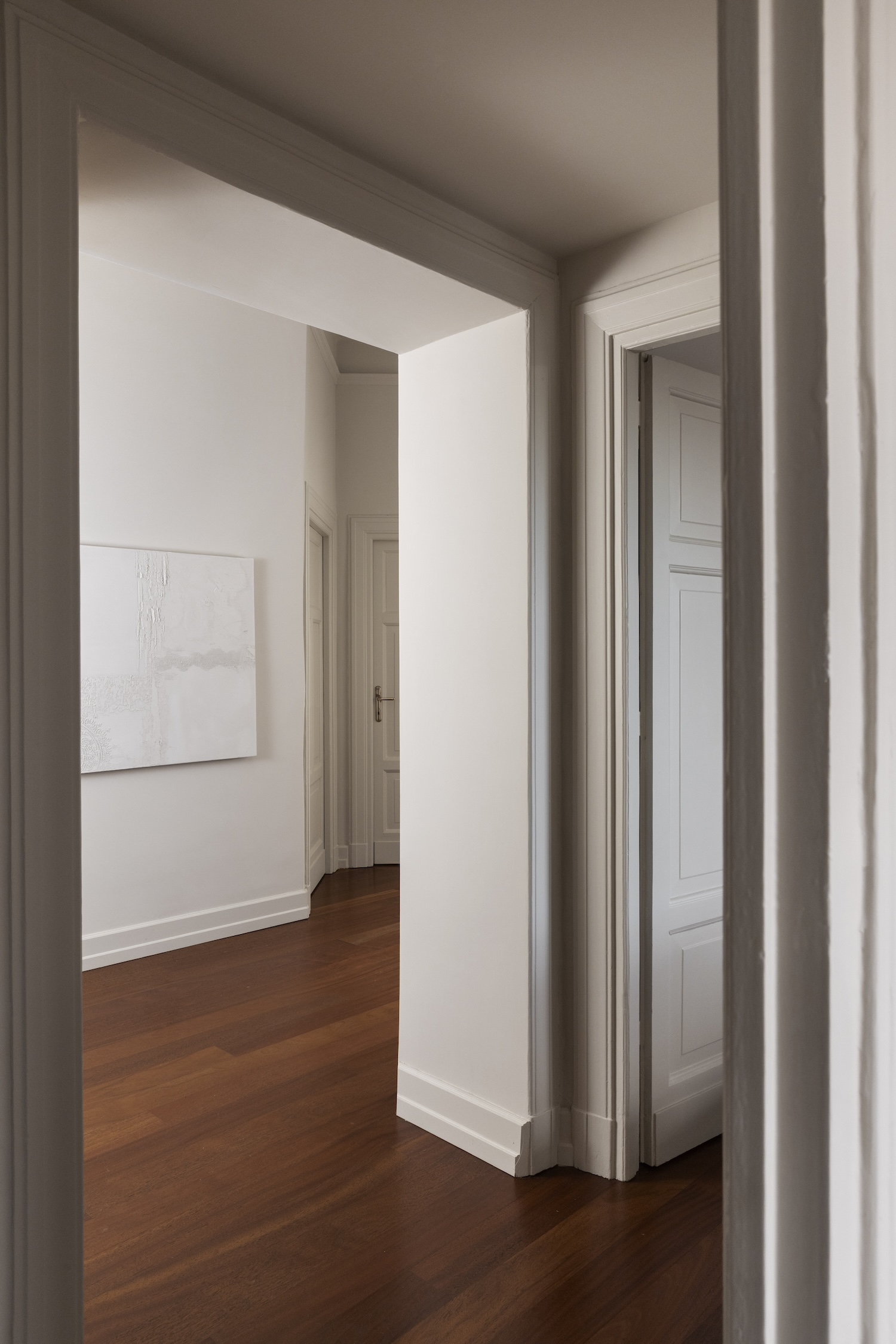
Opening is a minimalist exhibition located in Rome, Italy, within the larger Open House Rome XIII Edition created by Pederzoli Matteis. The first thing you notice upon entering the space is not the polished surfaces or carefully arranged objects, but the deliberate roughness of a marble fragment balanced against another stone, creating what appears to be the most elemental table imaginable. This simple trilithic gesture – two uprights supporting a horizontal plane – opens the exhibition with a profound statement about architecture’s essential nature.
In this moment of material honesty, the studio reveals its philosophical approach through what might seem like construction debris. These marble and stone offcuts, rescued from workshop floors and transformed into structural elements, embody a practice that finds poetry in pragmatism. “Construction is conceived as the minimal core of inhabited space – a void more than a solid,” the designers explain, and this void becomes palpable as you move through their carefully orchestrated sequence of spaces.
The trilithic system here recalls both Stonehenge’s primal monumentality and Donald Judd’s minimalist interventions, yet it operates on an entirely different register. Where ancient builders sought permanence and Judd pursued conceptual clarity, Pederzoli Matteis embraces the accidental beauty of industrial waste streams. Their marble fragments carry the geological memory of quarries alongside the cultural memory of Roman construction techniques, creating what we might call a “constructed archaeology” of contemporary practice.
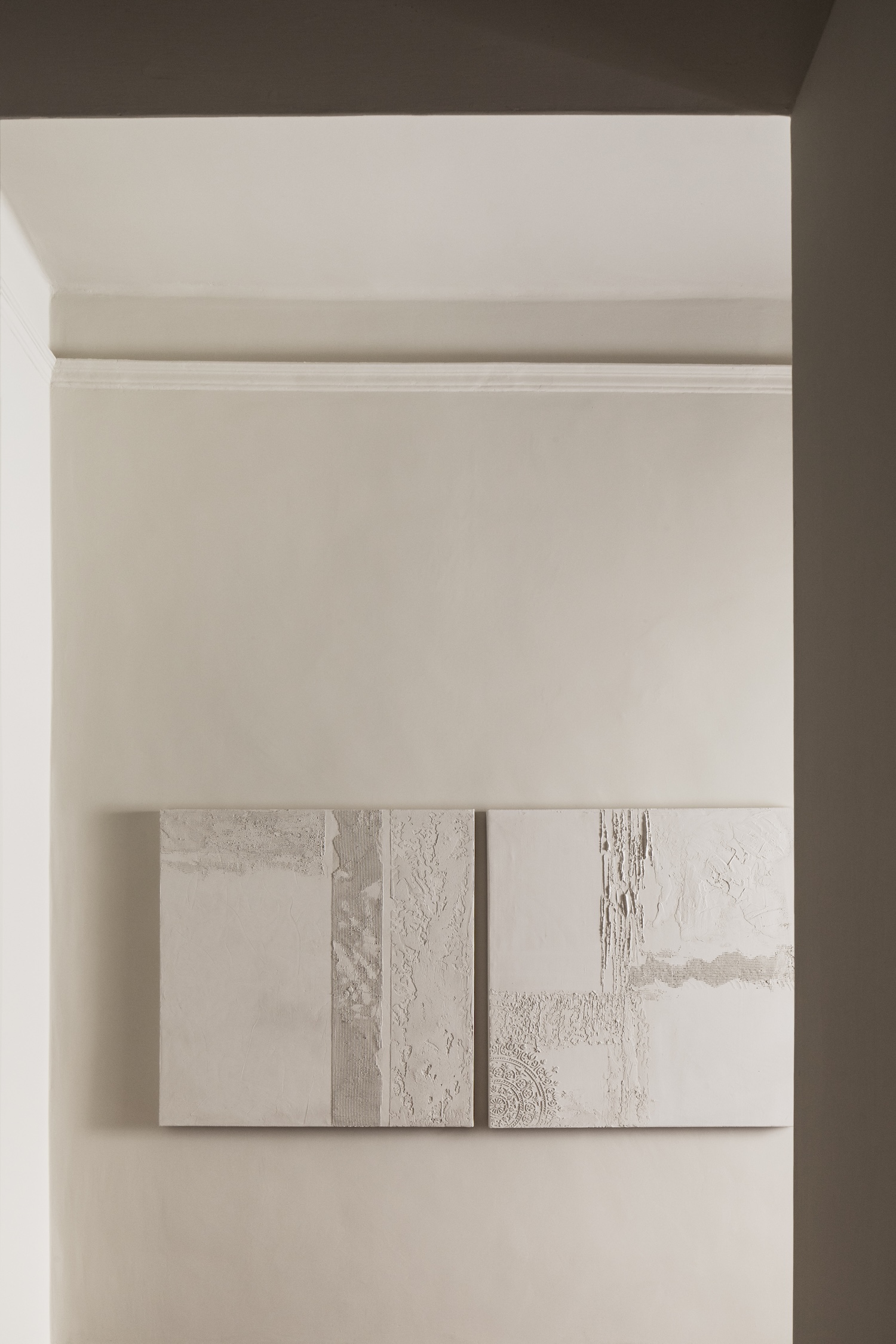
This archaeological sensibility extends through the exhibition’s three conceptual territories. The natural clay panels by Matteo Brioni introduce surface as a living membrane, their varying textures creating what the studio describes as “a skin that ripples and smooths.” Here, the Italian tradition of working with earth-based materials meets contemporary concerns about material authenticity and environmental responsibility.
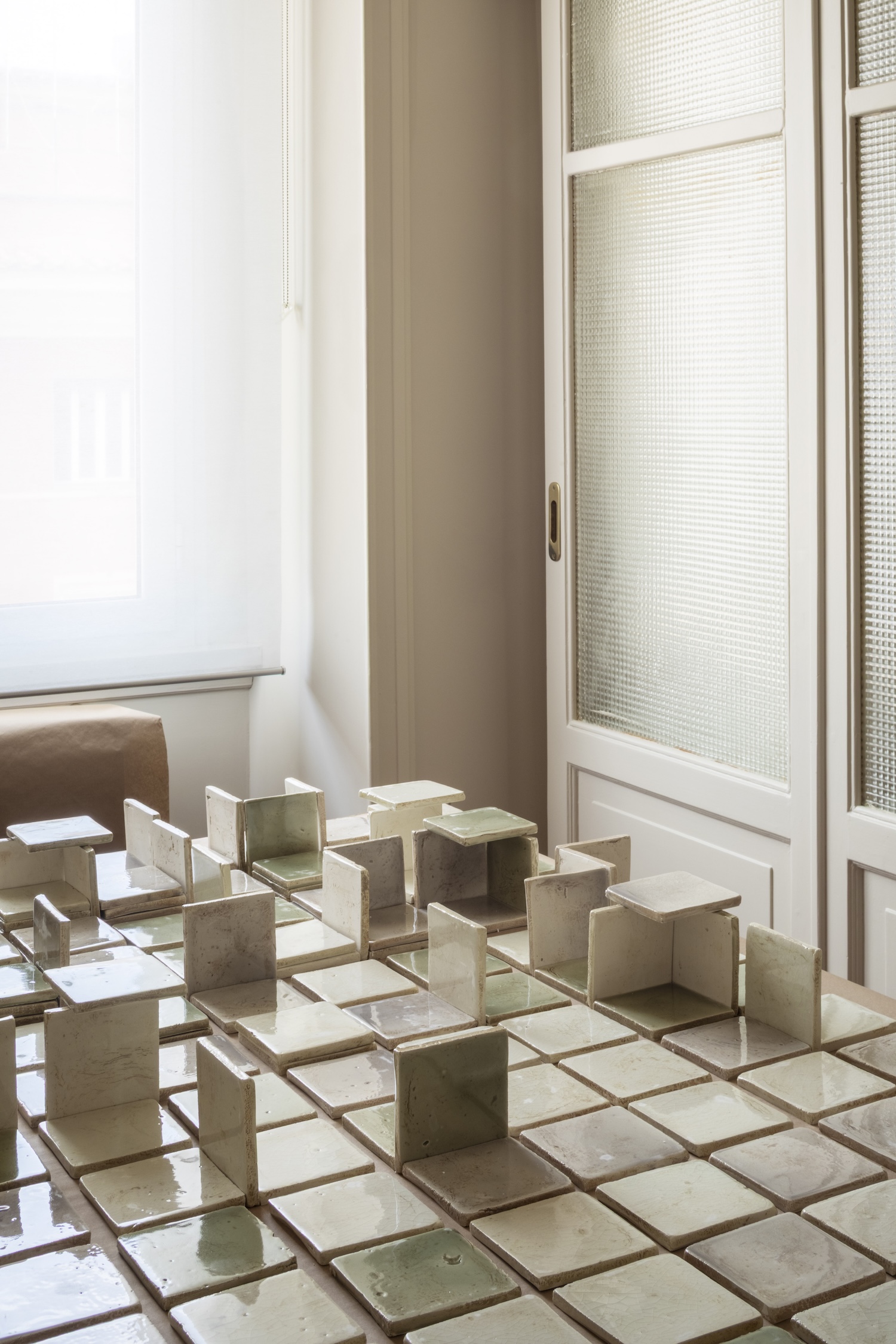
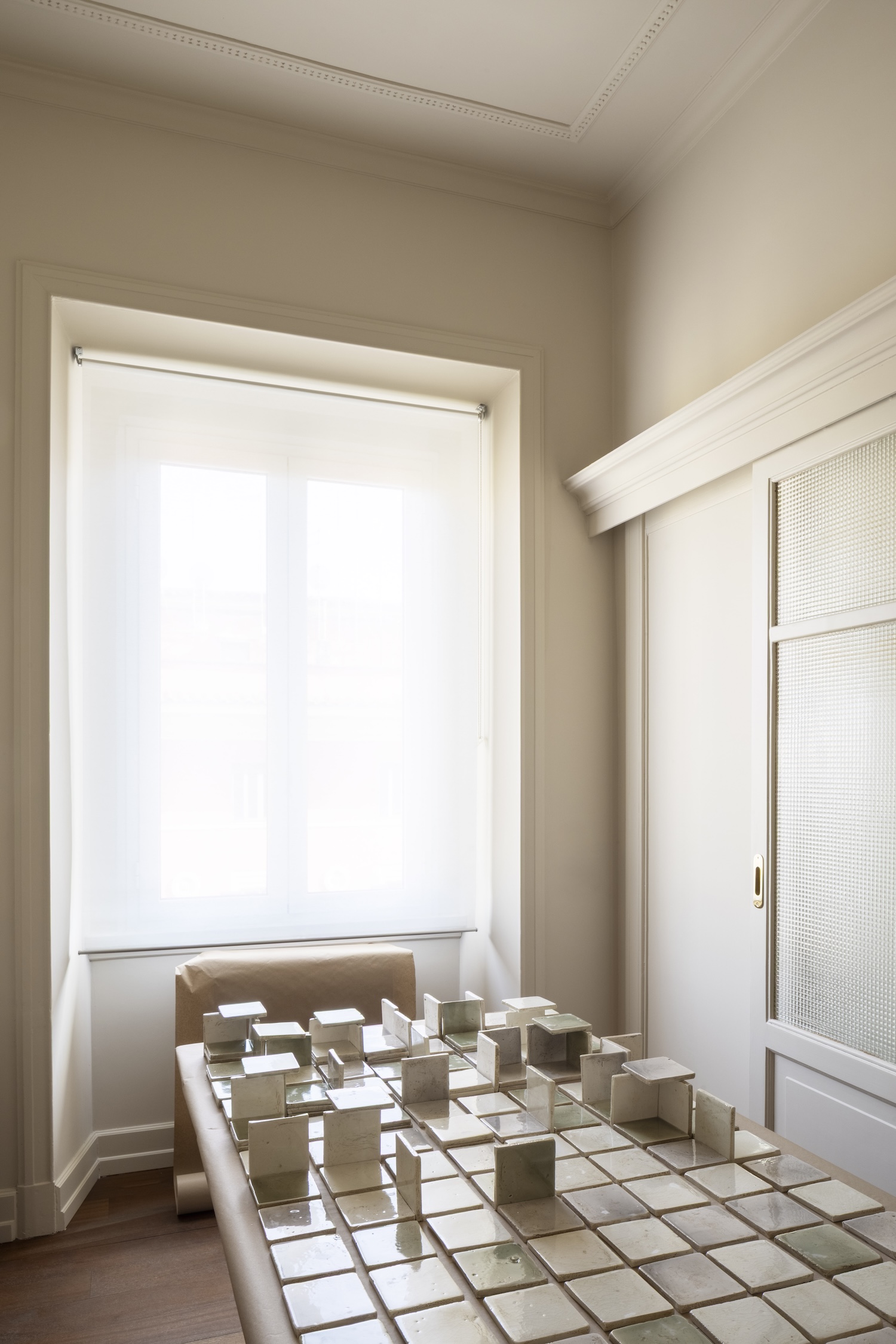
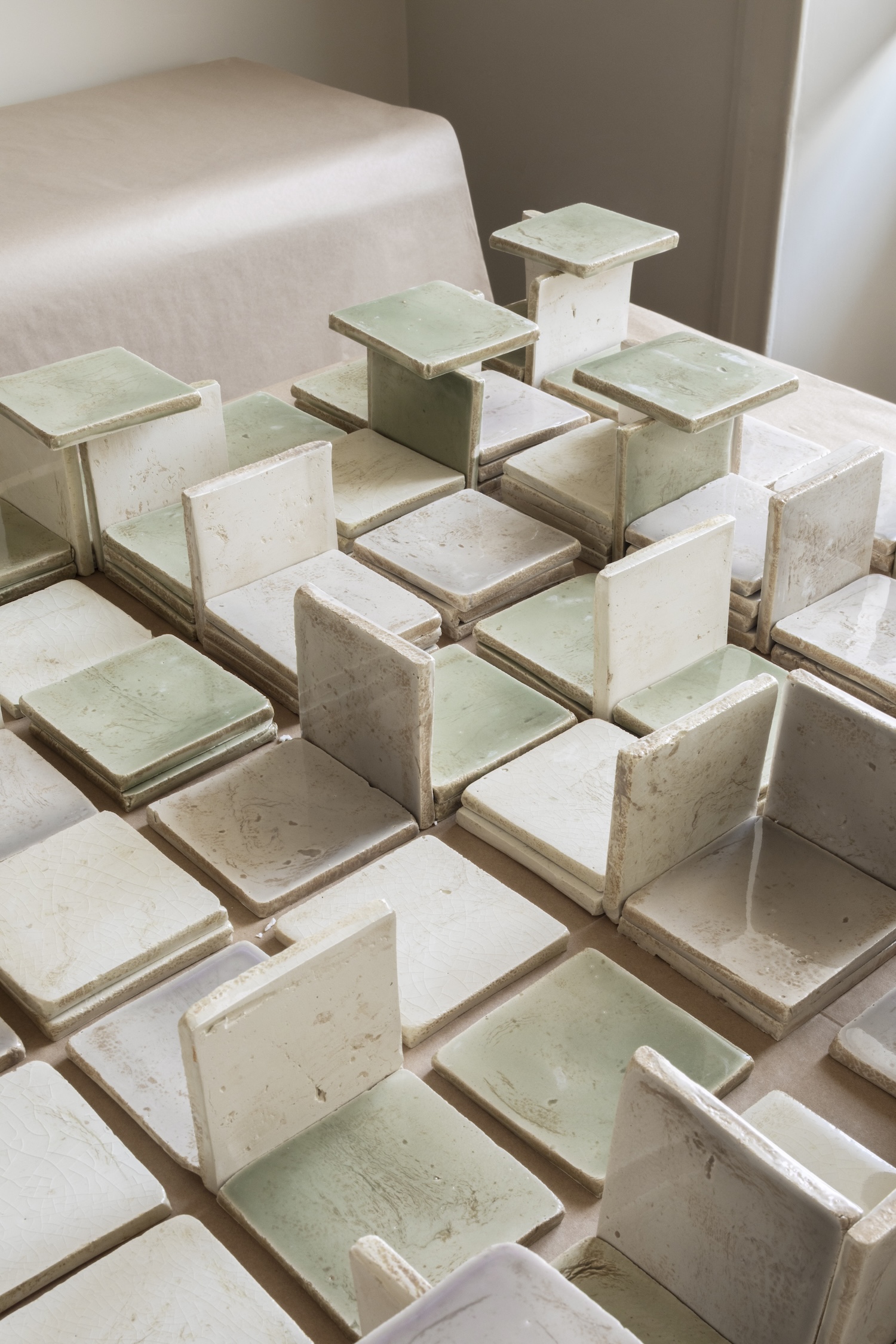
The final gesture – Ravasini’s handcrafted ceramic tiles clustering into defensive formations – suggests how traditional craft knowledge adapts to contemporary spatial challenges. These objects function simultaneously as protective cladding and sculptural installation, embodying the studio’s belief that technical necessity and aesthetic investigation need not operate in separate realms.