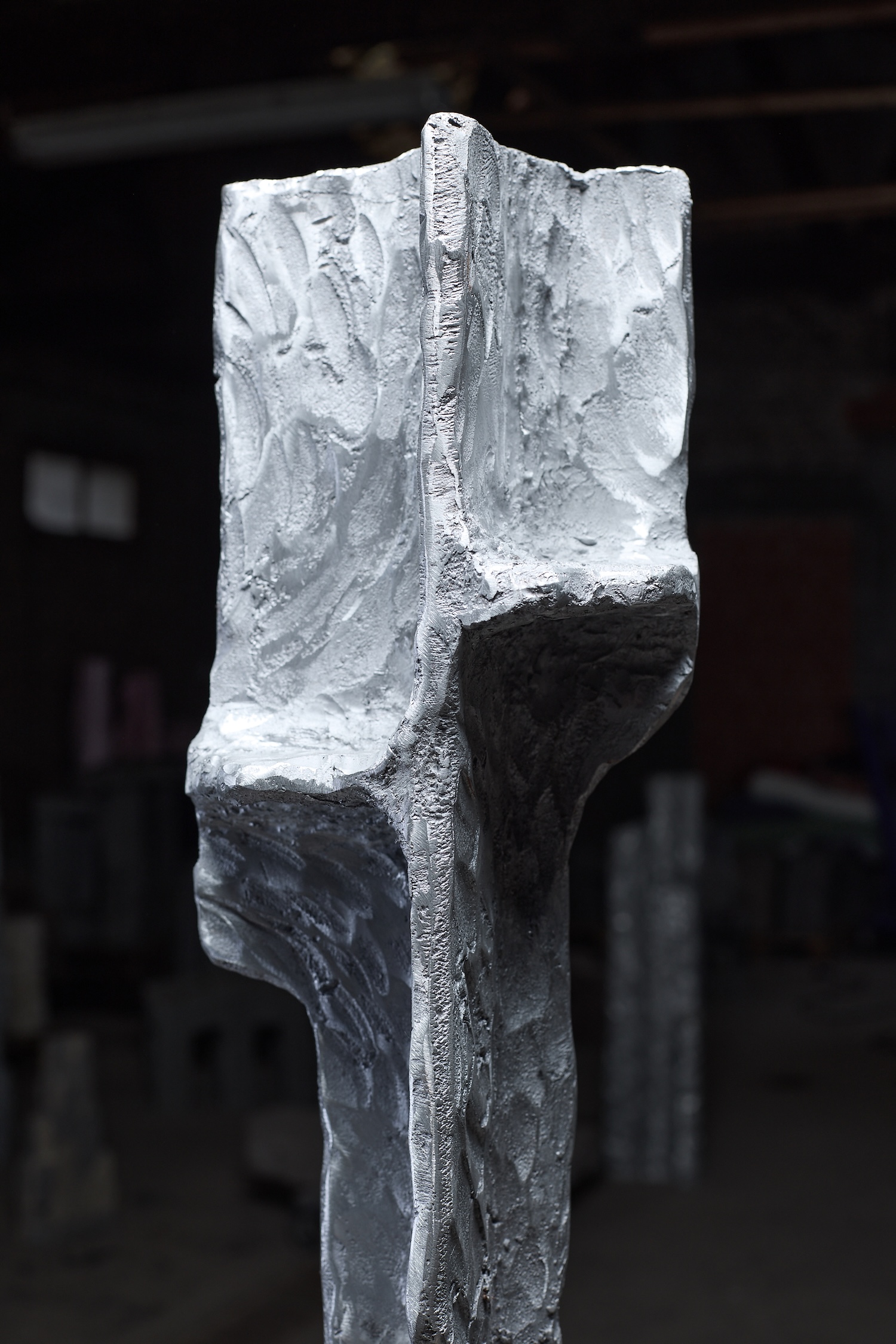
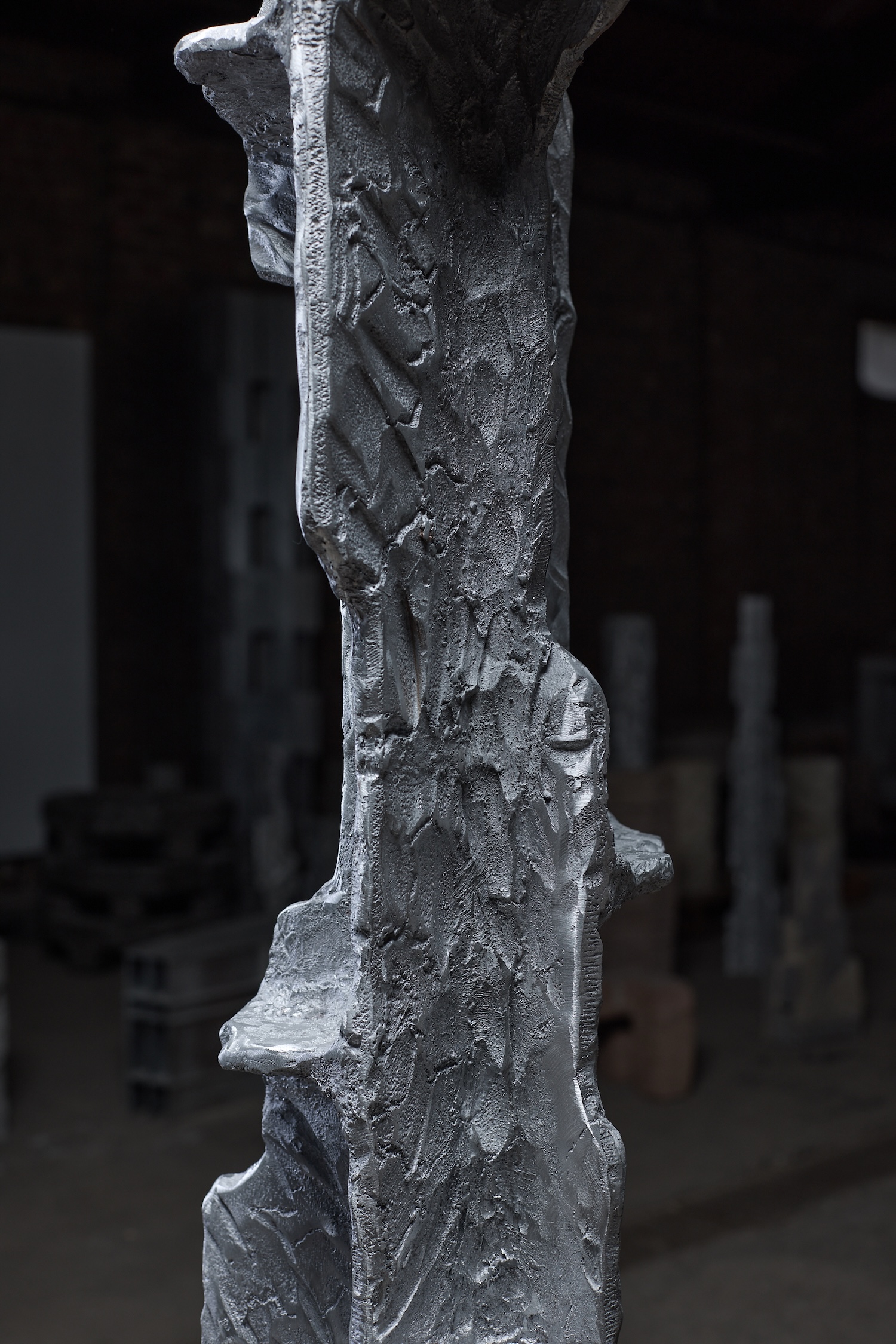
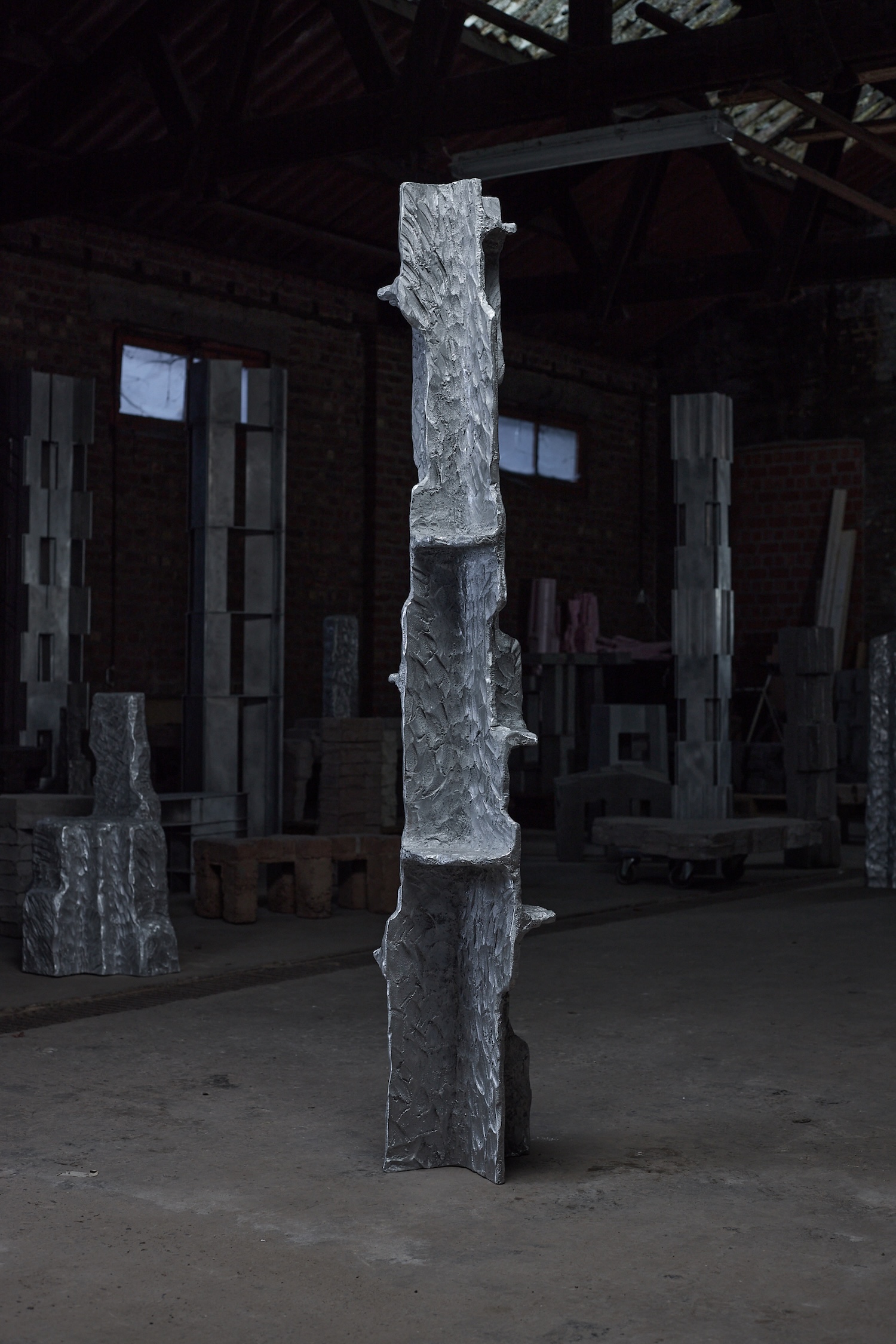
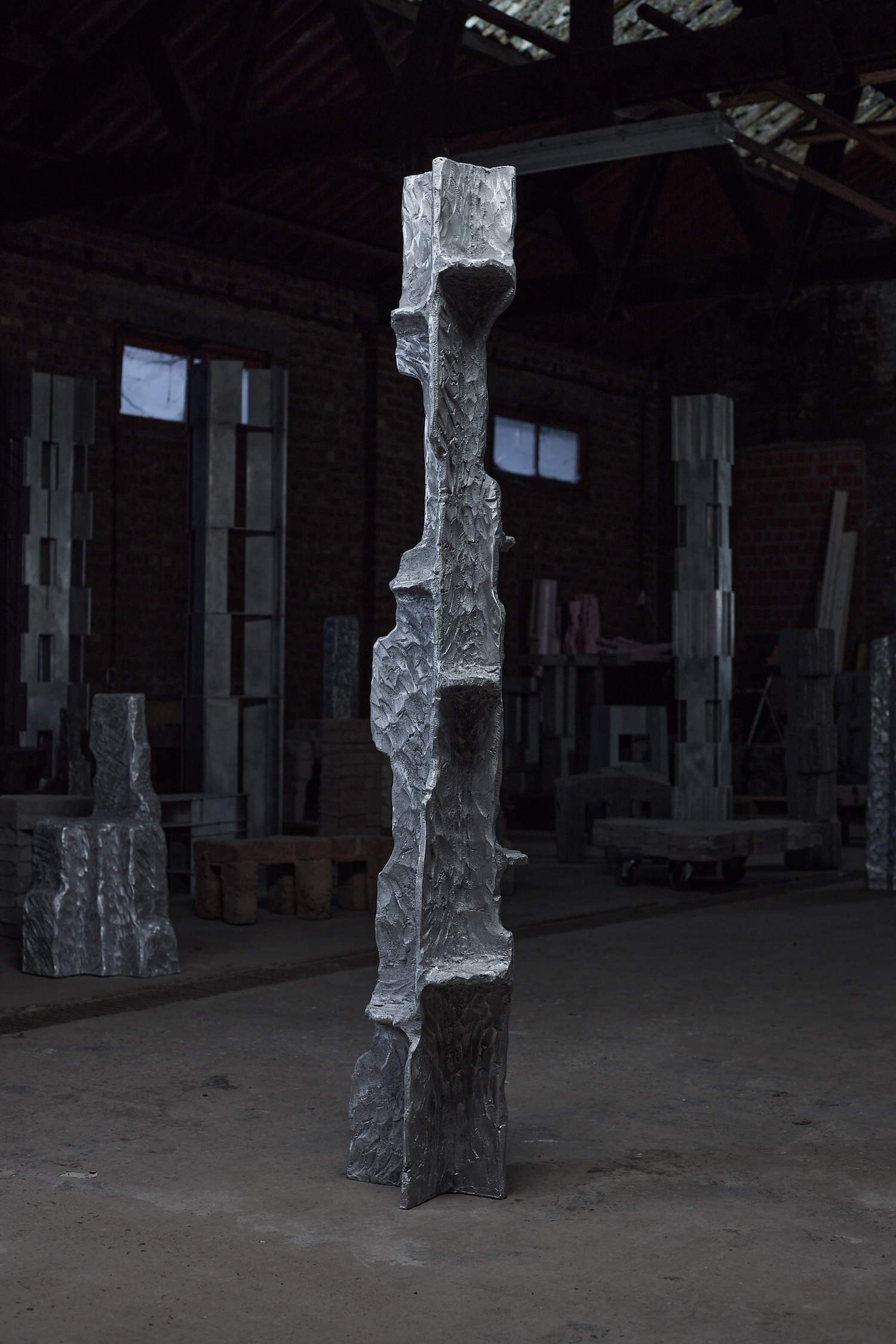
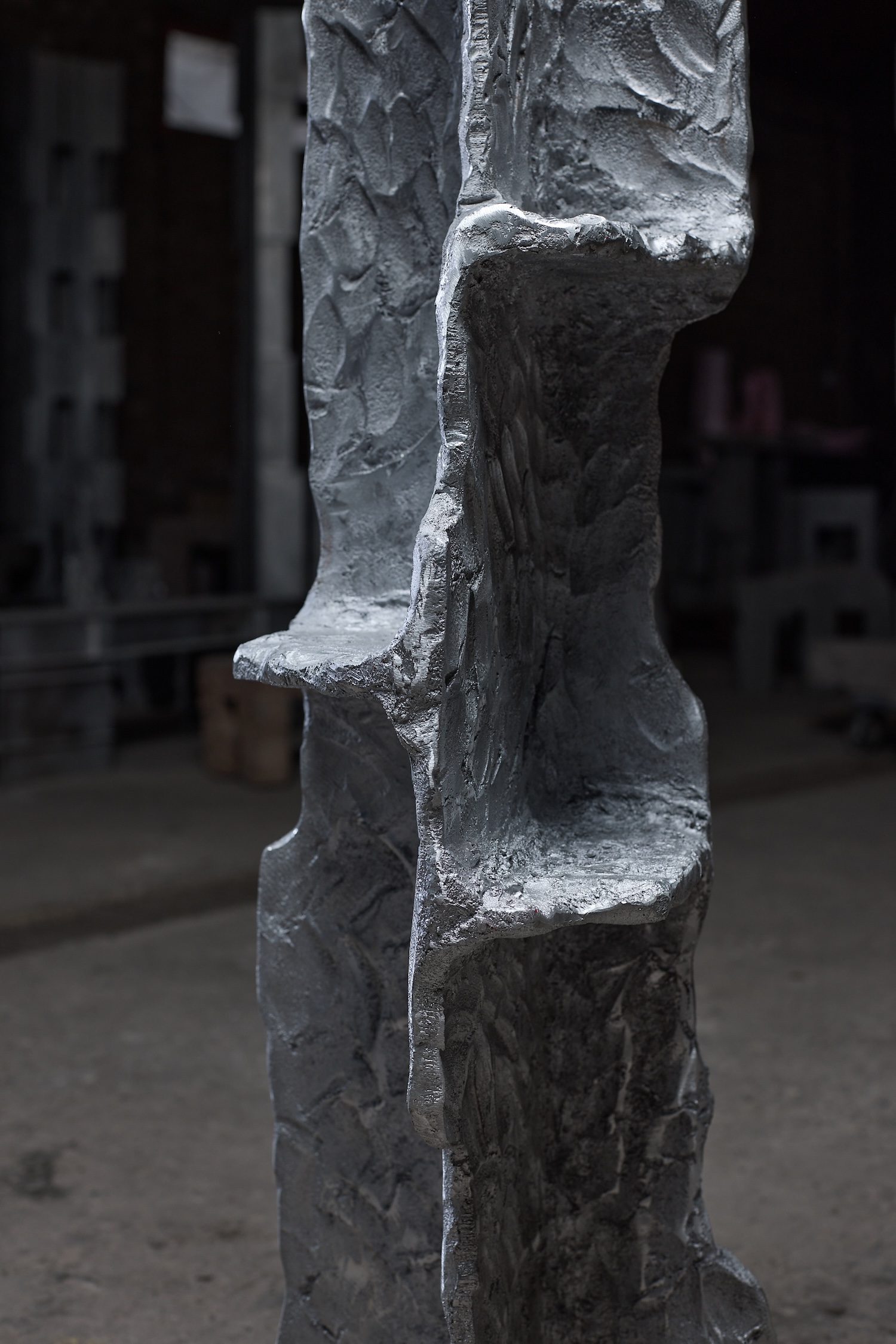
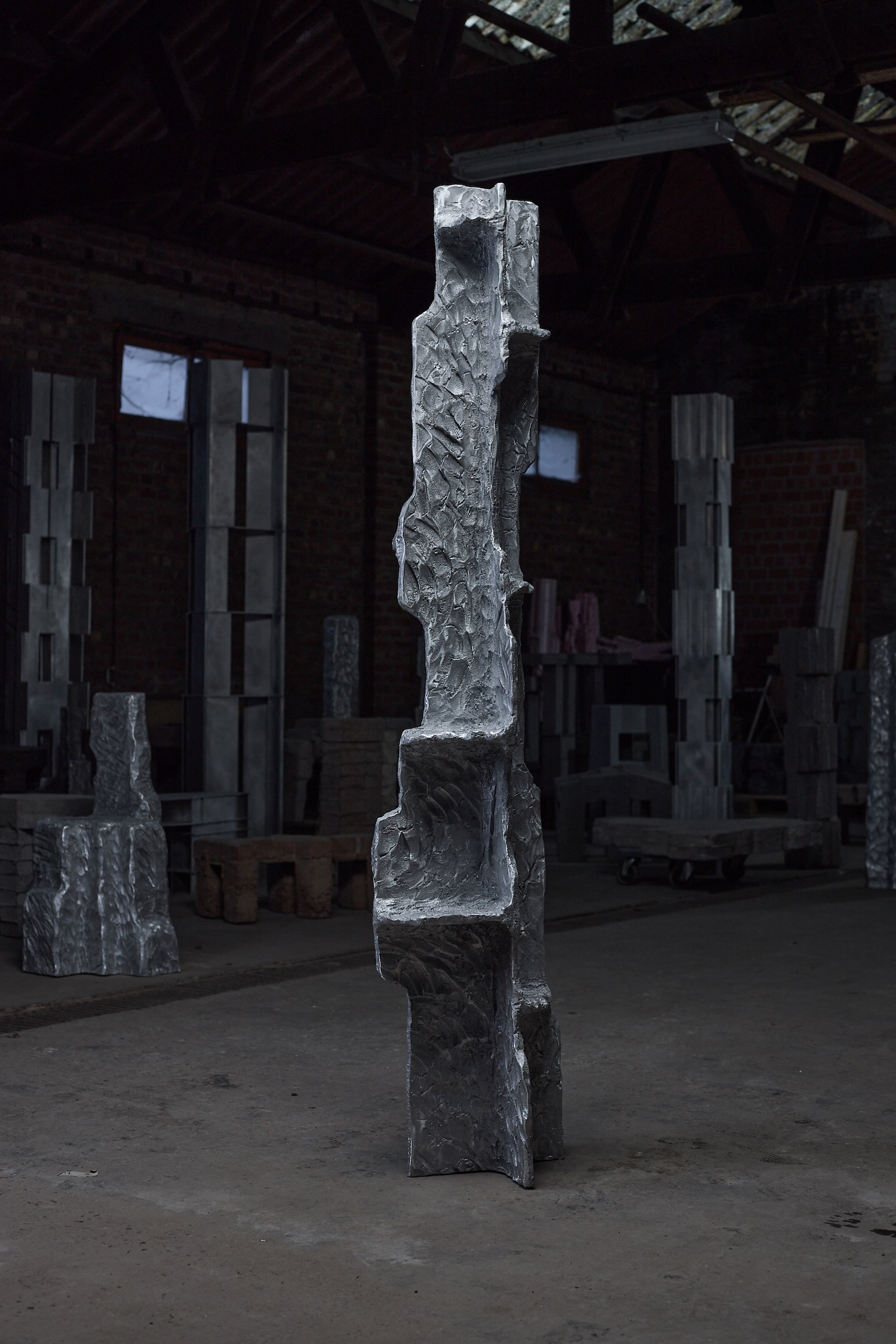
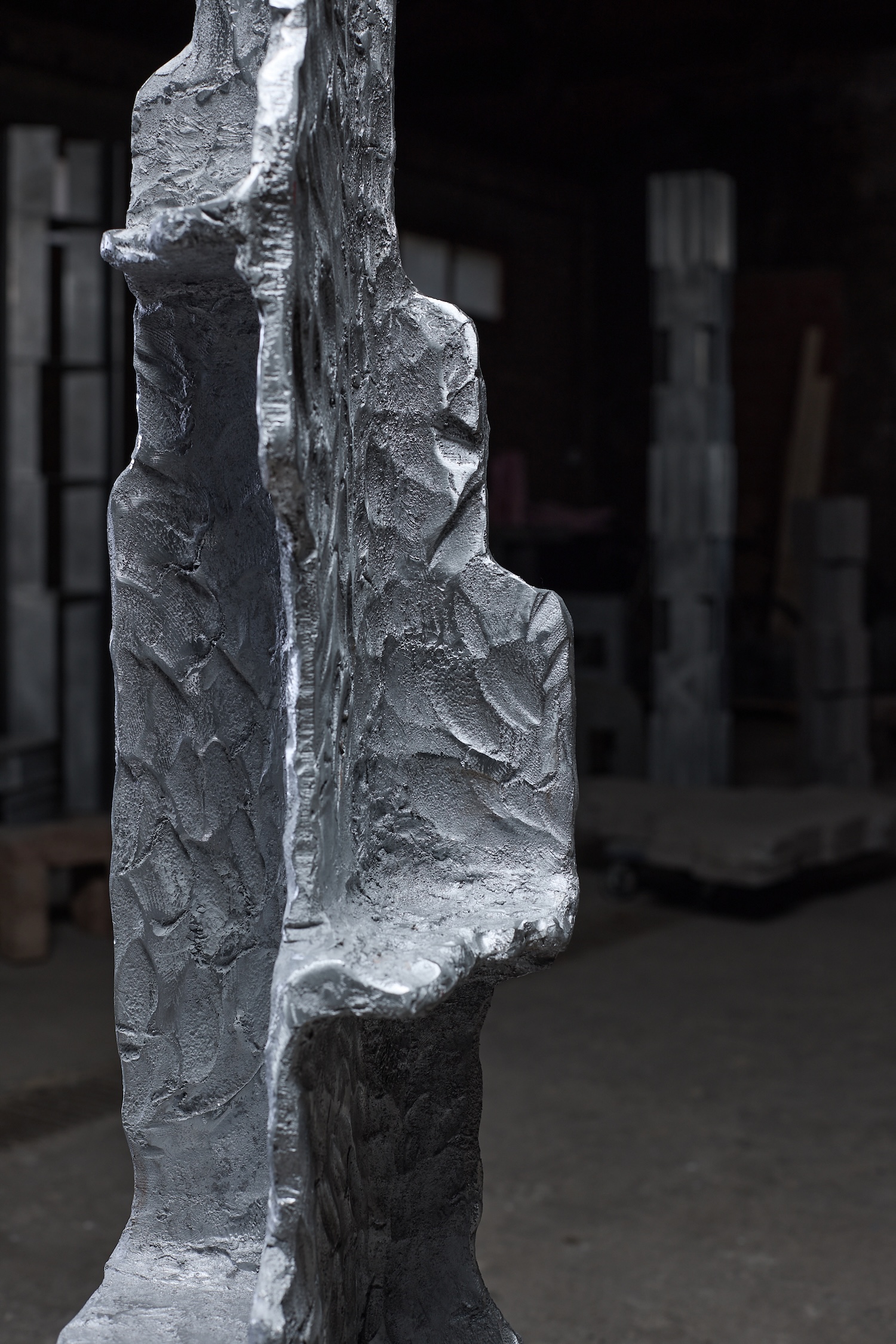
Alucast Column/Shelf is a minimal shelf created by Ghent-based designer Bram Vanderbeke. One notices them first as a kind of interruption – aluminum forms that catch and scatter light across a room, introducing what their creator calls “a new rhythm” to the space. These sculptural shelves command attention not through ostentatious design but through the honest revelation of their making. The scars and undulations visible across their surfaces tell a story of physical engagement with material, a dialog between maker and medium rarely seen in our age of smooth perfection.
The process begins with massive foam blocks, laboriously carved and then augmented with layers of wax. This intensive physical labor is deliberately preserved in the final pieces, where casting marks and tool impressions remain visible – not as flaws to be eliminated but as essential elements of the objects’ character. The rough polishing technique applied to the aluminum creates a surface that simultaneously reflects and absorbs light, making these shelving units responsive to their environment in almost animated ways.
This approach to shelving design connects to a lineage of truth-to-materials philosophy that stretches from early 20th century Modernism through Brutalism and into today’s post-digital craft revival. Where designers like Jean Prouvé revealed structural elements as aesthetic features, these Architectural Objects go further by celebrating the very markings that most industrial processes would consider defects.
“It is the point where materiality takes over,” the designer notes, describing the moment when a viewer transitions to user, engaging with both function and form simultaneously. This dual identity – sculptural presence and utilitarian purpose – places these objects within a rich tradition of boundary-breaking design that includes the work of Noguchi, Perriand, and more recently, Max Lamb and Studio Mumbai.
The aluminum casting process itself represents a fascinating technical choice. While traditional aluminum furniture production typically involves extrusion or sheet fabrication for consistency, these shelves embrace the unpredictability of casting, particularly when executed through such physically intensive methods. The resulting tactility rewards close inspection, creating what design historian Deyan Sudjic might call “objects that demand to be read as well as used.”