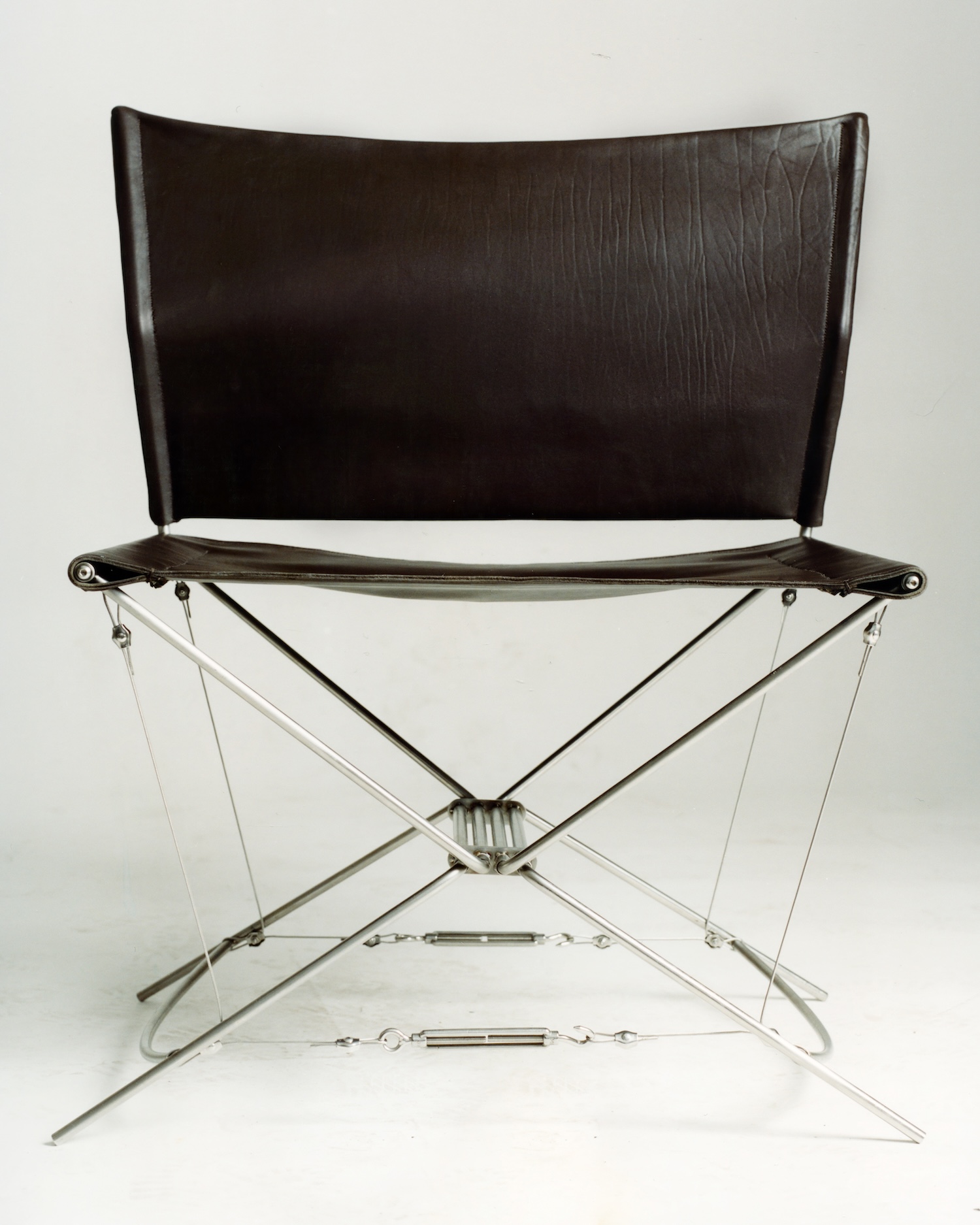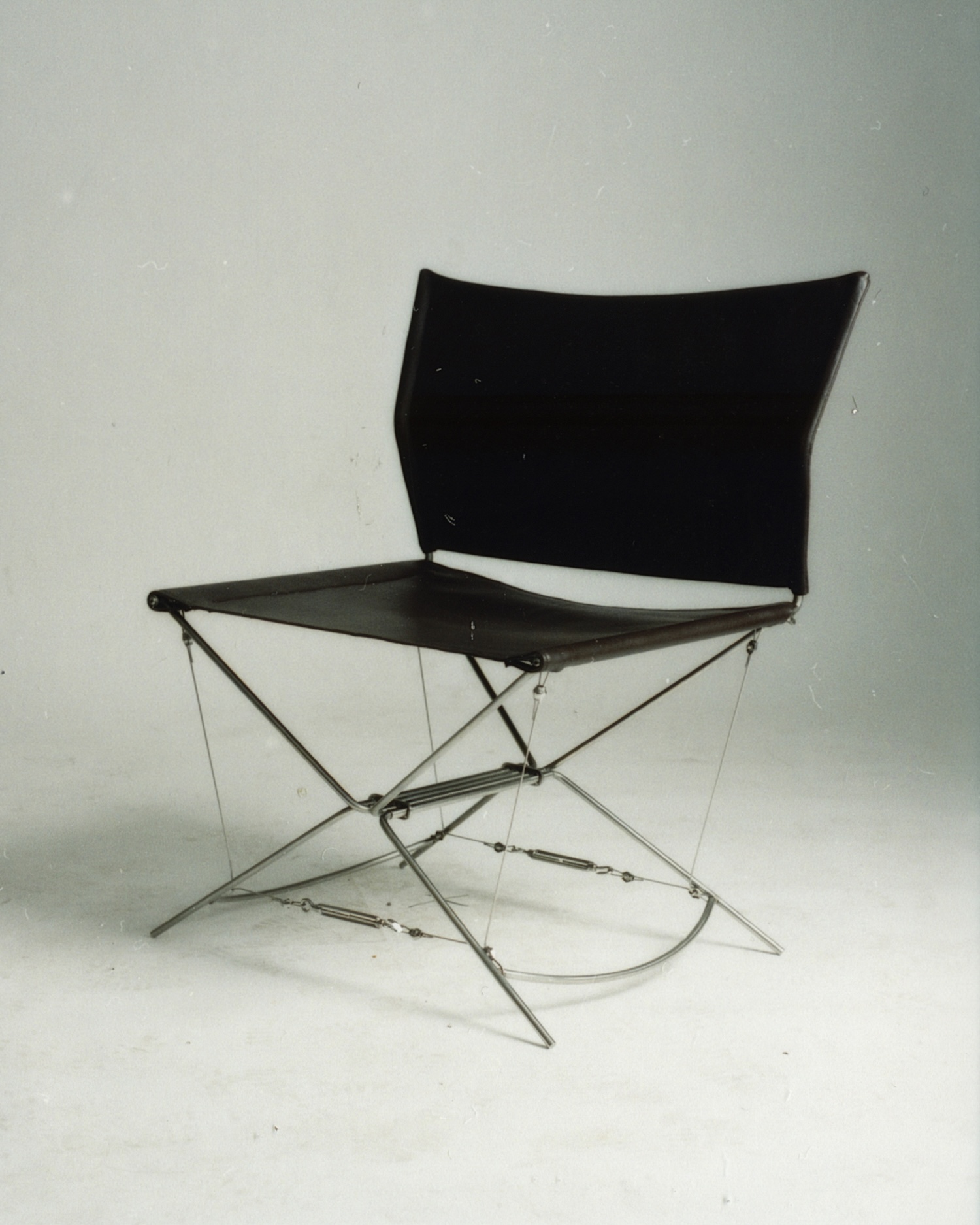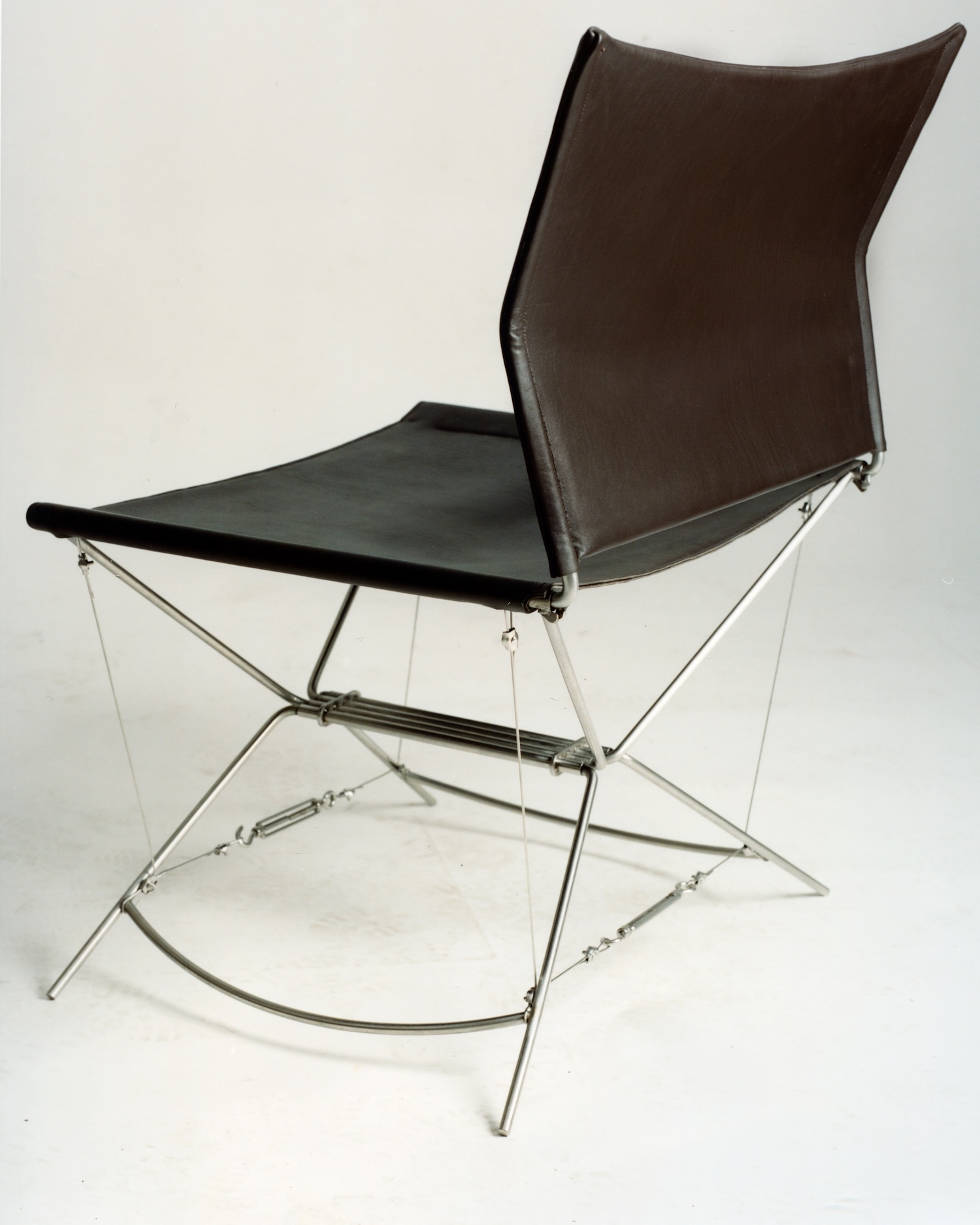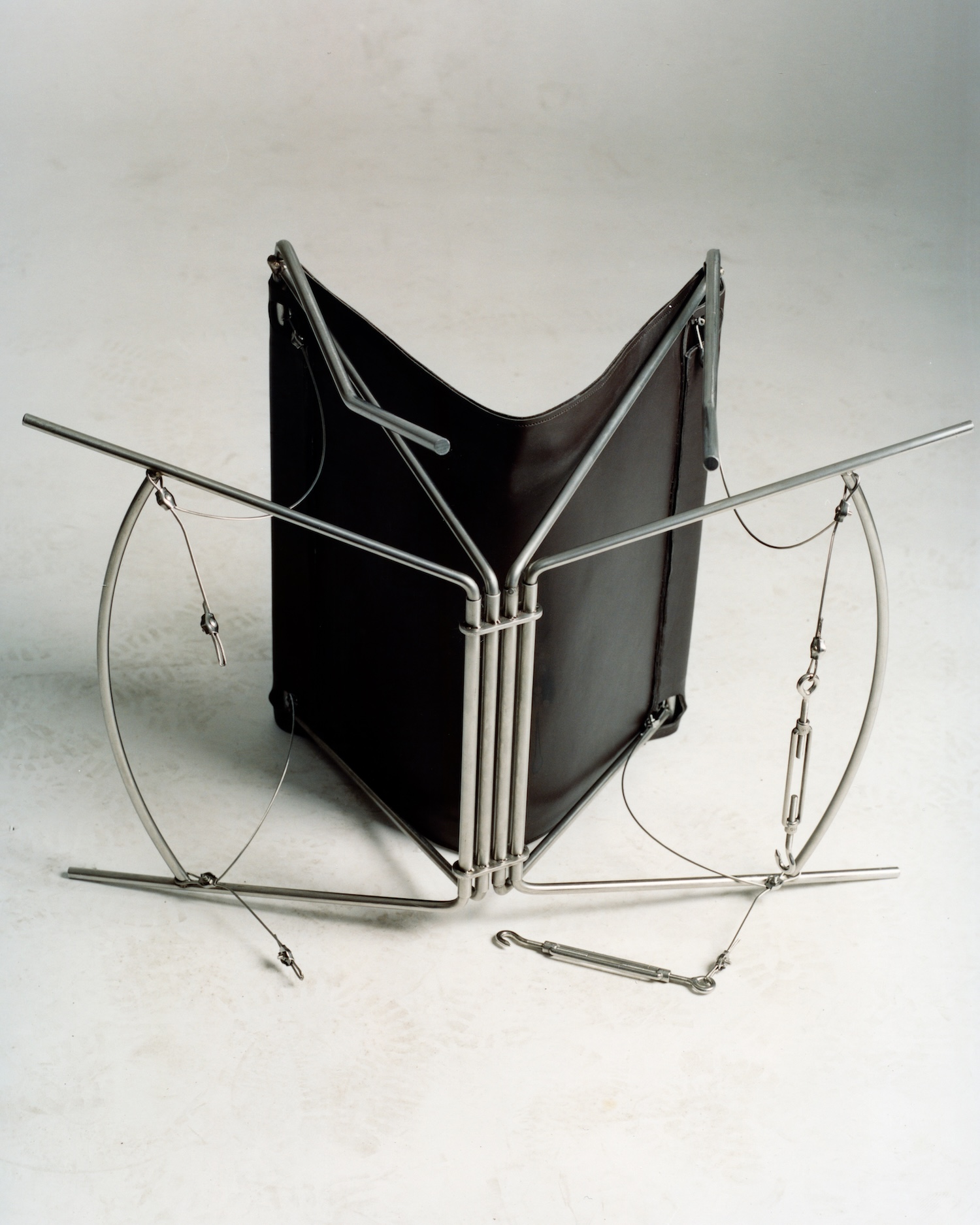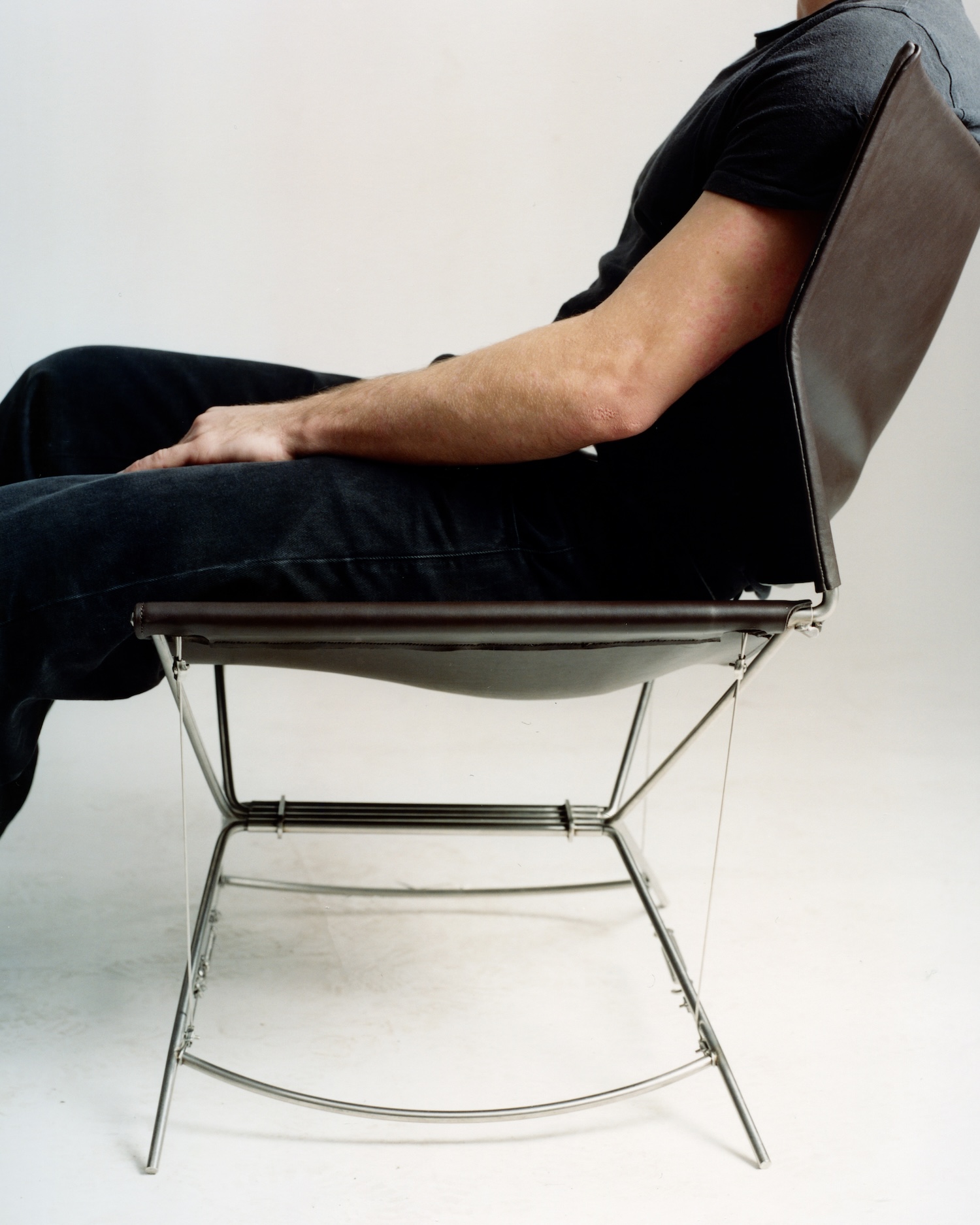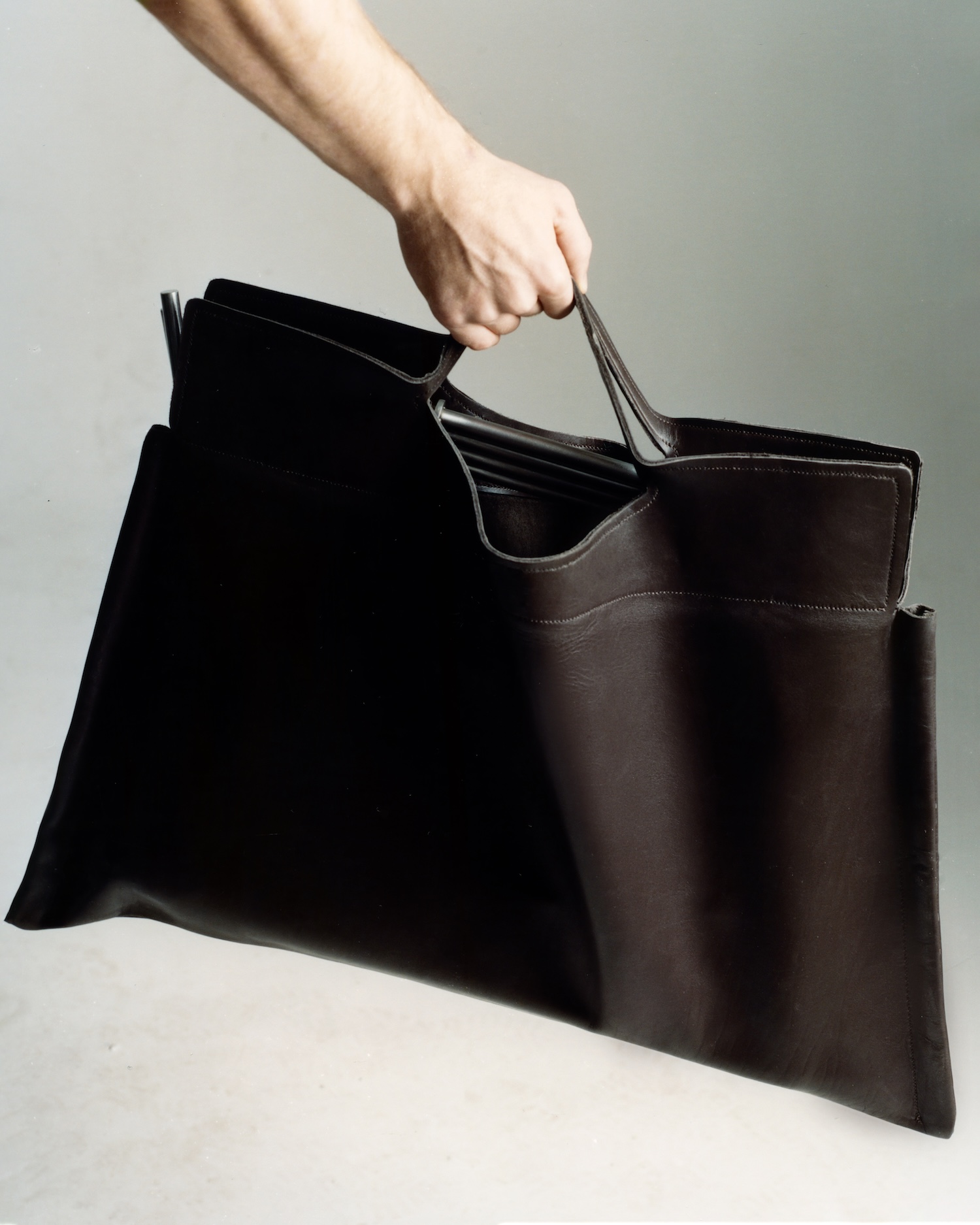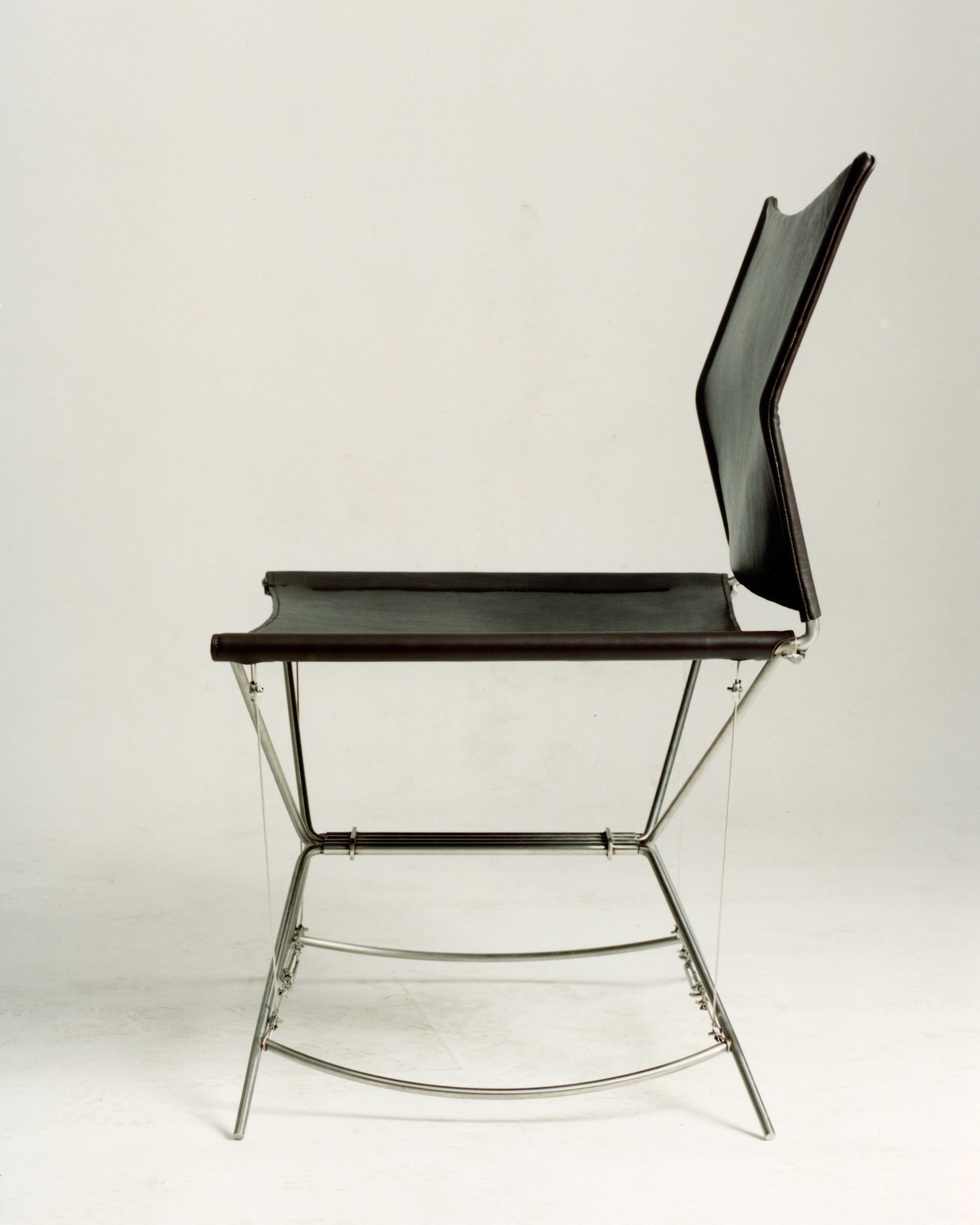
The calf leather panel that supports a sitter’s back in Cabin Bag also serves as the pouch the chair is carried in. The foldable lounge chair is by Anton Defant, a designer based in Berlin, Germany, who developed it over the past two years as a further study of furniture that folds. Defant trained at the University of Applied Arts Vienna and works largely in one-off pieces and small series that sit between product and sculpture.
Folding camp furniture usually divides the work among three parts – a collapsible frame, a textile seat stretched across it, and a separate sack for carrying both. In a traditional sling chair, the canvas seat is itself the structure, taking load in tension between two rails. Cabin Bag merges seat and sack into one leather component. Defant drew on camping typologies with a particular goal, objects that adapt to whatever setting they are placed in while relying on nothing from it.
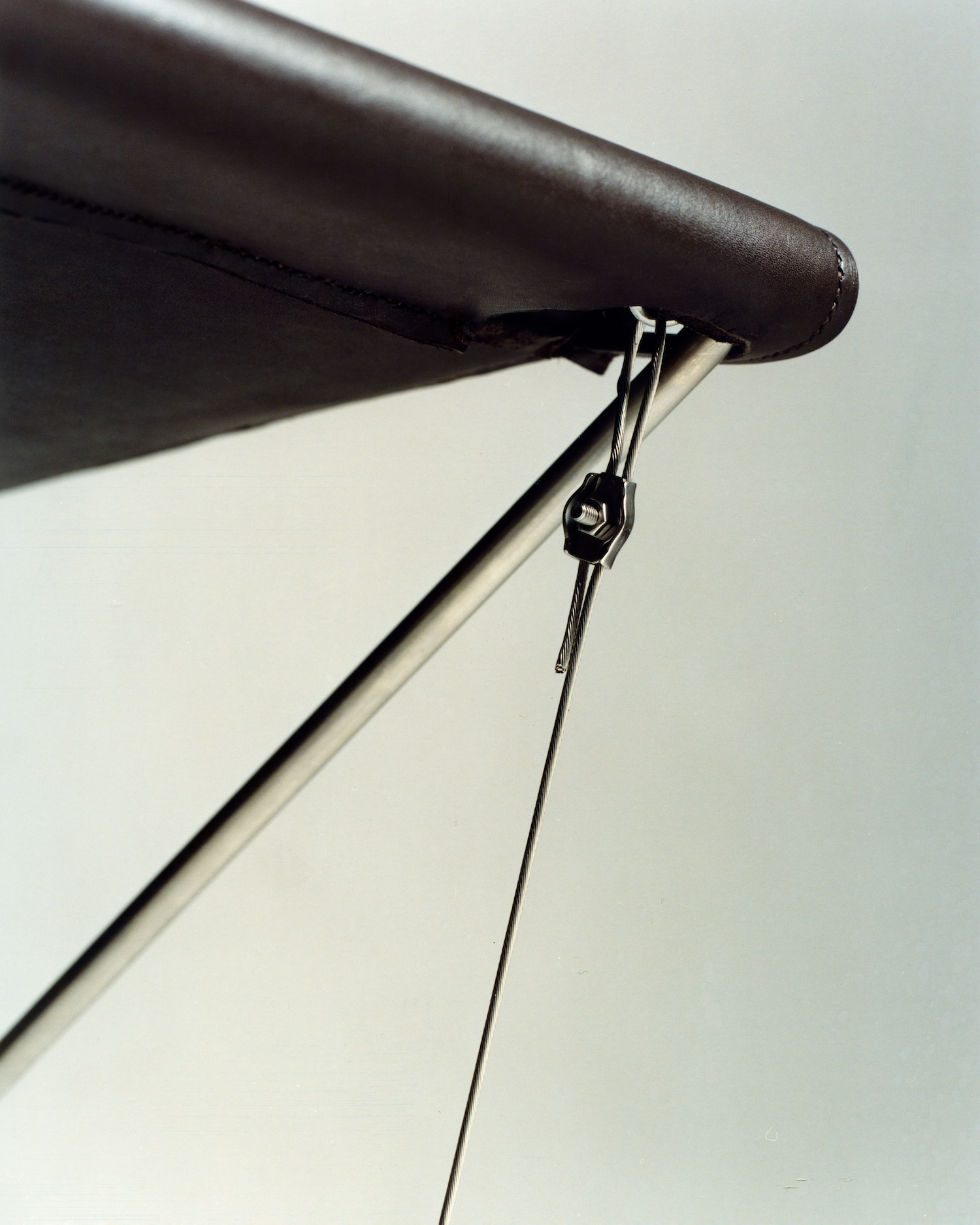
The frame is stainless steel, which withstands outdoor use without paint or plating. Its structure pairs a rod with a turnbuckle, the threaded coupling more common in rigging and cable railings, where turning the central body draws two ends together or pushes them apart. Wendelin Kammermeier handled the metal fabrication.
Defant originally developed the piece for the furniture company Campeggi. The project changed course when leather designer Moritz Alte, a friend of Defant, joined to design and hand-sew the bag and its leather components. Alte also took on the later fabrication and leather detailing.
Calf leather is thinner and more pliable than the heavier hides usually cut for sling seating, which lets one panel take a sitter’s weight and then fold into a compact pouch. The two materials also age at different rates. The steel keeps its finish, while the leather darkens and softens with handling and each cycle of folding.