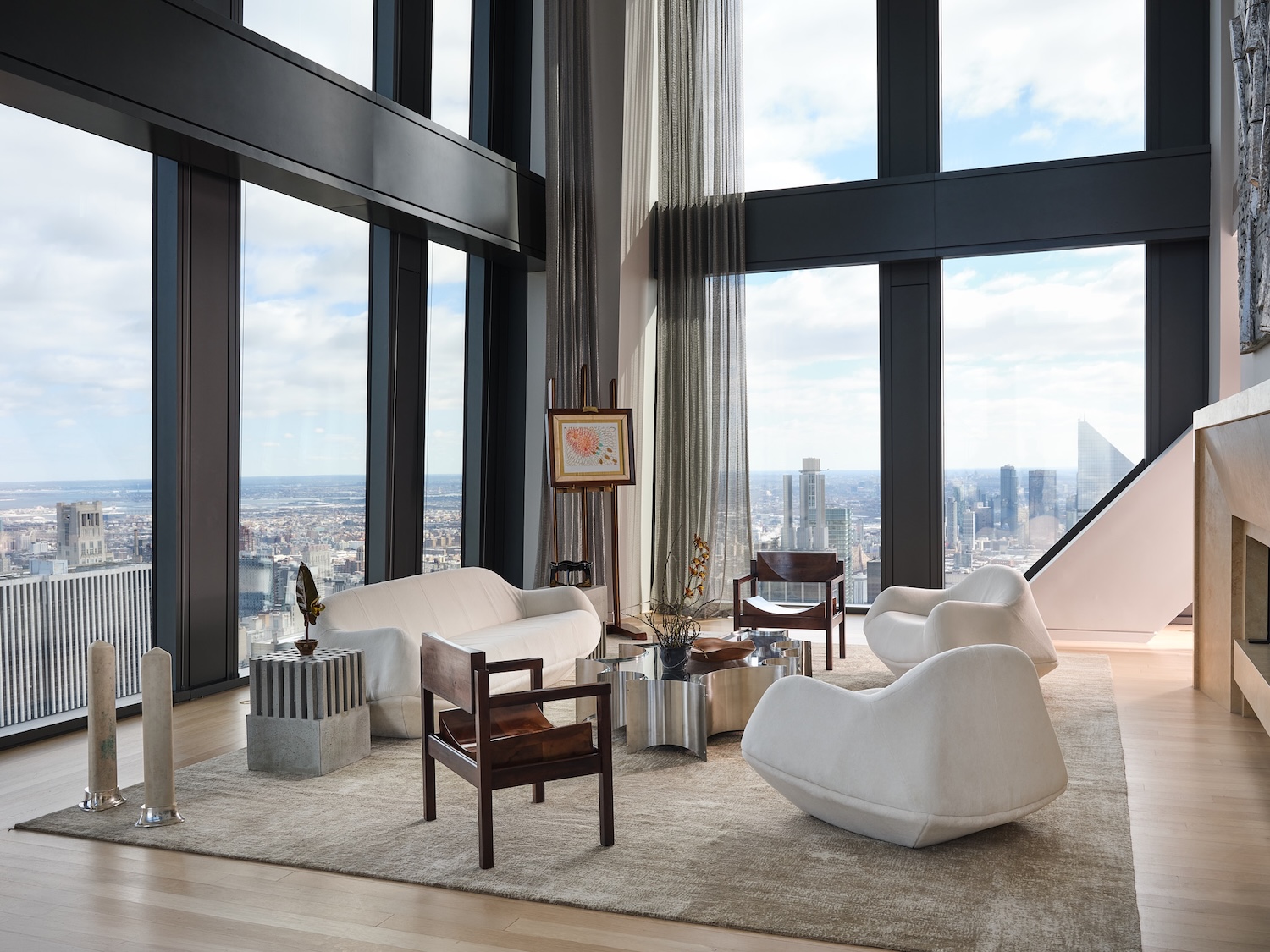
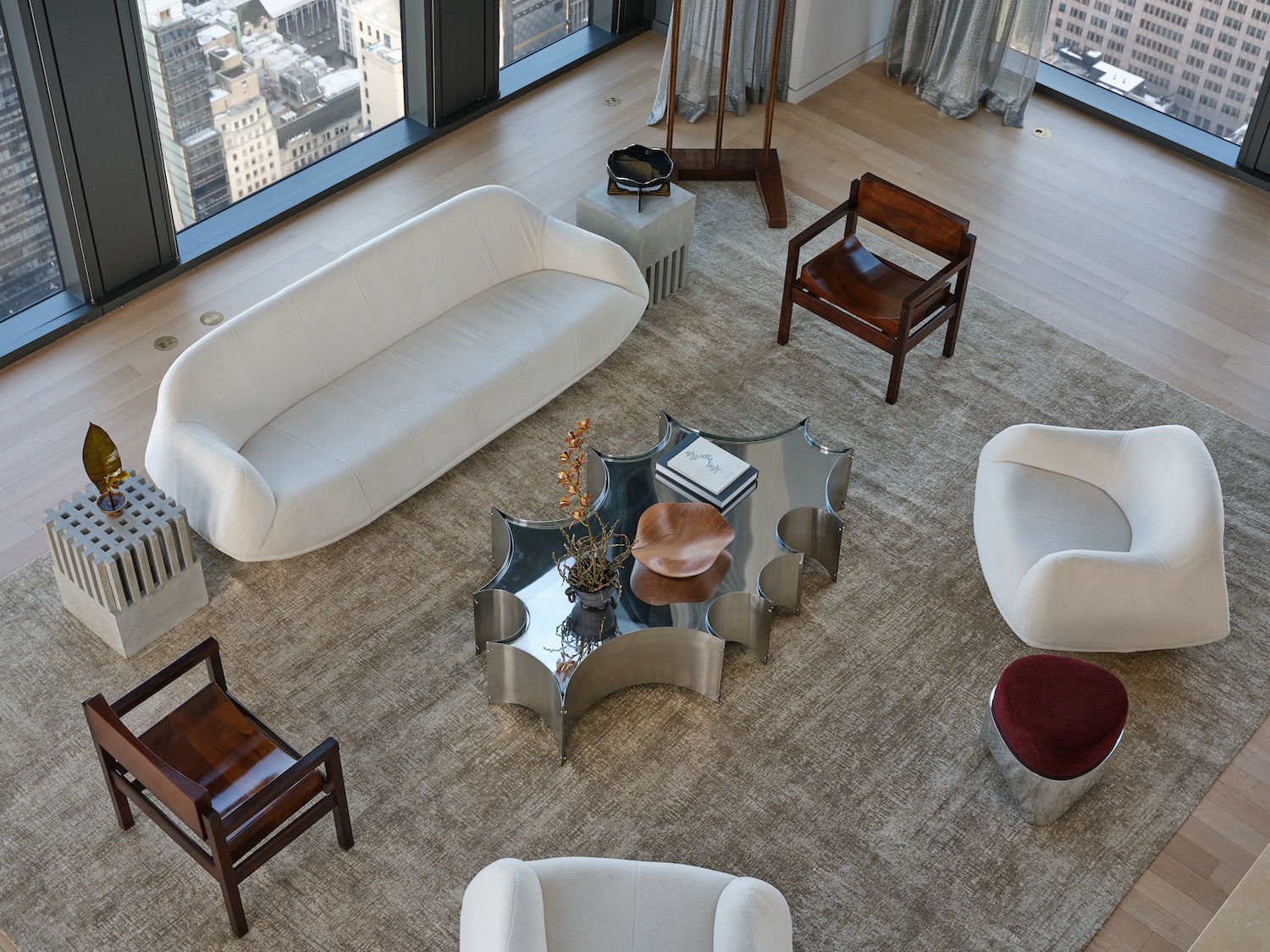
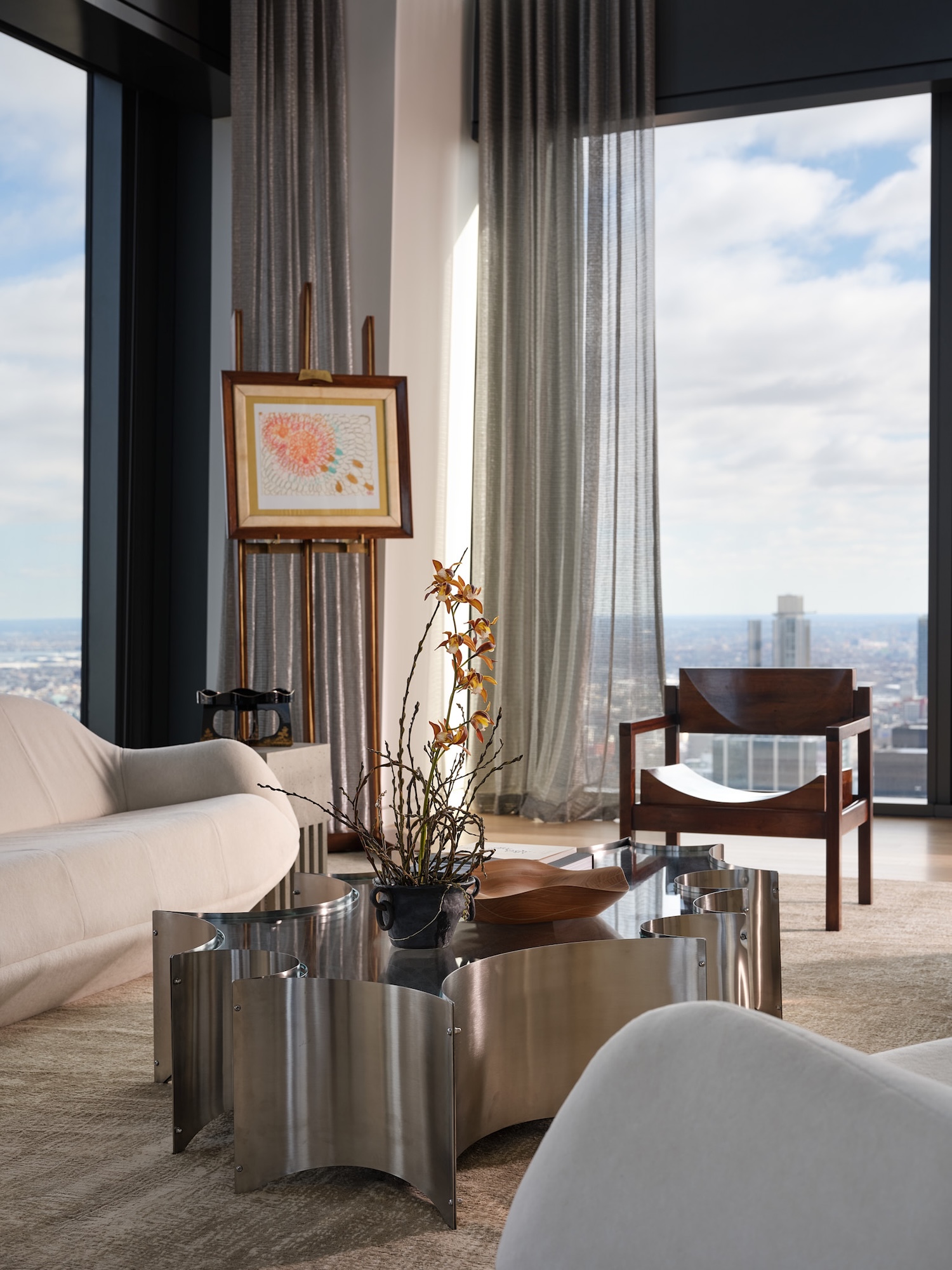
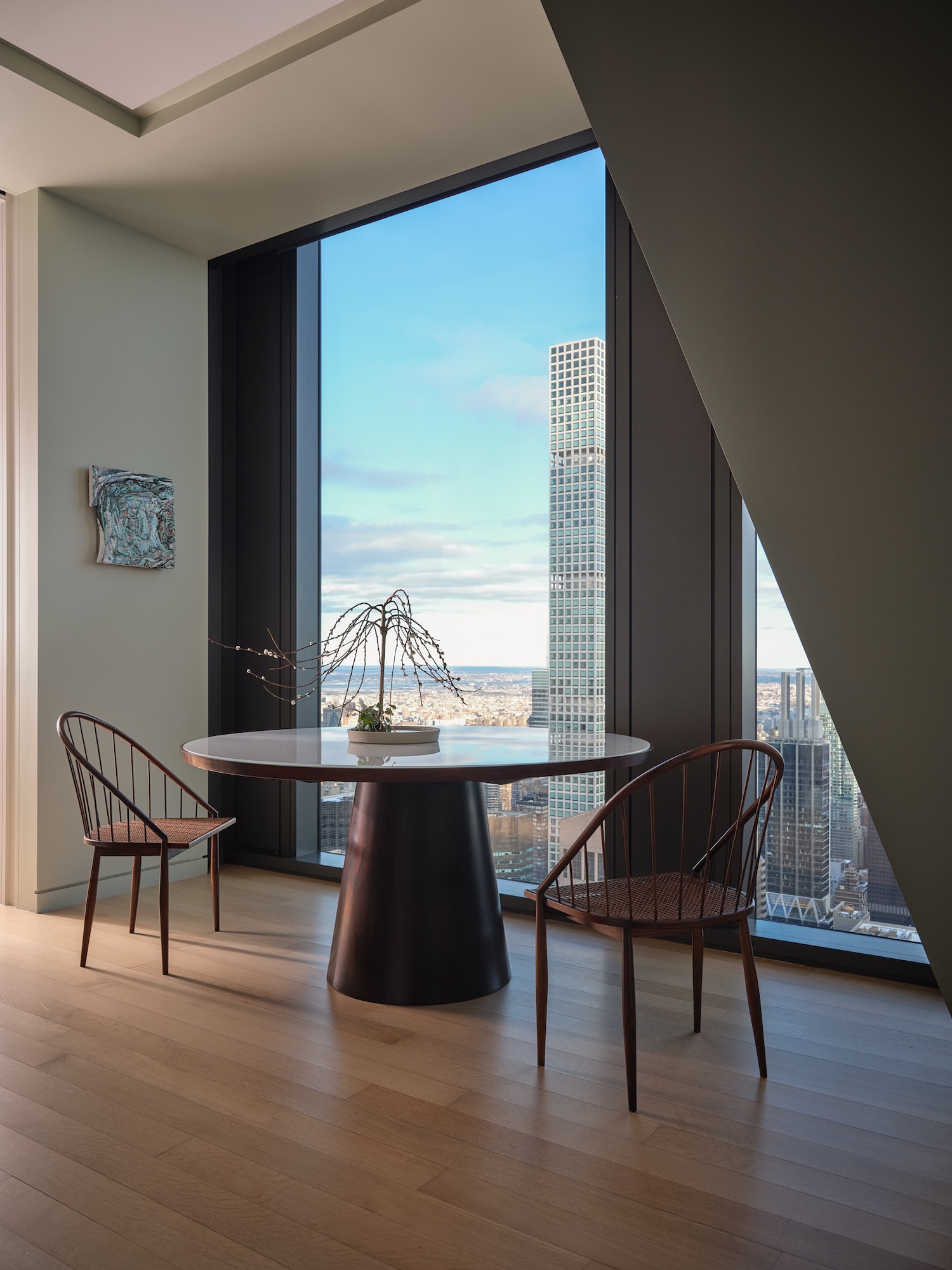
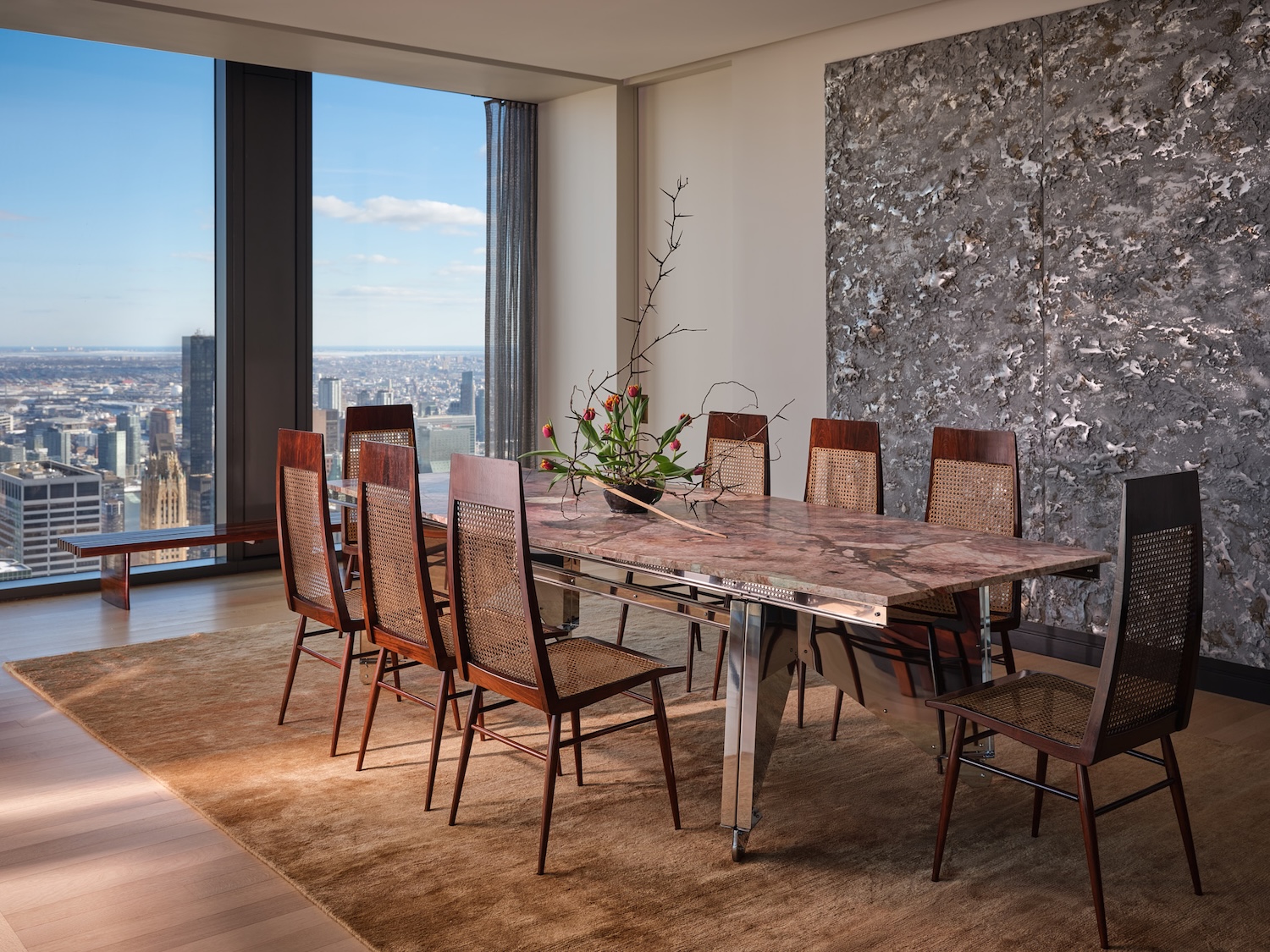
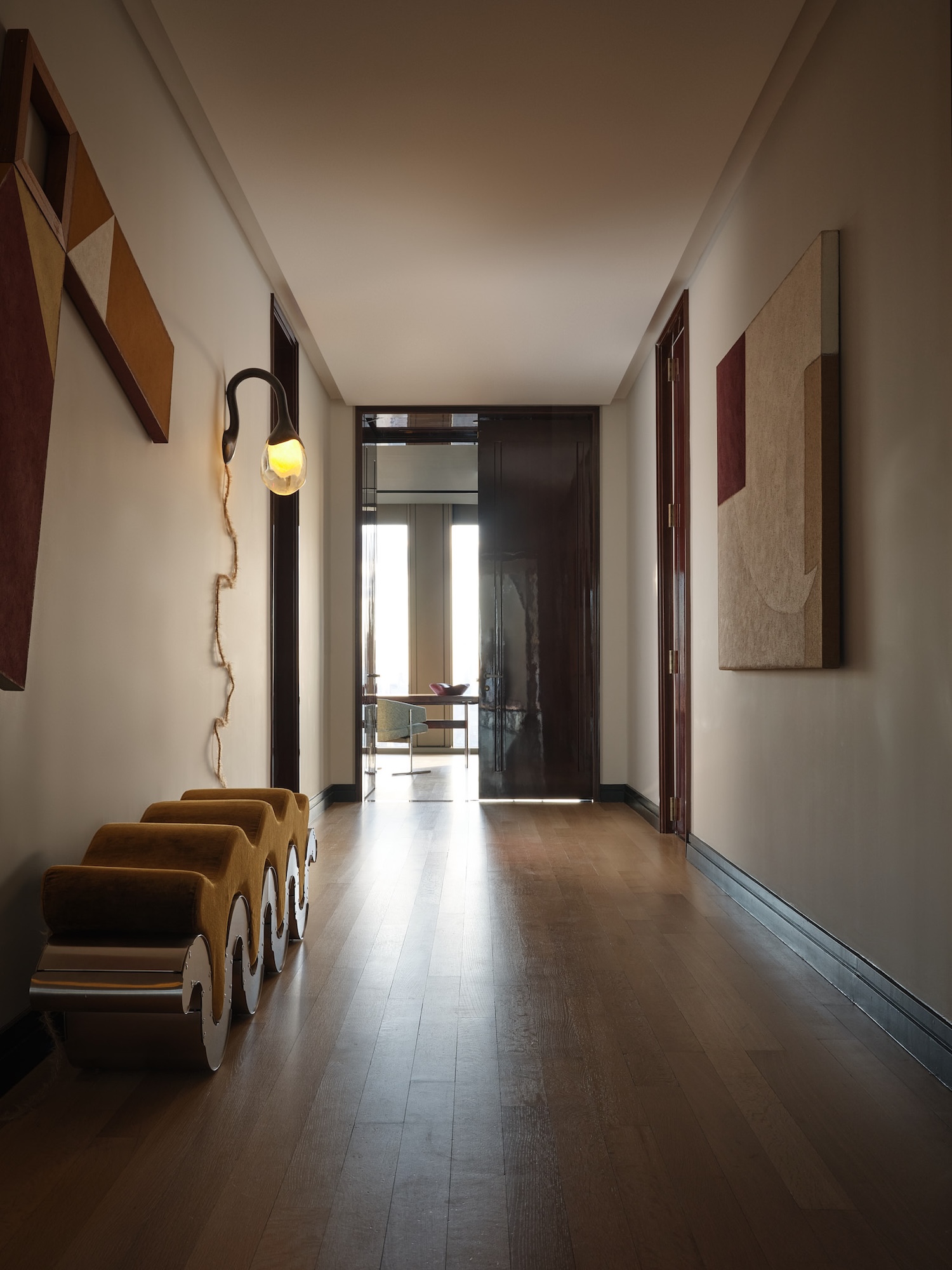
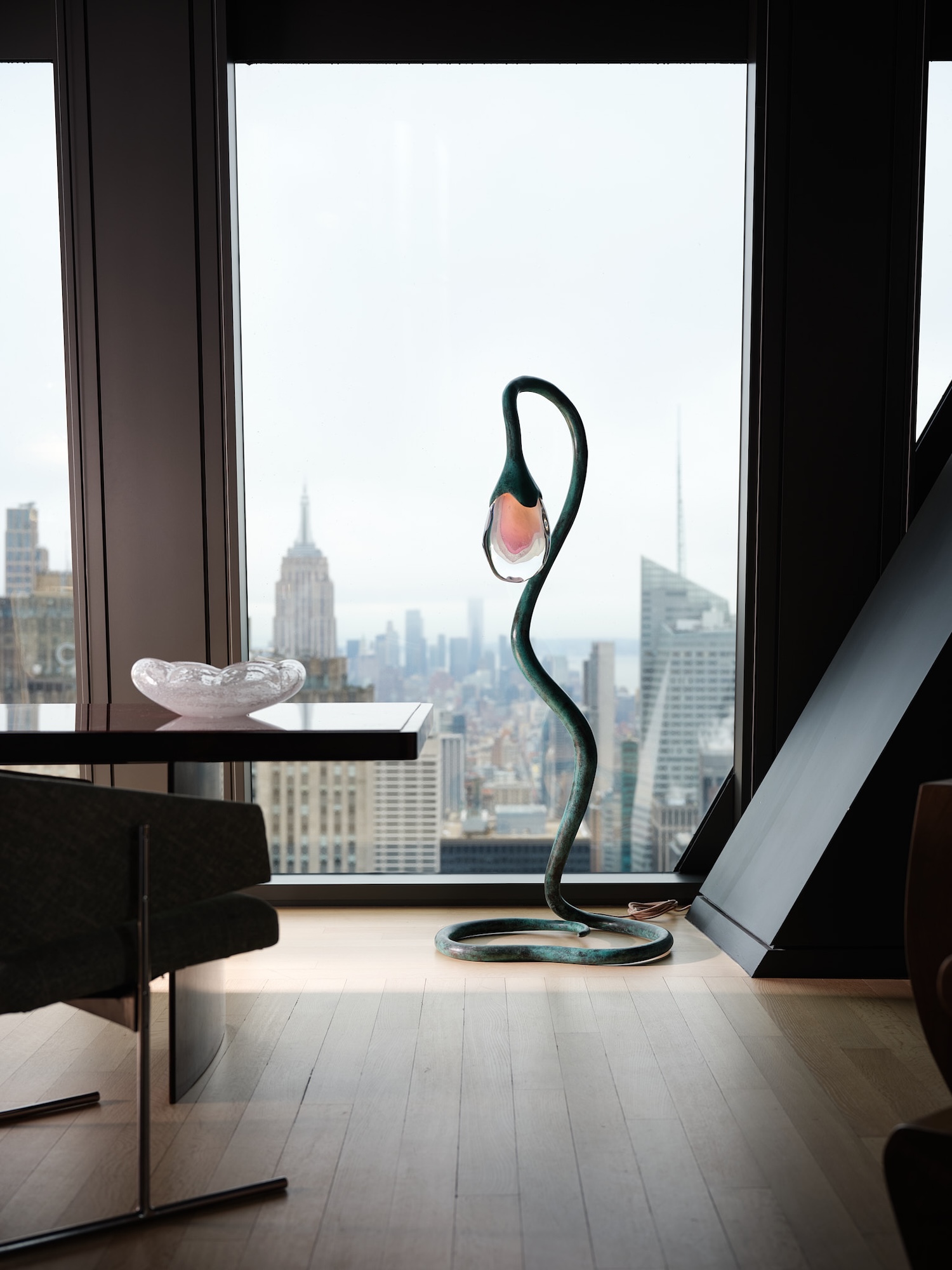
Crossings is a minimalist exhibition located in New York, United States, co-curated by Ulysses de Santi and Ashlee Harrison. Staged within a private penthouse at 53 West 53, Jean Nouvel’s diagrid tower rising above MoMA in Midtown Manhattan, Crossings transforms a four-bedroom residence into a site of cultural and formal exchange – where Brazilian modernism, postwar international design, and contemporary conceptual practice collide. The premise is simple but structurally demanding: rather than staging objects against neutral gallery walls, the curators place them inside the logic of domestic life, where proximity and friction generate meaning.
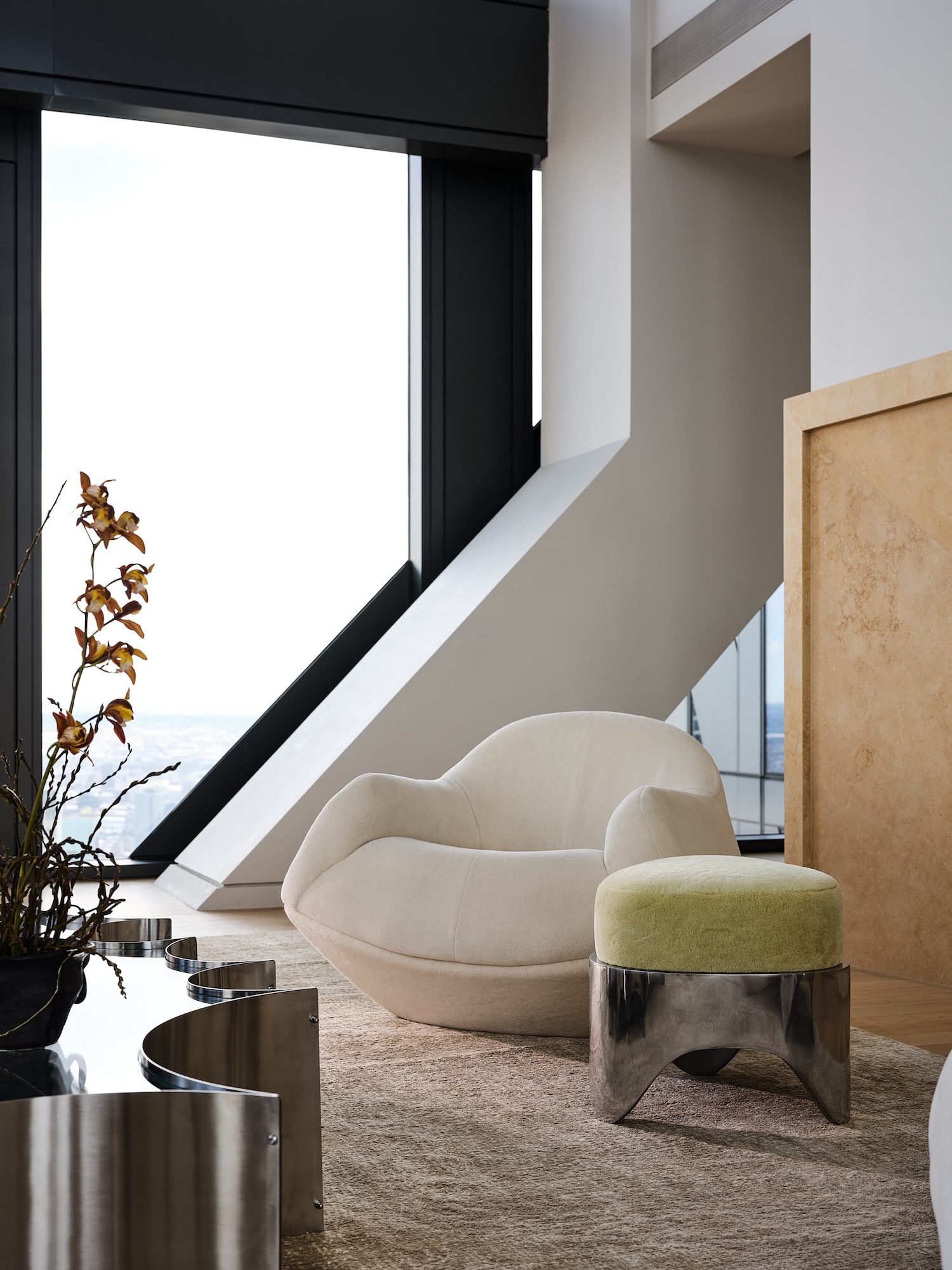
Nouvel’s diagrid establishes a distinctive diagonal geometry throughout the building’s interior, and the exhibition extends this architectural logic inward – curves, planes, and rhythms moving through furniture, sculpture, and painting in a single, evolving composition. The space does not merely host the work; it argues with it.
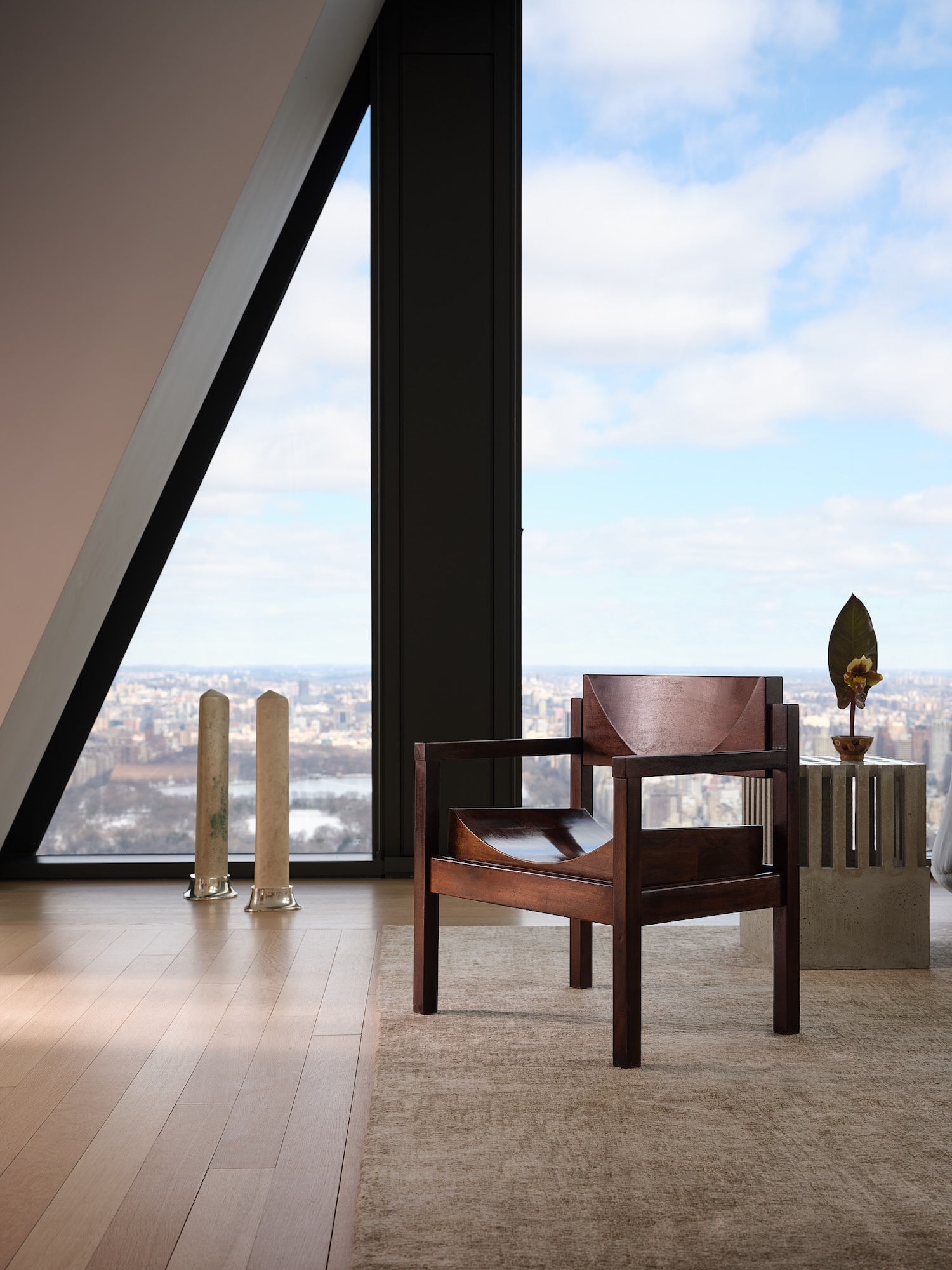
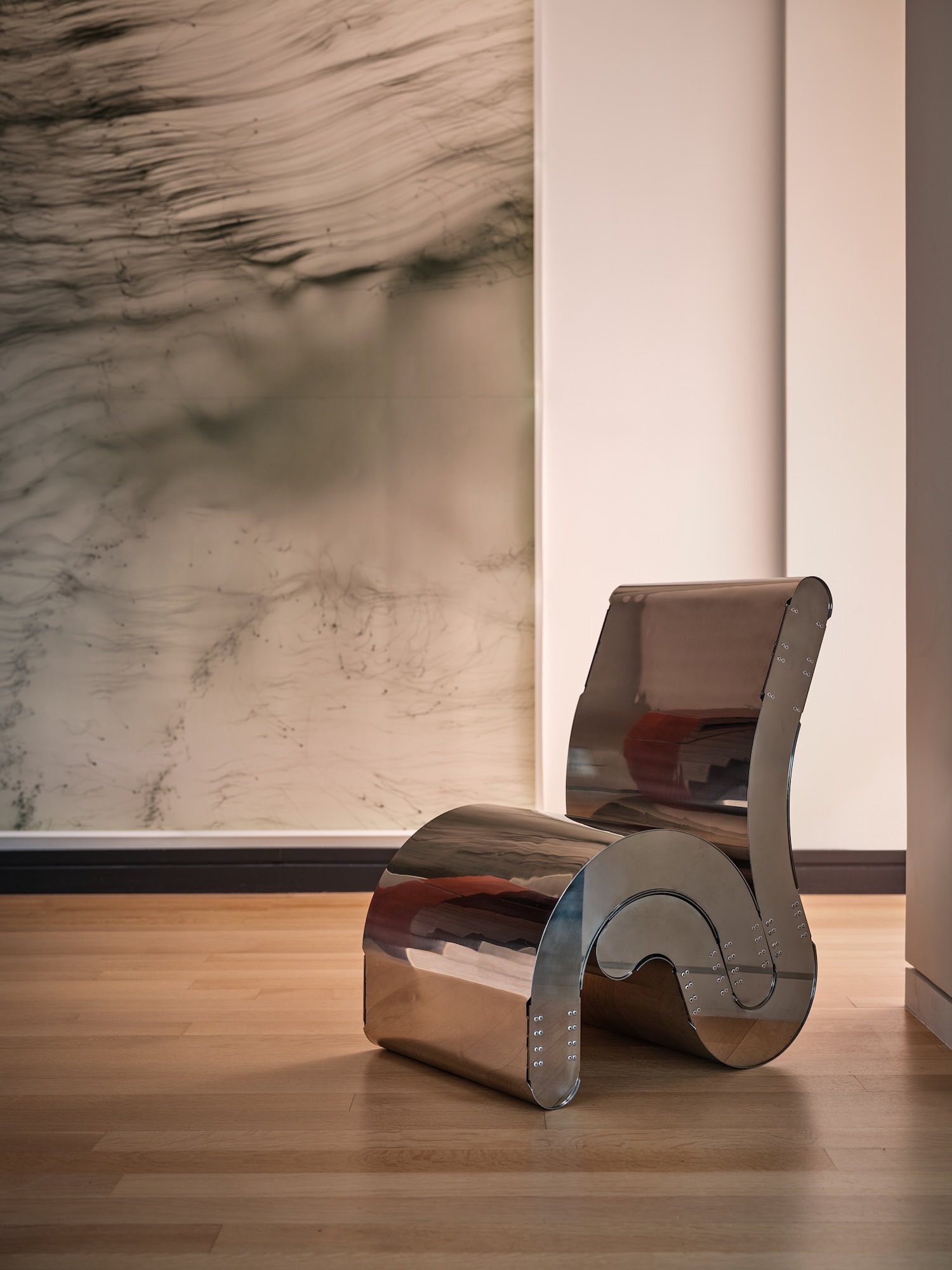
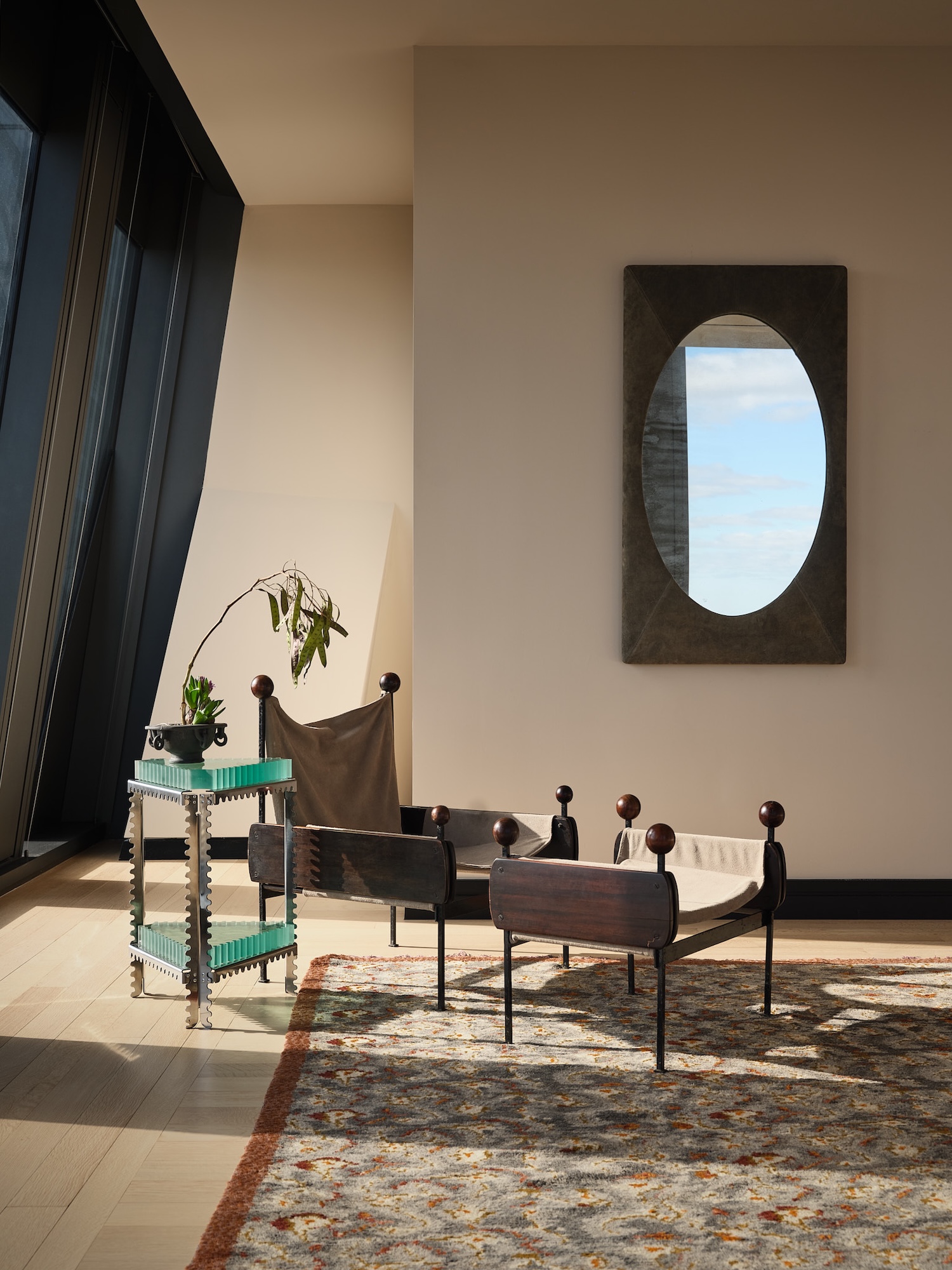
The Brazilian lineage anchoring the exhibition runs from a rare 1935 Amadeo Maciel Residence Chair by Joaquim Tenreiro – one of the earliest figures to synthesize European modernism with Brazilian craft traditions – through a 1959 architectural buffet by Jorge Zalszupin and a two-seated chair by Jose Zanine Caldas from 1980, previously exhibited at the neighboring Museum of Modern Art. These pieces carry the full weight of mid-century Brazilian design’s particular tension between artisanal material fluency and rationalist form. Against them, Lucas Simoes places contemporary collectible objects rendered in polished stainless steel, glass, and cement – industrial materials that reference modernist geometry while refusing its functional certainties. His practice extends modernist principles while destabilizing function and scale, pressing on the question of how design histories evolve through conceptual inquiry rather than formal continuity.
Fine art from midcentury enters through a partnership with Simoes de Assis, one of Sao Paulo’s leading galleries for modern and contemporary work, bringing sculpture by Francisco Sobrino alongside painting and mixed media by Manfredo de Souzanetto and Ascanio MMM. The selection reinforces the exhibition’s geographic argument: Brazilian and Iberian modernism as intertwined rather than parallel.