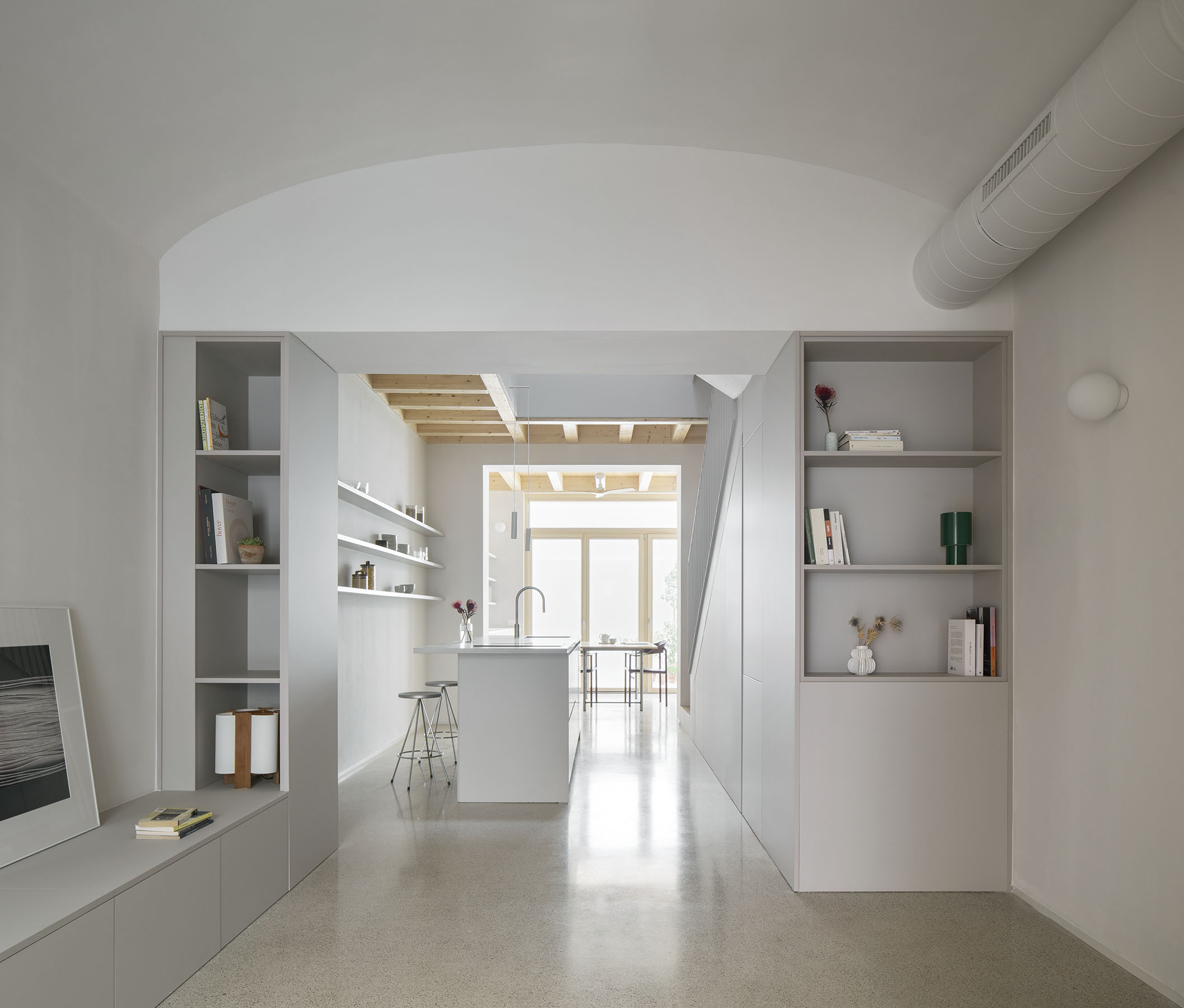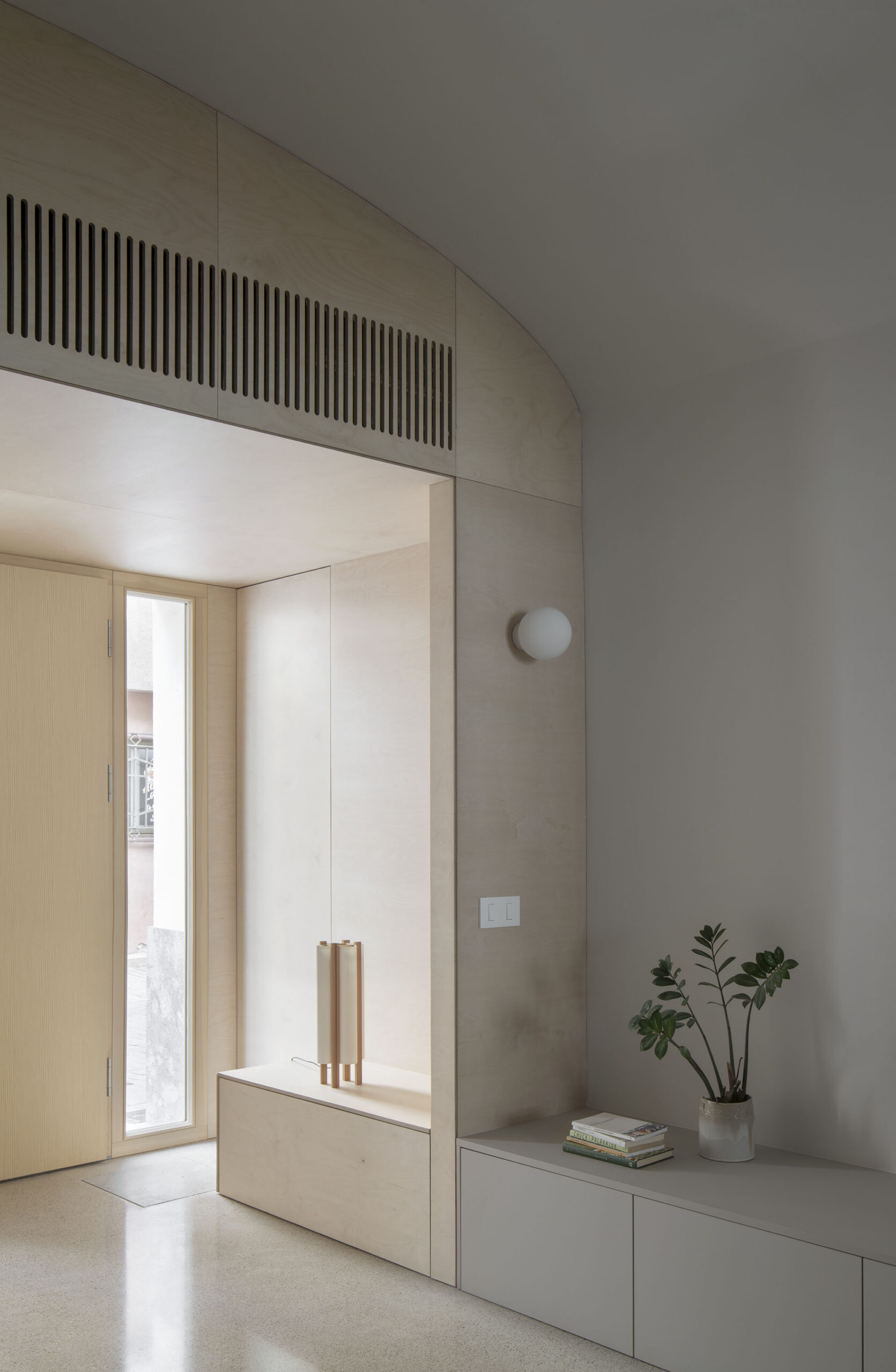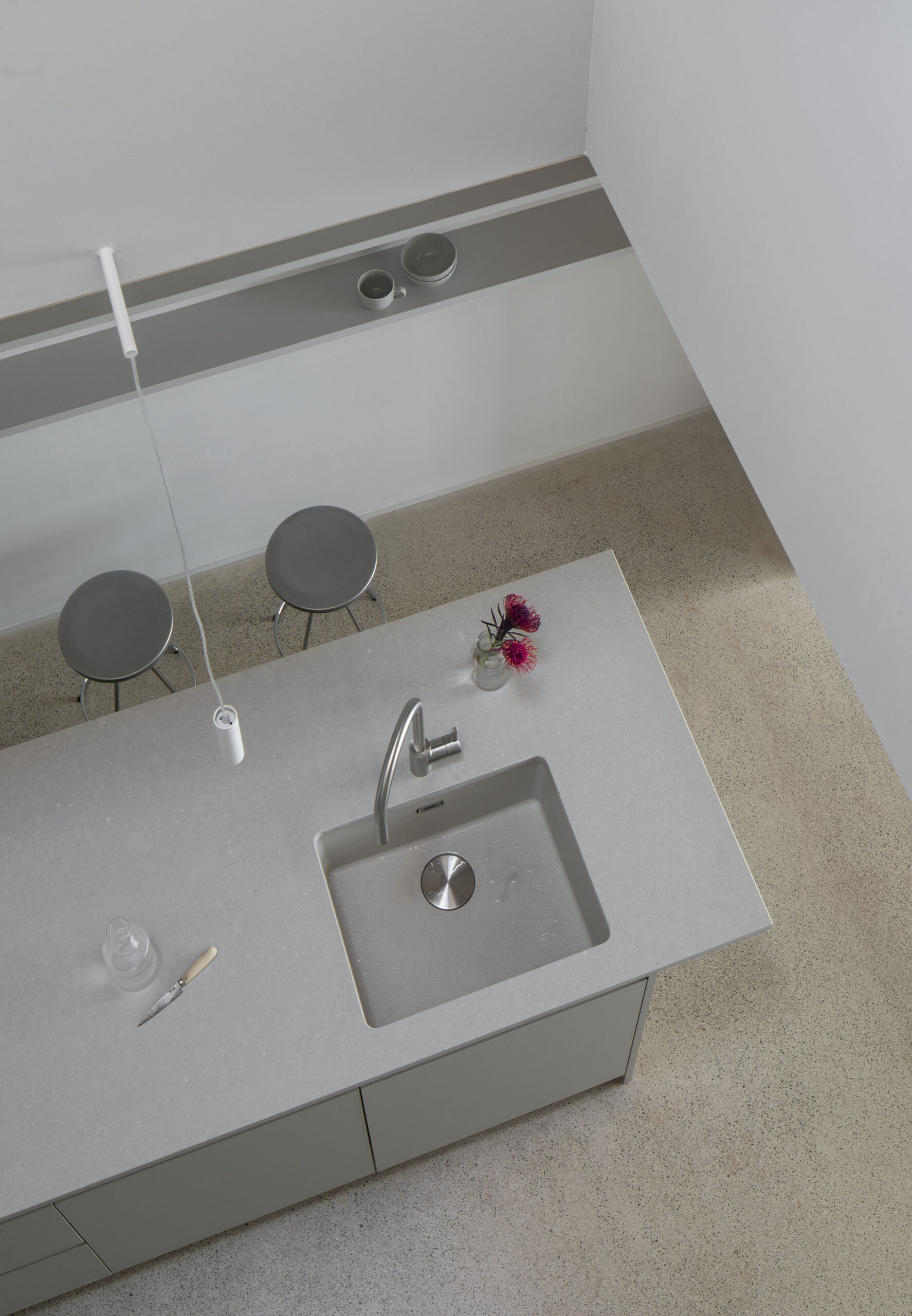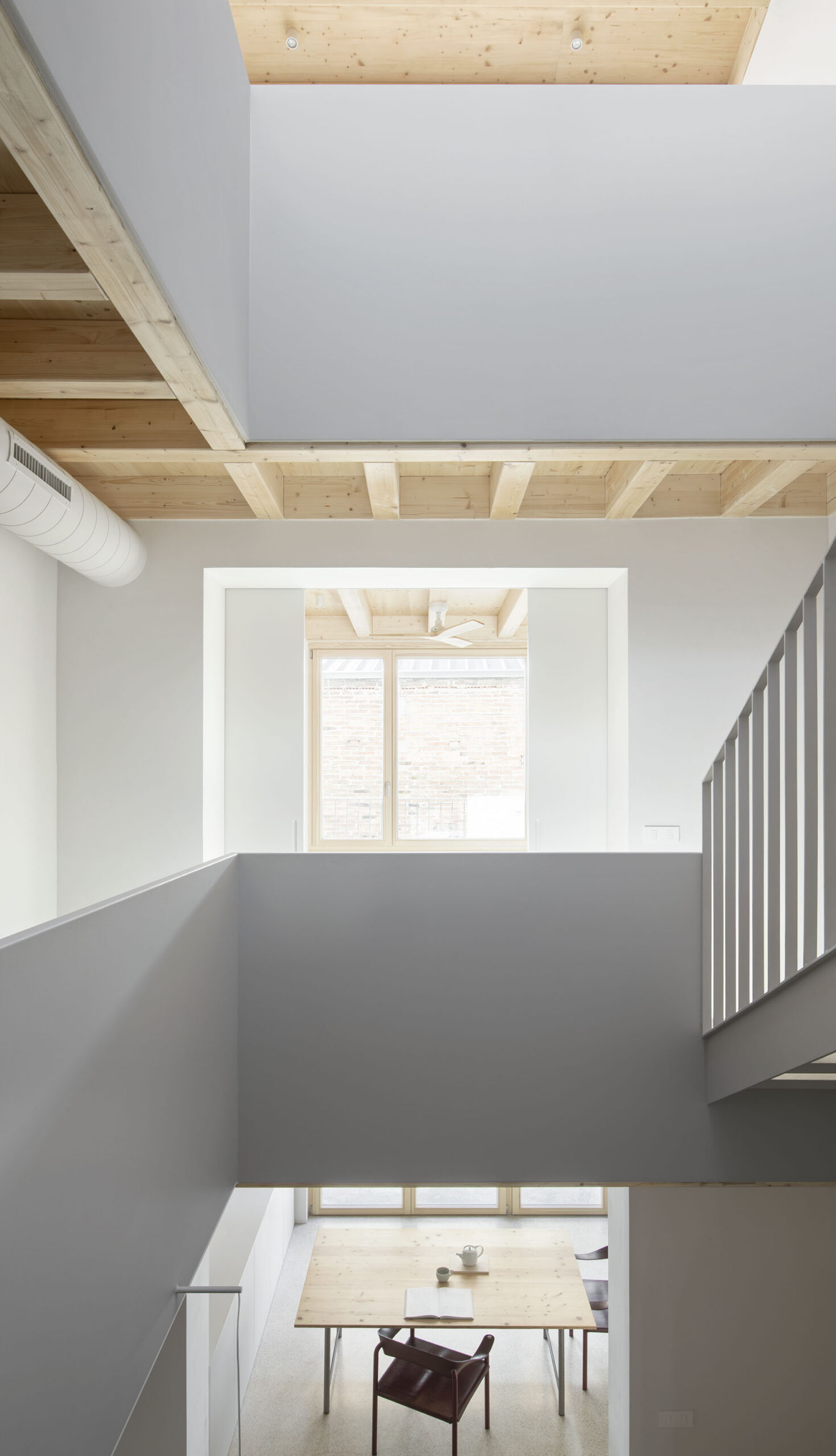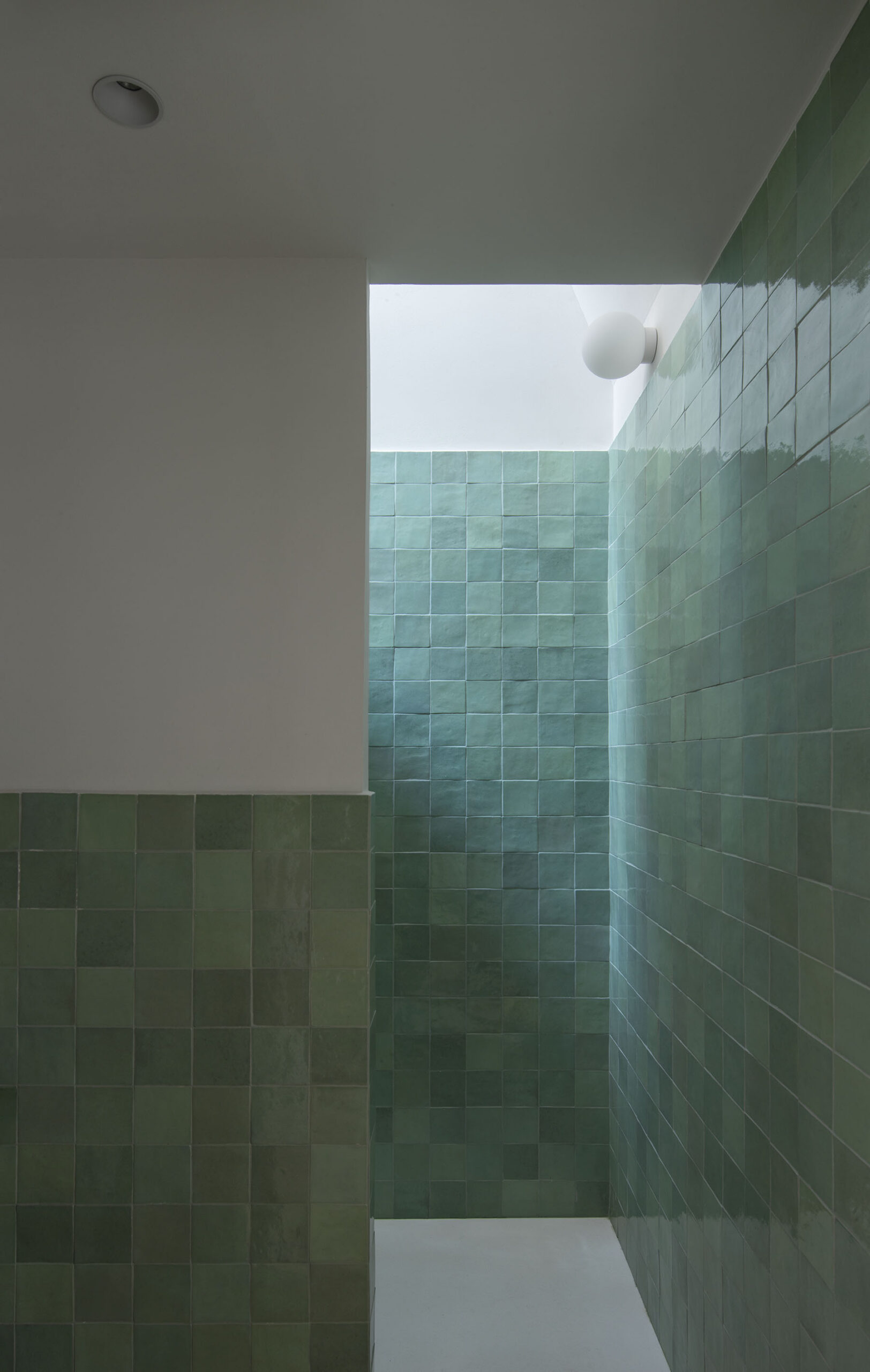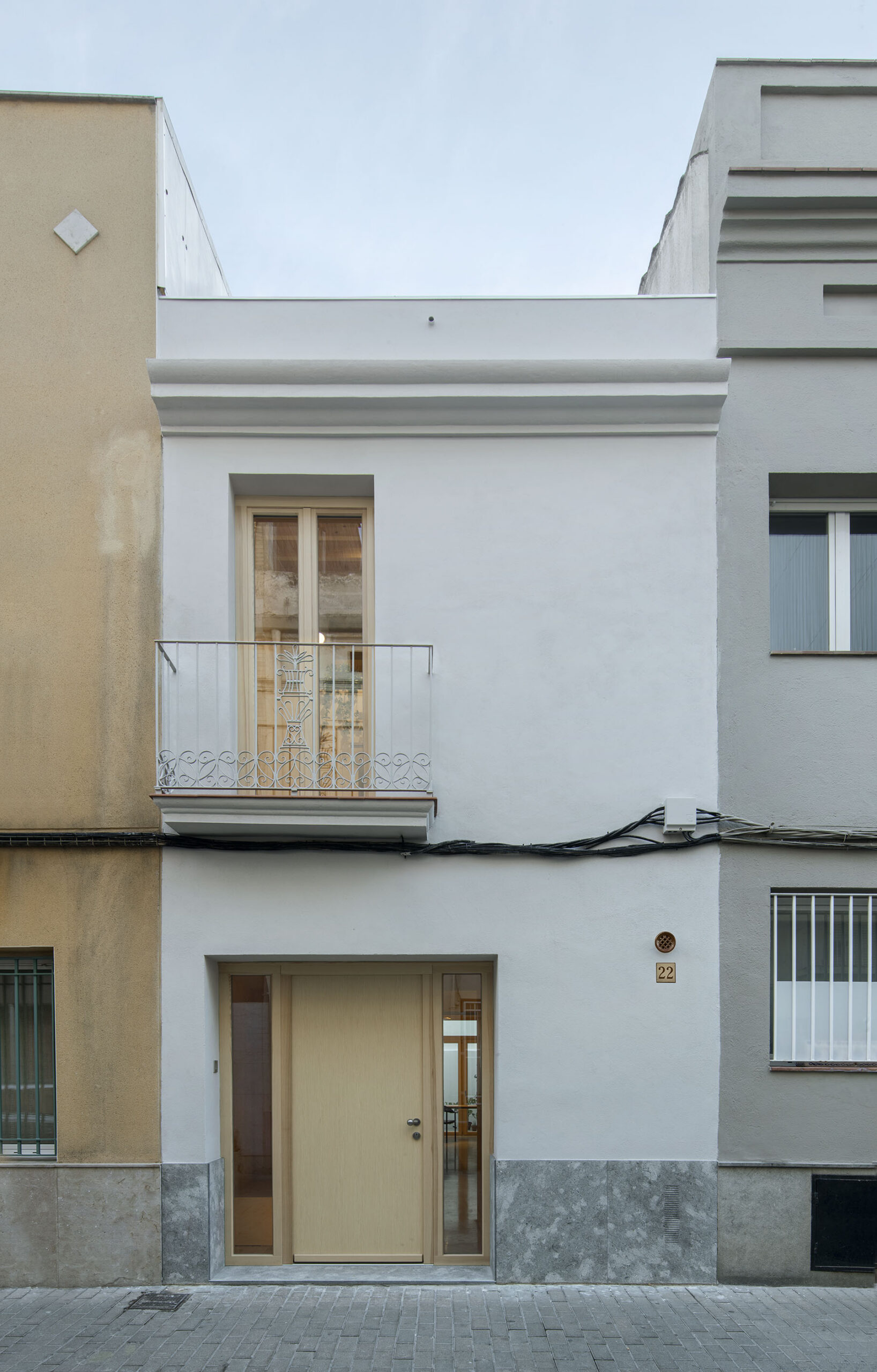
Casa Carme is a minimalist residential interior located in Barcelona, Spain, designed by Enric Rojo Arquitectura. The project’s central constraint is also its central idea. At just 3.5 meters wide, the terraced house offered almost no room for conventional spatial logic – no side corridors, no parallel circulation routes, no casual division of program across a floor plate. Enric Rojo Arquitectura treated this compression not as a problem to solve but as a premise to follow through on, reorganizing the house entirely around a vertical void that runs through all three levels and terminates in a large skylight above.
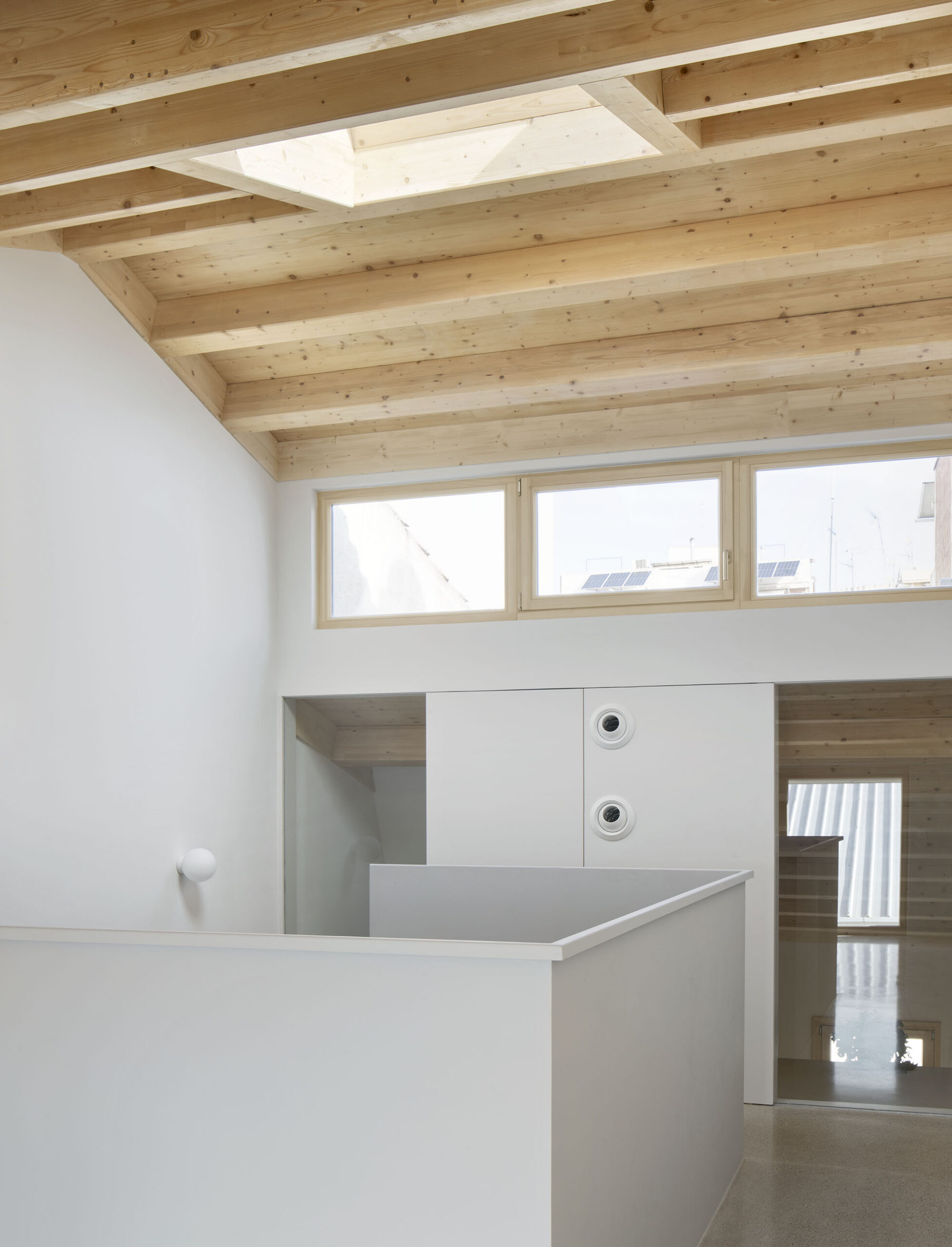
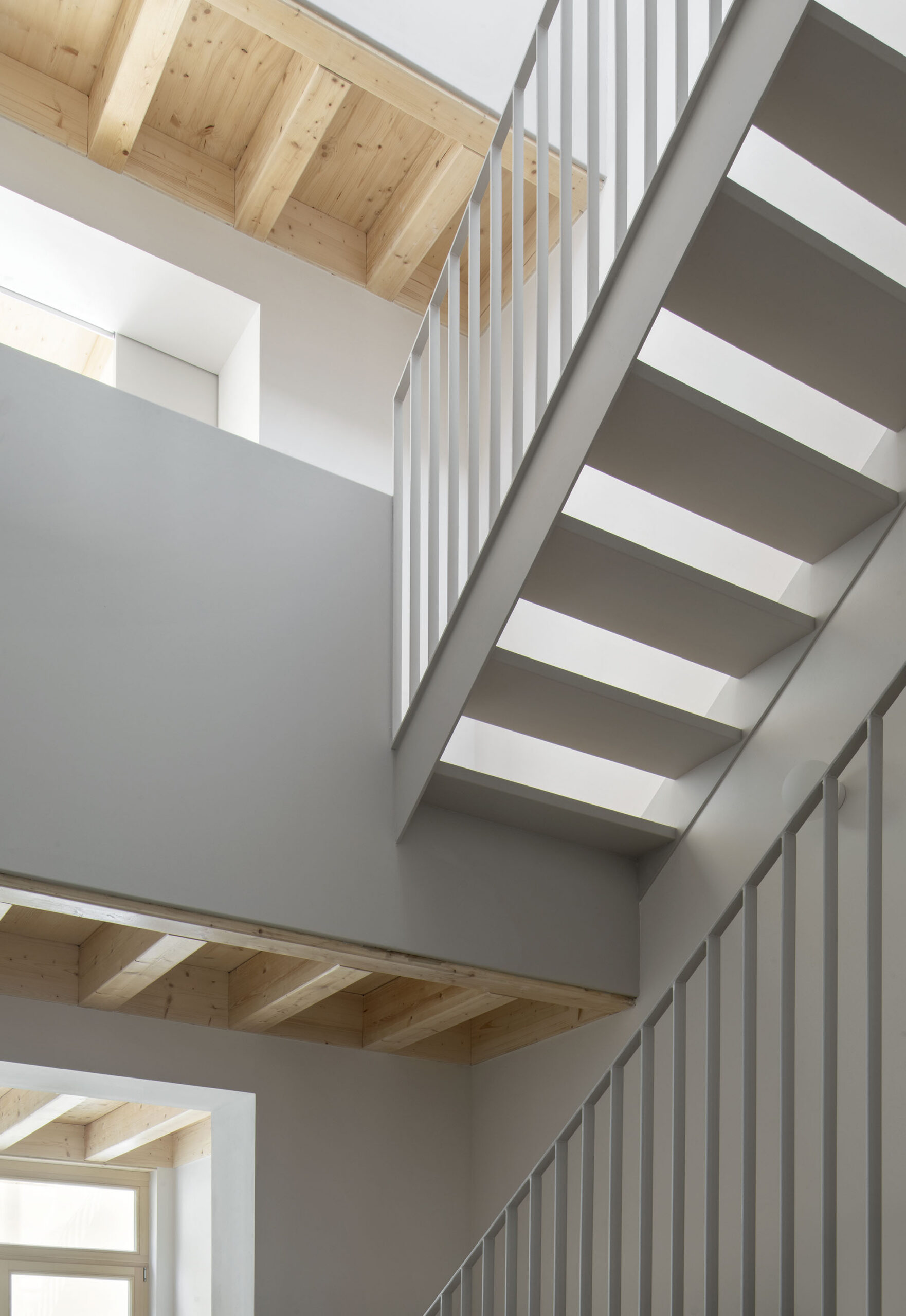
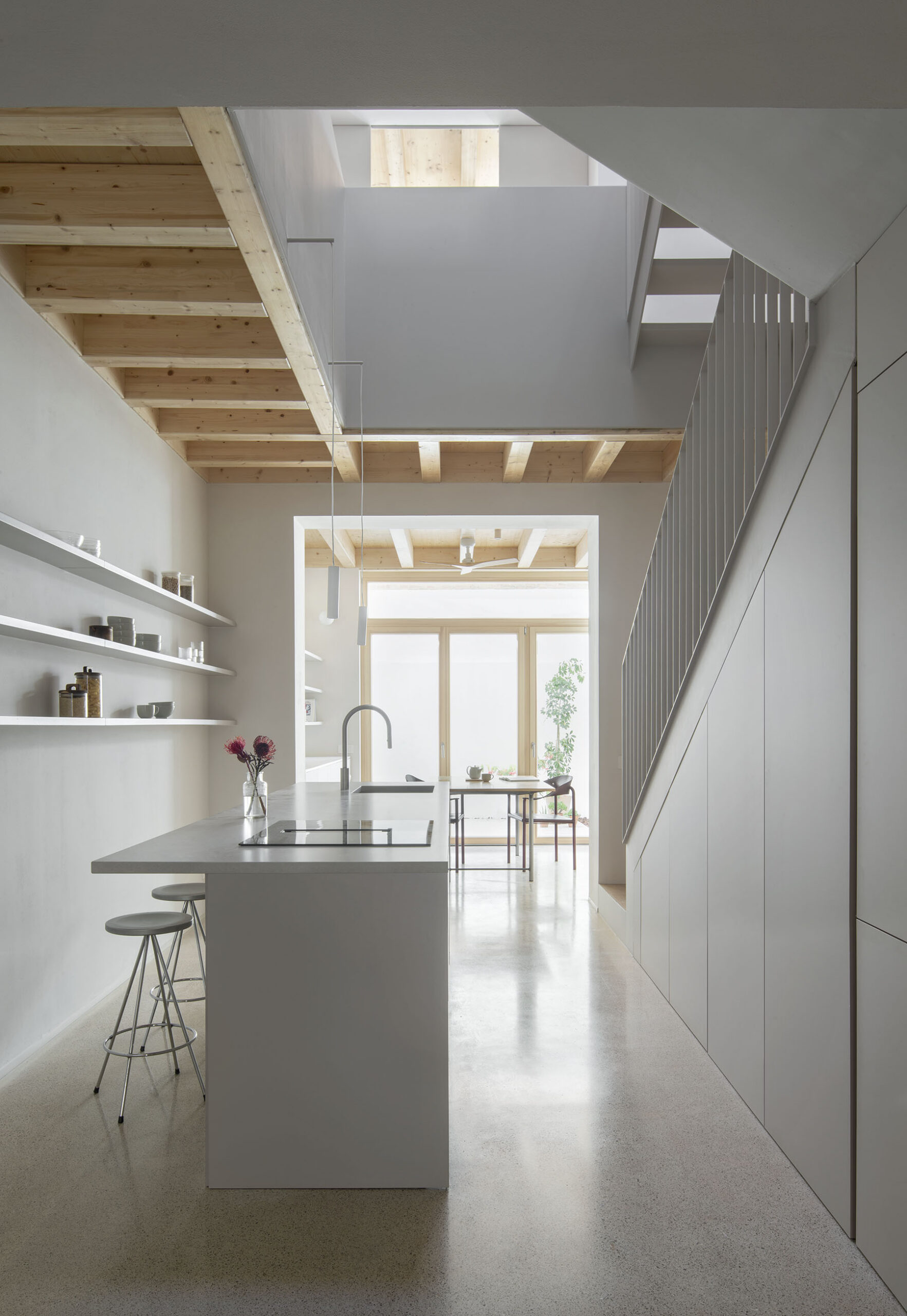
That void does real structural and experiential work. Spiral stairs and connecting passages concentrate around it, functioning less like conventional circulation and more like the covered walkways of a medieval cloister – a reference the practice draws on directly. The skylight above pulls daylight deep into a building type that typically resists it, the narrow party-wall typology common across Catalonia’s dense urban cores. Natural light reaches the ground floor not through windows, which on a 3.5-meter facade are necessarily limited, but through this carved interior shaft. The section, in other words, replaces the plan as the primary design instrument.
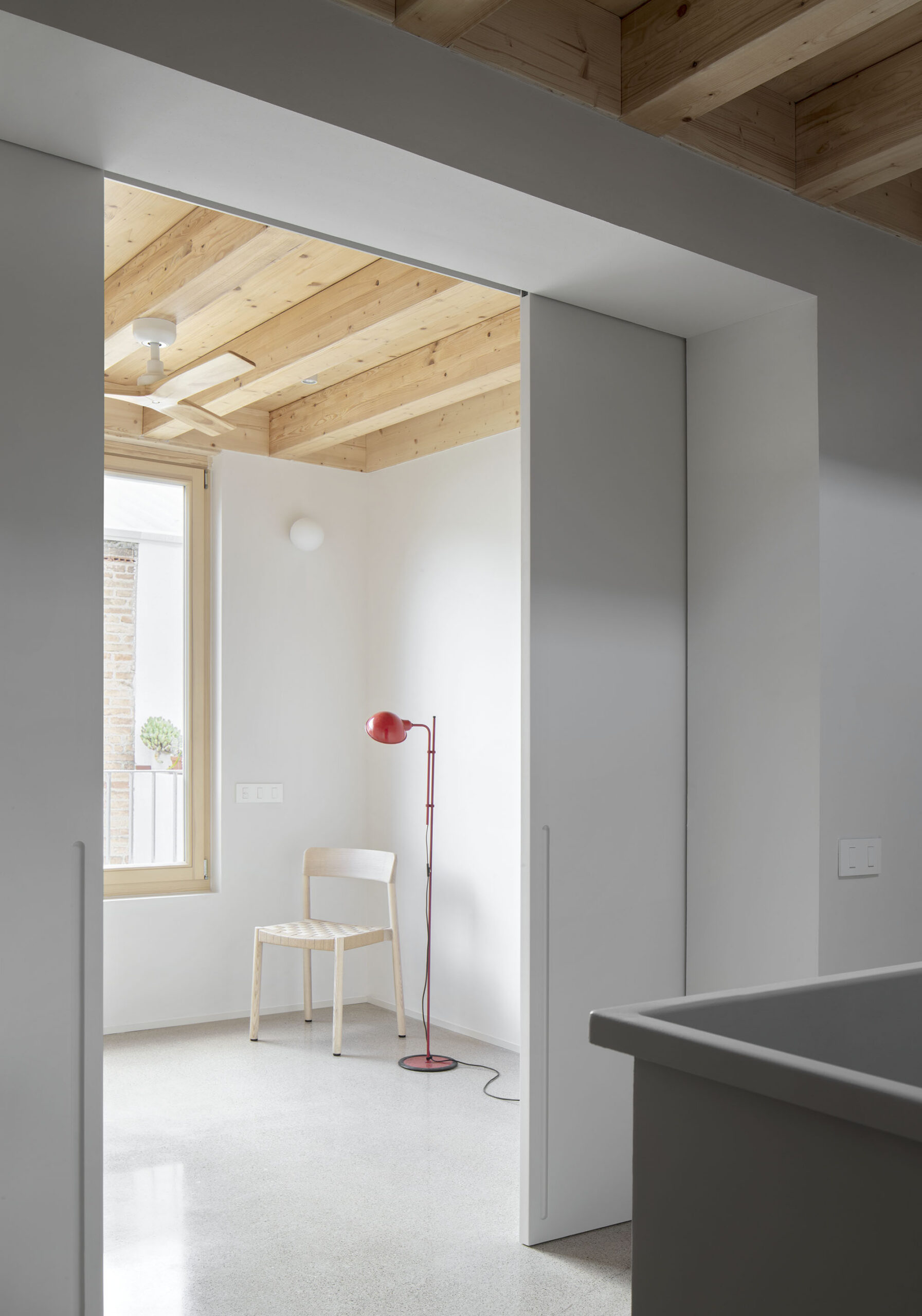
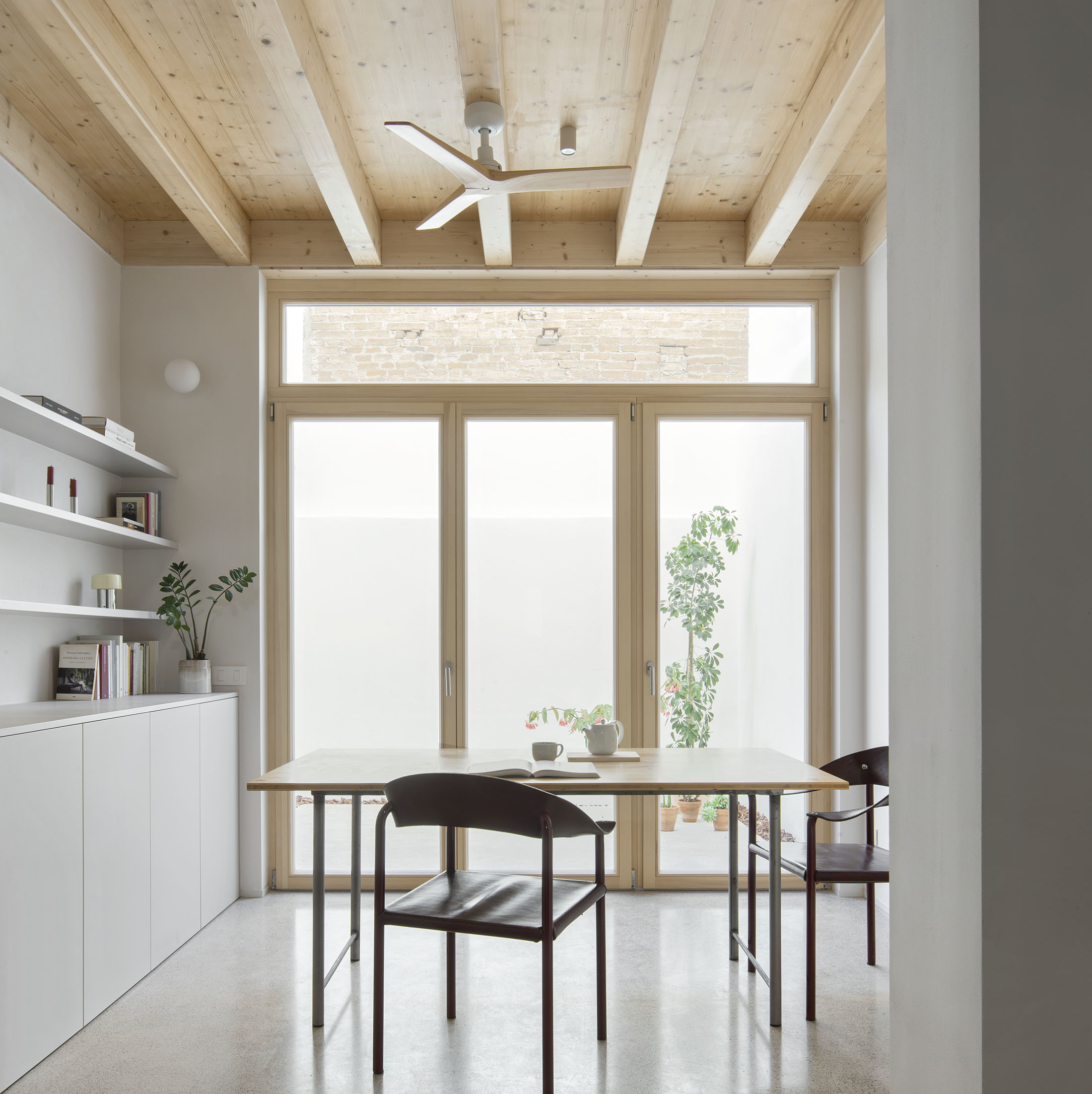
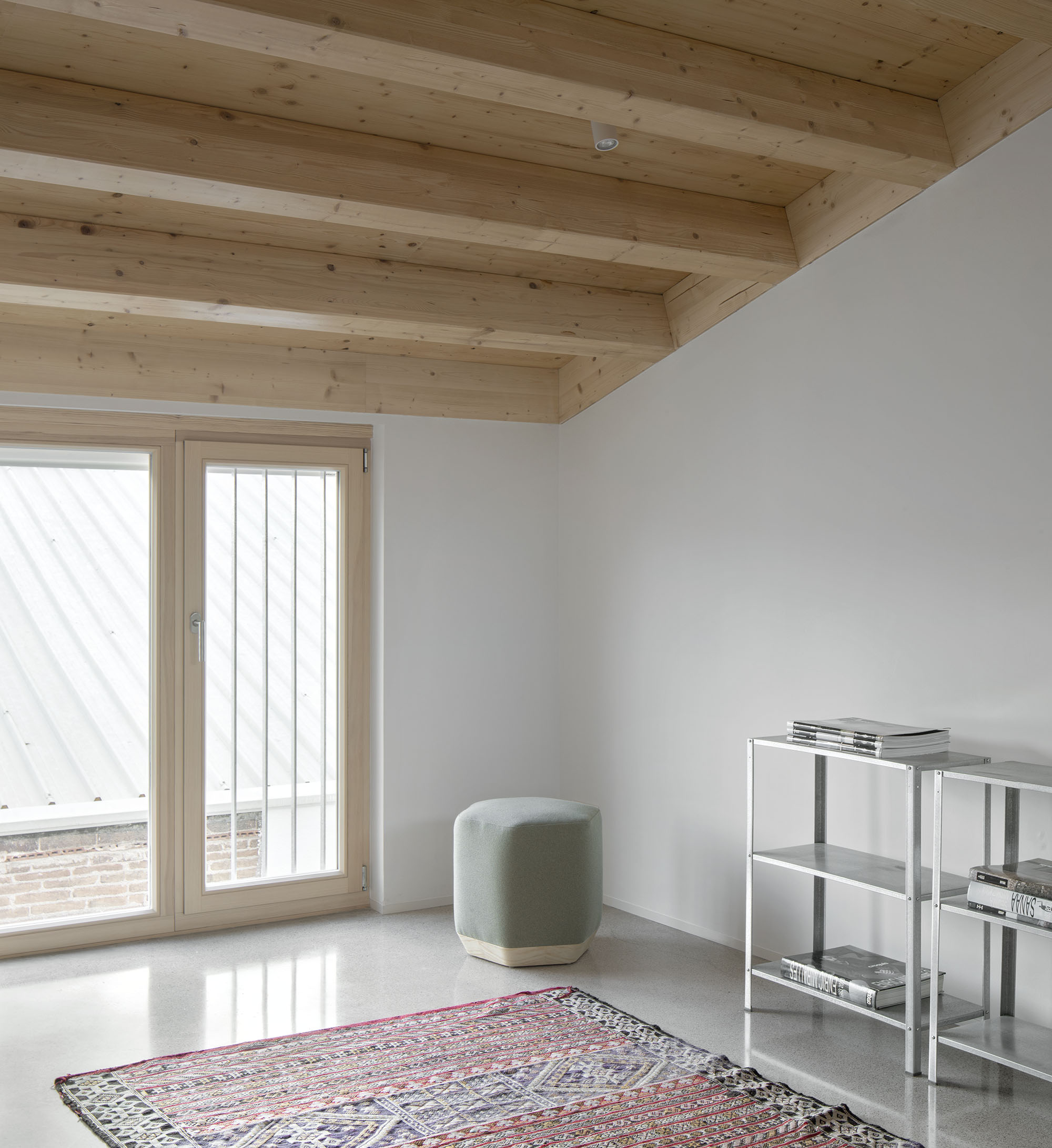
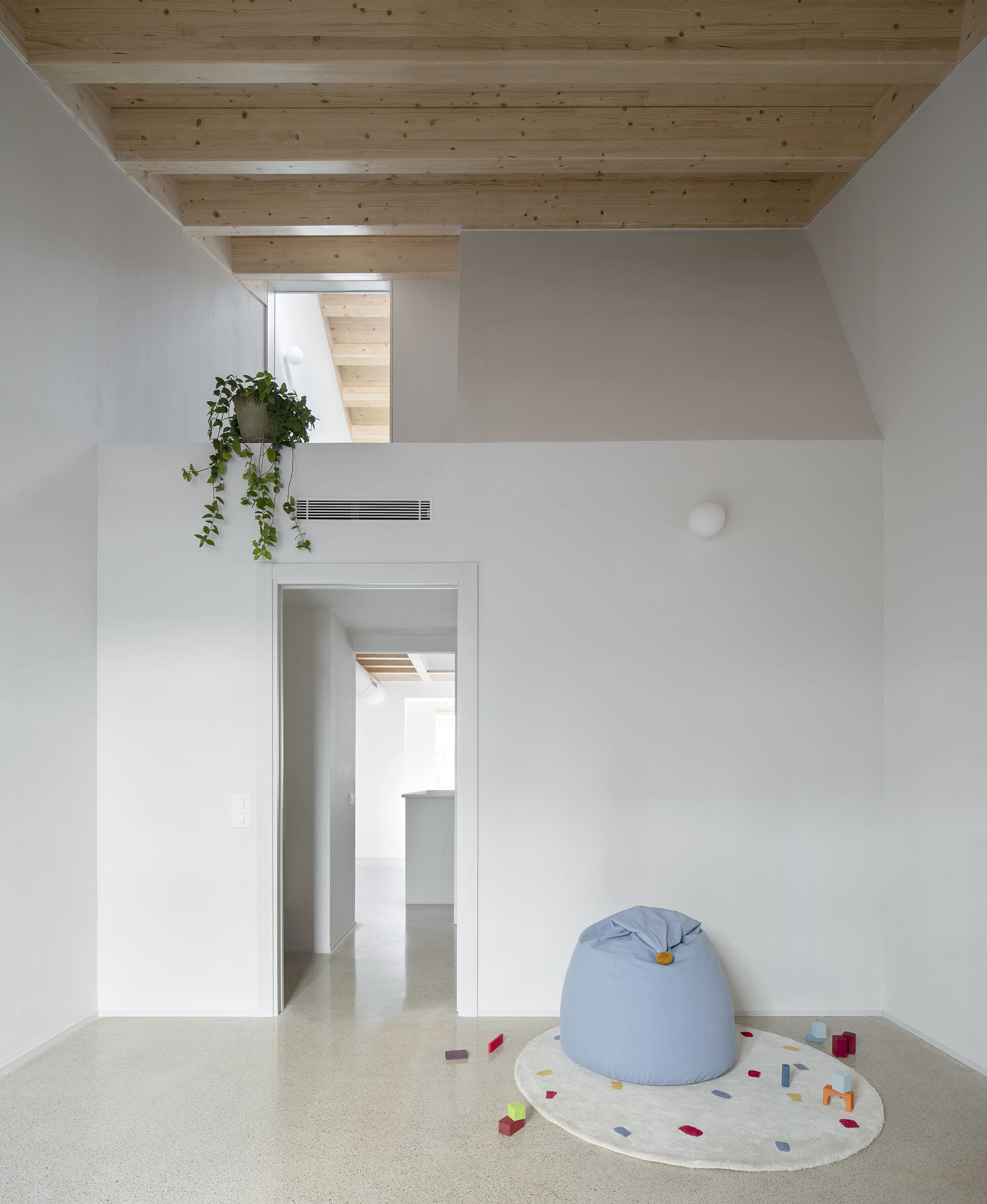
Exposed timber structure reinforces this sectional reading. The beams and joists remain visible across each level, giving the interior a clear diagram of how the building stands up – load paths legible from any point in the house. This transparency is characteristic of a broader current in contemporary Spanish residential work, where craft materials are allowed to perform as finished surfaces rather than being concealed behind plaster or cladding. The timber here carries both a technical and an atmospheric role: it tracks the geometry of each floor, and it warms an otherwise neutral material palette of polished concrete floors and white render.