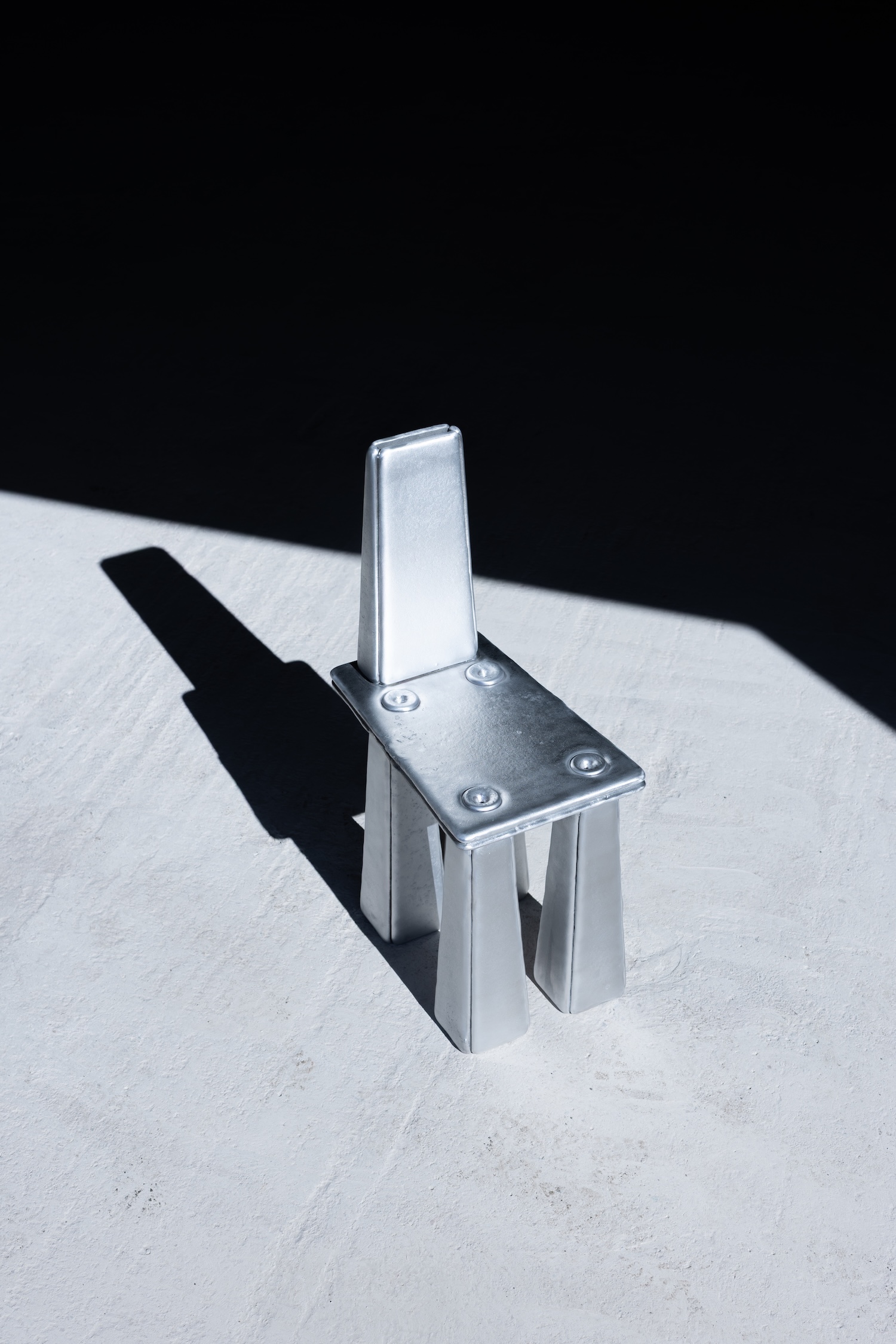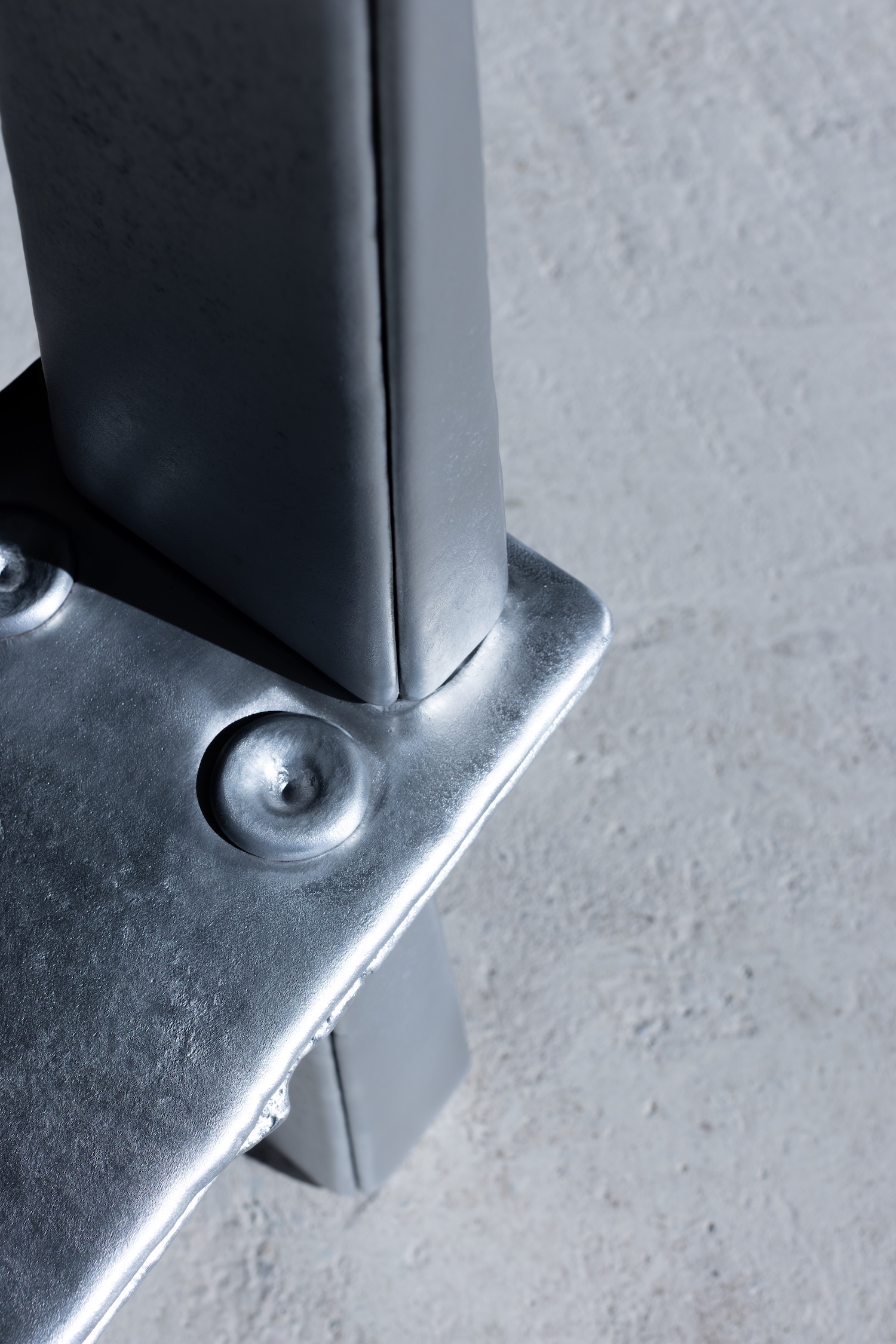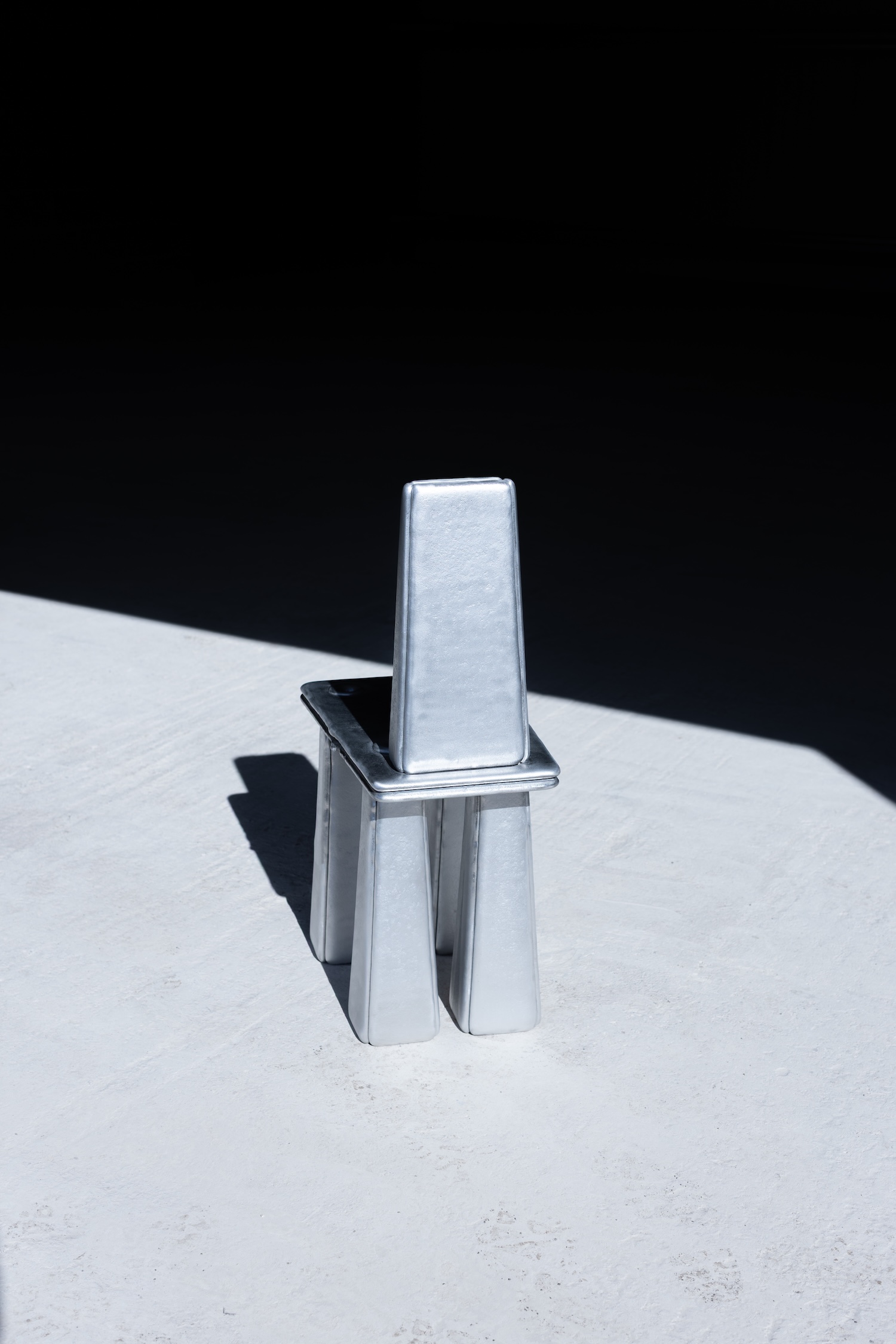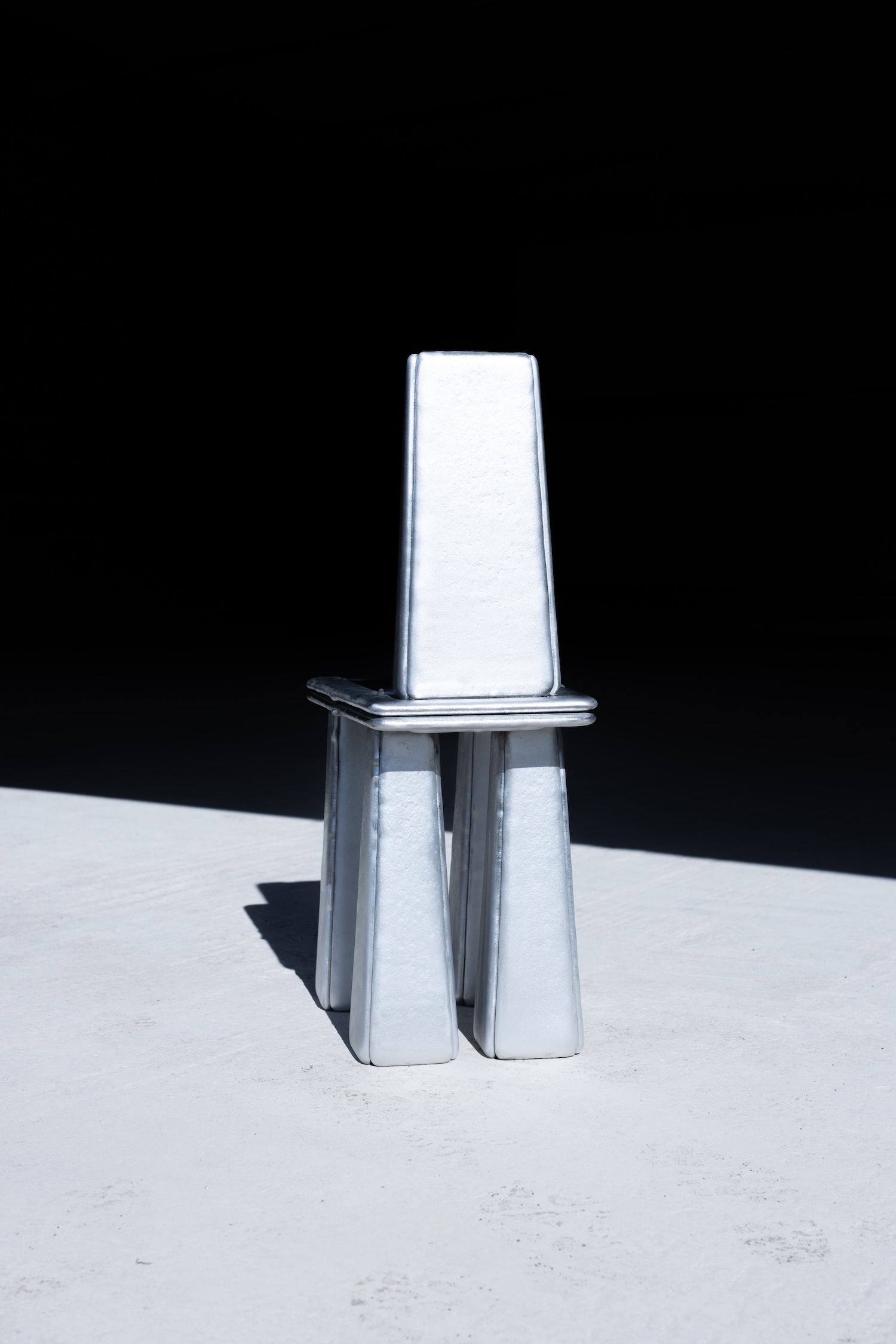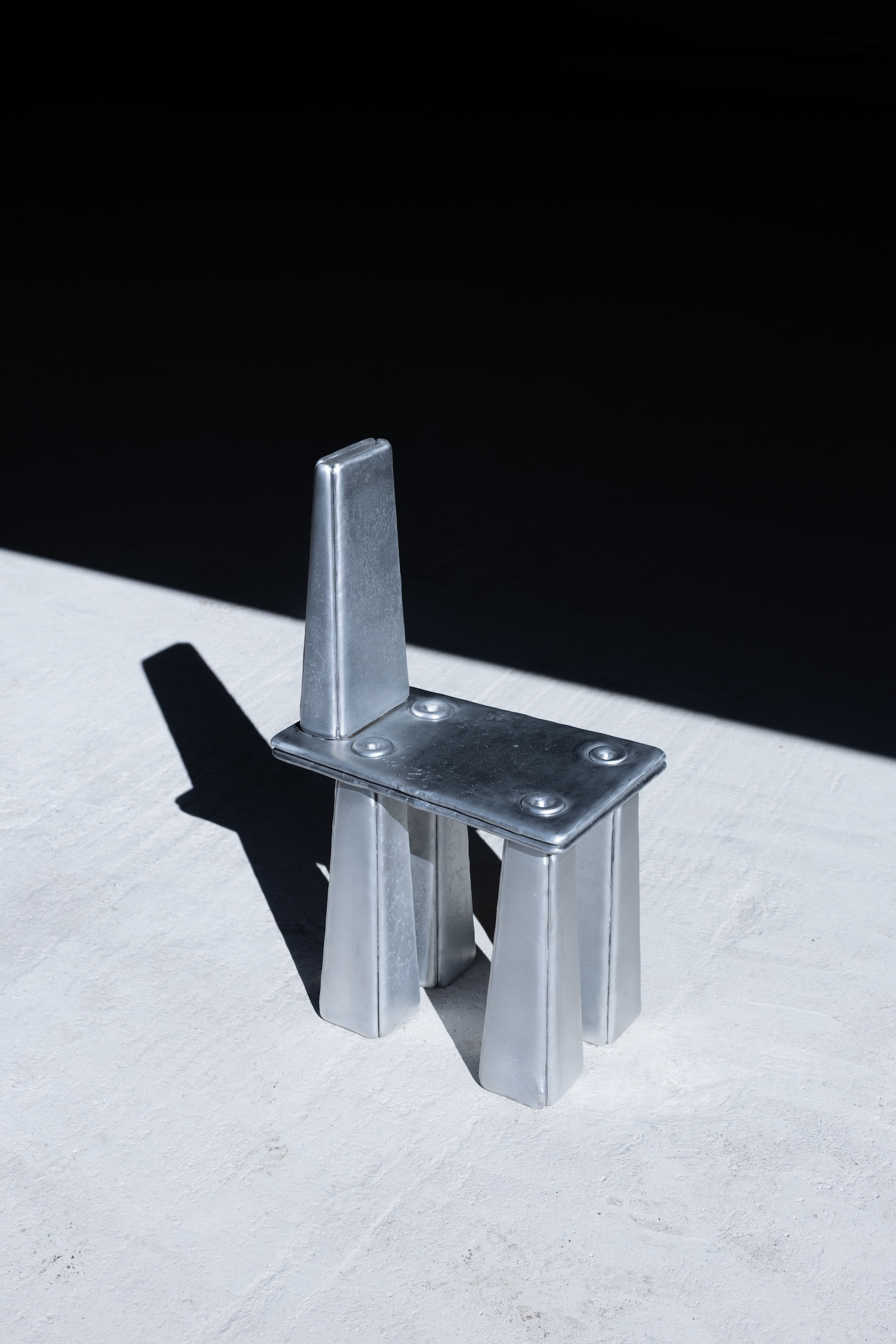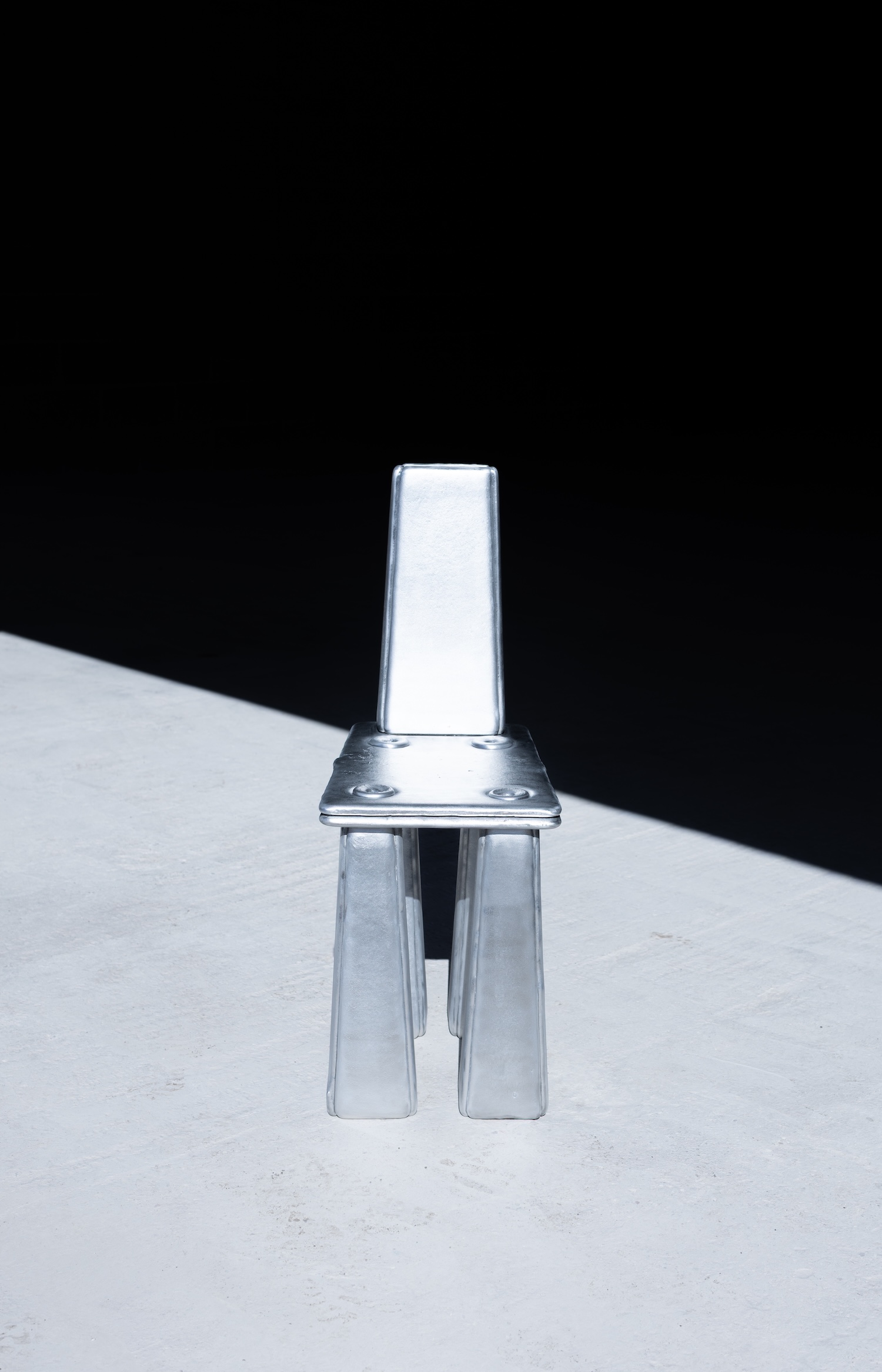
The INGOT chair by Marc Sweeney is held together by the same metal it is made from. Sweeney casts each aluminum tile individually, assembles the tiles into the form of the chair, and then pours molten aluminum into the joints between them. The pour solidifies in place and binds the pieces mechanically, so one process of melting and pouring produces both the components and the connections.
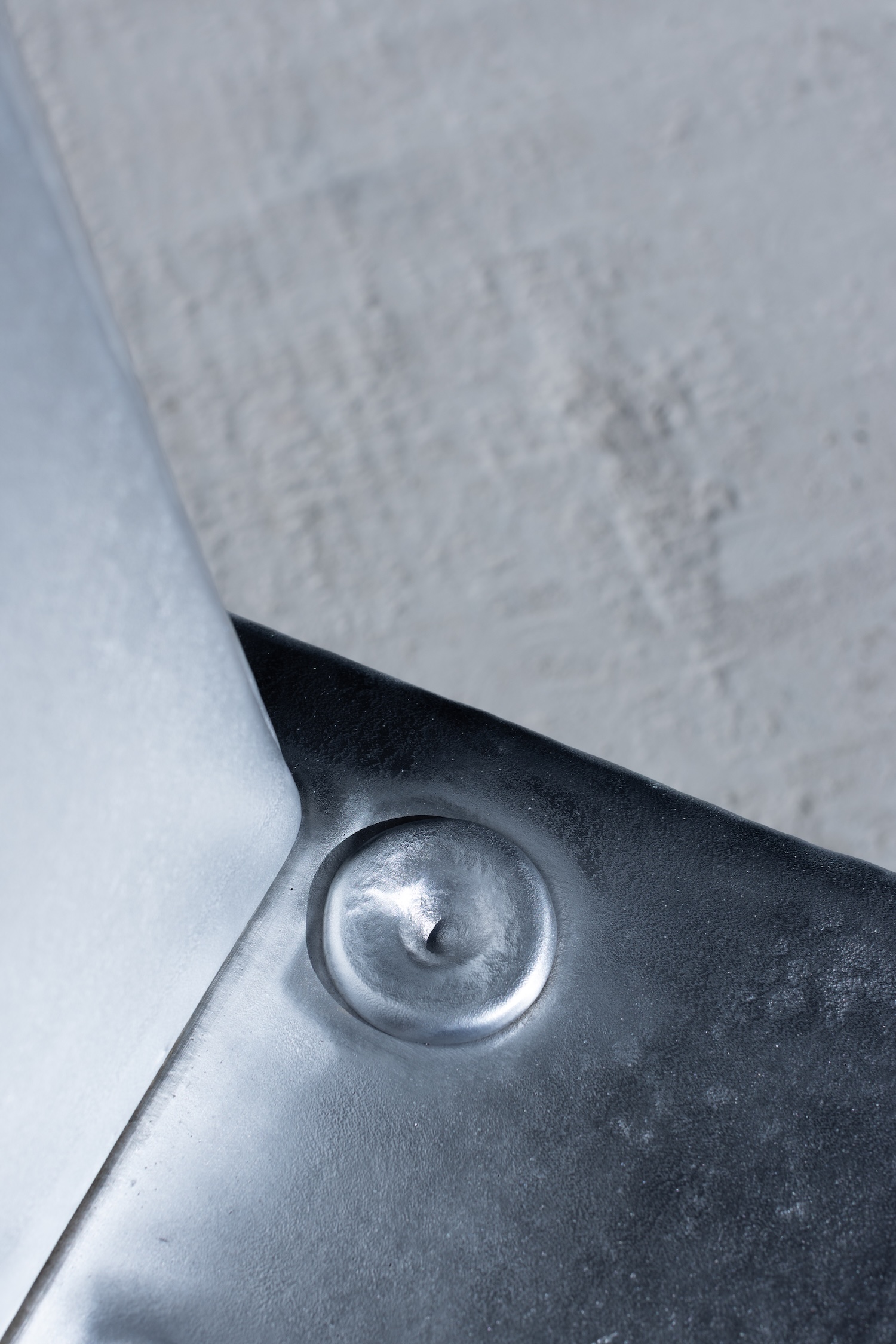
Most metal furniture separates these steps. Parts are cast, bent, or machined, then joined by welding, fastening, or adhesive, each a different operation with its own tooling. In INGOT the joint is another casting. The poured metal fills the cavity where tiles meet and takes its shape, and the complicated geometry of those joints is what stops the solidified metal from being drawn back out. Because the tiles are already solid when the pour arrives, they act as chill surfaces, pulling heat out of the liquid and fixing it against their edges.
Each tile is cast in an open mold, with its upper face left exposed to air as it cools. Without a mold wall to press against, that face is shaped by the liquid itself. Surface tension in molten aluminum is high enough that the metal pulls back at the perimeter and settles into rounded edges and a faintly domed top, both formed during solidification. The same exposure lets a thin oxide skin develop across that surface, which reads duller than the side that sat against the mold.
Ingots are conventionally produced the same way, poured into open troughs and left to cool with the top surface free. That surface is usually treated as raw stock, removed or remelted before the metal becomes anything else. In the chair, it is the finished face. The volume and temperature of each pour vary slightly, so the meniscus settles differently from one tile to the next, and the edge profiles and surface texture shift across the seat and back.