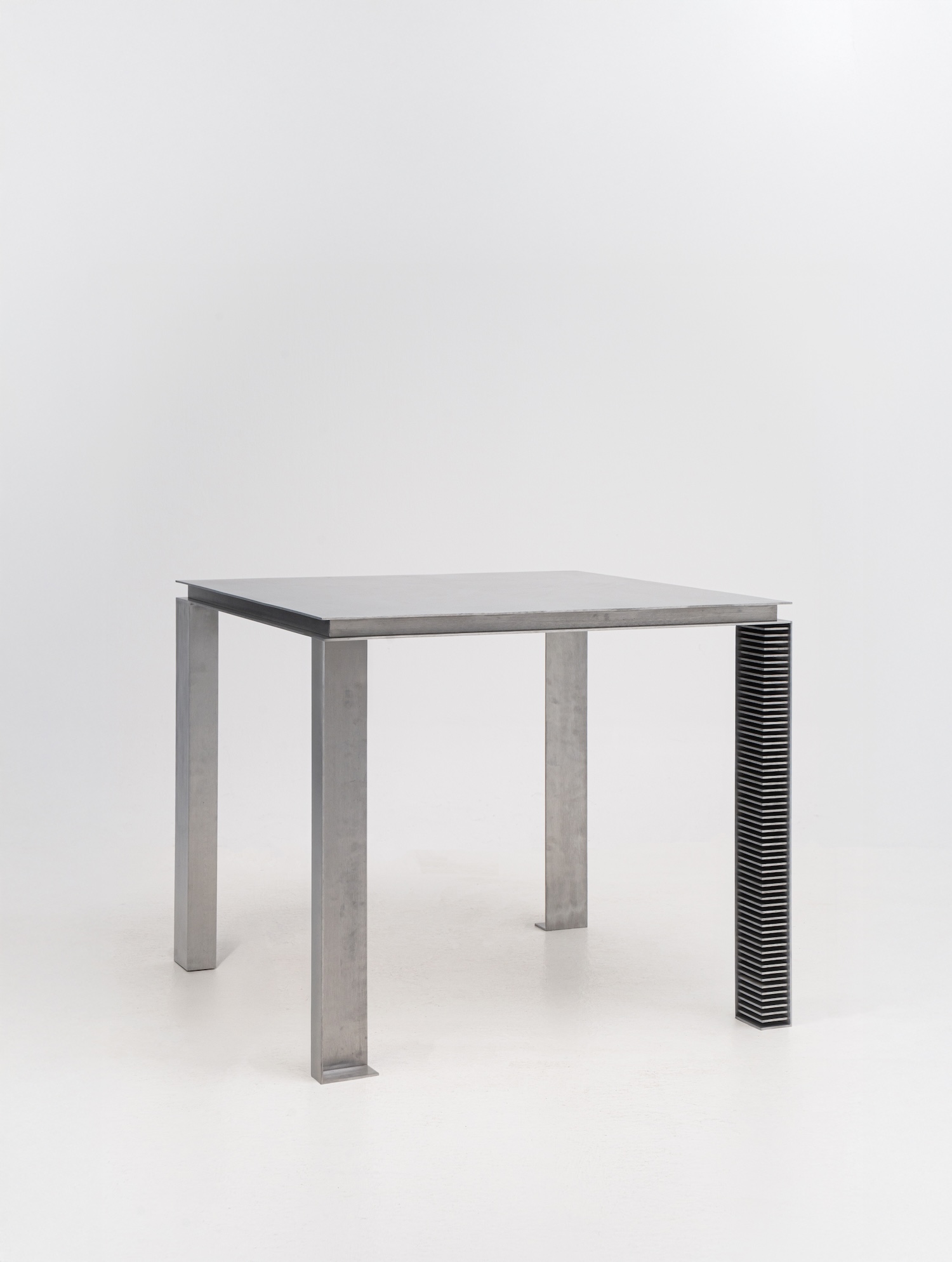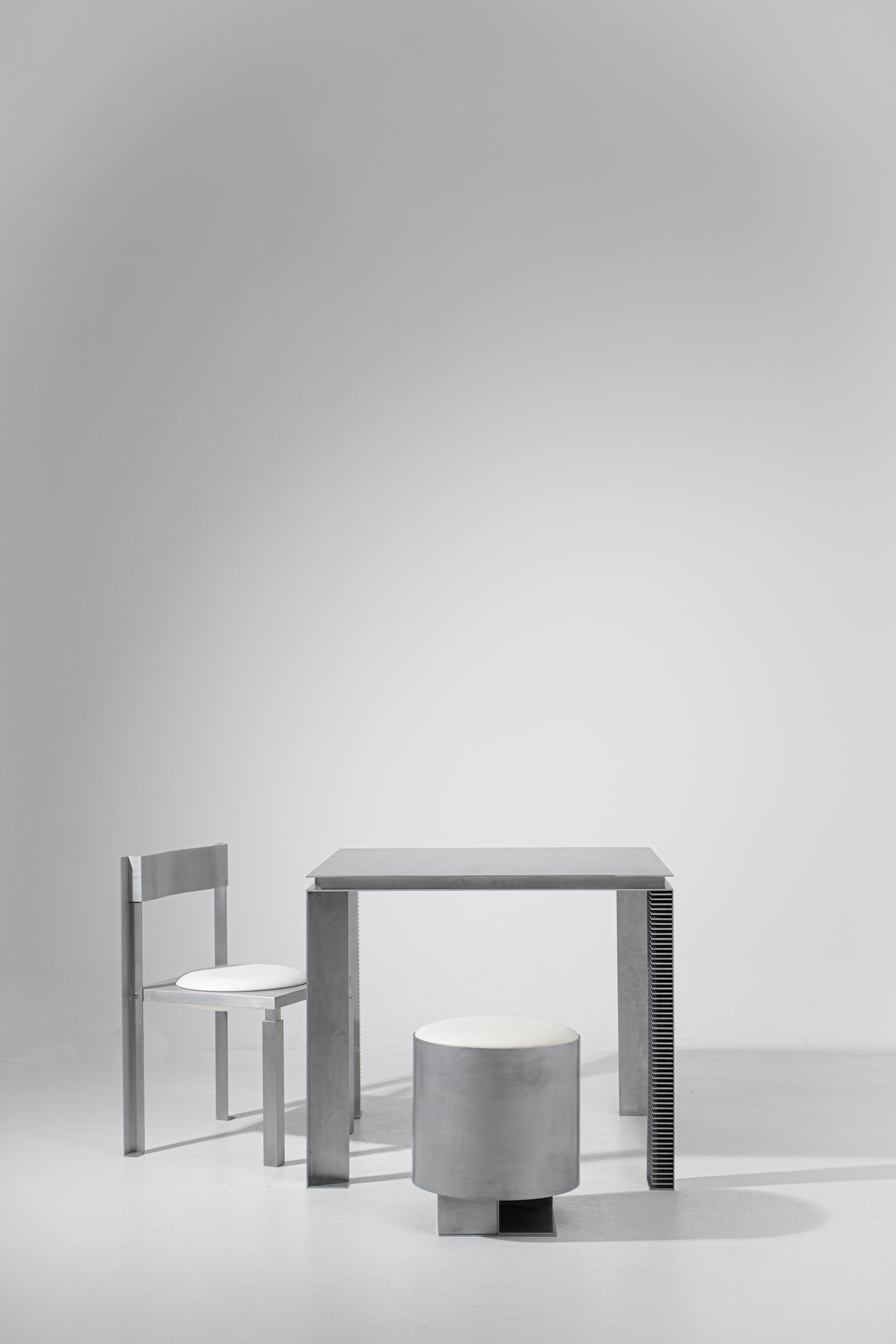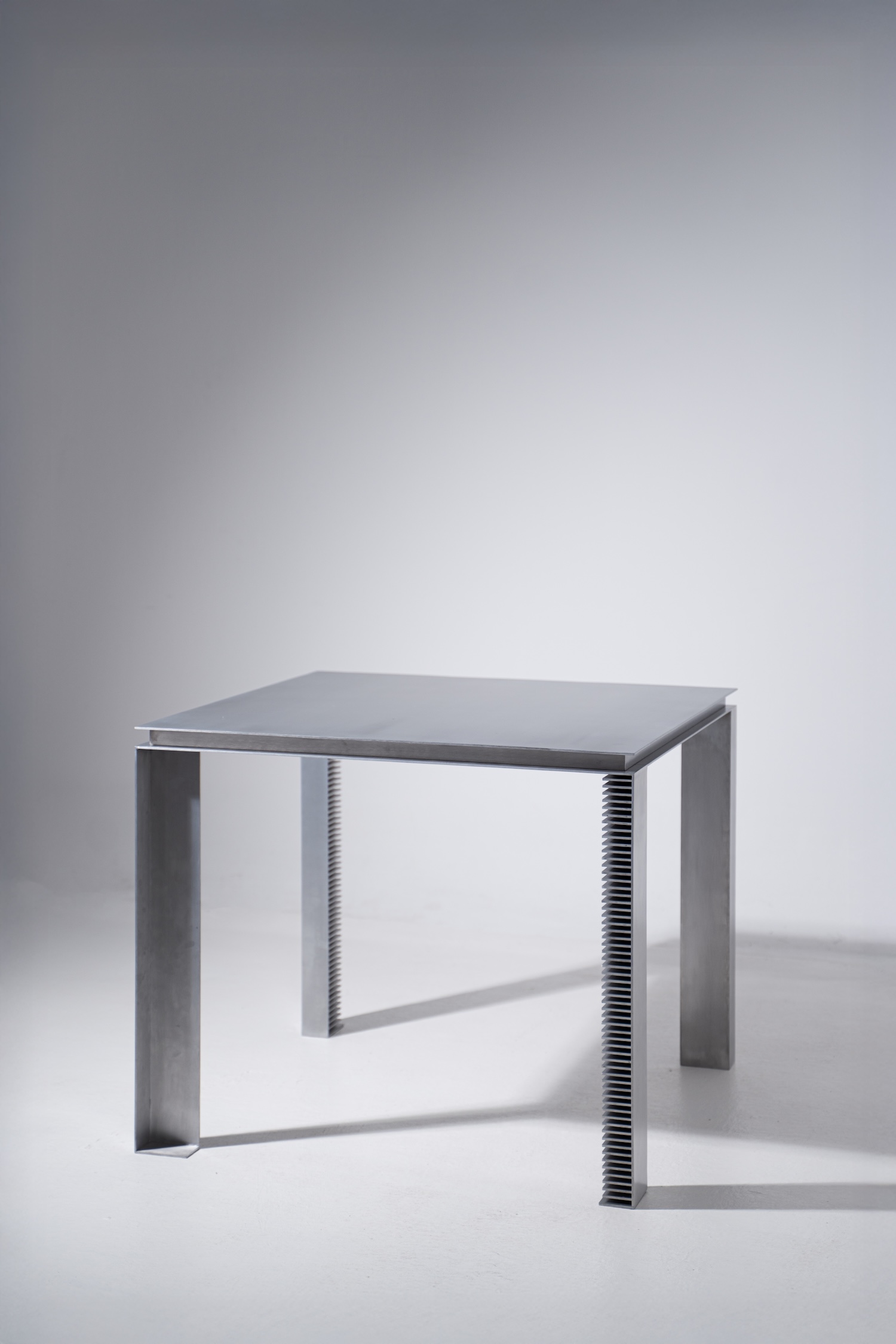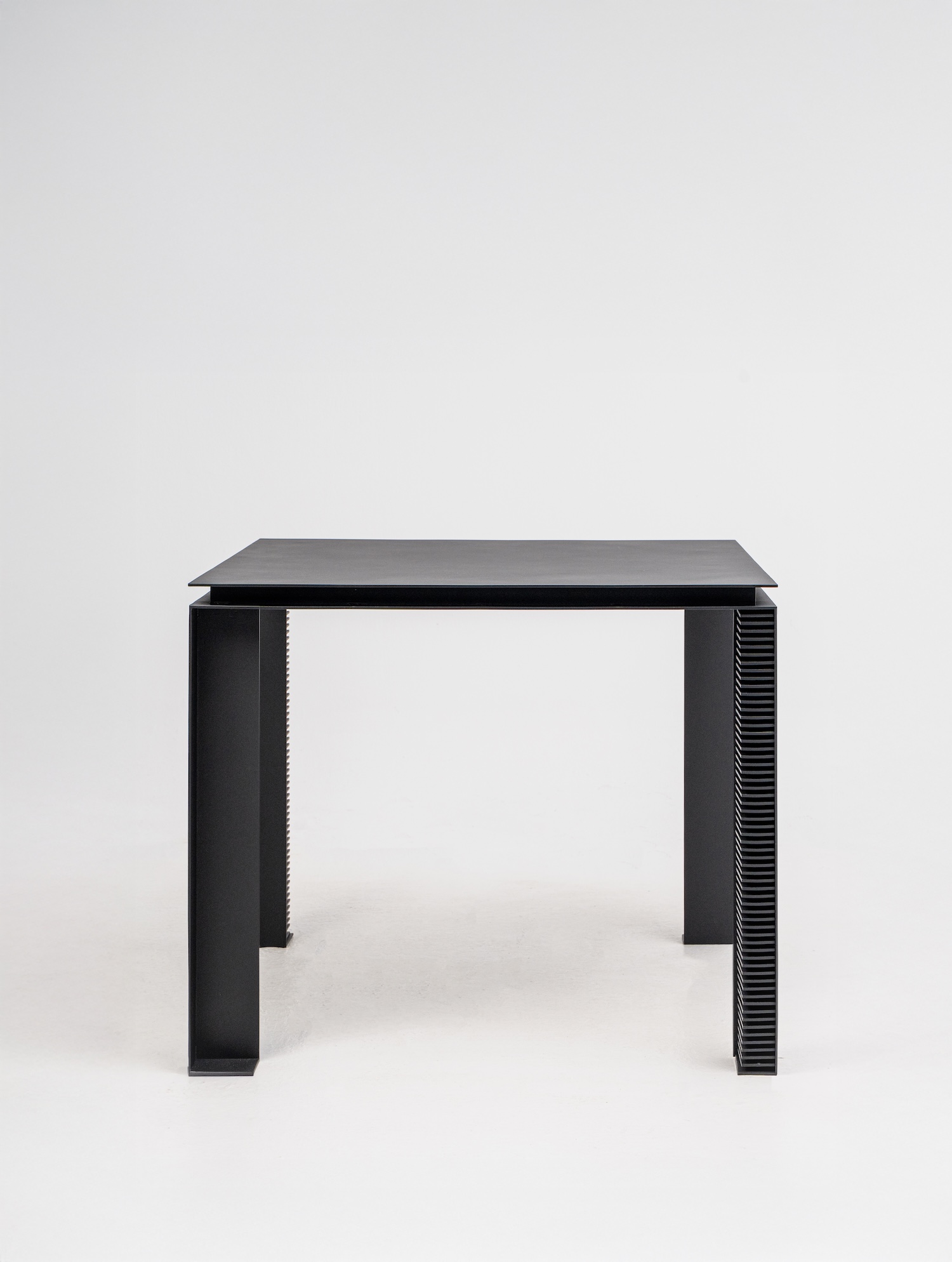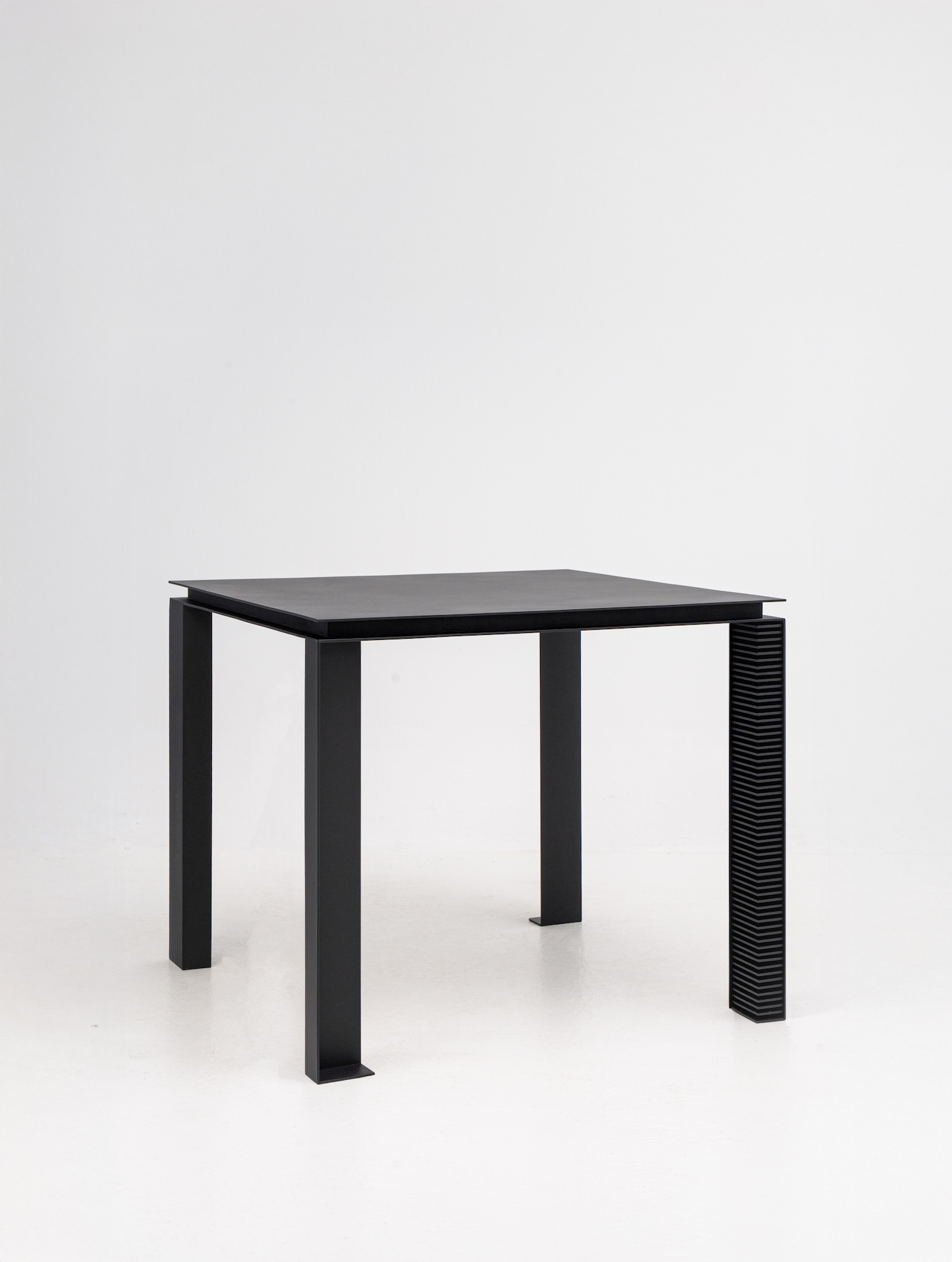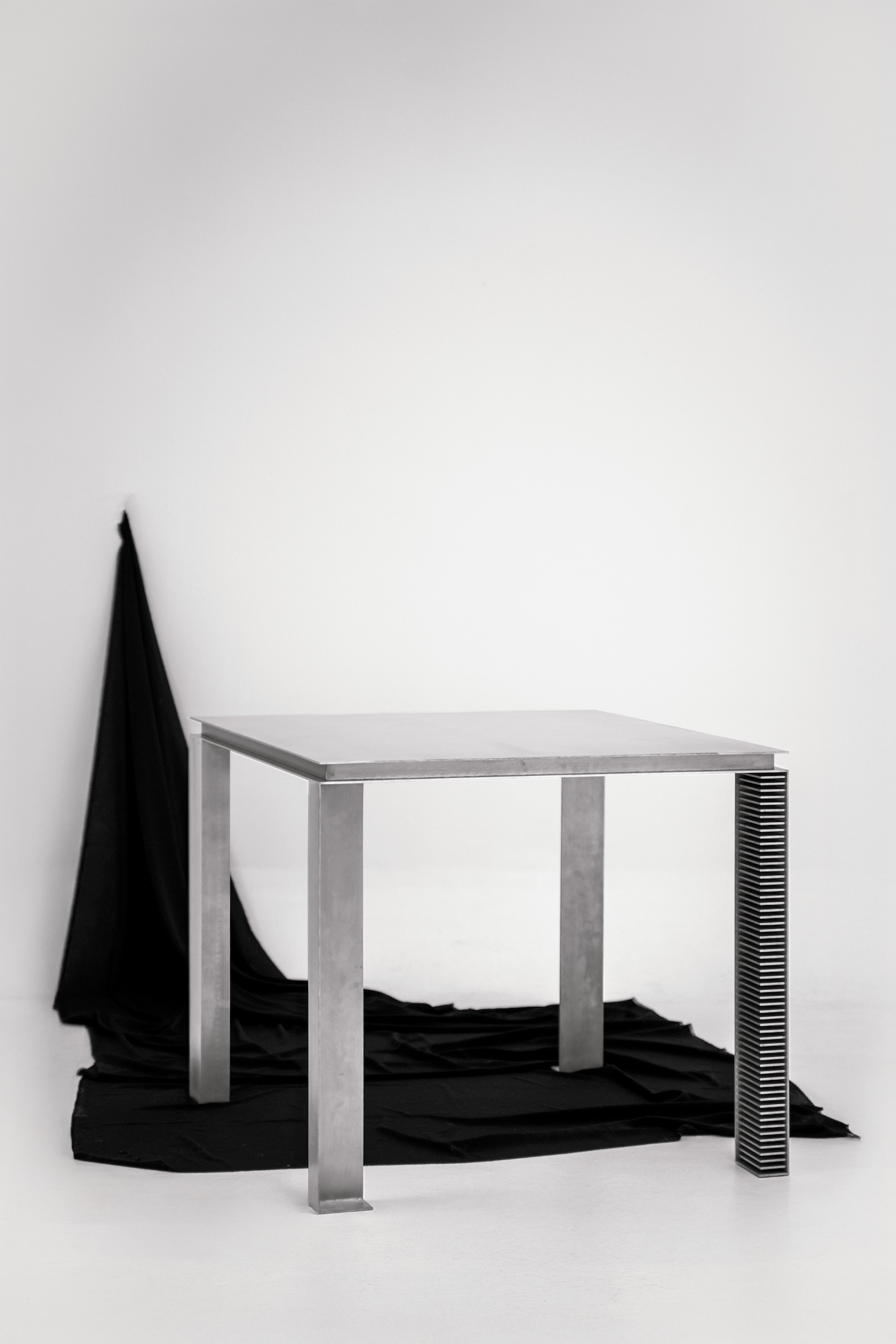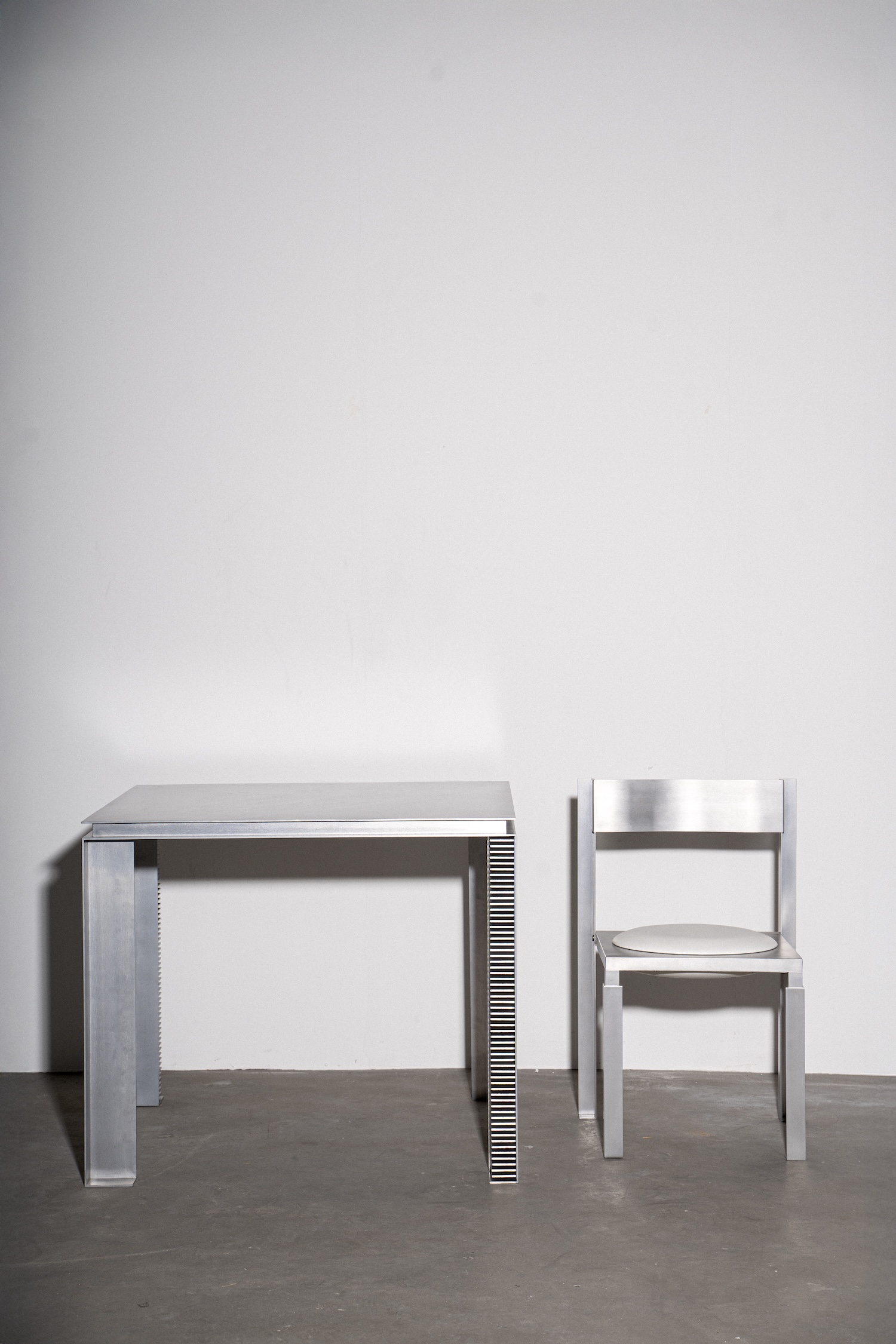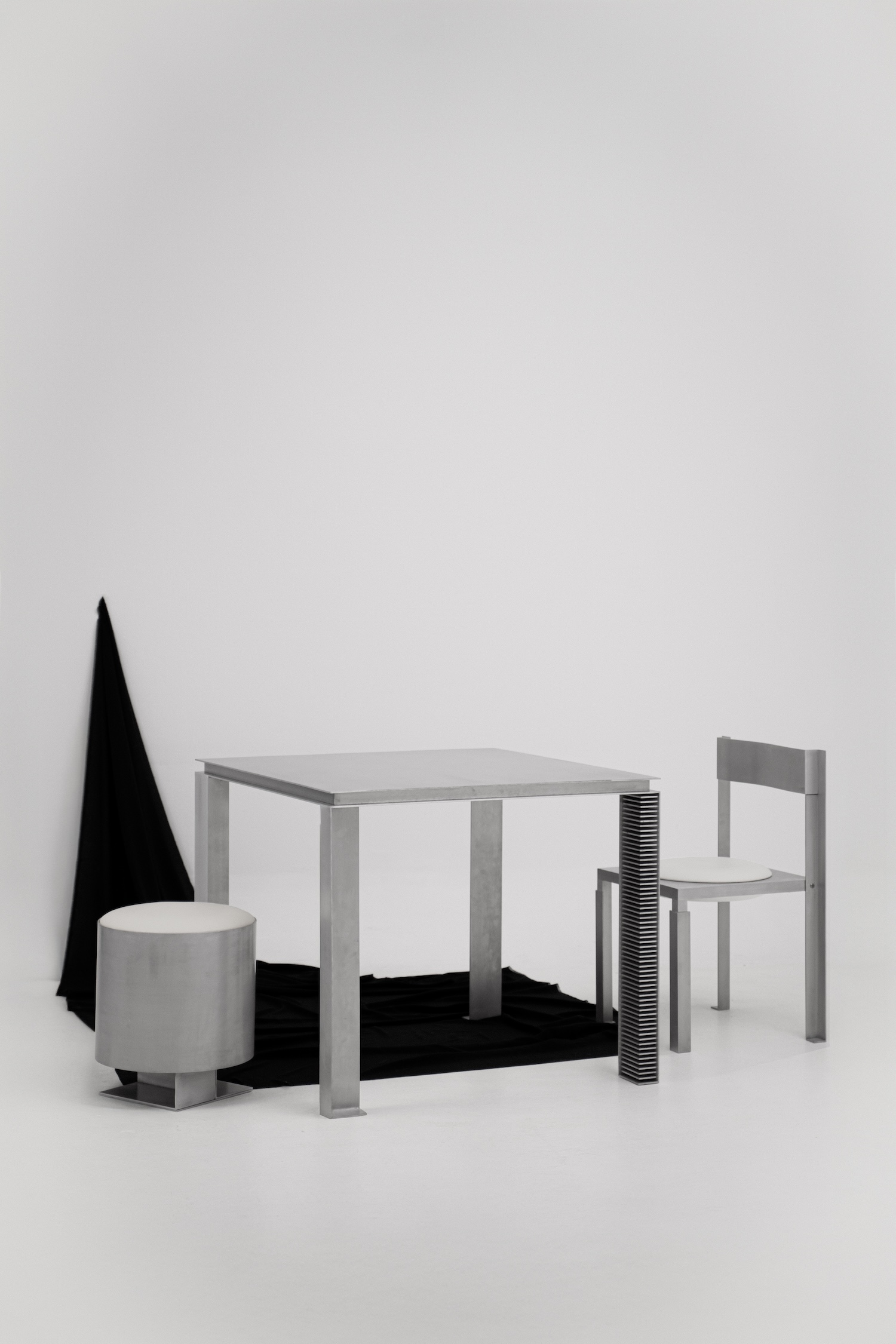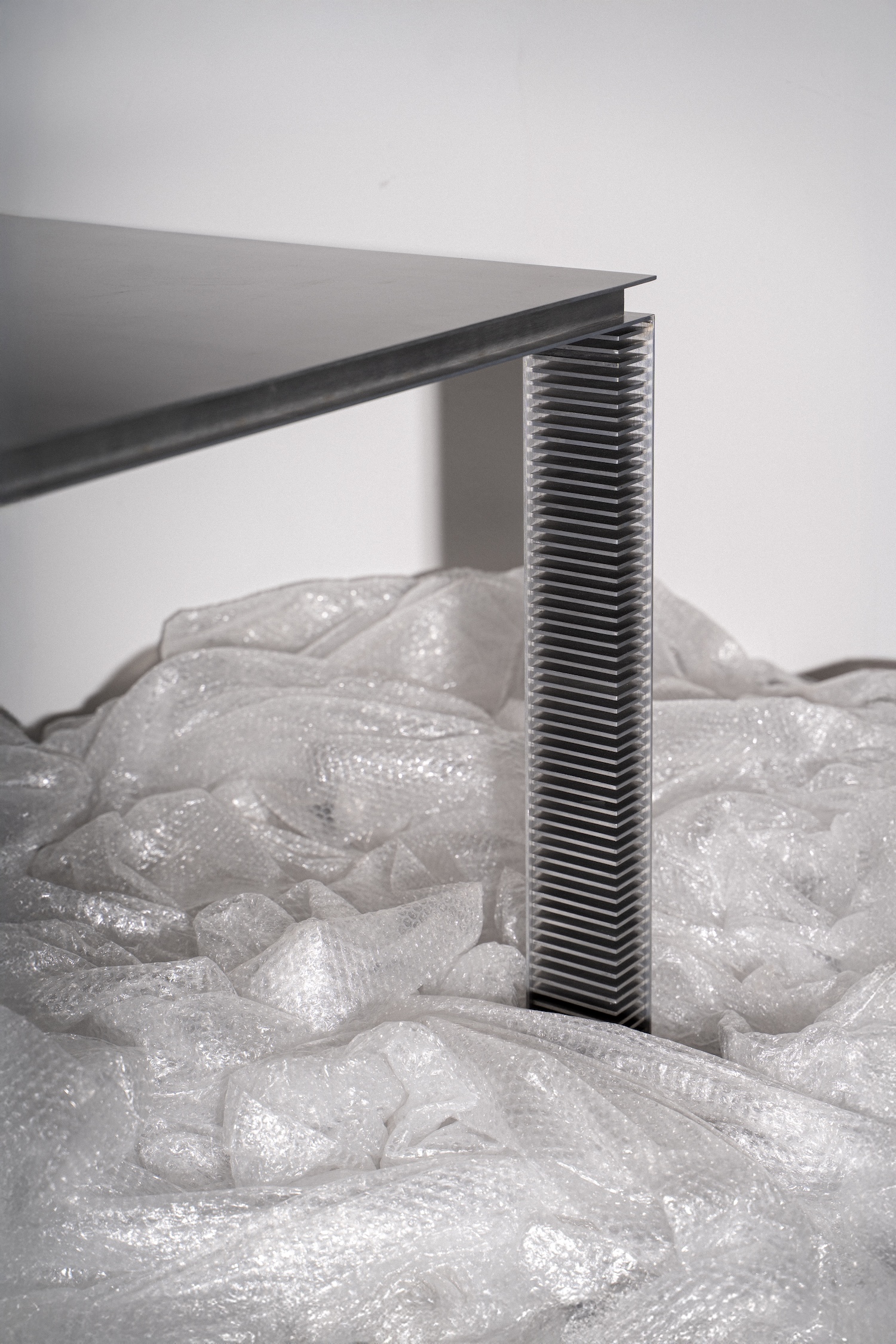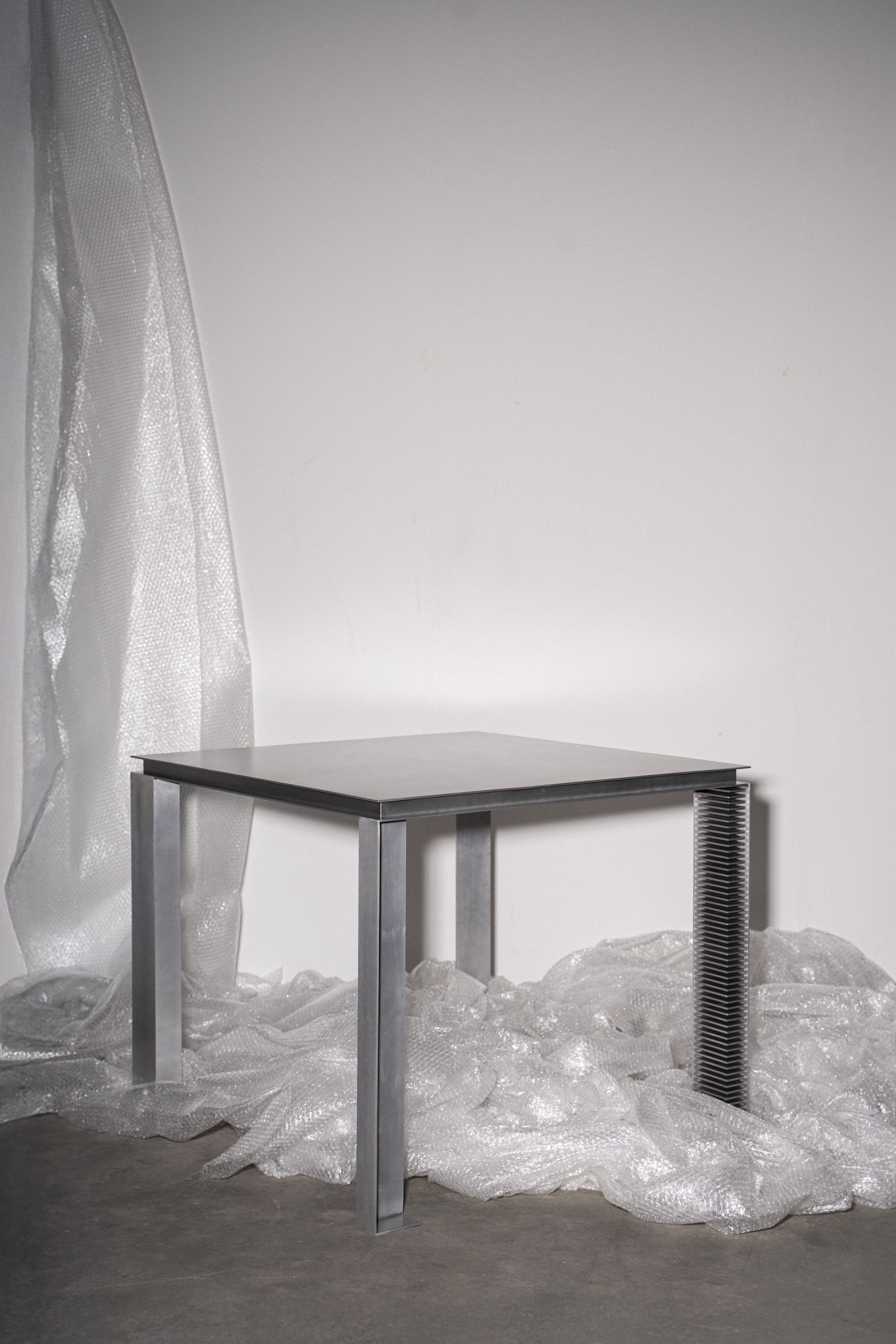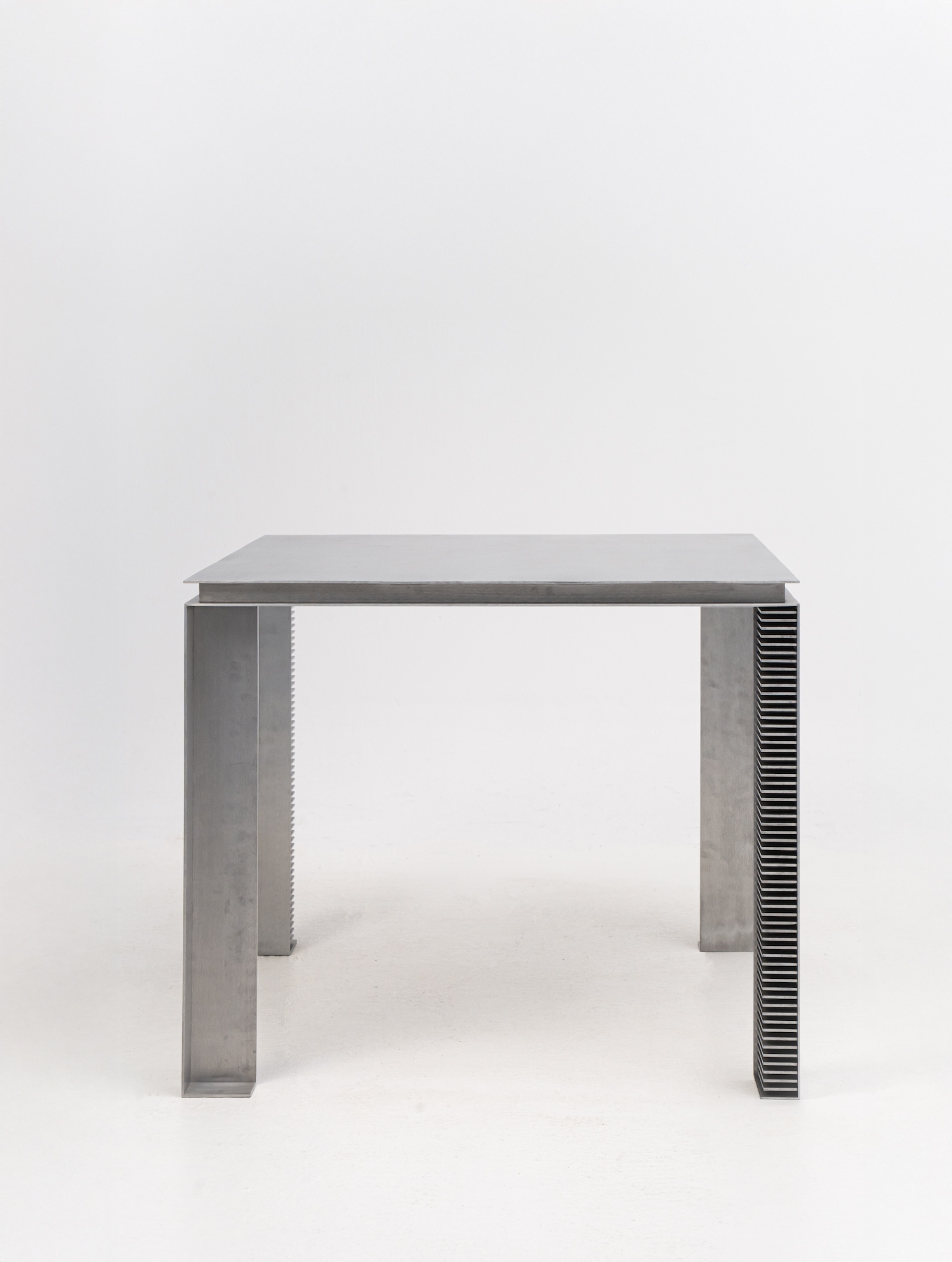
The Strut Table is built from aluminum angle profile, the L-shaped section more commonly found as edge trim in building construction, where it is fixed in place and rarely noticed. Designed by Yağmur Köylü for YET. Design Studio in Istanbul, Turkey, the table is made entirely from that material and gives the profiles two jobs at once. They hold the piece up, and they determine what it looks like.
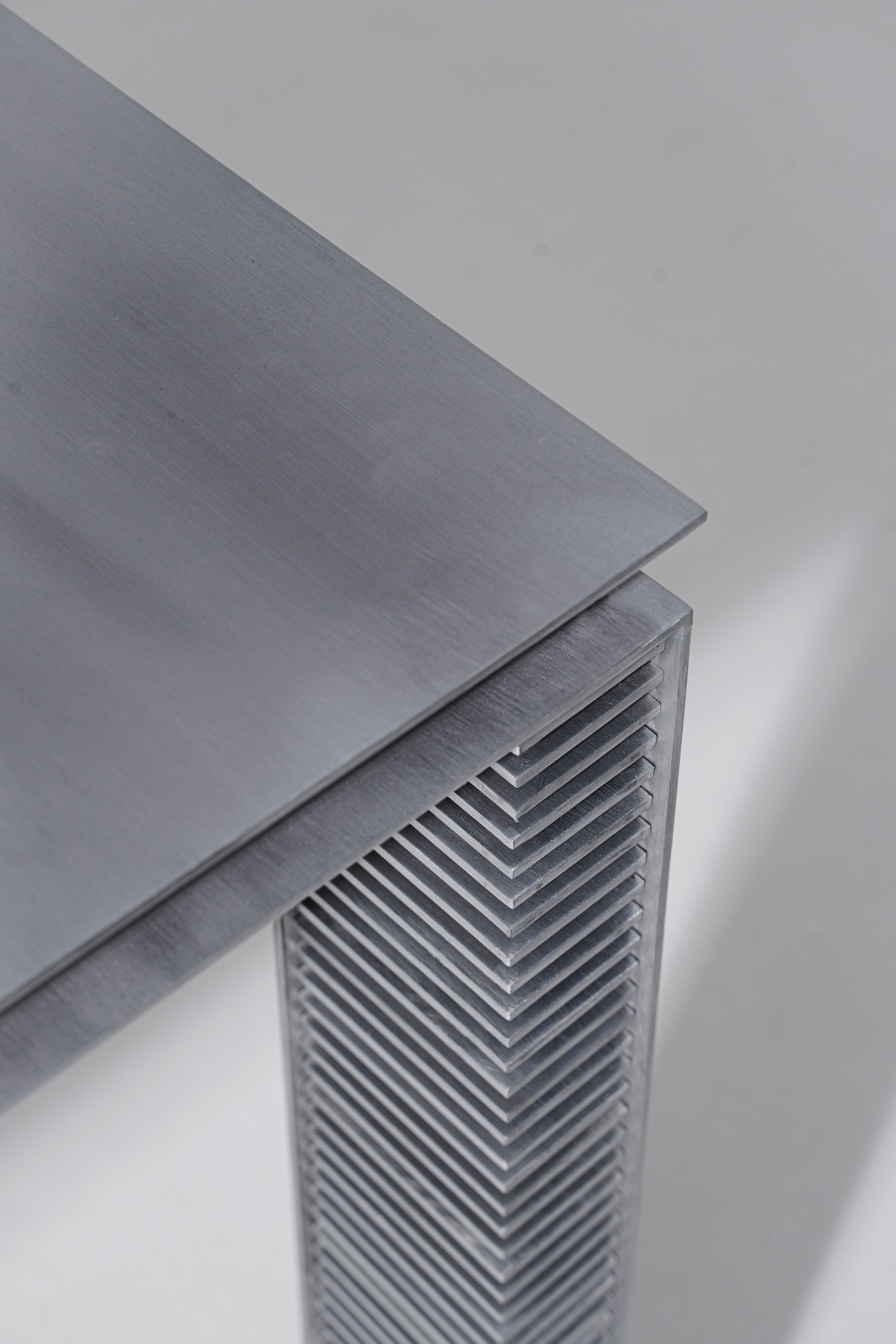
The table follows the Strut Chair, which the studio presented at Milan Design Week 2025, and carries the chair’s structural vocabulary into a larger piece of furniture. In most tables the frame is subordinate to the top, tucked beneath an apron or reduced to four plain legs. Here the supporting members move to the front of the composition. The profiles are repeated in a measured sequence, and the right angle of each section catches light on one flange while holding shadow on the other, so the frame reads as a series of stepped depths from any side.
An angle profile gets its stiffness from geometry. The two flanges brace each other along their length, which lets a thin section of aluminum resist bending without added thickness. That property accounts for the table’s slender appearance. Its strength comes from how often the profile is repeated and how precisely the pieces meet, with no extra mass brought in to compensate. Aluminum also keeps the sharp inside and outside corners of each section, and those corners produce the hard line between lit and shaded faces that gives the repetition its rhythm.
The square top keeps the overall geometry restrained, which leaves the frame as the only part of the object with visual incident. Without a contrasting material for the top or the feet, the table offers no single focal point, and attention moves along the profiles instead.