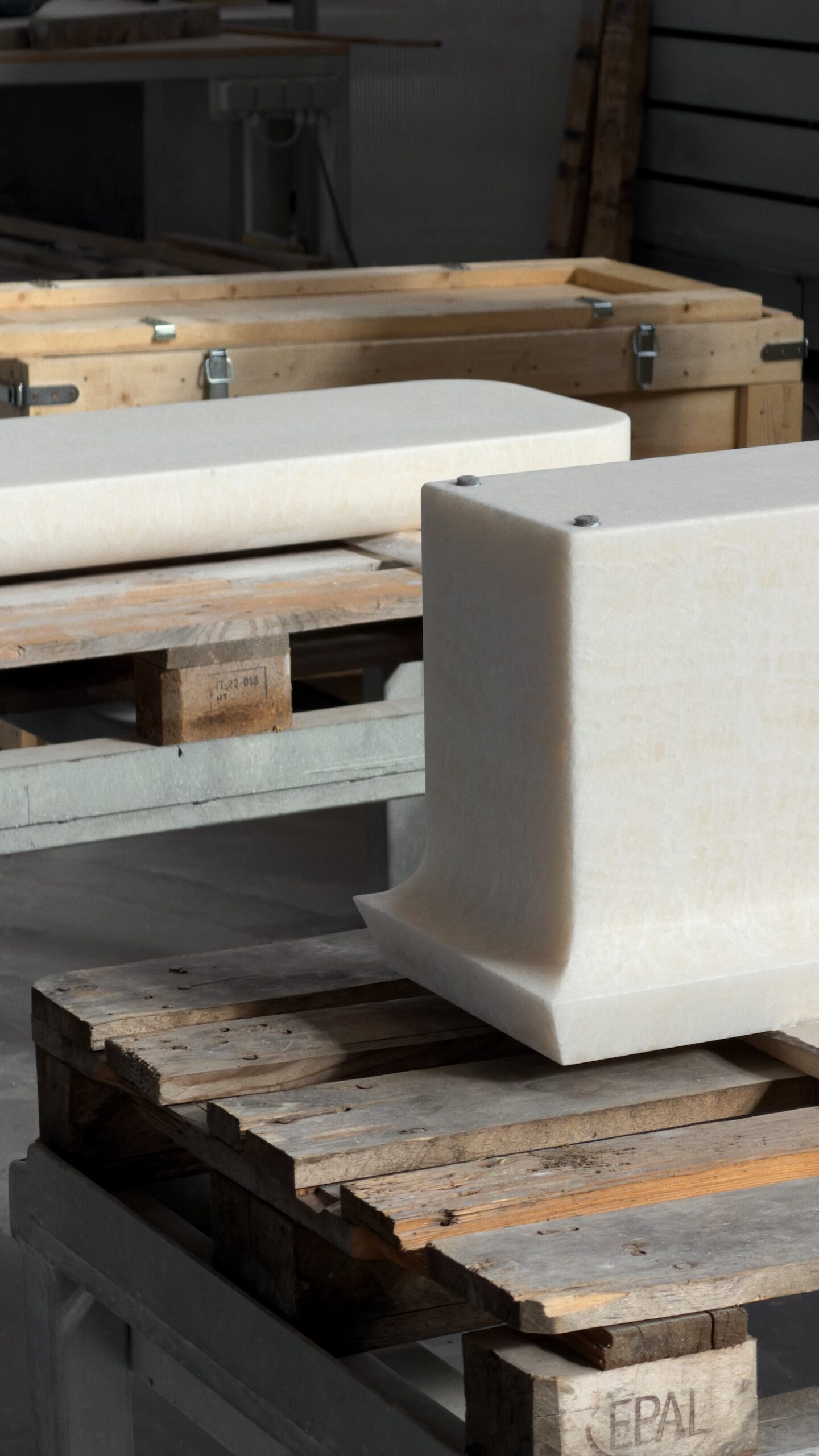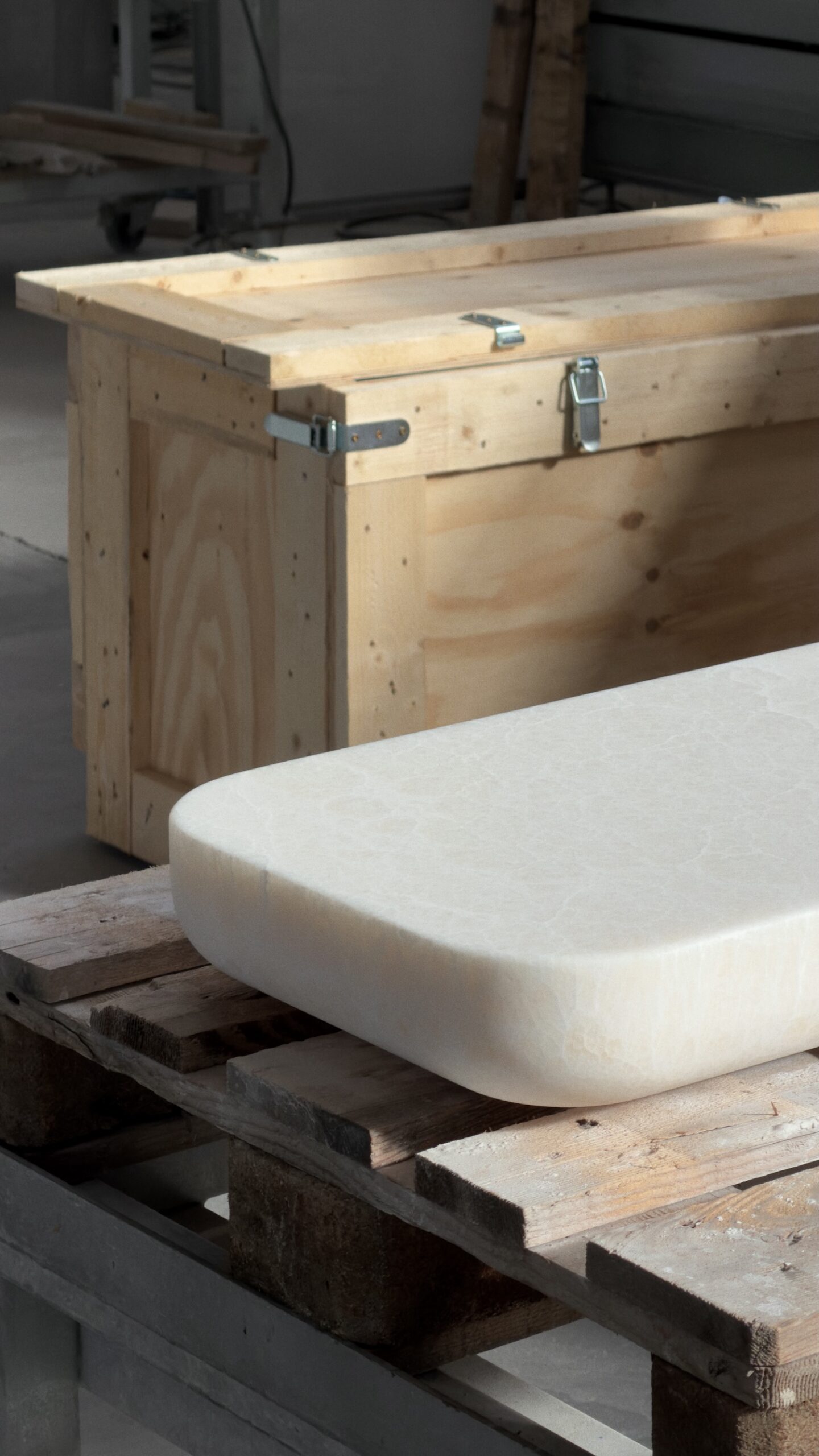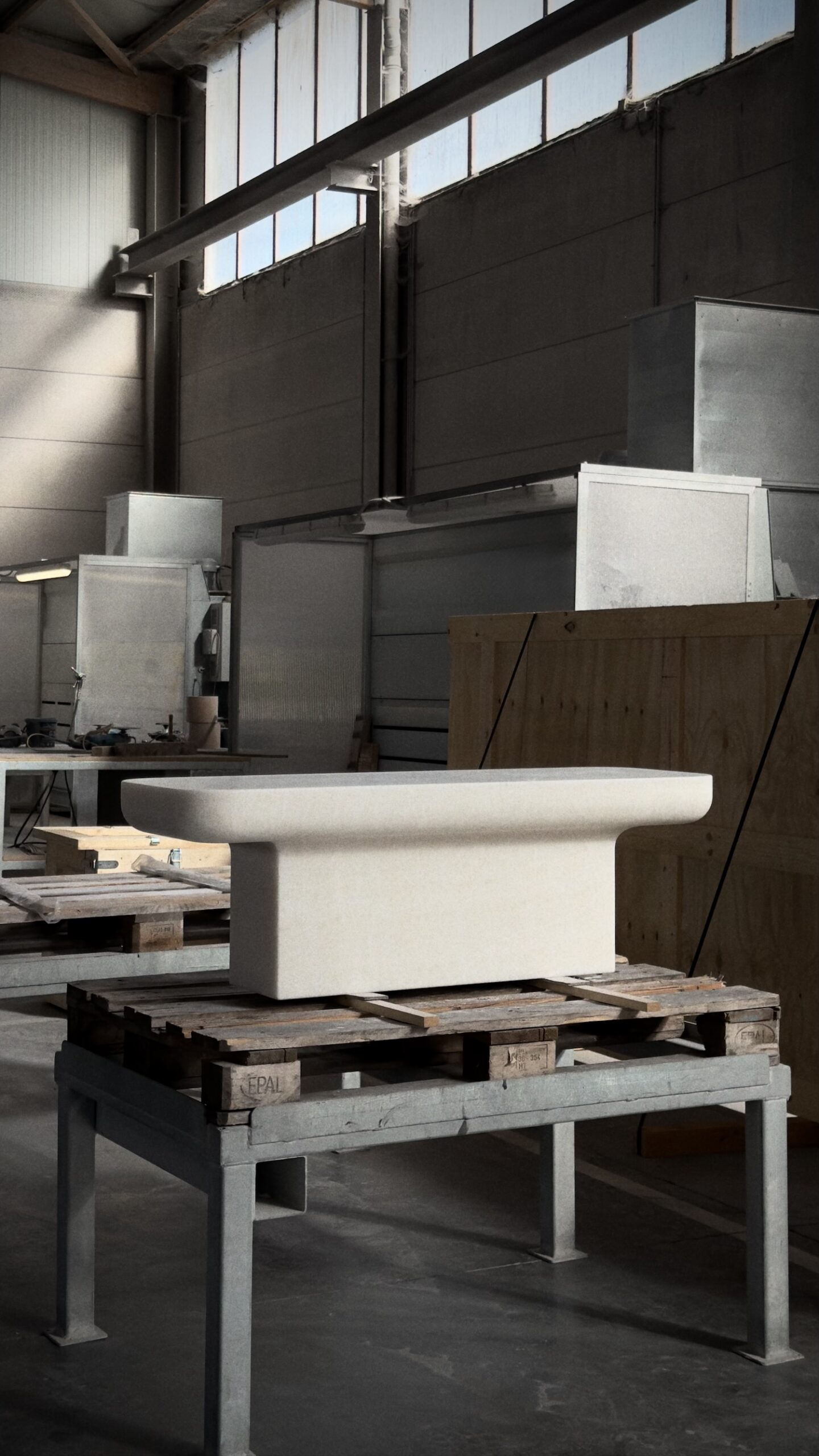
The glass pieces in the Mono collection began as wooden models that were refined and then deliberately altered to carry small irregularities. Kerstens, the Antwerp, Belgium studio founded by interior architect Andy Kerstens, had those models transposed into solid cast glass by master artisans in the Czech Republic, with every flaw carried through. The collection now spans seven pieces in two materials, and each material acquires its irregularity in an opposite way.
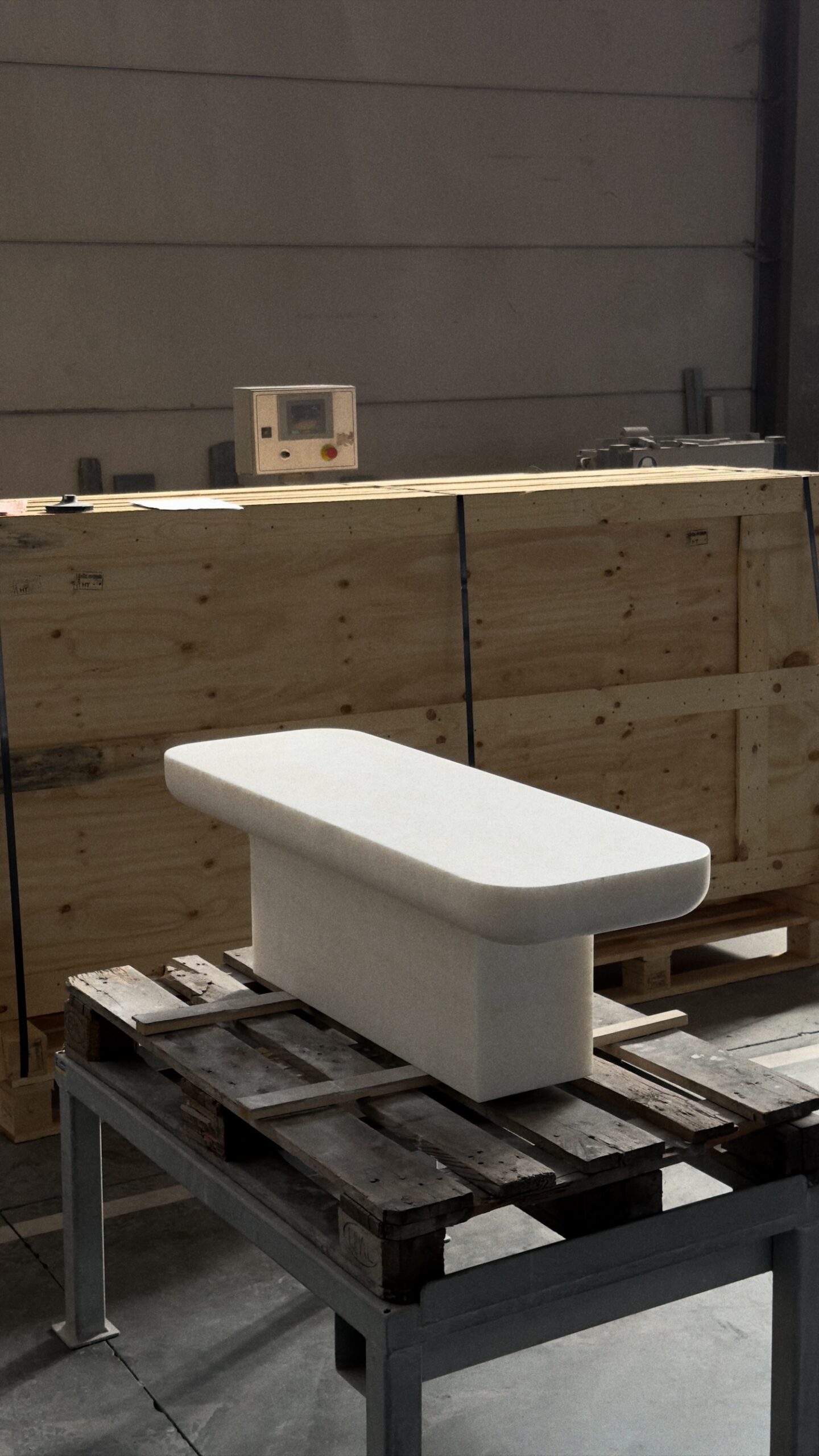
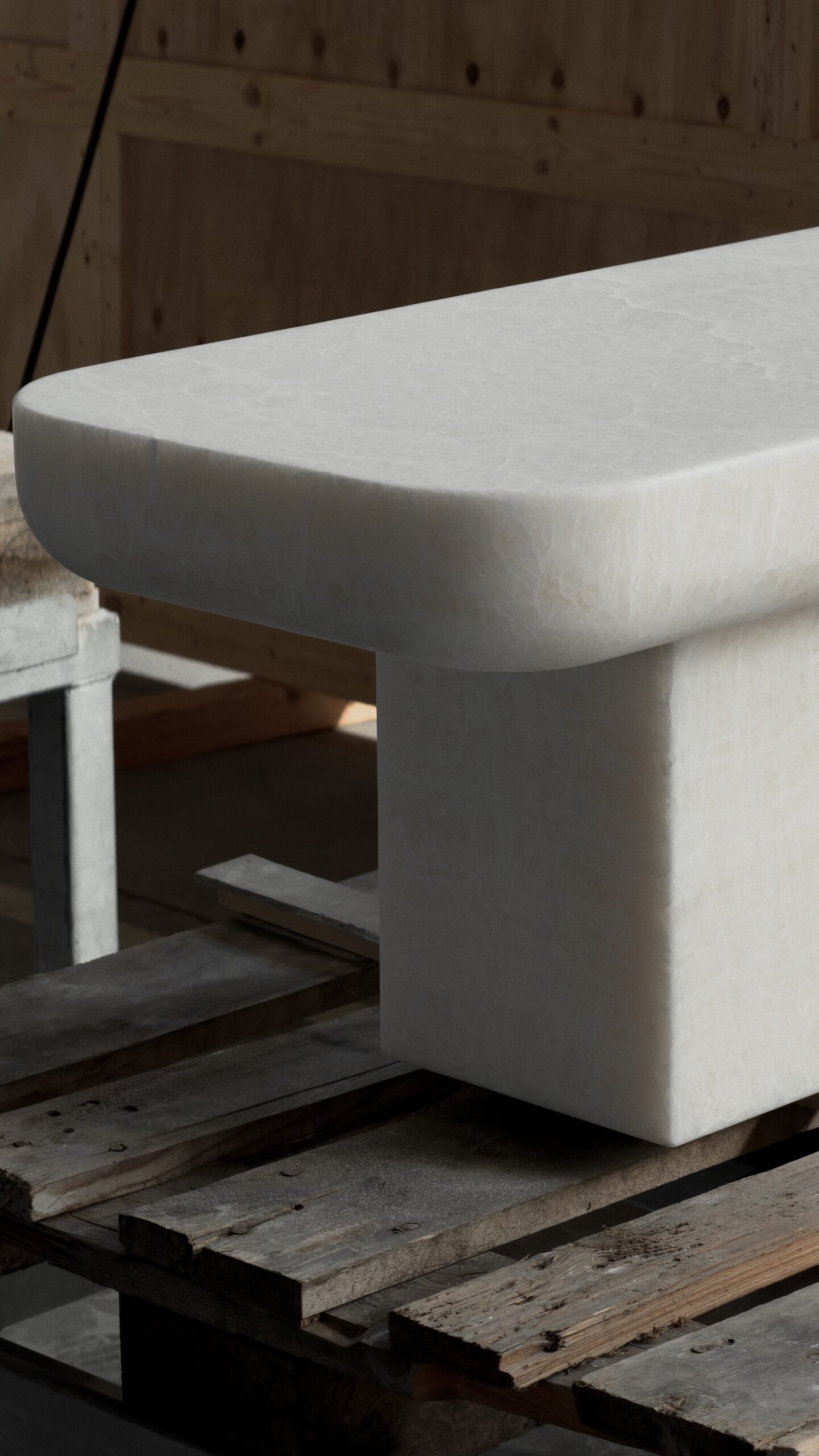
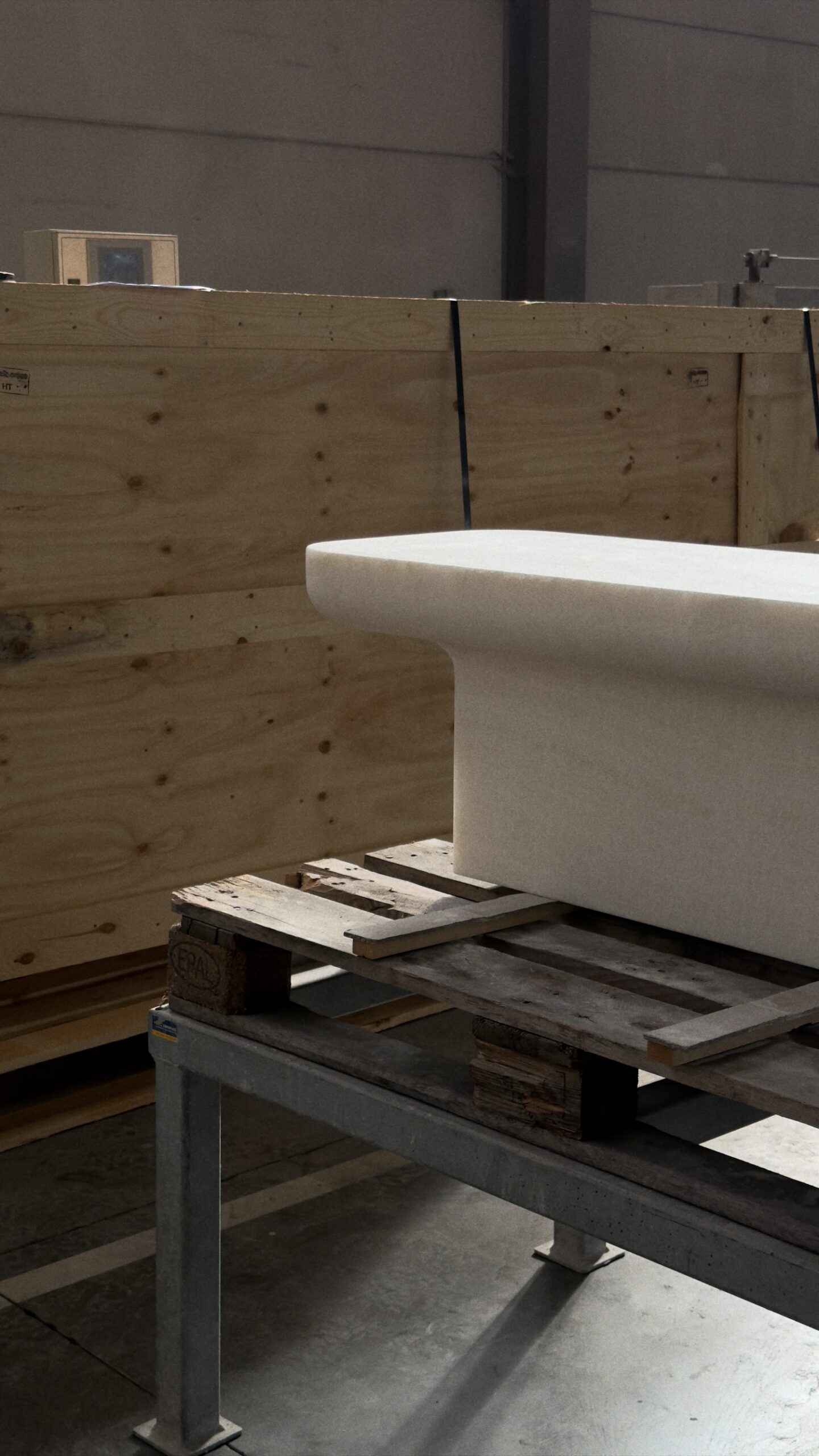
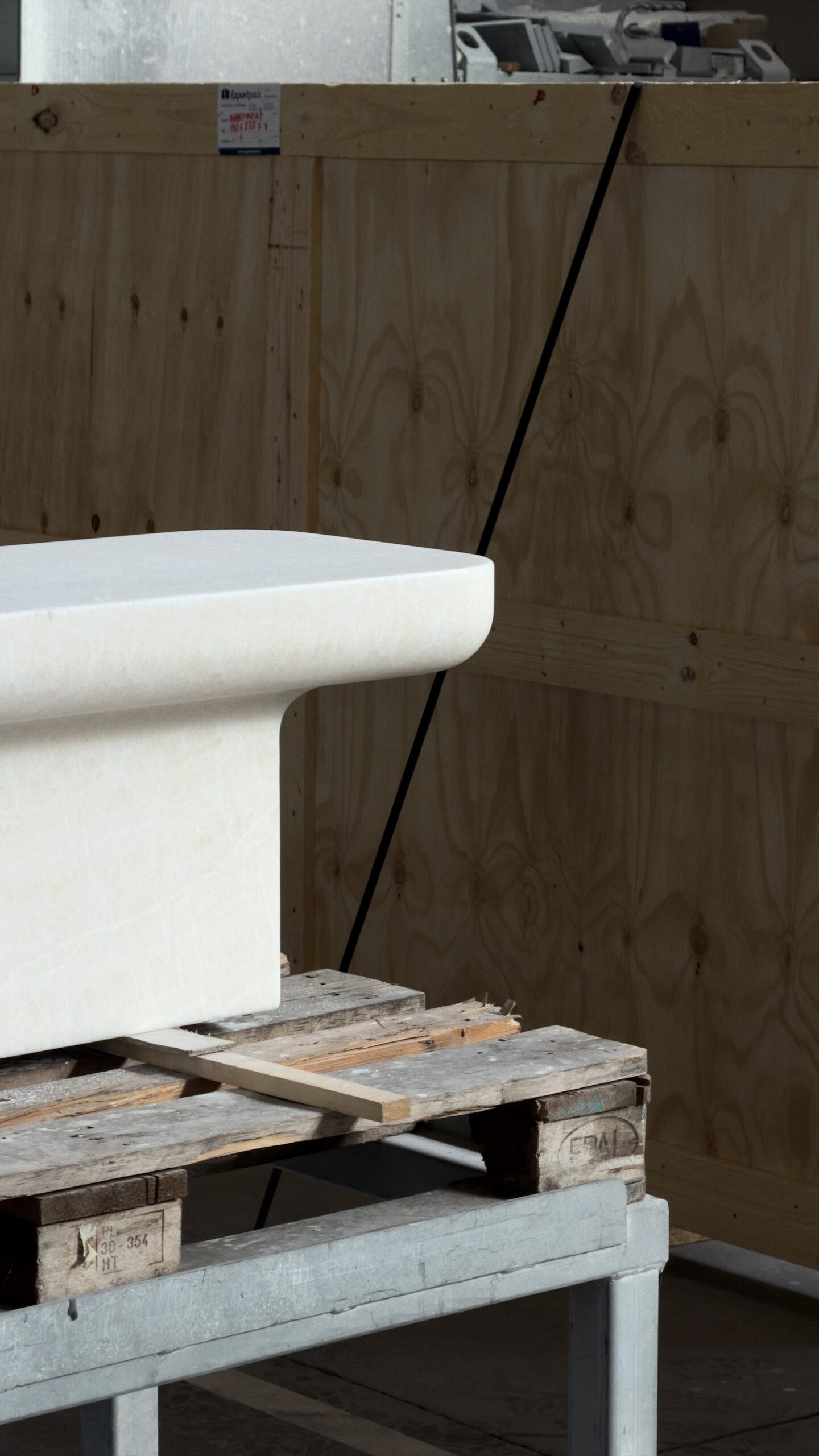
The stone editions came first. A side table in 2022 was followed in 2024 by a coffee table, a console, and a bench, each carved from a solid block of natural stone by Belgian craftsmen. The geometry holds across the family. A softly curved top rests on straight legs with hard, angular edges, and the proportions are set through symmetry and scale alone, with no applied ornament. In stone, variation arrives without being drawn. Veining and layered deposits run through the block, and carving from a single piece exposes them across the curves wherever the cut happens to fall.
Glass has no such inheritance. A cast object follows its model closely, so any variation in the finished piece has to exist before casting begins. Kerstens placed that work at the model stage, then produced a glass side table in 2025 and a glass coffee table and console in 2026 through a cold casting process. The finished surfaces carry a soft undulation, while the interiors hold suspended air pockets and faint organic striations that the casting leaves inside the mass.
Those inclusions govern how the pieces treat light. As light passes through the solid volume, the textured surface and internal striations refract it into shifting patches of reflection and shadow, and the effect changes with the surrounding conditions over the course of a day. The imperfections are specific to each piece, so the refraction pattern varies from one table or console to the next, even where the outline is identical.