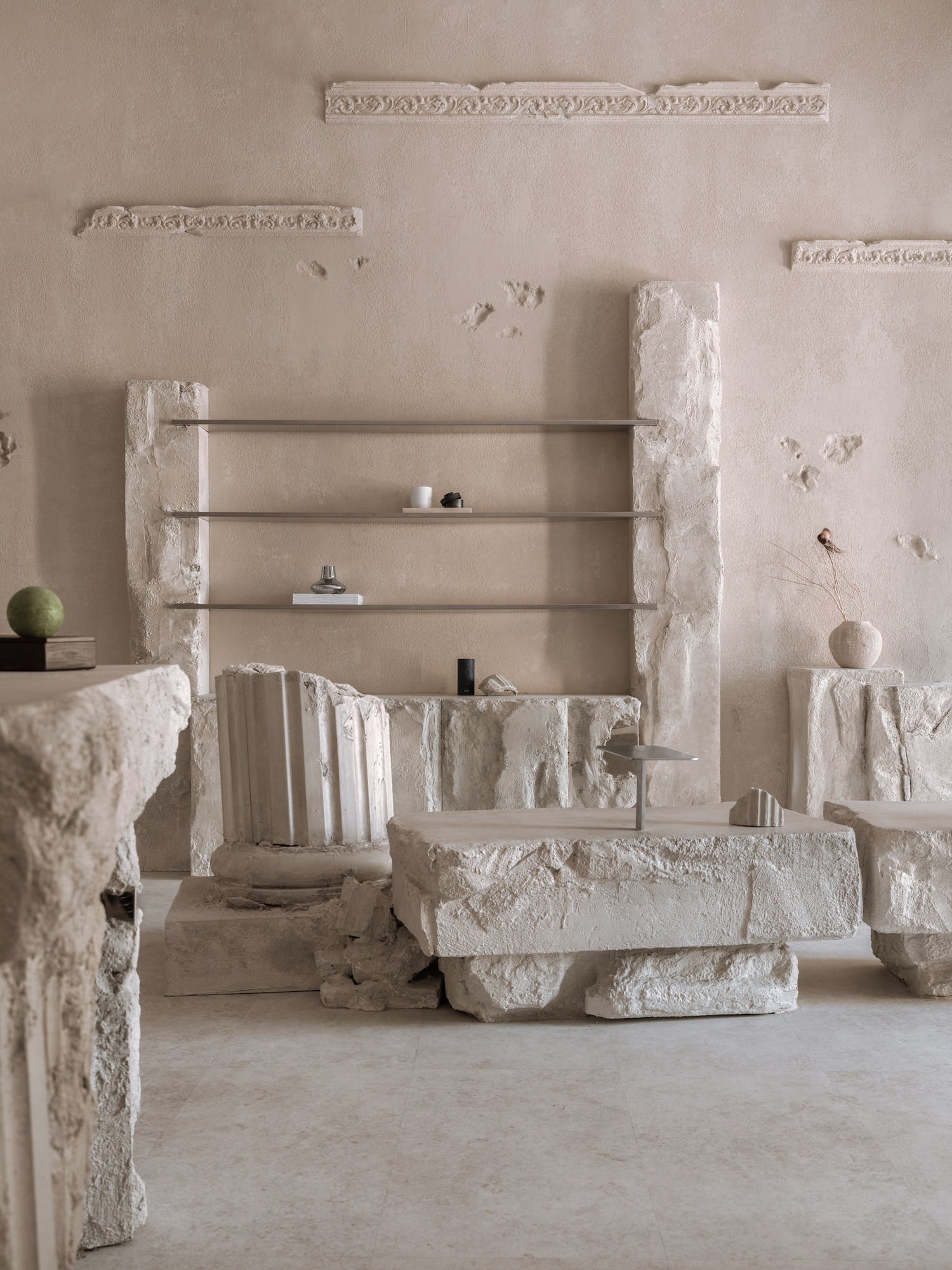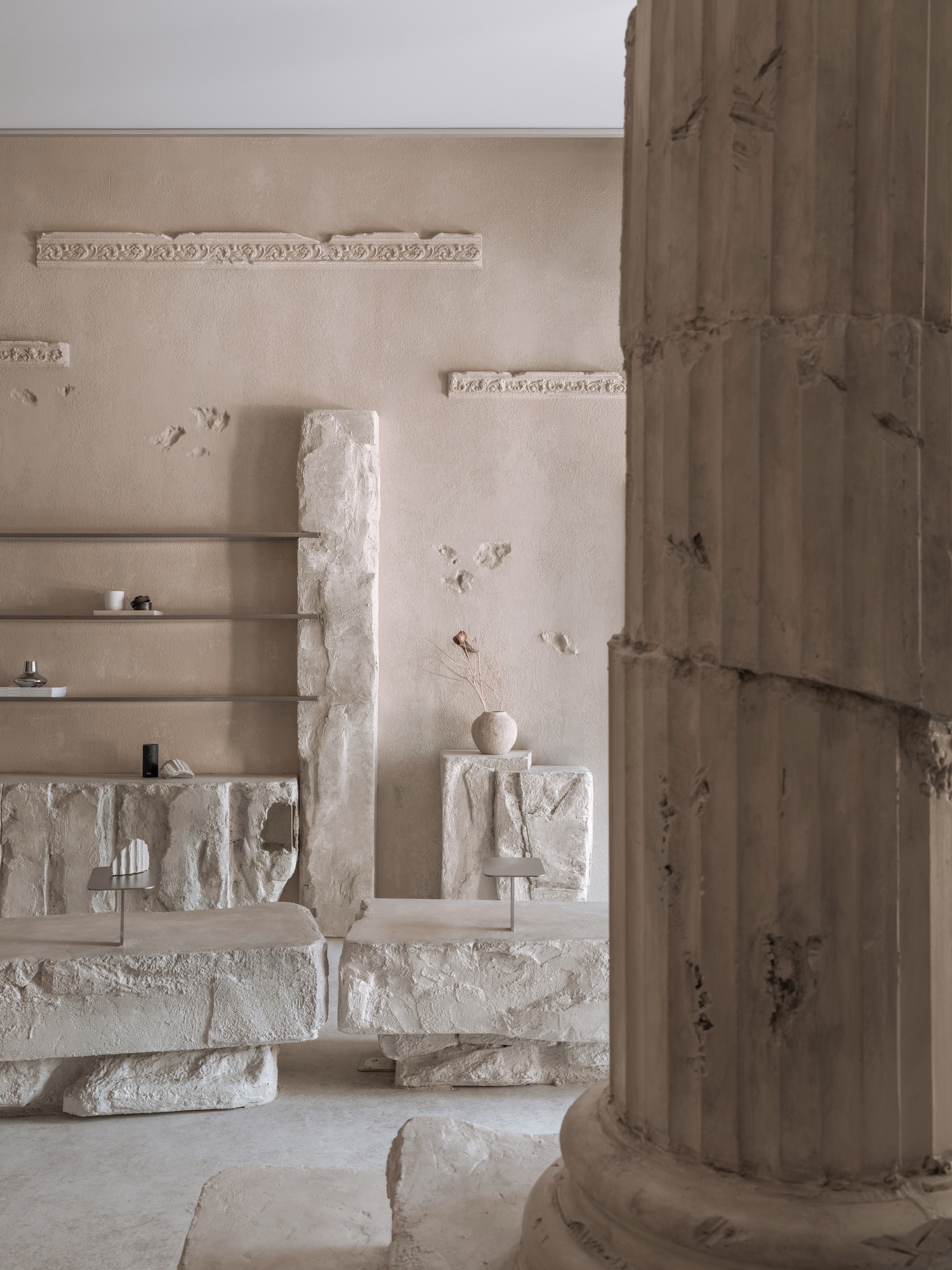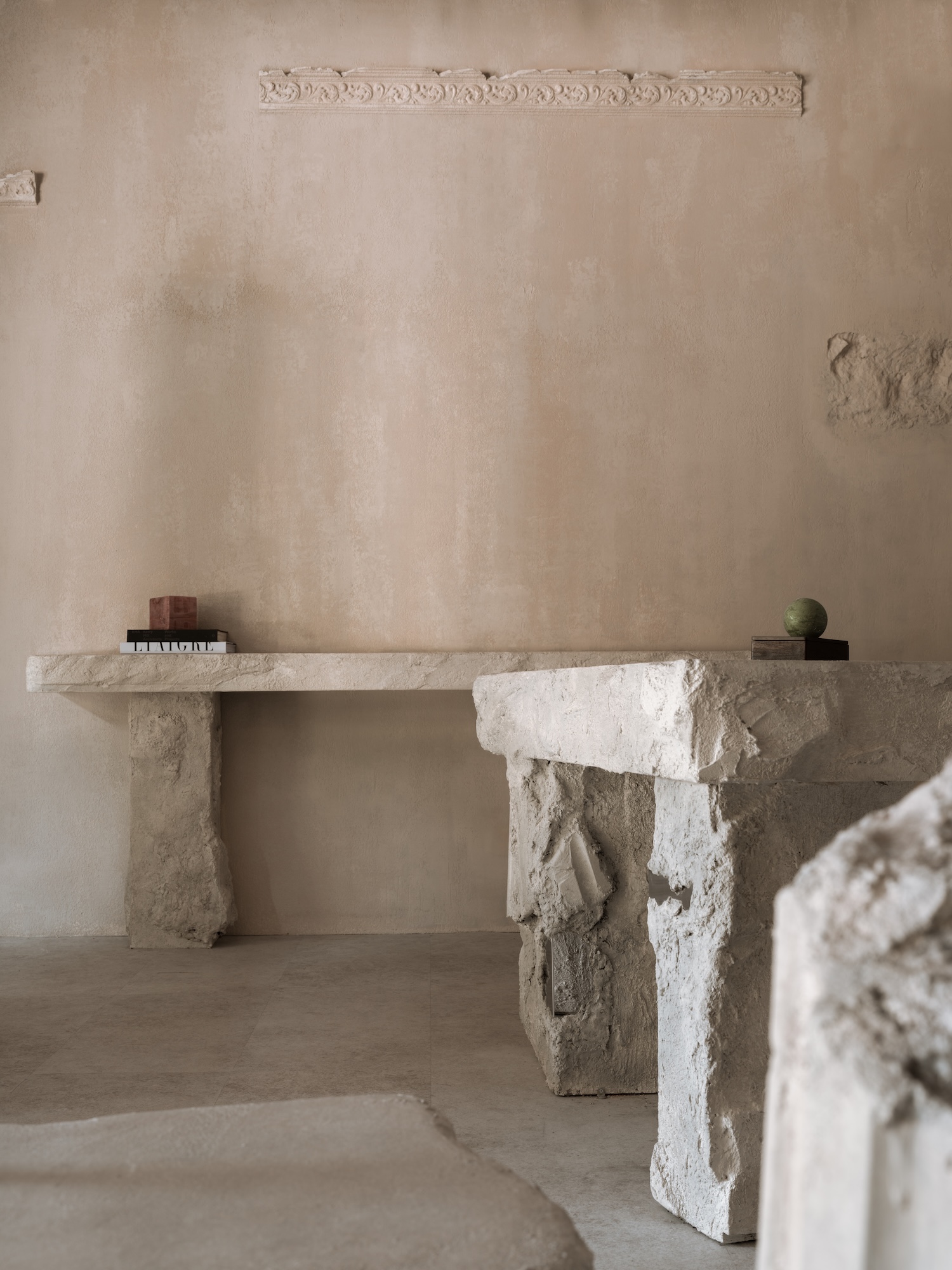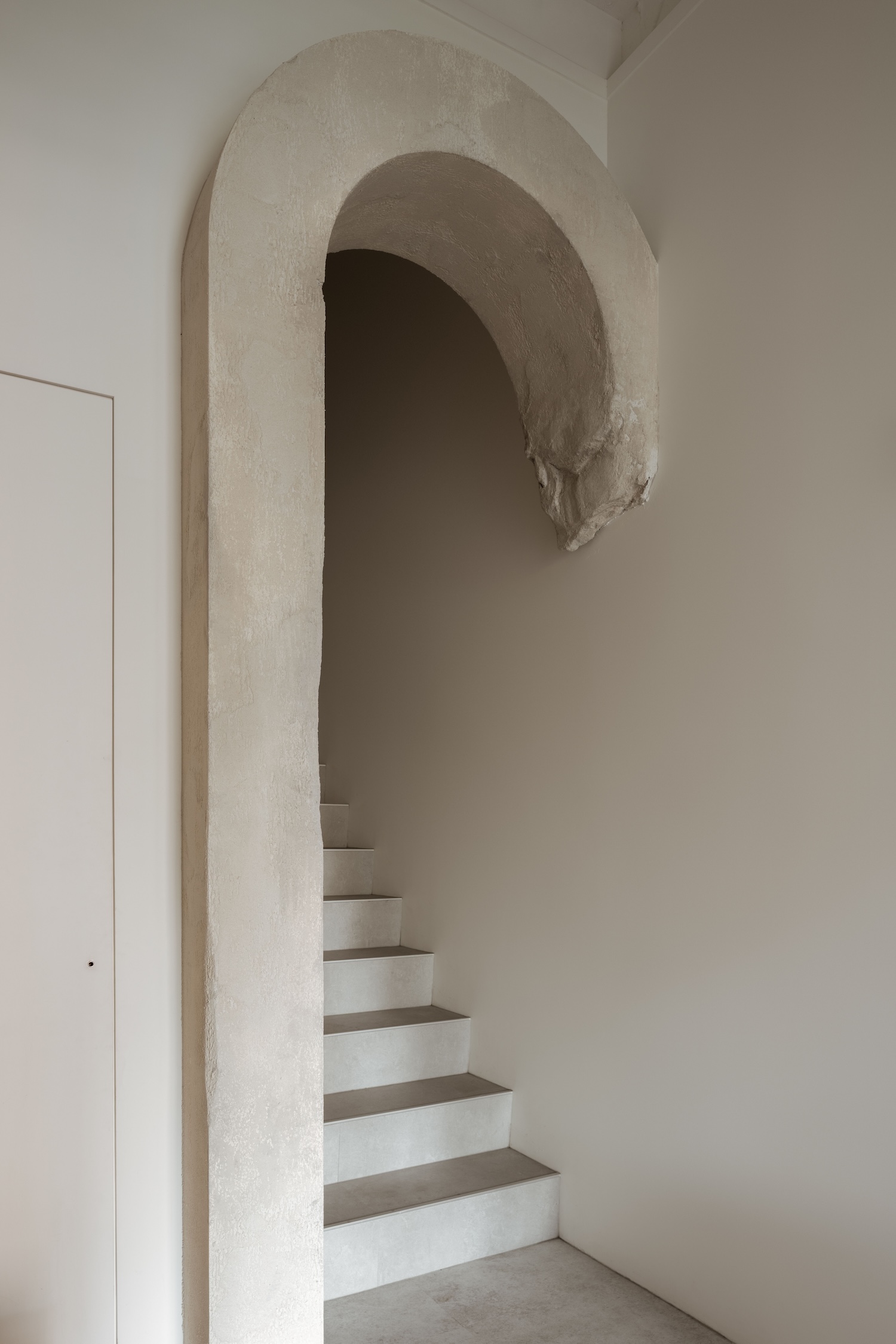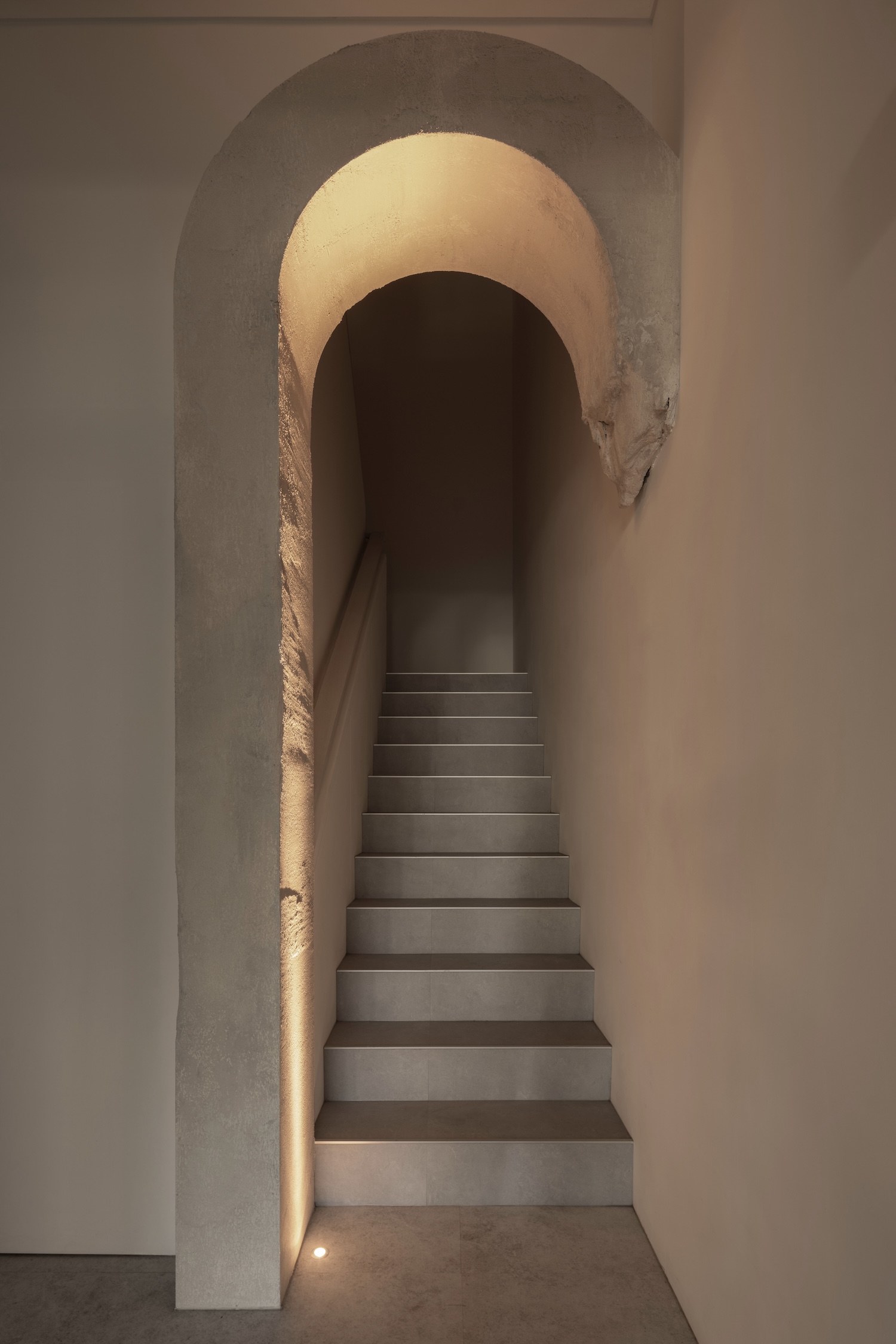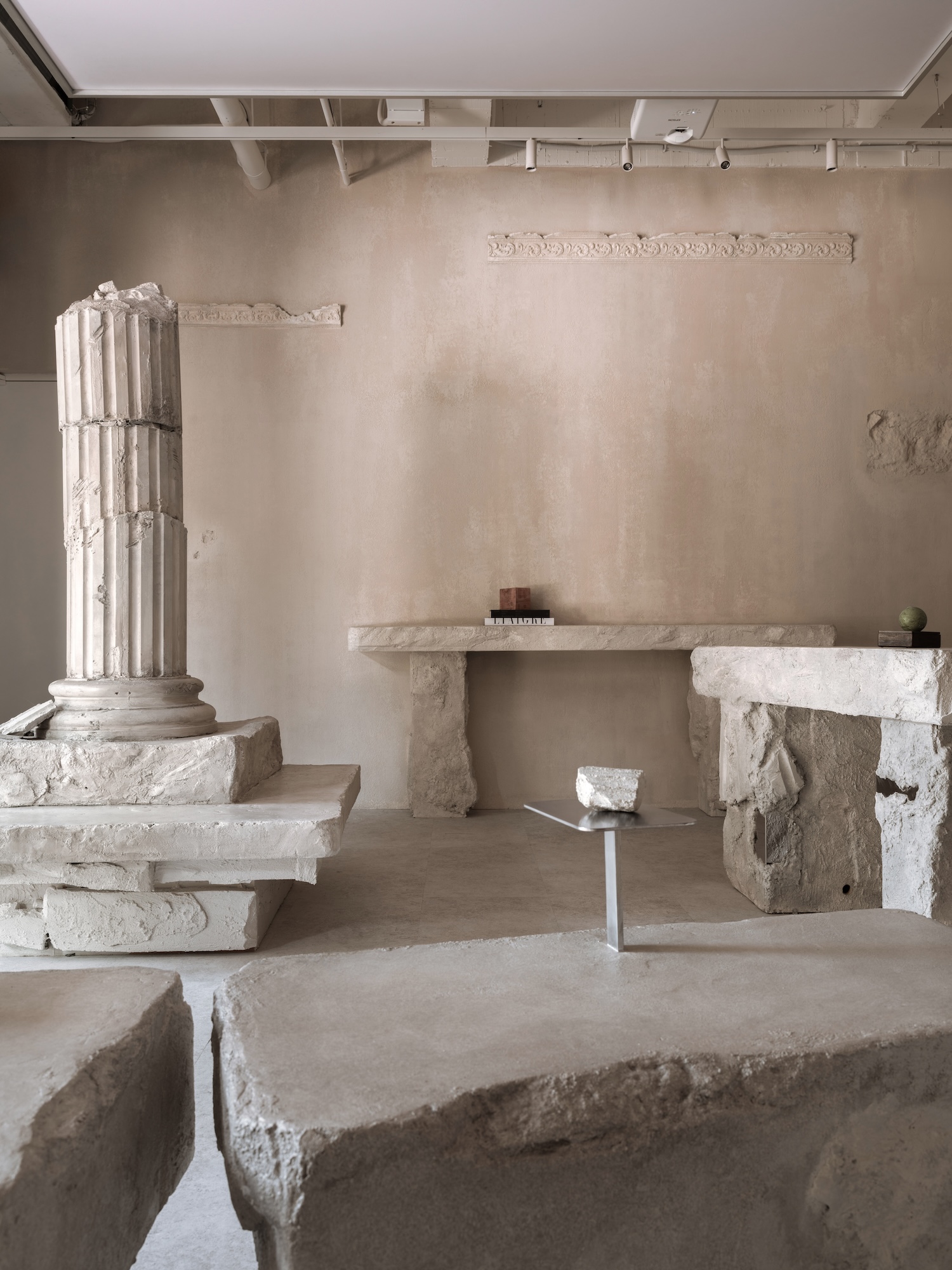
The columns, fractured plinths, and eroded blocks that fill Cream & Bean are all made by hand in concrete, as are the weathered walls behind them. FORSPACE STUDIO, led by designer William Chen, completed the café in Taipei, Taiwan in 2026, basing the interior on the imagery of Roman ruins and staging it as an excavation in progress, with fragments of a forgotten civilization appearing to surface from below ground.
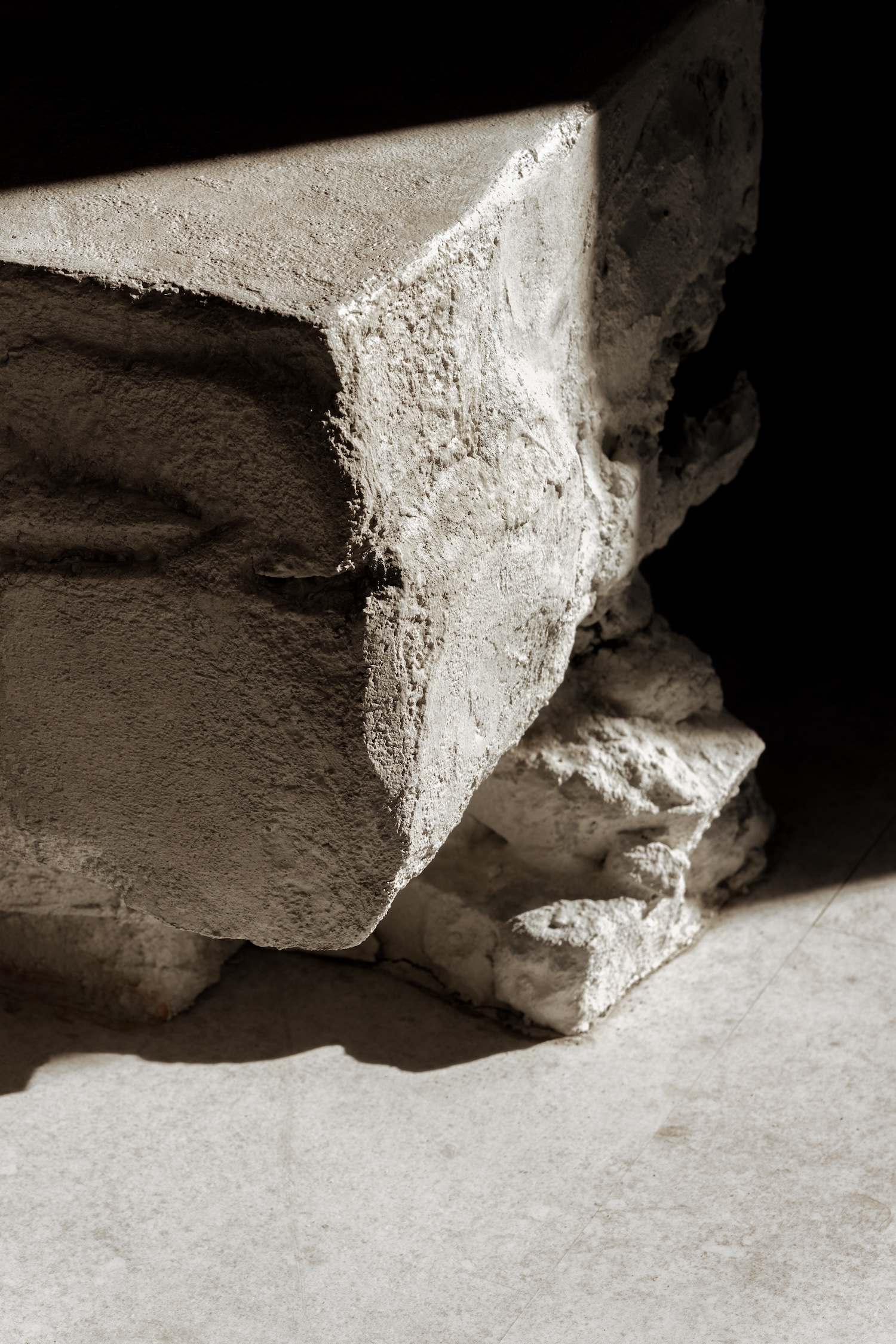
Interiors that borrow from antiquity usually reconstruct it, returning columns to full height and surfaces to an imagined original finish. FORSPACE STUDIO builds the ruin instead. Columns appear as broken sections, plinths are split open, and the faces of the blocks are left rough and pitted. Specialty finishes give the concrete its weathered texture, and reinforcing steel is left exposed in places, so new material carries the look of something damaged and partly recovered.
The fragments are also the furniture. Custom pieces shaped as broken columns and architectural remains form the seating areas and set the route through the compact room. They are arranged in a rhythmic sequence that leads visitors past one piece at a time, in an order modeled on the way an archaeologist uncovers a site.
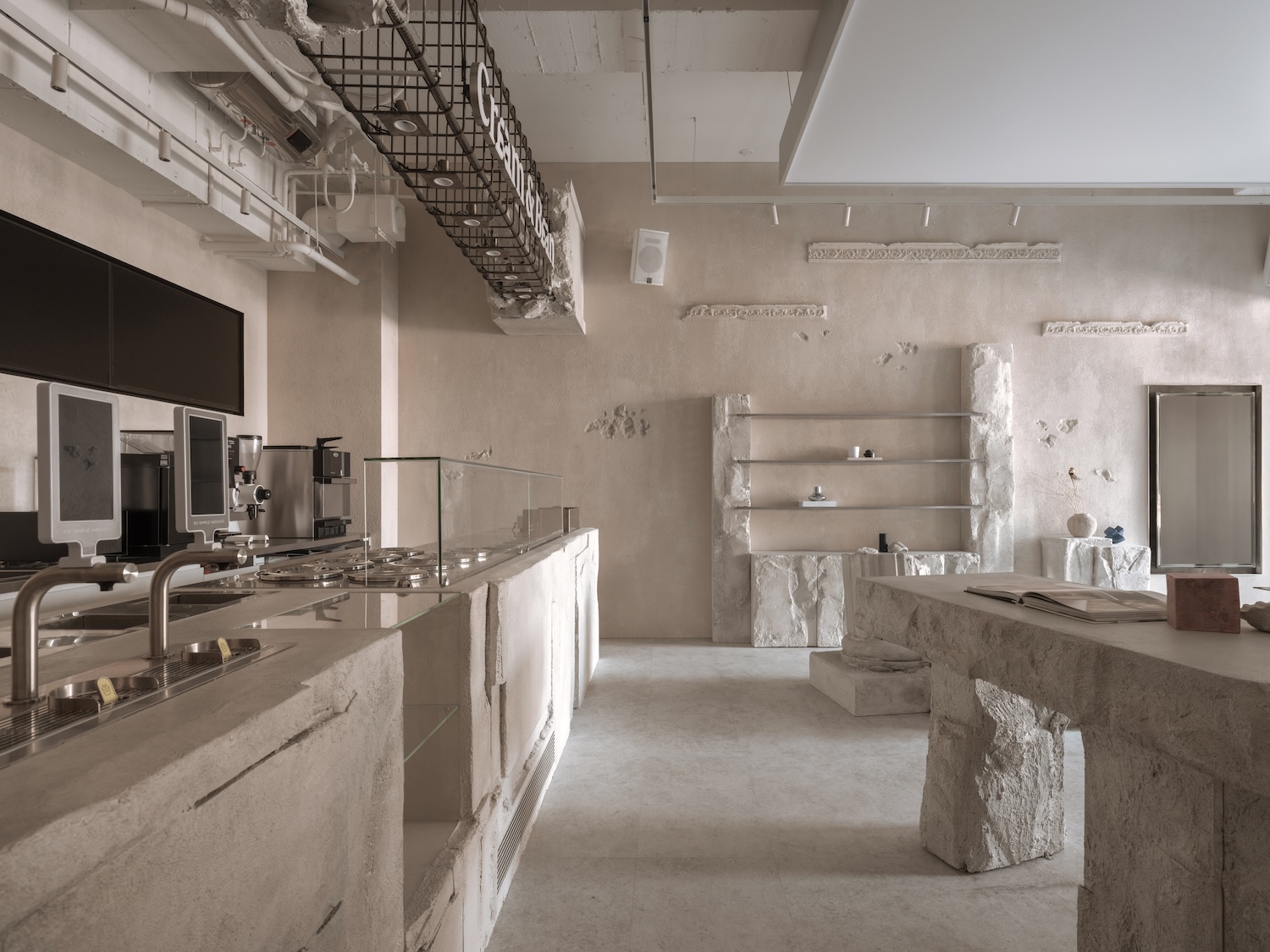
Overhead, a luminous membrane ceiling fills the interior with soft, even light. That uniform light sits directly above the most rugged textures in the room, and the heavy concrete forms beneath it read as lighter than their mass would suggest.
At the center of the ruins is a streamlined service counter, the most clearly contemporary element in the space. It is where the coffee is made, placing the precise work of preparation inside the rough concrete landscape. Minimalist metal details are set against the rugged surfaces throughout the café.
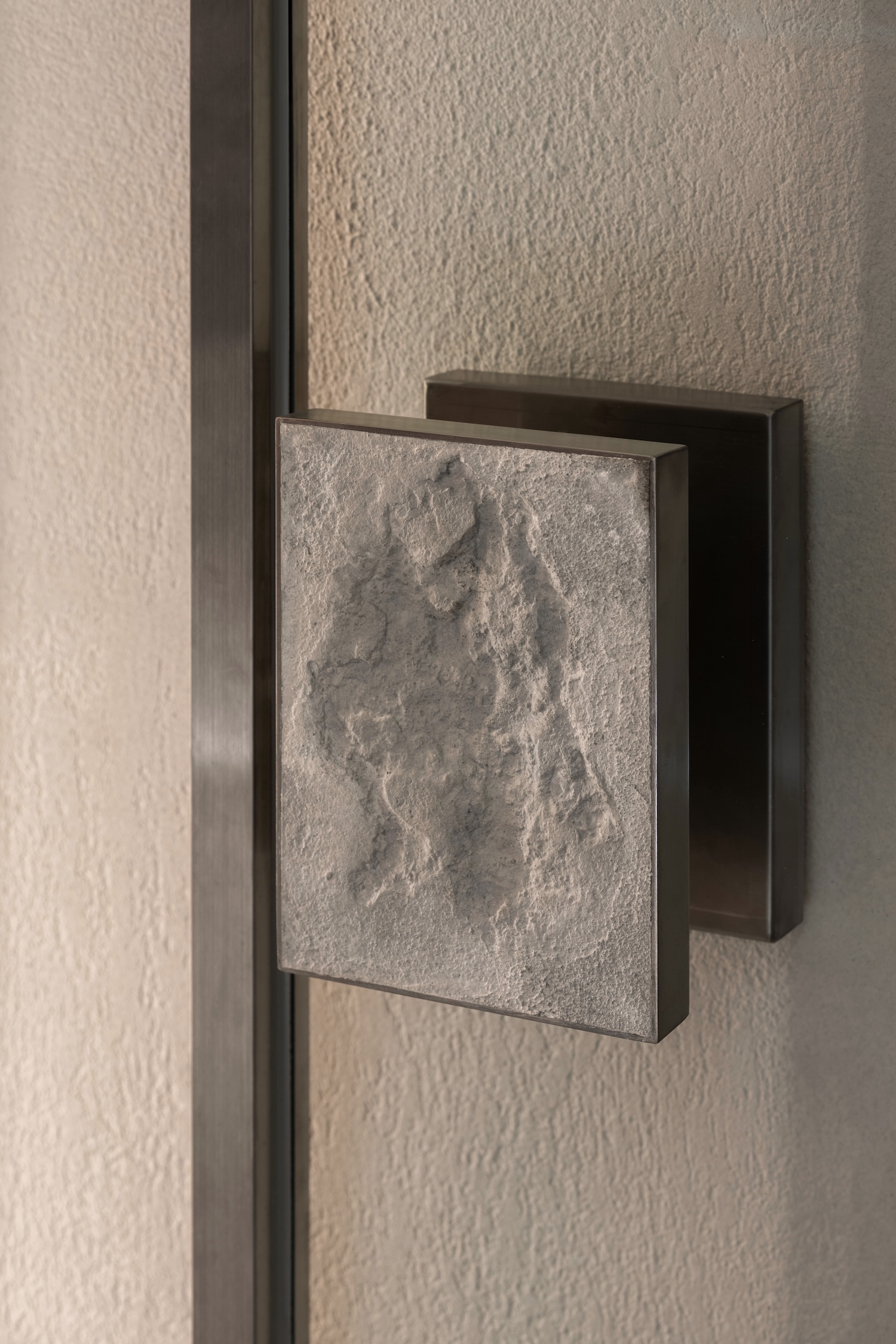
The pairing carries down to the door handles. Each is a piece of raw, hand-chiseled stone set into a sharp black metal frame, so the first surface a visitor touches on arrival is stone, the material the concrete inside has been worked to resemble.