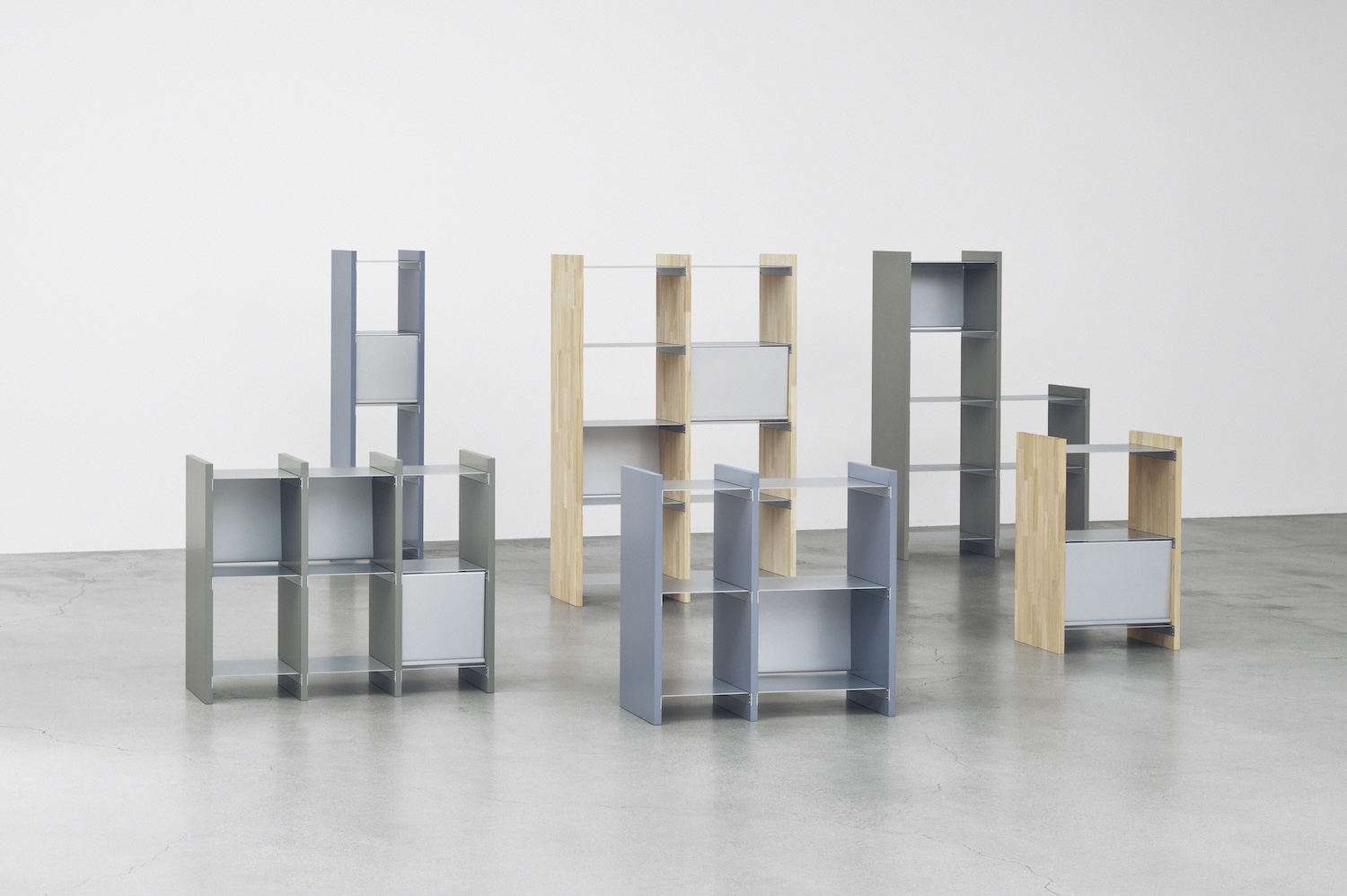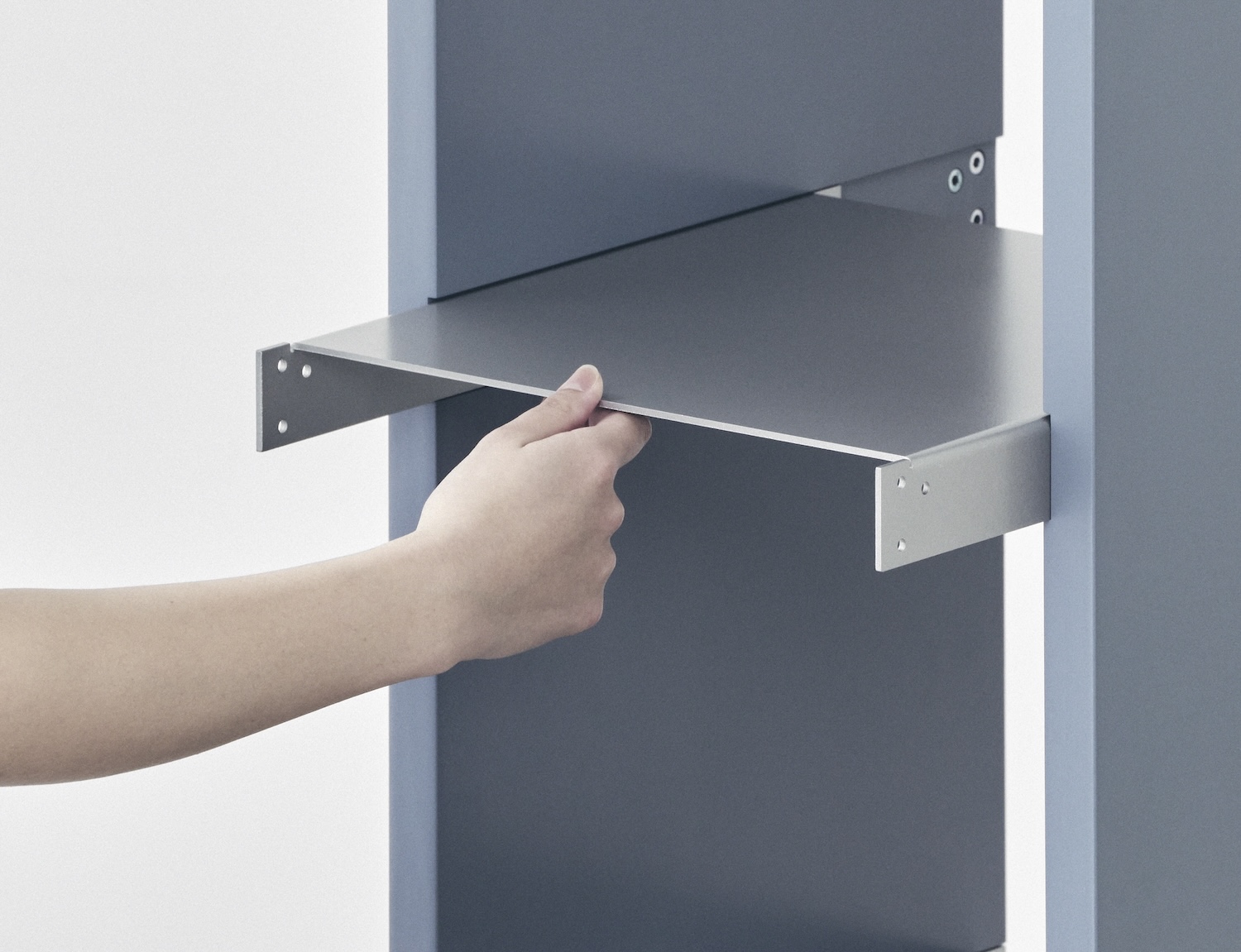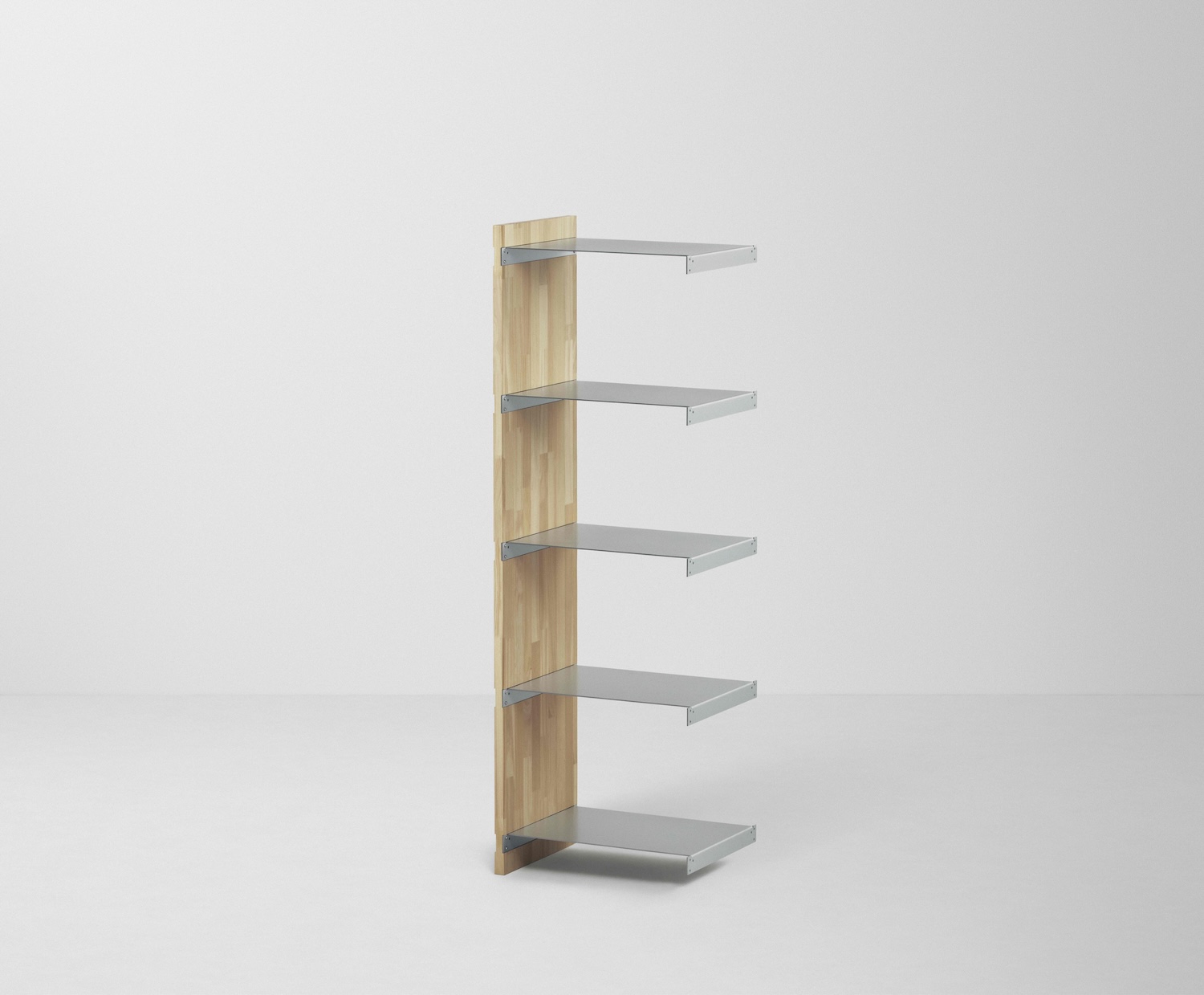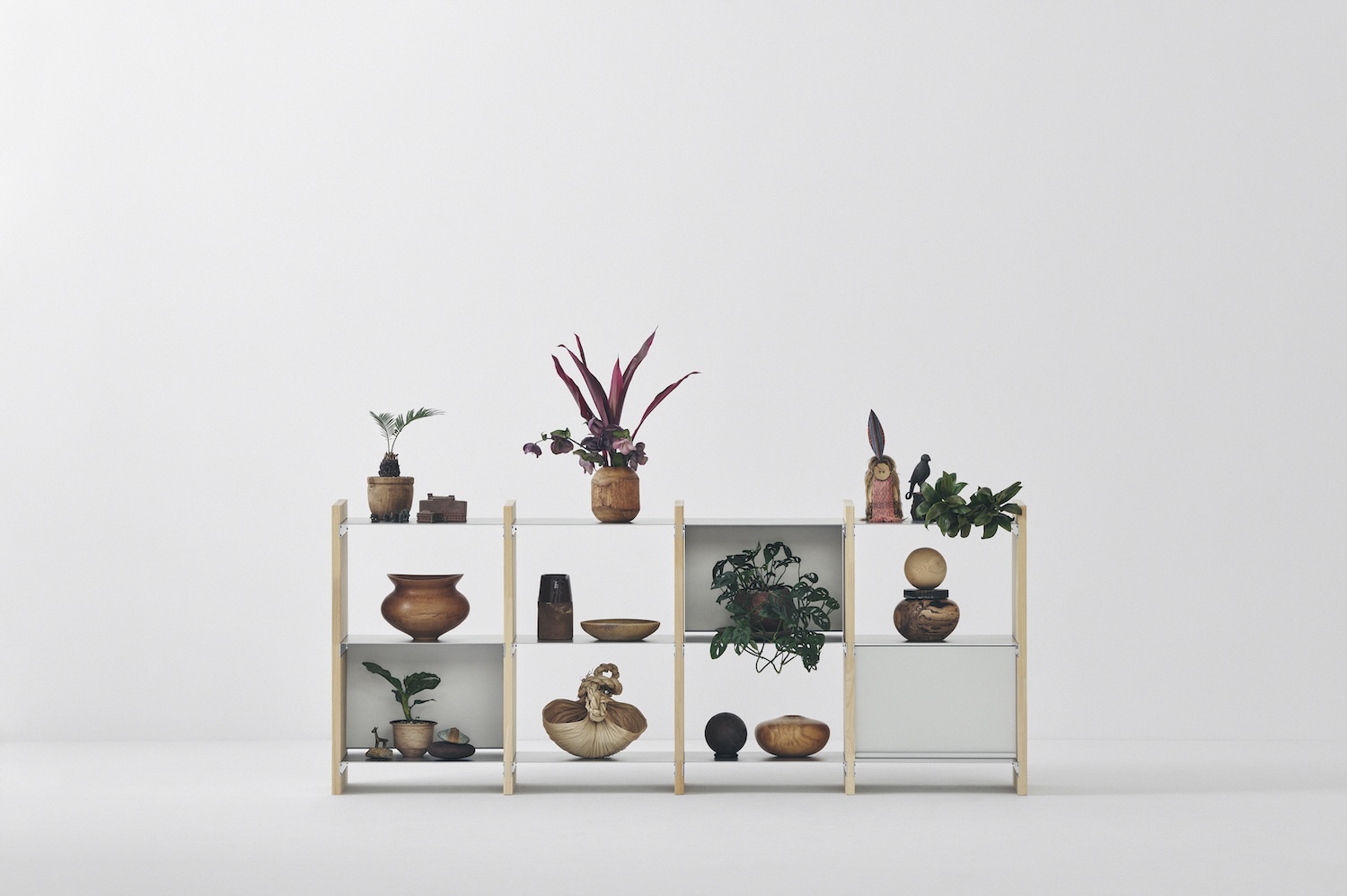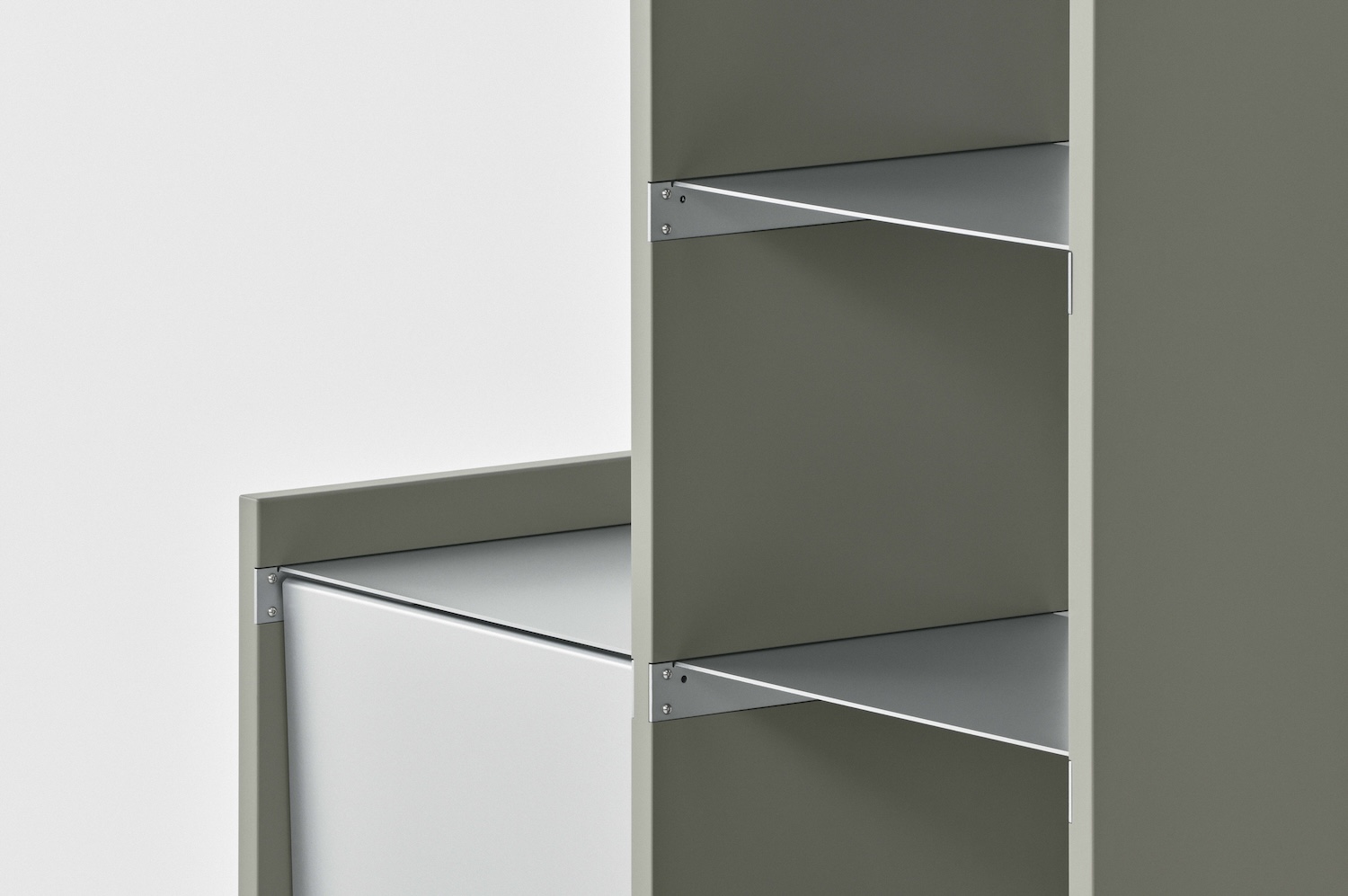
ONCE is a minimalist shelving system created by Japan-based architect Momoko Kudo. The revelation comes in the moment of assembly, when what appears to be a collection of abstract components suddenly coheres into something both architecturally sound and infinitely adaptable. ONCE presents itself not as finished furniture but as potential energy – a shelving system that challenges our assumptions about what constitutes completion in design. Here, in the hands of architect Momoko Kudo and her collaborative team, the flat-packed format becomes not merely a shipping convenience but a philosophical statement about transformation and possibility.
The system’s genius lies in its fundamental reversibility. Where traditional shelving relegates one side to utilitarian concealment against a wall, ONCE embraces the spatial reality of contemporary living – rooms that flow into one another, spaces that serve multiple functions, homes where the boundary between storage and display has dissolved. This double-sided accessibility speaks to a deeper understanding of how we actually inhabit space, acknowledging that modern life rarely affords the luxury of single-purpose rooms or permanently fixed arrangements.
Kudo’s architectural background permeates every aspect of the design. Her educational journey under Terunobu Fujimori, known for his fantastical yet deeply rooted architectural philosophy, surfaces in ONCE’s ability to be simultaneously pragmatic and poetic. The modular components – adjustable in height, width, and layout through an elegantly simple system – echo the post-war Japanese tradition of flexible interior architecture, where shoji screens and tatami mats created spaces that could be reconfigured according to daily rhythms and seasonal needs.
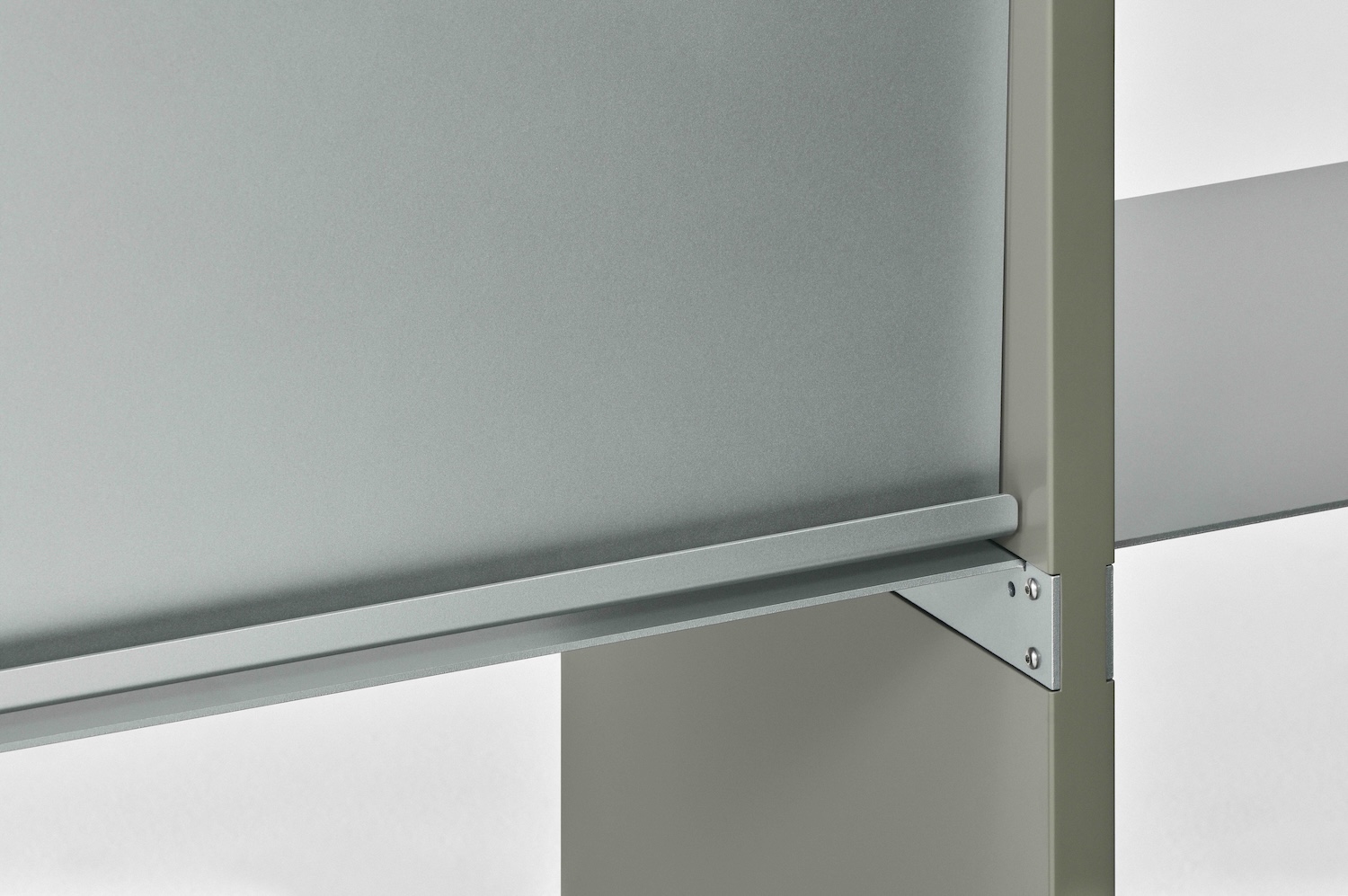
The materiality speaks quietly but insistently of industrial precision married to artisanal sensibility. Each component bears the subtle signatures of contemporary manufacturing – clean edges, consistent tolerances, surfaces that invite touch while resisting wear. Yet the overall aesthetic refuses the cold perfection of mass production, instead embracing what we might call manufactured warmth, where repetition becomes a form of visual rhythm rather than monotonous sameness.