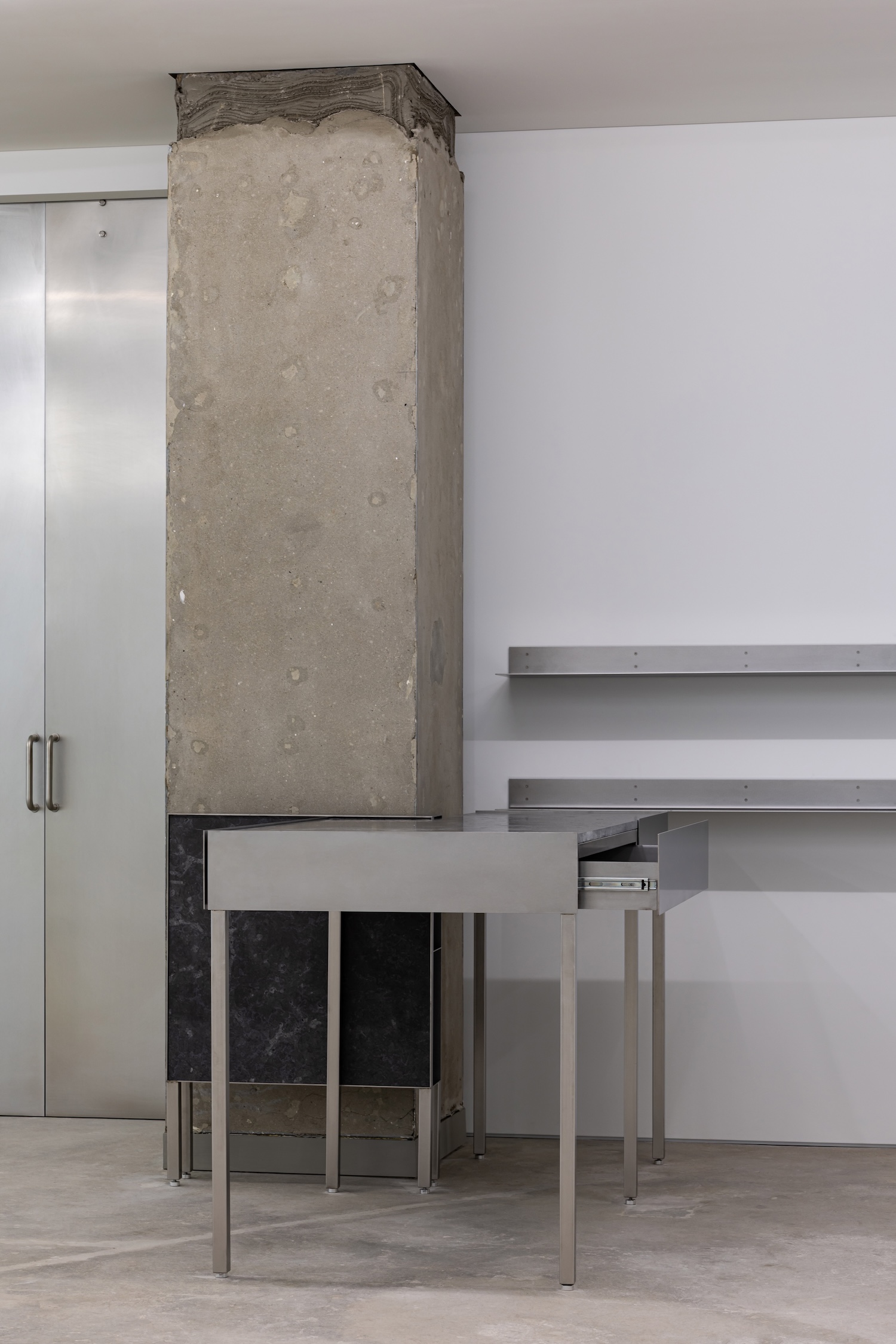
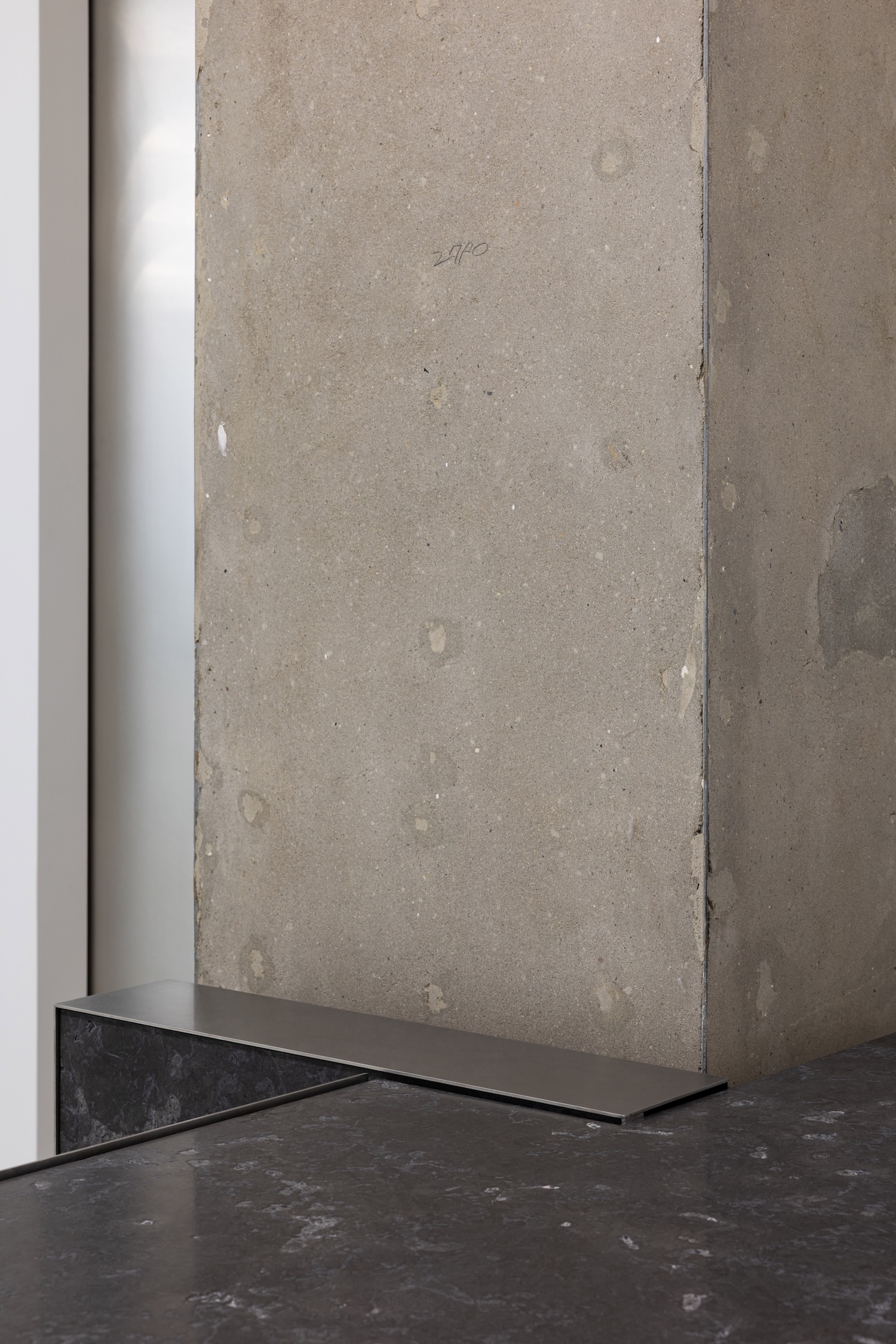
1-5 Design Lab is a minimal space located in Seoul, South Korea, designed by Studio Pin Vice*. The architects understood that portfolio preparation – that crucial bridge between aspiration and achievement – deserved spatial dignity matching its psychological weight. By stripping away the institutional markers that typically define educational interiors, they created something rarer: a space that treats student work as worthy of exhibition even in its nascent stages. The white walls and transparent glass partitions function not merely as neutral backdrops but as active participants in the educational process, suggesting that every sketch, every maquette, every tentative design exploration possesses inherent value worth displaying.
This architectural philosophy echoes the radical reimagining of creative education that emerged in the mid-20th century, when schools like Black Mountain College began dissolving boundaries between studio practice and daily life. Yet where those earlier experiments often embraced deliberately rough, workshop-like aesthetics, 1-5 Design Lab moves in the opposite direction, toward the pristine. The space borrows the visual language of Seoul’s contemporary gallery district, where minimalism functions not as absence but as a form of generous attention – providing the kind of focused, distraction-free environment where creative work can truly breathe.
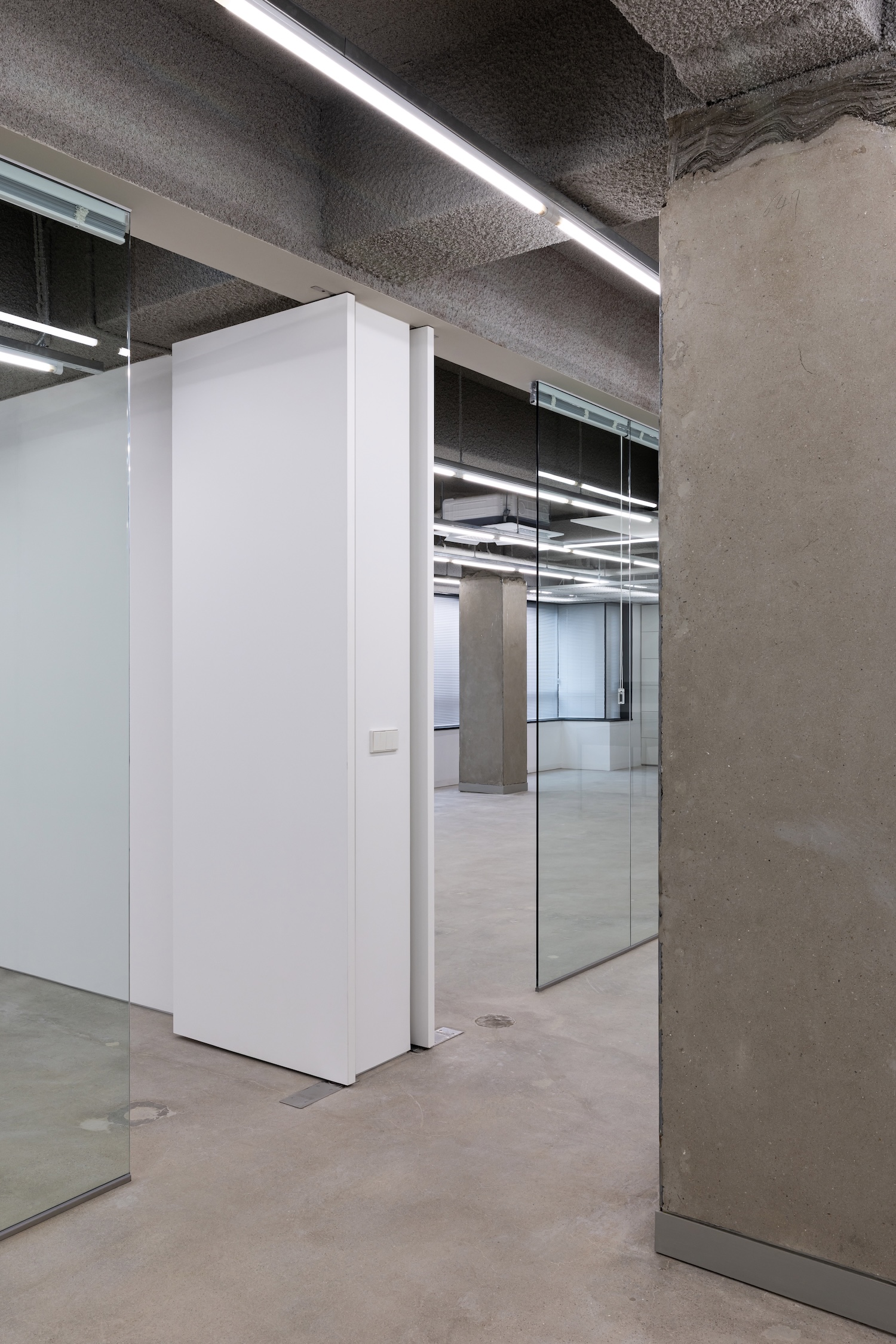
The solid wood doors reveal perhaps the most sophisticated spatial gesture. Designed to disappear into the wall plane when closed, they transform the central hall into what the architects describe as a “flexible exhibition space.” This dual identity – sometimes intimate classroom, sometimes expansive gallery – reflects the fluid nature of contemporary creative education, where boundaries between instruction, critique, and presentation increasingly blur.
The material palette reinforces this gallery-like atmosphere through restraint rather than ostentation. The exposed ceiling, treated with sprayed perlite finish, acknowledges the building’s industrial heritage while creating the kind of neutral, slightly textured surface favored in contemporary art spaces. The continuous 4000K lighting – carefully calibrated to approximate natural daylight – serves both practical and psychological functions, suggesting the serious, professional environment these students aspire to enter.