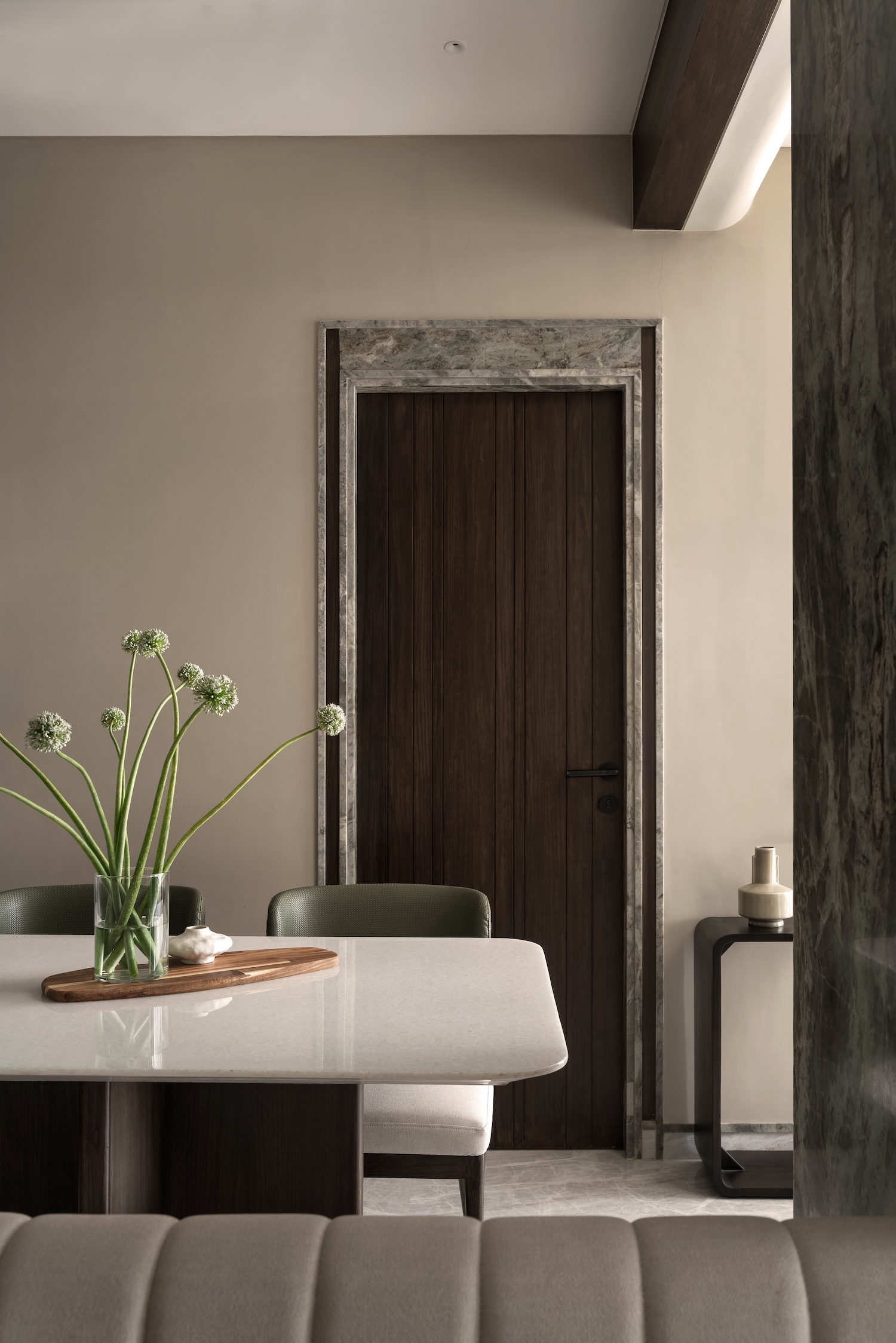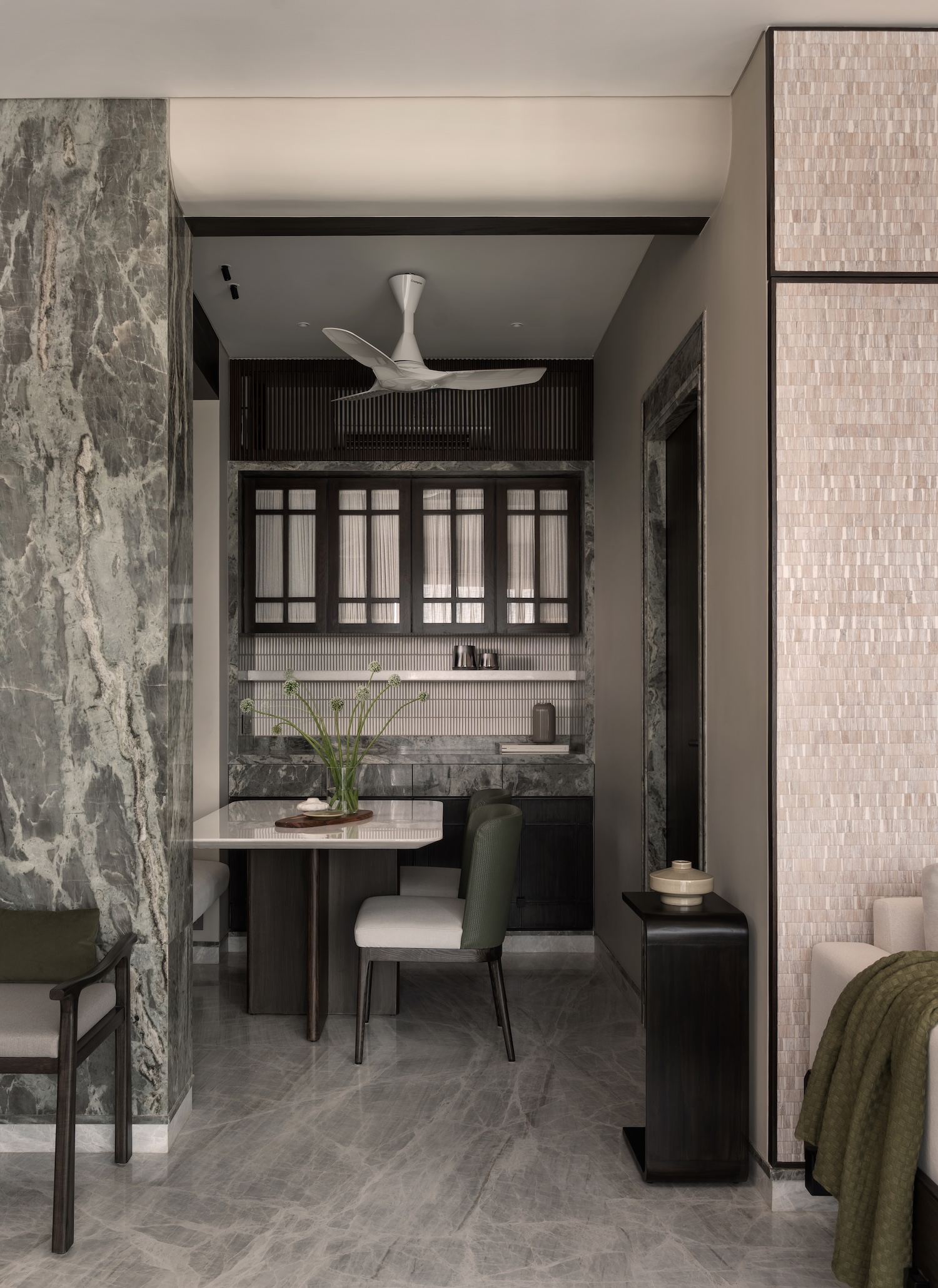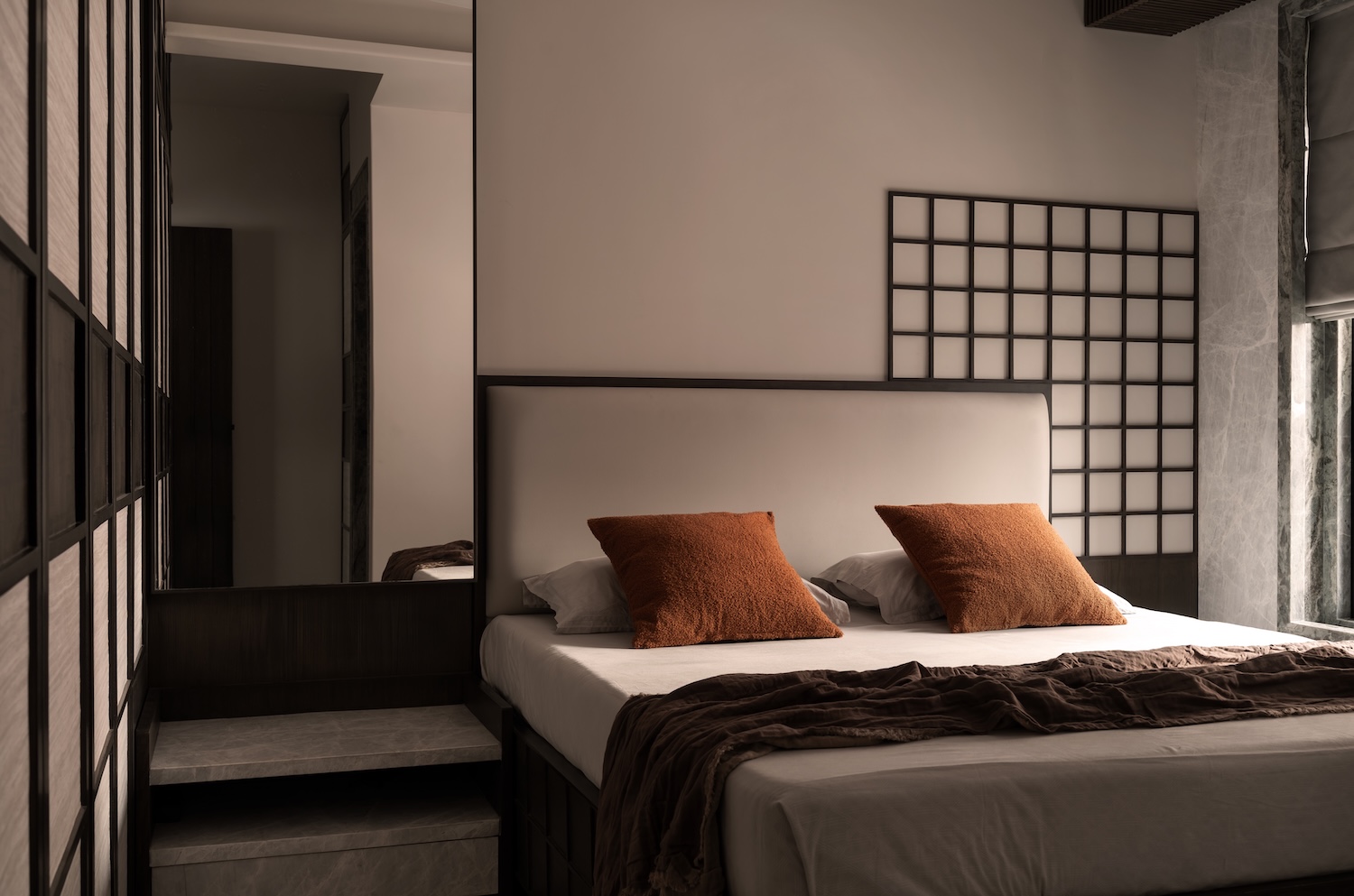
Apartment 1701 is a minimalist apartment located in Mumbai, India, designed by Studio Hasta. The columns and beams that a high-rise slab imposes on every unit are usually treated as obstacles to be boxed out or drywalled over, and here they become the organizing grammar of the plan, marking thresholds between living, dining and circulation without a single added partition.
That decision carries more weight in Mumbai than it might elsewhere. Floor area in the city trades at some of the highest rates in the world, and the reflex among renovation clients is to subdivide, to convert every recess into a room. Studio Hasta moves the other way, letting the existing structural rhythm do the work of definition so that each zone reads as distinct while the volume stays continuous. The approach has a lineage in the Chandigarh-era Indian modernism of Aditya Prakash and in the later domestic work of Bijoy Jain, where structure and enclosure remain legible as separate systems rather than dissolving into finish.
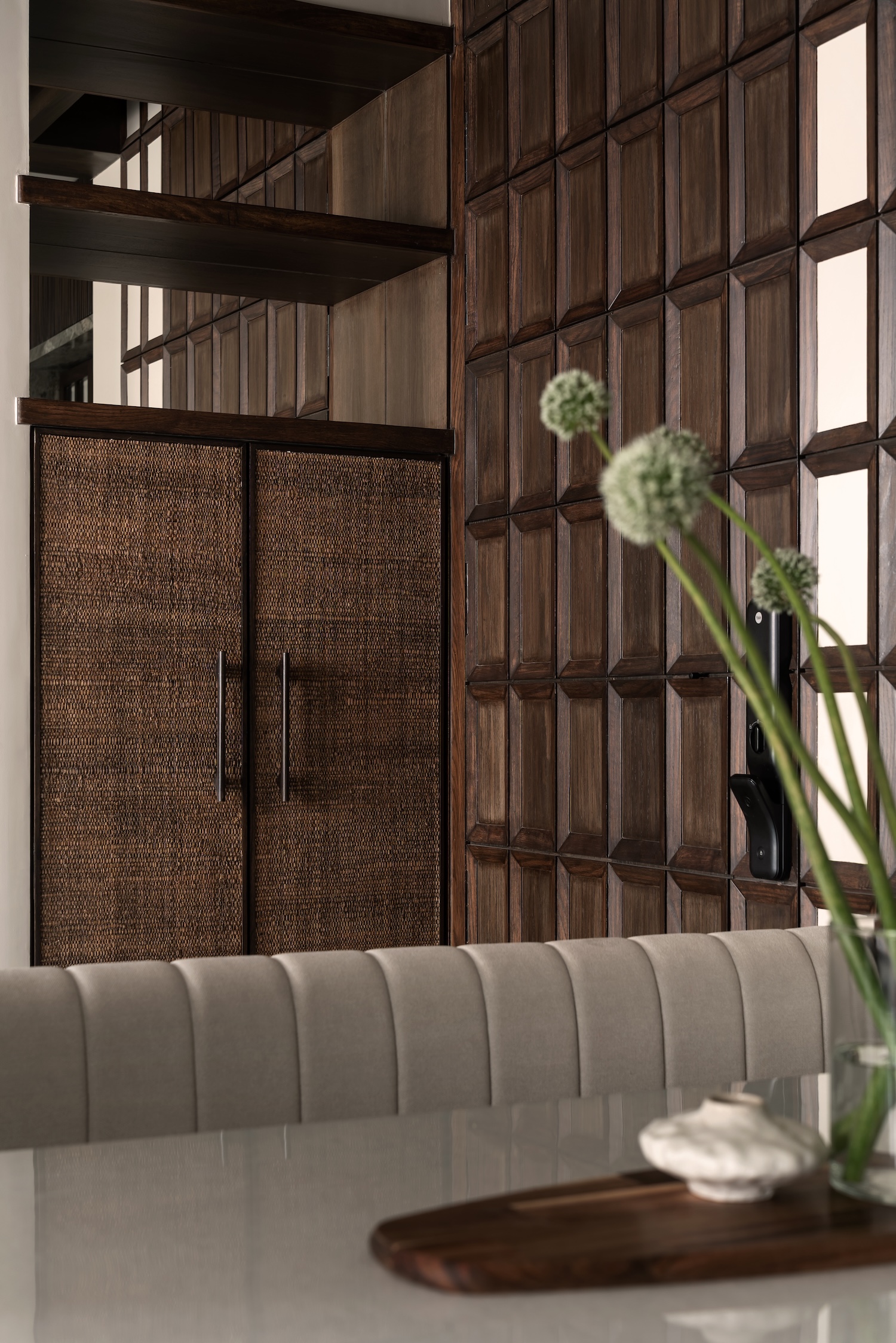
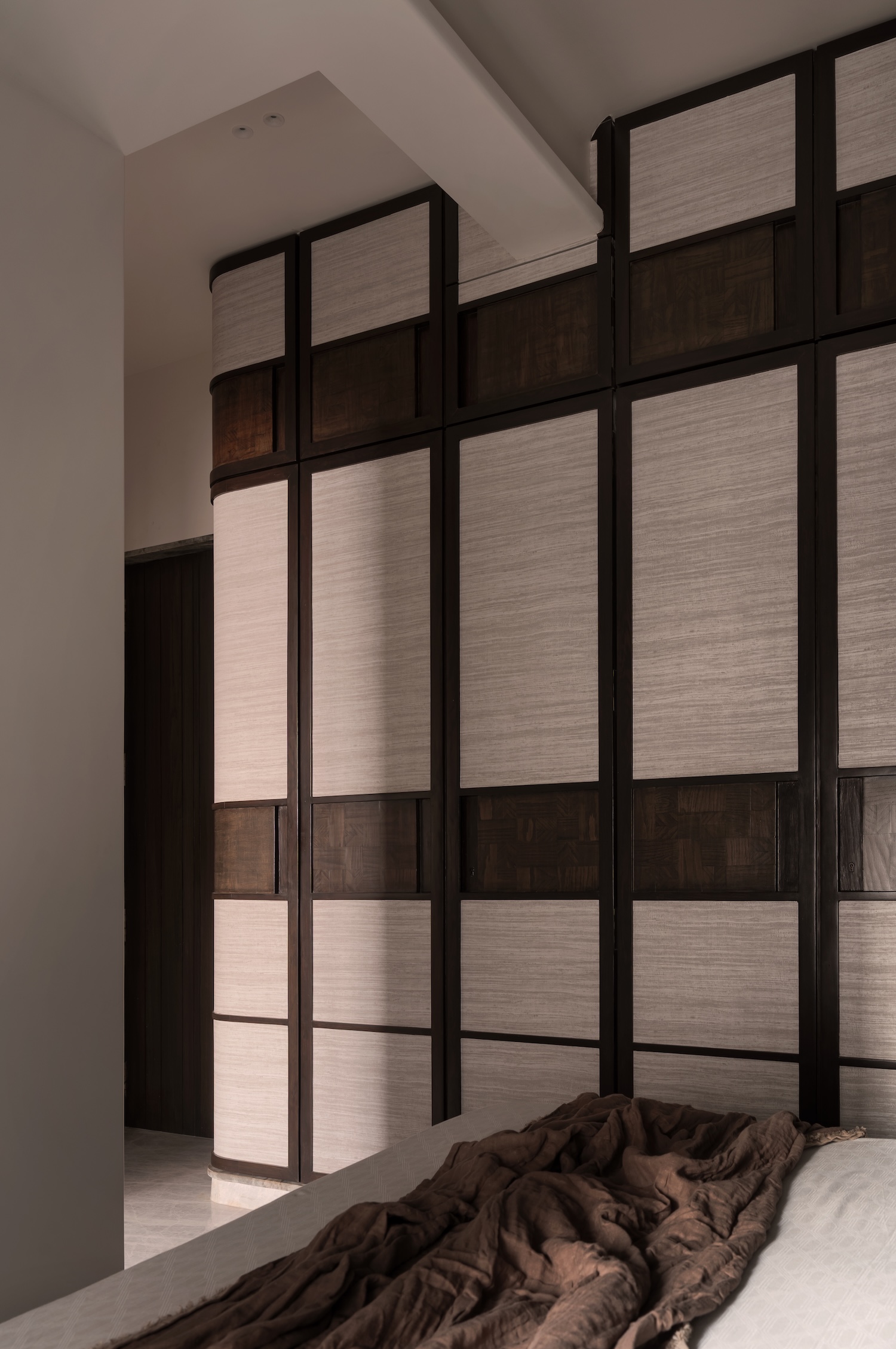
Storage absorbs the pressure that walls would otherwise create. Concealed cabinets, hidden niches and multifunctional joinery run through the apartment, along with an integrated bar unit that folds into the wall plane instead of announcing itself as furniture. The joinery has to be dimensionally exact for this to succeed, since a flush cabinet face reveals every millimetre of misalignment under raking light, and the absence of visible hardware means the reveal itself becomes the detail. A family of three generates a great deal of daily material, and the plan quietly swallows all of it.
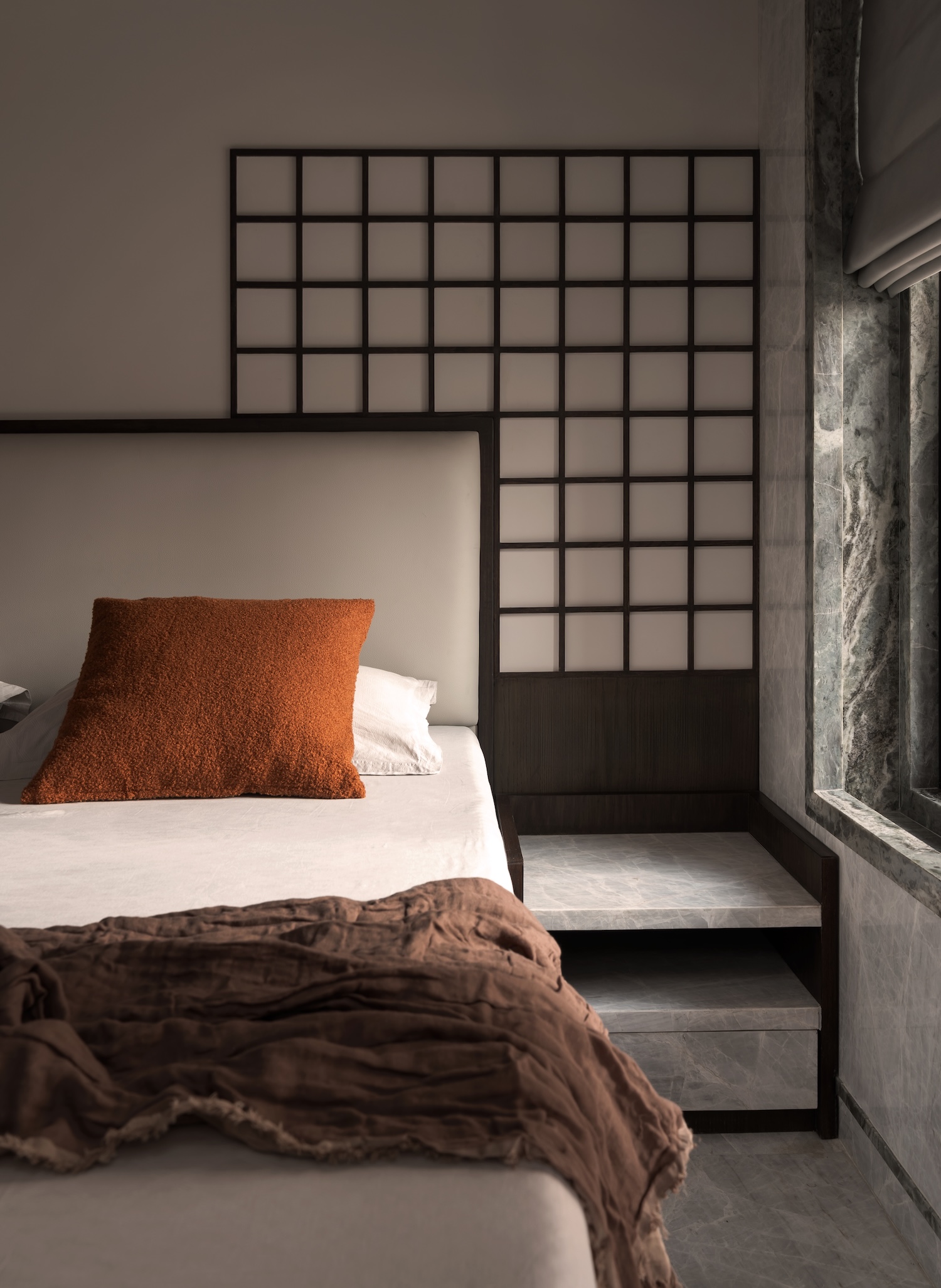
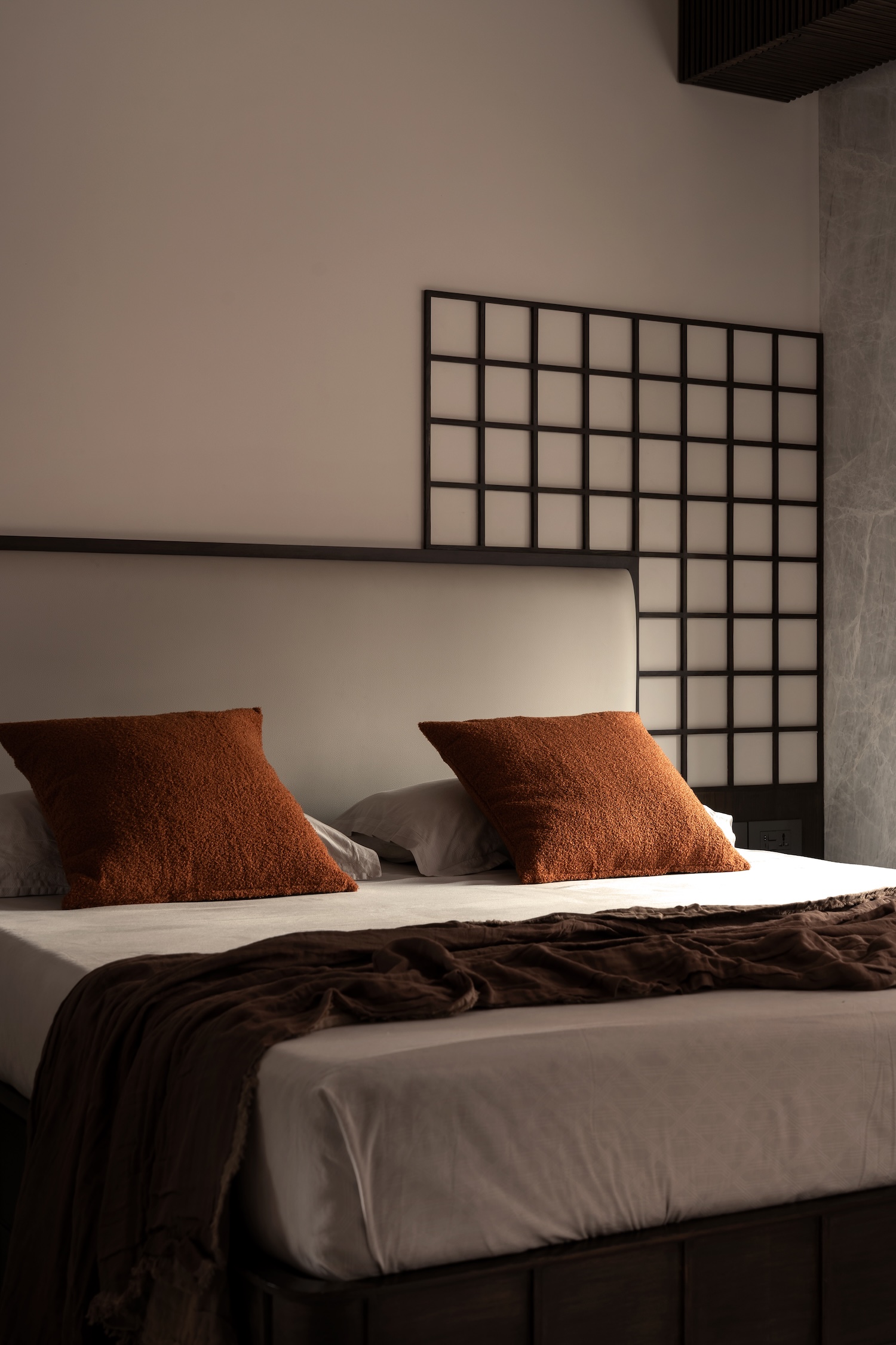
Natural stone, stained timber, textured wall finishes and soft fabrics establish the palette. Stained timber matters here for reasons beyond colour, since the stain penetrates rather than coats and lets the grain continue to register through the surface, which keeps the large joinery runs from reading as monolithic slabs. Textured wall plaster catches the low, humid light of the western Indian coast in a way flat paint cannot, giving otherwise plain surfaces a depth that shifts across the day. Stone provides the durable counterpoint, the material that will still look correct after a decade of a young family moving through it.